
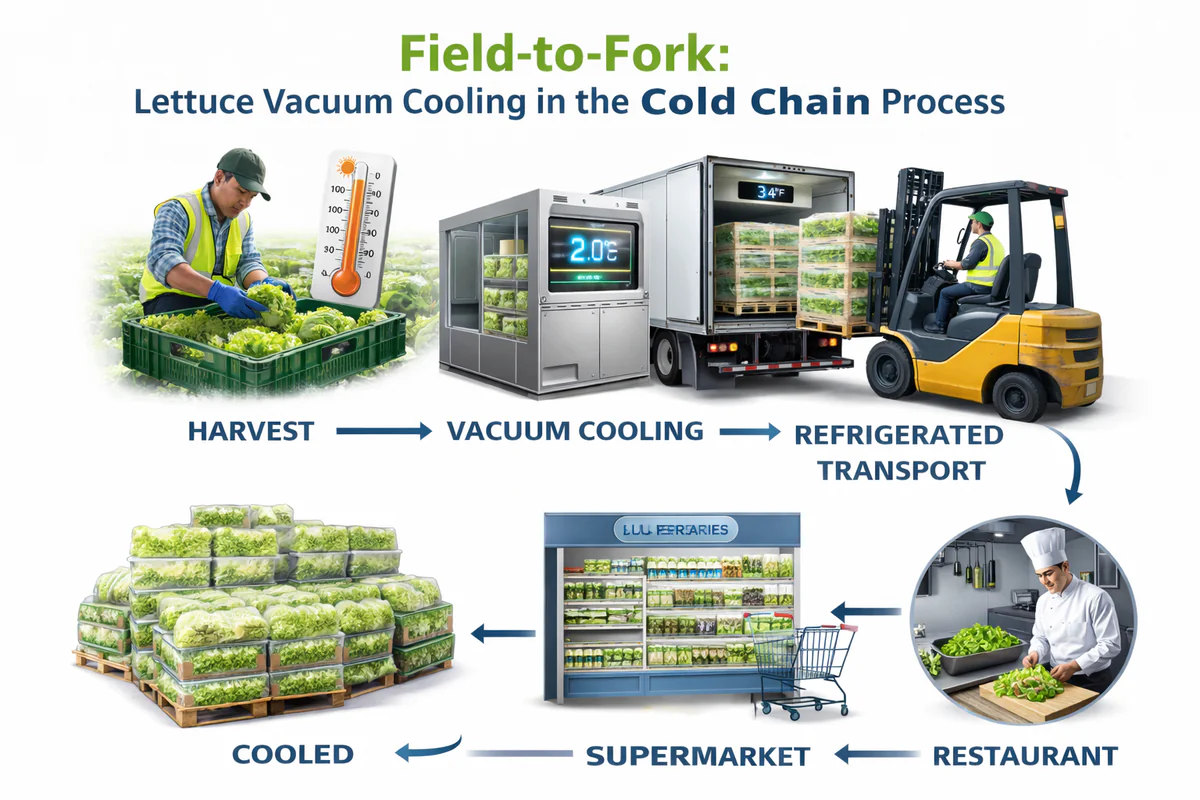
Field-to-Fork: Lettuce Vacuum Cooling in the Cold Chain Process?
We often talk about "freshness" as if it were magic, but in the lettuce business, freshness is purely a matter of logistics and thermodynamics. It is a race against the clock.
Vacuum cooling is the critical "first mile" technology in the cold chain process, bridging the gap between harvest and transport. By removing field heat within minutes rather than hours, it stabilizes the biological activity of lettuce, ensuring that the cold chain remains unbroken from the moment it leaves the farm until it reaches the consumer’s fork.
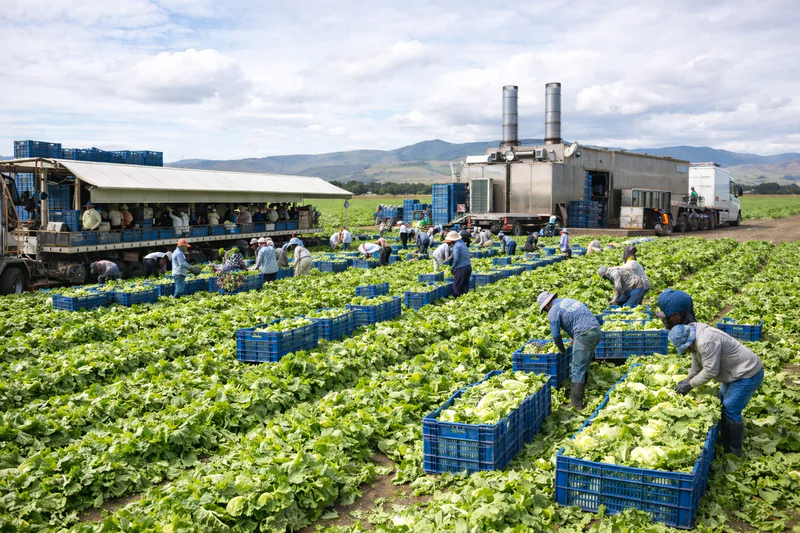
At Allcold, I have spent years optimizing supply chains for clients who ship fragile greens across oceans. I have seen what happens when the "first mile" goes wrong. You can have the best refrigerated trucks and the coldest supermarket displays, but if you don’t kill the heat immediately after harvest, the battle is already lost. Lettuce is 95% water, and once cut, it begins to dehydrate and decay instantly. Vacuum cooling isn’t just a machine; it is the anchor of the entire modern cold chain. In this article, I will walk you through the journey of a head of lettuce, explaining exactly where and why vacuum cooling is indispensable for maintaining quality from the soil to the salad bowl.
Why is the "First Mile" the Most Dangerous for Lettuce?
The moment a knife slices through the stem of an Iceberg or Romaine lettuce, the plant goes into shock. It is no longer receiving water from the roots, but it is still transpiring rapidly.
The first hour after harvest is the most critical period in the cold chain because the lettuce is at its highest temperature and respiration rate. Without immediate cooling, the "field heat" accelerates enzymatic breakdown and moisture loss, causing irreversible damage that no amount of subsequent refrigeration can fix.
The Physiology of Stress
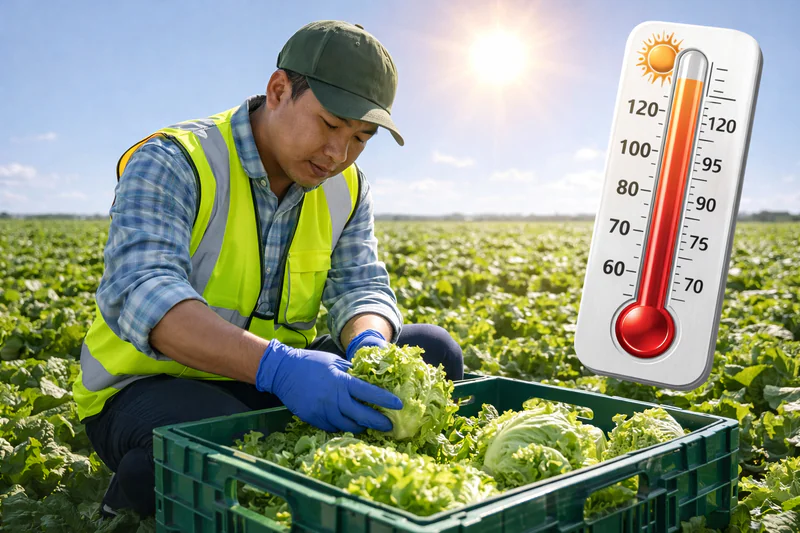
When I visit farms in California or Yunnan, the ambient temperature can be 30°C or even 35°C. The lettuce leaves are dark green and absorb solar radiation. Internal temperatures can spike to 40°C.
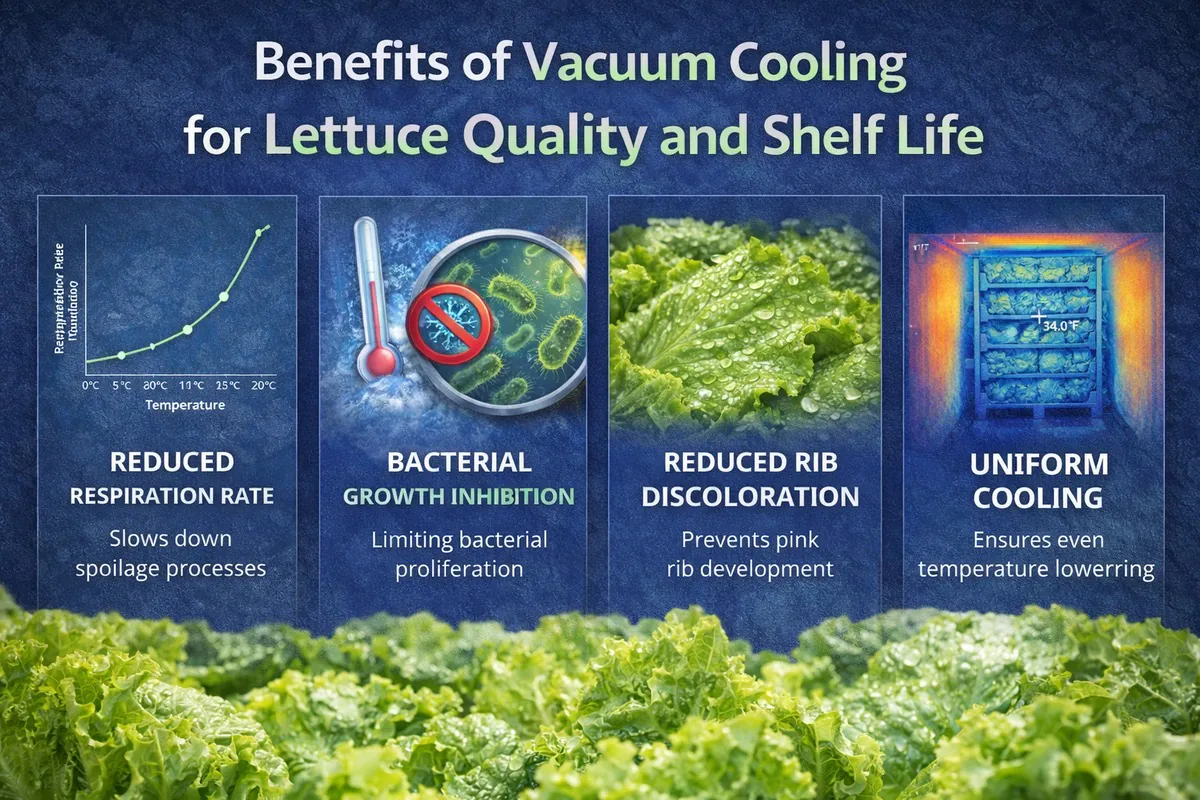
At this temperature, the lettuce is burning its own sugar reserves to stay alive. This is called Respiration.
- High Respiration1: The plant consumes oxygen and releases CO2 and heat.
- Water Loss2: The stomata (pores) on the leaves open up to try and cool the plant down, releasing water vapor.
If you load this hot lettuce directly into a refrigerated truck, you are making a mistake. The truck’s refrigeration unit is designed to maintain temperature, not lower it rapidly.
The "First Mile" is dangerous because if you trap that heat inside a cardboard box, you create an oven. The center of the pallet will stay hot for 24 hours, turning the lettuce pink and slimy before it even reaches the distribution center. Vacuum cooling stops this biological panic button instantly.
How Does Vacuum Cooling Fit into the Packing Workflow?
Logistics is about flow. A bottleneck anywhere slows down the whole operation. Where does a massive vacuum chamber fit into a busy packing house without causing a traffic jam?
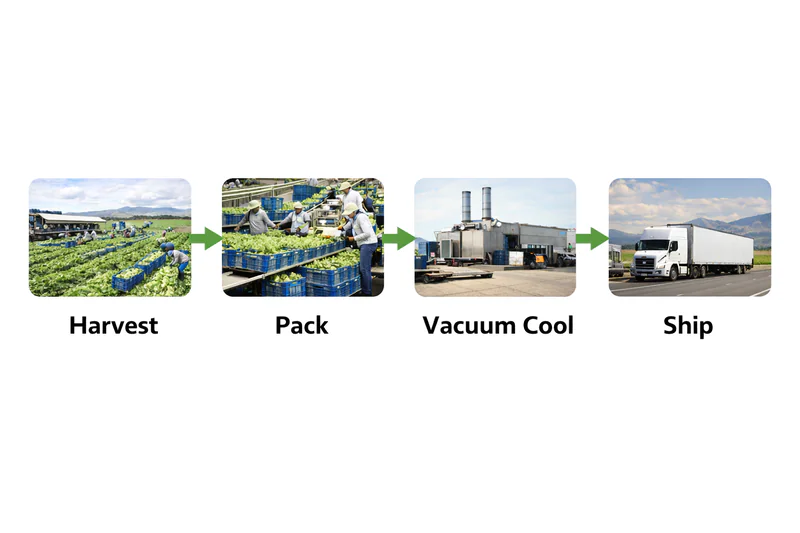
Vacuum cooling integrates seamlessly as a "flow-through" step between packing and loading. Unlike cold rooms that require hours of dwell time and double handling, vacuum coolers operate in rapid 20-30 minute cycles, allowing pallets to move directly from the field trucks, through the cooler, and straight onto the shipping containers.
 forced-air cooling tunnels3. They had forklifts running everywhere.
- Unload field truck.
- Drive to cold room.
- Wait 12 hours.
- Drive to loading dock.
- Load export truck.
It was chaotic and required huge floor space.
The Allcold Workflow:
With a vacuum cooler4, the process is linear. - Harvest & Pack: Lettuce is packed into boxes right in the field or at the packhouse entrance.
- Staging: Pallets are built and wrapped (with vented plastic).
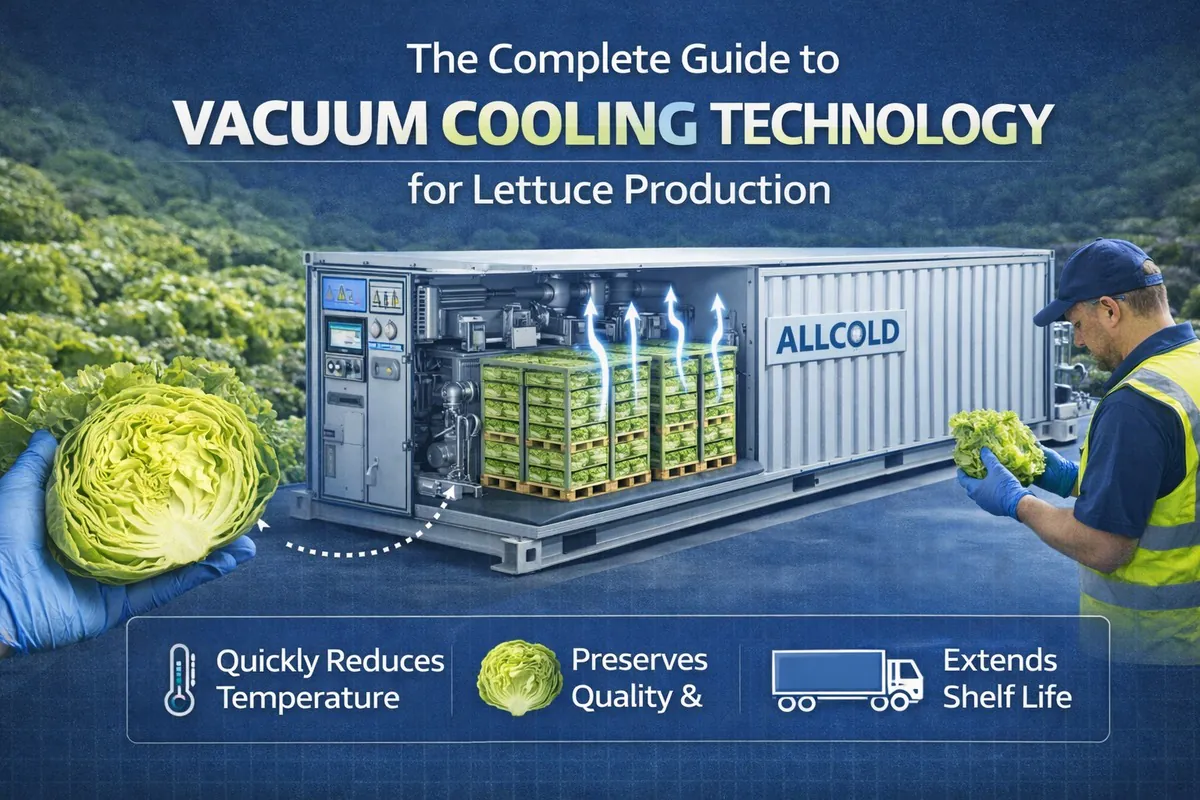
- The Cool: The forklift driver places 2, 4, or 6 pallets into our machine. He presses "Start."
- 25 Minutes Later: The cycle ends. The core is 2°C.
- Direct Loading: The same forklift driver takes the pallets out and drives them straight into the refrigerated trailer.
There is no intermediate storage. There is no "waiting room." This reduces forklift traffic, reduces labor costs, and most importantly, minimizes the time the product sits around. It turns cooling into a checkpoint, not a parking lot.
What Happens to the Cold Chain During Transport?
Once the truck doors close, the lettuce is on its own. It might be on the road for 4 days or on a ship for 2 weeks. How does vacuum cooling protect it during this journey?
Vacuum cooling pre-conditions the load for transport by removing latent heat from the center of the pallet. This ensures that the transport refrigeration unit only needs to maintain the temperature rather than fight to lower it, preventing temperature fluctuations and reducing fuel consumption for the logistics provider.
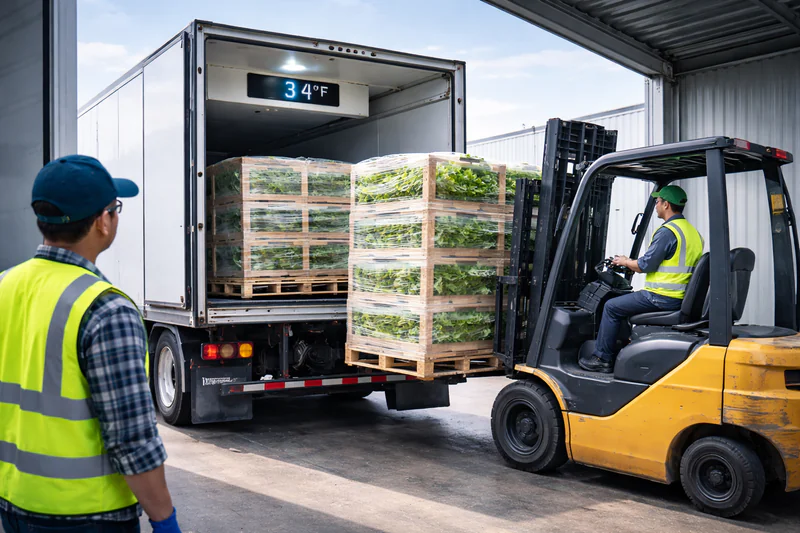
The "Thermal Inertia5" Effect
A refrigerated container (Reefer) is not a blast freezer. Its airflow is often poor, especially when packed tight with pallets.
If you load lettuce at 15°C into a Reefer set to 2°C, the unit will run at maximum power. The air coming out of the chute will be freezing, damaging the top boxes (freezer burn), while the boxes in the middle remain warm.
The Vacuum Advantage:
When you vacuum cool, you create a block of cold mass. The lettuce, the box, and the trapped air are all at 2°C.
This creates Thermal Inertia.
- If the truck engine shuts off for an hour during a driver break, the lettuce stays cold because the core mass is cold.
- The reefer unit cycles on and off less frequently, saving diesel.
- Most importantly, there are no "hot spots" inside the load that could trigger ripening or rot.
I tell my clients: "Vacuum cooling6 is your insurance policy against a bad truck driver." Even if the transport conditions aren’t perfect, the thermal stability of vacuum-cooled produce gives you a buffer.
How Does It Impact the Retailer and Consumer?
The final link in the chain is the supermarket shelf. Does the consumer really know the difference between vacuum-cooled lettuce and standard lettuce? They might not know the name, but they know the result.
For retailers and consumers, vacuum cooling translates directly into extended shelf life and reduced waste. By arresting decay early, the lettuce arrives at the supermarket with its crisp texture and nutritional value intact, staying fresh in the consumer’s refrigerator for days longer than non-vacuum cooled alternatives.
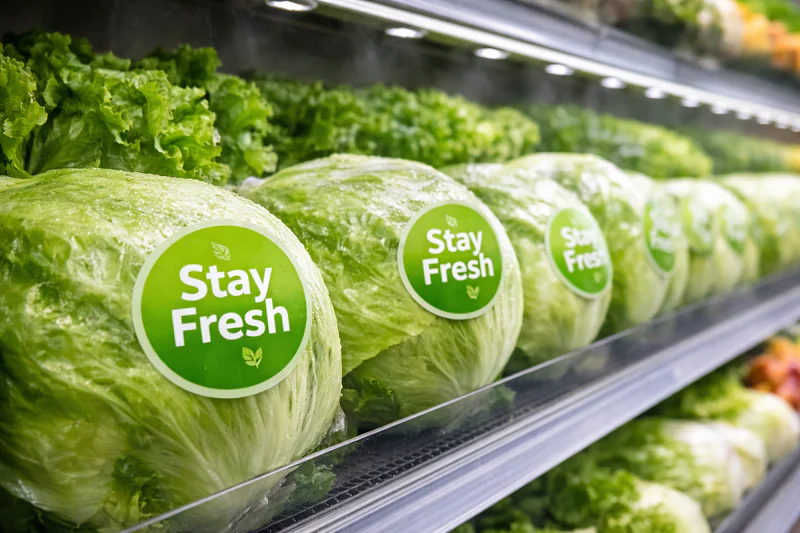
The "Pink Rib7" Test
Consumers buy with their eyes. The biggest enemy of lettuce sales is "Pink Rib"—the discoloration of the white ribs of the leaf. This is caused by oxidation and heat stress.
When a supermarket buyer like Norman (my client in the US) sees Pink Rib, he asks for a credit or rejects the load.
The Consumer Experience:
- Non-Vacuum: The lettuce looks tired. You buy it on Monday, and by Wednesday, it is slimy in your fridge bin. You throw half of it away. You are angry at the store.
- Vacuum Cooled8: The lettuce is crisp. It "snaps" when you break it. You buy it on Monday, and it is still perfect for a salad on Saturday.
This creates brand loyalty.
Retailers love vacuum cooling because it reduces their Shrinkage (waste). If they throw away 10% less lettuce because it stays fresh longer, that is pure profit.
In the end, the technology we install in the field is what guarantees the crunch in the salad bowl 3,000 miles away.
Can You Maintain the Cold Chain for Mixed Loads?
Real-world logistics is messy. Trucks often carry broccoli, lettuce, and strawberries together. How does vacuum cooling help when shipping mixed commodities?
Vacuum cooling allows for precise temperature standardization across different crops before they are consolidated. By bringing leafy greens down to the exact storage temperature of other commodities (like 1°C-2°C) rapidly, it prevents warmer items from raising the ambient temperature of the mixed load and compromising the entire shipment.
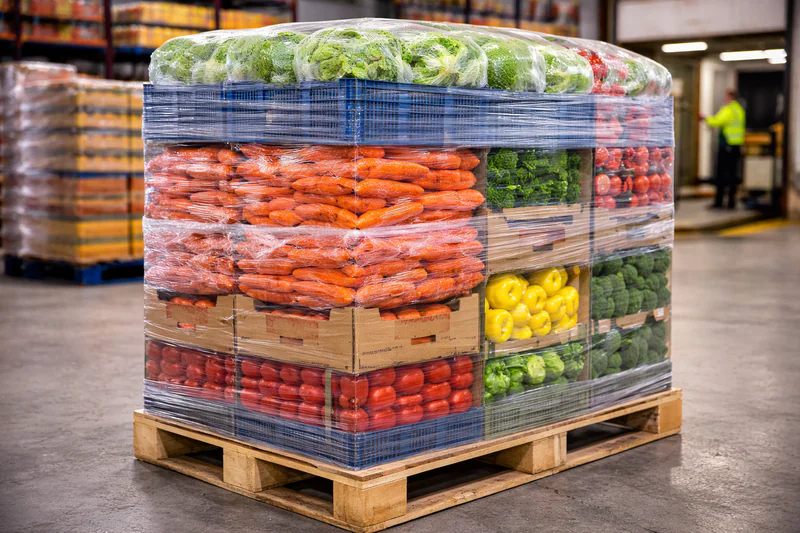
The Cross-Transfer Danger
Imagine a scenario: You have a truck carrying broccoli (which is iced) and lettuce.
If the lettuce is not properly pre-cooled, it acts as a heater. It radiates heat onto the broccoli. The ice on the broccoli melts faster. The water drips onto the lettuce. Now you have a warm, wet mess.
Standardization is Key:
Vacuum cooling acts as the "Equalizer."
Before consolidation, we run the lettuce through the cycle.
- Broccoli: 0°C
- Lettuce (Post-Vac): 1°C
- Spinach (Post-Vac): 1°C
Now, when you put these pallets side-by-side in the truck, they are in thermal equilibrium. They don’t exchange heat.
This is crucial for "Groupage" or LTL (Less Than Truckload) shipments, which are common for smaller growers or specialized distributors. It allows you to mix fragile leafy greens with denser vegetables without risking the quality of either.
Is Vacuum Cooling Adaptable to Different Packaging in the Chain?
The cold chain uses everything from plastic crates to cardboard cartons and wooden bins. Does the packaging type block the cooling process?
Vacuum cooling is largely independent of packaging type, provided there is some ventilation. Unlike forced air which struggles to penetrate plastic-wrapped pallets, vacuum cooling works by pressure change, effectively cooling product inside plastic bags, RPCs (Reusable Plastic Containers), or cardboard boxes simultaneously.
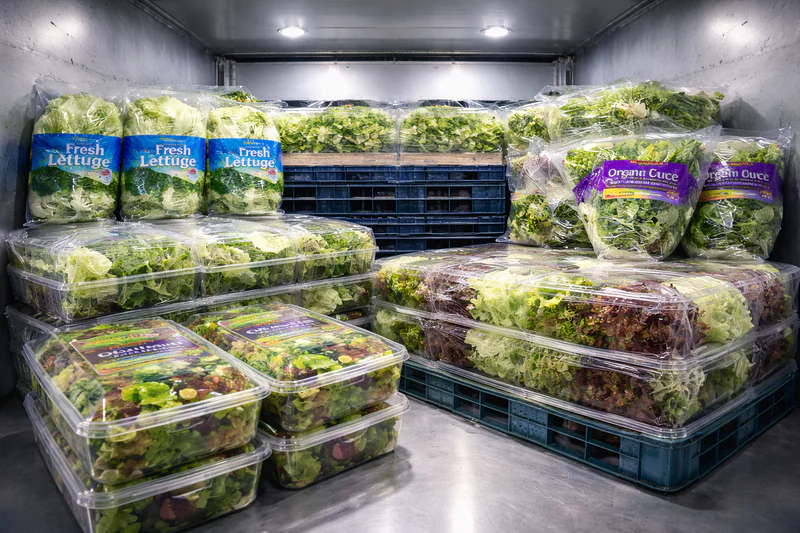
The "Vented" Requirement
My client Sophia runs a central kitchen in Singapore. She receives lettuce in plastic crates (RPCs) to reduce waste. Another client in Europe ships in cardboard boxes with plastic liners.
Forced air cooling hates plastic liners. The air hits the plastic and stops.
Vacuum cooling ignores the liner—mostly.
The Physics:
As long as the packaging is not hermetically sealed (airtight), the vacuum works.
- Cardboard: We cool right through the box walls.
- Plastic Liners: As long as there are micro-perforations or the bag is folded (not heat sealed), the vapor escapes.
- RPCs: These are the best. They offer zero resistance.
However, if you use a completely sealed bag (like a retail pillow pack) without vents, the bag will balloon and pop.
We work with packaging suppliers to ensure that the "vent ratio" is sufficient. Usually, a few 5mm holes or a micro-perforated film is all that is needed to allow the Allcold machine to do its job perfectly.
Conclusion
The "Field-to-Fork" journey is full of hazards for a delicate vegetable like lettuce. Heat, time, and handling are always conspiring to degrade quality. Vacuum cooling is the only technology that effectively pauses time. By integrating an Allcold Vacuum Cooler into your packing line, you aren’t just cooling a vegetable; you are securing the entire cold chain. You are ensuring that the hard work of the farmer is respected and that the expectation of the consumer is met. In the modern food supply chain, it is the invisible link that holds everything together.
-
Understanding Respiration in plants can help optimize farming practices and improve crop resilience under stress. ↩
-
Exploring Water Loss in plants can provide insights into effective irrigation strategies and stress management. ↩
-
Learn about forced-air cooling tunnels and their impact on food preservation and logistics. ↩
-
Explore this link to understand how vacuum coolers enhance efficiency and product quality in food processing. ↩
-
Understanding Thermal Inertia can help you optimize refrigerated transport and maintain produce quality. ↩
-
Explore vacuum cooling techniques to enhance your knowledge on preserving freshness during transport. ↩
-
Understanding Pink Rib is crucial for consumers and retailers to ensure quality lettuce and reduce waste. ↩
-
Exploring Vacuum Cooled technology can reveal how it enhances freshness and reduces waste, benefiting both consumers and retailers. ↩

Mila
You May Also Like
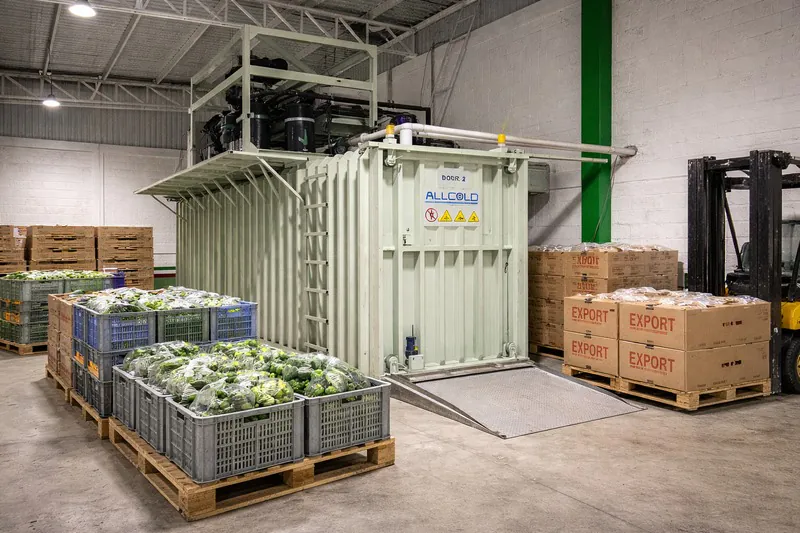
Buying a Vacuum Cooler for Fresh Produce Export? Avoid These Costly Procurement Mistakes
Buying a vacuum cooler for fresh produce export is not simply a machine purchase. It is a project decision that
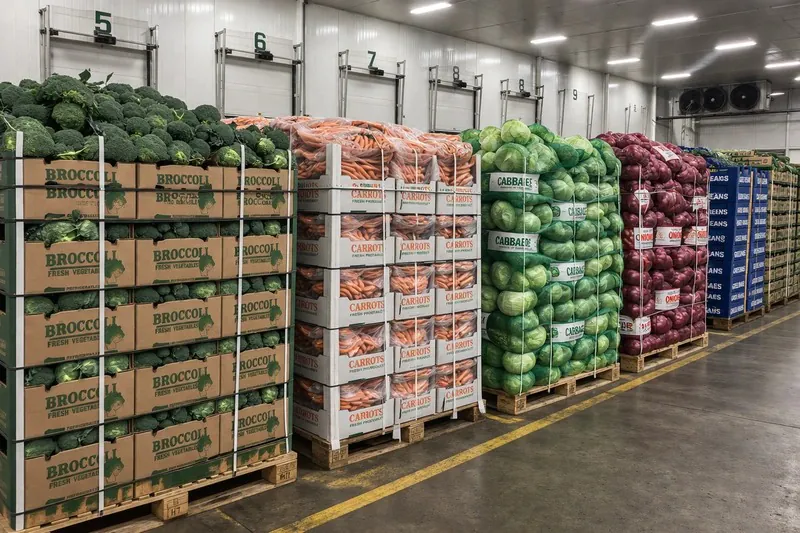
How Much Produce Shrink Can Better Pre-Cooling Prevent in Export Projects?
Produce shrink in export projects is not simply a freshness problem. It is a commercial problem that compounds across every
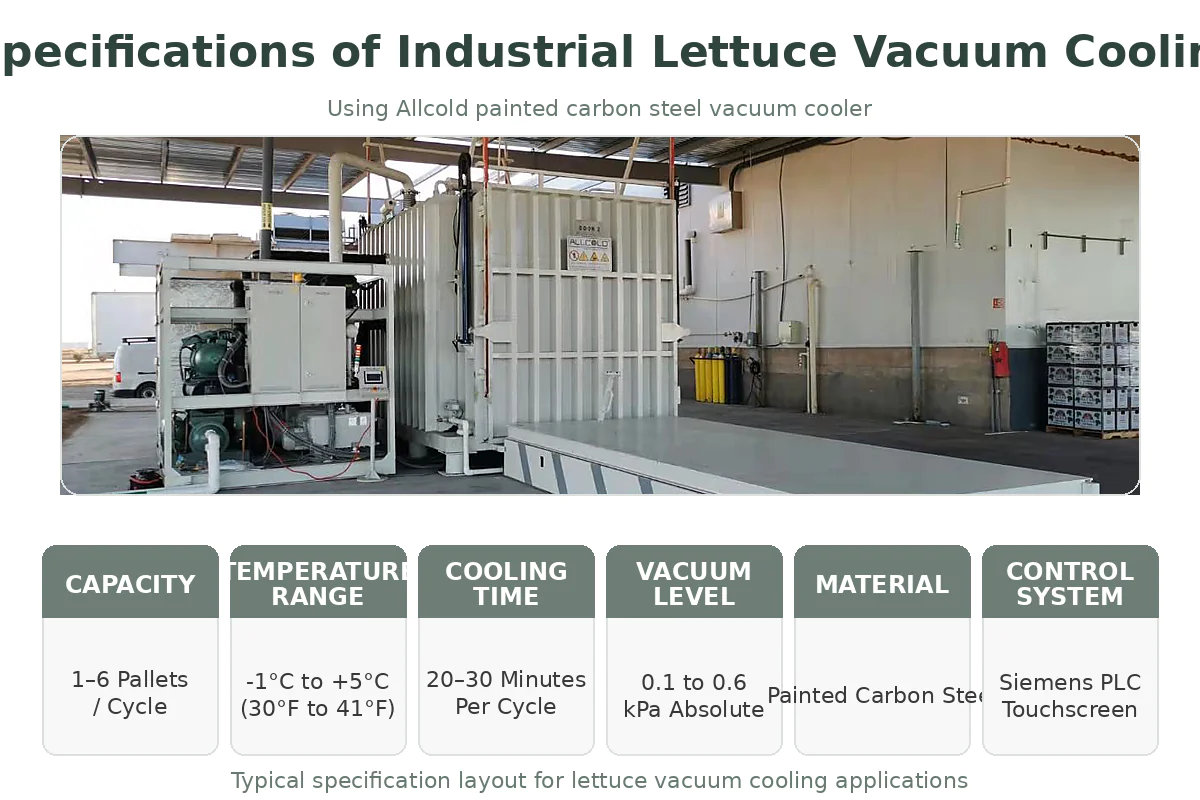
Technical Specifications of Industrial Lettuce Vacuum Cooling Systems?
Buyers often look at a quote and only see the price. They ignore the technical specifications. This is a mistake.
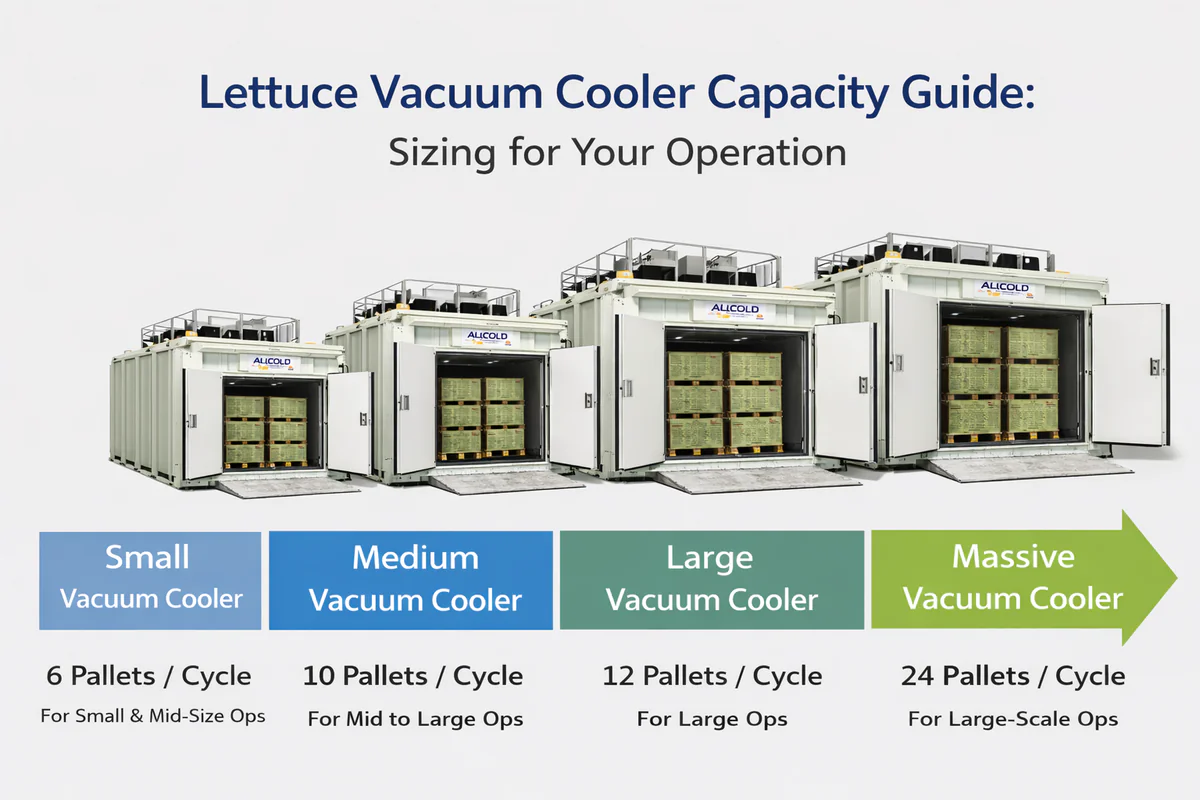
Lettuce Vacuum Cooler Capacity Guide: Sizing for Your Operation?
Investing in a vacuum cooler is a significant decision, but choosing the wrong size can be an even more expensive
Vacuum Cooling Organic Lettuce: Best Practices for Premium Quality?
Organic lettuce is a promise to the consumer: no chemicals, no shortcuts, just nature. But without the safety net of
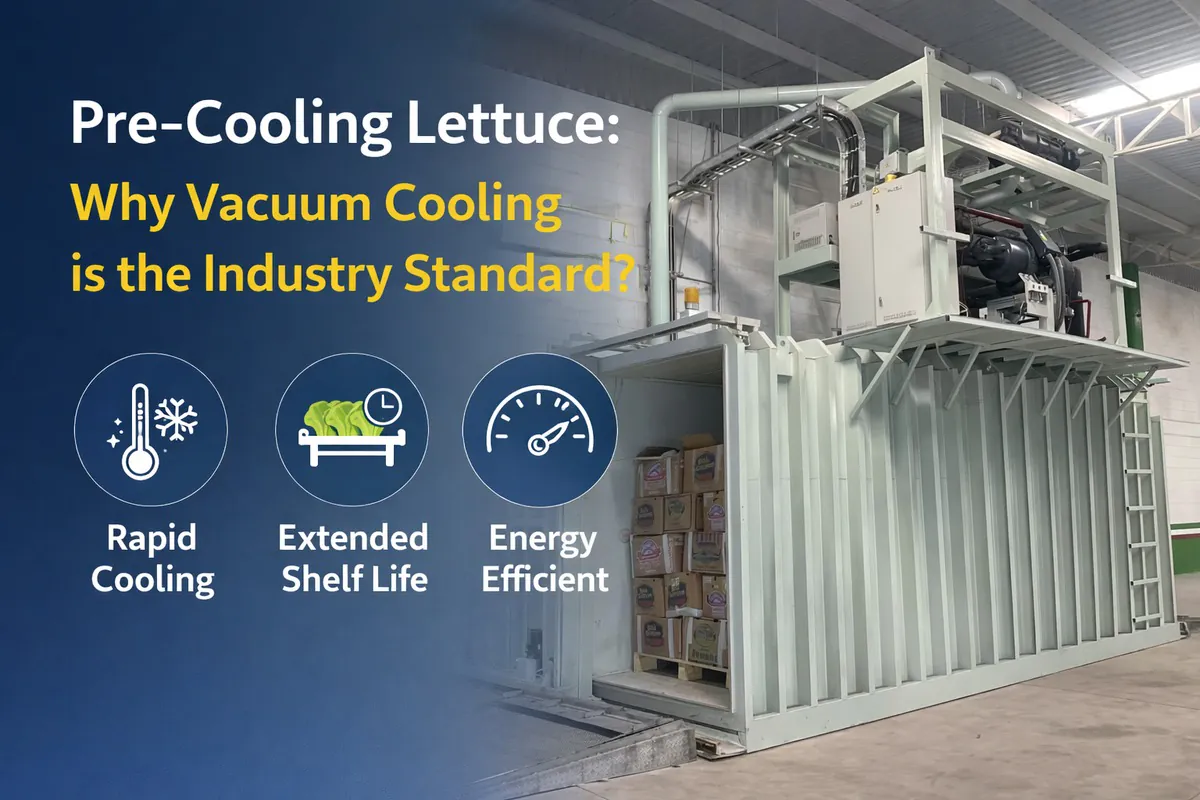
Pre-Cooling Lettuce: Why Vacuum Cooling is the Industry Standard?
In the fresh produce industry, the clock starts ticking the moment a knife cuts a stem. For lettuce, heat is
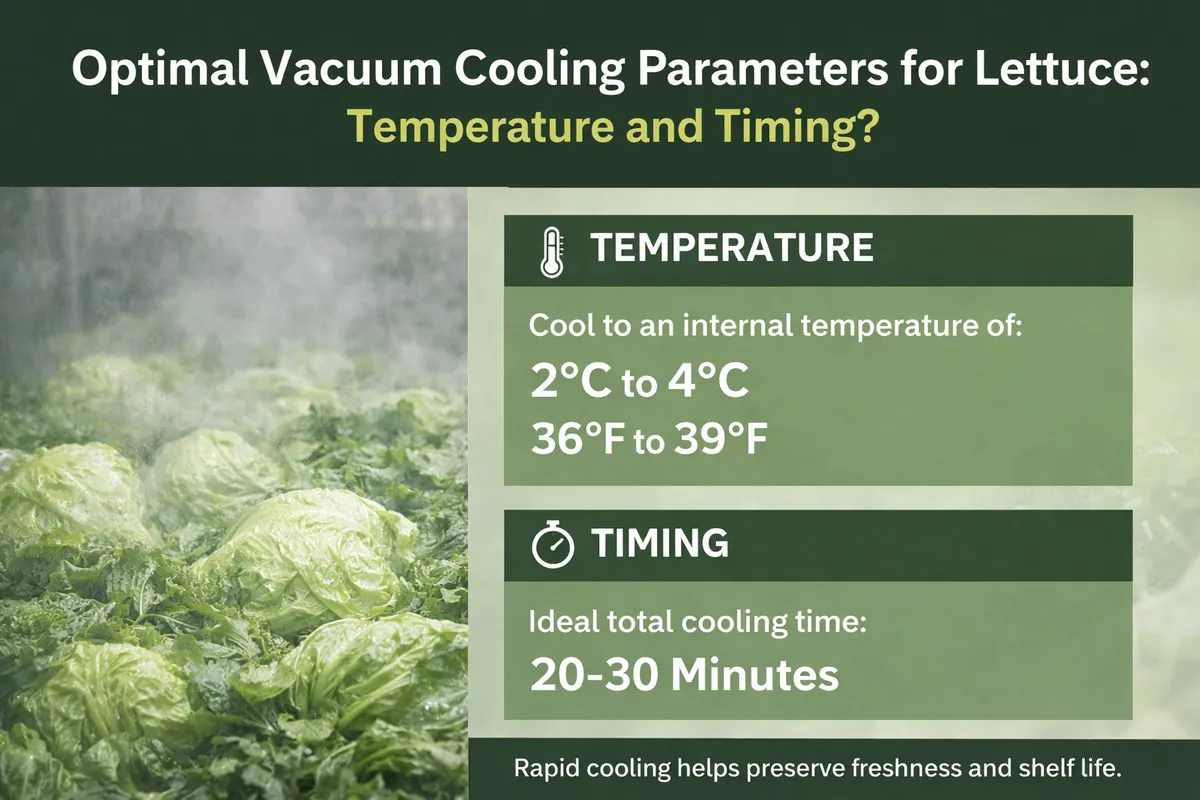
Optimal Vacuum Cooling Parameters for Lettuce: Temperature and Timing?
In the world of post-harvest preservation, precision is the difference between a crisp, profitable shipment and a slimy, rejected claim.
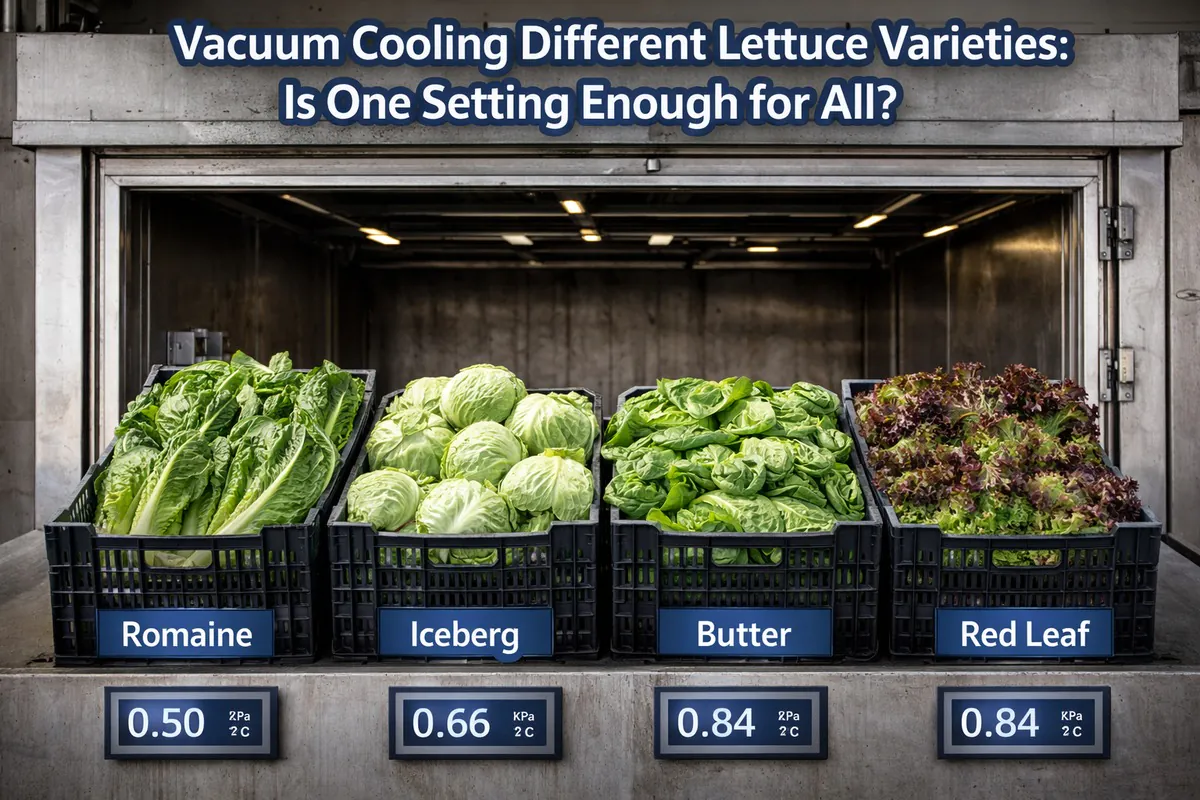
Vacuum Cooling Different Lettuce Varieties: Is One Setting Enough for All?
Not all lettuce is created equal. A dense head of Iceberg is a fortress of water, while delicate Baby Spinach
Benefits of Vacuum Cooling for Lettuce Quality and Shelf Life?
Lettuce is 95% water, wrapped in cdsfvxgba fragile green skin. Once harvested, it is fighting a losing battle against heat
The Complete Guide to Vacuum Cooling Technology for Lettuce Production?
Lettuce is a race against nature. From the moment the stem is cut in the field, respiration heat begins to