
Buying a Vacuum Cooler for Fresh Produce Export? Avoid These Costly Procurement Mistakes
Buying a vacuum cooler for fresh produce export is not simply a machine purchase. It is a project decision that shapes cooling discipline, pallet flow, loading windows, shelf-life performance, labor rhythm, and after-sales risk across the full export season. In most cases, buyers who encounter problems did not choose a fundamentally wrong product. They compared offers the wrong way—by headline price, chamber size, or quoted pallet count—while leaving the questions that actually matter unasked until after the order was placed.
This article covers the most common and costly procurement mistakes we see from a factory-side perspective. The goal is not to make the decision feel complicated. The goal is to help serious export buyers compare offers correctly before cost, schedule, and operating risk become locked in.
Why Procurement Mistakes Hurt More in Fresh Produce Export Projects
Fresh produce export operations run under tighter timing pressure than most domestic cooling applications. Product temperature, truck departure windows, destination shelf-life expectations, carton integrity, and loading rhythm are all connected. When a procurement decision is wrong, the problem does not stay inside the equipment room—it works its way into the entire first-mile cold chain.
That is why vacuum cooler sourcing in an export context should be treated as a throughput and project-fit decision, not just an equipment purchase. A cheaper quotation can still produce a higher total project cost if the machine slows loading, fails to match the packaging format, causes commissioning delays, or leaves the operation exposed when peak-season pressure is highest. From our experience, the machine does not earn its value by appearing in the quotation—it earns its value by protecting shipment rhythm under real operating pressure. That framing is consistent with broader postharvest handling guidance from the FAO on prevention of post-harvest food losses, which emphasizes that poor early-chain decisions multiply downstream quality and market losses quickly.
Mistake 1: Comparing Quotations by Price Instead of Real Export Throughput
This is the most common mistake and usually the most expensive. Buyers see two quotations with similar chamber size or pallet count and assume they are commercially comparable. In practice, they often are not.
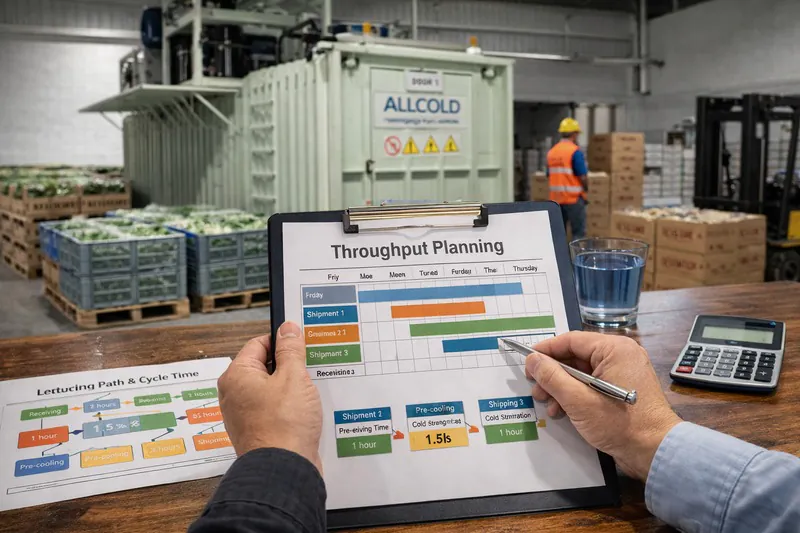
Real export throughput depends on more than what physically fits inside the chamber. It depends on pull-down time, loading and unloading discipline, packaging permeability, operator handling time, and how consistently the cooling cycle repeats during busy dispatch hours. A quotation that looks cheaper on paper may still reduce total line efficiency if one cycle takes longer, or if pallet movement around the machine cannot keep pace with the export window. Buyers compare static capacity. Operations run on dynamic capacity. A machine can look large enough on a spec sheet and still create a bottleneck if the cycle rhythm does not match the actual dispatch schedule.
| Quotation item | What many buyers compare | What should actually be checked |
|---|---|---|
| Chamber size | How many pallets fit physically | How many pallets can be cooled reliably per hour under export pressure |
| Cooling time | Best-case cycle figure | Repeatable cycle time including loading and unloading losses |
| Quoted capacity | Average daily output number | Peak-hour output during the busiest shipping window |
| Price | Machine purchase cost | Total operating impact on labor, delays, claims, and shipment flow |
Serious buyers should ask suppliers to explain not only chamber size, but the expected hourly cycle rhythm under their actual crop, carton format, and pallet conditions. That is a far more useful comparison basis than machine price alone. For buyers reviewing refrigeration load expectations at a system level, the ASHRAE Refrigeration Handbook remains a reliable technical reference.
Mistake 2: Ignoring Product Type, Packaging Format, and Load Configuration
Many buyers describe their application too broadly: leafy vegetables, export produce, fresh greens. That is not enough. Product category matters, but packaging behavior matters just as much—and sometimes more. Vent hole design, liner use, carton density, crate structure, pallet wrap, and stack pattern all affect how a load behaves inside a vacuum cooling cycle.
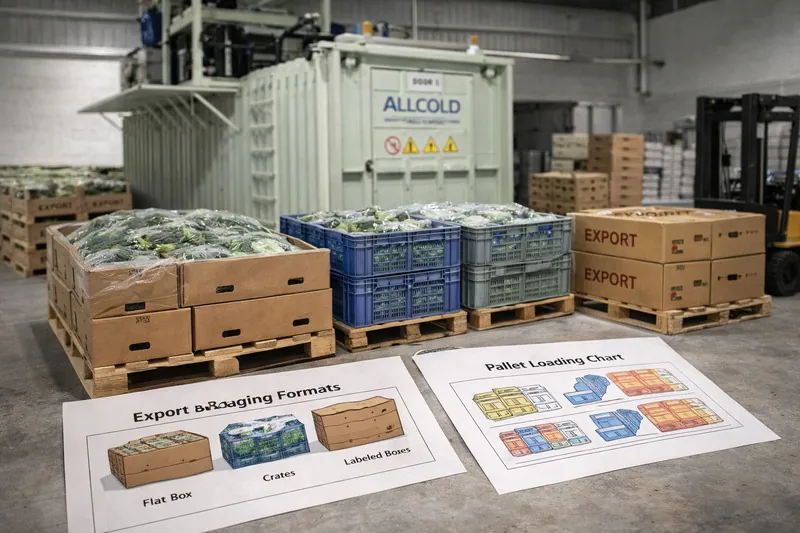
Two export projects can both describe themselves as handling “leafy vegetables for export” and still require completely different engineering judgment. One may run standardized ventilated cartons on uniform pallets. Another may run mixed carton sizes, variable stack heights, or denser loads that restrict moisture release and reduce cooling consistency. If the quotation is built around the wrong load assumption, the machine can underperform even when the equipment itself is technically sound. Packaging is not a secondary detail to be confirmed after machine selection. In produce export, packaging format is part of machine selection—and buyers who treat it otherwise are setting up a mismatch that will show up during commissioning or in the first busy harvest week. This is consistent with commodity-specific postharvest guidance from the UC Davis Postharvest Produce Facts, which shows clearly how handling method, packaging conditions, and storage requirements must be evaluated together.
Mistake 3: Buying for Average Daily Output Instead of Peak Export Pressure
Average daily volume is one of the least useful numbers in final procurement comparison. Export operations do not usually fail on average days. They fail during compressed, high-pressure days: peak harvest weeks, hot-weather dispatch periods, or short loading windows before truck cut-off.
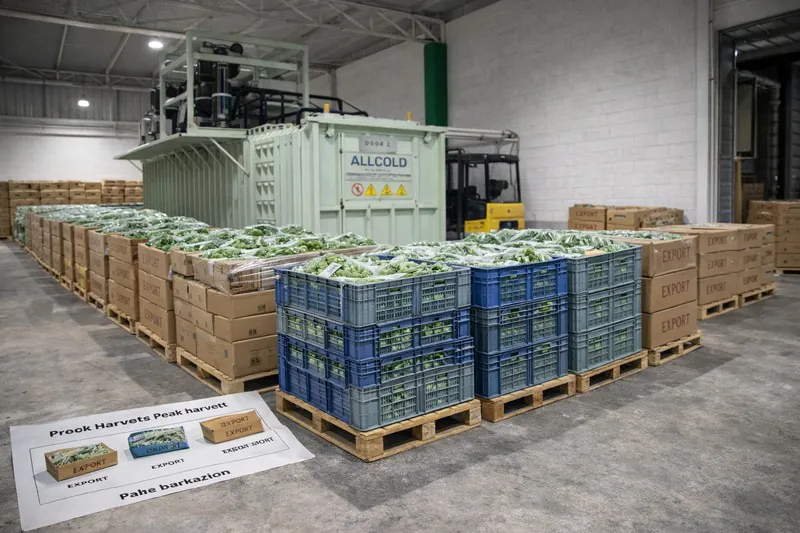
The better procurement question is not “How much do we handle per day?” It is “What happens during our hardest hour?” If product arrives in harvest bursts, if several pallets must be processed before dispatch cut-off, or if labor loading is uneven across the shift, the machine must be evaluated against the peak pattern—not the daily average. We often see buyers underestimate this gap. A machine chosen around average daily output can look commercially reasonable and still create queues, rushed loading, inconsistent cooling discipline, and preventable shelf-life loss during the exact moments when the operation needs the most stability.
Mistake 4: Focusing on Chamber Size While Overlooking Full Process Flow
Some buyers spend considerable time comparing internal chamber dimensions, but too little time mapping the actual pallet path before and after cooling. A vacuum cooler does not operate as a standalone box. It sits inside a handling system that includes staging lanes, forklift movement paths, waiting space, door orientation, pallet transfer coordination, and cold-room handoff timing.
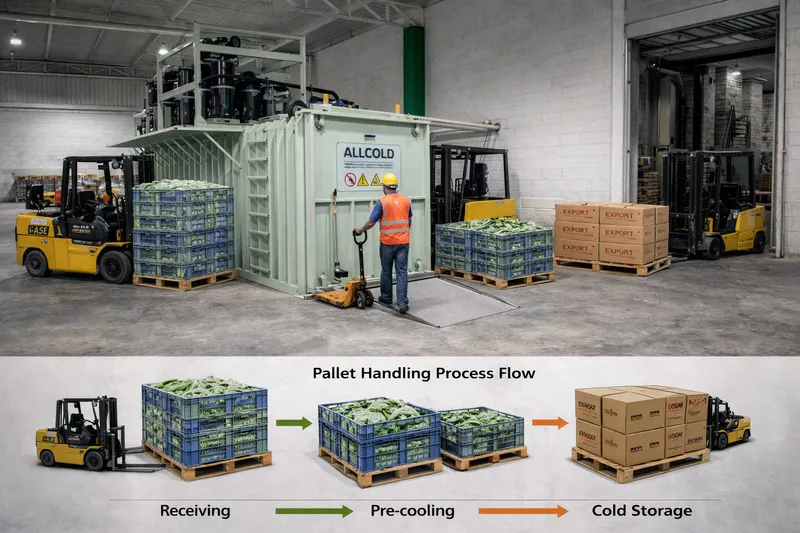
If the surrounding process is poorly organized, a correctly sized machine can still underperform at the project level. The staging lane may be too short. The forklift turn path may be awkward for the site layout. Cooled pallets may wait too long before transfer. Product may queue in the wrong location and lose temperature benefit before reaching cold storage. None of these problems will be visible if the buyer is only comparing machine dimensions on a PDF quotation. Process fit should be treated as a procurement issue, not left for operations to solve after delivery.
Mistake 5: Overlooking Site Utilities, Installation Conditions, and Power Compatibility
A quotation can look attractive and still become a difficult project if the site is not ready. Buyers should verify voltage, phase, frequency, drainage, ventilation, service clearance, access for delivery and installation, and overall equipment footprint before placing the order. These are not minor technical footnotes—they determine whether the project starts cleanly or gets delayed by last-minute rework.
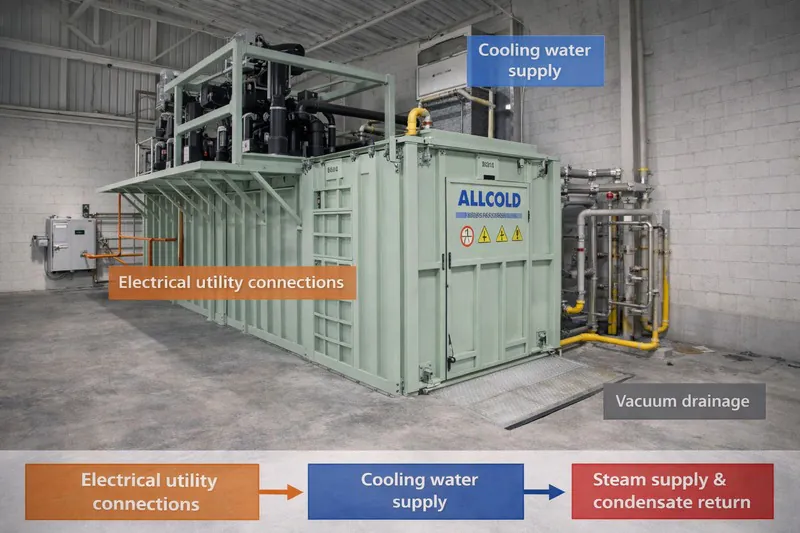
This is especially relevant for overseas or multi-market export projects, where site conditions are not standardized. One of the most expensive buyer assumptions is believing that a “standard configuration” from one region will automatically fit another. In practice, utility mismatches, space constraints, or local installation conditions are frequently where time and budget start leaking before the machine even arrives. The right procurement question is not simply whether the machine can run. It is whether it can be installed, commissioned, and supported at the actual site without hidden compromises. For buyers reviewing installation and refrigeration system requirements in more technical terms, cold-chain engineering material derived from ASHRAE refrigeration design practice provides useful reference points.
Mistake 6: Failing to Evaluate Service Access, Spare Parts, and Remote Support
Export buyers often focus heavily on lead time and final price, but give too little weight to after-sales response. In a time-sensitive export operation, that is a real risk. A vacuum cooler that goes down during peak harvest or dispatch season is not a maintenance event—it is a logistics crisis.
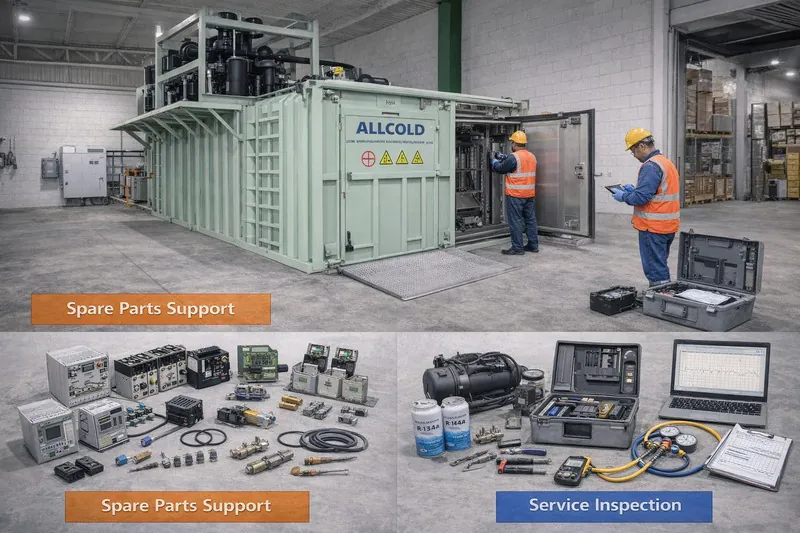
The practical procurement question is not whether service exists in theory. It is whether support is structured in a way that actually protects the buyer under operating pressure. Before finalizing an order, buyers should clarify: the recommended spare parts package, the troubleshooting and escalation path, commissioning support scope, remote communication method, and expected response time when a problem occurs. In our view, many buyers unintentionally purchase a machine while failing to purchase operating resilience. That distinction matters because postharvest cooling systems are judged by continuity as much as by performance—a principle also reflected in FAO guidance on fresh produce handling (FAO combined methods guidance).
Mistake 7: Assuming Similar Quotations Mean Similar Delivery Scope and Project Support
This is one of the most underestimated procurement mistakes. Two quotations can look closely matched in price and machine format, yet differ sharply in what is actually included in the delivery scope. One supplier may include layout guidance, engineering drawings, startup support, commissioning boundaries, and a clear documentation package. Another may include none of those items. On paper, both offers can still appear “similar.”
Buyers should explicitly verify what the quoted scope includes: electrical schematics, mechanical drawings, commissioning responsibilities, operator training, documentation package, spare parts list, and communication accountability during installation. These items often determine whether the project starts cleanly or depends on urgent post-order clarification under time pressure. This is where experienced buyers separate machine price from actual project value. A slightly higher quotation with clear scope boundaries can reduce far more risk than a cheaper offer that leaves delivery responsibilities undefined. Once the order is placed and the schedule is locked, the cost of resolving scope gaps shifts entirely to the buyer.
Conclusion
Procurement mistakes in fresh produce export cooling are rarely dramatic—they are small assumptions left unchallenged during quotation review. Map the actual project conditions first: peak-hour pressure, packaging reality, site readiness, process flow, and service requirements. Then compare suppliers against those conditions, not against each other in isolation.
Useful References

Mila
You May Also Like
How Much Produce Shrink Can Better Pre-Cooling Prevent in Export Projects?
Produce shrink in export projects is not simply a freshness problem. It is a commercial problem that compounds across every
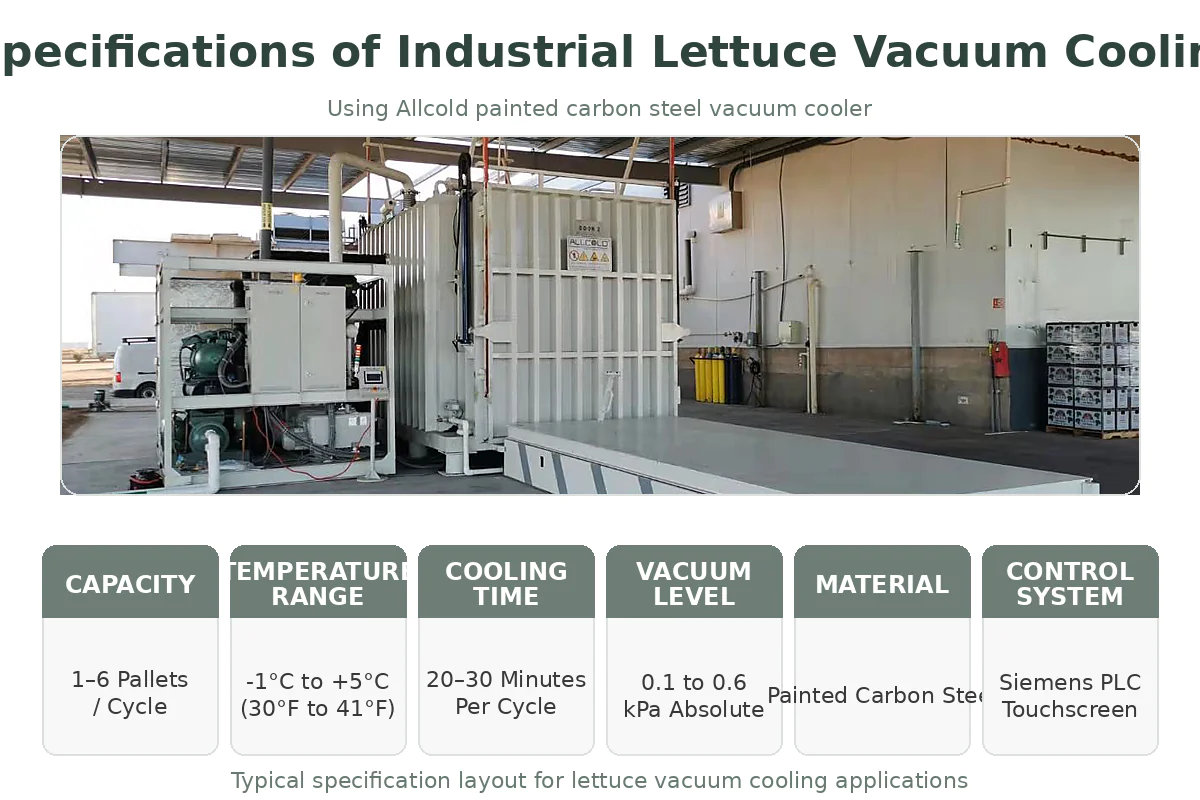
Technical Specifications of Industrial Lettuce Vacuum Cooling Systems?
Buyers often look at a quote and only see the price. They ignore the technical specifications. This is a mistake.
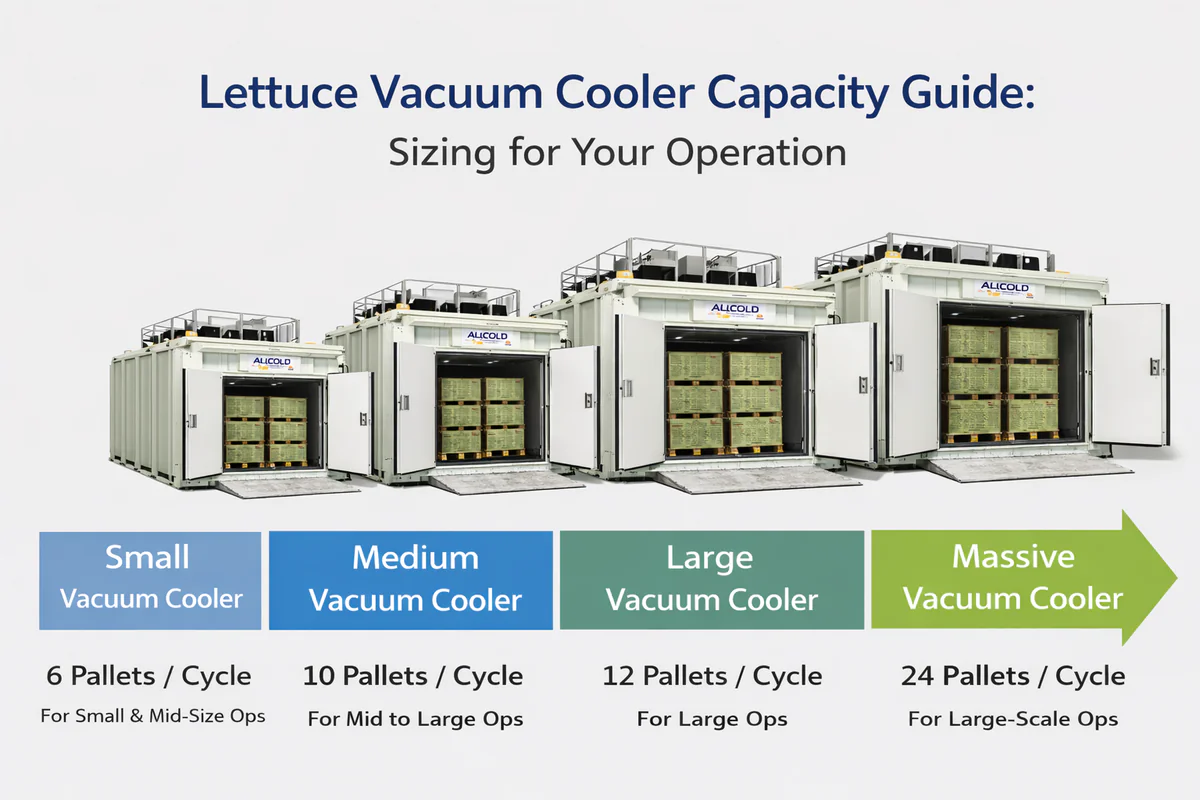
Lettuce Vacuum Cooler Capacity Guide: Sizing for Your Operation?
Investing in a vacuum cooler is a significant decision, but choosing the wrong size can be an even more expensive
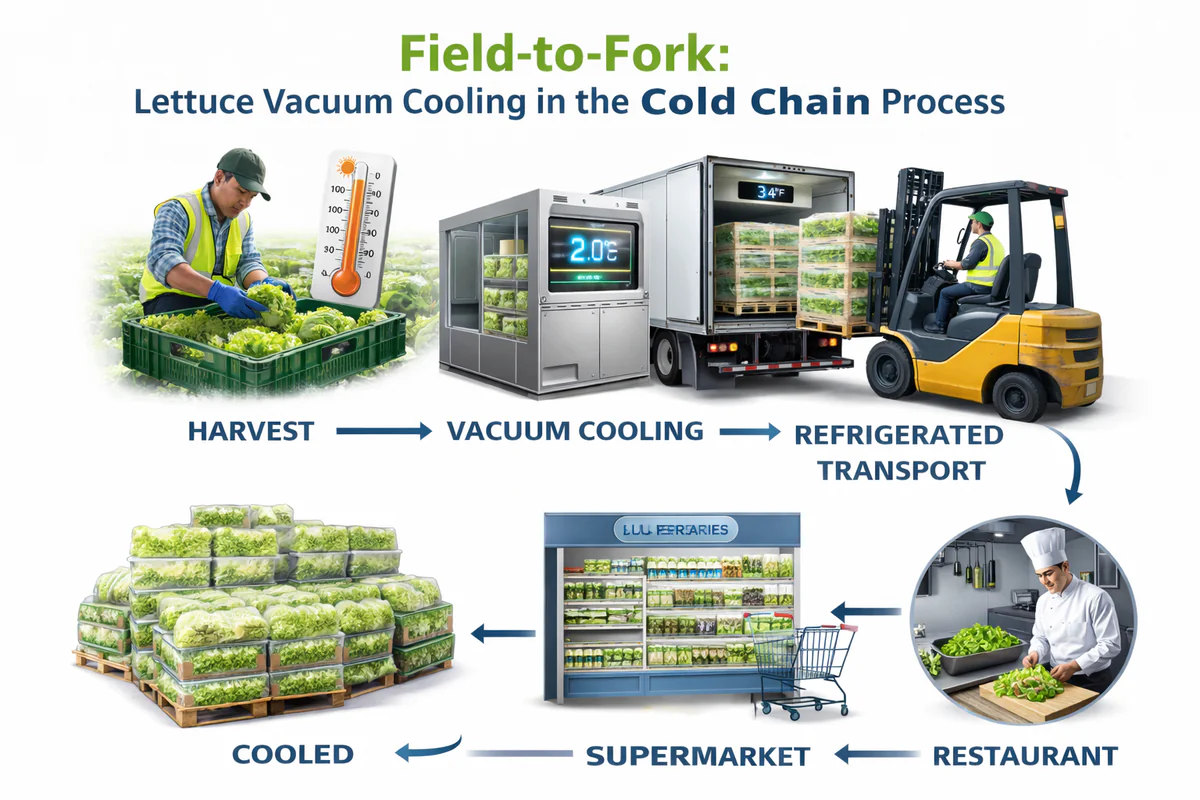
Field-to-Fork: Lettuce Vacuum Cooling in the Cold Chain Process?
We often talk about "freshness" as if it were magic, but in the lettuce business, freshness is purely a matter
Vacuum Cooling Organic Lettuce: Best Practices for Premium Quality?
Organic lettuce is a promise to the consumer: no chemicals, no shortcuts, just nature. But without the safety net of
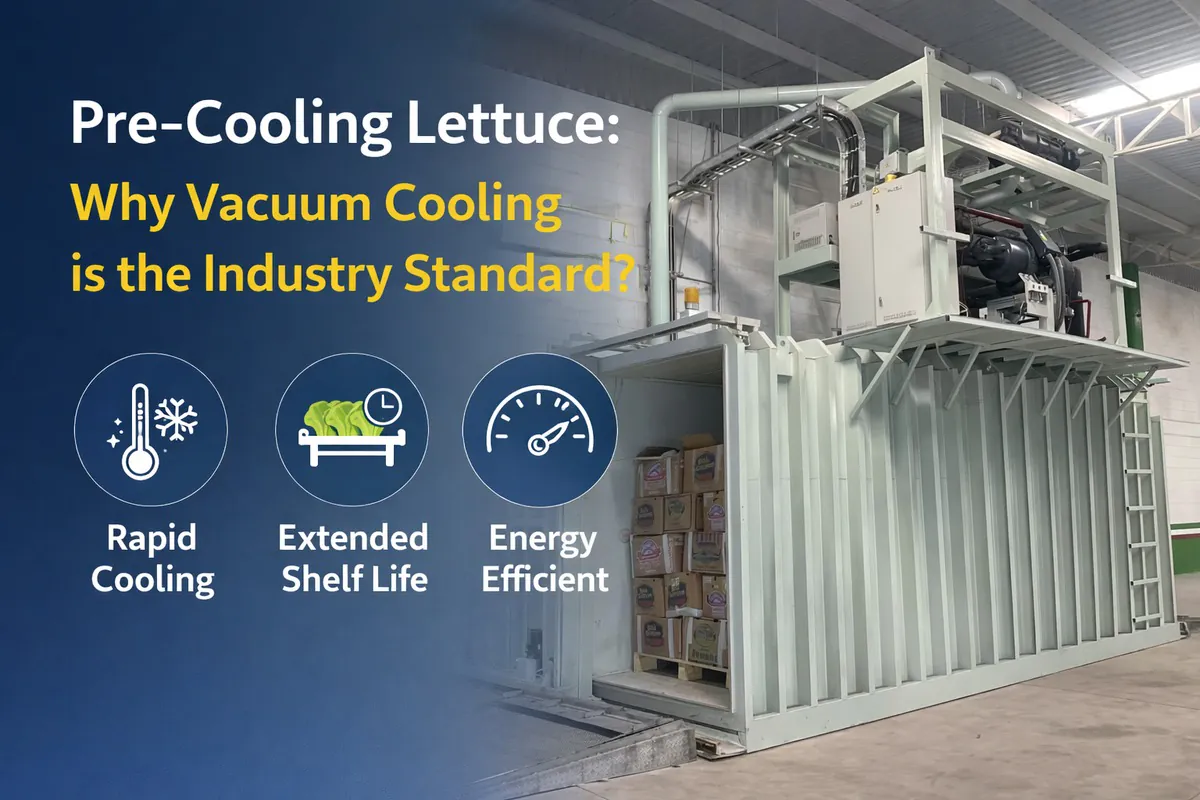
Pre-Cooling Lettuce: Why Vacuum Cooling is the Industry Standard?
In the fresh produce industry, the clock starts ticking the moment a knife cuts a stem. For lettuce, heat is
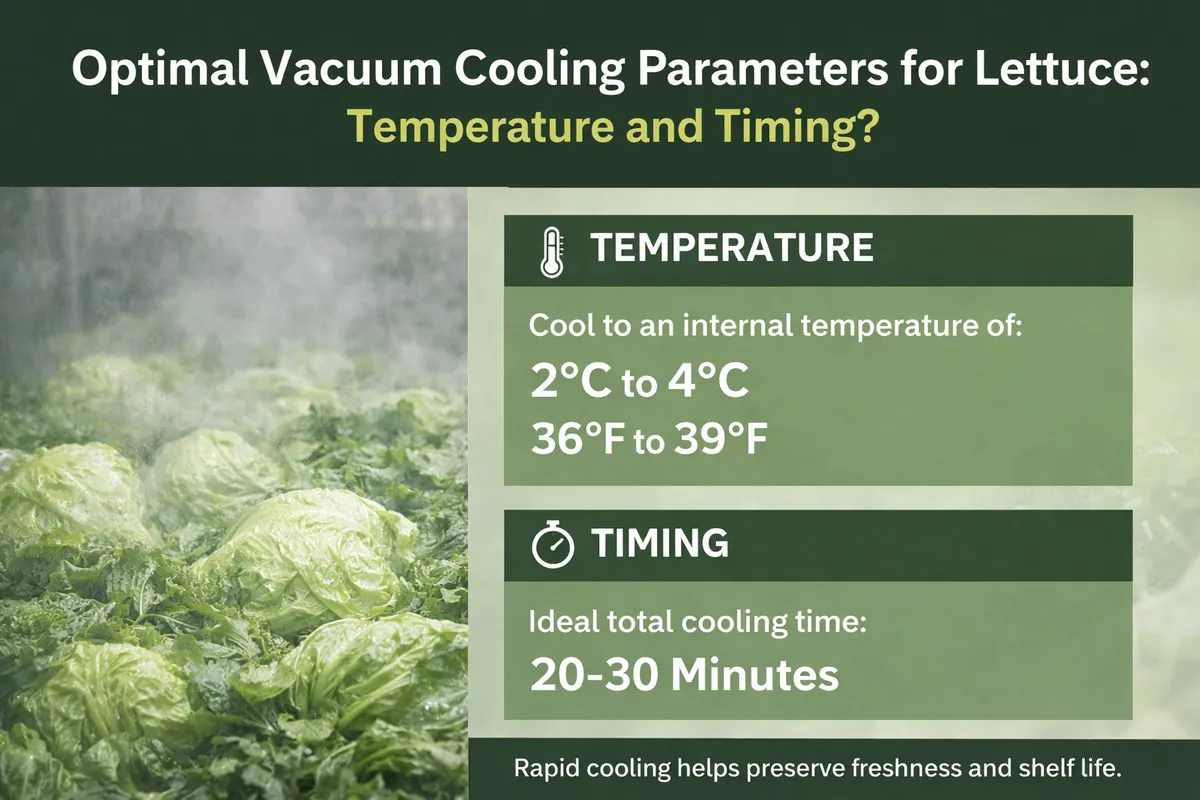
Optimal Vacuum Cooling Parameters for Lettuce: Temperature and Timing?
In the world of post-harvest preservation, precision is the difference between a crisp, profitable shipment and a slimy, rejected claim.
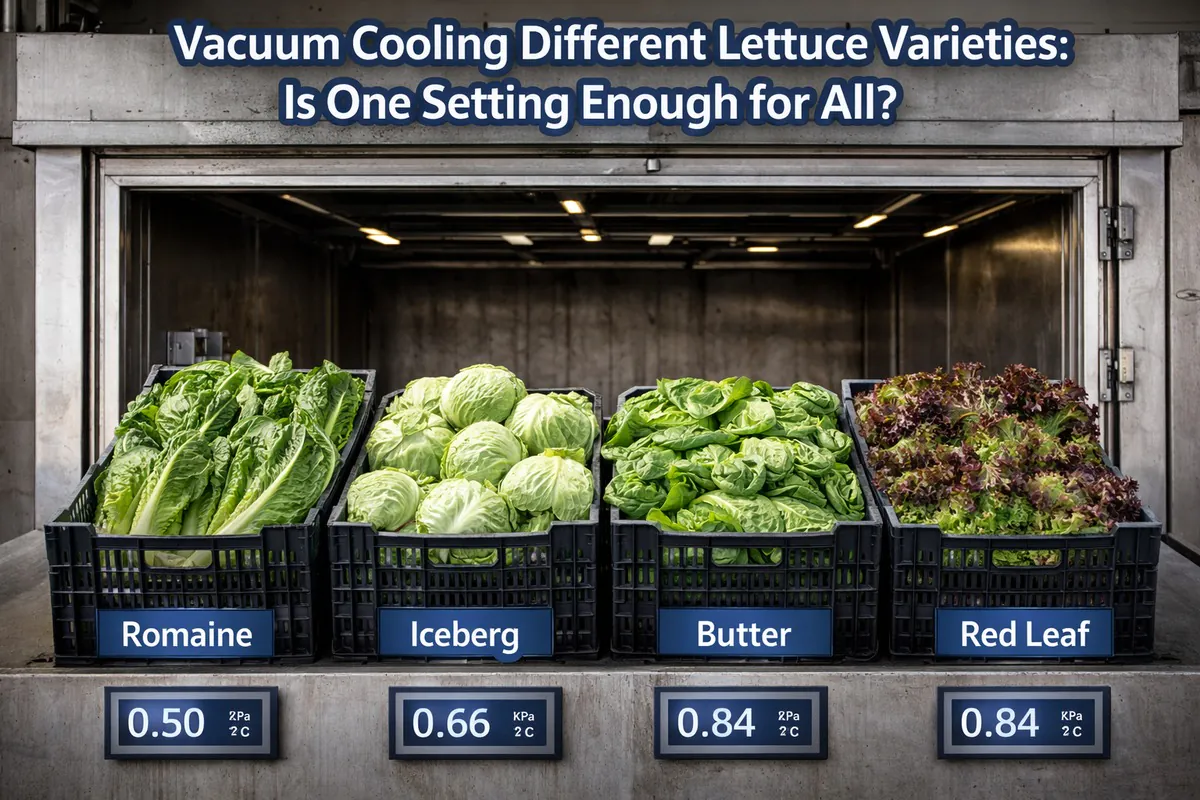
Vacuum Cooling Different Lettuce Varieties: Is One Setting Enough for All?
Not all lettuce is created equal. A dense head of Iceberg is a fortress of water, while delicate Baby Spinach
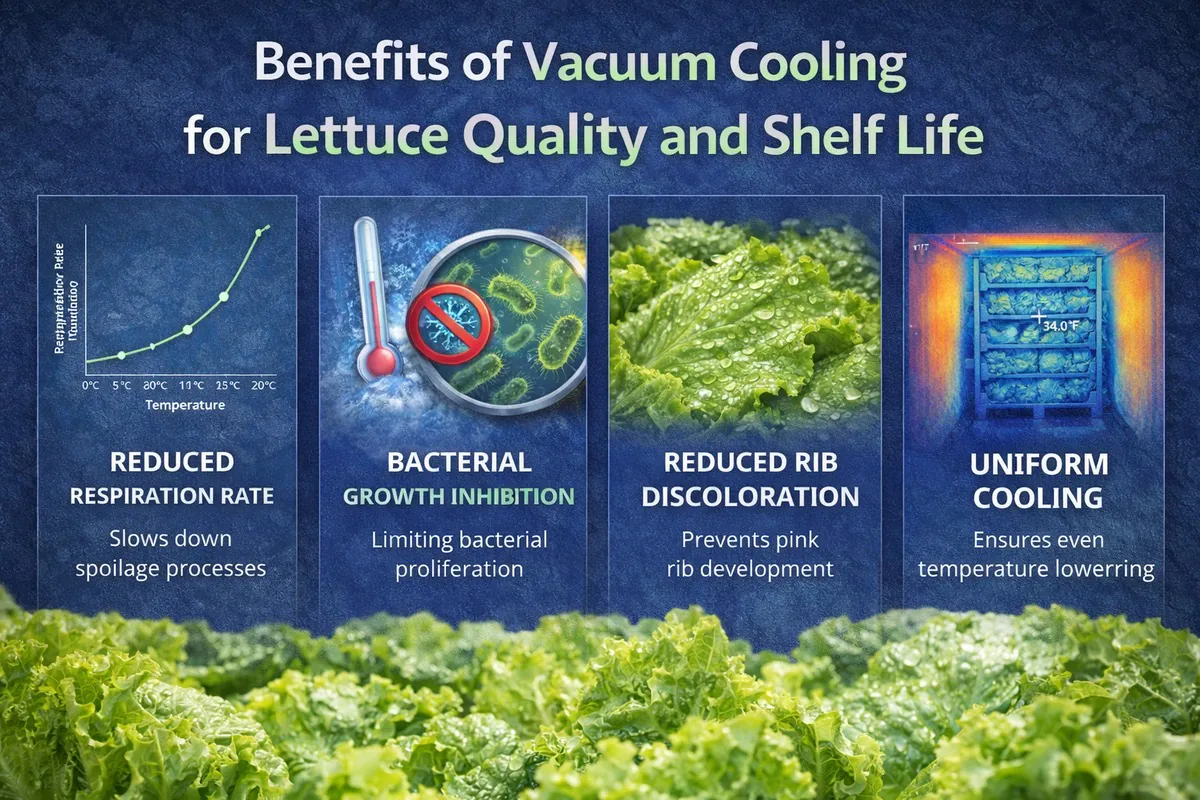
Benefits of Vacuum Cooling for Lettuce Quality and Shelf Life?
Lettuce is 95% water, wrapped in cdsfvxgba fragile green skin. Once harvested, it is fighting a losing battle against heat

The Complete Guide to Vacuum Cooling Technology for Lettuce Production?
Lettuce is a race against nature. From the moment the stem is cut in the field, respiration heat begins to