
How Much Does a Bakery Vacuum Cooler Really Cost?
You’ve seen what vacuum cooling can do for a bakery—longer shelf life, better texture, incredible efficiency. But there’s a big question looming: what is the price? The cost seems like a closely guarded secret, making it hard to budget or even know if it’s a realistic option for you.
You search online and find a confusing mix of information. Some suppliers list vague prices, while others won’t tell you anything without a formal quote. You are stuck, afraid of investing too little in a machine that will fail, or overpaying for features you do not need.
The price of a bakery vacuum cooler typically ranges from $20,000 for a small, entry-level model to over $150,000 for a large, fully automated industrial system. The final cost depends on three main factors: cooling capacity, the quality of key components, and the level of customization.
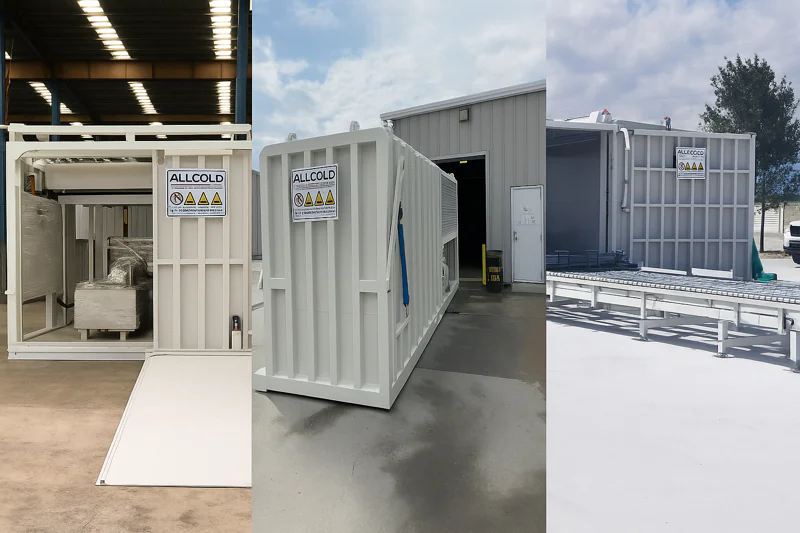
This price range can seem wide, but it reflects the different scales of baking operations. A small craft bakery has very different needs than an industrial plant supplying a national supermarket chain. As a manufacturer, I believe in being transparent about what determines these prices. My goal is to help you understand what you are paying for, so you can choose the right machine for your business and your budget.
What Determines the Price of a Budget-Friendly Vacuum Cooler?
You are running a small to medium-sized bakery. You want the benefits of vacuum cooling, but you have a limited budget. You look at the high-end machines and worry that the technology is out of your reach. You need a starting point.
The good news is that you don’t need to spend a fortune to get started. There are budget-friendly options designed specifically for smaller operations. But you are cautious. You need to know if "budget-friendly" means low quality or if it is a smart, focused investment.
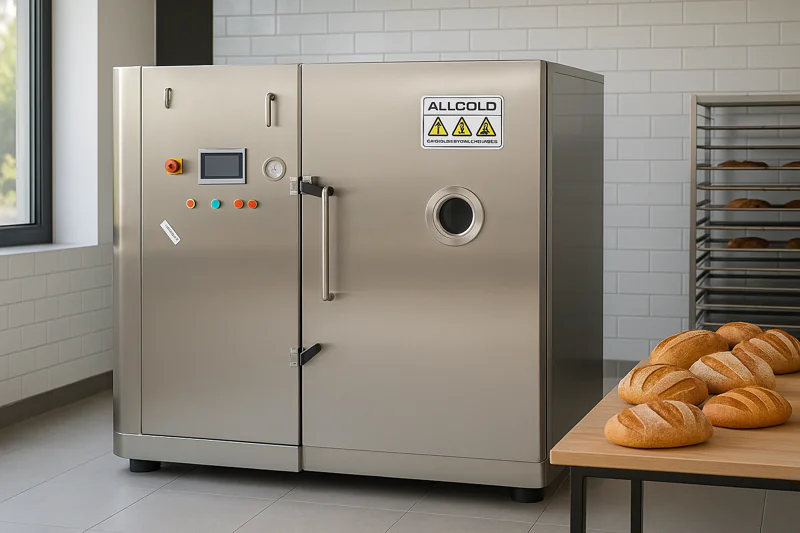
A budget-friendly bakery vacuum cooler, typically priced between $20,000 and $40,000, is defined by its smaller capacity (50-100kg per cycle). The price is kept accessible by using standard-duty components and a more basic control system, perfect for a single-trolley operation.
What You Get in an Entry-Level Machine
This price point is not about cutting corners on quality; it’s about matching the machine’s scale to the user’s needs. We build these machines to be reliable workhorses for bakeries that are taking their first step into this technology. A central kitchen manager like Sophia might even consider a small unit like this for research and development (R&D) purposes before committing to a larger system.
Here’s a breakdown of what defines a budget-friendly model:
- Cooling Capacity1: This is the single biggest factor. An entry-level machine is designed to cool one standard bakery trolley at a time, holding roughly 50kg to 100kg of product. This is ideal for a business that produces in batches rather than in a continuous flow. The cycle time is still incredibly fast—usually around 3-6 minutes to cool bread from 95°C to 30°C.
- Core Components2: To manage costs, these machines may use high-quality pumps and compressors from excellent Chinese brands instead of the premium German brands found in top-tier models. As a manufacturer, we ensure these components are robust and reliable. We never compromise on critical electrical parts, using brands like Schneider Electric even in our most basic models to guarantee safety and stability.
- Control System3: You will get a reliable and easy-to-use PLC (Programmable Logic Controller) with a touch screen. It will come with pre-set cooling "recipes" for different products like bread, cakes, and croissants. It provides all the control you need for excellent results but may not have the advanced data logging or remote access features of more expensive systems.
| Feature | Entry-Level / Budget Specification | Who is it for? |
|---|---|---|
| Price Range4 | $20,000 – $40,000 | Small bakeries, new businesses, R&D labs. |
| Capacity/Cycle | 50kg – 100kg (One standard trolley) | Batch production, single-store operations. |
| Vacuum Pump | High-quality, reliable Chinese brand | Users focused on core function over brand name. |
| Control System | Standard PLC with pre-set recipes | Operations that don’t require complex data tracking. |
| Construction | Painted steel frame with stainless steel chamber interior | Standard industrial environments. |
This machine is a fantastic investment. It brings immediate benefits in efficiency and product quality, delivering a rapid return on investment by eliminating the need for large cooling racks and extending shelf life.
What Features Justify a Mid-Range Machine’s Price?
Your bakery is successful and growing. You are supplying several stores or have a contract with a regional food service provider. Your entry-level cooler, or your old rack-and-fan system, is now the bottleneck in your production. You need more capacity and more control.
You see the price jump for a mid-range machine and you need to understand the value. Is the extra cost just for a bigger box, or are you getting tangible improvements in performance, reliability, and efficiency that will support your growing business for years to come?
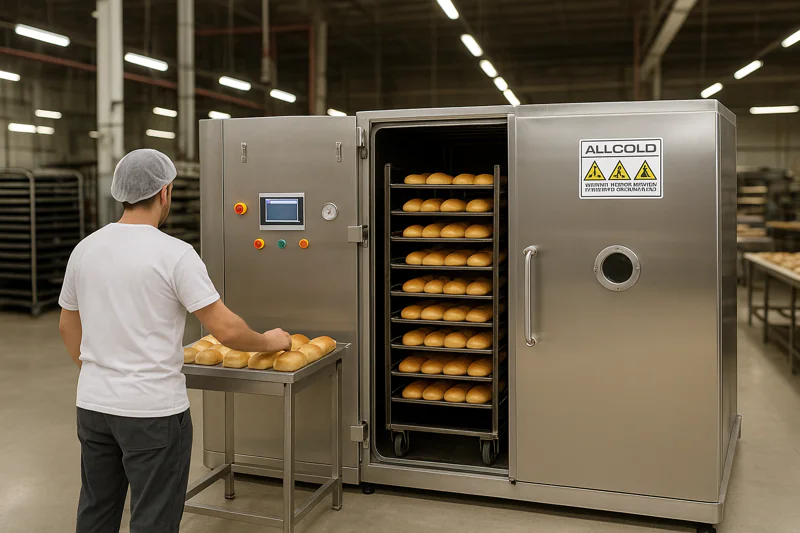
A mid-range bakery vacuum cooler, priced from $40,000 to $80,000, offers double the capacity (200kg+), premium European components for higher efficiency and longevity, and a more advanced control system. This price reflects an investment in higher throughput and lower long-term operating costs.
The Leap to Industrial Performance
This is the category where most serious industrial bakeries and central kitchens find their sweet spot. A procurement manager like Sophia would see this as the standard for a reliable production line. The extra investment buys you three critical upgrades:
- Higher Throughput5: These machines are typically built to handle two bakery trolleys at once, instantly doubling your cooling capacity to 200kg or more per cycle. With a cycle time of just 3-6 minutes, a single machine can cool over 2,000 kg of bread per hour. This completely eliminates the cooling bottleneck for most medium-to-large bakeries.
- Premium Core Components6: This is a major reason for the price increase, and it’s a critical one for reliability. At this level, we use world-class German components as standard. This includes a Leybold or Busch vacuum pump and a Bitzer refrigeration compressor. These brands are famous in the industry for their incredible durability, energy efficiency, and low maintenance requirements. For a buyer like Norman, who is sensitive to quality and long-term service, specifying these brands is a sign of a high-quality machine.
- Advanced Control & Customization7: The Siemens PLC control system8 in these machines offers more flexibility. We can program custom recipes tailored to your specific products, chamber size can be customized to fit non-standard trolleys, and you gain features like energy monitoring. The machine is no longer just a cooler; it’s a precise, controllable part of your quality assurance process.
| Feature | Mid-Range / Industrial Specification | Why it’s worth it for a growing business |
|---|---|---|
| Price Range | $40,000 – $80,000 | Supports higher production volumes and profitability. |
| Capacity/Cycle | 200kg+ (Two standard trolleys) | Eliminates production bottlenecks. |
| Vacuum Pump | Premium German Brand (Leybold/Busch) | Higher reliability, lower energy costs, longer life. |
| Compressor | Premium German Brand (Bitzer) | Superior efficiency and durability. |
| Control System | Advanced Siemens PLC with custom recipes | Precise control over product quality. |
Investing in a mid-range machine is about preparing your business for the future. The superior components and higher capacity mean the machine will not only meet your needs today but will continue to be a valuable asset as your production demands grow.
Why Invest in a Premium, High-Capacity System?
You are operating a large-scale industrial bakery, possibly running 24/7. Your customers are major supermarket chains or fast-food franchises. For you, consistency is everything, and downtime is not an option. A single production halt can cost tens of thousands of dollars.
You see the premium price tag, which can exceed $150,000, and you need to see a clear return on that investment. You are not just buying a machine; you are investing in a core piece of your factory’s infrastructure. You demand the ultimate in performance, hygiene, and data integration.
A premium vacuum cooling system, with prices starting at $80,000 and going up based on size, is for maximum throughput and 24/7 reliability. It features multi-trolley capacity (3, 4, or more), full stainless steel construction for HACCP compliance, and advanced data logging for traceability.
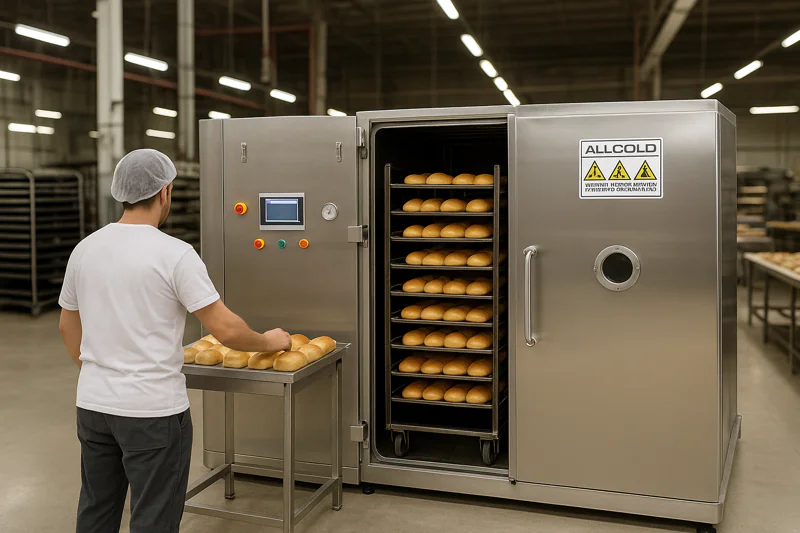
The Ultimate Cooling Solution
For a client like Sophia, who manages a central kitchen for a fast-food chain, this type of machine is a necessity. The features at this level are designed to meet the strictest standards of food safety, automation, and quality control.
- Maximum Throughput & Automation: These systems are designed to cool 4, 6, or even more trolleys at once. They often feature dual doors (one for entry, one for exit) and can be integrated with automated conveyor systems for a completely hands-off process. This is about maximizing the output of a multi-million dollar production line.
- Full Stainless Steel Construction: At this level, it’s not just the interior chamber that is stainless steel—the entire frame, the doors, and all external paneling are made from high-grade stainless steel. This is essential for meeting the highest hygiene standards like HACCP. The surfaces are easy to clean, non-porous, and resistant to corrosion, ensuring a sanitary production environment.
- Advanced Data Integration & Remote Service: The Siemens control systems on these machines are top-of-the-line. They log every piece of data from every cooling cycle: temperature curves, vacuum pressure, cycle duration. This data can be exported for quality assurance records and traceability. Furthermore, these machines are equipped with remote access modules. This means our engineers can log in to your machine from our office to diagnose issues, tweak settings, or provide support, minimizing any potential downtime.
| Feature | Premium / High-Capacity Specification | The Business Case for a Large Industrial Bakery |
|---|---|---|
| Price Range | $80,000 – $150,000+ | Maximum ROI through efficiency at a massive scale. |
| Capacity/Cycle | 300kg – 1000kg+ (3-8+ trolleys) | Matches the speed of the world’s fastest production lines. |
| Construction | Full Stainless Steel (Frame, Chamber, Doors) | Meets the strictest HACCP and food safety standards. |
| Control System | Advanced Siemens PLC with Data Logging & Remote Access | Provides full traceability and minimizes downtime. |
| Automation | Can be integrated with automated loading/unloading systems | Reduces labor costs and human error. |
This level of investment is about risk mitigation and absolute consistency. For a large-scale producer, the cost of a rejected shipment or a production halt is far greater than the premium paid for a machine built for this exact purpose.
Conclusion
The price of a bakery vacuum cooler is a direct reflection of its capability. From budget-friendly models for small shops to premium systems for industrial giants, the right machine exists for your specific needs. Understanding what drives the price is the first step to making a smart investment.
Understanding cooling capacity helps you choose the right machine for your bakery’s production needs. ↩
Learn about essential components that ensure reliability and performance in budget machines. ↩
Explore how a good control system can improve efficiency and product quality in baking. ↩
Get insights into pricing to make informed decisions for your bakery investment. ↩
Explore how higher throughput can significantly enhance production efficiency and profitability in industrial baking. ↩
Learn why investing in premium components like Leybold and Bitzer can lead to better reliability and lower maintenance costs. ↩
Discover how advanced control systems can optimize baking processes and ensure consistent product quality. ↩
Find out how Siemens PLC systems enhance operational flexibility and efficiency in industrial settings. ↩
Need vacuum cooling for your production line?
Allcold engineers work with central kitchens and bakeries to spec the right cooling system for your production volume and food type.

Mila
You May Also Like

When Should You NOT Use Vacuum Cooling for Your Bakery?
Are you tired of waiting hours for your bread to cool down while your profits evaporate? You might think vacuum

Is Your Cooling Strategy Burning Your Profits? A Cost-Benefit Analysis of Vacuum vs. Conventional Cooling
As a bakery owner, you look at your balance sheet every month. You see the cost of ingredients, labor, and
Hybrid Cooling Solutions: Can Combining Vacuum and Traditional Methods Save Your Bakery?
Are you torn between the speed of new technology and the reliability of traditional freezing? Many bakery owners feel they
Blast Freezers vs Vacuum Coolers: Which Is the Right Choice for Your Bakery?
Are you tired of watching your freshly baked bread sit on racks for hours, taking up valuable space while you

Bakery Vacuum Cooling vs Spiral Cooling Systems: Which Is Better for Your Business?
Are you struggling with slow production lines because your bread takes forever to cool down? You are not alone. Cooling
Is a Vacuum Cooler the Missing Ingredient in Your Hotel or Restaurant Bakery?
Imagine your kitchen is in full swing, and the freshly baked bread is finally out of the oven, but it
Can One Cooling System Handle Your Entire Bakery Menu?
You juggle sourdough, delicate pastries, and frozen dough lines daily. Yet, one cooling mistake ruins the texture of your artisan

Is Your Frozen Dough Production Losing Quality Before It Hits the Freezer?
You watch your energy bills climb month after month while your blast freezers work overtime. You see production bottlenecks form
How Can Organic Bakeries Extend Shelf Life Without Preservatives?
You pour your heart into sourcing the finest organic flours and perfecting natural fermentation, only to watch your hard work
Can Vacuum Cooling Finally Fix the "Gummy" Texture in Gluten-Free Bread?
You watch your perfectly risen gluten-free loaves come out of the oven, only to see them sink or turn gummy