
Pre-Cooling Lettuce: Why Vacuum Cooling is the Industry Standard?
In the fresh produce industry, the clock starts ticking the moment a knife cuts a stem. For lettuce, heat is the enemy, and traditional cooling methods often feel like bringing a knife to a gunfight.
Vacuum cooling has become the industry standard for lettuce because it is the only method that cools produce evenly from the inside out. By utilizing the physics of evaporative cooling, it drops core temperatures from 30°C to 2°C in under 30 minutes, extending shelf life by weeks and virtually eliminating the "field heat" that causes bacterial decay.
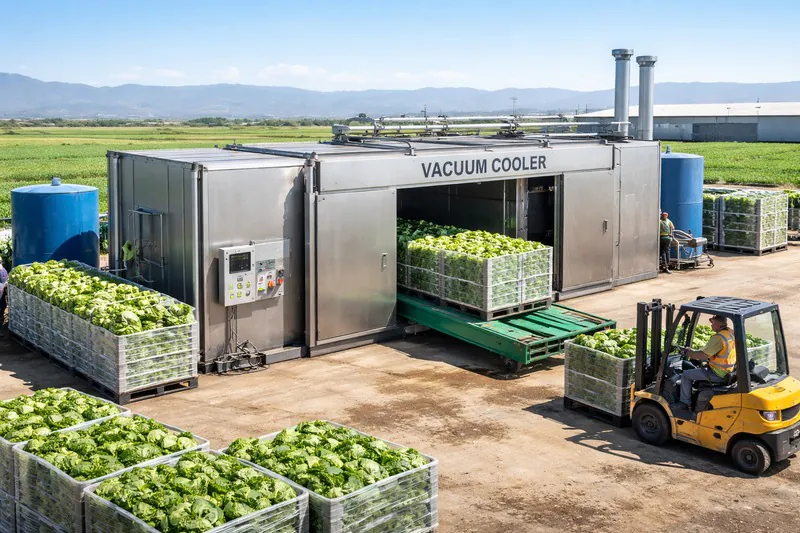
At Allcold, I work with growers from California to China who used to rely on cold rooms or hydrocooling. They would stack pallets of hot Romaine in a refrigerated warehouse and hope for the best. The result? The outer boxes froze, the inner boxes rotted, and customers complained. Today, the global standard for leafy greens—from Iceberg to baby spinach—is vacuum cooling. It’s not just a faster way to cool; it’s a completely different physiological approach to preserving freshness. In this article, I will explain why this technology has replaced older methods and why serious lettuce exporters consider it mandatory equipment, not a luxury.
Why is "Field Heat" Such a Massive Problem for Lettuce?
Lettuce doesn’t die when you harvest it; it panics. The stress of being cut triggers a biological reaction that generates heat and consumes sugar. If you don’t stop this, you are selling a dying product.
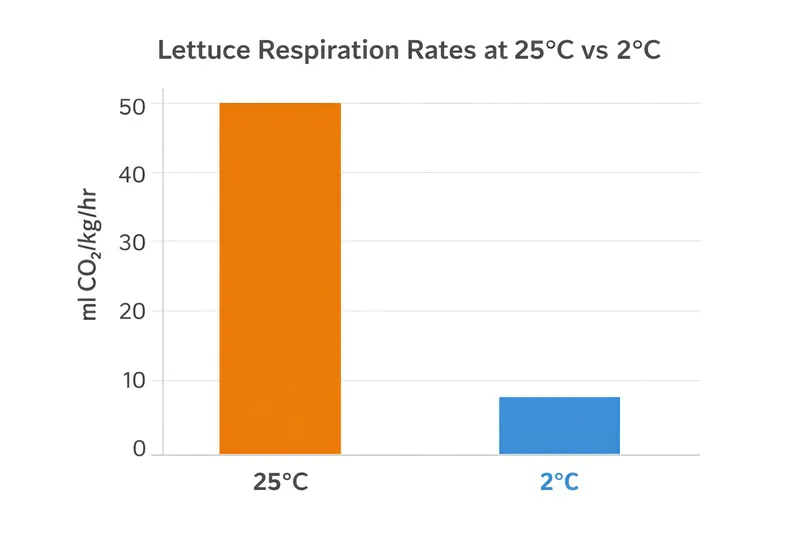
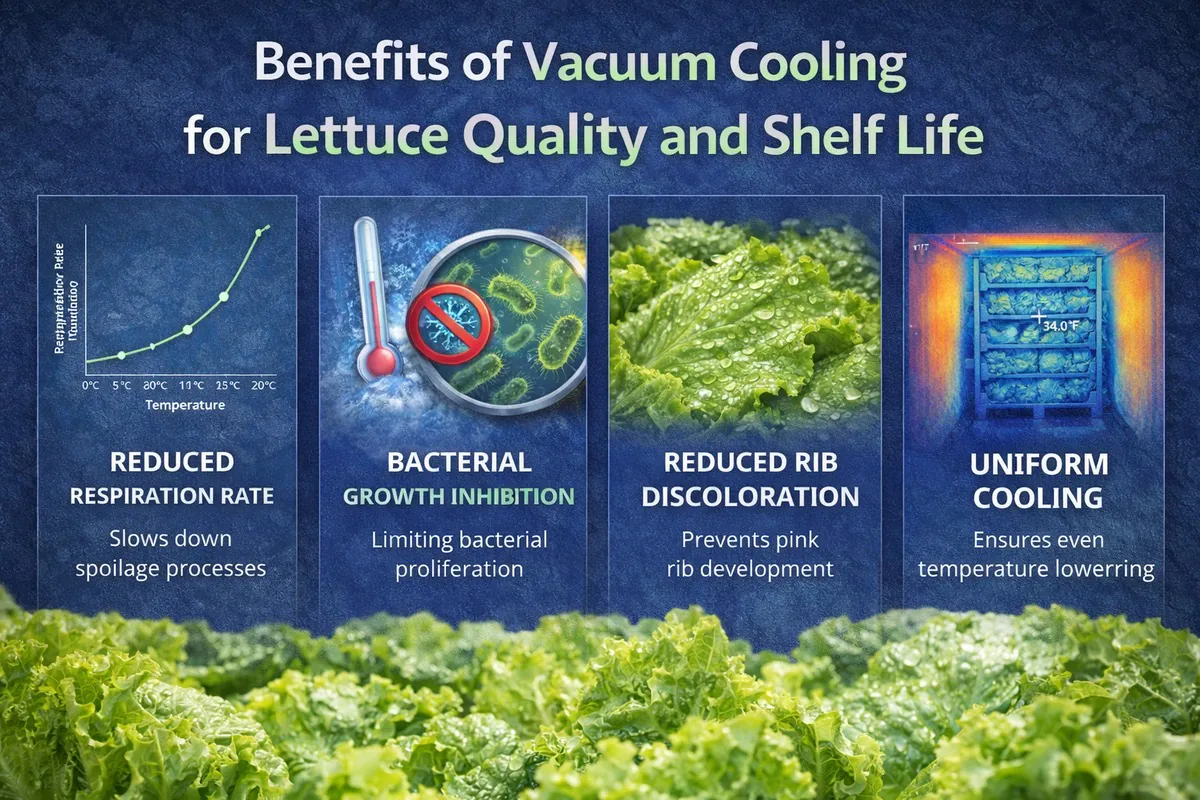
Field heat drives respiration, the process where lettuce consumes its own stored energy to stay alive. For every 10°C increase in temperature, the respiration rate doubles or triples. Vacuum cooling is the only technology fast enough to arrest this process immediately, locking in the plant’s energy reserves and crisp texture.
The Biology of Decay
When I explain this to my clients, I ask them to imagine running a marathon in the desert. That is what a head of lettuce is doing after harvest. It is alive. It is breathing.
In technical terms, this is Respiration. The plant takes in oxygen and breaks down its stored carbohydrates (sugars) to release energy, carbon dioxide, and—crucially—heat. This heat is called "Vital Heat."
- At 25°C (77°F): A ton of lettuce can generate over 40,000 BTUs of heat per day. It is literally cooking itself from the inside.
- At 0°C (32°F): That same ton generates only about 800 BTUs.
The difference is staggering. If you leave lettuce at field temperature for just a few hours, it burns through its sugar reserves. This leads to limp leaves, loss of sweetness, and yellowing.
The Failure of Traditional Cooling
Putting hot lettuce into a standard cold room (forced air cooling) is like trying to put out a forest fire with a garden hose. The cold air hits the outside of the bin or the pallet wrap. It has to slowly penetrate layer after layer of cardboard, plastic, and trapped air.
I have seen tests where the center of a pallet in a cold room took 24 to 48 hours to reach 4°C. During those 48 hours, the lettuce in the middle was aging at a frantic pace.
Vacuum cooling1 bypasses this entirely. It doesn’t rely on conduction or convection. It relies on phase change. We make the water inside the lettuce boil at a low temperature. This reaction happens everywhere at once—inside the box, inside the plastic bag, inside the head of lettuce. We stop the respiration clock in 20 minutes, not 20 hours.
How Does Vacuum Cooling Compare to Hydrocooling?
Water cools faster than air, right? Hydrocooling (showering produce with ice water) was the standard for years. But for lettuce, getting wet is often a recipe for disaster.
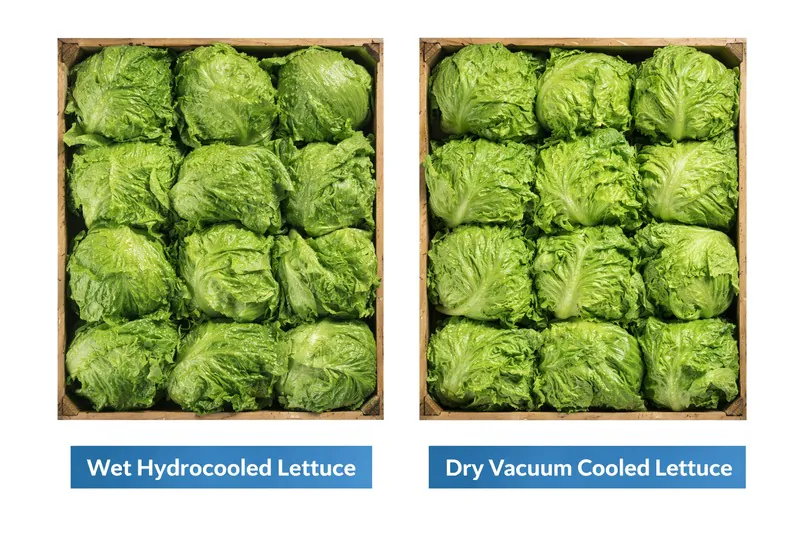
While hydrocooling is fast, it introduces moisture that promotes bacterial rot and fungal diseases like Sclerotinia in leafy greens. Vacuum cooling offers a "dry" cooling cycle, removing surface moisture while lowering the temperature, effectively sanitizing the product environment and preventing the spread of pathogens.
The "Wet" Risk Factor
Hydrocooling is fantastic for commodities like carrots, peaches, or broccoli—things with tough skins that don’t mind getting wet. For lettuce, it is problematic.
- Cross-Contamination2: In a hydrocooler, the same water is recirculated over thousands of heads of lettuce. If one head has Salmonella or E. coli, the water can spread it to the entire batch. Even with chlorination, the risk remains high in organic matter.
- Fungal Growth: Lettuce leaves trap water. If you pack wet lettuce into a box, you create a humid microclimate perfect for mold. Botrytis (Grey Mold) loves moisture.
- Customer Preference: Supermarkets hate wet boxes. They collapse on the shelf, and the wet leaves look slimy to the consumer.
The "Dry" Advantage of Vacuum
Vacuum cooling3 is inherently a drying process. To cool the product, we must evaporate a small percentage of its water (usually 2-3%).
This means that if there was any dew or rain on the lettuce from the field, the vacuum cycle removes it first. The product comes out cold and dry to the touch.
This dry surface is hostile to bacteria. Without free water, pathogens cannot multiply effectively.
For my clients exporting to strict markets like Japan or the UK, this "sanitizing effect" of drying is a major selling point. They can guarantee not just a cold product, but a safer, cleaner product that won’t turn into a bag of soup during transit.
Is Vacuum Cooling the Only Way to Achieve Uniformity?
A cold room cools the outside of the pallet. Forced air cools the side facing the fan. What about the lettuce in the middle of the stack?
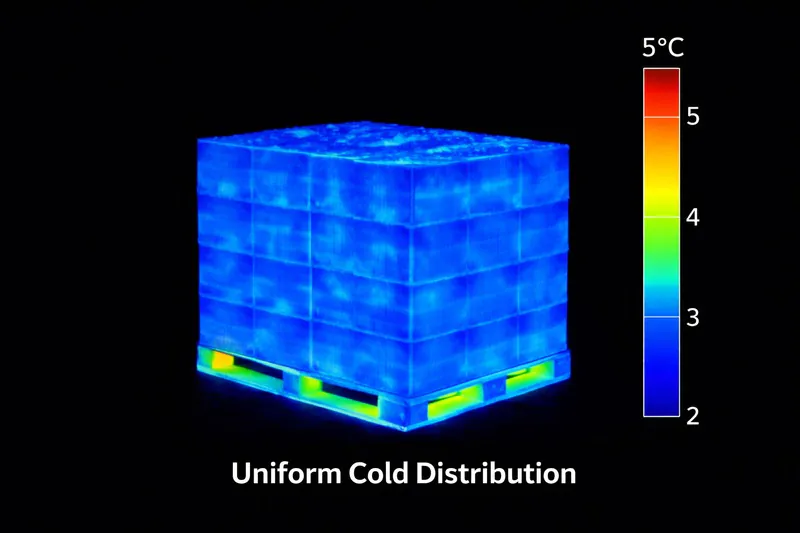
Vacuum cooling is the only method that guarantees 100% temperature uniformity throughout the entire load. Because pressure equalizes instantly in a vacuum chamber, the cooling effect occurs simultaneously in the center of the densest pallet and the outermost box, eliminating "hot spots" that cause rejections.
The Geometry of Cooling
Consider a standard pallet of Iceberg lettuce. It is 1 meter wide, 1.2 meters deep, and 2 meters high. It is wrapped in plastic film and corner boards. It is a solid brick of vegetable matter.
- Forced Air: You have to suck cold air through this brick. The air follows the path of least resistance. It goes through the gaps between boxes, not through the lettuce heads. The boxes near the fan get frozen; the boxes in the "shadow" stay warm.
- The Rejection Nightmare: I know a buyer named Norman who sources for huge US grocery chains. He carries a long probe thermometer. He walks to the middle of the truck, sticks the probe deep into the center pallet. If it reads 4°C, he accepts. If it reads 7°C, he rejects the whole truck. With forced air, hitting that center target without freezing the outside is nearly impossible.
The Physics of Pressure
Vacuum cooling cheats geometry4.
When we pump the air out of the Allcold chamber, the pressure drops everywhere at the exact same speed.
- Pressure at the door: 6 millibars.
- Pressure inside the center box: 6 millibars.
- Pressure inside the heart of the lettuce: 6 millibars.
Because the boiling point of water is determined by pressure, the water boils inside the center head at the exact same moment it boils in the outer head.
The result is a temperature differential of less than 0.5°C across the entire load. This consistency is what allows large growers to ship with confidence, knowing that the product in the middle of the pallet is just as fresh as the product on the outside.
Does Vacuum Cooling Extend Shelf Life Significantly?
We talk about "freshness," but that is subjective. Shelf life is objective. It is measured in days and dollars. How many extra days does vacuum cooling buy you?
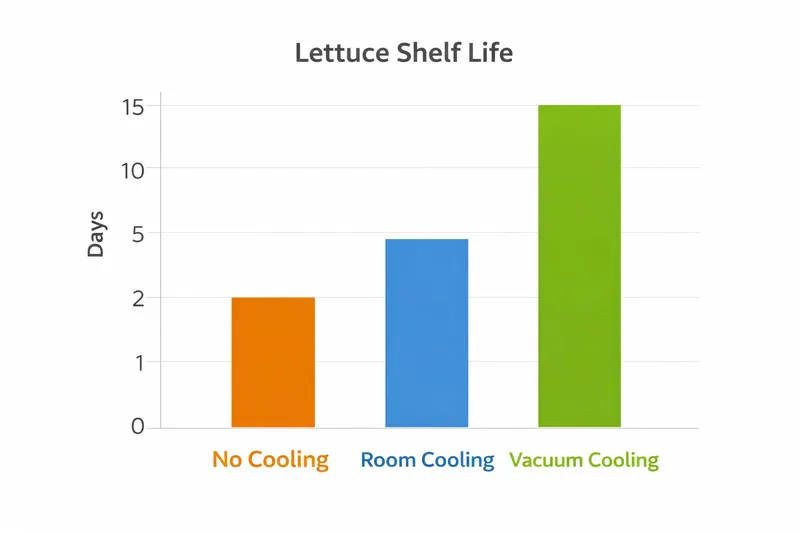
Vacuum cooling typically extends the shelf life of lettuce by 2 to 3 times compared to conventional cooling. By dropping the temperature to 2°C within 30 minutes of harvest, the metabolic deterioration is halted immediately, allowing lettuce to remain crisp and marketable for up to 21-28 days.
The "Golden Hour5" Rule
There is a concept in post-harvest physiology called the "Golden Hour." It suggests that for every hour delay in cooling, you lose one day of shelf life.
This might be an exaggeration, but the principle is sound.
If you harvest lettuce at 8:00 AM and it sits in the heat until 6:00 PM before entering a cold room, it has aged significantly. Even if you cool it down eventually, the damage to the cell walls and the consumption of sugars has already happened. You cannot reverse it.
The 21-Day Standard
Vacuum cooling allows us to hit the target temperature of 2°C usually within 45 minutes to 1 hour of harvest (including transport from field to packing house).
This immediate cessation of biological activity puts the lettuce in stasis.
- Without Cooling: Lettuce rots in 3-5 days.
- Room Cooling: Lettuce lasts 7-10 days.
- Vacuum Cooling6: Lettuce lasts 21-28 days.
This extension is what makes global trade possible. It allows Spanish growers to sell to Germany. It allows Mexican growers to sell to Canada. It allows Chinese growers to sell to Singapore.
Without the 3-week window provided by vacuum cooling, the supply chain would collapse. The risk of spoilage during the 4-day or 5-day truck journey would be too high. Vacuum cooling is the insurance policy that makes the logistics viable.
Is It Energy Efficient Compared to Other Methods?
Vacuum coolers are big, powerful machines. They look like they consume a lot of electricity. But are they actually more efficient per kilogram of produce?
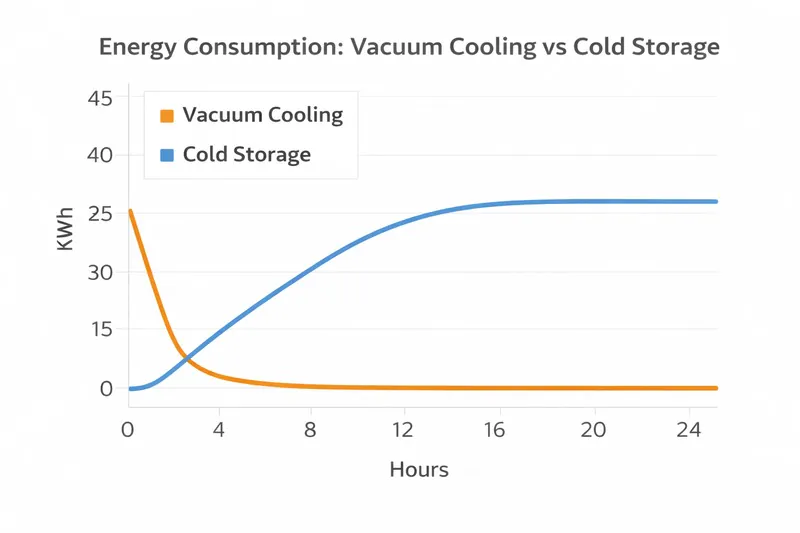
Yes, vacuum cooling is surprisingly energy-efficient because it only cools the product, not the room or the packaging. Unlike cold rooms that must run 24/7 to maintain ambient temperature against heat infiltration, a vacuum cooler runs only during the short cycle, directing 100% of its energy into evaporative cooling.
The Waste of Cold Rooms
Think about a large refrigerated warehouse. You are cooling:
- The concrete floor.
- The steel racking.
- The forklift trucks driving in and out.
- The vast volume of air in the room.
- The heat leaking in through the doors and walls.
Only a fraction of the electricity you pay for actually goes into cooling the lettuce. It is incredibly inefficient thermodynamically.
The Precision of Vacuum
In an Allcold AVC machine, the energy equation is very tight.
We are using electricity to run vacuum pumps and refrigeration compressors7.
- The vacuum pump removes air (which holds very little heat).
- The refrigeration system condenses the water vapor coming directly from the lettuce.
We are not trying to cool the steel chamber walls (they stay warm). We are not cooling the air (we are removing it).
Virtually all the energy consumed is directly correlated to the heat of vaporization of the water inside the vegetable.
The Metric: We typically look at kilowatts per pallet8. Because the cycle is so fast (25 minutes), the total energy cost per kilogram of lettuce is often lower than running a forced-air fan for 12 hours. Plus, you can turn the machine off when there is no produce. A cold room must run constantly to stay cold.
Can It Handle Large Volumes During Peak Season?
Farming is feast or famine. When the harvest hits, it hits hard. You might have 20 truckloads in one day. Can a vacuum cooler keep up?
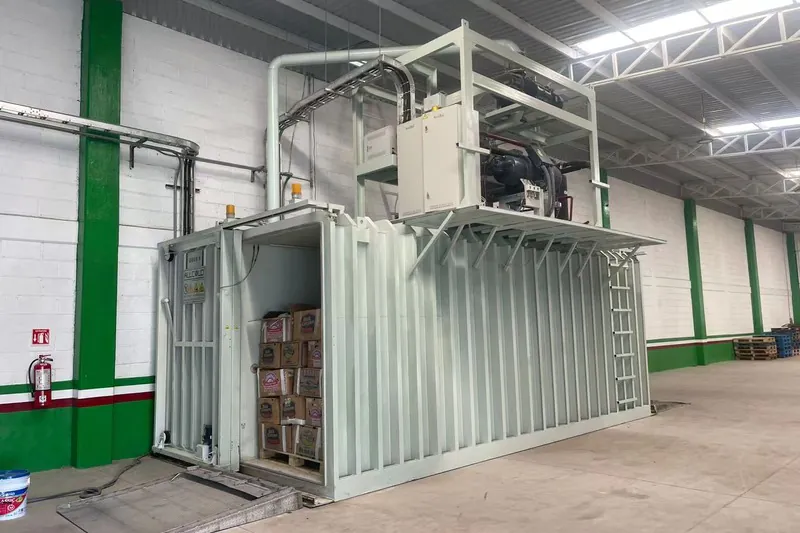
Vacuum cooling is designed for high throughput. A standard 2-pallet system can process 4-6 tons of lettuce per hour, while larger systems handle up to 12 pallets per cycle. This scalability ensures that even during peak harvest, there is no bottleneck, and every load leaves the dock at the optimal temperature.
The Bottleneck Problem
In a traditional packing house, the cold room is the bottleneck. It has a fixed capacity. Once the floor space is full, you cannot harvest any more. You have to wait 12-24 hours for that room to turn over.
This is a disaster during peak season when the crop is maturing fast and needs to come out of the field now.
The Flow-Through9 Solution
Vacuum cooling changes the logistics from "Storage" to "Flow-Through."
With an Allcold AVC system, cooling is part of the process line, not a storage phase.
- Lettuce comes off the field truck.
- It goes into the vacuum cooler (25 mins).
- It comes out at 2°C.
- It goes directly onto the refrigerated shipping truck.
You don’t need a massive holding cooler. You need a staging area.
Our largest machines can process 20 to 24 pallets per hour10. That is two full semi-trucks every hour.
This speed matches the harvest speed. As fast as the crews can cut and pack, the machine can cool. This eliminates the "waiting for cooling" bottleneck and allows growers to maximize their yield during the critical harvest window.
Conclusion
The shift to vacuum cooling isn’t a trend; it’s a technological evolution that separates professional exporters from local market suppliers. By leveraging the physics of evaporation, we solve the three biggest problems in lettuce logistics: Speed, Uniformity, and Shelf Life.
When you invest in an Allcold AVC Vacuum Cooler, you aren’t just buying a machine; you are buying the ability to "freeze time." You are guaranteeing that the crisp, sweet freshness of your field reaches the fork of a customer thousands of miles away. In a global market where quality is the only currency that matters, vacuum cooling is the gold standard.
-
Exploring vacuum cooling can reveal innovative methods to enhance vegetable preservation, ensuring quality and longevity. ↩
-
Understanding cross-contamination risks can help ensure food safety and improve handling practices. ↩
-
Exploring vacuum cooling benefits can enhance your knowledge of food preservation and safety techniques. ↩
-
Explore this link to understand how vacuum cooling optimizes temperature consistency, ensuring freshness in shipping. ↩
-
Understanding the Golden Hour can help improve your post-harvest practices and extend the shelf life of produce. ↩
-
Explore vacuum cooling techniques to enhance your produce’s longevity and ensure better quality during transport. ↩
-
Exploring this topic reveals innovative cooling technologies that enhance efficiency and reduce energy consumption. ↩
-
Understanding this metric can help optimize energy use in refrigeration, leading to cost savings and improved efficiency. ↩
-
Explore this link to understand how the Flow-Through solution revolutionizes cooling logistics, enhancing efficiency in harvest operations. ↩
-
Discover insights on how processing at this rate can significantly improve harvest efficiency and reduce bottlenecks in packing. ↩

Mila
You May Also Like
Buying a Vacuum Cooler for Fresh Produce Export? Avoid These Costly Procurement Mistakes
Buying a vacuum cooler for fresh produce export is not simply a machine purchase. It is a project decision that
How Much Produce Shrink Can Better Pre-Cooling Prevent in Export Projects?
Produce shrink in export projects is not simply a freshness problem. It is a commercial problem that compounds across every
Technical Specifications of Industrial Lettuce Vacuum Cooling Systems?
Buyers often look at a quote and only see the price. They ignore the technical specifications. This is a mistake.
Lettuce Vacuum Cooler Capacity Guide: Sizing for Your Operation?
Investing in a vacuum cooler is a significant decision, but choosing the wrong size can be an even more expensive
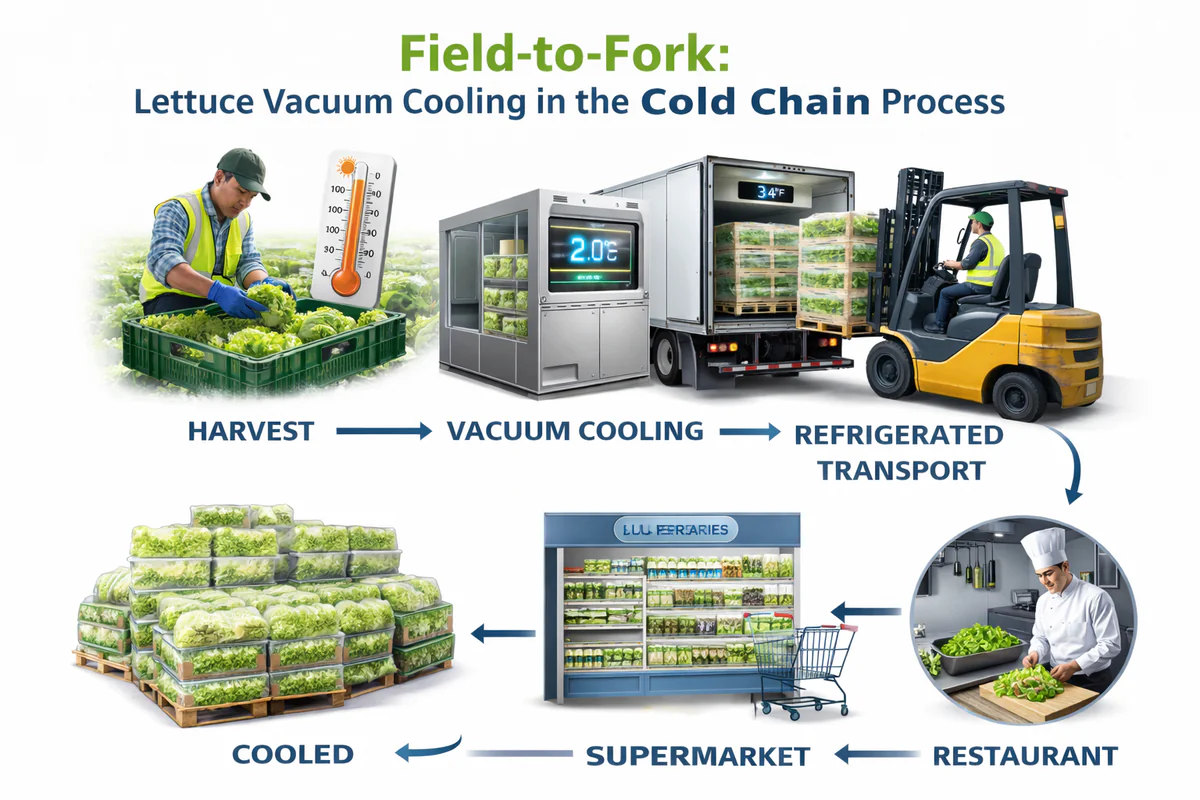
Field-to-Fork: Lettuce Vacuum Cooling in the Cold Chain Process?
We often talk about "freshness" as if it were magic, but in the lettuce business, freshness is purely a matter
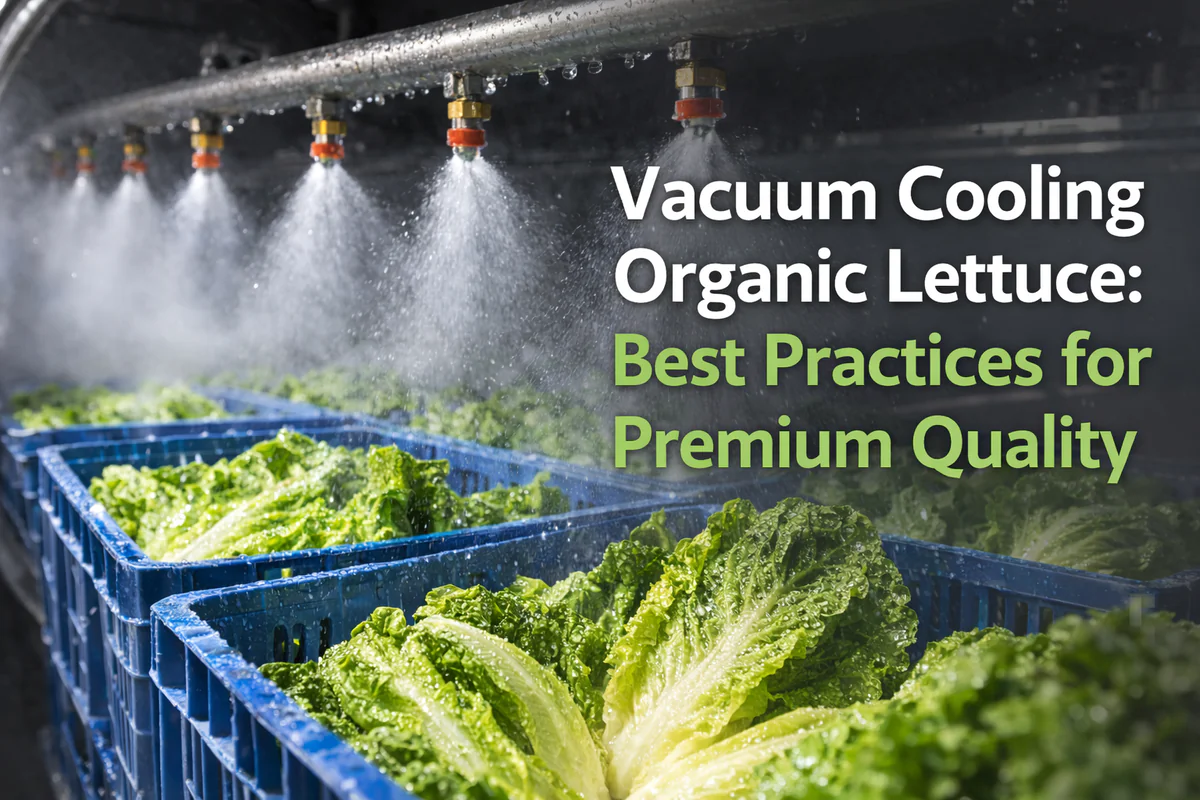
Vacuum Cooling Organic Lettuce: Best Practices for Premium Quality?
Organic lettuce is a promise to the consumer: no chemicals, no shortcuts, just nature. But without the safety net of
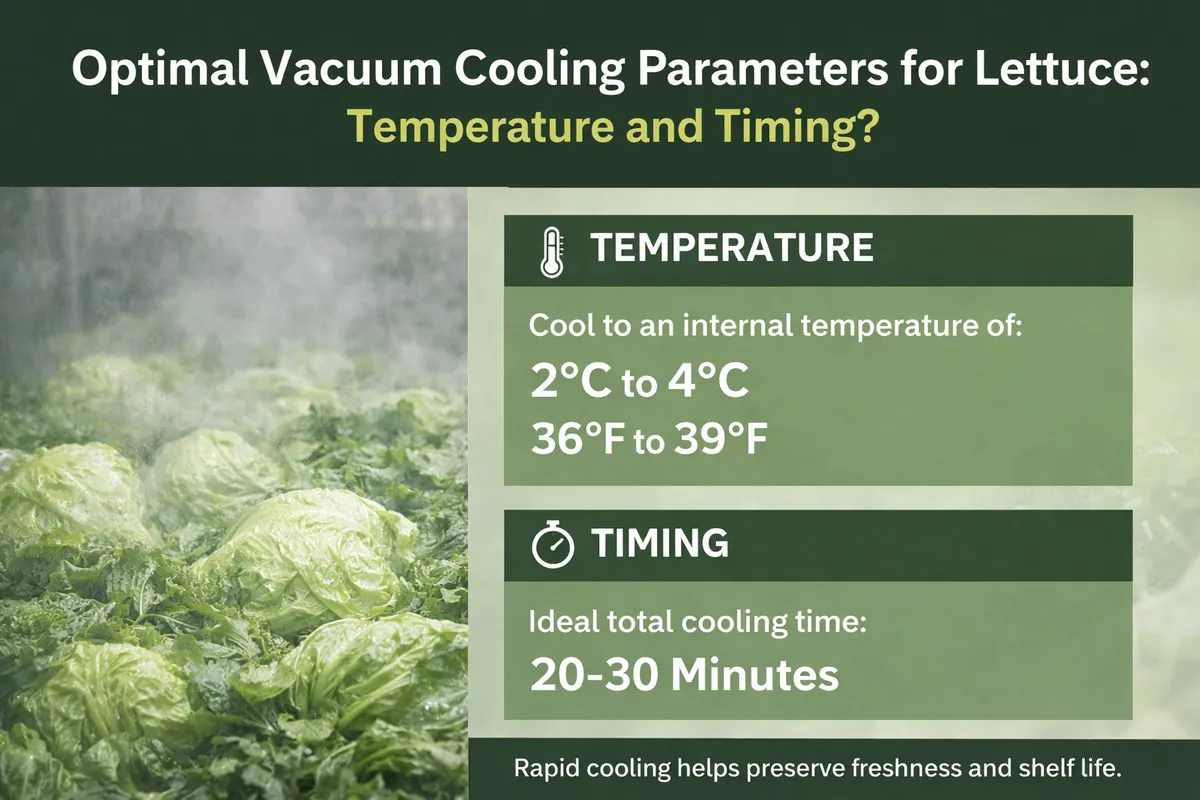
Optimal Vacuum Cooling Parameters for Lettuce: Temperature and Timing?
In the world of post-harvest preservation, precision is the difference between a crisp, profitable shipment and a slimy, rejected claim.
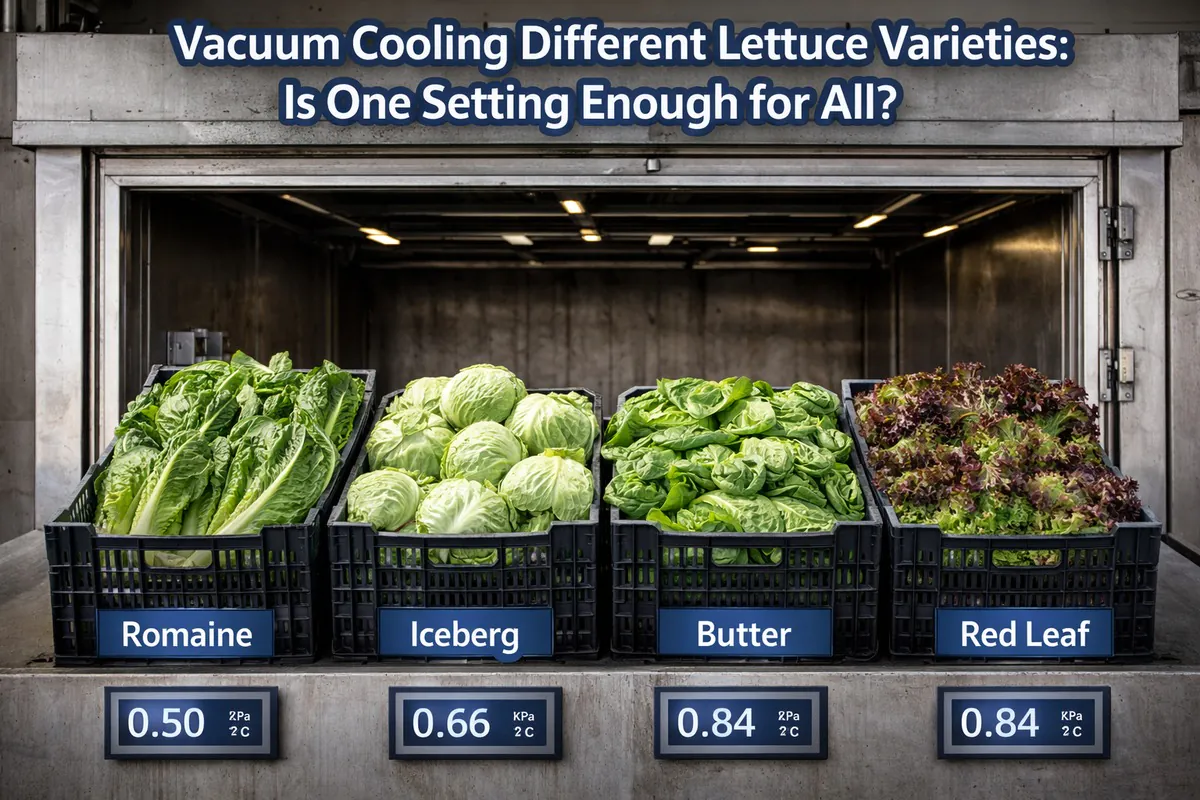
Vacuum Cooling Different Lettuce Varieties: Is One Setting Enough for All?
Not all lettuce is created equal. A dense head of Iceberg is a fortress of water, while delicate Baby Spinach
Benefits of Vacuum Cooling for Lettuce Quality and Shelf Life?
Lettuce is 95% water, wrapped in cdsfvxgba fragile green skin. Once harvested, it is fighting a losing battle against heat
The Complete Guide to Vacuum Cooling Technology for Lettuce Production?
Lettuce is a race against nature. From the moment the stem is cut in the field, respiration heat begins to