
Technical Specifications of Industrial Lettuce Vacuum Cooling Systems?
Buyers often look at a quote and only see the price. They ignore the technical specifications. This is a mistake. The specs dictate your machine’s lifespan and efficiency.
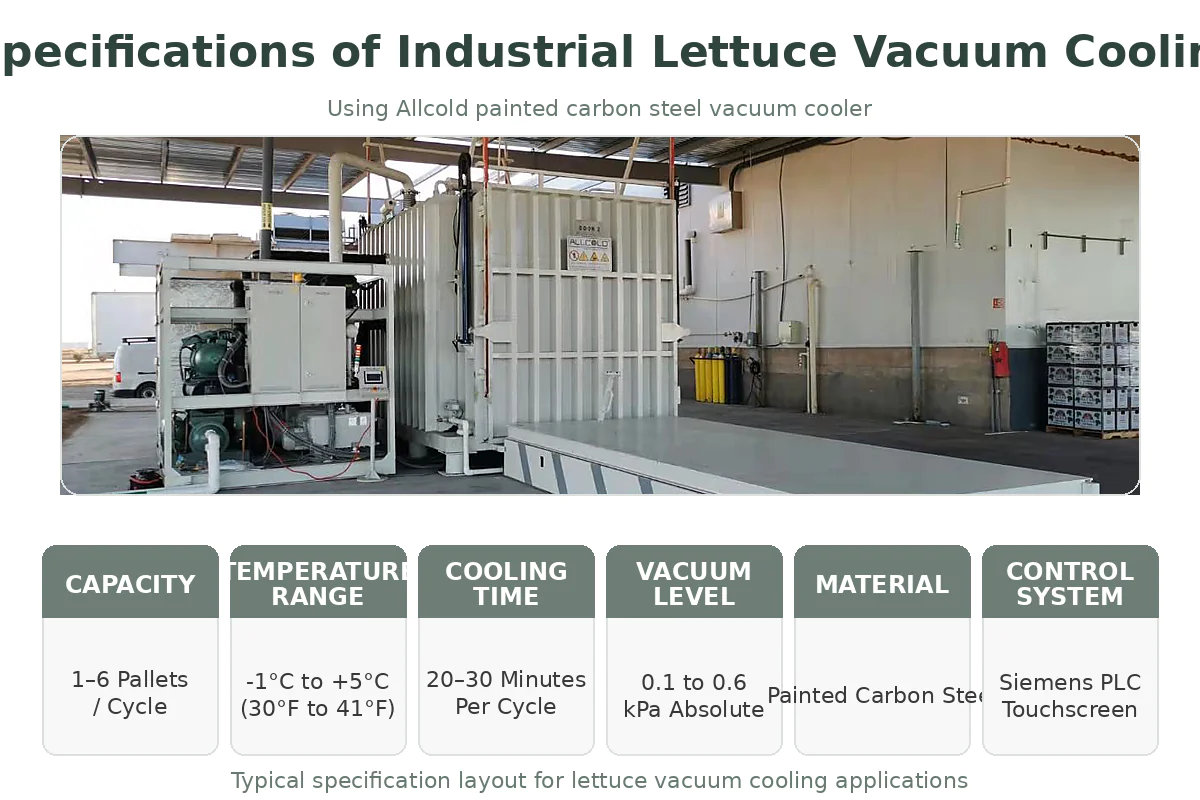
An industrial lettuce vacuum cooler relies on specific technical parameters: high-capacity vacuum pumps, robust refrigeration compressors, smart PLC controls, and a heavy-duty painted carbon steel chamber. Understanding these specifications helps buyers match equipment to their exact daily harvest volume and local power grid constraints.
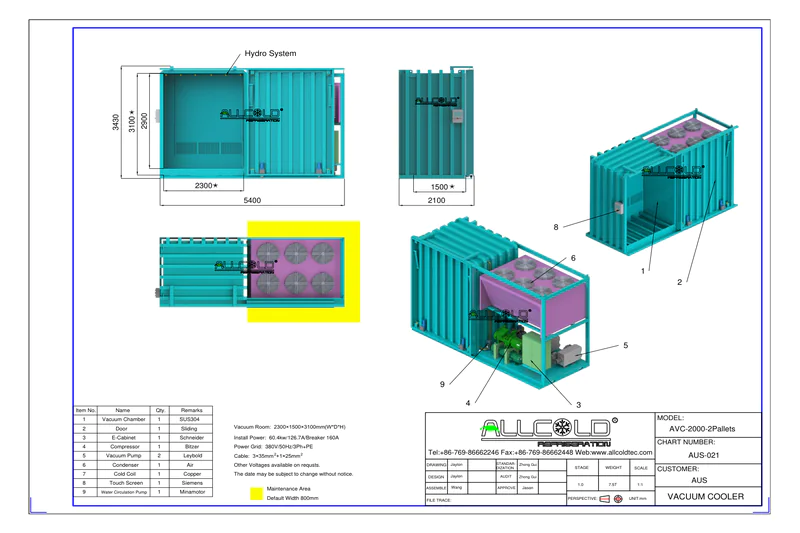
At Allcold, I review technical drawings every day. I see how a slight change in a compressor model changes the entire cooling cycle. My clients, like Carlos in Mexico or Norman in America, need machines that work hard and do not fail during peak season. They care about quality control, after-sales service, and fast cooling speeds. To deliver this, we build our machines using precise technical specifications. We do not guess. We calculate the exact physics required to boil water at room temperature. In this guide, I will break down the core technical specifications of a standard vegetable vacuum cooler. I will explain what these numbers mean for your daily operation and your profit margins.
What Are the Core Specifications of the Vacuum Chamber?
The vacuum chamber is the physical body of the machine. It must withstand immense atmospheric pressure every single day without warping or cracking.
Standard vegetable vacuum chambers are constructed from high-strength carbon steel, coated with industrial-grade epoxy paint. This material provides the necessary structural integrity to handle deep vacuum cycles while offering a cost-effective, durable solution compared to stainless steel, which is unnecessary for boxed field crops.
The Physics of the Painted Steel Chamber
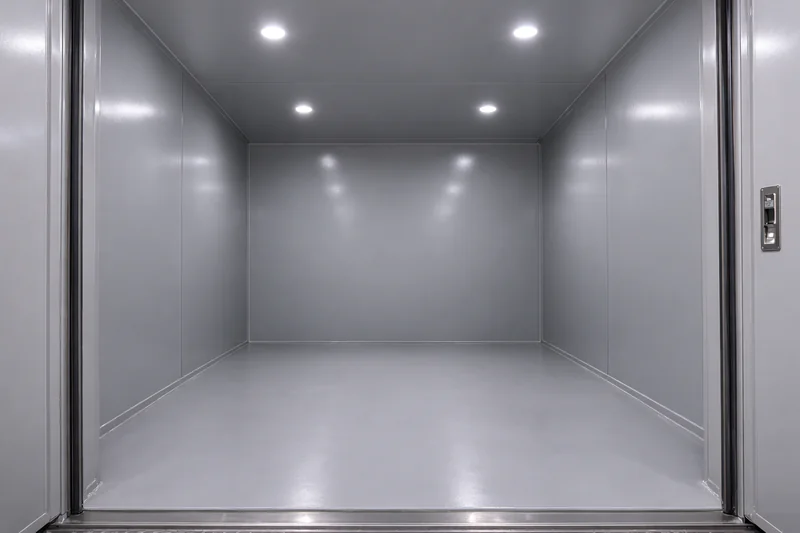
Many buyers assume food equipment must always use stainless steel. This is true for our cooked food machines. However, for fresh vegetables like lettuce, the product stays inside cardboard boxes or plastic crates. The lettuce never touches the chamber walls. Therefore, we use heavy-duty carbon steel. We weld thick steel plates to form a cylinder or a reinforced rectangular box.
We paint the inside and outside with specialized epoxy paint. This paint resists moisture and prevents rust. It makes the chamber easy to clean. The carbon steel construction keeps the machine affordable without sacrificing strength.
Strength is the most important specification here. When the vacuum pump removes the air inside, the outside atmosphere pushes against the chamber walls with massive force. If the steel is too thin, the chamber will collapse.
Dimension Specifications
We size the chamber based on standard pallets. A standard US pallet is 40×48 inches. An Euro pallet is 800×1200 mm. We design the internal dimensions to fit 2, 4, 6, or 8 pallets comfortably. We leave enough clearance for forklift operators.
We also specify the door type. We offer manual sliding doors, hydraulic upward-lifting doors, or automatic tunnel doors. The door seal uses a heavy-duty rubber O-ring. This seal is a critical technical component. If the seal leaks, the machine cannot reach the target vacuum level. We use high-quality rubber to ensure a perfect, airtight lock every single cycle.
| Component | Specification Standard | Purpose |
|---|---|---|
| Chamber Material | Painted Carbon Steel (Mild Steel)1 | Structural strength and cost-efficiency |
| Coating | Industrial Epoxy Paint2 | Rust prevention and easy cleaning |
| Door Seal | High-Density Rubber O-Ring | Airtight vacuum integrity |
| Wall Thickness | Minimum 10mm-12mm (varies by size) | Prevents implosion under pressure |
How Do Vacuum Pumps Determine Cooling Speed?
The vacuum pump is the breathing lung of the cooler. It pulls the air out of the chamber. A slow pump means a slow cooling cycle.
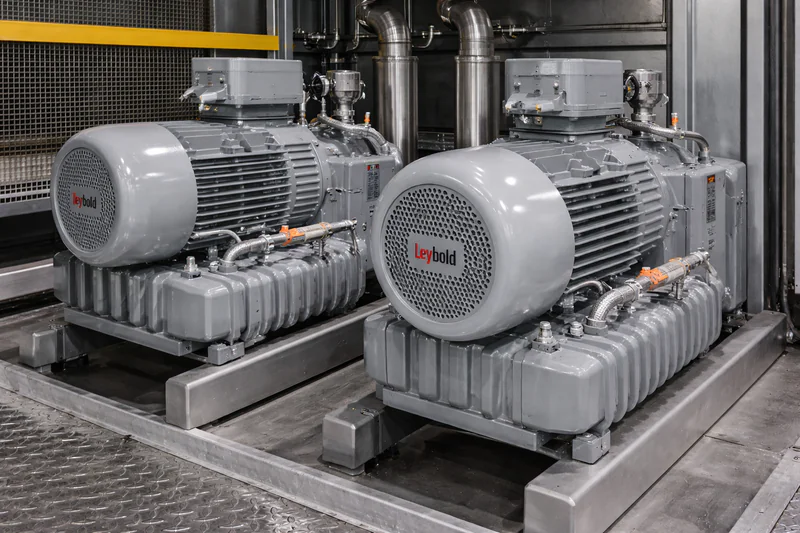
Vacuum pumps are specified by their volumetric pumping speed, usually measured in cubic meters per hour (m³/h). High-capacity rotary vane pumps or dry screw pumps are required to rapidly lower the chamber pressure to the "flash point" of 23 mbar, initiating the evaporation process quickly.
Matching Pump Capacity to Chamber Volume
The specification of the vacuum pump dictates the speed of the first cooling phase. We call this the "pull-down" phase. We must remove 99% of the air inside the chamber.
If we have a large 6-pallet chamber, we have a large volume of air. We must use a large pump. A common specification for a medium machine is a vacuum pump capacity3 of 600 m³/h to 1000 m³/h.
I often explain this to technically knowledgeable clients like Carlos. If you use a small pump on a big chamber, the machine takes 15 minutes just to reach the flash point. This wastes time. We specify pumps that reach the flash point in 3 to 5 minutes.
Rotary Vane vs. Screw Pumps
We offer two main types of vacuum pumps. Buyers must choose based on their maintenance capabilities and budget.
- Oil-Sealed Rotary Vane Pumps: This is the traditional standard. They are reliable and cost-effective. They use oil to create the vacuum seal. The operator must check the oil level and change the oil filters regularly. If water vapor mixes with the oil, the pump loses efficiency.
- Dry Screw Pumps4: These are a premium upgrade. They use no oil in the pumping chamber. They handle water vapor perfectly. They require less maintenance. They cost more initially, but they save money on oil and maintenance labor over time.
We always specify high-quality pump brands. We use Leybold or Busch. These brands offer global support, which helps buyers in North America or Europe get spare parts easily.
| Pump Type | Key Specification | Maintenance Level | Best Application |
|---|---|---|---|
| Rotary Vane | 300 – 1200 m³/h capacity | Medium (Oil changes) | Standard agricultural use |
| Dry Screw | 400 – 1000 m³/h capacity | Low (No oil in chamber) | High-volume, low-maintenance sites |
Why Is the Refrigeration System the Heart of the Machine?
The vacuum pump removes the air. The lettuce releases water vapor to cool down. If we do not catch this vapor, the pump will break.
The refrigeration system features a water catcher (evaporator coil) inside the chamber and an external compressor. Its primary specification is cooling capacity (measured in kW or HP). This system freezes the escaping water vapor, protecting the vacuum pumps and driving the temperature down to 2°C.
The Role of the Vapor Catcher
The refrigeration system is the most expensive and critical part of the machine. Inside the painted steel chamber, we install a massive coil of pipes. We call this the vapor catcher5.
When the lettuce boils at low pressure, it releases huge amounts of water vapor. A 4-pallet load of lettuce can release 20 liters of water vapor in 15 minutes.
Vacuum pumps cannot compress liquid water. If this vapor enters the oil-sealed vacuum pump, the pump fails. The vapor catcher5 sits between the lettuce and the vacuum pump. We pump cold refrigerant gas (like R404a or R448a) through these coils. The coils reach a temperature of -10°C.
When the warm water vapor touches the cold coils, it instantly turns into ice. This traps the water inside the chamber. It protects the pump.
Compressor Specifications
The compressor sits outside the chamber. It drives the refrigerant gas. We specify the compressor size based on the peak heat load. A 4-pallet machine usually requires a 40 HP or 50 HP compressor. We use top brands like Bitzer or Hanbell.
We specify semi-hermetic reciprocating compressors or screw compressors. Screw compressors are better for larger machines (6 pallets or more) because they offer smooth, continuous power. The condenser specification is also vital. We use air-cooled condensers for smaller machines and evaporative water-cooled condensers for larger industrial setups to maintain high efficiency in hot climates.
| Refrigeration Component | Specification Detail | Function in the Cycle |
|---|---|---|
| Compressor | Bitzer/Hanbell (40HP – 150HP) | Drives the refrigerant gas |
| Vapor Catcher | Copper or Stainless Steel Coils | Freezes vapor to protect pumps |
| Condenser | Air-cooled or Water-cooled | Rejects heat to the outside air |
| Refrigerant | R404a / R448a / R507 | Transfers heat energy efficiently |
How Does the Control System Manage the Cooling Cycle?
A powerful machine is dangerous without a smart brain. The control system must monitor pressure and temperature every single second to prevent freezing the lettuce.
Industrial vacuum coolers utilize Programmable Logic Controllers (PLCs) and HMI touchscreens for precise automation. Key specifications include highly sensitive pressure transducers and core temperature probes. These sensors feed real-time data to the PLC, allowing it to adjust valve speeds and stop the cycle automatically at exactly 2°C.
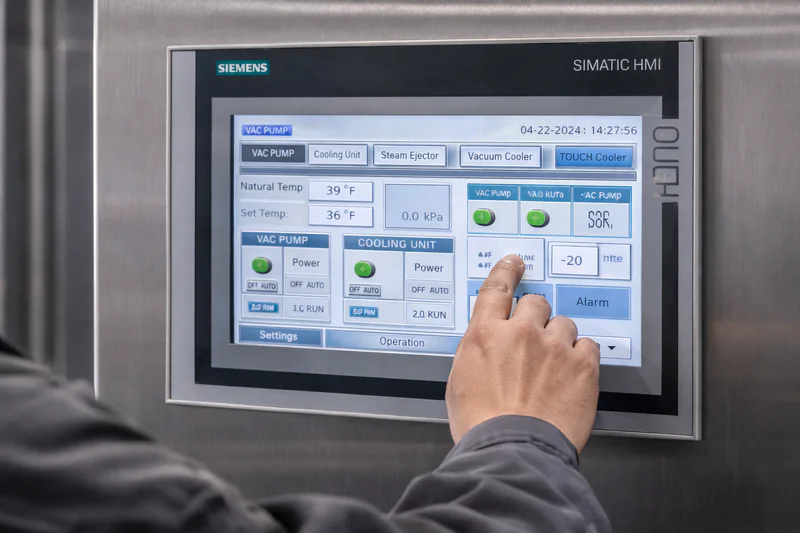
PLC6 Automation and HMI Interface
We do not rely on manual operation. Manual operation leads to human error. If an operator leaves the machine running too long, the lettuce will freeze and turn black. We specify Siemens or Mitsubishi PLCs for all our equipment.
The PLC is the brain. The HMI (Human Machine Interface)7 is the face. The HMI is a color touchscreen. It displays the real-time pressure curve and temperature curve.
For buyers like Sophia, who manages strict food safety processes, the control system is a major selling point. We program specific "recipes" into the PLC. The operator simply selects "Iceberg Lettuce" on the screen and presses start. The PLC takes full control.
Sensors and Precision
The technical specifications of the sensors matter greatly.
- Pressure Transducers: We use high-precision pressure sensors. They measure the vacuum level from 1000 mbar down to 1 mbar. The PLC uses this data to know exactly when the water starts boiling.
- Temperature Probes: We provide long, needle-like temperature probes. The operator inserts these probes deep into the center of a lettuce head before starting the cycle. The PLC monitors the core temperature. Once the core hits 2.0°C, the PLC automatically opens the air-release valve and stops the cycle.
This automated precision guarantees consistent quality. It saves energy. It reduces the need for highly skilled operators on the factory floor.
| Control Component | Specification Detail | Operational Benefit |
|---|---|---|
| PLC Brand | Siemens / Mitsubishi | High reliability and global support |
| Interface | 7-inch or 10-inch Touchscreen | Easy operation and recipe management |
| Pressure Sensor | 0-1000 mbar Transducer | Exact control of the evaporation point |
| Temperature Probe | PT100 Stainless Steel Needle | Accurate core temperature reading |
What Are the Power and Utility Requirements?
Industrial equipment requires industrial infrastructure. You cannot plug a vacuum cooler into a standard wall outlet. Buyers must prepare their site utilities before the machine arrives.
Technical specifications always detail the total electrical power consumption (kW) and voltage requirements (e.g., 380V/3Ph/50Hz or 480V/3Ph/60Hz). Additionally, large systems with water-cooled condensers specify cooling water flow rates (m³/h), requiring buyers to install adequate electrical transformers and external cooling towers.
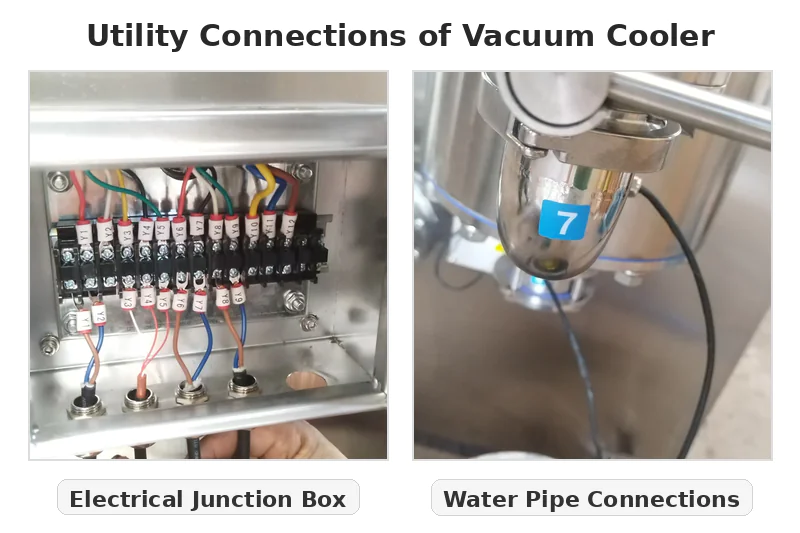
Electrical Power Specifications
Power is often the biggest hurdle for new buyers. Before we build a machine, we ask for the local voltage specifications. In China and Europe, the standard is 380V/50Hz. In North America, it is often 460V/60Hz or 480V/60Hz. We build the electrical cabinet to match the buyer’s exact local grid.
Buyers must look at the "Total Connected Load8" specification. A 4-pallet machine might have a total load of 45 kW. The buyer must ensure their factory transformer can handle this sudden power draw. When the massive compressor turns on, it causes a power spike. We often specify soft starters or Variable Frequency Drives (VFD) in our electrical panels to smooth out this power spike. This protects the buyer’s power grid.
Water Supply Requirements
If the machine uses a water-cooled condenser, we must specify the water requirements. Air-cooled machines just need good ventilation. Water-cooled machines need a steady flow of cool water to remove the heat from the refrigerant gas.
We provide specifications for the required water flow rate9 (for example, 20 cubic meters per hour) and the water inlet temperature. The buyer must install an external cooling tower on their roof or outside their factory to provide this water.
By understanding these utility specifications early, buyers avoid expensive installation delays. At Allcold, we provide complete engineering drawings to help your local contractors prepare the site perfectly.
| Utility Type | Key Specification Metric | Buyer Responsibility |
|---|---|---|
| Electrical | Voltage (V) & Phase (Ph) | Match machine to local grid power |
| Electrical | Total Power (kW) / Amps | Upgrade factory transformer if needed |
| Water | Flow Rate (m³/h) | Install external cooling tower |
| Environment | Ambient Temp (°C) | Provide adequate room ventilation |
Conclusion
Technical specifications define a vacuum cooler’s true capability. By understanding pump capacity, refrigeration power, and chamber materials, you can make an informed investment that perfectly matches your daily harvest goals.
-
Explore the advantages of painted carbon steel for food equipment, including cost-efficiency and structural strength. ↩
-
Learn how industrial epoxy paint protects food equipment from rust and simplifies cleaning, ensuring longevity. ↩
-
Understanding vacuum pump capacity is crucial for optimizing performance and efficiency in various industrial processes. ↩
-
Exploring the benefits of Dry Screw Pumps can help you make informed decisions about maintenance and cost savings. ↩
-
Understanding the vapor catcher’s role can enhance your knowledge of refrigeration efficiency and pump protection. ↩ ↩
-
Understanding PLCs is crucial for optimizing automation processes and ensuring efficiency in operations. ↩
-
Exploring HMI technology can enhance your knowledge of user interfaces in automation, leading to better operational control. ↩
-
Understanding Total Connected Load is crucial for ensuring your electrical system can handle the power demands of machinery. ↩
-
Knowing how to calculate water flow rate is essential for maintaining efficient cooling in water-cooled machines. ↩

Mila
You May Also Like
Buying a Vacuum Cooler for Fresh Produce Export? Avoid These Costly Procurement Mistakes
Buying a vacuum cooler for fresh produce export is not simply a machine purchase. It is a project decision that
How Much Produce Shrink Can Better Pre-Cooling Prevent in Export Projects?
Produce shrink in export projects is not simply a freshness problem. It is a commercial problem that compounds across every
Lettuce Vacuum Cooler Capacity Guide: Sizing for Your Operation?
Investing in a vacuum cooler is a significant decision, but choosing the wrong size can be an even more expensive
Field-to-Fork: Lettuce Vacuum Cooling in the Cold Chain Process?
We often talk about "freshness" as if it were magic, but in the lettuce business, freshness is purely a matter
Vacuum Cooling Organic Lettuce: Best Practices for Premium Quality?
Organic lettuce is a promise to the consumer: no chemicals, no shortcuts, just nature. But without the safety net of
Pre-Cooling Lettuce: Why Vacuum Cooling is the Industry Standard?
In the fresh produce industry, the clock starts ticking the moment a knife cuts a stem. For lettuce, heat is
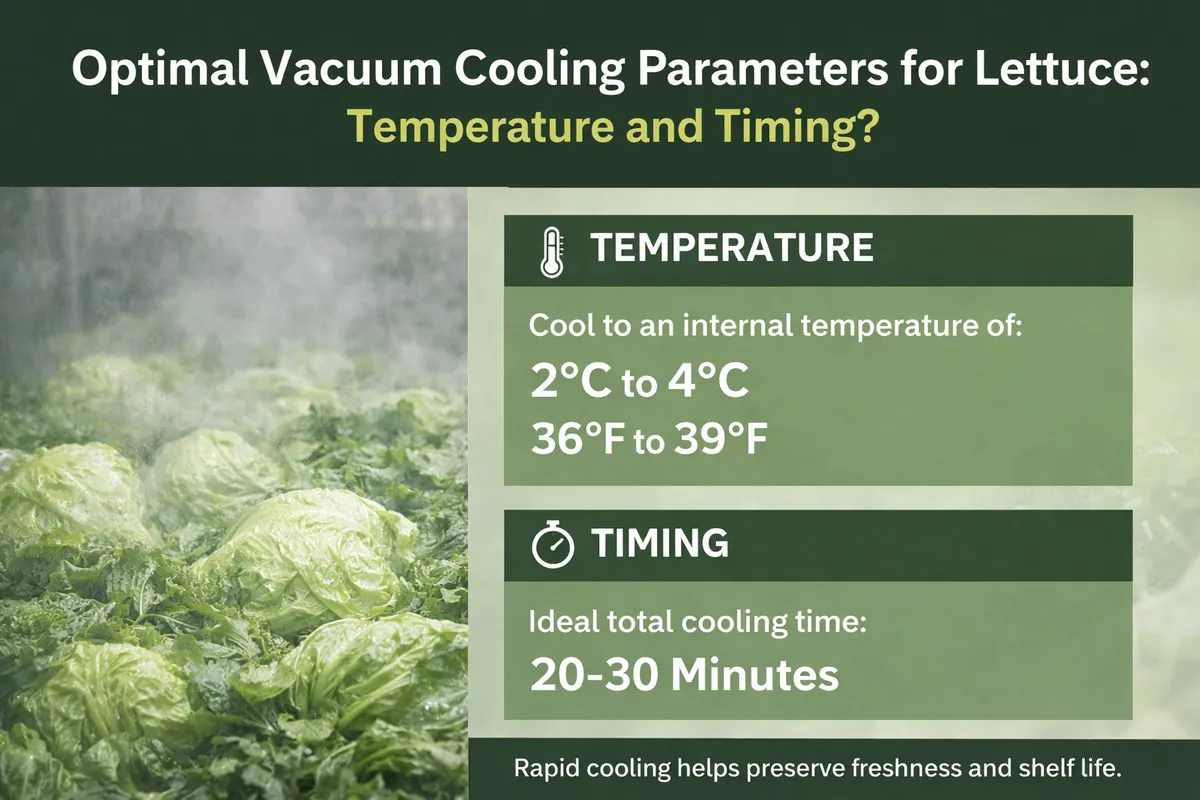
Optimal Vacuum Cooling Parameters for Lettuce: Temperature and Timing?
In the world of post-harvest preservation, precision is the difference between a crisp, profitable shipment and a slimy, rejected claim.
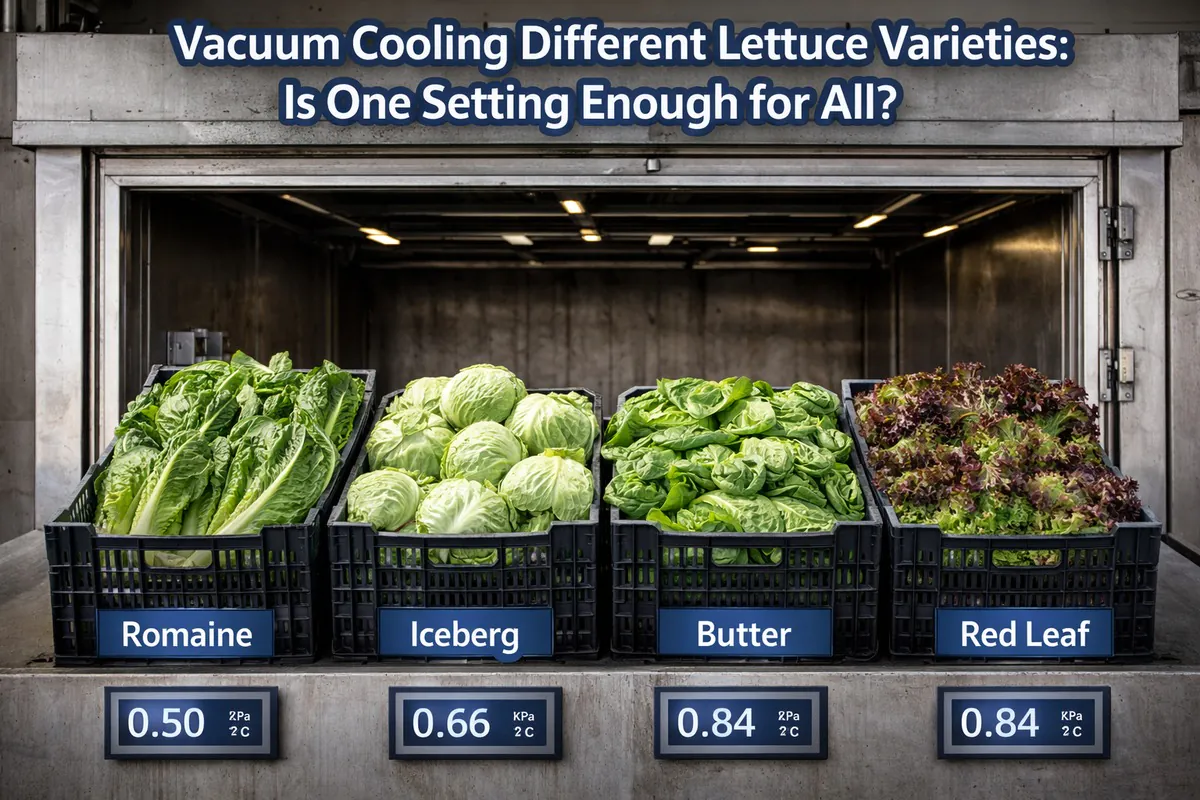
Vacuum Cooling Different Lettuce Varieties: Is One Setting Enough for All?
Not all lettuce is created equal. A dense head of Iceberg is a fortress of water, while delicate Baby Spinach
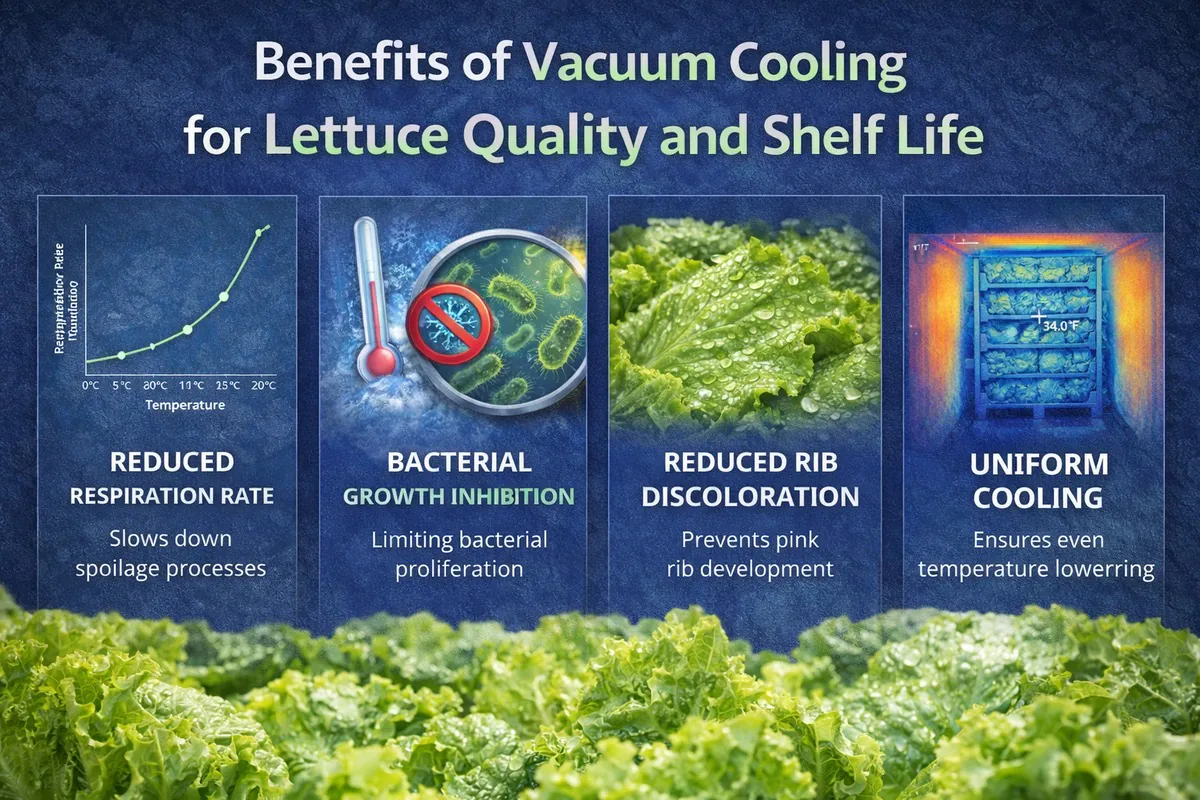
Benefits of Vacuum Cooling for Lettuce Quality and Shelf Life?
Lettuce is 95% water, wrapped in cdsfvxgba fragile green skin. Once harvested, it is fighting a losing battle against heat
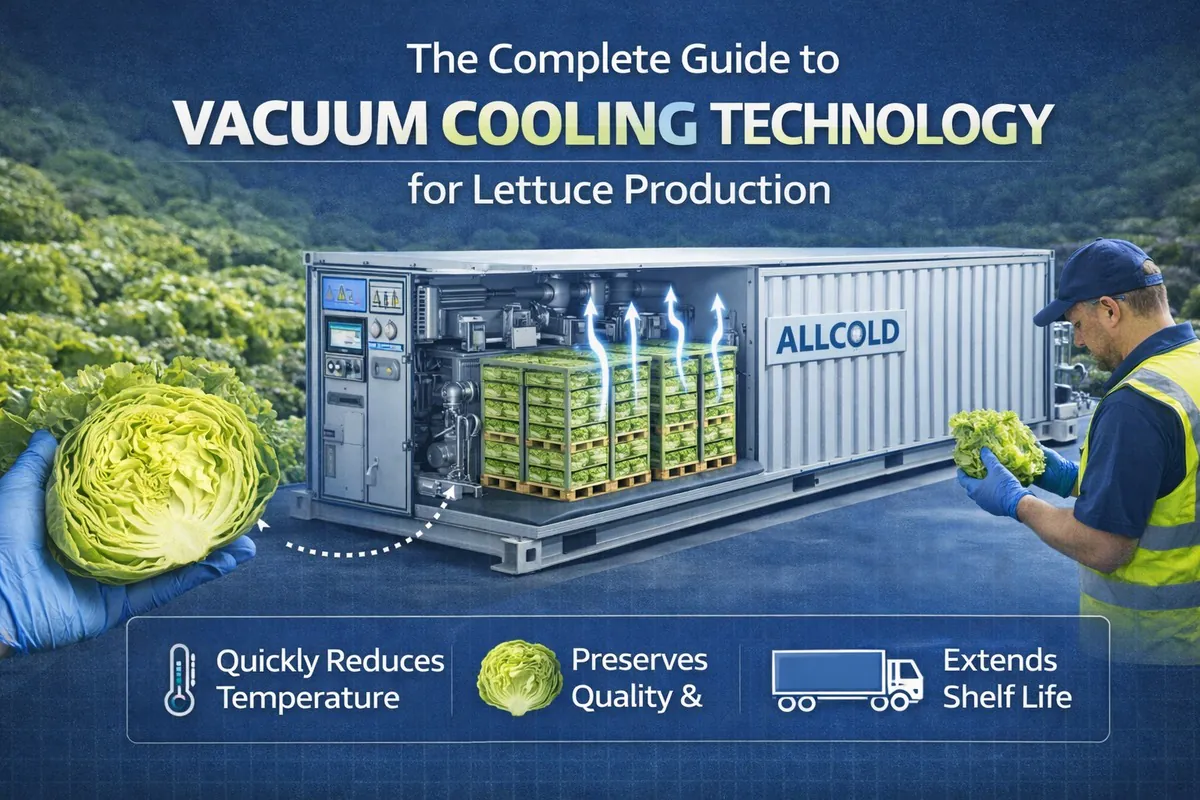
The Complete Guide to Vacuum Cooling Technology for Lettuce Production?
Lettuce is a race against nature. From the moment the stem is cut in the field, respiration heat begins to