
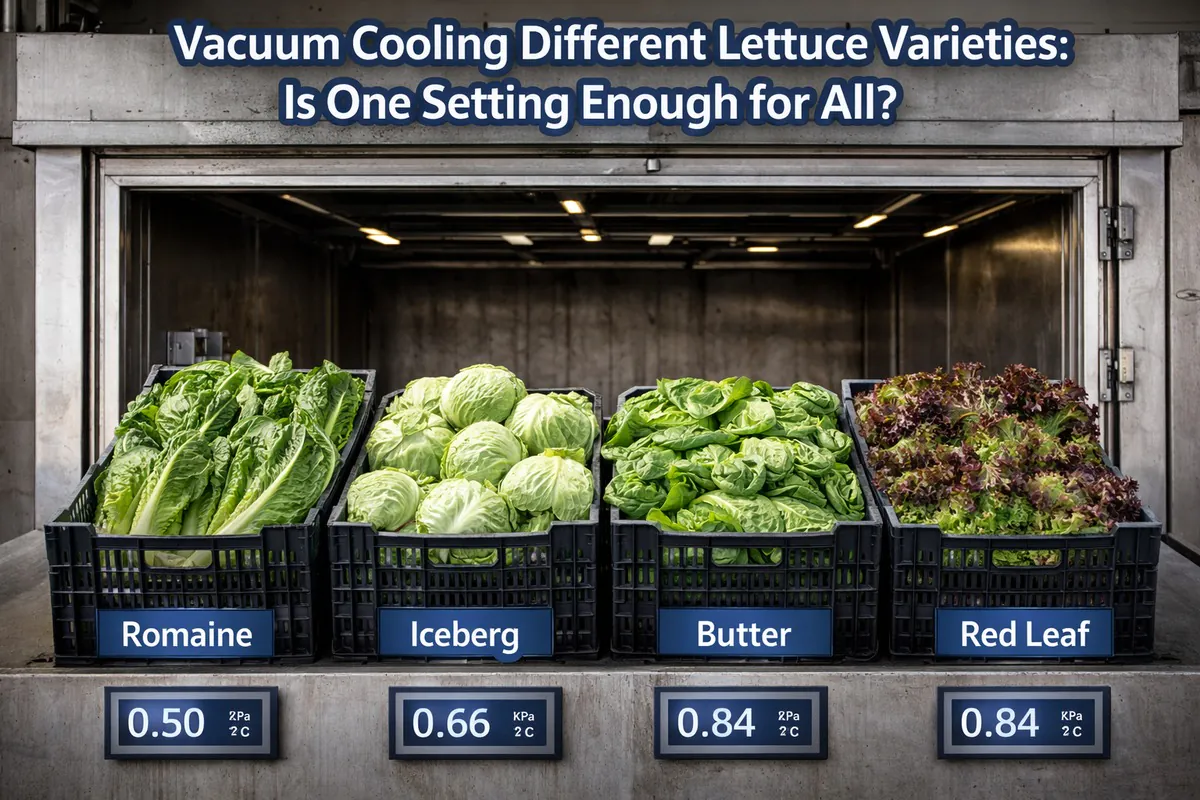
Vacuum Cooling Different Lettuce Varieties: Is One Setting Enough for All?
Not all lettuce is created equal. A dense head of Iceberg is a fortress of water, while delicate Baby Spinach is like tissue paper. If you treat them the same in a vacuum cooler, you might freeze one and wilt the other.
Different lettuce varieties require specific vacuum cooling protocols to maximize quality. While Iceberg lettuce is robust and cools rapidly due to its high water content and porous structure, denser varieties like Romaine hearts and fragile leafy greens require adjusted "Vacuum Delay" settings to prevent cell damage and freezing injury.
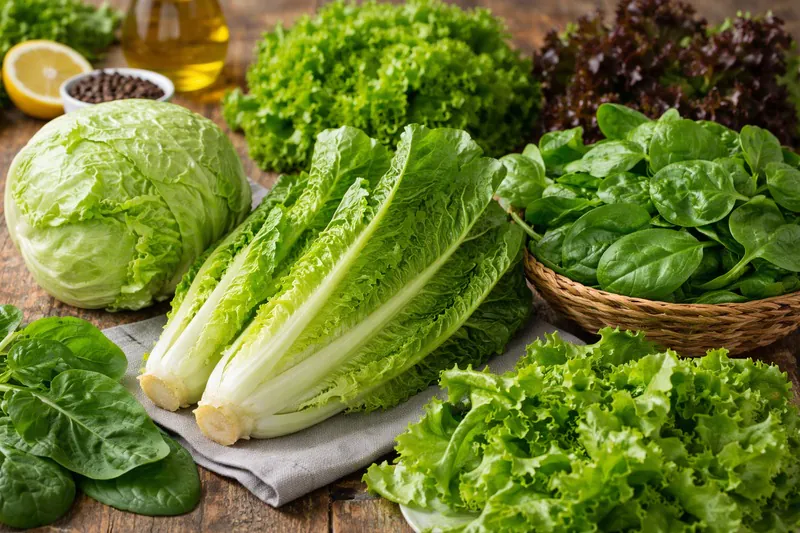
At Allcold, I’ve installed machines for clients ranging from massive Iceberg plantations in California to boutique organic farms in France growing mesclun mix. A common mistake I see is operators using a "set it and forget it" mentality. They press the same button for Romaine as they do for Spinach. This is dangerous. The physics of vacuum cooling relies on evaporation, and the ease with which moisture escapes the plant tissue—known as "Water Yield Resistance"—varies wildly between crops. In this guide, I will break down exactly how to tweak your Allcold AVC machine for the "Big Three" categories: Iceberg, Romaine, and delicate Leafy Greens.
Iceberg Lettuce: The "King of Speed" or a Freezing Risk?
Iceberg lettuce is the easiest crop to vacuum cool, but its density can be deceptive. It loves to give up its water, which makes it cool incredibly fast—sometimes too fast.
Iceberg lettuce has a very low "Water Yield Resistance," meaning moisture evaporates easily from its porous layers. This allows for the fastest cooling cycles (often under 20 minutes), but operators must be careful not to overshoot the target temperature, which can cause the outer leaves to freeze and turn transparent.
The Physics of the "Ball"
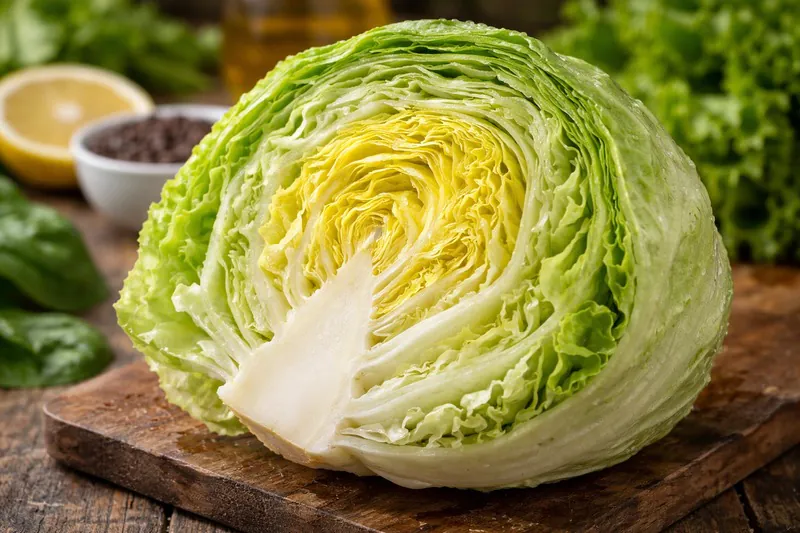
Iceberg1 lettuce is essentially a ball of water wrapped in leaves. It has a large surface area-to-volume ratio internally because of the way the leaves are folded. This structure is perfect for vacuum cooling. When the pressure drops in our AVC chamber, the vapor finds an easy path out from the core.
For my clients growing Iceberg, we typically see the fastest cycle times. A standard 4-pallet AVC-4000 system can drop Iceberg from 25°C to 2°C in as little as 18 to 22 minutes.
The Danger Zone: Freezing
However, speed brings risks. Because the moisture evaporates so readily, the temperature can plummet past the target if the sensors are not placed correctly.
If the core reaches 0°C or -1°C, the water inside the cells crystallizes. When it thaws, the cell walls rupture, and the lettuce looks "glassy" or water-soaked.
My Tip for Operators: Always insert the temperature probe into the densest part of the hardest head of lettuce you can find on the pallet. This ensures the machine controls the cooling based on the "worst-case scenario." On our Siemens touch screens, we set a strict "Cut-Off Temperature" at 1.5°C to provide a safety buffer against freezing.
Table: Iceberg Cooling Profile
| Feature | Iceberg Lettuce Characteristics | Recommended AVC Strategy |
|---|---|---|
| Density | High (Compact Ball) | Probe placement in core is critical |
| Moisture Release | Very Fast (Low Resistance) | Aggressive vacuum pull-down allowed |
| Freezing Risk | Moderate to High | Set cut-off at >1.5°C |
| Typical Cycle | 18 – 25 Minutes | Standard Fast Cycle |
Romaine (Cos) Lettuce: Why is the "Heart" so Hard to Cool?
Romaine is the tricky middle child. The leaves are open, but the "heart" is a dense, fibrous stalk. This creates a conflict: the leaves cool fast, but the heart stays warm.
Romaine lettuce, particularly Romaine Hearts, has a higher density in the stem than leaf varieties. To prevent "Pink Rib" (oxidation) and ensure the core cools down without freezing the tips, we utilize the "Vacuum Delay" function to slow the pressure drop during the final phase of the cycle.
The "Pink Rib2" Battle
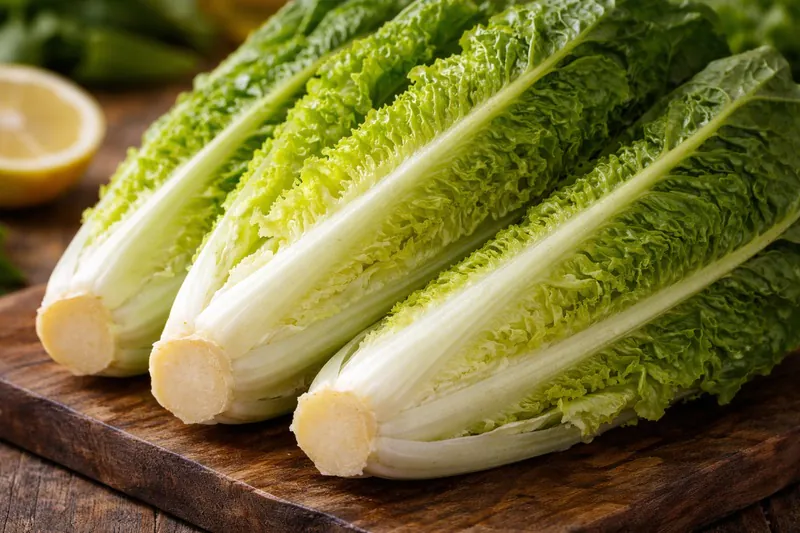
I mentioned earlier that "Pink Rib" is a major issue for Romaine. This physiological disorder is accelerated by heat. The problem with Romaine is that the thick white rib holds heat much longer than the thin green leaf.
If you pull the vacuum too fast (like you would for Iceberg), the green tips might hit 1°C while the rib is still at 7°C. The machine thinks it’s done, stops, and you ship the product. Two days later, the heat from the rib radiates out, warms the bag, and the ribs turn pink.
The Solution: Pulse Cooling
For Romaine, especially bagged hearts, I advise my clients to use a "Pulsed" or "Stepped" cooling cycle.
Instead of dropping the pressure in one straight line, our software allows the vacuum to hold at a specific level (e.g., 8 millibars) for a few minutes. This allows the heat from the dense rib to migrate to the surface moisture before we finish the cycle.
It takes a little longer—maybe 25 to 30 minutes instead of 20—but the result is a uniform temperature throughout the rib, which is the only way to guarantee a 21-day shelf life without discoloration.
Leafy Greens & Spinach: How to prevent "Exploding" Cells?
Spinach, Arugula (Rocket), and Baby Leaf mix are incredibly fragile. They have almost no structure. If you subject them to a violent vacuum, you can literally tear the tissue apart.
Delicate leafy greens have high "Water Yield Resistance" relative to their structural strength. A rapid pressure drop can cause internal moisture to boil faster than it can escape, causing the leaves to burst or bruise. For these crops, a gentle "Hydro-Vacuum" cycle or a slower pump speed is essential.
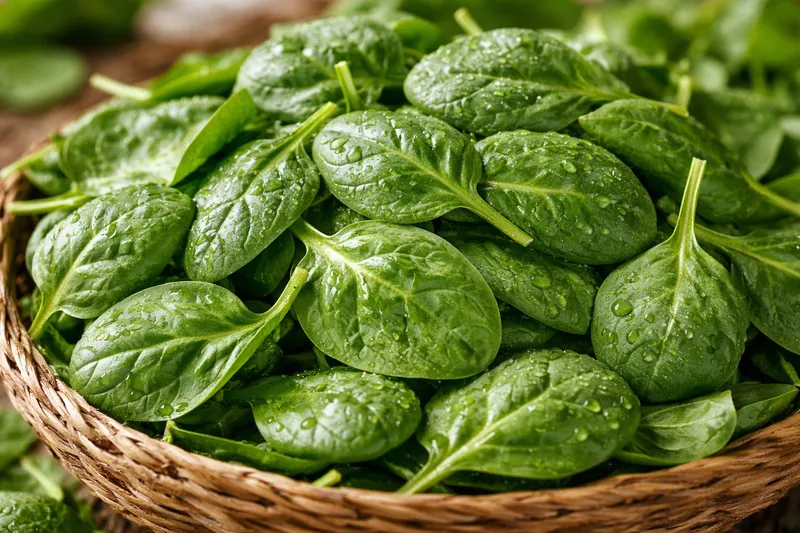
The Mechanics of "Pop"
Imagine a balloon. If you expand the air inside it slowly, it stretches. If you expand it instantly, it pops.
Leafy greens like Spinach have very small stomata (pores) and thin cell walls. When we drop the pressure, the water inside turns to vapor and expands 1,600 times in volume. If that vapor cannot exit the leaf fast enough through the pores, it ruptures the cell wall.
The result? The leaves look dark, bruised, or "cooked" immediately after cooling.
The Gentle Cycle
For these high-value crops, we program the Allcold AVC to use a Gentle Ramp-Up3.
- Slower Evacuation: We reduce the speed of the vacuum pump (using a Variable Frequency Drive) as we approach the flash point.
- Hydro-Injection: We often recommend the Hydro-Vacuum4 option for spinach. By spraying a fine mist of water before the cycle, we provide "free" surface water for evaporation. The machine evaporates this added water first to remove the initial heat, sparing the internal moisture of the delicate leaf. This keeps the leaves turgid and heavy, rather than limp and dried out.
Mixed Loads: Can You Cool Iceberg and Romaine Together?
Realistically, harvest schedules are messy. Sometimes you have 2 pallets of Iceberg and 2 pallets of Romaine ready at the same time. Can you put them in the same chamber?
Mixing loads is possible but risky. You must always program the machine for the "hardest to cool" product (usually the Romaine or Spinach). While this means the Iceberg will take slightly longer than necessary to cool, it ensures the denser products reach the target temperature without compromising quality.
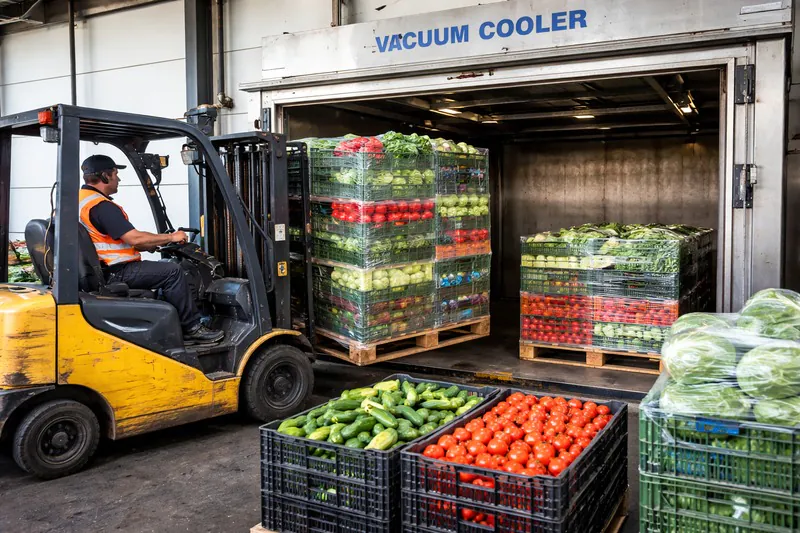
The Lowest Common Denominator Rule
I get asked this by logistics managers constantly: "Mila, can we mix the loads to save time?"
Technically, yes. The vacuum chamber doesn’t know what is inside. It just removes air. However, physics dictates that the cooling speed is determined by the product with the highest resistance to water loss.
If you run an "Iceberg Cycle5" (fast and aggressive) on a mixed load:
- The Iceberg will be perfect.
- The Romaine will be hot in the core.
- The Spinach might be bruised.
The Correct Protocol
If you must mix loads (which I generally advise against for maximum efficiency), you must follow the "Safe & Slow" Protocol:
- Probe Placement: Place the temperature probes in the slowest cooling product (the Romaine hearts). Do not put the probe in the Iceberg.
- Settings: Select the "Romaine" or "Dense Veg" program on the touch screen.
- Result: The Iceberg will simply sit there and wait for the Romaine to catch up. It won’t freeze (because the pressure dictates the temperature), but the cycle will take the full 30 minutes required for the Romaine. You lose a little efficiency on the Iceberg, but you save the quality of the Romaine.
Packaging Impact: Does Plastic Wrap Stop the Vacuum?
We’ve talked about the vegetable, but what about the box? Most lettuce is wrapped in plastic or packed in cartons. Does this block the cooling process?
Vacuum cooling is the only method that can cool produce inside sealed packaging. However, the packaging must have micro-perforations or be unsealed to allow water vapor to escape. Solid plastic bags without vents will balloon and burst, or prevent cooling entirely.
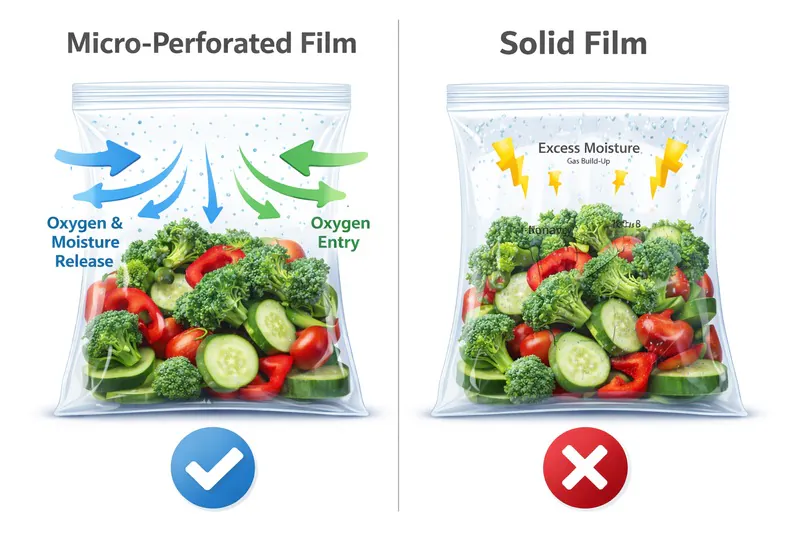
The Vapor Path
Vacuum cooling is not about air touching the product; it is about vapor leaving the product.
If you wrap a head of lettuce in a solid, airtight plastic bag, the vapor cannot escape. The bag will inflate like a balloon because the pressure inside the bag is higher than the pressure in the chamber. Eventually, it will pop, or the lettuce inside will remain hot because evaporation stopped.
Optimizing Packaging for AVC
For my clients supplying supermarkets (who require wrapped produce), we recommend Micro-Perforated Film6.
- Perforations: Even tiny holes (needle-point size) are sufficient. As long as vapor can flow, cooling can happen.
- Cardboard Boxes: Standard cardboard boxes / cartons are no problem. The vacuum penetrates cardboard instantly.
- Plastic Liners: If you use a plastic liner inside a crate, do not fold it over and seal it tight. Leave the top open or use a perforated liner.
Correct packaging ensures that the "Vacuum Delay7" settings we discussed earlier actually work on the vegetable, rather than fighting against the plastic wrap.
Conclusion
There is no "Magic Button" that works perfectly for every crop. The Allcold AVC series is a precision instrument, not a blunt tool. Iceberg demands speed and frost protection; Romaine demands patience to penetrate the heart; and Spinach demands a gentle touch to preserve its structure. By understanding these biological differences and utilizing the programmable recipes on our Siemens controllers, you can switch from one crop to another in seconds, ensuring that whether it’s a dense heart or a fragile leaf, it arrives at the market as fresh as the moment you cut it.
-
Explore the benefits of Iceberg lettuce cultivation to enhance your understanding of its unique properties and growing techniques. ↩
-
Learn about the causes of Pink Rib to better manage and prevent this issue in your produce. ↩
-
Understanding the Gentle Ramp-Up process can enhance your knowledge of preserving delicate crops like spinach during vacuum cycles. ↩
-
Exploring Hydro-Vacuum technology will reveal innovative methods for maintaining the quality of leafy greens during processing. ↩
-
Understanding the Iceberg Cycle can help optimize cooling processes and maintain food quality during transport. ↩
-
Explore this link to understand how Micro-Perforated Film enhances produce freshness and optimizes vacuum cooling. ↩
-
Learn about Vacuum Delay to ensure effective cooling and preservation of vegetables during transport. ↩

Mila
You May Also Like
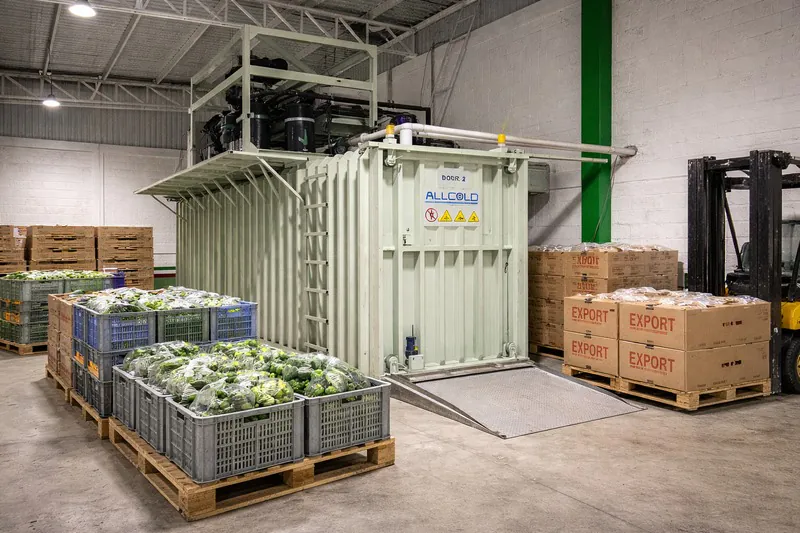
Buying a Vacuum Cooler for Fresh Produce Export? Avoid These Costly Procurement Mistakes
Buying a vacuum cooler for fresh produce export is not simply a machine purchase. It is a project decision that
How Much Produce Shrink Can Better Pre-Cooling Prevent in Export Projects?
Produce shrink in export projects is not simply a freshness problem. It is a commercial problem that compounds across every
Technical Specifications of Industrial Lettuce Vacuum Cooling Systems?
Buyers often look at a quote and only see the price. They ignore the technical specifications. This is a mistake.
Lettuce Vacuum Cooler Capacity Guide: Sizing for Your Operation?
Investing in a vacuum cooler is a significant decision, but choosing the wrong size can be an even more expensive
Field-to-Fork: Lettuce Vacuum Cooling in the Cold Chain Process?
We often talk about "freshness" as if it were magic, but in the lettuce business, freshness is purely a matter
Vacuum Cooling Organic Lettuce: Best Practices for Premium Quality?
Organic lettuce is a promise to the consumer: no chemicals, no shortcuts, just nature. But without the safety net of
Pre-Cooling Lettuce: Why Vacuum Cooling is the Industry Standard?
In the fresh produce industry, the clock starts ticking the moment a knife cuts a stem. For lettuce, heat is
Optimal Vacuum Cooling Parameters for Lettuce: Temperature and Timing?
In the world of post-harvest preservation, precision is the difference between a crisp, profitable shipment and a slimy, rejected claim.
Benefits of Vacuum Cooling for Lettuce Quality and Shelf Life?
Lettuce is 95% water, wrapped in cdsfvxgba fragile green skin. Once harvested, it is fighting a losing battle against heat
The Complete Guide to Vacuum Cooling Technology for Lettuce Production?
Lettuce is a race against nature. From the moment the stem is cut in the field, respiration heat begins to