
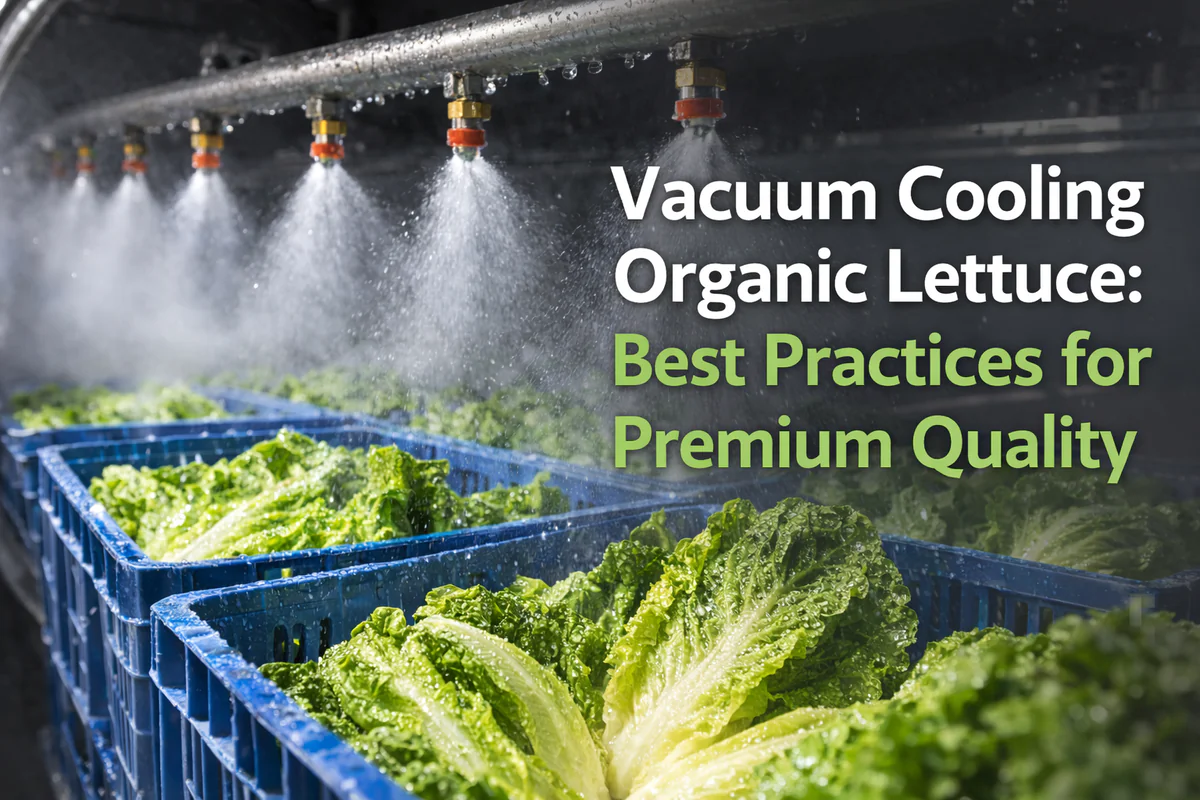
Vacuum Cooling Organic Lettuce: Best Practices for Premium Quality?
Organic lettuce is a promise to the consumer: no chemicals, no shortcuts, just nature. But without the safety net of preservatives, organic produce is incredibly vulnerable to decay.
Vacuum cooling is the ideal post-harvest solution for organic lettuce because it is a chemical-free physical process. To maintain premium quality, operators must prioritize hygiene to prevent cross-contamination, use "Hydro-Vacuum" settings to minimize weight loss, and employ gentle pressure cycles to protect the often more fragile cell structure of organic leaves.
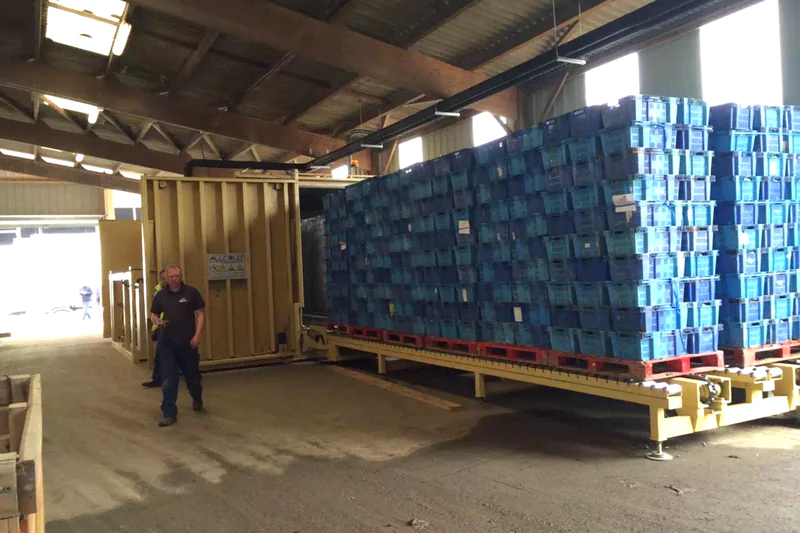
At Allcold, I have seen a massive shift in the market. Ten years ago, my clients were mostly conventional mega-farms. Today, I work with boutique organic growers in California, specialized co-ops in France, and high-tech vertical farms in Singapore. They all face the same dilemma: How do you keep a product fresh for 3 weeks without using fungicides or chlorine dips? The answer is physics. Vacuum cooling is the only "clean" technology that extends shelf life naturally. However, treating organic Romaine exactly like conventional Iceberg is a mistake. In this guide, I will share the specific best practices for handling organic greens to ensure your premium product justifies its premium price.
Why is Vacuum Cooling the Only "True" Organic Solution?
Conventional cooling methods often rely on water that contains sanitizers. For an organic grower, "chemical-free" isn’t just a marketing slogan; it’s a legal requirement.
Vacuum cooling is a 100% physical process that uses no gases, chemicals, or additives. It cools by boiling a fraction of the plant’s own water under low pressure. This makes it the only cooling method that inherently aligns with organic certification standards (like USDA Organic or EU Bio) while eliminating the risk of chemical residue.
The Problem with Hydrocooling for Organic
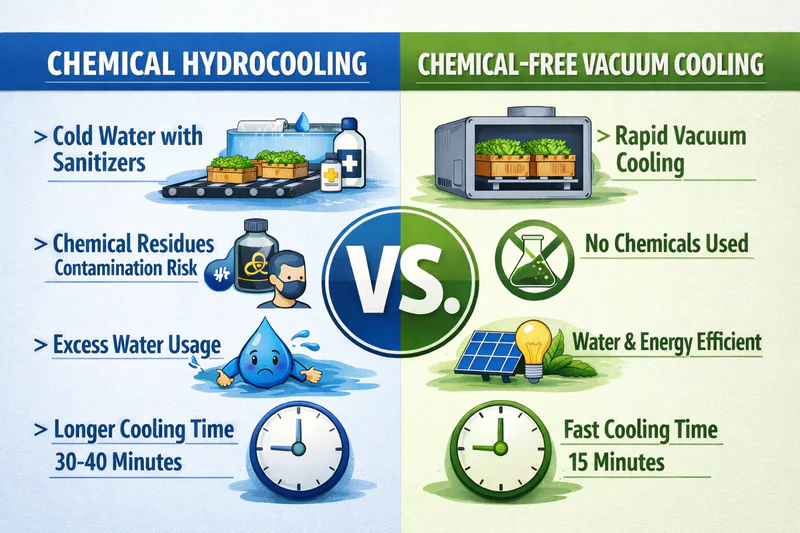
Many of my clients, like Carlos in Mexico, used to use hydrocooling (ice water showers). The problem is the water. To kill bacteria in the water, you must add chlorine or ozone.
For strict organic certification, the levels of these sanitizers are heavily regulated. If you use too little, you risk spreading E. coli from one dirty leaf to the entire batch. If you use too much, you violate organic standards or leave a chemical taste.
Vacuum cooling solves this by removing the medium entirely. There is no water bath. There is no recirculated soup of bacteria.
The cooling happens inside the sealed chamber via evaporation.
- No Contact: The cooling agent is the vacuum (empty space).
- No Residue: Nothing touches the lettuce but air and vapor.
This "dry" cooling method is the cleanest possible way to reduce temperature. For organic consumers who pay extra specifically to avoid chemical exposure, vacuum cooling preserves the integrity of the "Organic" label better than any other method.
Table: Organic Suitability1
| Method | Coolant Medium | Chemical Risk | Organic Suitability |
|---|---|---|---|
| Hydrocooling | Recirculated Water | High (Cross-contamination) | Low (Requires sanitizers) |
| Forced Air | Cold Room Air | Low (Mold spores in fans) | Moderate |
| Top Icing | Crushed Ice | Moderate (Ice source purity) | Moderate |
| Vacuum Cooling2 | Evaporation (Physics) | Zero (Closed System) | High (Gold Standard) |
How to Protect the "Crunch" of Pesticide-Free Leaves?
Organic lettuce often grows differently. Without synthetic growth boosters, the cell structure can be either denser or, ironically, more fragile due to insect pressure. How do we handle this variation?
Organic lettuce varieties can be structurally distinct and more sensitive to pressure changes. To preserve their texture, operators should utilize a "Pulsed Cooling" cycle. This gradual pressure drop prevents rapid cell expansion, ensuring the leaves remain crisp and turgid without bruising or becoming limp, which is critical for high-end retail.
The "Pop" Effect in Organic Crops
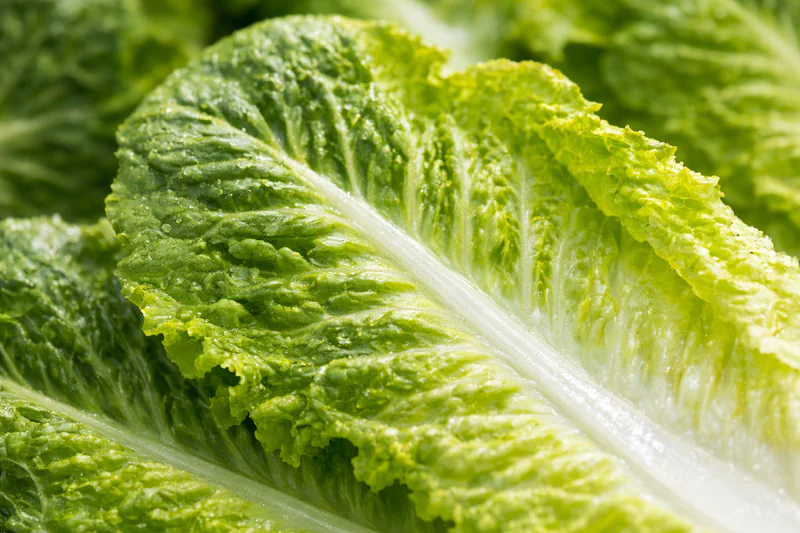
One thing I have learned from my interactions with agronomists is that organic crops can have different cell wall elasticity compared to conventional crops pumped full of nitrates.
If you pull a vacuum too fast—dropping from 1000 mbar to 6 mbar in 3 minutes—the water inside the cells turns to vapor explosively.
- Conventional Iceberg: Tough, watery, can handle the stress.
- Organic Baby Leaf3: Often more delicate. The rapid expansion can rupture the cell walls.
When the cell wall breaks, the lettuce loses its "crunch." It becomes limp.The Allcold Recipe
For my organic clients, I program a specific "Organic Soft" Recipe into the Siemens PLC.
This recipe uses a Variable Frequency Drive (VFD)4 on the vacuum pumps. - Step 1: Fast pull down to 30 mbar (remove the air).
- Step 2: Slow, stepped pull down from 30 mbar to 6 mbar (control the boil).
By slowing down the "Flash Phase," we allow the vapor to escape through the natural pores (stomata) of the leaf without tearing the tissue. The result is a head of lettuce that stays crunchy on the shelf for weeks, justifying the higher price tag.
Can You Cool Organic and Conventional in the Same Machine?
Most packhouses are mixed operations. They run conventional lines and organic lines. Can one machine handle both without violating certification rules?
Cross-contamination is a major violation of organic protocols. Since standard vegetable vacuum coolers are typically constructed from painted carbon steel (mild steel), best practices dictate rigorous cleaning schedules. Running organic loads first in the morning ("First In") avoids residue contact from previous conventional batches.
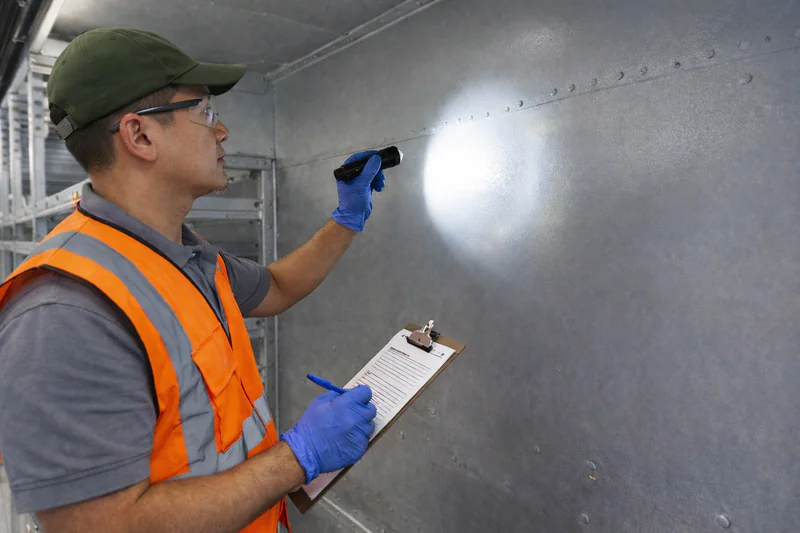
The "First In" Rule
Logistics managers hate downtime. They want to run the machine non-stop. But if you put a pallet of organic spinach into a chamber that just processed conventional celery (which might have pesticide residue on the crates), you technically compromise the organic status.
Although the risk is low (since vacuum cooling is air-based), auditors are strict.
My Advice to Operations Managers:
Always schedule your organic harvest for the first run of the day.
- Overnight: The machine is clean and dry.
- Morning (7 AM – 10 AM): Process all Organic loads.
- Mid-Day: Switch to Conventional loads.
- End of Day: Full wipe-down.
Maintaining Painted Steel
Unlike our food processing models which use stainless steel, standard vegetable coolers use High-Quality Painted Carbon Steel5. This is industry standard for field crops because the produce is packed in boxes and never touches the walls directly.
However, for organic certification6, the cleanliness of these walls matters.
- Paint Integrity: We use a specialized, durable epoxy paint that resists chipping and rust. It is crucial to inspect this coating regularly. If the paint chips, rust can form, which harbors bacteria.
- Cleaning Protocol: You cannot use harsh acids on painted steel. Instead, use mild, food-safe detergents and soft brushes. Ensure the floor of the chamber is swept and rinsed daily to remove any soil or leaf debris that could carry contaminants.
How to Prevent Weight Loss in High-Value Crops?
Organic lettuce sells by the head or by weight, often at $3.00 or more. Vacuum cooling evaporates water. Are you evaporating your profits?
To minimize weight loss in high-value organic crops, the "Hydro-Vacuum" feature is essential. By misting the produce with purified water inside the chamber, the machine evaporates this added surface water instead of the plant’s internal moisture, preserving 100% of the saleable weight.
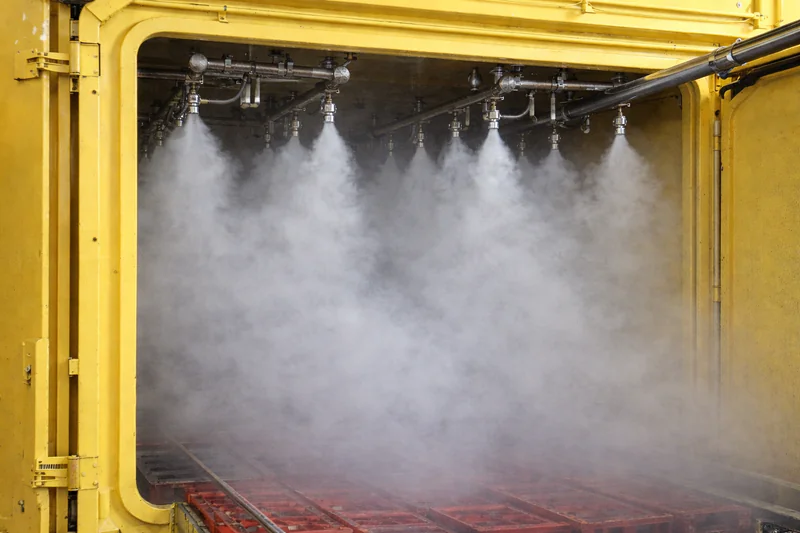
The Economics of 3%
Vacuum cooling typically causes 2% to 3% weight loss7 due to evaporation.
On a conventional pallet worth $500, losing $15 is acceptable for the speed gained.
On an organic pallet worth $1,500, losing $45 per pallet is painful. Over a season, that is thousands of dollars.
Furthermore, organic shoppers are picky. If the lettuce looks slightly dehydrated or "tired," they won’t buy it.
The Hydro-Vac Solution
We install a Hydro-Spray System8 in our premium models.
This system sprays a fine mist of water over the pallets inside the chamber before the vacuum starts.
- The Science: The vacuum pump doesn’t care where the water comes from. It just needs water to boil to absorb heat.
- The Trick: By adding 2% water to the surface, the machine boils that water off first. The internal water of the lettuce cells stays inside.
- The Result: The lettuce comes out at the same weight it went in. It is cold, crisp, and heavy.
Critical Note for Organics: The water used for the spray must be potable and filtered. You cannot use recycled water here. We recommend a dedicated Reverse Osmosis (RO) line for the Hydro-Vac system to ensure total purity.
Does Precise Cooling Replace Chemical Preservatives?
Conventional growers have an arsenal of sprays, waxes, and gases to keep things fresh. Organic growers have one weapon: Cold. How do we maximize it?
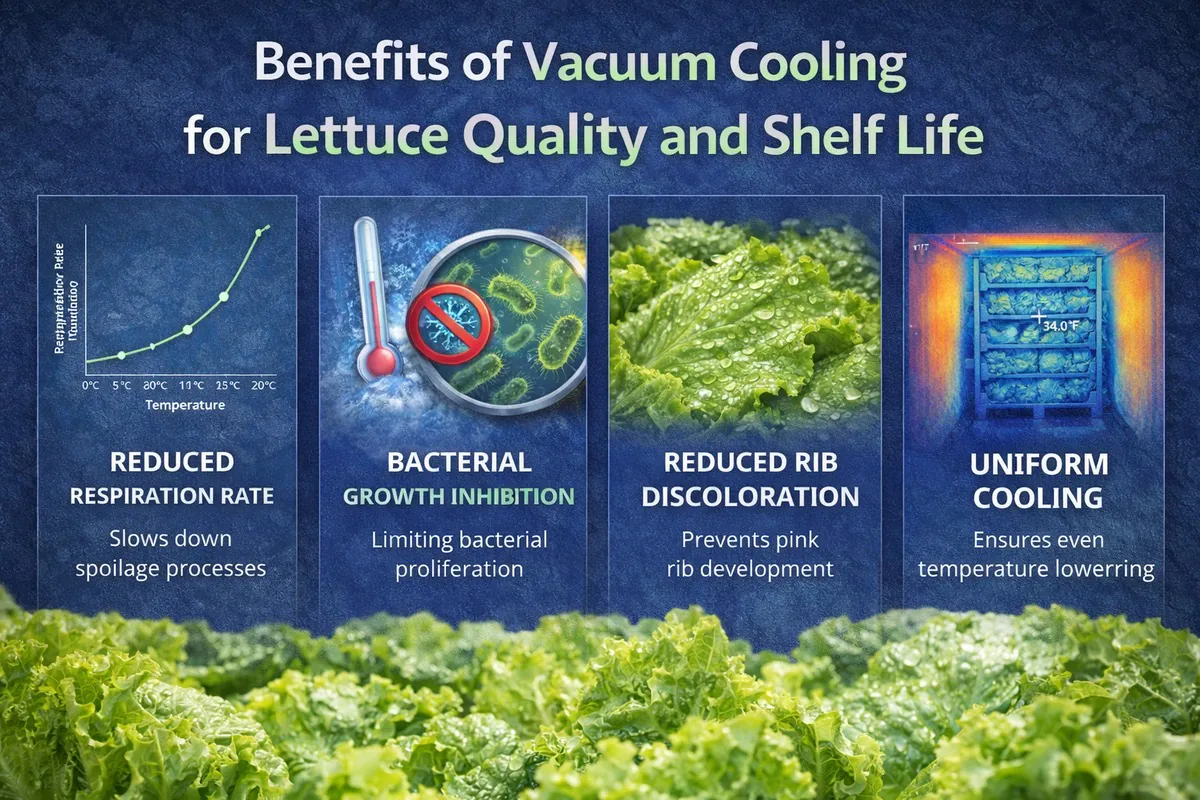
Without chemical preservatives, precise temperature control is the single most important factor for organic shelf life. Vacuum cooling guarantees a core temperature of 2°C throughout the pallet. This halts respiration and enzymatic breakdown immediately, effectively substituting the need for chemical inhibitors.
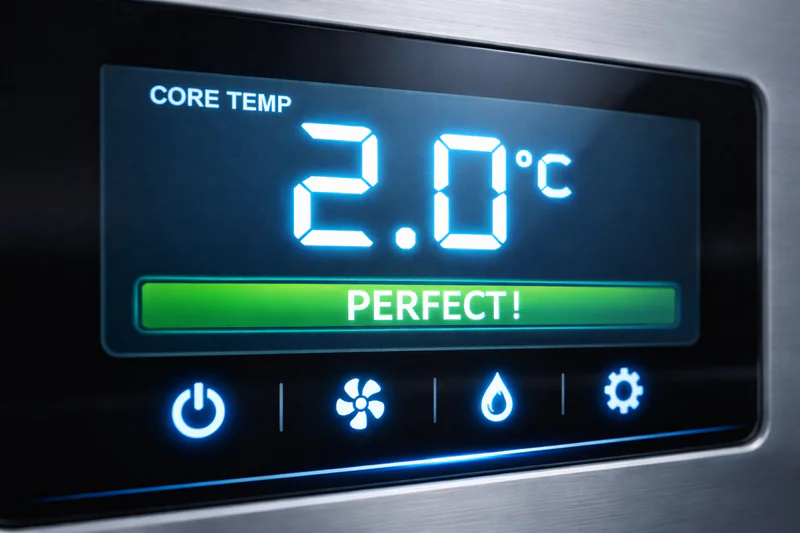
The "Cold Chain is King" Philosophy
I often tell my client Sophia, who manages a central kitchen: "You can’t cheat with organic."
If a conventional lettuce warms up to 10°C, the fungicides might keep the mold away for a few days.
If an organic lettuce warms up to 10°C, the natural bacteria on the leaf will start digesting it immediately. Pink Rib9 (oxidation) will appear within 24 hours.
Therefore, the Target Temperature10 must be hit accurately.
- Cold Room Limitations: In a cold room, the outer boxes hit 2°C, but the center boxes might stay at 6°C for a day. That 6°C is a death sentence for organic produce.
- Vacuum Precision: Our machines use core temperature probes. We do not stop the cycle until the heart of the densest head hits 2.0°C.
This uniformity is the only way to guarantee a 21-day shelf life without chemicals. By freezing the biological clock instantly and uniformly, we render the bacteria dormant, which is the only "preservative" an organic grower is allowed to use.
What Packaging Works Best for Vacuum Cooling Organic?
Organic brands often use compostable bags or PLA films to be "green." But are these materials strong enough to survive a vacuum chamber?
Sustainable packaging materials like PLA (polylactic acid) or compostable films are often mechanically weaker than standard plastic. Vacuum cooling requires these materials to be micro-perforated to allow airflow. Without vents, the pressure differential will burst biodegradable bags, damaging the product.
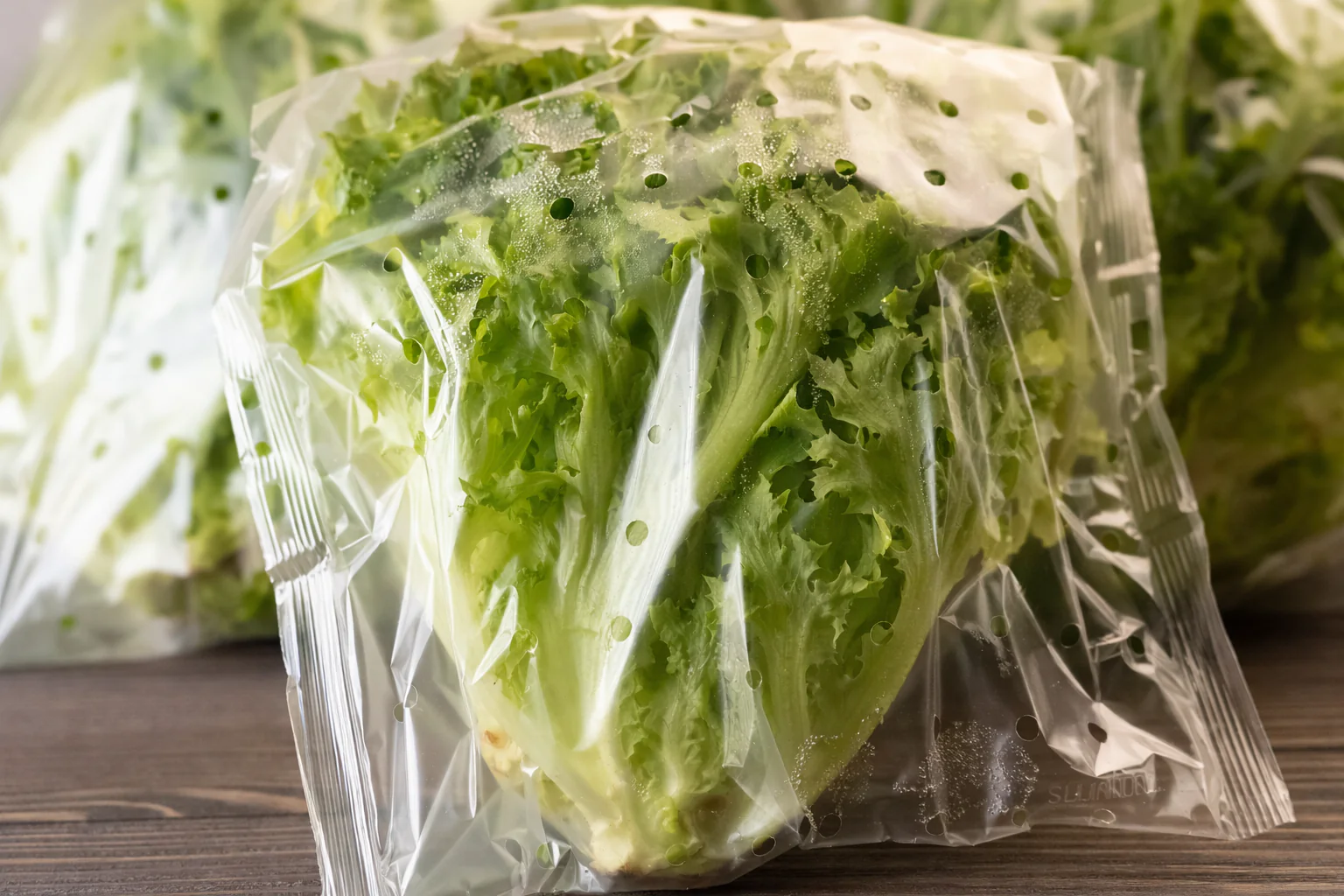
The Conflict: Green vs. Strong
Norman, a buyer in the US, recently switched his suppliers to "Home Compostable" bags. He immediately called me saying his bags were exploding in the vacuum cooler.
Standard Polyethylene (PE) is stretchy and strong. Compostable film (PLA/Corn starch) is brittle.
When the air inside the bag expands under vacuum, PE stretches. PLA snaps.
If the bag bursts, the lettuce falls out, or worse, the bag seals onto the lettuce like shrink wrap, suffocating it.
The Venting Requirement
To cool organic produce in eco-friendly packaging, you must use vented films.
- Micro-Perforations: You don’t need big holes. Needle-point holes are enough to let the vapor escape.
- Adjusting the Machine: If the packaging is weak, we slow down the Venting Speed (Repressurization).
Normally, we let air back into the chamber in 2 minutes. For fragile organic packaging, we stretch this to 4 minutes. This gentle return to atmospheric pressure prevents the "crushing" effect that can damage weak cardboard boxes or biodegradable liners.
We help our clients find the balance between being environmentally friendly and physically practical.
Conclusion
Producing organic lettuce is a labor of love, but selling it is a race against time. Vacuum cooling is the essential bridge between the field and the fork for the organic sector. It provides the cleanliness of a chemical-free process, the speed to lock in freshness, and the uniformity required to survive the supply chain. By using specific recipes—gentle pulsed cooling, hydro-spray for weight retention, and strict hygiene protocols for your painted steel chambers—you ensure that the premium product you harvested is the same premium product the customer takes home.
-
Understanding Organic Suitability can help consumers make informed choices about food safety and organic standards. ↩
-
Explore the advantages of Vacuum Cooling, a method that ensures organic integrity without chemical exposure. ↩
-
Explore the unique qualities of Organic Baby Leaf and understand why it’s more delicate yet flavorful, enhancing your culinary experience. ↩
-
Learn how VFD technology optimizes vacuum processes, ensuring better quality preservation in organic produce. ↩
-
Explore this link to understand why High-Quality Painted Carbon Steel is essential for maintaining hygiene and durability in food processing. ↩
-
Discover the steps and requirements for organic certification, ensuring your products meet the highest standards. ↩
-
Understanding the impact of weight loss in vacuum cooling can help optimize processes and reduce costs. ↩
-
Exploring the Hydro-Spray System can reveal innovative solutions for maintaining product quality during cooling. ↩
-
Understanding Pink Rib is crucial for maintaining the quality of organic produce. Explore this link to learn more about its impact. ↩
-
Discover the significance of Target Temperature in preserving organic food quality and safety. This resource will enhance your knowledge. ↩

Mila
You May Also Like
Buying a Vacuum Cooler for Fresh Produce Export? Avoid These Costly Procurement Mistakes
Buying a vacuum cooler for fresh produce export is not simply a machine purchase. It is a project decision that
How Much Produce Shrink Can Better Pre-Cooling Prevent in Export Projects?
Produce shrink in export projects is not simply a freshness problem. It is a commercial problem that compounds across every
Technical Specifications of Industrial Lettuce Vacuum Cooling Systems?
Buyers often look at a quote and only see the price. They ignore the technical specifications. This is a mistake.
Lettuce Vacuum Cooler Capacity Guide: Sizing for Your Operation?
Investing in a vacuum cooler is a significant decision, but choosing the wrong size can be an even more expensive
Field-to-Fork: Lettuce Vacuum Cooling in the Cold Chain Process?
We often talk about "freshness" as if it were magic, but in the lettuce business, freshness is purely a matter
Pre-Cooling Lettuce: Why Vacuum Cooling is the Industry Standard?
In the fresh produce industry, the clock starts ticking the moment a knife cuts a stem. For lettuce, heat is
Optimal Vacuum Cooling Parameters for Lettuce: Temperature and Timing?
In the world of post-harvest preservation, precision is the difference between a crisp, profitable shipment and a slimy, rejected claim.
Vacuum Cooling Different Lettuce Varieties: Is One Setting Enough for All?
Not all lettuce is created equal. A dense head of Iceberg is a fortress of water, while delicate Baby Spinach
Benefits of Vacuum Cooling for Lettuce Quality and Shelf Life?
Lettuce is 95% water, wrapped in cdsfvxgba fragile green skin. Once harvested, it is fighting a losing battle against heat
The Complete Guide to Vacuum Cooling Technology for Lettuce Production?
Lettuce is a race against nature. From the moment the stem is cut in the field, respiration heat begins to