

When Should You NOT Use Vacuum Cooling for Your Bakery?
Are you tired of waiting hours for your bread to cool down while your profits evaporate? You might think vacuum cooling is the magic solution for everything, but is it really?
Vacuum cooling is not suitable for products with very low moisture content (like cookies), items requiring slow structural setting, or goods that are already below 60°C. Using it incorrectly can lead to dried-out products, exploded fillings, and wasted energy expenses that hurt your bottom line.
I have spent years at Allcold helping clients like Norman from the US and Carlos from Mexico optimize their cooling lines. I usually talk about how amazing our machines are. However, honesty is the foundation of my business. Sometimes, a vacuum cooler is simply the wrong tool for the job. If you use it on the wrong products or at the wrong time, you will not get that fluffy, crispy result. Instead, you might ruin a whole batch. Let’s look at the specific situations where you should keep the vacuum cooler turned off.
Is Your Product Moisture Content Too Low?
Do you bake crispy cookies, dry crackers, or dense biscuits? If you do, putting them into a powerful vacuum chamber might be the biggest mistake you make today.
Vacuum cooling relies entirely on the evaporation of moisture from inside the product. If your baked goods, like cookies or crackers, contain very little water, the machine cannot cool them effectively, and you will simply waste electricity without lowering the temperature.

Understanding Flash Evaporation
I need to explain the physics here in simple terms. Vacuum cooling works by "flash evaporation." The machine lowers the pressure in the chamber. This forces a small percentage of the water inside your bread to boil and turn into steam. This process takes the heat away with it. This is why our machines, like the AVCF-150, can take bread from 100°C down to 28°C in just 10 minutes.
Why Dry Products Fail
However, this process requires water. If you are baking cookies, biscotti, or thin crackers, the moisture content is already extremely low when they come out of the oven. If you put these into a vacuum cooler, two bad things happen. First, the machine runs its pumps, consuming energy, but the temperature barely drops because there is no water to evaporate. Second, any tiny bit of moisture remaining will be sucked out violently. Your cookies won’t just be cool; they will be bone-dry and potentially brittle to the point of breaking.
Water Yield Resistance
I often tell my clients that understanding "Water Yield" is key. Our machines even have a "Vacuum delay facility" to help with products that have high water yield resistance. But for low-moisture goods, no setting can fix the lack of water.
Table: Vacuum Cooling Compatibility Check
| Product Type | Moisture Content | Vacuum Suitability | Result |
|---|---|---|---|
| Sourdough Bread | High | Excellent | Crispy crust, moist crumb |
| Sponge Cake | Medium-High | Good | Fluffy, holds shape |
| Cookies | Very Low | AVOID | Over-dried, inefficient cooling |
| Crackers | Very Low | AVOID | Brittle, energy waste |
| Baguettes | High | Excellent | Extended shelf life |
If you are like my client Norman, who looks for competitive prices, running a high-power machine on a product that doesn’t need it is just burning money.
Does Your Product Contain Unstable Fillings?
Imagine opening the cooler door and finding your delicious jam tarts have exploded all over the stainless steel walls. This is a nightmare for cleaning and production schedules.
Products with liquid fillings, like piping hot fruit jams or certain creams, can react poorly to rapid pressure drops. The filling may boil and expand faster than the outer crust, causing the product to burst and creating a significant hygiene hazard in the chamber.

The Boiling Point Issue
This is a technical point that touches on what Sophia, my client from Singapore, cares about most: hygiene and HACCP standards. When we lower the pressure in the vacuum chamber, we lower the boiling point of water. This is great for the dough. But if you have a liquid filling, like a hot strawberry jam or a very liquid custard, that filling behaves like a liquid, not a solid sponge.
Hygiene Disasters
As the pressure drops, the water inside that hot jam flashes into steam very aggressively. In a porous structure like bread, the steam escapes through the pores. In a sealed tart or a donut, the steam is trapped. The result? The filling expands rapidly and can rupture the crust. You end up with jam splattered all over the internal chamber of the machine.
Maintenance Consequences
Our manuals explicitly state that "overall hygiene maintenance" is required regularly. If you are exploding tarts every day, you are not just losing product; you are creating a cleaning disaster. You will spend more time scrubbing sugar off the walls than you saved by cooling quickly.
Furthermore, some fillings might cool at a different rate than the dough. You might end up with a cool crust but a core that is still dangerously hot, or a filling that has separated because the water evaporated out of the gel structure. For these delicate items, traditional air cooling or a very gentle, programmed cooling cycle (which we can customize) is necessary. But standard "fast" cycles are a risk.
Checklist for Filled Products:
- Is the filling liquid at high temperatures?
- Is the outer shell sealed tight (no vents)?
- Does the filling rely on precise water content for texture?
If you answered yes, proceed with extreme caution or stick to conventional cooling.
Is Your Product Temperature Already Too Low?
Sometimes, production delays happen. Maybe the bread sat on the rack for 20 minutes before reaching the cooling room. Is it still worth turning on the vacuum cooler?
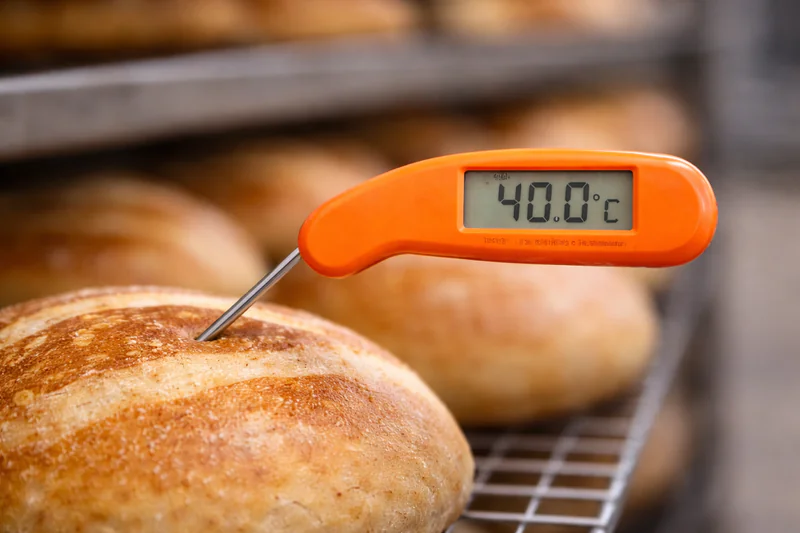
Vacuum cooling is most efficient at high temperatures, specifically when the product is between 100°C and 60°C. If your product has already naturally cooled below 60°C, the energy required to remove the remaining heat via vacuum increases significantly, reducing the return on investment.
The Flash Point Efficiency
I recently reviewed a quotation for a client in Vietnam where we specified: "Bread Go in Temperature: 100°C". This is not just a suggestion; it is the sweet spot for the physics of our machine.
The "flash point" or the zone of highest efficiency happens when the product is very hot. At 100°C, water turns to steam very easily with just a slight drop in pressure. The cooling curve is steep and fast. You get massive temperature reduction for your energy input.
Diminishing Returns
However, once the product drops below 60°C, the curve flattens. To cool a loaf from 40°C to 20°C takes much more work from the vacuum pump than cooling it from 90°C to 70°C. The pump has to work harder to achieve the lower pressures required to boil water at 40°C.
Operational Advice
If your logistics are poor and the trolleys sit in a hallway for 30 minutes, losing that initial "heat energy," you have missed the window. Putting lukewarm bread into the AVCF-150 is inefficient. My client Carlos, who values energy efficiency, knows that timing is everything. If the product is already lukewarm, you are better off letting it finish in an air-conditioned room rather than spiking your electricity bill to shave off the final few degrees.
Additionally, our manuals note that the object temperature should be set above 0°C. While that is a safety limit, the efficiency limit is much higher. Don’t use the machine as a refrigerator; use it as a rapid cooler for hot products.
Efficiency Comparison:
- Zone A (100°C – 60°C): High Efficiency. Maximum water flash. Fastest cooling speed.
- Zone B (60°C – 30°C): Medium Efficiency. Slower evaporation. Good for finishing, but costly to start here.
- Zone C (<30°C): Low Efficiency. Not recommended for starting. Use a standard cold room.
Do You Need the "Staling" Process for Structure?
This sounds counter-intuitive. Why would you want staling? Well, some traditional products actually need a slow retrograde process to set their crumb structure correctly.
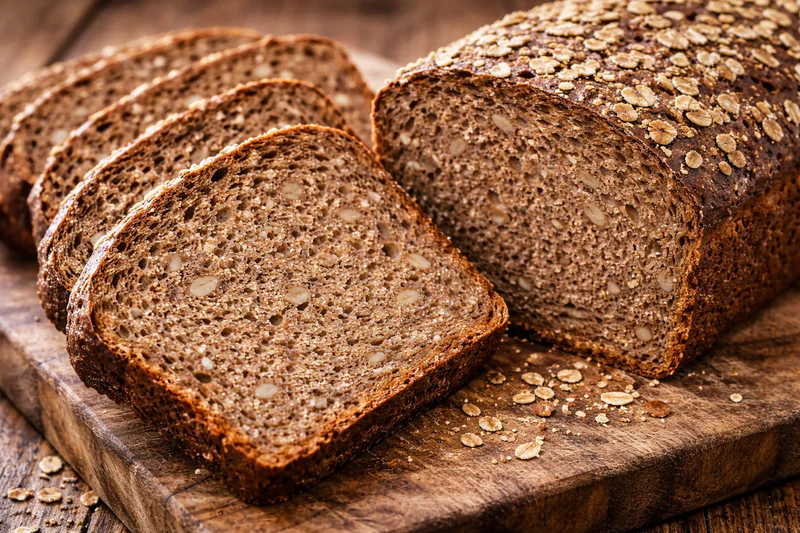
Certain dense cakes, heavy ryes, or specific gluten-free products need time for the starch to gelatinize and retrograde slowly to hold their shape. Rapid vacuum cooling can sometimes halt this process too early, leading to a gummy texture or a collapsed center.
The Chemistry of Baking
Vacuum cooling is intense. We are sucking heat out rapidly. For standard wheat bread, buns, and sponge cakes, this is amazing because it stabilizes the structure instantly and prevents the crust from getting soggy. It locks in the volume.
However, baking is chemistry. Some chemical reactions require time. I have seen bakers try to vacuum cool very heavy, dense fruit cakes or specific types of heavy rye breads. These products rely on the "carry-over baking" that happens as the product slowly cools from 95°C down to room temperature. The center of the cake continues to set during this slow period.
If you interrupt this with a 10-minute vacuum cycle, you stop that internal cooking instantly. The starches may not have fully set. When you cut into the product later, you might find the center is gummy or "wet," not because it has too much water, but because the structure didn’t finish forming.
Also, consider the crust. Vacuum cooling is famous for keeping crusts crispy. But what if you want a soft, chewy crust? Think about certain soft rolls that are bagged warm to sweat slightly. If you vacuum cool them, the crust becomes dry and crisp. You would then need to modify your recipe to add fats or softeners to compensate. If you are not willing to change your recipe, vacuum cooling might not be for you.
For clients like Sophia in Singapore who need consistent, high-volume fast food products, we can adjust the recipe to fit the machine. But if you are an artisan baker refusing to change a 100-year-old recipe that requires a 4-hour slow cool, do not use this machine.
Is Your Maintenance Schedule Non-Existent?
This is not about the product; this is about you. A vacuum cooler is a sophisticated piece of machinery, not a simple table. If you ignore it, it will fail you.
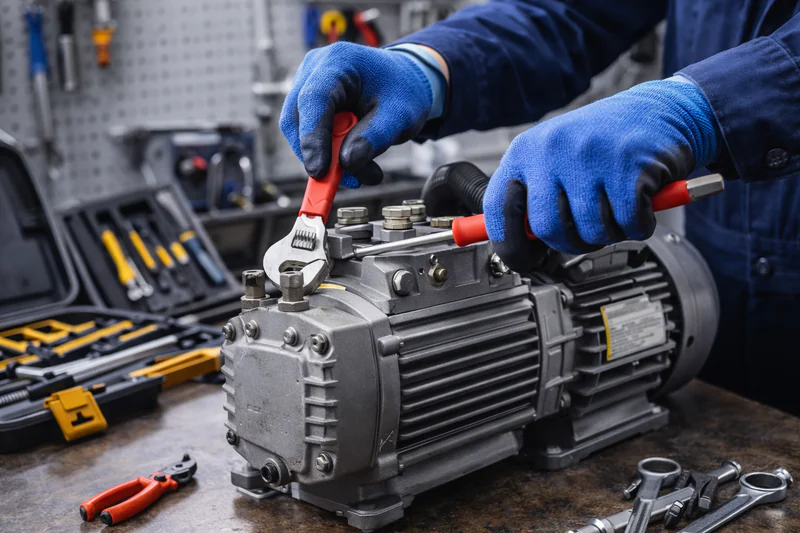
If your facility lacks a dedicated maintenance team or a schedule for checking pumps, filters, and condensers, you should not install a vacuum cooler. These machines require clean filters and oil checks to function; neglecting them leads to breakdowns during critical high-season shifts.
The Cost of Neglect
I am very proud of the components we use at Allcold. We use Bitzer compressors from Germany, Leybold vacuum pumps, and Schneider electrics. These are top-tier brands. However, even a Ferrari needs an oil change.
Our manuals clearly state: "Overall hygiene maintenance every two seasons" and checking that the "air compressor could work and pressure reaches 6-8 bars". We also specify that if the machine is left unused, you must protect it from dampness and dust.
Routine Checks
I have seen clients who just run the machine until it stops. They don’t check the oil in the vacuum pump. They don’t clean the condenser coils. Then, right in the middle of a busy season (like Carlos faces in Mexico), the machine shuts down.
If you are a small bakery owner who thinks "maintenance" just means wiping the table, this technology might be too advanced for your current workflow. You need a mindset of prevention. We provide "trouble-shooting assist systems" and "remote control" support, but we cannot physically reach through the screen to change a filter for you.
Essential Maintenance
If you cannot commit to the maintenance, stick to racks and fans. They are slower, but they don’t have vacuum pumps that need care. But if you are ready to be professional, like my typical customers, the maintenance is a small price to pay for the massive efficiency gains.
Essential Maintenance Checklist from Our Manuals:
- Daily: Clean the chamber to prevent mold/bacteria.
- Weekly: Check oil levels in the vacuum pump.
- Monthly: Inspect the air-cooled condenser for dust blockage (crucial for KW rating efficiency).
- Seasonal: Full hygiene maintenance.
Conclusion
Vacuum cooling is a game-changer for speed and shelf life, but it’s not magic. Avoid it for low-moisture cookies, delicate fillings, or if you can’t commit to basic maintenance.

Mila
You May Also Like

Is Your Cooling Strategy Burning Your Profits? A Cost-Benefit Analysis of Vacuum vs. Conventional Cooling
As a bakery owner, you look at your balance sheet every month. You see the cost of ingredients, labor, and
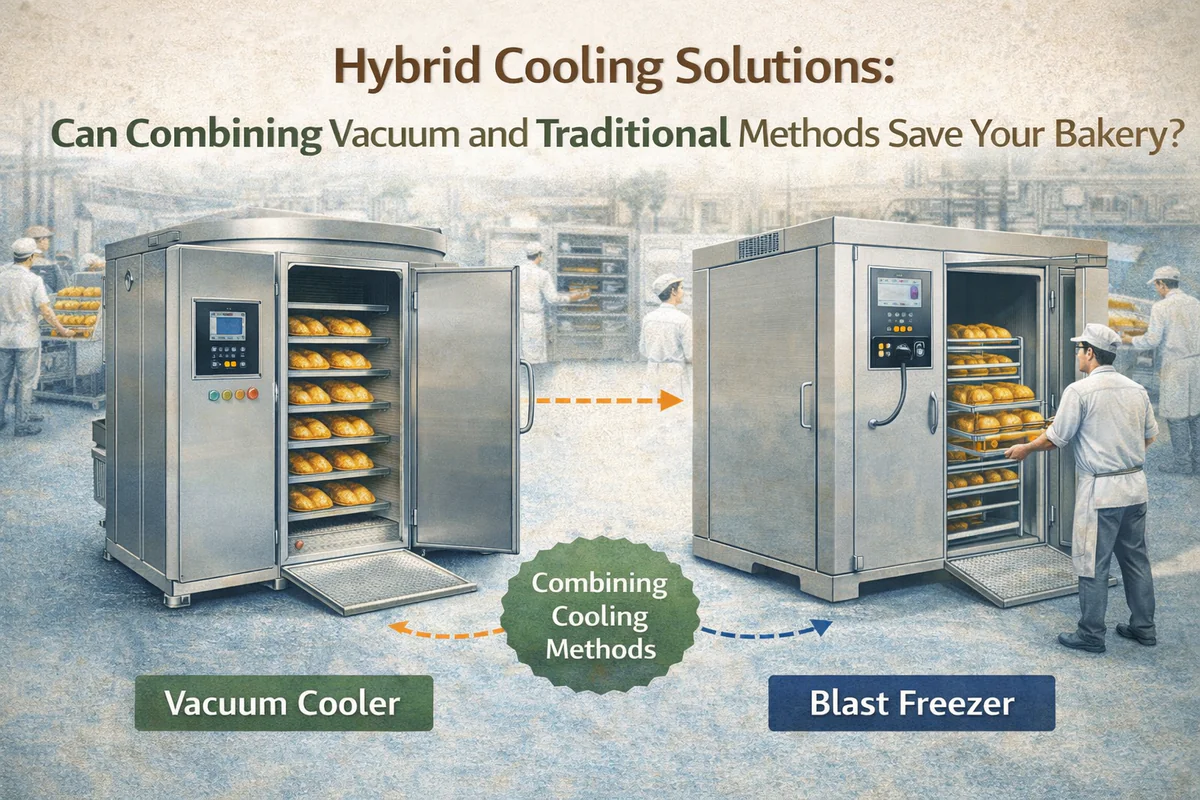
Hybrid Cooling Solutions: Can Combining Vacuum and Traditional Methods Save Your Bakery?
Are you torn between the speed of new technology and the reliability of traditional freezing? Many bakery owners feel they
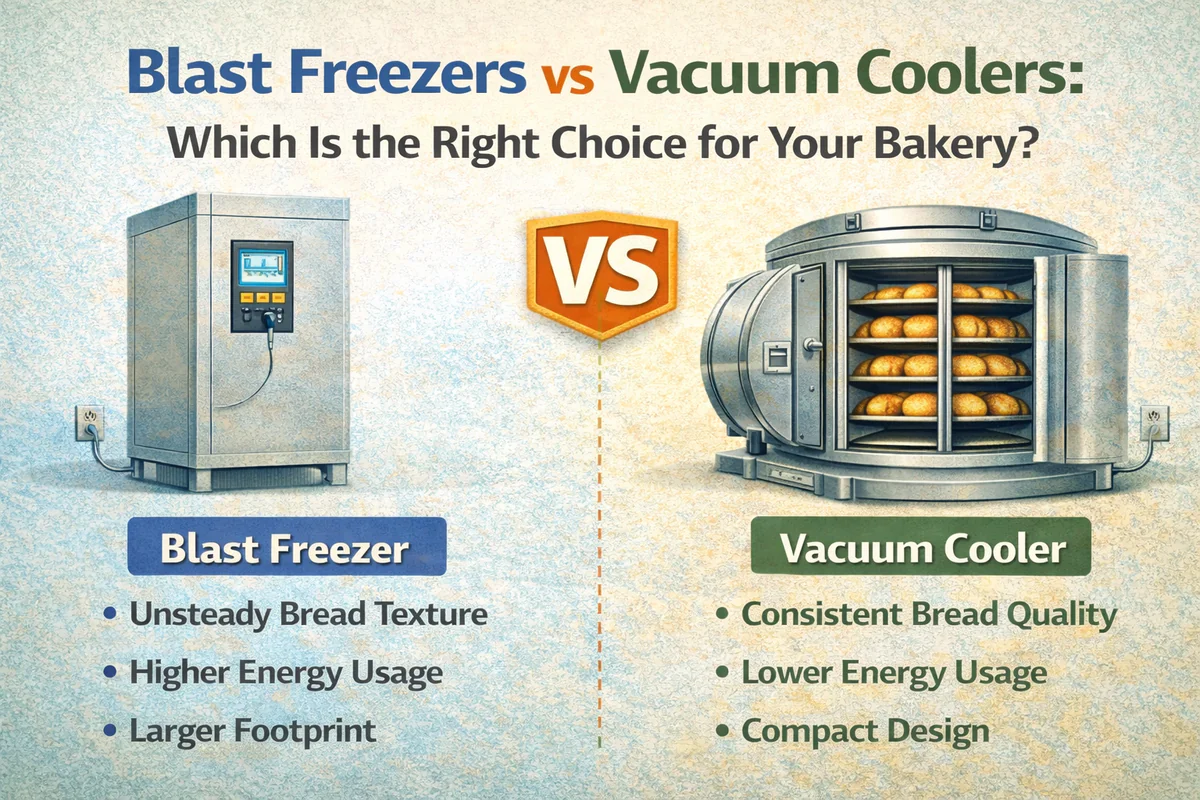
Blast Freezers vs Vacuum Coolers: Which Is the Right Choice for Your Bakery?
Are you tired of watching your freshly baked bread sit on racks for hours, taking up valuable space while you

Bakery Vacuum Cooling vs Spiral Cooling Systems: Which Is Better for Your Business?
Are you struggling with slow production lines because your bread takes forever to cool down? You are not alone. Cooling
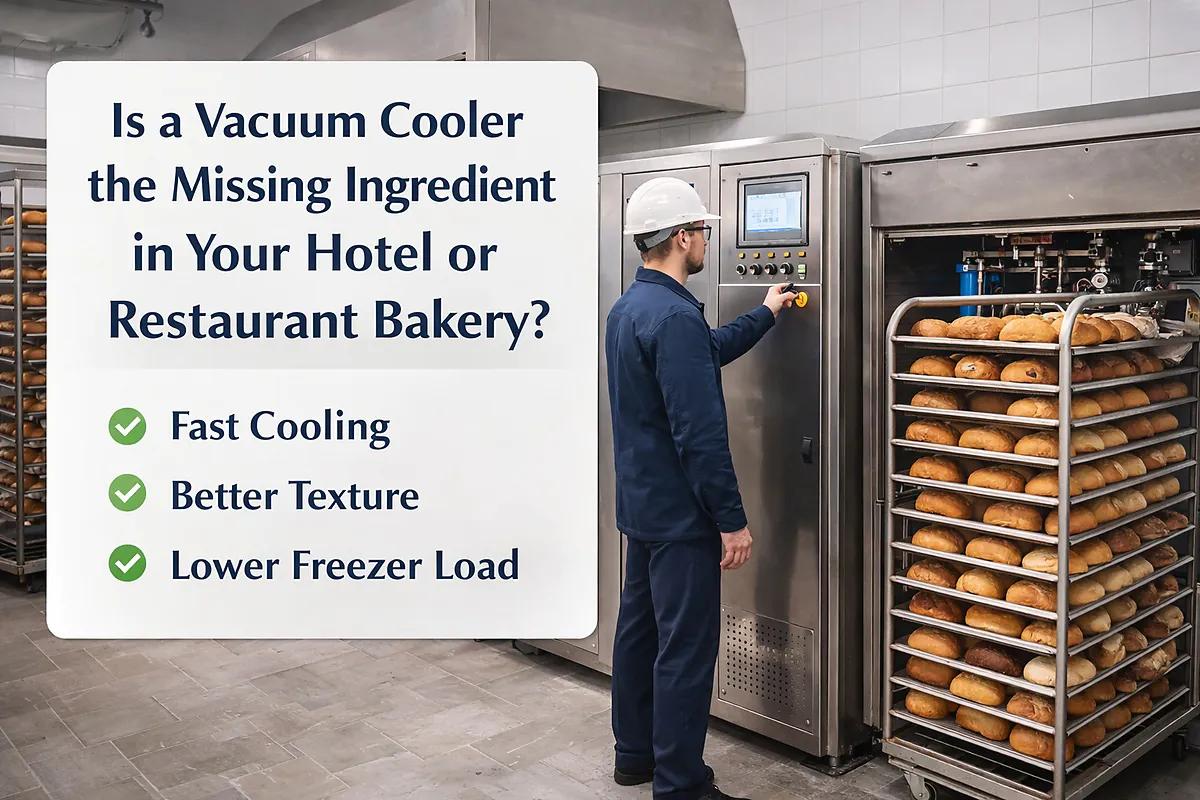
Is a Vacuum Cooler the Missing Ingredient in Your Hotel or Restaurant Bakery?
Imagine your kitchen is in full swing, and the freshly baked bread is finally out of the oven, but it
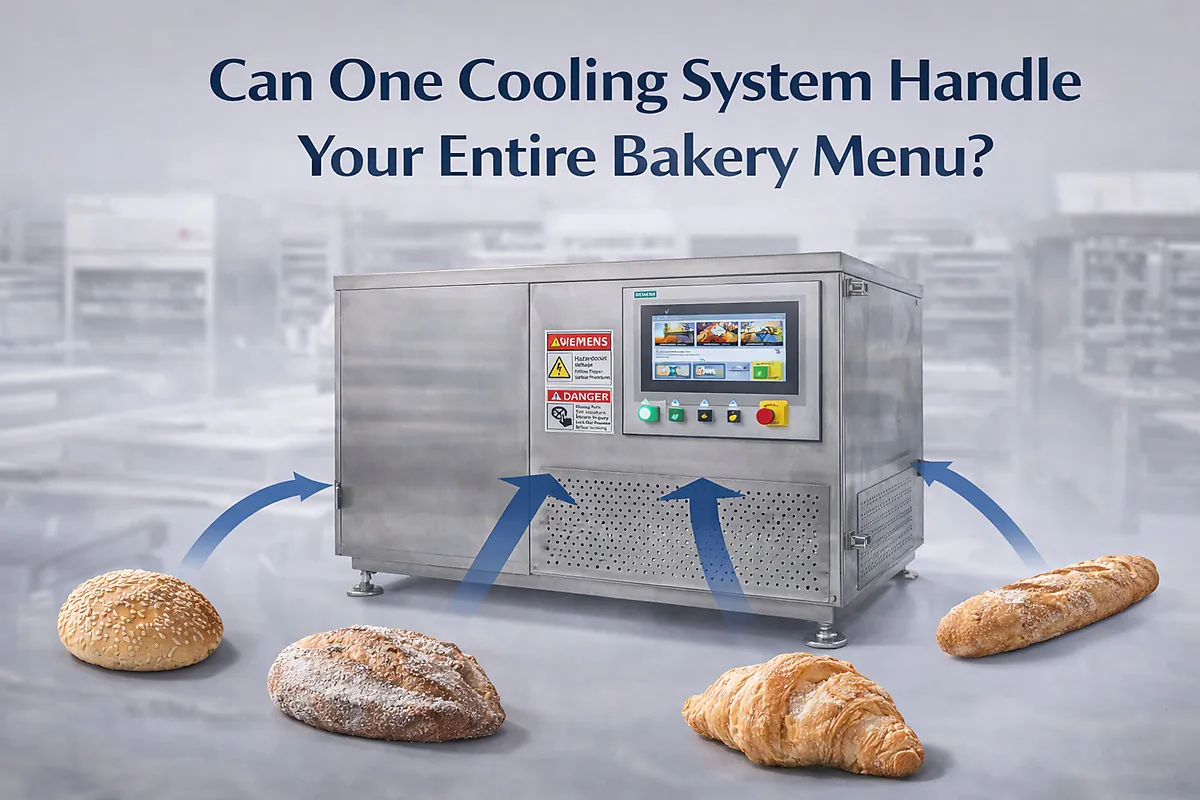
Can One Cooling System Handle Your Entire Bakery Menu?
You juggle sourdough, delicate pastries, and frozen dough lines daily. Yet, one cooling mistake ruins the texture of your artisan

Is Your Frozen Dough Production Losing Quality Before It Hits the Freezer?
You watch your energy bills climb month after month while your blast freezers work overtime. You see production bottlenecks form
How Can Organic Bakeries Extend Shelf Life Without Preservatives?
You pour your heart into sourcing the finest organic flours and perfecting natural fermentation, only to watch your hard work
Can Vacuum Cooling Finally Fix the "Gummy" Texture in Gluten-Free Bread?
You watch your perfectly risen gluten-free loaves come out of the oven, only to see them sink or turn gummy
Why Are Commercial Bakeries Worldwide Racing to Adopt Vacuum Cooling?
You watch your competitors deliver fresher bread faster while you are still stuck waiting for racks to cool in the