
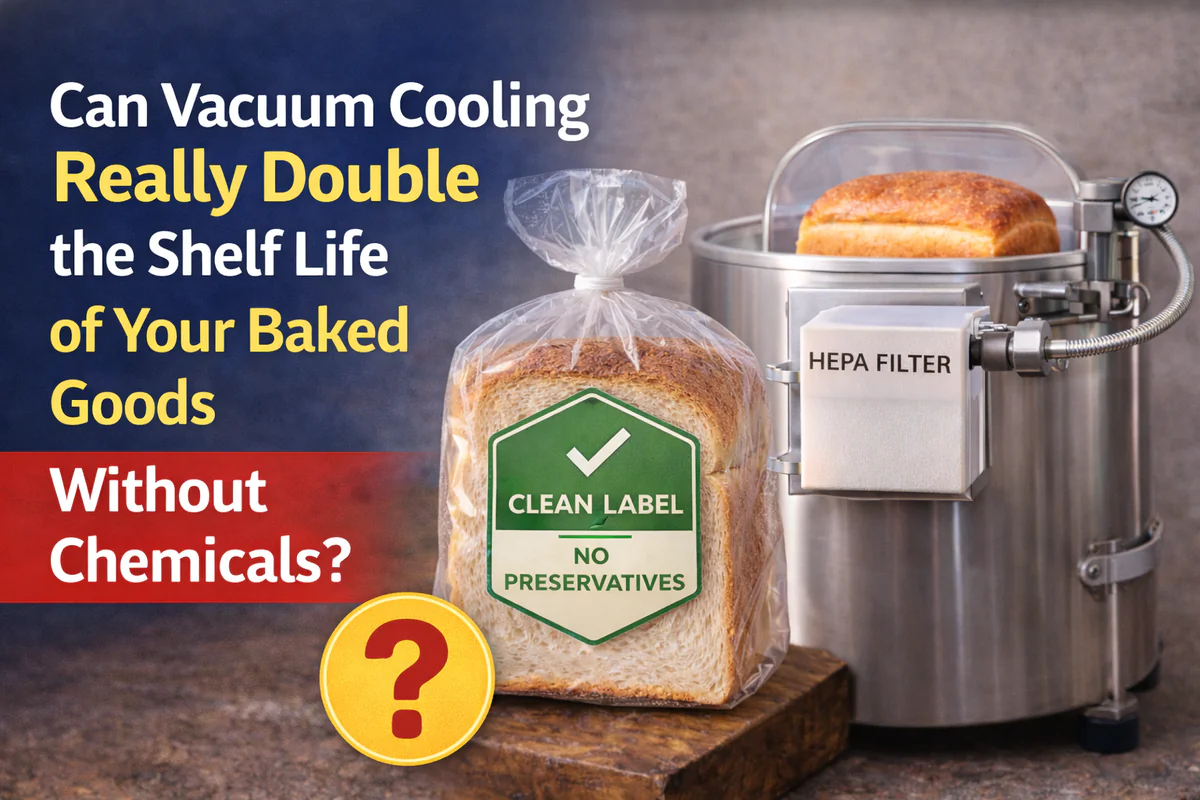
How Can Vacuum Cooling Support Bakery Shelf Life?
Vacuum cooling can support bakery shelf-life control by shortening the warm cooling stage and helping products reach a repeatable packaging temperature. It does not sterilize bread, guarantee a fixed number of extra days, or automatically allow preservatives to be removed. Shelf life remains the combined result of recipe, water activity, sanitation, cooling, packaging, storage, and distribution.
For many bread applications, Allcold’s bakery catalogue uses a typical cooling reference of about 3–5 minutes to approximately 28°C, with moisture retention above 90% under the catalogue conditions. These figures are starting points for selection and trials, not universal guarantees for every baked product.
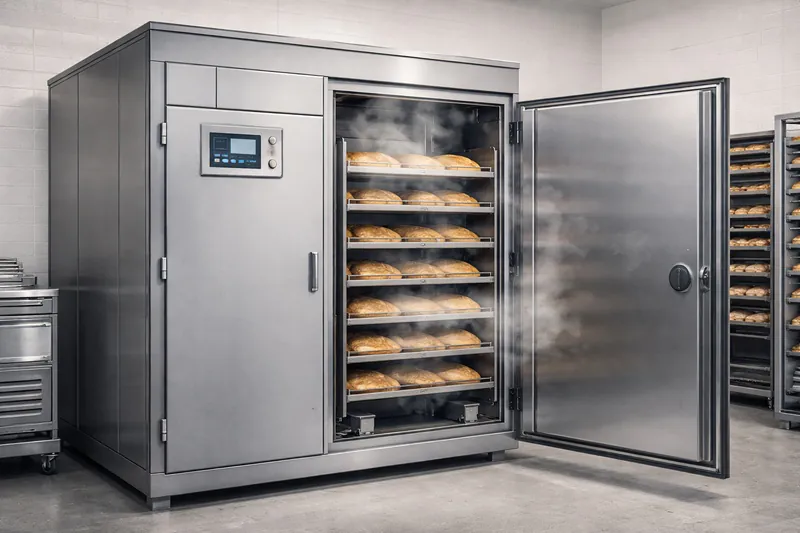
What Can Rapid Cooling Actually Change?
When bread remains on racks in ambient conditions, its cooling time varies with product size, trolley loading, room temperature, humidity, and airflow. A controlled vacuum cycle can reduce that variation and bring the batch to the agreed end temperature more quickly.
This can help a bakery:
- Reach a defined slicing or packaging temperature more consistently.
- Reduce long, variable trolley-holding periods.
- Limit exposure to uncontrolled ambient air during cooling.
- Standardize the time between oven discharge and packaging.
- Compare weight, texture, and temperature results from batch to batch.
These are process-control benefits. They are not proof of a microbiological reduction or a longer commercial shelf life unless the complete product and process have been tested.
Why Is Packaging Temperature Important?
Packaging a product while it is still too warm may allow moisture to condense inside the package as the product continues to cool. Condensation can affect crust texture, label appearance, and the package environment. But a cooler package is not automatically condensation-free: recipe, package permeability, headspace, room conditions, and storage temperature also matter.
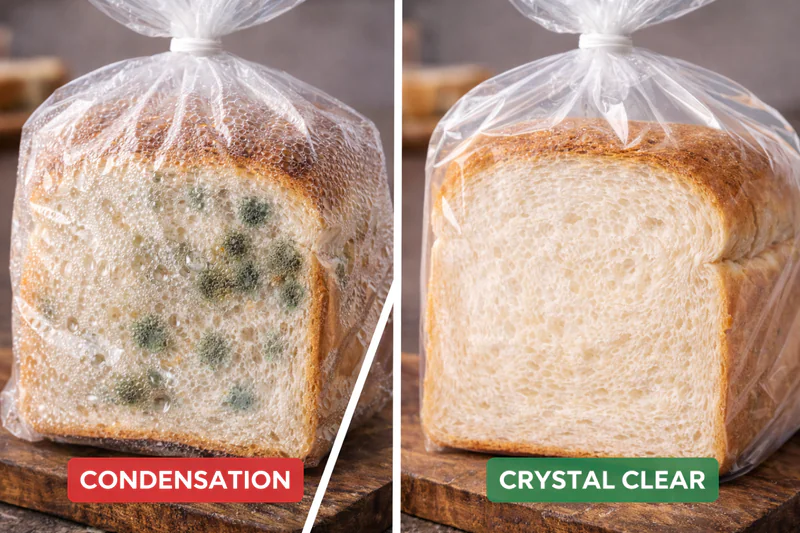
For a useful trial, agree on the packaging temperature first. Allcold’s typical bread reference is around 28°C, but the correct target must match the customer’s product and next process. Measure both the product core and representative surface positions, then confirm what happens after packaging under normal storage conditions.
How Does Moisture Loss Affect the Result?
Vacuum cooling removes heat through controlled evaporation. Some product weight change is therefore part of the process, and it must be measured rather than described with a universal claim.
The Allcold catalogue reports moisture retention above 90% under its stated conditions. For an actual product, record:
| Measurement | Why it matters |
|---|---|
| Weight before and after cooling | Confirms the actual cooling loss for the recipe and load |
| Core and surface temperatures | Shows whether the target is reached uniformly |
| Top, center, and bottom tray results | Identifies loading or airflow differences |
| Crust and crumb texture | Confirms the required product quality |
| Water activity, when relevant | Supports shelf-life evaluation but does not replace microbiology |
| Packaged-product condition | Reveals condensation, texture, or seal issues after cooling |
The pressure curve, holding time, target temperature, tray spacing, and load arrangement can then be adjusted. A cycle that is too aggressive for one product may be suitable for another, which is why the trial must use the customer’s real bread.
Does Vacuum Cooling Control Mold or Bacteria?
Vacuum cooling is a cooling process, not a sterilization process. It should not be presented as killing mold, eliminating spores, or making the product sterile.
Shortening warm holding may be useful within a controlled production system, but the microbiological result depends on the incoming product, post-bake handling, equipment hygiene, operator practices, air management, packaging, and storage. If a shelf-life claim is important, use a qualified laboratory and an agreed sampling plan.
A sensible validation compares conventional and vacuum-cooled batches made from the same production run. Test them using the same packaging and storage route, and evaluate them at predefined time points.
Can a Bakery Remove Preservatives After Installing a Vacuum Cooler?
Not on the basis of cooling speed alone. Any preservative reduction or “clean-label” reformulation is a separate product-development and food-safety decision.
Before changing a formulation, the bakery should define:
- The existing recipe and approved preservative system.
- The required commercial shelf life.
- Applicable legal and customer requirements.
- Packaging material and sealing method.
- Normal and worst-case storage temperatures.
- Distribution time and handling conditions.
- Sensory and microbiological acceptance criteria.
The revised product should then undergo controlled shelf-life testing and appropriate food-safety review. Allcold can provide cooling-cycle and temperature data, but the bakery and its qualified food-safety specialists remain responsible for formulation and shelf-life approval.
What Should a Bakery Shelf-Life Trial Record?
Use a written protocol so the result can support an equipment decision.
- Define the products. Record formula, piece weight, dimensions, baking conditions, and batch size.
- Define the cooling target. Record starting temperature, target core temperature, maximum surface temperature, and acceptable cycle time.
- Use the real loading system. Provide trolley or pallet dimensions, tray spacing, loaded height, and kilograms per batch.
- Measure the cooling result. Record pressure curve, cooling time, temperature uniformity, and weight change.
- Package normally. Use the customer’s actual package, sealing process, and packaging-room conditions.
- Store through the real route. Include the intended temperature, time, and distribution handling.
- Evaluate at agreed intervals. Assess sensory quality, texture, condensation, package condition, and laboratory results where required.
- Approve claims only from data. Separate measured results from assumptions and marketing language.
This process may show a shelf-life benefit, no meaningful change, or a need to adjust the cycle, packaging, or formulation. All three outcomes are more useful than promising “double shelf life” before testing.
What Information Does Allcold Need for Equipment Selection?
Because bakery chambers are normally designed around the customer’s trolley or pallet system, provide:
- Product types and piece sizes.
- Kilograms, trays, trolleys, or pallets per batch.
- Trolley or pallet width, depth, and total loaded height.
- Starting and target temperatures.
- Required batches per hour or shift.
- Packaging and slicing schedule.
- Electrical supply, cooling-water conditions, drainage, and installation environment.
- Trial acceptance criteria for temperature, weight, texture, and cycle time.
These inputs allow the chamber size, door arrangement, vacuum system, condenser, and controls to be matched to the actual production flow.
Conclusion
Vacuum cooling can support bakery shelf-life management by making cooling faster and more repeatable and by helping bread reach an agreed packaging temperature. It cannot independently guarantee mold control, eliminate preservatives, or promise a fixed shelf-life extension.
Use the catalogue reference—approximately 3–5 minutes to about 28°C—as the starting point, then validate the actual product, loading system, packaging, storage route, and quality requirements before making a commercial claim.
View Allcold bakery vacuum-cooling systems or send your product, trolley, and trial requirements.

Mila
You May Also Like

When Should You NOT Use Vacuum Cooling for Your Bakery?
Are you tired of waiting hours for your bread to cool down while your profits evaporate? You might think vacuum

Is Your Cooling Strategy Burning Your Profits? A Cost-Benefit Analysis of Vacuum vs. Conventional Cooling
As a bakery owner, you look at your balance sheet every month. You see the cost of ingredients, labor, and
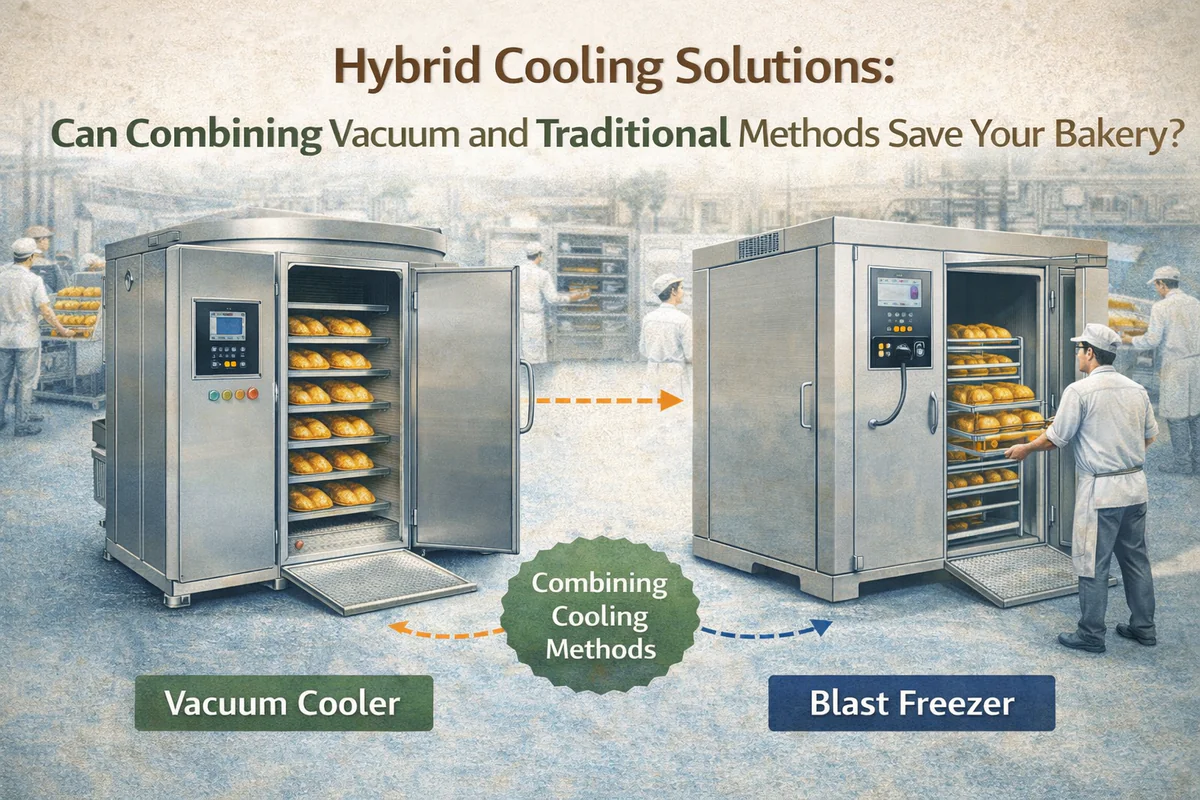
Hybrid Cooling Solutions: Can Combining Vacuum and Traditional Methods Save Your Bakery?
Are you torn between the speed of new technology and the reliability of traditional freezing? Many bakery owners feel they
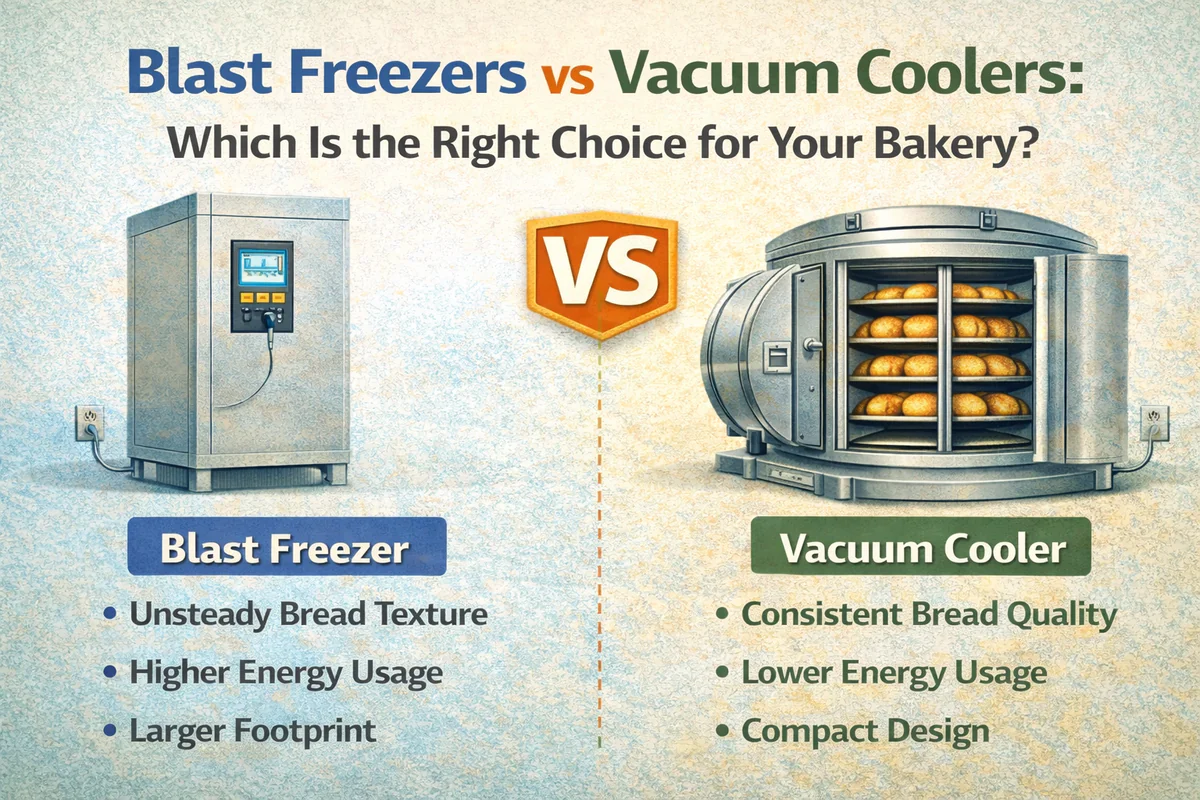
Blast Freezers vs Vacuum Coolers: Which Is the Right Choice for Your Bakery?
Are you tired of watching your freshly baked bread sit on racks for hours, taking up valuable space while you

Bakery Vacuum Cooling vs Spiral Cooling Systems: Which Is Better for Your Business?
Are you struggling with slow production lines because your bread takes forever to cool down? You are not alone. Cooling
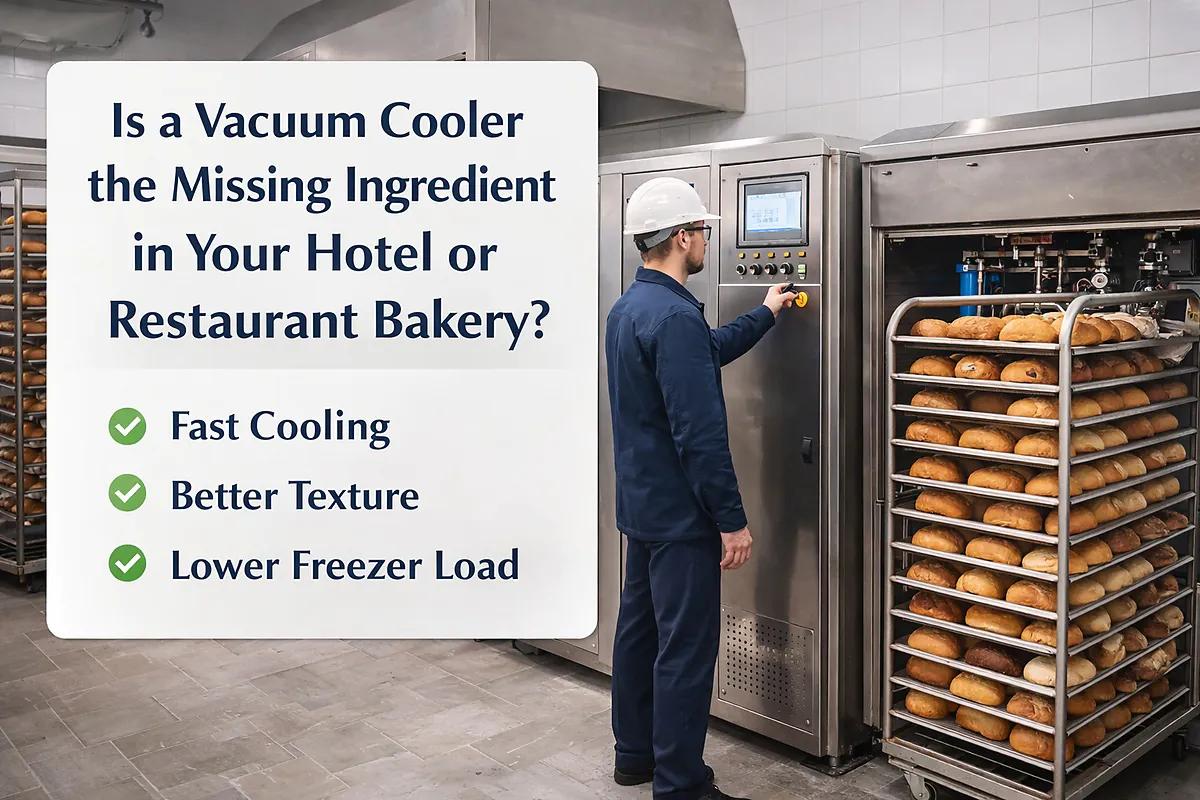
Is a Vacuum Cooler the Missing Ingredient in Your Hotel or Restaurant Bakery?
Imagine your kitchen is in full swing, and the freshly baked bread is finally out of the oven, but it
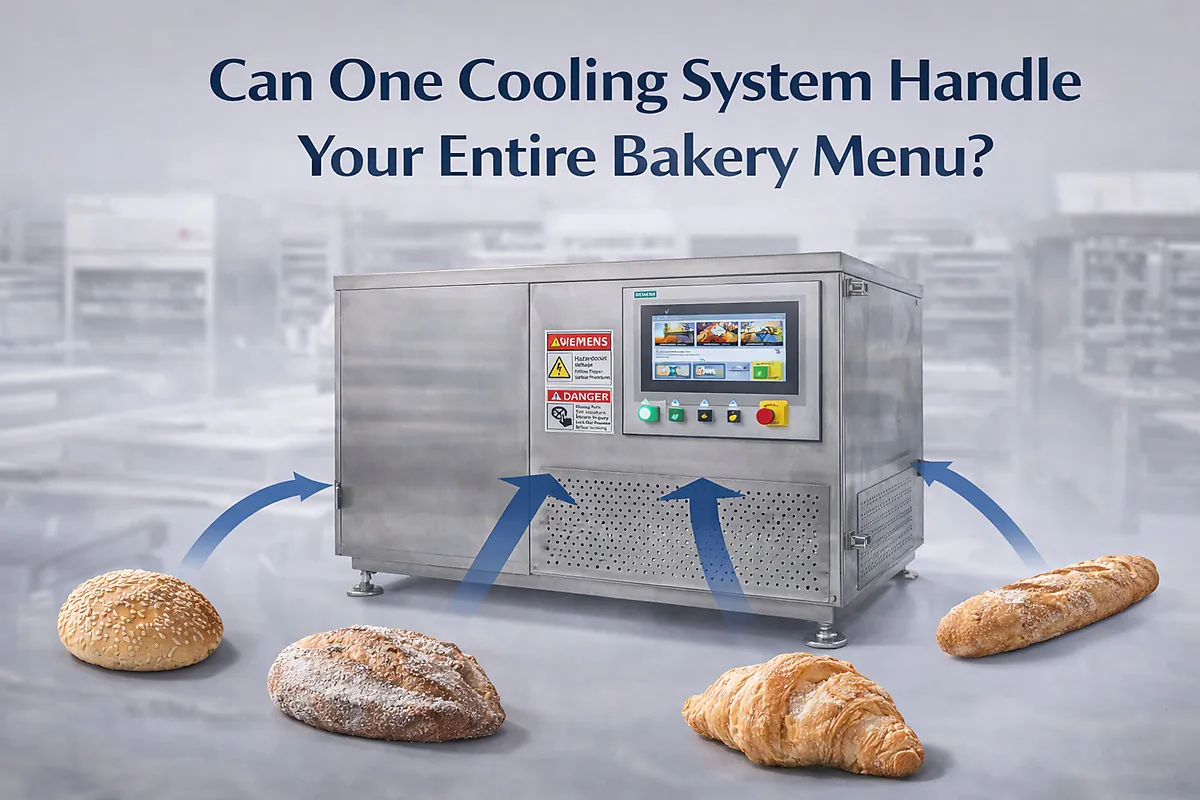
Can One Cooling System Handle Your Entire Bakery Menu?
You juggle sourdough, delicate pastries, and frozen dough lines daily. Yet, one cooling mistake ruins the texture of your artisan

Is Your Frozen Dough Production Losing Quality Before It Hits the Freezer?
You watch your energy bills climb month after month while your blast freezers work overtime. You see production bottlenecks form
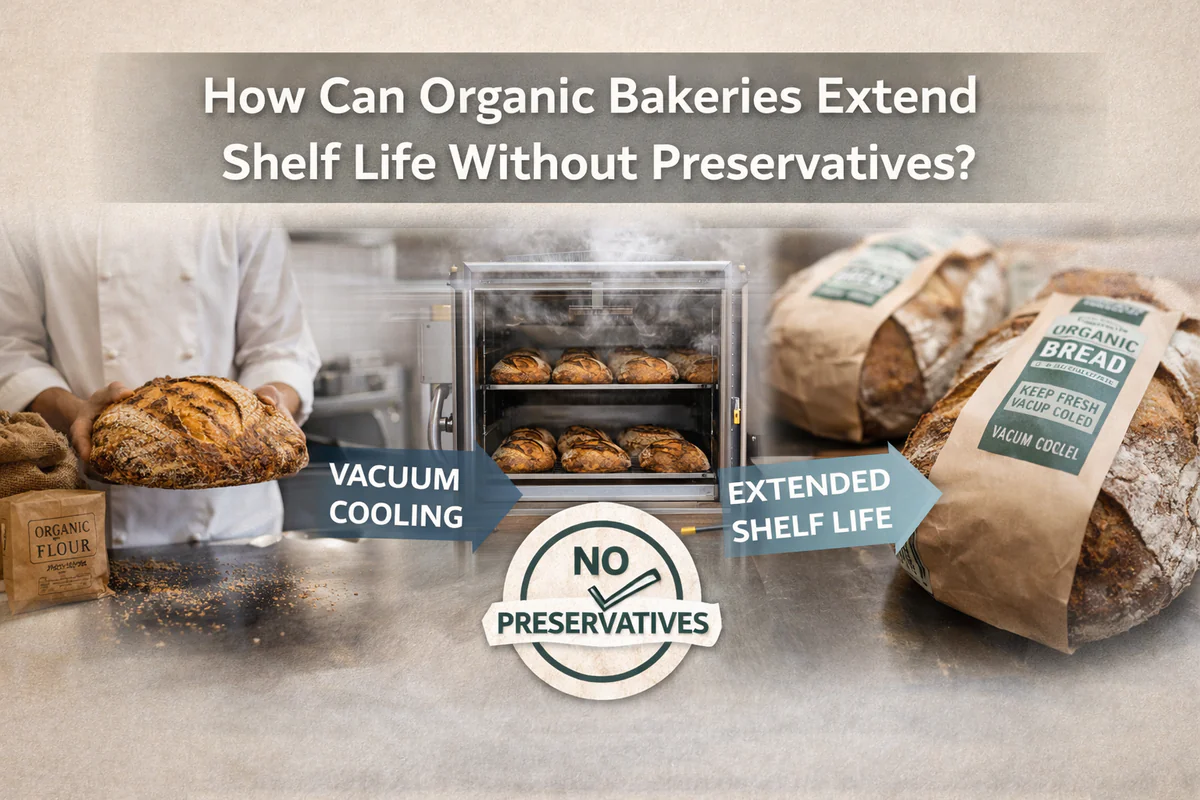
How Can Organic Bakeries Extend Shelf Life Without Preservatives?
You pour your heart into sourcing the finest organic flours and perfecting natural fermentation, only to watch your hard work
Can Vacuum Cooling Finally Fix the "Gummy" Texture in Gluten-Free Bread?
You watch your perfectly risen gluten-free loaves come out of the oven, only to see them sink or turn gummy