
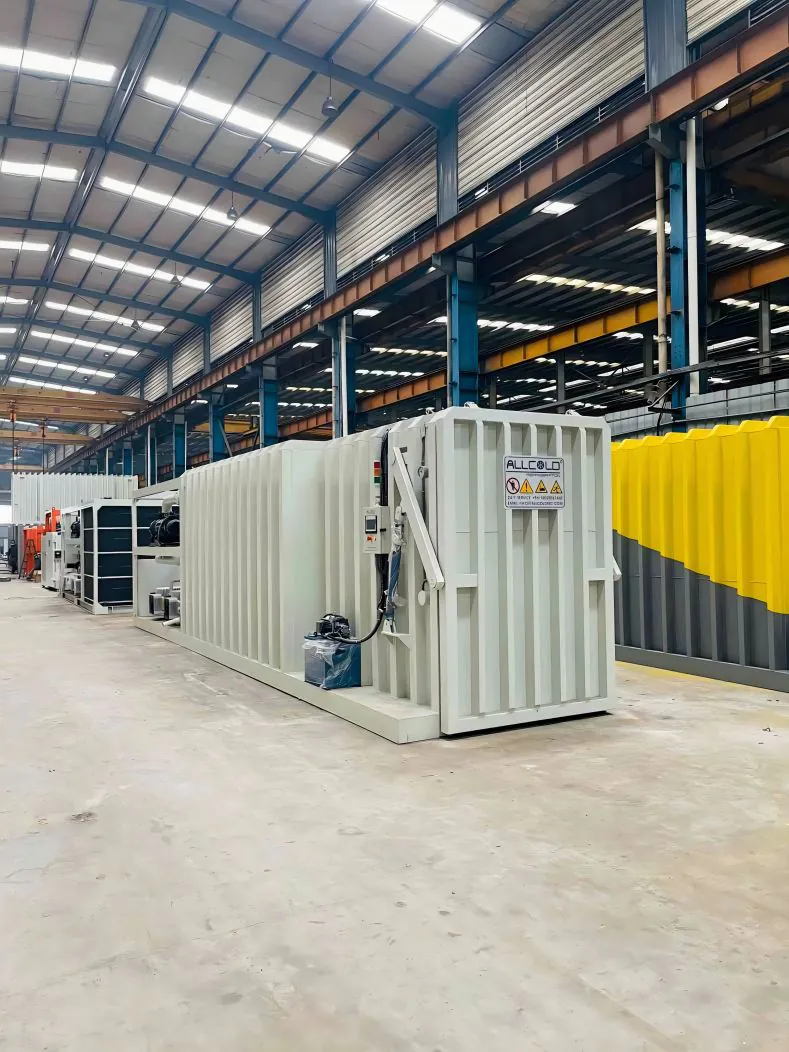
Industrial Bread Vacuum Cooling: 5–10 Min to About 28°C
Industrial bread vacuum cooling uses a food-processing vacuum chamber to cool baked products immediately after the oven. Inside the chamber, controlled pressure reduction lowers the boiling point of water. A small, controlled amount of moisture evaporates from the bread, removing heat from both the crust and crumb.
Allcold’s bakery catalogue and quotation data show that bread is commonly cooled to about 28°C in approximately 5–10 minutes, depending on bread type, load, starting temperature, and trolley arrangement. Internal testing shows low moisture loss when the pressure curve is matched to the product, but no single moisture-retention percentage applies to every recipe or load. The final cycle is confirmed against the bakery’s actual product rather than a generic setting.
What Industrial Bread Vacuum Cooling Actually Does
A bakery vacuum cooler places hot bread, usually on trays or trolleys, inside a sealed chamber. The system reduces pressure in stages. As the boiling point of water falls, a small portion of the product’s moisture evaporates at a much lower temperature than it would at atmospheric pressure. The latent heat required for evaporation comes from the bread itself, so the core and surface cool rapidly.
This mechanism is different from a cold room, spiral cooler, or blast freezer. Those systems primarily transfer heat from the product to colder air. Vacuum cooling removes heat through controlled evaporation. It is also different from vacuum packaging: the bread is cooled in a chamber, not compressed inside a consumer vacuum bag.
For bakery applications, the chamber stage can be completed in minutes, but a realistic production calculation must include loading, door closing, pump-down, controlled pressure reduction, vacuum break, door opening, and unloading. A “five-minute cooling result” does not automatically mean twelve production batches per hour.
Allcold Bakery Vacuum Cooling Performance
Allcold’s catalogue, quotations, and bakery testing focus on three linked outcomes: cooling to the required temperature, low moisture loss, and a stable product structure. For typical bread projects targeting about 28°C, quotation data supports an approximate 5–10 minute cycle. A product trial is used to match the pressure curve to the bread instead of applying the same settings to every formula.
| Performance question | What the evidence supports | What must be validated |
|---|---|---|
| Cooling speed | Vacuum cooling can reduce post-bake cooling time substantially compared with ambient rack cooling. | Total cycle time, loading time, target core temperature, and line balance. |
| Crust crispness | Research has found changes in crust fracture and acoustic behaviour consistent with increased crispness. | Whether the effect remains desirable after packaging and storage. |
| Shape and collapse | Rapid structural setting can help some products retain shape. | Dough strength, loaf geometry, pressure ramp, and risk of excessive expansion or cracking. |
| Moisture and yield | Allcold testing shows that moisture loss can be kept low with a product-matched cycle; the actual result must be measured against the bread recipe, starting weight, load, and target temperature. | Confirm the result using the bakery’s actual loaf weight, recipe, loading, and target temperature. |
| Crumb softness | Results are mixed and depend strongly on formulation and process conditions. | Fresh crumb firmness and the staling curve over the intended shelf life. |
| Microbial shelf life | Faster cooling can reduce warm holding time, but cooling alone is not a preservative system. | Hygiene, water activity, formulation, packaging atmosphere, storage temperature, and challenge-test data. |
The Allcold catalogue also describes shorter oven and cooling stages as part of an integrated process. In the illustrated two-trolley example, baking time is reduced from 24 to 17 minutes and cooling time from 30 to 2.5 minutes. These figures are catalogue examples, not guarantees for every product; final settings are confirmed with the customer’s bread and production line.
How Allcold Keeps Moisture Loss Low
Vacuum cooling removes heat through controlled evaporation, but this does not mean the bread must become dry. Allcold controls the pressure reduction, target temperature, and cycle duration so that only the amount of evaporation required for cooling occurs. In company testing, the resulting water loss is low when the pressure curve is matched to the actual bread. Because recipes and loads differ, Allcold does not publish one universal retention percentage for every bakery project.
The settings are matched to:
- initial core and crust temperature;
- target discharge temperature;
- surface-area-to-mass ratio;
- loaf size, porosity, and crust permeability;
- recipe hydration and bake loss before cooling;
- the pressure reduction profile and hold time;
- whether water spraying or another compensation strategy is used.
For a new product, Allcold verifies the cycle with the customer’s actual bread. Recording weight before and after cooling is still useful, but it is a commissioning measurement used to optimize an already low-loss process—not an assumption that vacuum cooling causes high dehydration.
Which Bakery Products Are the Best Candidates?
Vacuum cooling is most attractive when conventional cooling is a real production bottleneck and the bakery needs fast cooling without sacrificing product moisture. The following matrix is a starting point, not a substitute for a product trial.
| Product group | Potential reason to test | Main risk to measure |
|---|---|---|
| High-volume pan bread and buns | Shorter time before slicing and packaging; repeatable batch flow. | Moisture retention, crust character, and crumb firmness. |
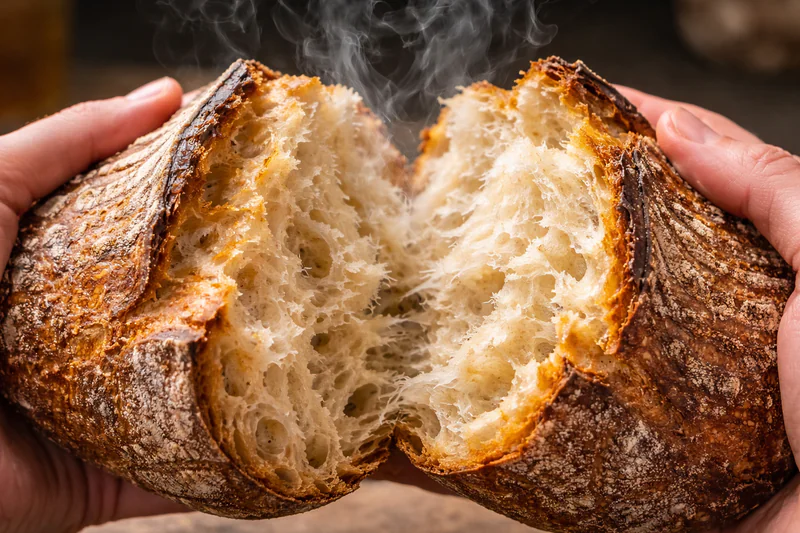
| Sourdough and hearth loaves | Potential crust and shape benefits; reduced rack residence time. | Crust cracking, moisture retention, and whether the result fits the intended artisan texture. |
| Croissants and laminated products | Fast structural setting and shorter handling delay. | Layer damage, excessive expansion, and surface drying. |
| Cakes, panettone, and delicate products | Possible support against collapse when the pressure profile is gentle. | Internal cracking, deformation, and recipe-specific response. |
| Gluten-free products | Potential process and structure benefits for selected formulas. | Weak structure, gummy crumb, and the pressure curve required to maintain moisture. |
| Partially baked products for MAP or freezing | Faster transition to the next controlled process. | The combined effect of cooling, rebaking, packaging, and storage—not cooling in isolation. |
If the product has a weak structure or does not create a meaningful cooling bottleneck, vacuum cooling may not be the best first investment. Our guide on when not to use vacuum cooling in a bakery provides additional screening questions.
How to Size a Vacuum Cooler Around the Production Line
Machine selection should begin with the oven and downstream equipment, not with a generic chamber capacity. The basic throughput relationship is:
Required cooling cycles per hour = peak oven output (kg/hour) ÷ usable product load per cycle (kg)
“Usable product load” is not simply the maximum chamber volume. Air gaps, trolley geometry, tray spacing, door clearance, product expansion, and loading ergonomics all affect the real batch. The cycle calculation must also include material handling time.
Allcold’s Standard Bakery Configurations
Allcold’s bakery vacuum cooler catalogue lists the following standard starting points. The catalogue gives a typical cooling range of 1–8 minutes depending on the bread, load, and processing conditions. That range describes the cooling stage, not a guaranteed door-to-door production cycle. Chamber size and configuration can be customized after the real trolley and process data are reviewed.
| Model | Nominal loading | Catalogue chamber size | Catalogue total power |
|---|---|---|---|
| AVCF-40 | 5 trays | 600 × 500 × 800 mm | 7.5 kW |
| AVCF-100 | 1 trolley | 600 × 800 × 1900 mm | 15.2 kW |
| AVCF-120 | 1 trolley | 660 × 780 × 2050 mm | 17.7 kW |
| AVCF-140 | 1 trolley | 760 × 880 × 2050 mm | 19.7 kW |
| AVCF-200 | 1 trolley | 760 × 930 × 2100 mm | 25.6 kW |
| AVCF-320 | 2 trolleys | 870 × 1030 × 2100 mm | 32.7 kW |
These values should be treated as catalogue reference data, not a final quotation. A “one trolley” label is not enough to select a model: trolley width, height, tray projection, loading weight, voltage, door direction, and clearance still need confirmation.
Before recommending a bakery vacuum cooling system, the following information should be collected:
- Product list: bread type, loaf weight, dimensions, and recipe characteristics.
- Temperature targets: oven-exit core temperature and required temperature before slicing, packing, or freezing.
- Production rate: peak kilograms per hour and the oven’s batch rhythm.
- Loading format: trolley dimensions, trays per trolley, and kilograms per trolley.
- Quality targets: required moisture retention, crust target, crumb firmness, and dimensional tolerance.
- Downstream process: slicer, bagger, MAP line, freezer, or manual packing speed.
- Utilities and site conditions: voltage, frequency, available space, drainage, ventilation, and loading path.
For a deeper specification review, see our guide to choosing bakery vacuum cooler capacity and performance.
What a Meaningful Product Trial Should Measure
A visually attractive loaf immediately after cooling is not enough to approve a process. A useful trial compares the proposed vacuum recipe with the bakery’s current cooling method and records:
- core and crust temperature curves;
- total chamber cycle and handling time;
- mass before and after cooling;
- loaf height, width, cracking, and collapse;
- crust crispness after cooling and after packaging;
- crumb firmness at day 0 and across the intended shelf life;
- slicing quality and crumb generation;
- condensation inside the final package;
- microbiological results when shelf-life claims are required.
Research on bread crust found that vacuum cooling changed fracture and sound events associated with crispness, including retention of crust crispness under the tested conditions.3 Other research reports mixed results for crumb hardness and staling, especially when sourdough, partial baking, and modified-atmosphere packaging are involved.1 Those findings support testing, not a universal guarantee.
Vacuum Cooling, Spiral Cooling, or Blast Freezing?
These technologies solve different problems:
- Ambient or spiral cooling provides continuous flow and avoids intentional pressure reduction, but usually requires more residence time and floor space.
- Vacuum cooling provides fast batch cooling with low moisture loss when the pressure curve, target temperature, and batch handling are matched to the product.
- Blast freezing is designed to remove heat and freeze the product. It should not be evaluated as if its only purpose were cooling hot bread to packaging temperature.
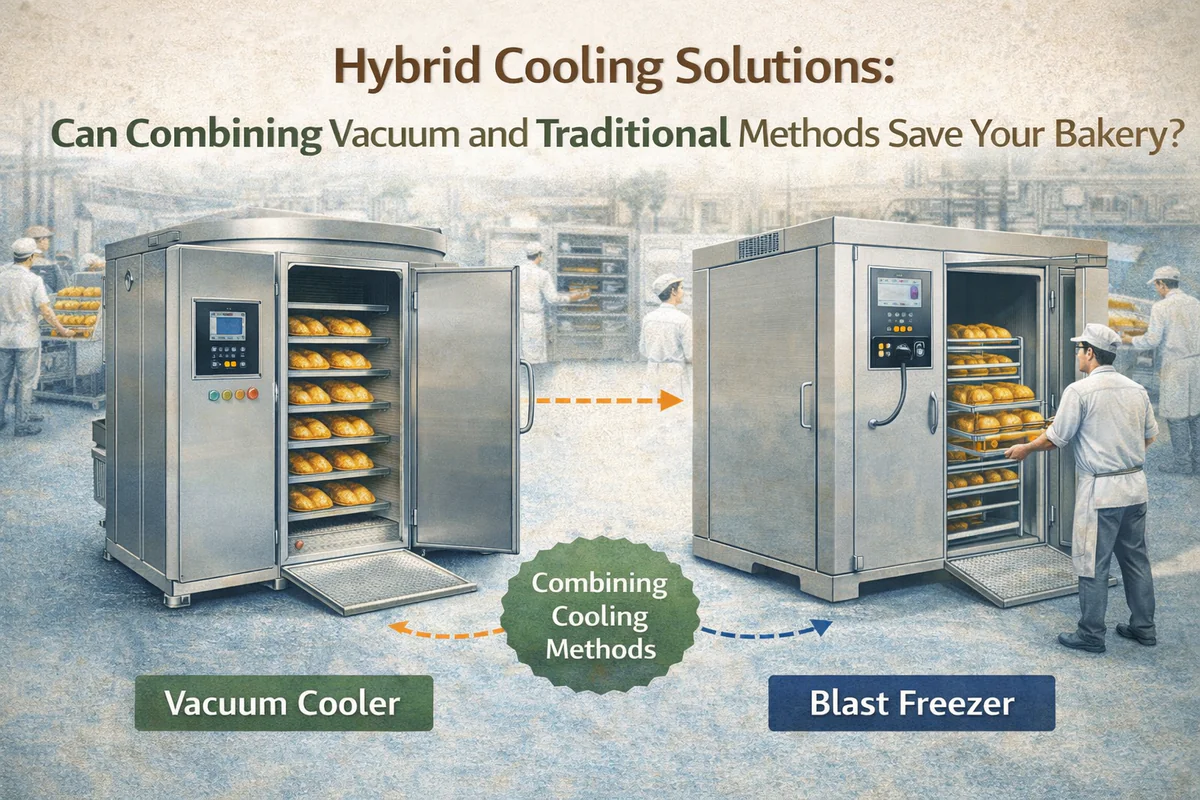
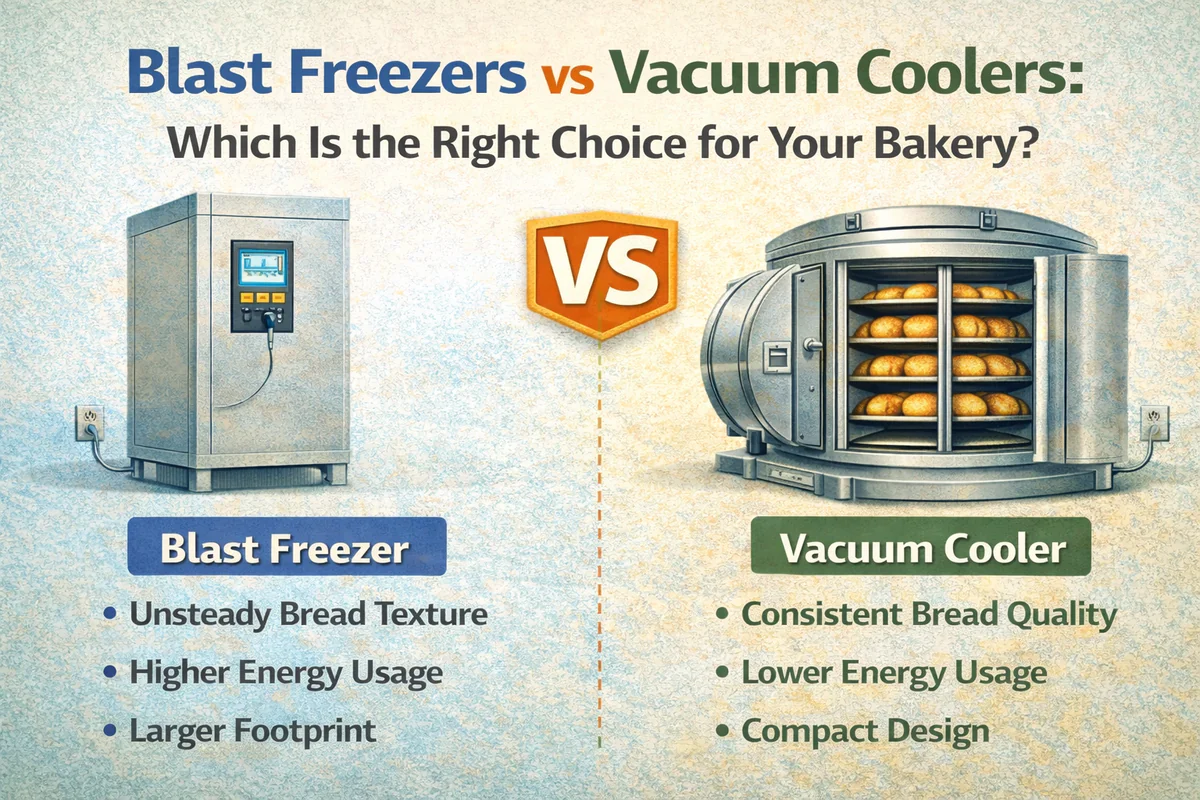
Some bakeries may need a hybrid line rather than a single technology. Our blast freezer versus bakery vacuum cooler comparison explains the process boundary in more detail.
The Practical Decision
Industrial bread vacuum cooling is most compelling when cooling racks restrict oven output, floor space is expensive, and rapid slicing or packaging has clear value. Allcold’s catalogue and quotation projects position typical bread cooling around 5–10 minutes to a target near 28°C, with low moisture loss and the final pressure profile validated for the bakery’s actual product.
The correct system is therefore not selected by a headline cooling time. It is selected by matching chamber loading, cycle structure, product response, and downstream capacity. If you are evaluating a project, send Allcold the product type, batch weight, trolley dimensions, oven output, starting temperature, target temperature, and local power supply. We can review whether a trial and a vacuum cooling configuration are technically justified before recommending a model.
Discuss your bakery cooling project with Allcold
References
- Novotni D, et al. “Influence of Barley Sourdough and Vacuum Cooling on Shelf Life Quality of Partially Baked Bread.” Food Technology and Biotechnology, 2017. https://pmc.ncbi.nlm.nih.gov/articles/PMC5848197/
- American Society of Baking. “Vacuum Cooling.” https://asbe.org/article/vacuum-cooling/
- Primo-Martín C, et al. “Fracture behaviour of bread crust: Effect of bread cooling conditions.” Journal of Food Engineering, 2008. https://www.sciencedirect.com/science/article/pii/S0260877408002161

Mila
You May Also Like

When Should You NOT Use Vacuum Cooling for Your Bakery?
Are you tired of waiting hours for your bread to cool down while your profits evaporate? You might think vacuum

Is Your Cooling Strategy Burning Your Profits? A Cost-Benefit Analysis of Vacuum vs. Conventional Cooling
As a bakery owner, you look at your balance sheet every month. You see the cost of ingredients, labor, and
Hybrid Cooling Solutions: Can Combining Vacuum and Traditional Methods Save Your Bakery?
Are you torn between the speed of new technology and the reliability of traditional freezing? Many bakery owners feel they
Blast Freezers vs Vacuum Coolers: Which Is the Right Choice for Your Bakery?
Are you tired of watching your freshly baked bread sit on racks for hours, taking up valuable space while you

Bakery Vacuum Cooling vs Spiral Cooling Systems: Which Is Better for Your Business?
Are you struggling with slow production lines because your bread takes forever to cool down? You are not alone. Cooling
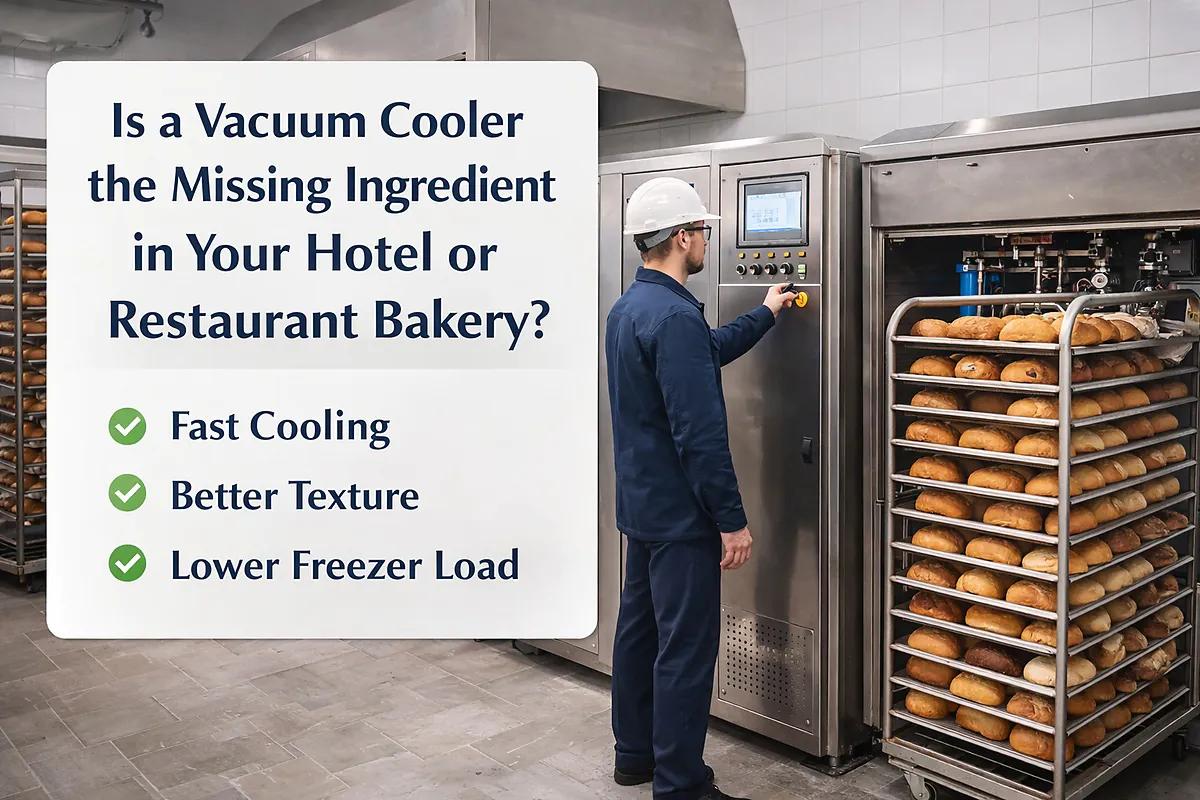
Is a Vacuum Cooler the Missing Ingredient in Your Hotel or Restaurant Bakery?
Imagine your kitchen is in full swing, and the freshly baked bread is finally out of the oven, but it
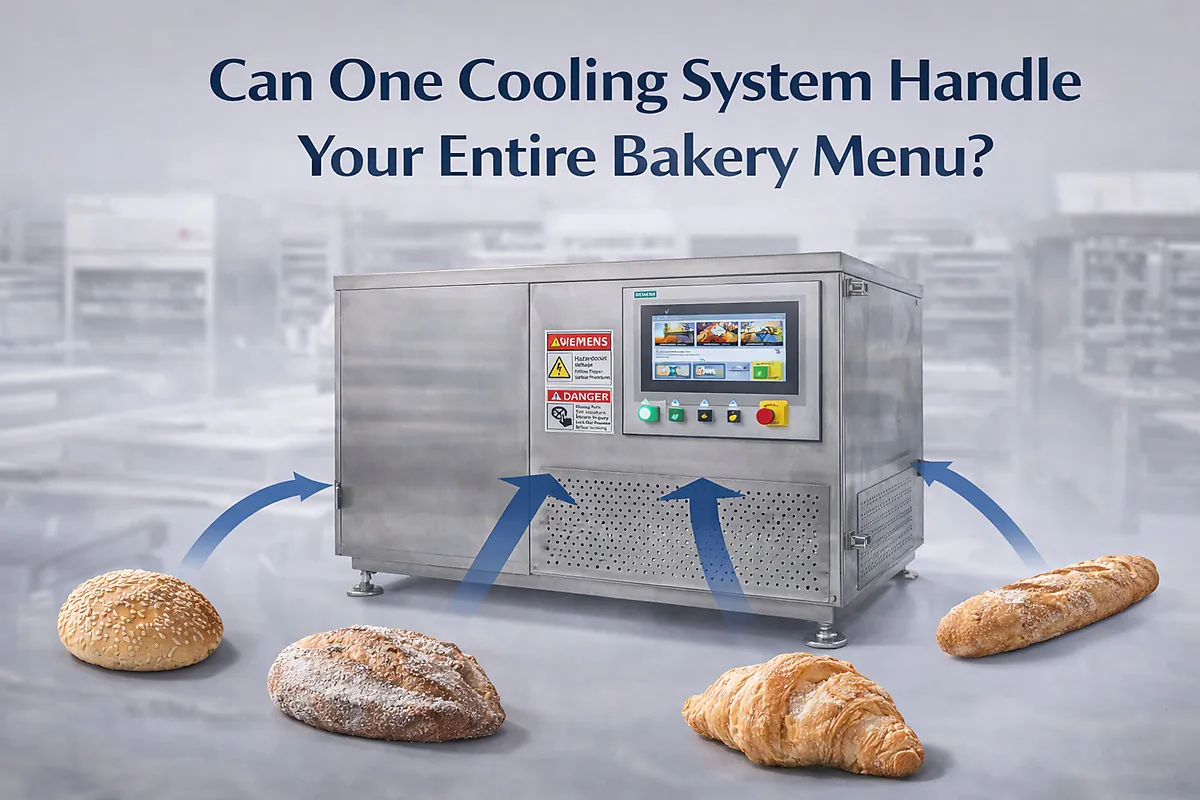
Can One Cooling System Handle Your Entire Bakery Menu?
You juggle sourdough, delicate pastries, and frozen dough lines daily. Yet, one cooling mistake ruins the texture of your artisan

Is Your Frozen Dough Production Losing Quality Before It Hits the Freezer?
You watch your energy bills climb month after month while your blast freezers work overtime. You see production bottlenecks form
How Can Organic Bakeries Extend Shelf Life Without Preservatives?
You pour your heart into sourcing the finest organic flours and perfecting natural fermentation, only to watch your hard work
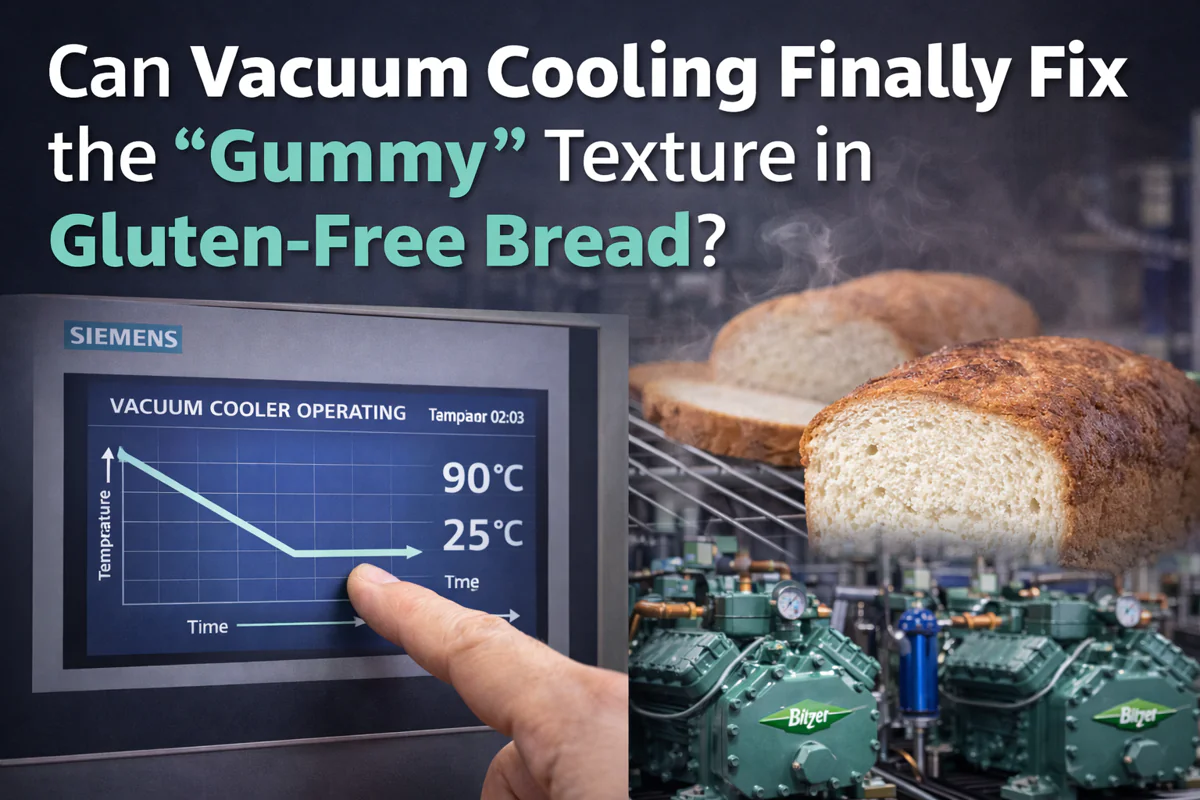
Can Vacuum Cooling Finally Fix the "Gummy" Texture in Gluten-Free Bread?
You watch your perfectly risen gluten-free loaves come out of the oven, only to see them sink or turn gummy