
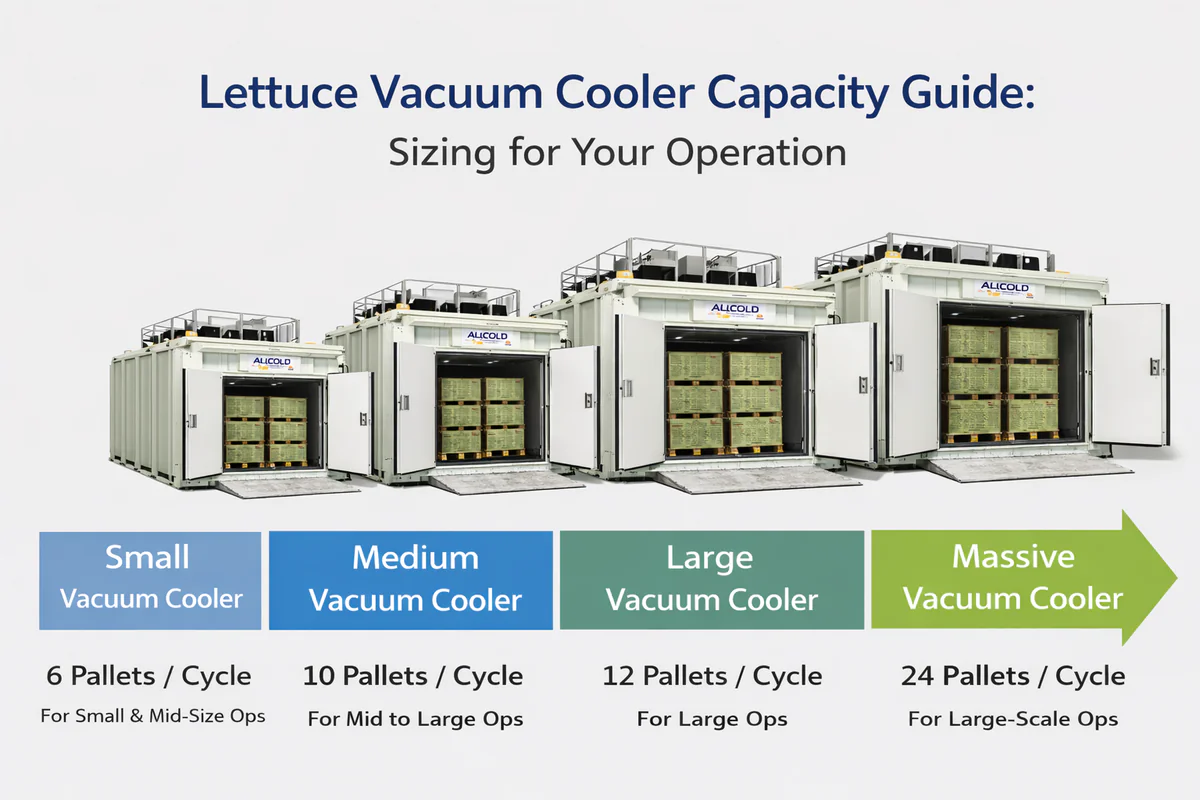
Lettuce Vacuum Cooler Capacity Guide: Sizing for Your Operation?
Investing in a vacuum cooler is a significant decision, but choosing the wrong size can be an even more expensive mistake. It’s not just about fitting a machine in your warehouse; it’s about matching physics to your harvest flow.
Selecting the correct vacuum cooler capacity requires analyzing your peak harvest volume, cooling cycle times (typically 20-30 minutes), and logistics workflow. Whether you need a compact 2-pallet system for a boutique farm or a massive 12-pallet tunnel for a commercial distributor, the right size ensures you eliminate bottlenecks, maximize energy efficiency, and maintain the cold chain integrity of every head of lettuce.
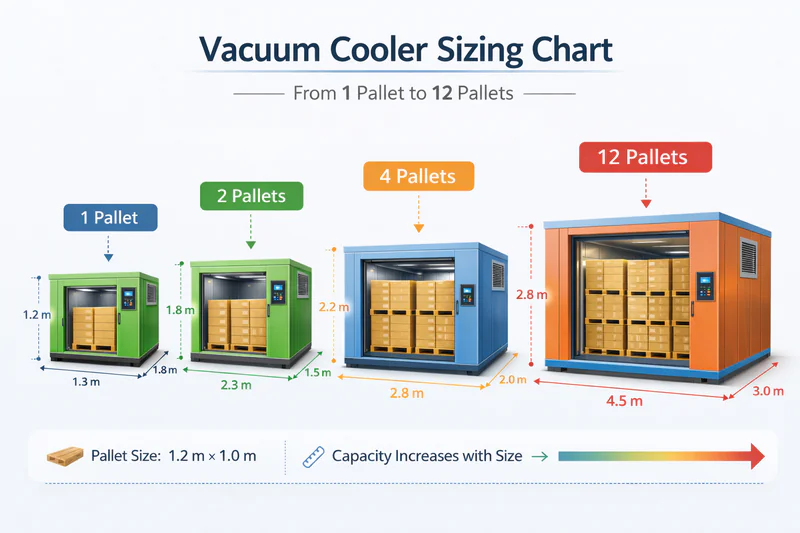
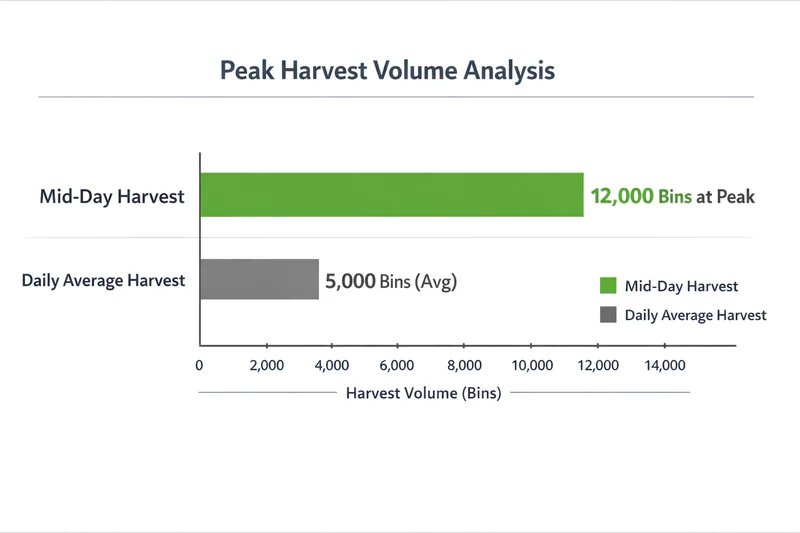
At Allcold, I receive emails every day from farmers asking, "Mila, how much does a vacuum cooler cost?" My answer is always a question back: "How many pallets do you harvest between 11 AM and 2 PM?" This is the golden question. Sizing isn’t about your total annual yield; it’s about your peak pressure point. I have seen small farms buy machines that are too big, wasting electricity on half-empty loads. I have also seen large distributors in America try to save money on a smaller unit, only to have trucks waiting in the sun for hours. In this guide, I will walk you through the math and the mindset needed to calculate the perfect capacity for your specific operation, ensuring you get the best ROI (Return on Investment) without compromising quality.
How Do I Calculate My Peak Hourly Throughput?
The most common mistake buyers make is calculating based on daily averages. Lettuce doesn’t grow on a schedule, and harvest crews don’t work at a constant pace. You need to size for the surge.
To determine your required capacity, identify the maximum number of pallets harvested during your busiest hour of the hottest day. Multiply this "Peak Hour Pallet Count" by the standard vacuum cooling cycle time (approx. 2 cycles per hour including handling) to find the minimum chamber size needed to prevent a backlog.
The "Lunchtime Bottleneck"
Let’s look at a real-world scenario with my client, Carlos, in Mexico.
Carlos harvests 2,000 cartons of Romaine a day.
- The Average Math: 2,000 cartons / 8 hours = 250 cartons/hour.
- The Reality: His crew starts slow. By 10 AM, they are flying. From 11 AM to 2 PM, they are bringing in 400 cartons/hour because they want to finish before the afternoon heat spikes.
If Carlos bought a machine sized for 250 cartons (approx. 4 pallets/hour), he would have a disaster at noon.
400 cartons is roughly 6-7 pallets.
A 4-pallet machine does roughly 2 cycles an hour = 8 pallets/hour capacity.
This seems fine, but it leaves zero margin for error. If the forklift driver takes a bathroom break, or the wrapping machine jams, the queue builds up.
The Safety Margin Rule:
I always advise adding a 20% Buffer1 to your peak hour.
If your peak is 6 pallets/hour, you need a machine that can handle 7.2 pallets/hour. - Cycle Time Reality2: A cycle is 20-25 minutes. Loading/Unloading takes 5-10 minutes. Realistically, you get 1.8 to 2 cycles per hour.
- Calculation: (Peak Pallets) / 1.8 = Chamber Size.
For Carlos, 7 pallets / 1.8 ≈ 3.8 pallets. So, a 4-Pallet Machine is the absolute minimum, but a 6-Pallet Machine would be the smart "future-proof" choice.
Small-Scale Operations: Is a 1 or 2 Pallet System Enough?
For boutique organic growers or specialized farms, giant machines are overkill. But are the small units efficient enough to justify the cost?
For small-scale farms harvesting under 500 cartons a day, a compact 1 or 2-pallet vacuum cooler is the ideal solution. These units are often "Plug-and-Play," requiring less infrastructure and power, while offering the same rapid cooling performance as larger industrial models, making them perfect for high-value, low-volume crops.
The Agility of the Small Machine
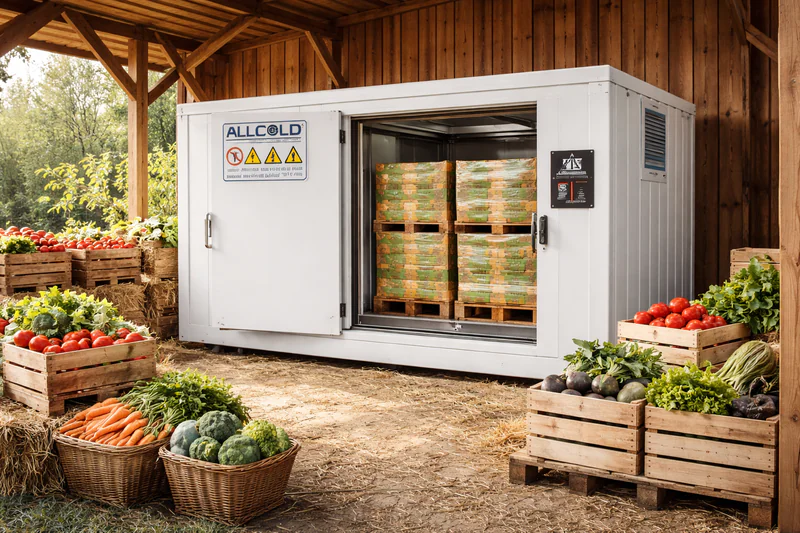
I work with a lot of "Market Garden" style farmers in Europe and vertical farms in Singapore. They don’t have 40-foot trailers; they have delivery vans.
For them, the Allcold 2-Pallet System3 is a game changer.
Why Size Down?
- Power Constraints: A 2-pallet machine typically runs on a 40HP – 50HP compressor system. This can often run on existing farm power supplies without needing a massive transformer upgrade.
- Batch Flexibility: If you harvest 1 pallet of spinach, then 1 pallet of baby leaf, then 1 pallet of herbs, you don’t want to wait to fill a huge chamber. With a small machine, you can process mixed loads quickly.
- Space: These units are compact. They fit in existing packing sheds.
The "Integrated Condenser4" Advantage:
On our smaller models (1-2 pallets), we often build the condenser (the part that releases heat) directly onto the skid. This makes the machine a single piece of equipment.- Installation: Unload, plug in power, connect water, and run.
- Mobility: Some clients even mount these on flatbed trailers to move between fields (though this requires a generator).
However, be warned: If you grow, you will outgrow it.
I had a client in Korea start with a 2-pallet machine. Two years later, he was harvesting 4 pallets an hour and had to run a night shift just to keep up. Always look at your 5-year growth plan.
Medium-Scale: The Workhorse 4 to 6 Pallet Models?
This is the "sweet spot" for most commercial vegetable growers. It balances high throughput with manageable logistics. But how do you choose between 4 and 6?
The 4 to 6-pallet vacuum cooler range is the industry standard for mid-sized operations, capable of processing 150-250 pallets per day. The choice depends on your forklift logistics: a 4-pallet machine is often a single-load depth, while a 6-pallet machine might require double-deep loading, necessitating skilled drivers and specific warehouse layouts.
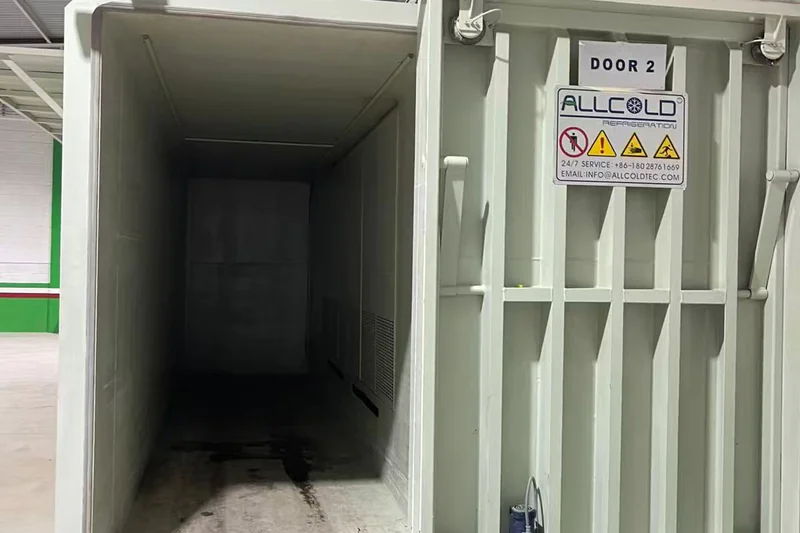
The Logistics of Loading
When you step up to a machine that holds 4, 5, or 6 pallets, the machine isn’t the limit—the forklift is.
- The 4-Pallet Configuration: usually 2 pallets wide x 2 pallets deep. Or 1 long row of 4.
- The 6-Pallet Configuration: usually 2 wide x 3 deep.
Single Door vs. Double Door (Tunnel):
For a 6-pallet machine, I almost always recommend a Tunnel Design5 (doors on both ends).
Why?
Imagine loading 6 pallets into a "dead-end" chamber. You drive in, place 2, back out. Drive in, place 2, back out. Drive in, place 2, back out.
That takes time.
With a Tunnel: - "Flow-Through": The dirty/field side loads from the back. The clean/shipping side unloads from the front.
- Traffic Separation: This keeps your field forklifts (which might have mud on the tires) away from your shipping dock (which needs to be clean).
Capacity vs. Cycle Time6:
A 6-pallet machine running 2 cycles/hour = 12 pallets/hour.
In an 8-hour shift, that’s nearly 100 pallets. That is a full truckload every 2 hours.
This size is perfect for growers supplying supermarket chains directly. It is robust enough to run all day but not so huge that a half-load feels like a waste.
Critical Consideration: Ensure your cold store doors are wide enough! A 6-pallet machine is a big piece of steel.
Large-Scale: When Do You Need a 10+ Pallet System?
For the giants of the industry—the huge consolidators in Salinas or Spain—time is money on a massive scale. Here, we talk about "trains" of pallets.
Large-scale vacuum coolers (8 to 12+ pallets) are designed for centralized distribution centers and mega-farms. These systems often utilize automated roller conveyor floors to load and unload entire batches in under 90 seconds, maximizing the machine’s active cooling time and minimizing human handling error.
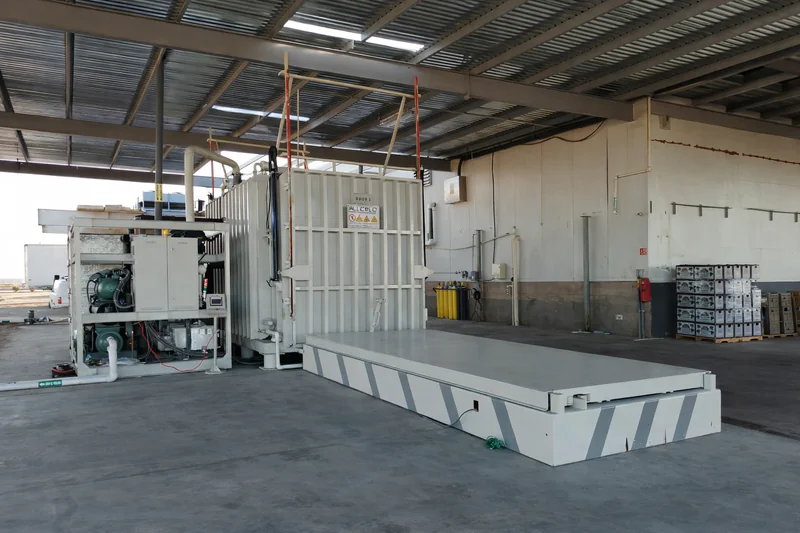
The Automation Necessity
When you get to 10 or 12 pallets per cycle, forklifts become too slow.
Loading 12 pallets one by one takes 15 minutes. Unloading takes 15 minutes. That’s 30 minutes of "dead time" for a 25-minute cooling cycle. Your efficiency drops to 50%.
The Solution: Conveyorized Systems.
For these beasts, we install Powered Roller Floors7 inside the chamber.
- Staging: Outside the chamber, you build a "train" of 12 pallets on a staging conveyor.
- The Swap: When the door opens, the internal conveyor pushes the cold pallets out the back, while simultaneously pulling the warm pallets in from the front.
- Speed: This swap takes 2 minutes.
Who needs this? - Consolidators: If you are a cooling center receiving product from 20 different farms, you need massive throughput8. You might process 500+ pallets a day.
- Peak Season Warriors: If you have a very short harvest window (e.g., Iceberg lettuce that must be harvested in a 4-hour window), you need to process volume instantly.
Infrastructure Warning:
These machines are power hungry. A 12-pallet system might need 300HP or 400HP of refrigeration. You will likely need a dedicated electrical substation and a massive water tower for the condenser loop. This is a construction project, not just a machine purchase.
How Does Crop Type Affect Capacity Sizing?
We call them "Lettuce Coolers," but what if you also grow spinach, broccoli, or sweet corn? Different crops cool at different speeds, changing your capacity math.
Different vegetables have different surface-area-to-weight ratios, which dictates cooling speed. While leafy lettuce cools in 20 minutes, denser crops like broccoli or corn may take 30-40 minutes per cycle. If you plan to cool mixed commodities, you must size your machine based on the slowest-cooling crop to avoid production bottlenecks.
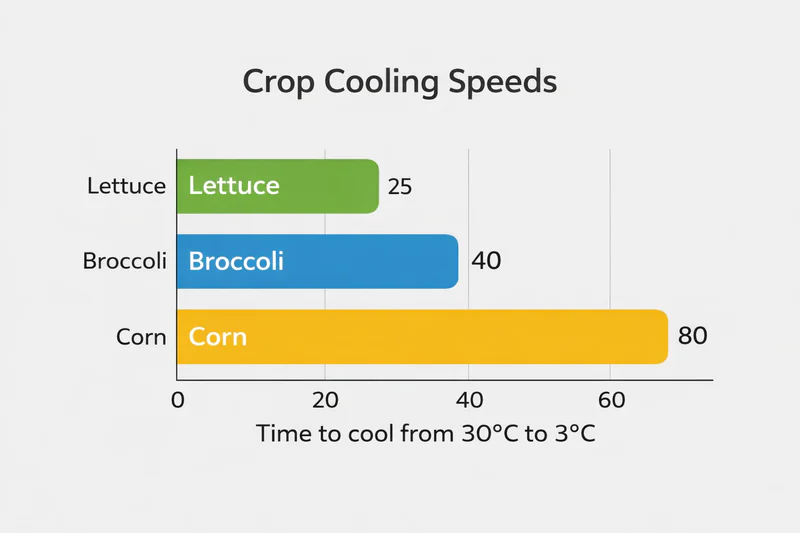
The Density Factor
My client Norman acts as a middleman. He buys whatever is available. One day it’s Iceberg, the next it’s Cabbage.
He bought a machine sized for Iceberg (20 min cycle).
Then he tried to cool Cabbage. Cabbage is dense. It’s a solid ball of leaves.
- Iceberg: 20-25 mins to reach 2°C.
- Cabbage: 35-45 mins to reach 2°C.
- Result: His throughput dropped by 50%.
Sizing for the "Worst Case":
If you grow 80% Lettuce and 20% Broccoli, size the machine for the Lettuce but add extra refrigeration power9. - Vacuum Pump: Removing air is easy for all crops.
- Refrigeration (The Trap): Denser crops hold more heat energy (Specific Heat Capacity10). You need more horsepower (HP) to remove that heat once the water starts boiling.
If you anticipate mixed loads, tell us. We will oversize the Vacuum Pumps (to pull through the dense layers) and the Condenser (to handle the extra heat load).
Tip: For dense crops, we also use "Hydro-Vac" (water spray). It speeds up the process significantly. If you don’t have Hydro-Vac, you must calculate for slower cycles.
Future-Proofing: Modular Sizing or One Big Unit?
Your business is growing. Should you buy one giant machine now, or buy a smaller one and add a second one later? This is a strategic capital expenditure question.
Deciding between one large vacuum cooler or two smaller modular units depends on your risk tolerance and redundancy needs. Two smaller machines offer operational security—if one requires maintenance, the other keeps running—whereas a single large unit offers lower initial capital cost but represents a single point of failure.
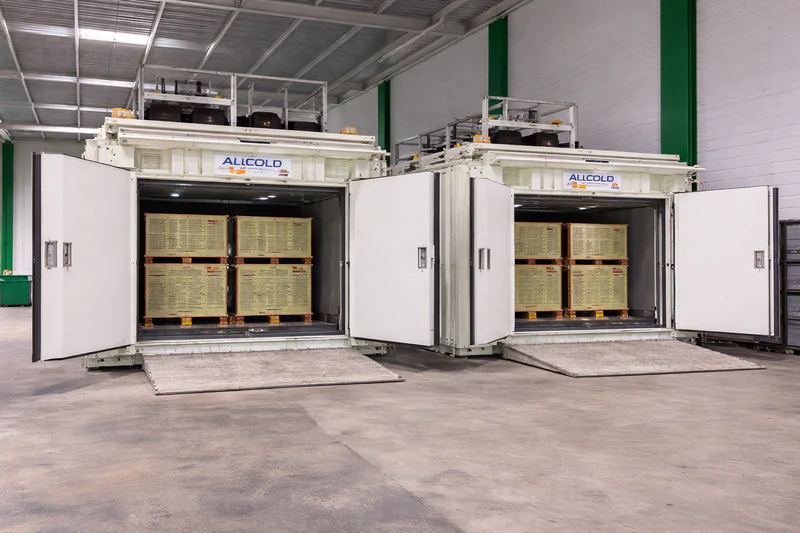
The "Don’t Put All Eggs in One Basket" Strategy
I had a tragic case with a farm in Arizona. They bought one massive 10-pallet machine. In the middle of July, a freak power surge blew the main VFD (Variable Frequency Drive).
It took 4 days to get the part.
For 4 days, they had Zero Cooling Capacity. They lost the entire harvest.
The Redundancy Argument:
If you need 8 pallets of capacity, buying Two x 4-Pallet Machines is often smarter than One x 8-Pallet Machine.
- Pros:
- Maintenance: You can service one machine while the other runs.
- Flexibility: On slow days, you only turn on one machine (saving energy).
- Resilience: If one breaks, you still have 50% capacity. You can run the remaining machine 24 hours a day to catch up.
- Cons:
- Cost: Two small machines cost about 20-30% more than one big one (two control panels, two sets of pumps, more steel).
- Space: You need more floor space.
My Recommendation:
If you are in a remote location (far from technicians), buy two smaller units. The redundancy is your insurance. If you are near a major city with good support, one big unit is the most cost-effective route.
Conclusion
Sizing a vacuum cooler is not a guessing game; it is a calculation of Peak Harvest Flow, Crop Density, and Risk Management. Don’t buy for your average day; buy for your busiest hour. Whether you need the agility of a 2-pallet unit or the brute force of a conveyorized 12-pallet system, the goal is the same: to match the machine’s appetite to your field’s output. At Allcold, we don’t just sell dimensions; we sell the assurance that when the harvest surge hits, your cold chain won’t break.
-
Understanding the significance of a 20% buffer can help optimize production efficiency and prevent bottlenecks. ↩
-
Exploring cycle time realities can provide insights into improving operational workflows and maximizing productivity. ↩
-
Discover how the Allcold 2-Pallet System can revolutionize small farming operations with its efficiency and compact design. ↩
-
Learn about the advantages of an Integrated Condenser and how it enhances the performance of agricultural machinery. ↩
-
Explore the advantages of Tunnel Design for efficient loading and unloading in logistics operations. ↩
-
Understanding Cycle Time is crucial for optimizing logistics operations and improving overall efficiency. ↩
-
Explore how Powered Roller Floors can significantly enhance your operational efficiency and reduce downtime. ↩
-
Learn effective strategies for achieving massive throughput in cooling centers to optimize your processing capabilities. ↩
-
Understanding extra refrigeration power can help optimize cooling processes for dense crops, improving efficiency and throughput. ↩
-
Learning about Specific Heat Capacity is crucial for managing heat in dense crops, ensuring effective cooling and energy use. ↩

Mila
You May Also Like
Buying a Vacuum Cooler for Fresh Produce Export? Avoid These Costly Procurement Mistakes
Buying a vacuum cooler for fresh produce export is not simply a machine purchase. It is a project decision that
How Much Produce Shrink Can Better Pre-Cooling Prevent in Export Projects?
Produce shrink in export projects is not simply a freshness problem. It is a commercial problem that compounds across every
Technical Specifications of Industrial Lettuce Vacuum Cooling Systems?
Buyers often look at a quote and only see the price. They ignore the technical specifications. This is a mistake.
Field-to-Fork: Lettuce Vacuum Cooling in the Cold Chain Process?
We often talk about "freshness" as if it were magic, but in the lettuce business, freshness is purely a matter
Vacuum Cooling Organic Lettuce: Best Practices for Premium Quality?
Organic lettuce is a promise to the consumer: no chemicals, no shortcuts, just nature. But without the safety net of
Pre-Cooling Lettuce: Why Vacuum Cooling is the Industry Standard?
In the fresh produce industry, the clock starts ticking the moment a knife cuts a stem. For lettuce, heat is
Optimal Vacuum Cooling Parameters for Lettuce: Temperature and Timing?
In the world of post-harvest preservation, precision is the difference between a crisp, profitable shipment and a slimy, rejected claim.
Vacuum Cooling Different Lettuce Varieties: Is One Setting Enough for All?
Not all lettuce is created equal. A dense head of Iceberg is a fortress of water, while delicate Baby Spinach
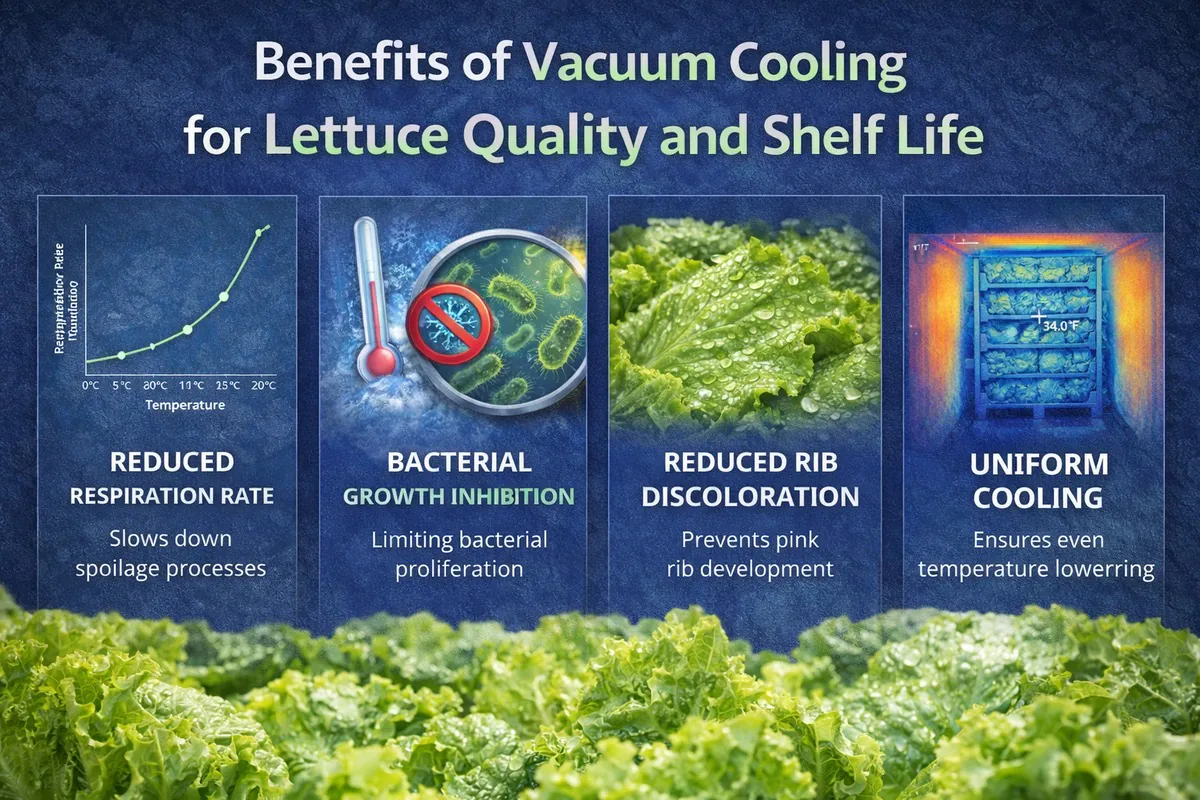
Benefits of Vacuum Cooling for Lettuce Quality and Shelf Life?
Lettuce is 95% water, wrapped in cdsfvxgba fragile green skin. Once harvested, it is fighting a losing battle against heat
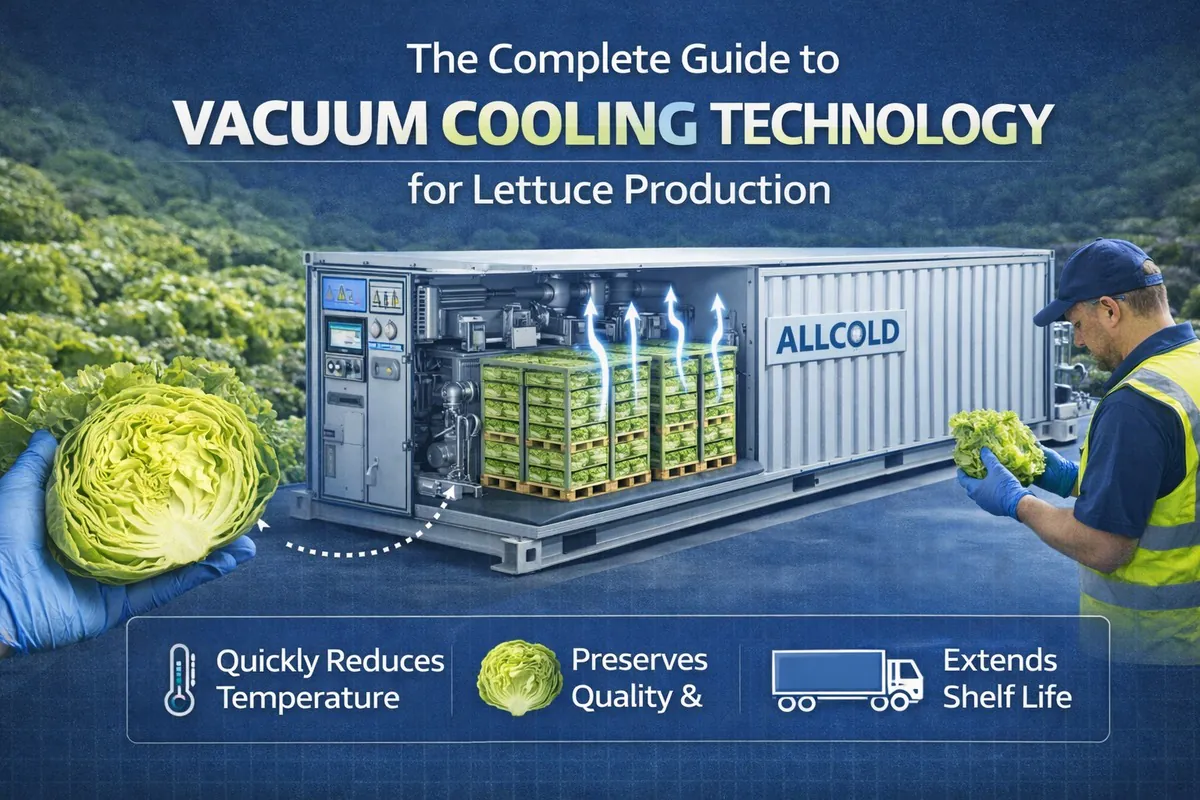
The Complete Guide to Vacuum Cooling Technology for Lettuce Production?
Lettuce is a race against nature. From the moment the stem is cut in the field, respiration heat begins to