
ROI Analysis: Is a Vacuum Cooler Worth the Investment for Your Farm?
You see the high upfront cost of a vacuum cooler and hesitate. But slow cooling methods and post-harvest losses are already costing you money every day, silently eating into your farm’s profits.
Yes, a vacuum cooler is worth the investment. It delivers a strong Return on Investment (ROI) by dramatically increasing your daily throughput, which boosts revenue, while high-quality components and an efficient operational design lower your long-term costs.
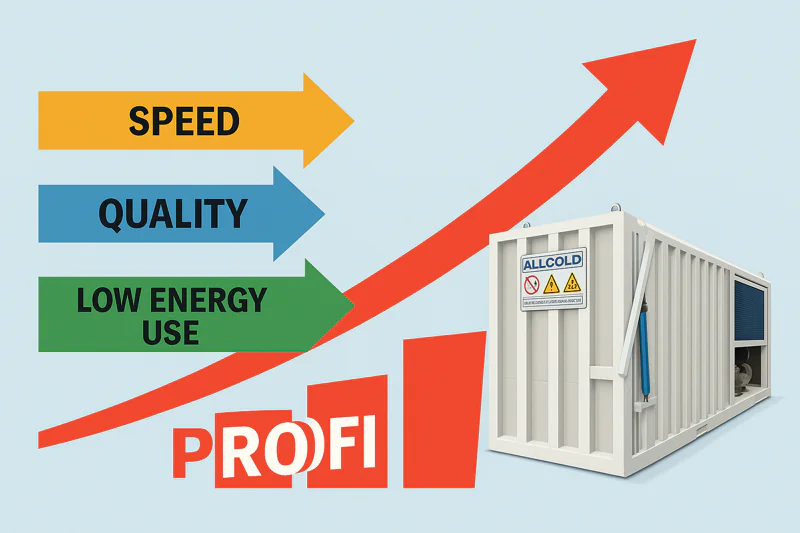
I’ve walked through this exact cost-benefit analysis with countless farm owners. They start by looking at the price tag, but the real story is in the total value over time. An investment in the right equipment isn’t just an expense; it’s a strategic move that pays for itself. Let’s break down the real numbers and factors that contribute to a powerful ROI.
How does upfront cost compare to long-term value?
The initial price of a quality machine can seem high. But opting for a cheaper alternative often leads to expensive breakdowns and lost product, especially during your busiest harvest season.
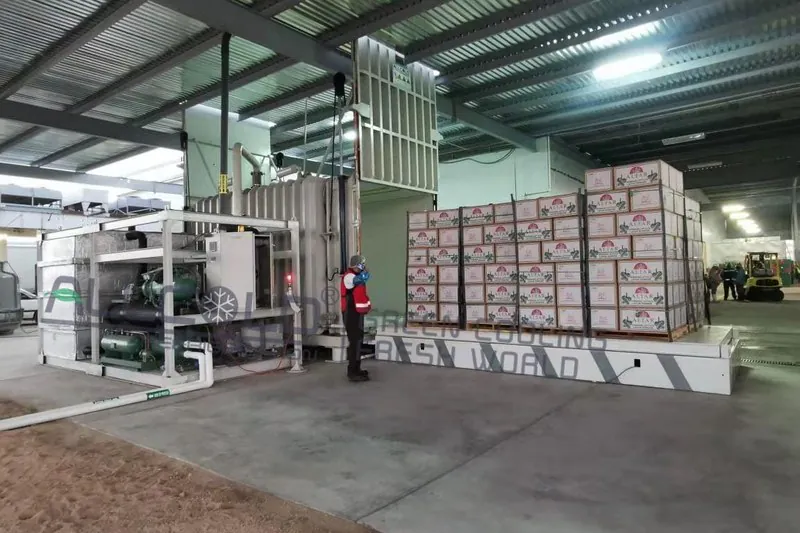
Allcold’s produce range includes different pallet capacities and custom chamber sizing. This helps a farm build an investment case around its actual pack and seasonal volume instead of buying solely by the largest nominal capacity it can afford. Share the peak harvest schedule and intended utilization, then test the quoted configuration against conservative output and cost assumptions.
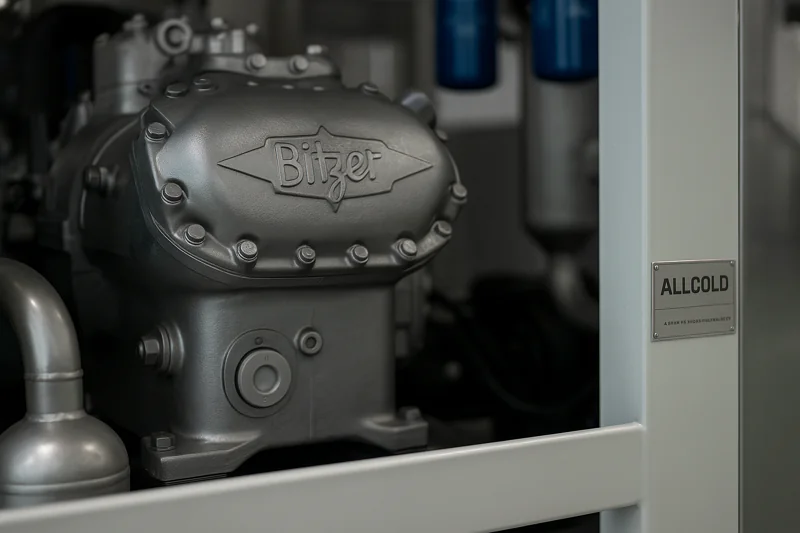
The incredible long-term value comes from using premium, world-class components. Machines built with brands like Bitzer from Germany for compressors ensures durability and reliability, leading to fewer repairs and a lower total cost of ownership.
Building for a Decade, Not a Season
Lifecycle value depends on the actual machine configuration, operating duty and maintenance. Request the component schedule for the proposed system and include expected service requirements in the investment comparison. A familiar compressor or pump brand is useful identification, not a guarantee of a particular service life.
We extend this quality-first approach to the entire machine. The control system uses a Siemens PLC2 for flawless, responsive operation, and the electricals are managed by reliable Schneider contactors. When you invest in a machine built with these parts, you are buying down your risk of future problems. A breakdown during peak season doesn’t just cost you a repair bill; it costs you lost revenue, damaged client relationships, and immense stress. The higher upfront cost of quality components is your insurance against these much larger, unpredictable expenses, making it a smarter financial decision in the long run.
| Component area | Quotation evidence | Lifecycle question |
|---|---|---|
| Vacuum equipment | Actual type and model | What service and consumables are required? |
| Refrigeration | Actual duty and configuration | What utilities and maintenance are required? |
| Controls | Supplied functions and hardware | What support and backups are available? |
| Electrical system | Approved supply and protection scope | Who installs and services the system? |
What are the direct financial gains from faster cooling?
Your current cooling process is likely a bottleneck. It’s slow and limits how much produce you can process and ship in a single day, putting a hard cap on your farm’s potential revenue.
Extremely fast and automated cooling cycles directly increase your farm’s daily product throughput. This allows you to process more harvests, fulfill larger orders, and significantly boost revenue without adding more labor shifts.
Turning Speed into Revenue
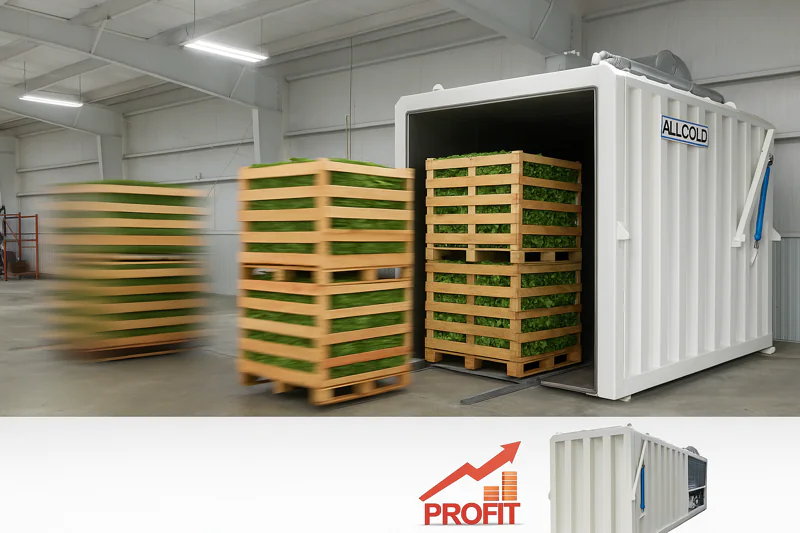
For farm owners who supply large supermarket chains, speed is money. Their contracts have strict delivery windows, and missing them is not an option. This is where a vacuum cooler completely changes the game. While traditional cold rooms can take many hours to cool a pallet of lettuce, a vacuum cooler achieves the same result in a fraction of the time. The entire process is automated. Your operator simply presses ‘Start’ on the touch screen to begin the cycle.
This speed isn’t just a small improvement; it’s a massive expansion of your farm’s capacity. Think about what this means for a full day’s work. In one 8-hour shift, a cold room might cool one batch. In that same shift, a vacuum cooler3 can run more than 15 automated cycles. You can now handle peak harvest volumes with ease, take on new, larger clients, and respond to urgent orders that your competitors have to turn down. This ability to say "yes" to more business is a direct path to increased revenue4. Furthermore, because the cycles are so fast and automated, you achieve this higher throughput with your existing team. You’re not paying more for labor; you’re simply making your entire operation more productive and profitable.
How do operational costs affect the overall ROI?
You’ve made the investment, but now you’re watching the electricity meter. A machine that is expensive to run day-to-day can quickly erode the financial benefits it provides.
A positive ROI depends on low operational costs. Our vacuum coolers are designed for efficiency, with automatic shutdown features and a straightforward maintenance schedule to minimize your daily expenses.
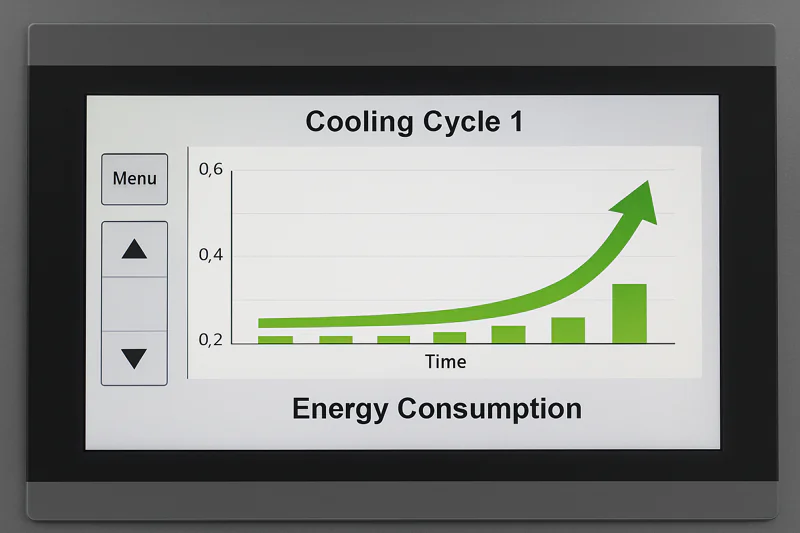
Efficiency That Protects Your Bottom Line
Operational costs are always on the mind of managers who have to balance budgets. A common misconception is that a fast, powerful machine must be an energy hog5. In reality, the opposite is true. Our system is designed with efficiency built-in. For example, once the product reaches the target temperature, the compressor and condenser fans stop automatically, preventing wasted energy. The machine also has a smart maintenance feature: after a cycle, the vacuum pumps keep running for a set time to remove water from the pump oil, protecting the equipment.
Maintenance costs are also predictable and low6. A monthly check of the vacuum pump oil is a simple visual task for your staff; you just look to see if it is emulsified. A major service, like changing the compressor oil, is only required every two years by a professional. Annually, the condenser should be washed to maintain efficiency. And we recommend a general hygiene cleaning every two seasons. This combination of low energy use and predictable, minimal maintenance ensures that the machine saves you money every single day, strengthening its ROI.
| Operating cost | Basis for the ROI model |
|---|---|
| Energy | Measured consumption for comparable loads |
| Maintenance | Installed-component manuals and realistic labor |
| Cleaning | Approved process and actual frequency |
| Support | Agreed scope, availability and exclusions |
How does reduced risk contribute to a positive ROI?
What is the cost to your farm if your primary cooler breaks down in the middle of harvest? The loss from spoiled produce, a broken contract, and a damaged reputation can be catastrophic.
Reduced risk is a critical part of ROI. Our comprehensive 12-month guarantee and accessible technical support line act as a safety net, ensuring any issue is resolved fast to protect your harvest and income.
Your Investment is Protected
Include the current warranty terms in the purchase review: duration, starting event, coverage, exclusions and the responsibilities of both parties. A warranty does not eliminate every downtime cost or establish that all initial operation is risk-free.
Agree the support contact routes, availability and escalation process for the destination. Include any remote or on-site service scope in writing. Do not build an ROI model on an assumed immediate response or round-the-clock service unless those terms are expressly included.
Conclusion
A vacuum cooler’s ROI becomes clear when you look beyond the price tag. It is a powerful tool that boosts revenue, lowers operational costs, and minimizes risk, making it a wise and profitable investment.
Explore the advantages of German-made Bitzer compressors for reliability and efficiency in your operations. ↩
Learn how Siemens PLCs enhance automation and operational stability in industrial applications. ↩
Explore how vacuum coolers can revolutionize your farming operations and boost efficiency. ↩
Learn strategies to enhance your farm’s profitability and maximize revenue potential. ↩
Understanding what constitutes an energy hog can help you make informed decisions about energy-efficient machinery. ↩
Exploring predictable and low maintenance costs can help you budget effectively and choose the right equipment for your needs. ↩
Explore this link to understand how a 12-month guarantee can protect your investment and ensure reliability. ↩
Discover strategies to minimize operational risk, ensuring your business runs smoothly and efficiently. ↩
Looking for the right vacuum cooler for your operation?

Mila
You May Also Like
Used vs. New Vacuum Coolers: Is the Lower Price Worth It?
Buying a used vacuum cooler? Compare load fit, condition, relocation, installed cost and support with a new system before deciding if the saving is real.
Why Does Produce Sweat After Vacuum Cooling?
FRESH PRODUCE · POST-COOLING HANDLING The cooling cycle can finish correctly—and the load can still become wet on its way
Vacuum Cooler Not Performing? Check Your Pallet Loading First
When a vacuum cooler produces inconsistent results—warm spots, longer cycle times, variable exit temperatures across the load—the machine is usually
Why One Successful Cooked Rice Cooling Test Is Not Enough to Standardize a Central Kitchen Process
A cooked rice batch can pass a vacuum cooling test and still fail as a production process. That is the
Why a Vacuum Cooler Utility Failure Becomes an Export Quality Problem Before It Becomes a Repair Problem
A vacuum cooler stoppage does not start as a maintenance problem. In a produce export operation, it becomes a quality
Why Asparagus Loses More Export Value in the First Two Hours After Cutting Than in the Entire Cold Chain That Follows
For fresh asparagus exporters, the most expensive quality loss often happens before the product even reaches the main cold chain.
Why Bean Sprouts Are One of the Hardest Vegetables to Pre-Cool Correctly and What Exporters Get Wrong
Bean sprouts look simple. They are light, moist, and usually packed in bulk or retail bags. But from a pre-cooling
Why Broccoli Loses Export Quality Faster Than Any Temperature Log Will Show
The complaint comes in from the buyer: yellowing, premature flowering, weak texture on arrival. The exporter reviews the cold room
Why Spinach Shipments That Leave Looking Perfect Arrive Looking Wrong
The complaint lands differently with spinach than with most other export vegetables. The exporter packed dark green, crisp product. The
How Exporters Can Reduce Produce Rejection Claims with Better Pre-Cooling Workflow
Learn how exporters can reduce produce rejection claims by improving pre-cooling workflow, timing control, packing handoff, and first-mile cold chain stability.