
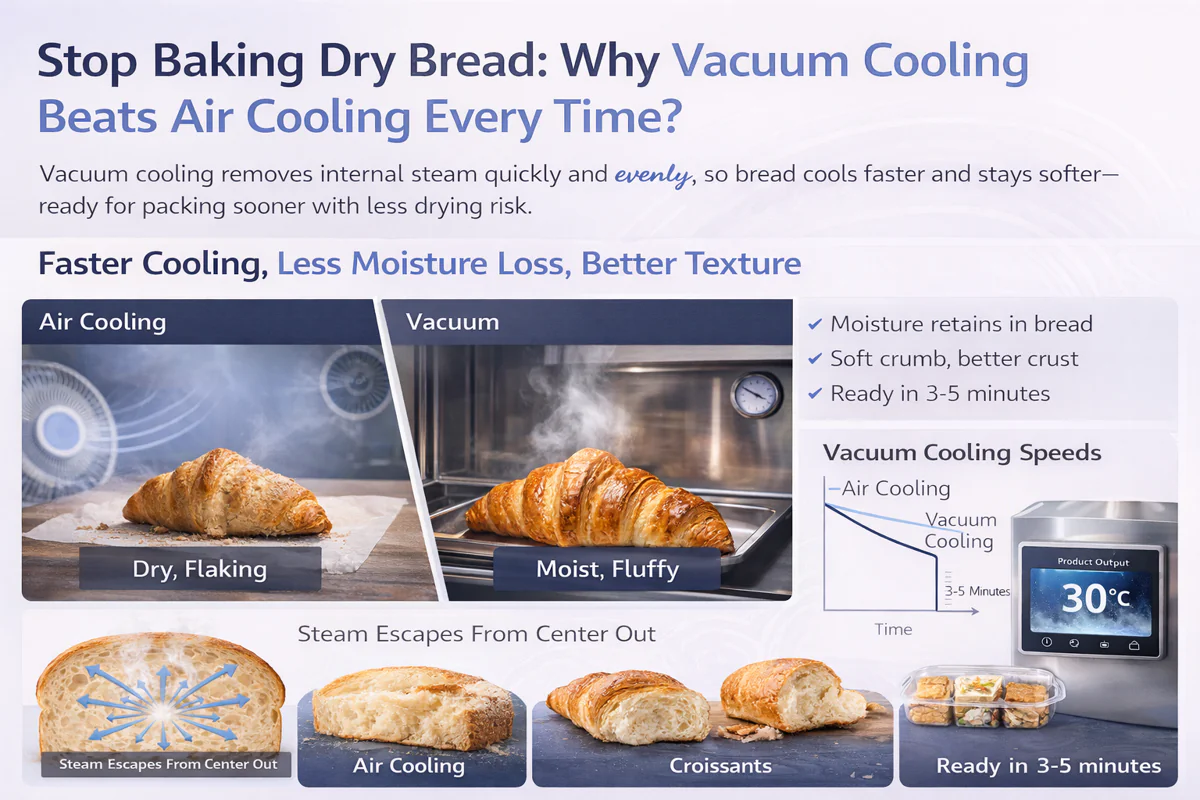
Stop Baking Dry Bread: Why Vacuum Cooling Beats Air Cooling Every Time?
You watch your perfectly baked loaves turn into dry, crumbly disappointments as they sit on racks for hours. You are literally watching your profits evaporate into thin air while you wait for gravity to do its job.
Allcold bakery vacuum cooling combines rapid cooling with low moisture loss. The catalogue gives a typical cooling time of 3-5 minutes and moisture retention above 90% under the catalogue conditions. Final results are confirmed with the bakery’s actual bread, load, starting temperature, and target temperature.
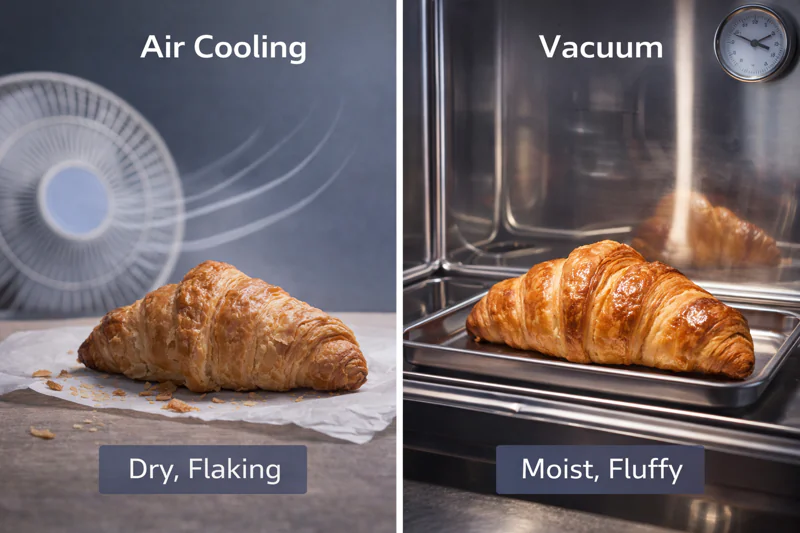
Most bakers believe that "natural" air cooling is the gentlest way to treat their bread. I am here to tell you that natural cooling is actually the most aggressive thief of your product’s quality. It steals weight, it steals texture, and it subjects your bread to the whims of the weather. At Allcold, we use precise engineering to change the physics of how water behaves inside your dough. By understanding the difference between "drying out" and "flash cooling," you can transform your bakery’s efficiency. Let’s dive into why the air around us is your bread’s worst enemy.
How Does Cooling Speed Directly Impact Moisture Retention?
You assume that cooling bread slowly allows the structure to settle naturally. In reality, every minute your bread spends hot is a minute it spends sweating out valuable moisture.
Traditional air cooling takes 90 to 120 minutes, maintaining high evaporation rates the entire time. Allcold vacuum coolers finish the cycle in roughly 3 to 5 minutes, stopping evaporation instantly once the target temperature is hit.
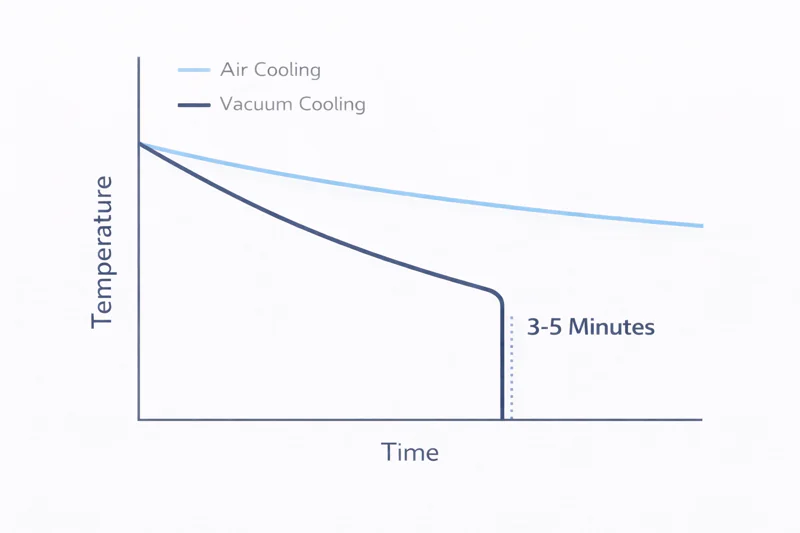
The relationship between time and moisture is critical. In a traditional setup, your bread comes out of the oven at over 90°C. It sits in a room that is likely 25°C to 30°C. For the next two hours, the heat from the core of the bread migrates to the crust, carrying moisture with it. This moisture evaporates into the room. It is a slow, bleeding process.
The Linear vs. Logarithmic Trap
Long air-cooling periods allow heat and moisture to migrate through the loaf for much longer. Allcold shortens that period by reducing pressure in a controlled chamber and stopping the cycle at the validated target temperature. The result is fast cooling with low total water loss, not a claim of zero evaporation. Weight before and after cooling should be recorded during commissioning.
The Cost of Evaporation
You might think machinery is expensive, but losing water is more expensive. To achieve this speed, we do not rely on simple fans. We use top-tier components. Our parts list includes Bitzer compressors from Germany and Leybold vacuum pumps . These powerful components ensure that the pressure drops rapidly. When the pressure drops, the cooling happens instantly. This efficiency means we minimize the "KW rating" of the energy used , but more importantly, we minimize the time your bread is vulnerable to evaporation. You keep the water you paid for inside the loaf, not in the air of your bakery.
| Feature | Air Cooling | Allcold Vacuum Cooling |
|---|---|---|
| Cooling Time | 90 – 120 Minutes | 3 – 5 Minutes |
| Moisture Performance | Depends on residence time, airflow, and ambient conditions | Low-loss, product-matched cycle; catalogue reference is above 90% moisture retention |
| Core Temp Lag | Core stays hot for an hour | Core cools instantly |
| Structure Set | Slow (risk of collapse) | Immediate (Volume locked) |
Why Is "Boiling" Inside the Loaf Better Than Evaporation from the Surface?
It sounds scary to say we "boil" water inside your bread. You fear it will turn your loaf into a sponge. But controlled low-temperature boiling is actually the secret to uniform moisture distribution.
Air cooling dries the crust first, creating a hard shell while the inside remains soggy. Vacuum cooling lowers the boiling point of water, causing moisture to flash-off evenly from the core to the crust simultaneously.
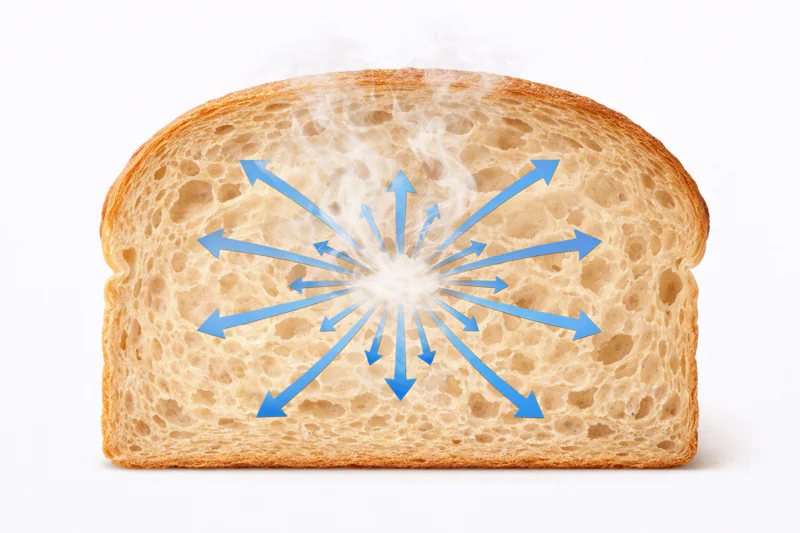
To understand why vacuum cooling preserves quality, you must look at the physics. Our manuals state clearly: "At reduced atmospheric pressure in a vacuum chamber, water boils at a lower than normal temperature". In air cooling, evaporation happens on the skin. The crust dries out and becomes hard. The moisture inside struggles to get out, often leaving a gummy ring under the crust. This is "migration."
Understanding the "Flash" Phenomenon
In an Allcold machine, we lower the pressure inside the chamber. Because the pressure is low everywhere, the water in the absolute center of the loaf boils at the same time as the water on the crust. This is called "flash evaporation1." It uses the latent heat of water to cool the bread from the inside out. This means the crumb sets uniformly. You don’t have a dry crust and a wet center. You have a perfectly moist crumb throughout. The steam generated actually cleans the vacuum pump oil as it exits , serving a dual purpose.
Automation as Quality Control
The danger with manual cooling is human error. You forget the rack, and the bread dries out. Our systems remove this risk through automation. We use Siemens touch screens and Schneider electric parts to control the process . According to our operation manual, you simply press ‘Start’. The machine runs the pumps and compressor in order . The critical part is the sensor. Once the ‘Target temperature’ reaches the setting figure you chose, the system automatically stops the cooling process . It immediately shifts to ‘Deflation’ and ‘Drainage’ . This means the machine physically cannot "over-dry" your bread. It hits 30°C, and it stops. Your moisture level is consistent every single batch.
Does Your Bakery’s Ambient Temperature Ruin Your Consistency?
One day it is raining, the next day it is a heatwave. You adjust your recipes constantly because your cooling room is fighting the weather.
Air cooling depends entirely on the room temperature and humidity. Allcold vacuum coolers are designed to operate efficiently even in ambient temperatures up to 45°C, delivering consistent moisture retention regardless of the weather outside.
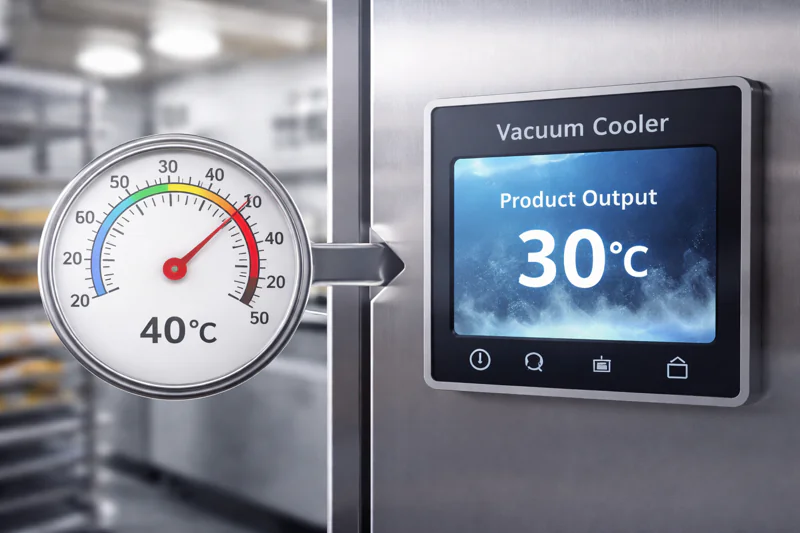
I have clients in Mexico and South Asia where the ambient temperature in the bakery can hit 40°C or more. In these conditions, air cooling essentially stops working. The air is too hot to absorb heat from the bread effectively, so the bread sits there, sweating out moisture without actually getting cold. It is a disaster for consistency.
Beating the Weather with Physics
Because the Allcold vacuum cooler2 operates as a sealed system, it creates its own internal environment. The physics of vacuum do not change whether it is raining in London or scorching hot in Dubai. We have designed our systems to work in harsh conditions. Our project details specify a "Max. Ambient temp. +45°C" . This means even in a hot summer kitchen, the machine performs exactly the same way.
Consistent Hardware Performance
Consistency comes from reliability. If your cooling breaks down, you are back to air cooling and lost profits. That is why we offer full technical support3 and a 12-month guarantee from the installation date. We check every machine with a 72-hour trouble-free trial operation before delivery . We also ensure our systems are "plug-in ready and well piped" , so you don’t have to worry about complex installations affecting performance. With a vacuum cooler, your cooling time remains exactly 3 to 5 minutes, year-round. This means your recipe hydration stays consistent, your dough weight stays consistent, and your profits stay consistent.
| Condition | Air Cooling Impact | Vacuum Cooling Impact |
|---|---|---|
| High Humidity (Rain) | Crust gets soggy/tough | Crust stays crispy |
| High Heat (>30°C) | Cooling time doubles/triples | No change in time |
| Consistency | Changes daily | Identical 365 days/year |
Conclusion
For bakeries where long cooling time is a real bottleneck, a product-matched vacuum cycle can shorten the process while keeping moisture loss low. The commercial result should be calculated from measured batch weight, cycle time, product quality, and downstream throughput.
Explore this link to understand how flash evaporation enhances bread quality and ensures a perfectly moist crumb. ↩
Explore this link to understand the technology behind vacuum coolers and their benefits in various conditions. ↩
Learn why having reliable technical support can save you time and money in maintaining your cooling systems. ↩

Mila
You May Also Like

When Should You NOT Use Vacuum Cooling for Your Bakery?
Are you tired of waiting hours for your bread to cool down while your profits evaporate? You might think vacuum

Is Your Cooling Strategy Burning Your Profits? A Cost-Benefit Analysis of Vacuum vs. Conventional Cooling
As a bakery owner, you look at your balance sheet every month. You see the cost of ingredients, labor, and
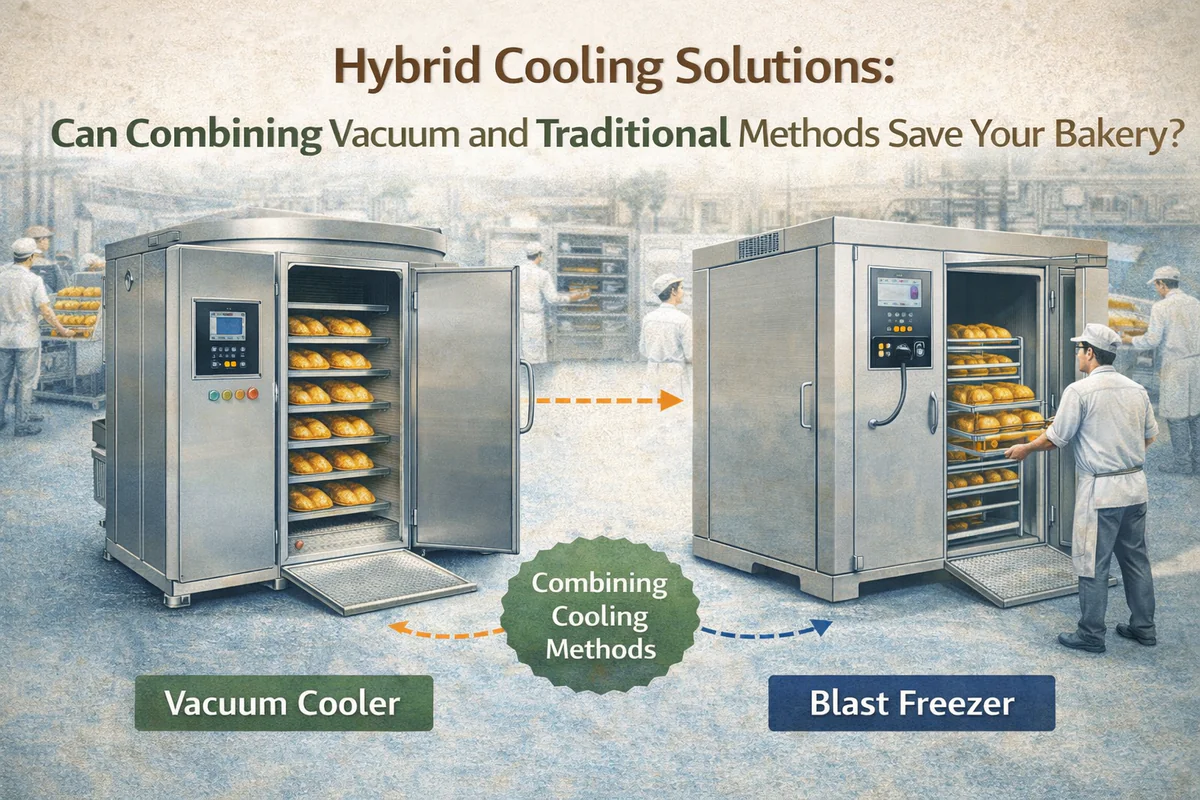
Hybrid Cooling Solutions: Can Combining Vacuum and Traditional Methods Save Your Bakery?
Are you torn between the speed of new technology and the reliability of traditional freezing? Many bakery owners feel they
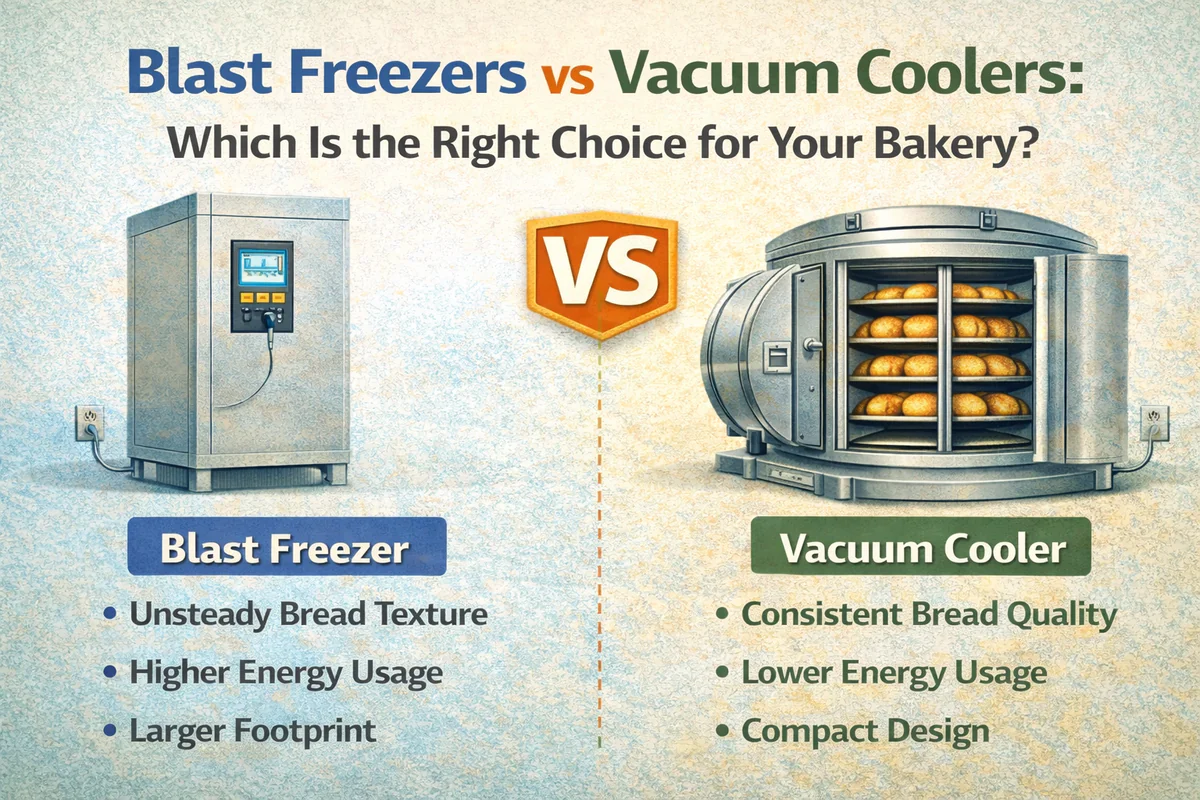
Blast Freezers vs Vacuum Coolers: Which Is the Right Choice for Your Bakery?
Are you tired of watching your freshly baked bread sit on racks for hours, taking up valuable space while you

Bakery Vacuum Cooling vs Spiral Cooling Systems: Which Is Better for Your Business?
Are you struggling with slow production lines because your bread takes forever to cool down? You are not alone. Cooling
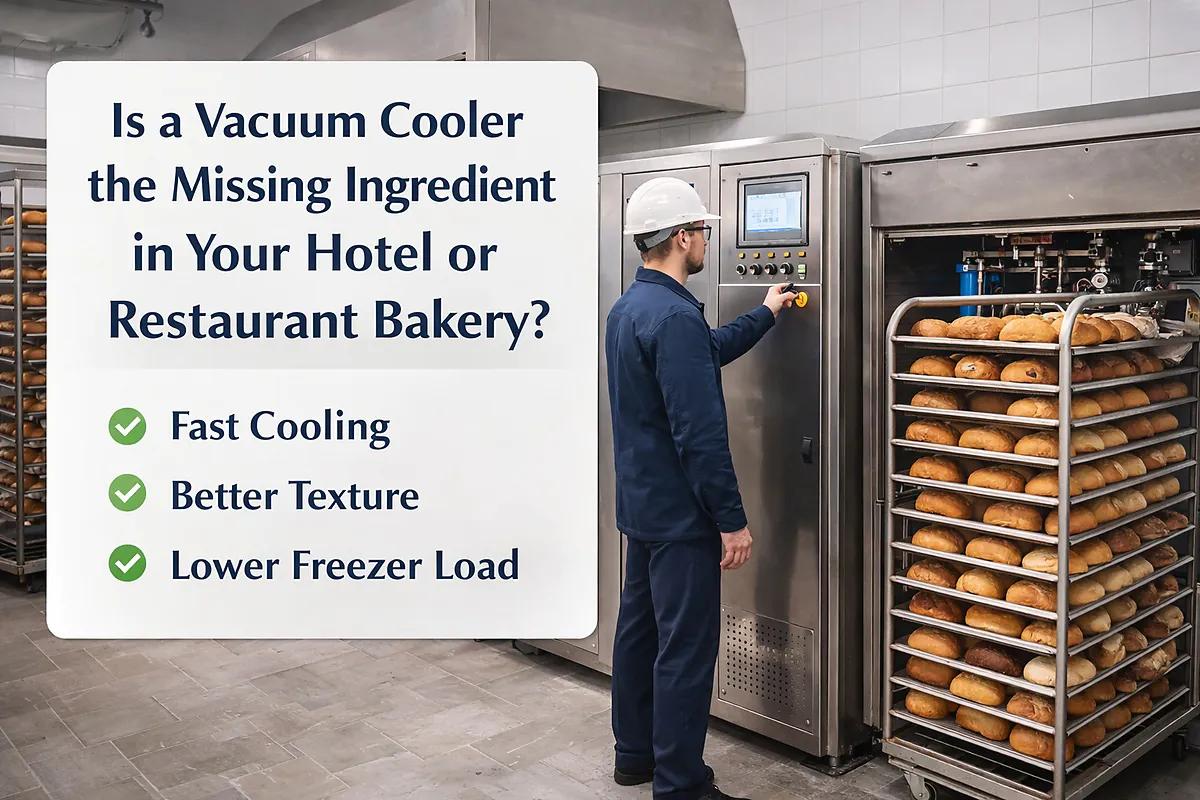
Is a Vacuum Cooler the Missing Ingredient in Your Hotel or Restaurant Bakery?
Imagine your kitchen is in full swing, and the freshly baked bread is finally out of the oven, but it
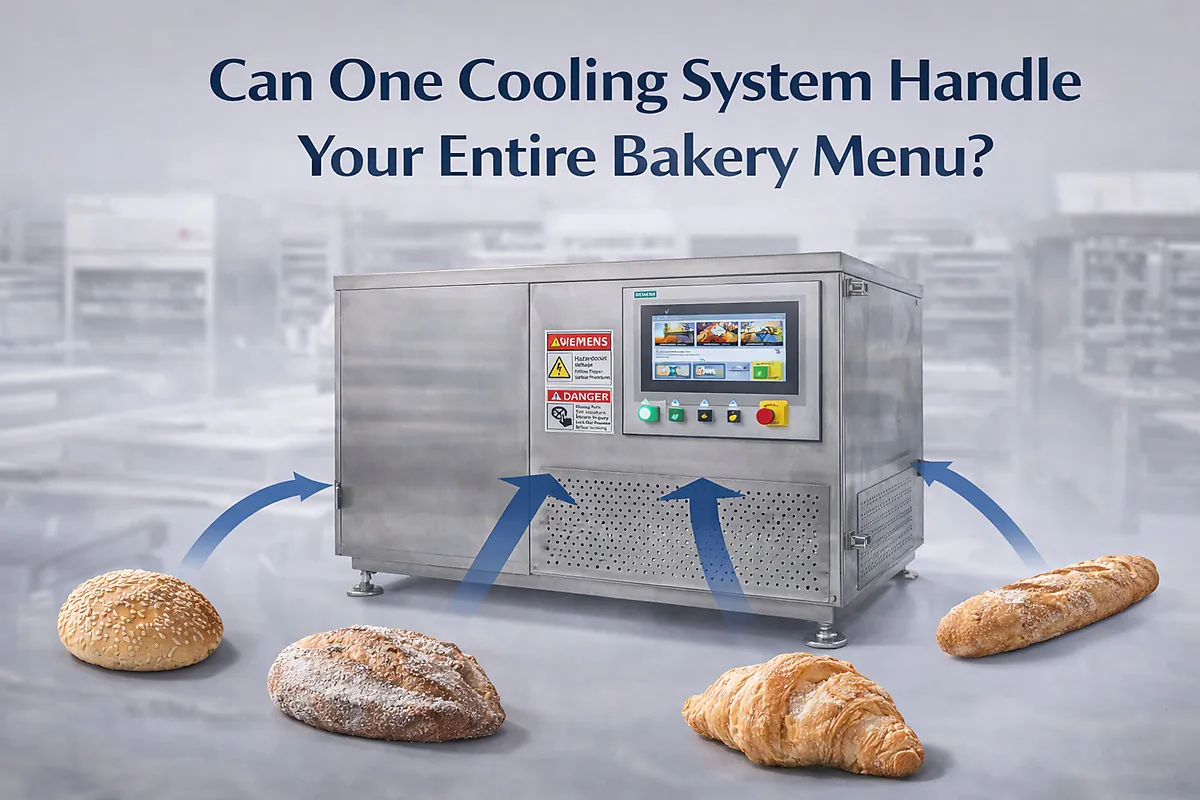
Can One Cooling System Handle Your Entire Bakery Menu?
You juggle sourdough, delicate pastries, and frozen dough lines daily. Yet, one cooling mistake ruins the texture of your artisan

Is Your Frozen Dough Production Losing Quality Before It Hits the Freezer?
You watch your energy bills climb month after month while your blast freezers work overtime. You see production bottlenecks form
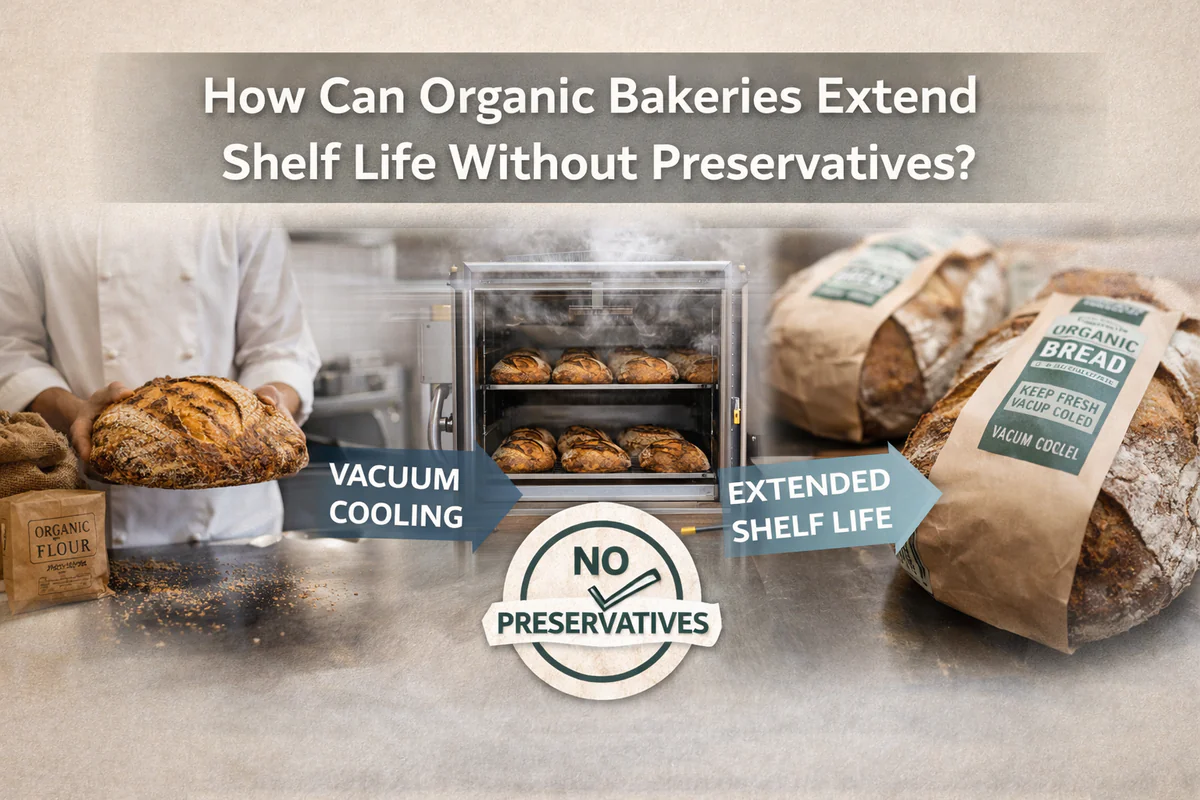
How Can Organic Bakeries Extend Shelf Life Without Preservatives?
You pour your heart into sourcing the finest organic flours and perfecting natural fermentation, only to watch your hard work
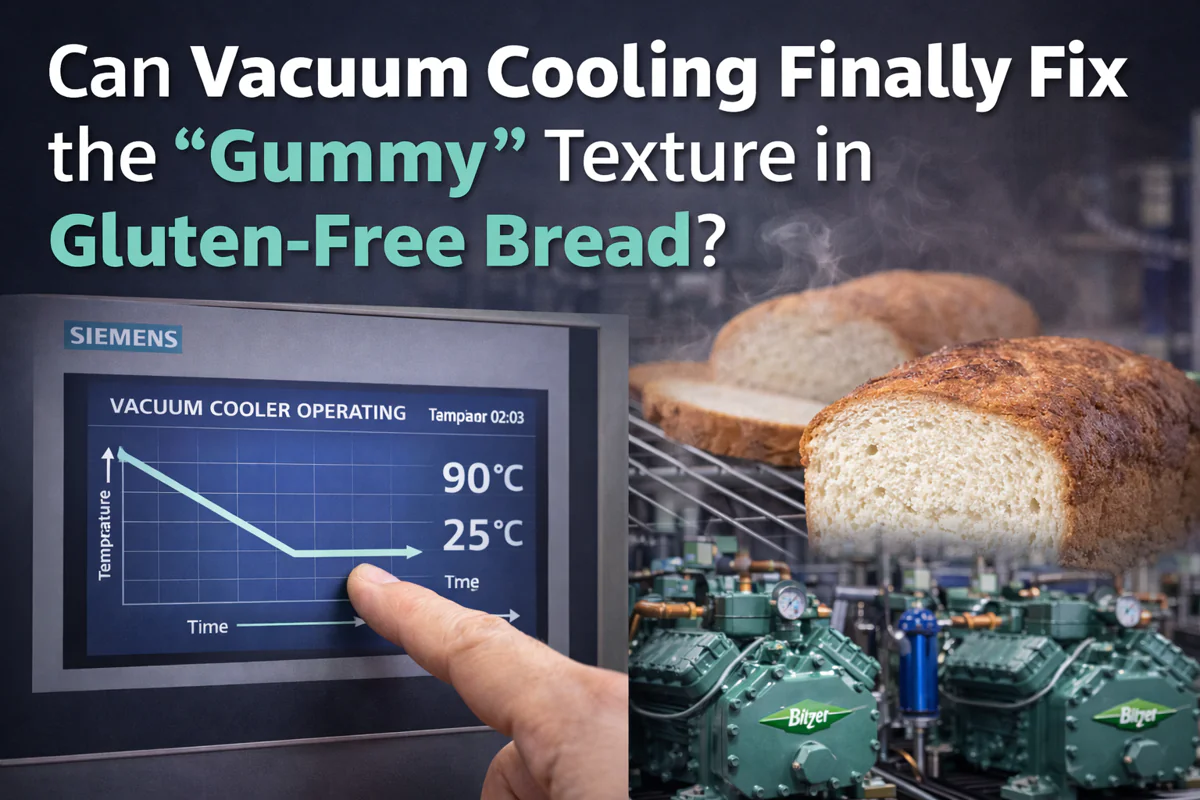
Can Vacuum Cooling Finally Fix the "Gummy" Texture in Gluten-Free Bread?
You watch your perfectly risen gluten-free loaves come out of the oven, only to see them sink or turn gummy