
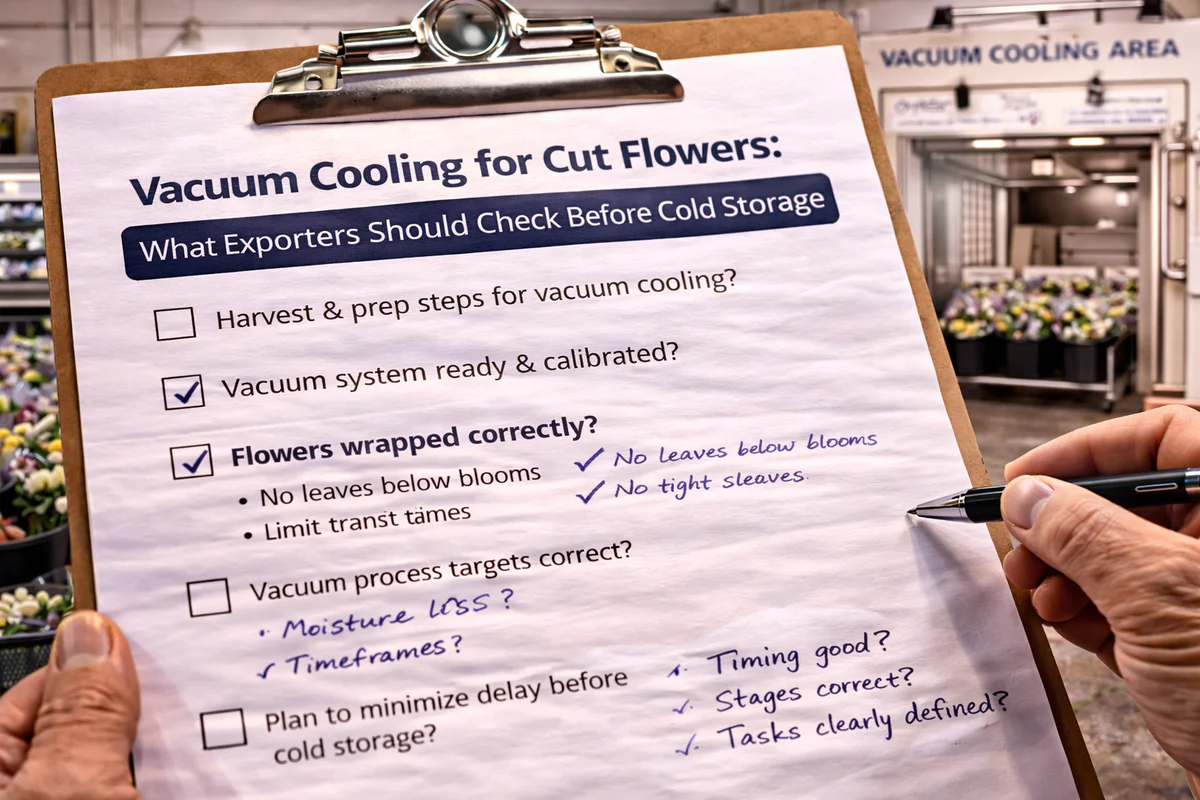
Vacuum Cooling for Cut Flowers: What Exporters Should Check Before Cold Storage
Many flower exporters already understand that temperature matters. What is still underestimated, from our factory-side perspective, is that the timing and workflow before cold storage often matter just as much as the cold room itself.
In many flower export operations, buyers focus on the refrigerated room, the transport temperature, and the final shipment schedule. Those are important, of course. But if the flowers enter cold storage carrying too much field heat, too much delay, or too much inconsistency between batches, the cold room is no longer protecting a strong product condition. It is trying to stabilize a weak one.
That is why we do not see vacuum cooling for cut flowers as a simple equipment decision. We see it as a workflow-control decision. The real question is not only whether flowers can be cooled quickly. The better question is whether the exporter can move flowers from harvest and handling into cold storage in a way that protects vase life, appearance, and shipment consistency.
In our experience, many exporters do not lose flower quality because one dramatic failure happened. They lose it because small upstream delays, staging mistakes, and uneven cooling quietly reduce the product margin before the boxes ever leave the site.
Most Flower Quality Loss Starts Before Cold Storage, Not Inside It
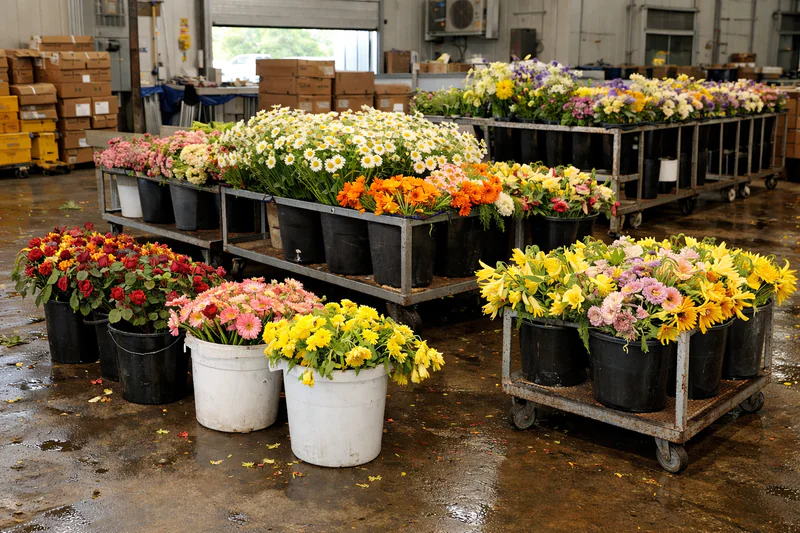
One of the most common mistakes in flower export is assuming that cold storage begins quality protection.
In reality, quality protection often begins earlier, in the period between harvest, initial handling, bunching, hydration decisions, pre-cooling, and transfer into the cold room.
From our side, this is where a lot of hidden loss begins:
- harvested flowers wait too long before temperature pull-down starts
- batches from different harvest times get mixed into one workflow
- the cooling step starts too late because the room or labor is not ready
- flowers are staged in a way that creates uneven product condition
- cold storage receives product that looks acceptable but is already carrying less quality margin
That is why we usually tell exporters this: the cold room does not erase earlier delay. It only receives the product condition that the upstream workflow created.
If the flowers arrive in the room too warm, too late, or too inconsistent, the storage step is already working from a weaker starting point.
Exporters Should Treat Pre-Cooling as a Shelf-Life Protection Step, Not Just a Temperature Step
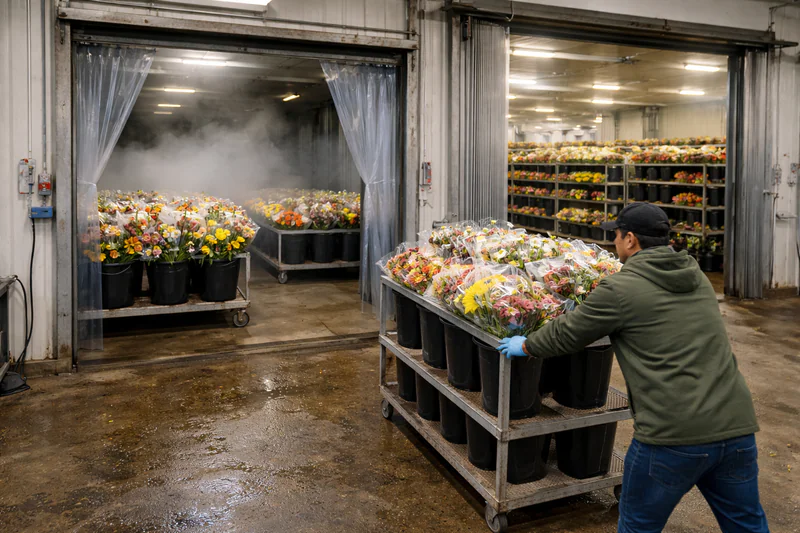
A lot of exporters talk about cooling only in terms of temperature. That is understandable, but commercially it is incomplete.
For cut flowers, pre-cooling should be judged by whether it helps protect:
- visual freshness
- stem and head condition
- moisture balance during handling
- consistency across bunches or boxes
- remaining transport margin before the shipment faces longer storage and logistics pressure
From our factory-side perspective, this is why vacuum cooling can be commercially valuable in flower export when the product and workflow are suitable. The goal is not only to make the flowers colder. The goal is to remove field heat early enough that the next controlled step, especially cold storage, starts from a more stable product condition.12
That distinction matters because flower buyers do not pay only for a lower temperature reading. They pay for arrival condition, saleable appearance, and usable shelf life after transport.
The Most Dangerous Window Is Often Between Harvest Handling and Cold-Room Entry
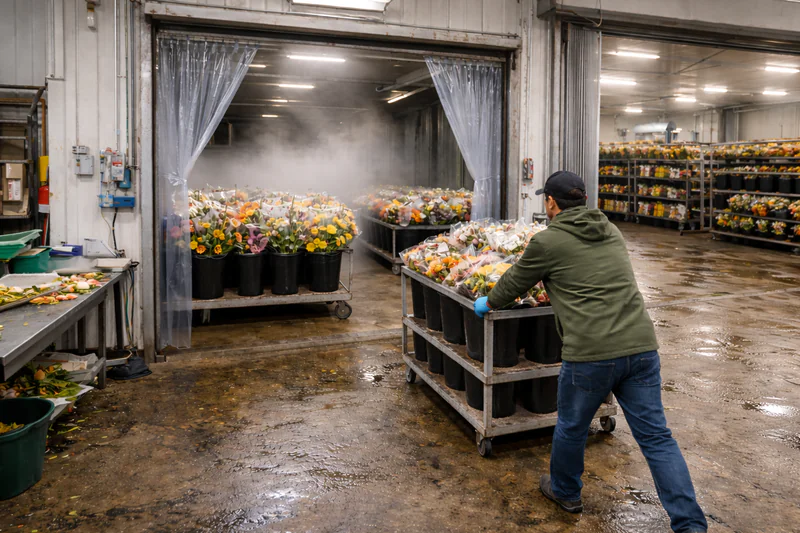
In many flower projects, the most dangerous period is not long-haul transport. It is the earlier window between harvest handling and stable cold-room entry.
We often see export teams focus on:
- container temperature
- reefer performance
- shipping schedules
- destination freshness complaints
Those things matter, but they are later-stage issues. The first avoidable damage often begins earlier, when the flowers:
- wait too long after cutting
- sit in a staging area without fast temperature control
- enter cooling in uneven batches
- leave cooling but do not reach cold storage fast enough
- experience a weak handoff between processing and storage teams
From our side, this is where quality margin is often quietly lost. The flowers may still look commercially acceptable at origin, but the buffer that protects them during export has already started shrinking.
That is why buyers planning a new project should also review what to check before installing a vacuum cooler, because a weak installation layout often creates a weak harvest-to-storage workflow later.
Uneven Batch Handling Creates Hidden Risk Across the Shipment
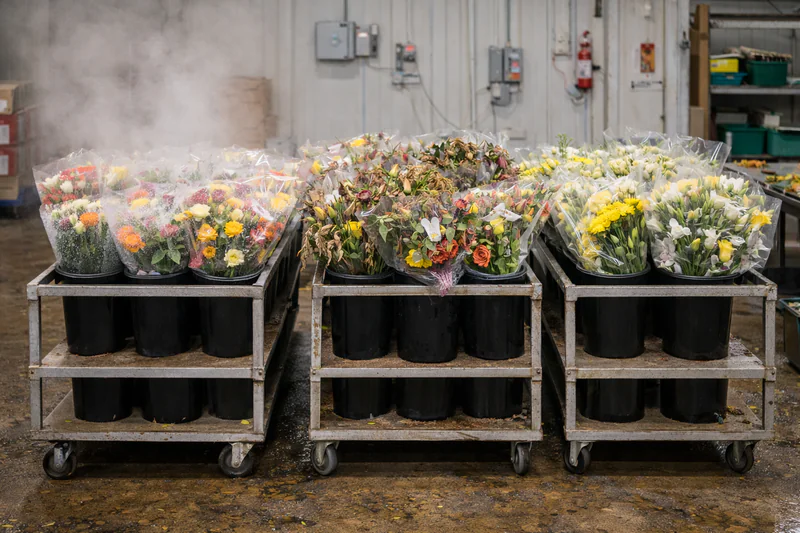
One of the harder problems in flower export is unevenness.
A shipment can contain flowers that were handled quickly and flowers that were delayed longer, even when both groups end up in the same packing and shipping plan. When that happens, the exporter may see mixed results later and struggle to explain why some boxes hold up better than others.
Unevenness usually comes from workflow problems such as:
- harvest timing that is not matched to cooling capacity
- bunch preparation taking longer than expected
- too many small batches competing for the same cooling window
- cold-room entry being delayed by internal traffic or staffing gaps
- product routing that changes under peak pressure
From our perspective, uneven batch handling is dangerous because it creates false confidence. Some flowers still look strong, so the exporter assumes the whole lot is protected. But complaints often grow from the weakest batches, not the strongest ones.
That is why the pre-cooling step should not be judged only by average performance. It should be judged by whether it reduces inconsistency across the real shipment.
Cooling Capacity for Flowers Should Be Based on Peak Harvest Pressure, Not Daily Volume Alone
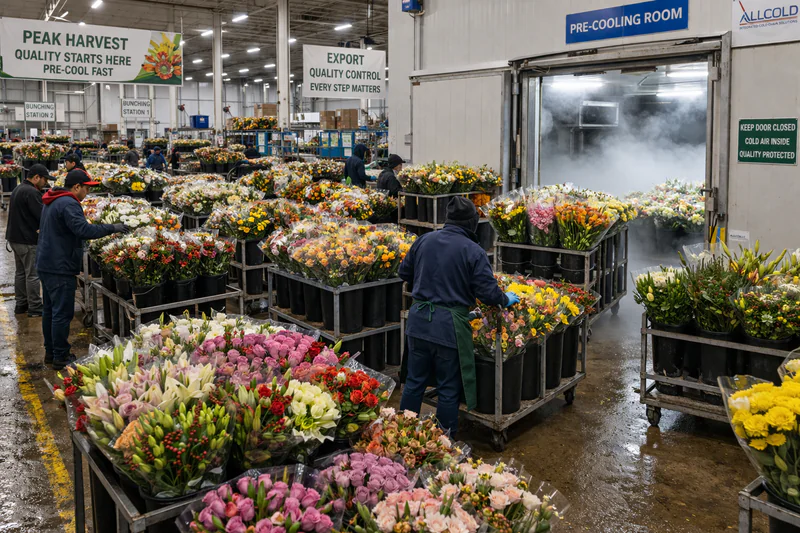
This is one of the most expensive planning mistakes we see.
A project may say it handles a certain number of stems or boxes per day, but daily output alone does not tell us whether the cooling workflow is really under control.
What we want to know is:
- how much product reaches the cooling step in the busiest hour
- whether harvest comes in evenly or in bursts
- how long flowers can wait before quality margin starts shrinking
- whether labor for bunching, grading, or boxing delays the cooling step
- whether the cold room can accept product immediately after cooling
We usually frame the issue like this:
| Planning metric | Weak approach | Better approach |
|---|---|---|
| Capacity basis | Daily stem or box volume | Peak-hour flower load before cold-room entry |
| Cooling logic | Average-day assumption | Real harvest and handling pressure |
| Workflow assumption | Product will flow evenly | Product may arrive in bursts and wait |
| Project result | Looks acceptable on paper | Matches the hardest operating window |
From our factory-side perspective, flower cooling projects should be sized around the hour when delay is most damaging, not around the average number that makes the quotation look comfortable.
Packing, Hydration, and Cooling Decisions Should Be Coordinated, Not Isolated
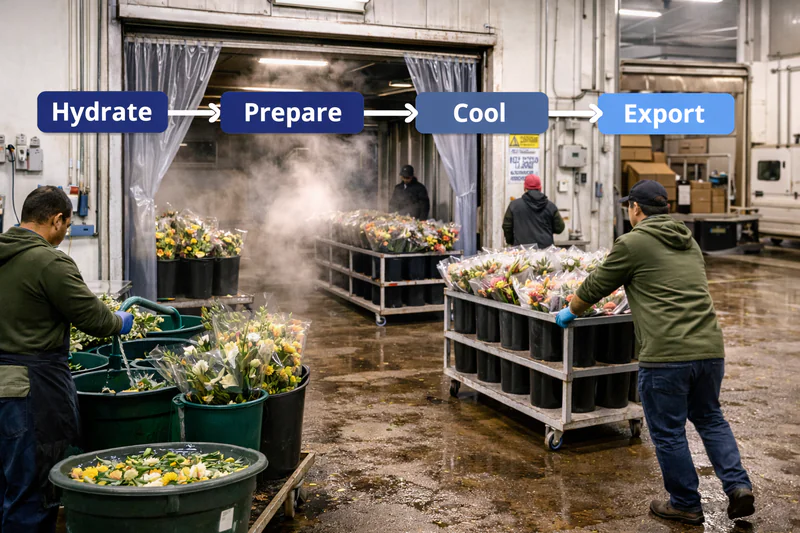
In many operations, harvesting, bunching, hydration treatment, packing, cooling, and cold storage are handled by different teams. That can work operationally, but it becomes risky when each team optimizes only its own step.
We often see avoidable problems when:
- bunching is finished but cooling is not ready
- the cooling step is available but flowers are still waiting for handling decisions
- cooled flowers wait too long for packing or boxing
- hydration and handling routines are not aligned with the timing of the cooling step
- the route into cold storage becomes a bottleneck during the busiest shift
From our side, these are not small coordination details. They are quality-protection details.
That is why we usually recommend managing the flower export process as one sequence:
- Harvest
- Initial handling and sorting
- Hydration or conditioning as required
- Vacuum cooling or other rapid pre-cooling step
- Packing or boxing
- Cold-room transfer
- Dispatch preparation
This kind of sequence review usually reveals where the quality margin is really being lost.
If buyers want to think more broadly about workflow design, our article on how packing house layout affects vacuum cooling throughput is also useful, because layout weakness often becomes handling weakness during the busiest hours.
A Good Flower Cooling Supplier Should Ask About Workflow, Not Only About Temperature
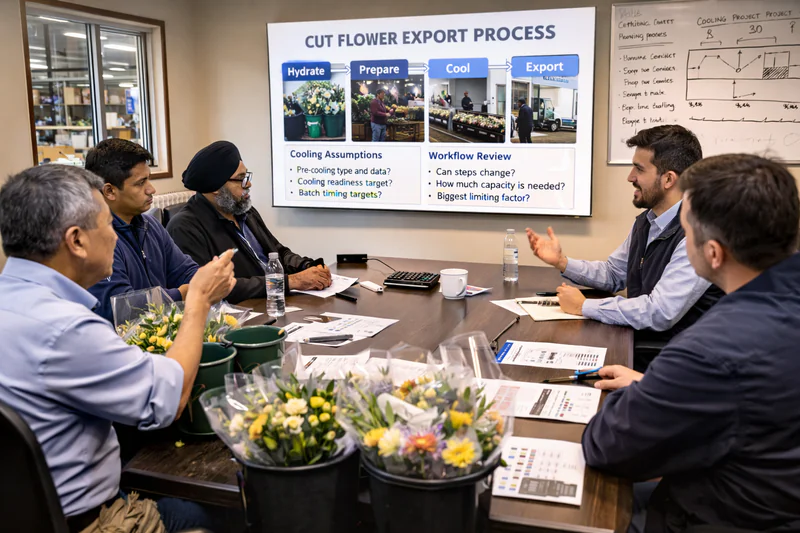
A supplier who only asks about target temperature is not asking enough.
For flower export projects, we believe a serious supplier should also ask:
- what flower varieties are being handled
- how harvest is organized across the day
- how long flowers wait before cooling starts
- whether bunching or grading happens before cooling
- how product moves into the cold room after cooling
- what the peak-hour handling pressure looks like
- what packaging and dispatch rhythm the exporter is using
- what service and support expectations exist during the export season
From our perspective, harder pre-sale questions usually protect the project. They help prevent the common mistake of treating flower cooling as a simple machine purchase when it is actually a workflow-sensitive quality-control step.
That is also why buyers comparing proposals should not focus only on price. Our article on why detailed vacuum cooler quotations help buyers avoid project risk is relevant here too, because the right flower cooling project depends on whether the quotation really reflects the operating reality.
What Flower Exporters Should Confirm Before Finalizing the Project
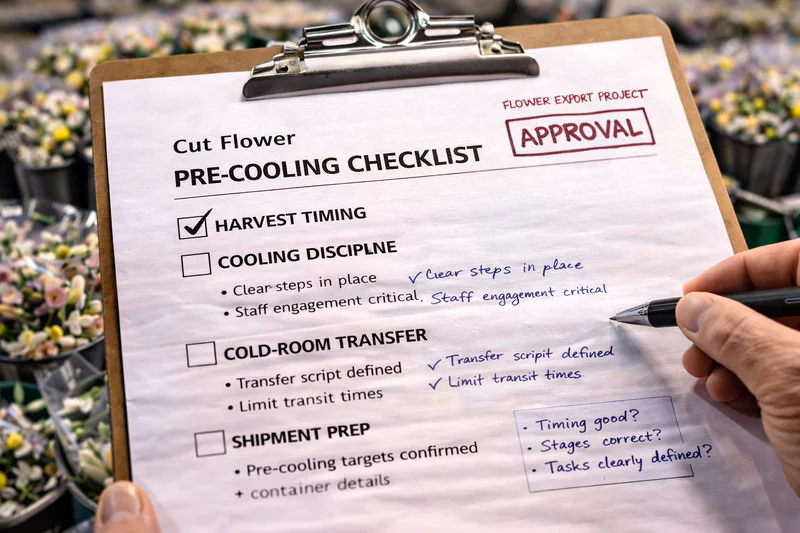
Before moving forward, we usually recommend confirming a practical checklist.
Cut Flower Pre-Cooling Checklist
- harvest-to-cooling time is measured, not guessed
- peak-hour flower volume is confirmed
- cooling position in the workflow is clearly defined
- batch handling consistency is reviewed
- hydration and bunching steps are aligned with cooling timing
- cold-room transfer after cooling is fast and controlled
- layout and staffing do not create unnecessary queueing
- quotation assumptions match the real operating window
- service and support expectations are documented
- the project is evaluated by shipment stability, not only by machine speed
If these points are still vague, the project usually is too.
FAQ
Is vacuum cooling suitable for all cut flowers?
Not automatically. Suitability depends on the flower variety, harvest condition, handling method, packaging workflow, and how quickly the product moves into protected cold storage. The machine may be suitable while the workflow is not.
Why is fast cold-room entry so important for flowers?
Because early temperature control helps protect visual freshness, reduce heat stress, and preserve more transport margin before the flowers enter longer storage and export handling.13
What is the biggest workflow mistake in flower cooling projects?
From our perspective, the biggest mistake is letting flowers wait too long between harvest handling and the start of rapid cooling. That is where quality margin is often lost before the cold room even has a chance to help.
Should cooling capacity be based on daily output?
Not by itself. Flower projects should be reviewed around peak harvest and handling pressure, because that is when queueing and delay become commercially expensive.
Final Thoughts
If I had to reduce this article to one message, it would be this:
For cut flowers, the cooling step protects shipment quality only when it shortens the risky window before cold storage, not when it simply adds another delay-prone stage to the workflow.
We have seen exporters focus too much on room temperature and not enough on harvest timing, batch consistency, bunching coordination, and cold-room handoff. That is usually where quality margin is either protected or quietly lost.
From our factory-side perspective, the strongest flower export projects are not only the ones with colder storage. They are the ones with a better pre-cooling workflow before storage begins.
If you send us your flower type, harvest rhythm, batch size, handling sequence, and cold-room transfer path, we can help you review the main project risks before you compare suppliers or finalize the configuration.
Footnotes
Postharvest handling recommendations for cut flowers, UC Davis Postharvest Technology Center: https://postharvest.ucdavis.edu/commodities/cut-flowers ↩ ↩
FAO guidance on post-harvest handling and loss prevention: https://www.fao.org/3/x5055e/x5055e00.htm ↩
Royal FloraHolland knowledge resources on cut flower quality and cold-chain handling: https://www.royalfloraholland.com/en/sustainability/knowledge ↩
Looking for the right vacuum cooler for your operation?
Allcold engineers work with packhouses and exporters to spec the right system for your product, volume, and site conditions.

Mila
You May Also Like
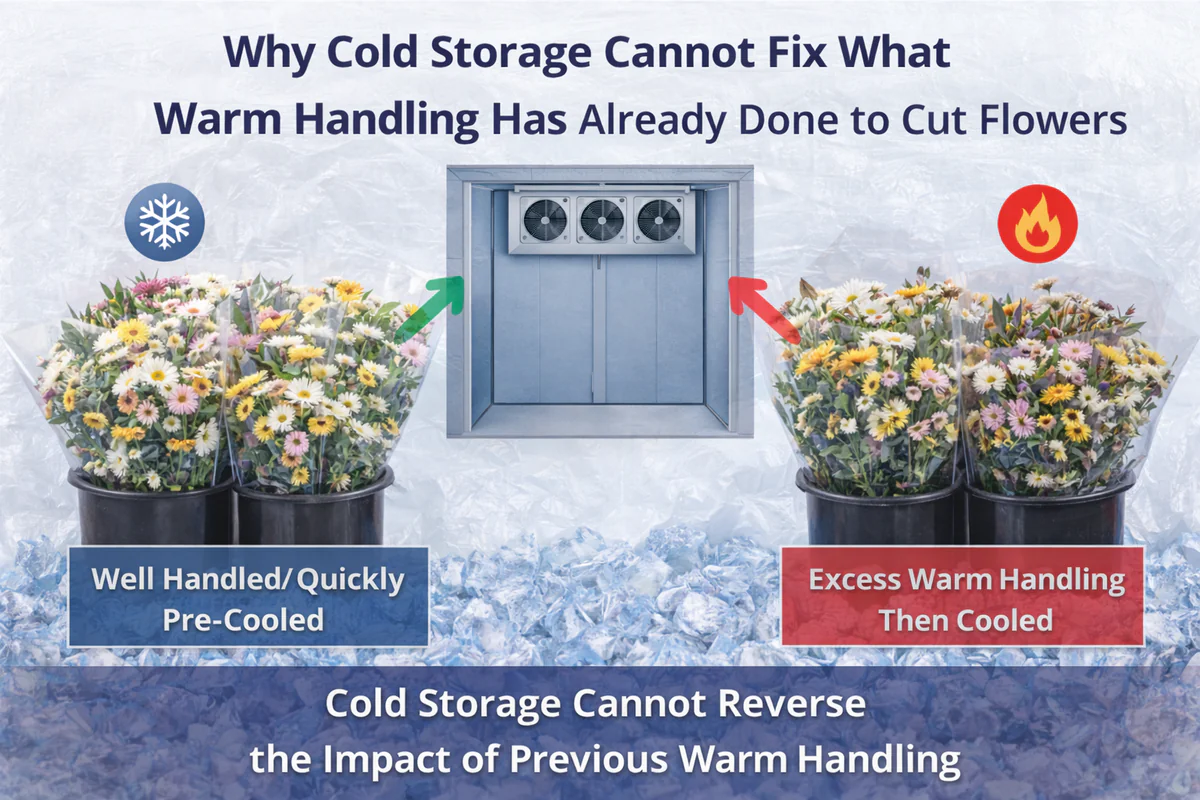
Why Cold Storage Cannot Fix What Warm Handling Has Already Done to Cut Flowers
Most flower exporters still talk about the cold room as if it is the place where quality is secured. From