
Vacuum Cooling Soups and Sauces: Machine Selection, Foam Control, and Validation
Can soups and sauces be vacuum cooled without boiling over?
Yes, but liquid-food vacuum cooling must be validated around foam expansion, container fill ratio, pressure-drop profile, viscosity, vapor load, concentration change, and the slowest temperature location. The machine’s nominal kilogram capacity alone is not enough. A safe commercial process needs adequate freeboard, controlled evacuation, effective vapor management, repeatable product movement, and acceptance limits for temperature, yield, flavor, texture, and carry-over.
A central kitchen can cool a tray of rice and a kettle of sauce in the same temperature range, yet the two products behave very differently under vacuum. Rice loses moisture from a porous solid structure. A soup, broth, curry, gravy, or purée can flash-boil across its free surface, expand as foam, splash against a lid, and carry droplets toward the vapor path. The liquid may cool rapidly while the batch loses yield, changes salt or solids concentration, or contaminates equipment upstream of the condenser.
This guide is for ready-meal manufacturers, central kitchens, sauce producers, QA teams, process engineers, and buyers evaluating vacuum cooling for pumpable or semi-liquid foods. It is not a universal operating recipe. It explains what must be tested before a liquid-food process can be approved and what information a supplier needs before sizing a system.
Start with the Cooling Route, Not the Machine Name
Allcold supplies more than one cooling route for soups and sauces. They should not be described as if they use the same physical principle. The correct choice depends on batch size, viscosity, target temperature, required automation, available utilities, and whether the product remains in a kettle, moves through a dedicated cooling vessel, or feeds a continuous line.
| Allcold route | Typical project fit | Cooling principle | Main validation questions |
|---|---|---|---|
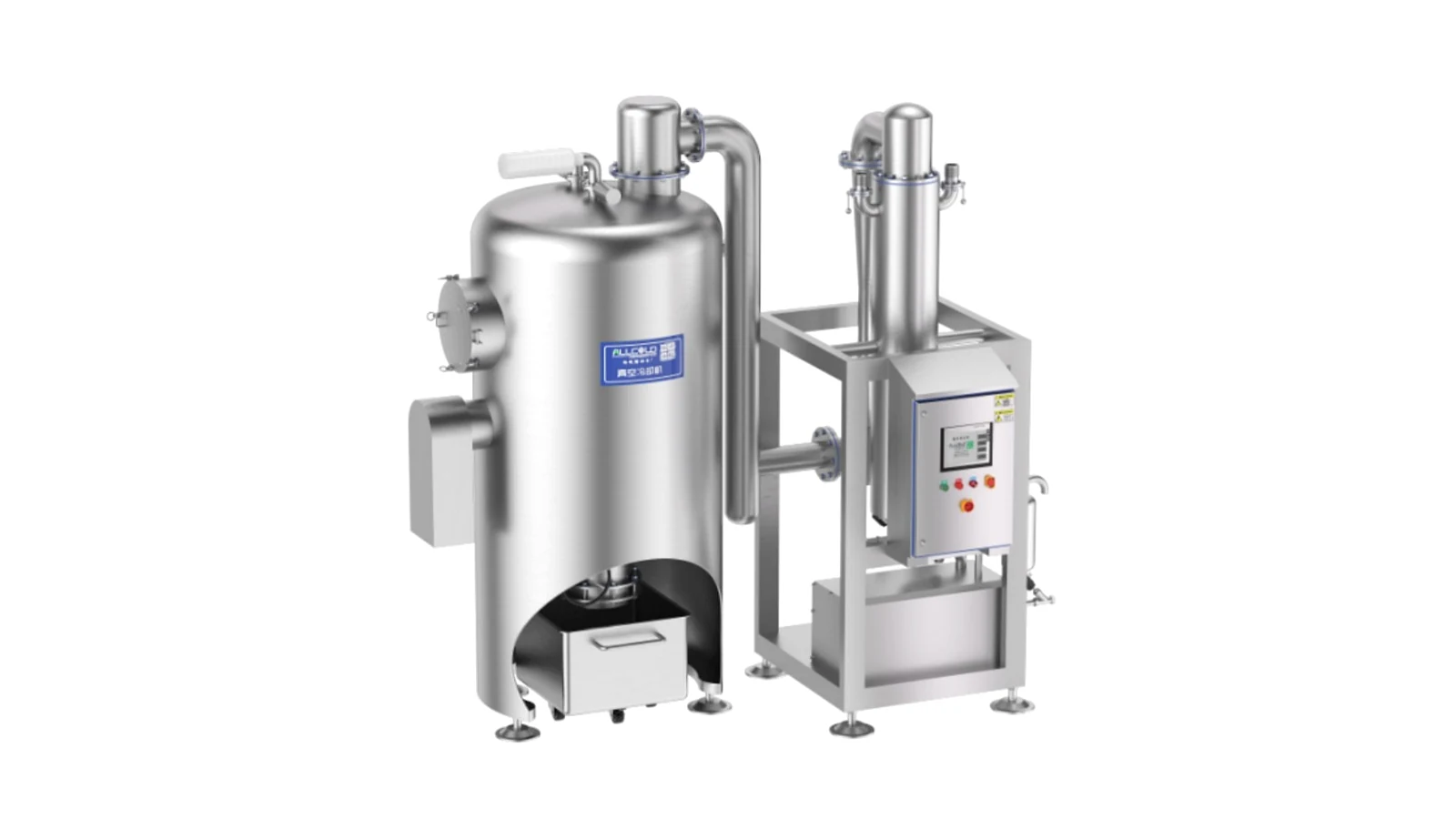
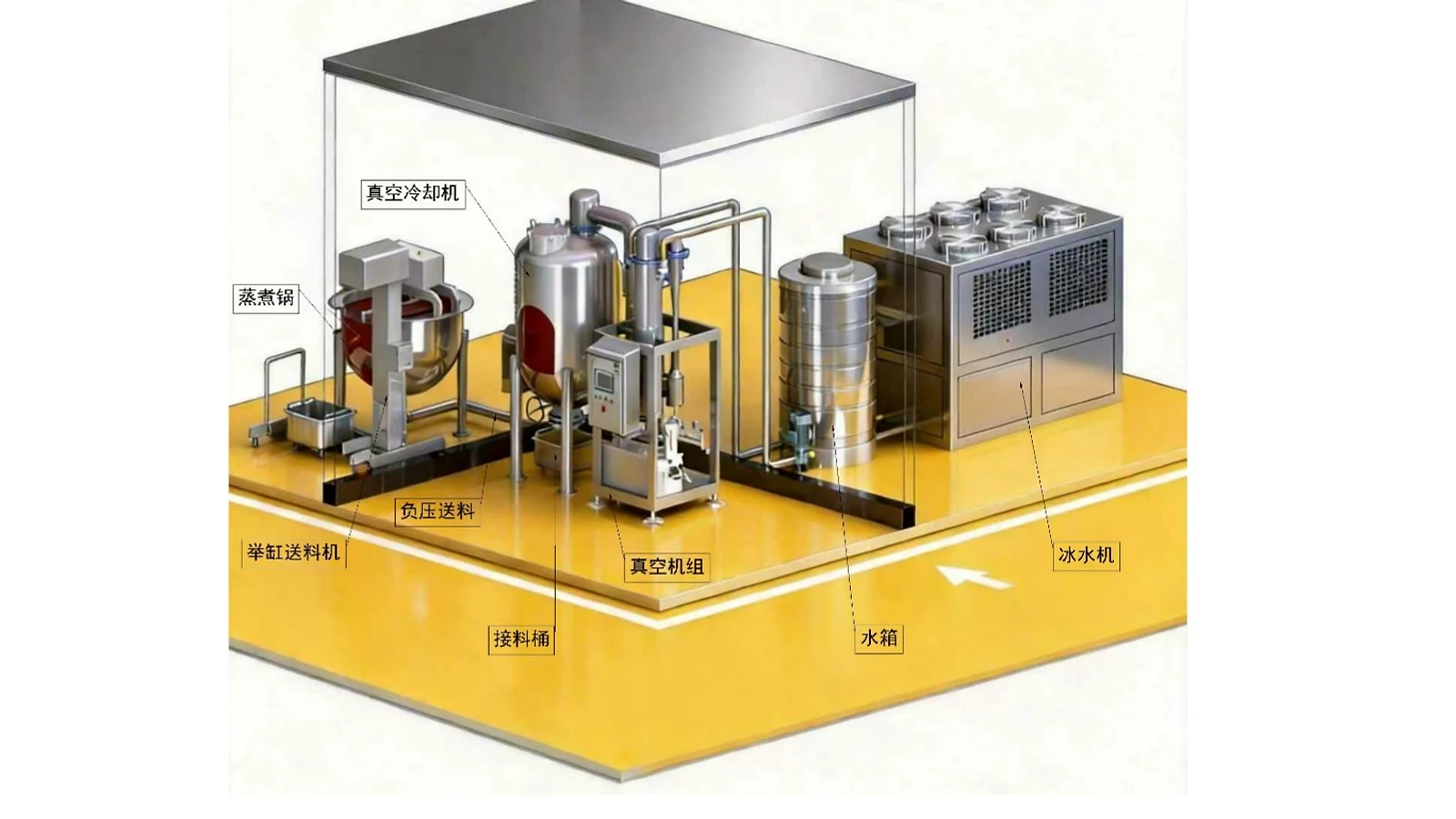
| Continuous liquid-food vacuum cooling system | Pumpable soups, sauces, broths, curries, purées, and other larger-volume liquid-food production | Water evaporates from the product under reduced pressure; the vapor system removes the released heat load | Foam, carry-over, pressure ramp, vapor capacity, concentration change, residence time, hygiene, and final temperature uniformity |
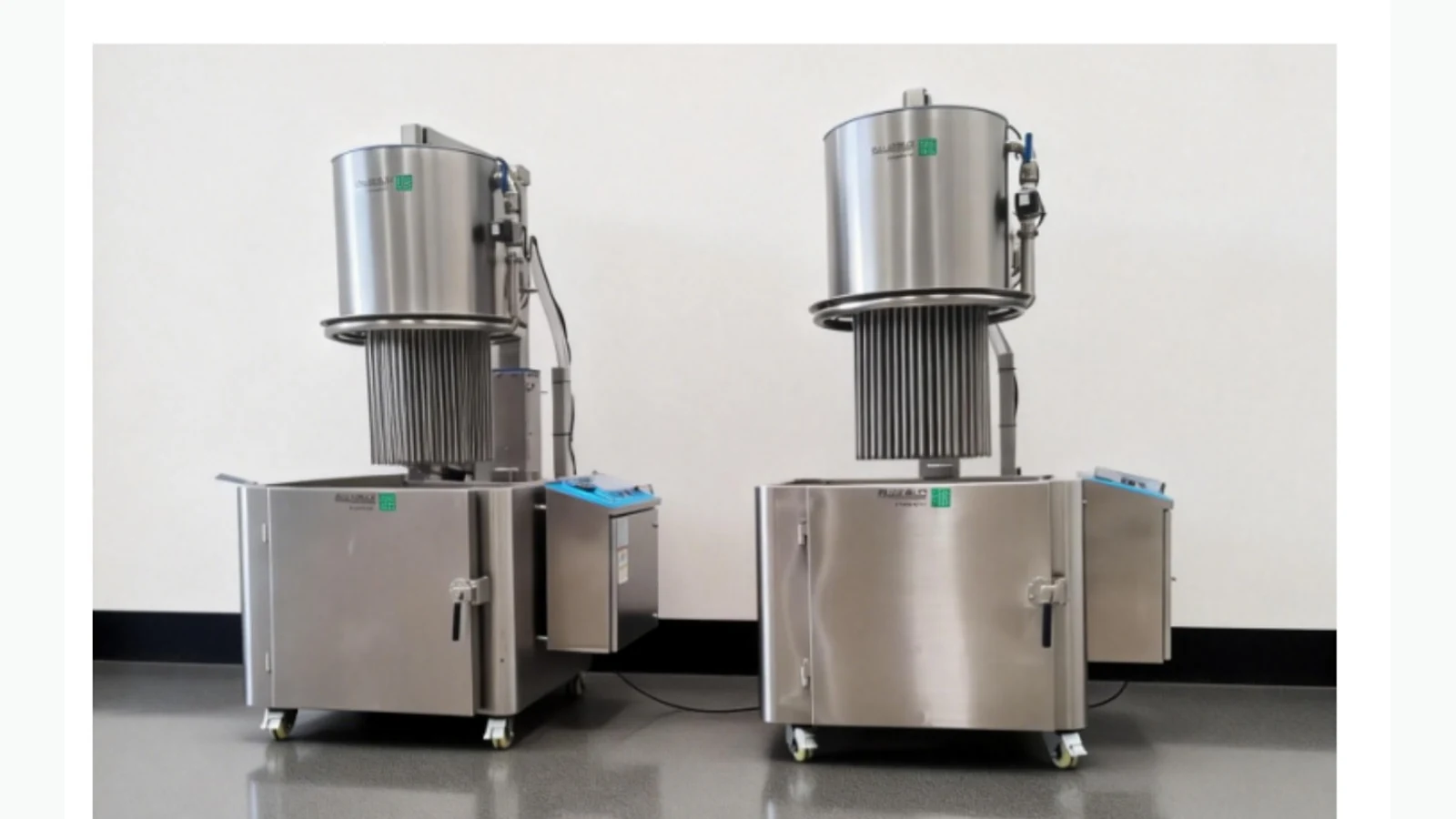
| Micro soup-and-sauce rapid cooler | Smaller batches cooled in a dedicated barrel with an immersed cooling assembly | Direct heat exchange rather than vacuum flash evaporation. Tap water can provide the initial cooling stage; ice or an ice-water chiller is an option when a lower endpoint is required | Cooling-water temperature, target temperature, batch depth, product movement, probe sanitation, viscosity, particulates, and cleaning |
| Custom steam-cook-and-cool integrated vessel | Projects that need cooking and cooling in one controlled vessel with less product transfer | A project-specific combination of cooking, controlled cooling, agitation, vacuum, and utility systems | Recipe sequence, agitation and shear, vapor load, cleanability, drainability, utilities, automation, and batch-release controls |
The statement “our machine can use tap water” applies to the micro rapid-cooling route described above. It should not be used as a blanket utility claim for the continuous vacuum system. A buyer should first define the target temperature and production method, then confirm whether tap water alone is sufficient at the site’s actual seasonal water temperature.
The Hidden Capacity Limit Is Often Headspace, Not Kilograms
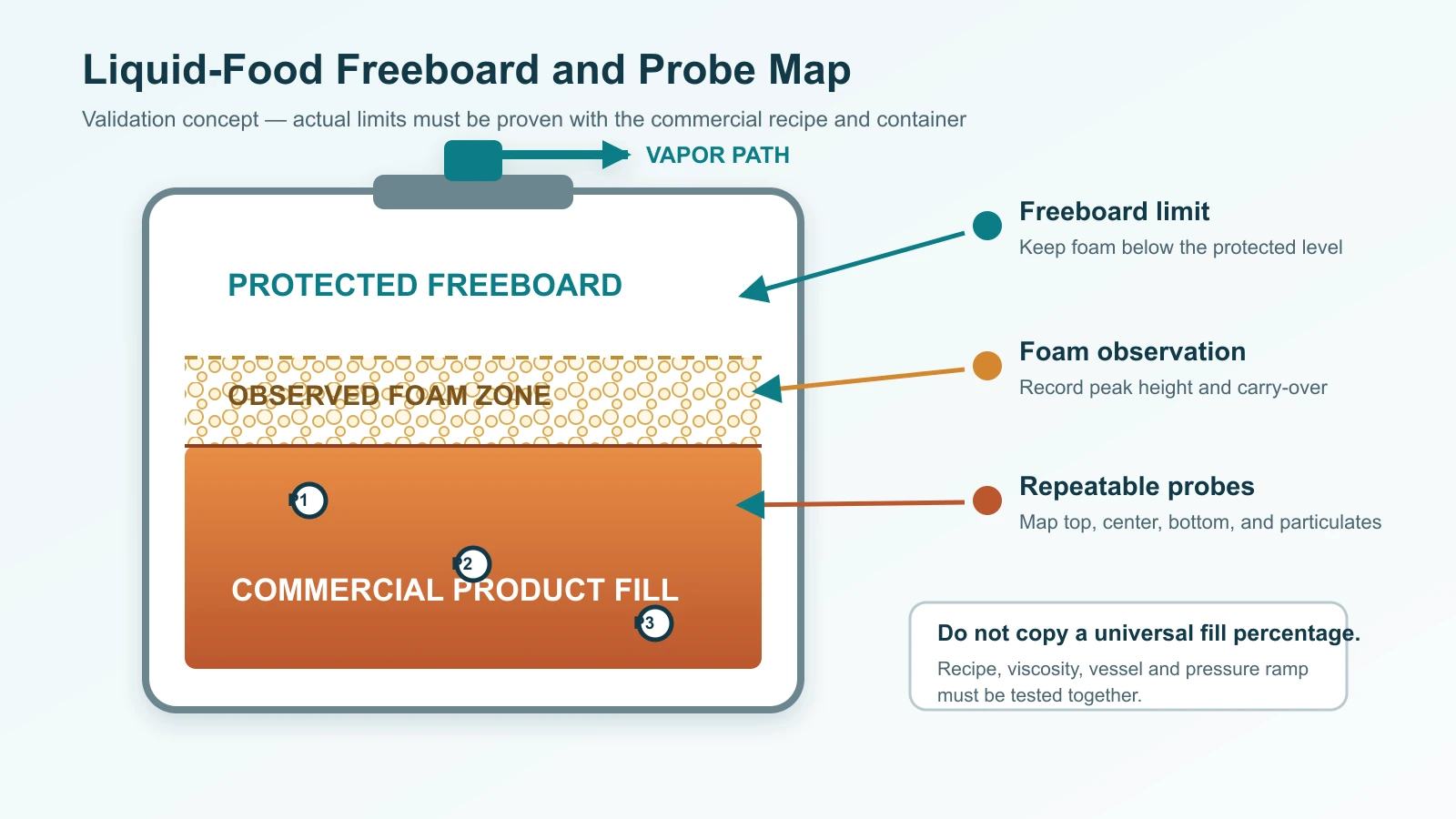
Buyers often begin with a simple request: “We need to cool 500 kg per batch.” That number matters, but it does not define the working load for a foaming liquid. The usable batch may be limited first by container geometry and the expansion space required above the product.
When pressure falls below the saturation pressure associated with the liquid temperature, part of the water flashes into vapor. Bubble formation can be gentle or violent. Product composition, dissolved gas, proteins, starches, fats, suspended particles, initial temperature, surface area, and pressure-drop rate all influence the response. A vessel that is safe at one fill level may overflow when the recipe or batch depth changes.
A 2025 study of high-temperature liquid food specifically evaluated liquid-to-container volume ratio, opening area, initial temperature, and terminal temperature as factors in splashing and ineffective water loss.[2] The practical lesson is not to copy a single laboratory value. It is to treat fill ratio, vent geometry, and the pressure program as controlled process variables.
Why Liquid Foods Foam, Splash, and Create Carry-Over
Vacuum cooling removes sensible heat by evaporating part of the product’s water. Reviews of the technology describe this direct evaporation as the fundamental difference between vacuum cooling and conventional air refrigeration.[3] In a liquid, vapor bubbles can nucleate throughout active regions and rise through the product. If the vapor-generation rate temporarily exceeds the liquid’s ability to release bubbles cleanly, the surface expands.
Foam is not only a housekeeping problem. It can create four commercial failures:
- Product loss: droplets or foam leave the intended container, reducing saleable yield.
- Recipe drift: evaporative loss can increase soluble-solids, salt, sugar, or spice concentration.
- Equipment contamination: carry-over can foul the vapor path, condenser surfaces, filters, or other protected components.
- False capacity: a chamber may physically hold the vessels, but the pressure program cannot safely process that fill level.
Industry guidance for soups and sauces also notes that broths, milk, some high-protein foods, and light fluids can foam or erupt early in the vacuum cycle, with carry-over affecting both yield and system performance.[5] This is why a fast pump-down curve is not automatically a good curve.
A Controlled Vacuum Ramp Is a Product-Protection Tool
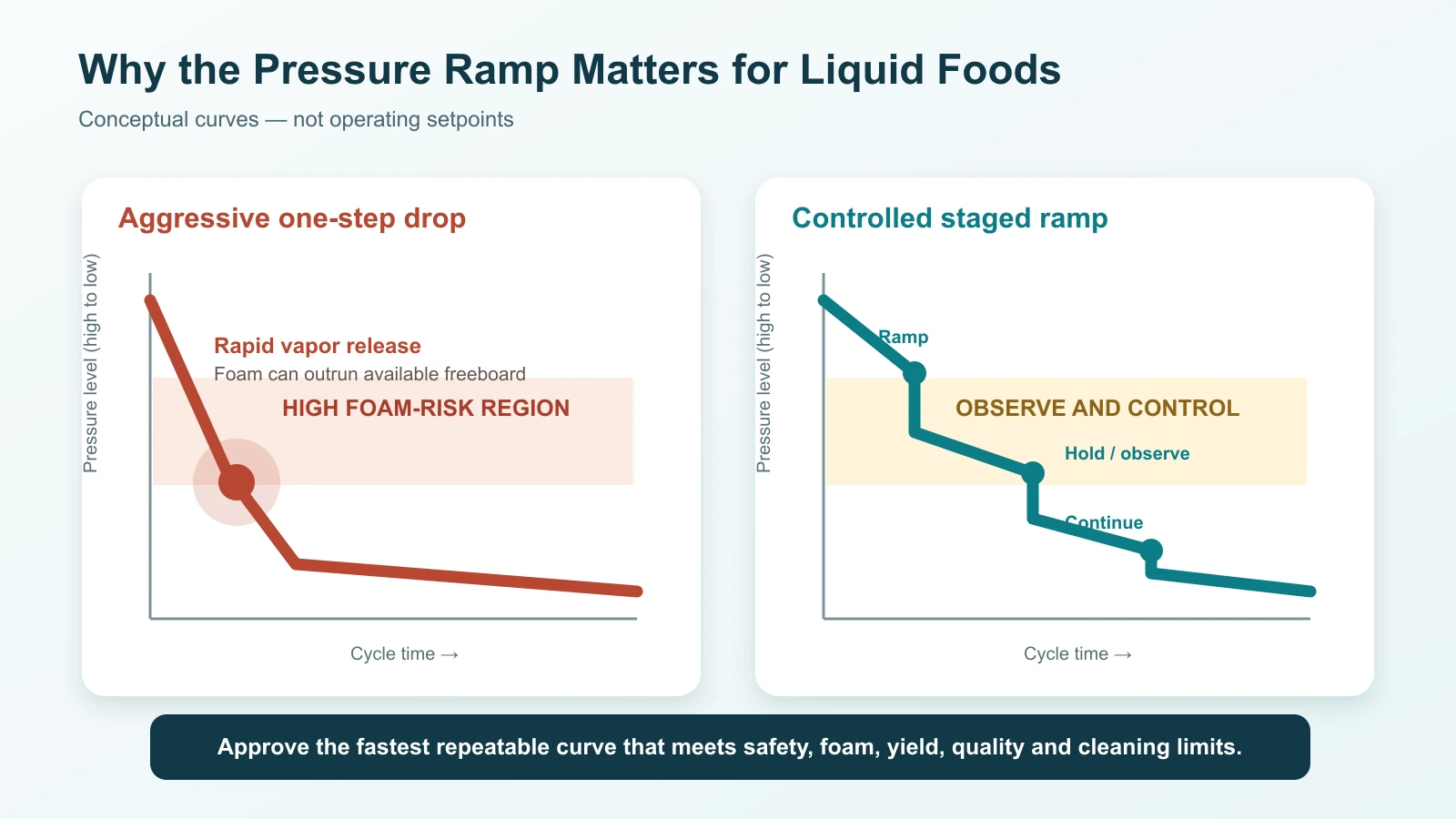
An aggressive program may reach low pressure quickly, but it can create a burst of vapor faster than the surface can settle. A controlled program can use staged pressure reduction, holds, or recipe-specific ramp rates to pass through the most active boiling region without uncontrolled expansion.
The correct profile cannot be selected from pressure alone. Operators should observe product behavior and record pressure, product temperature, chamber temperature where relevant, cycle time, and carry-over. If the first trial shows foam reaching the protected freeboard limit, simply reducing the final pressure may not solve the problem; the critical event may have occurred earlier in the ramp.
Viscosity Changes Both Cooling Uniformity and Foam Release
“Liquid food” is too broad to be a machine specification. Clear broth, cream soup, tomato sauce, curry, starch-thickened gravy, and vegetable purée have different flow behavior. Viscosity can also change sharply as temperature falls. A sauce that circulates easily at cooking temperature may become much less mobile near its packing temperature.
Low internal movement can create temperature layers or leave larger particulates behaving differently from the surrounding liquid. Mixing or agitation may improve uniformity for some products, but it must be designed around hygiene, shear sensitivity, particulates, foam stability, and the actual vessel. Industry process guidance distinguishes between mixing needs for viscous and lower-viscosity liquids rather than assuming one agitation pattern suits every product.[5]
The trial should therefore record:
- viscosity or a repeatable in-house consistency measure at the start and target temperatures;
- particle size and solids distribution;
- whether the product settles, skins, gels, or separates during cooling;
- temperature at the center, near the wall, near the surface, and at suspected slow zones;
- mixing method, speed, direction, and timing, if mixing is part of the process;
- post-cooling pumpability and filling performance.
Measure Concentration Change, Not Only Weight Loss
Evaporation is the cooling mechanism, so some water loss is expected. The commercial question is whether the loss is controlled and whether the finished product remains inside specification. A one-percent mass change can matter differently in a delicate broth, a high-value sauce, and a recipe that will be diluted later.
Do not rely only on the scale. Compare pre- and post-cooling values relevant to the recipe:
| Quality area | Possible measurement | Why it matters |
|---|---|---|
| Yield | Verified batch mass before and after cooling | Separates expected evaporation from spills and carry-over |
| Concentration | °Brix, total solids, salt, density, or recipe-specific marker | Detects flavor and formulation drift |
| Texture | Viscosity, flow cup, back-extrusion, or controlled sensory check | Confirms pumpability, coating, and eating quality |
| Stability | Separation, oiling-off, sediment, color, and reheating test | Shows whether rapid cooling changes the product later |
Research on vacuum cooling beef in soup illustrates why liquid and solid phases should be evaluated together: the surrounding soup influenced mass transfer and the cooled meat’s mass balance.[4] A mixed meal cannot always be validated by measuring only the liquid or only the particulate phase.
Food-Safety Limits Come Before Cycle-Time Claims
A vacuum cooler is a process tool, not a substitute for the facility’s HACCP plan or local regulatory requirements. For cooked time/temperature control for safety food, FDA guidance describes cooling from 57°C (135°F) to 21°C (70°F) within two hours and then to 5°C (41°F) or below within a total of six hours.[1] Other markets, products, and regulated meat or poultry processes may use different scientific support or stricter limits.
The validation must include the full timeline:
- end of cooking or hot holding;
- transfer to the cooling vessel or chamber;
- door close and cycle start;
- time-temperature passage through the applicable critical range;
- vacuum release, unloading, and transfer;
- packing or entry into chilled storage.
A short chamber cycle can coexist with a long uncontrolled delay before loading. Buyers should connect the equipment study to the broader central-kitchen cooling workflow, including trolley movement, hygiene zoning, drainage, chilled holding, and batch release.
Probe the Liquid and the Particulates
One probe at the geometric center is rarely enough for a soup or sauce trial. Sensors can move with circulating liquid, touch stainless steel, or sit in a zone that cools faster than a large particulate. Probe supports should prevent wall contact and keep measuring positions repeatable.
For a homogeneous liquid, map top, middle, bottom, center, and near-wall zones during development. For a product with meat, vegetables, dumplings, beans, or other pieces, measure representative large particulates as well as the surrounding liquid. The slowest point—not the easiest probe to install—must meet the approved limit.
Calibration status, probe response time, sensor location, and the moment the timing starts should appear in the trial record. The same discipline applies to other cooked-food projects, including the site’s cooked-noodle validation framework, but the locations and failure modes are product-specific.
Vapor Handling and Cleanability Belong in the Process Specification
Cooling a high-moisture batch generates a substantial vapor load. The condenser, vacuum source, piping, separators, and controls must be considered as a system. A chamber that reaches the target pressure when empty may behave differently when loaded with a hot, actively evaporating liquid. Buyers reviewing vacuum-cooler configurations for cooked food should therefore connect the hardware discussion to the real recipe and loaded evaporation duty.
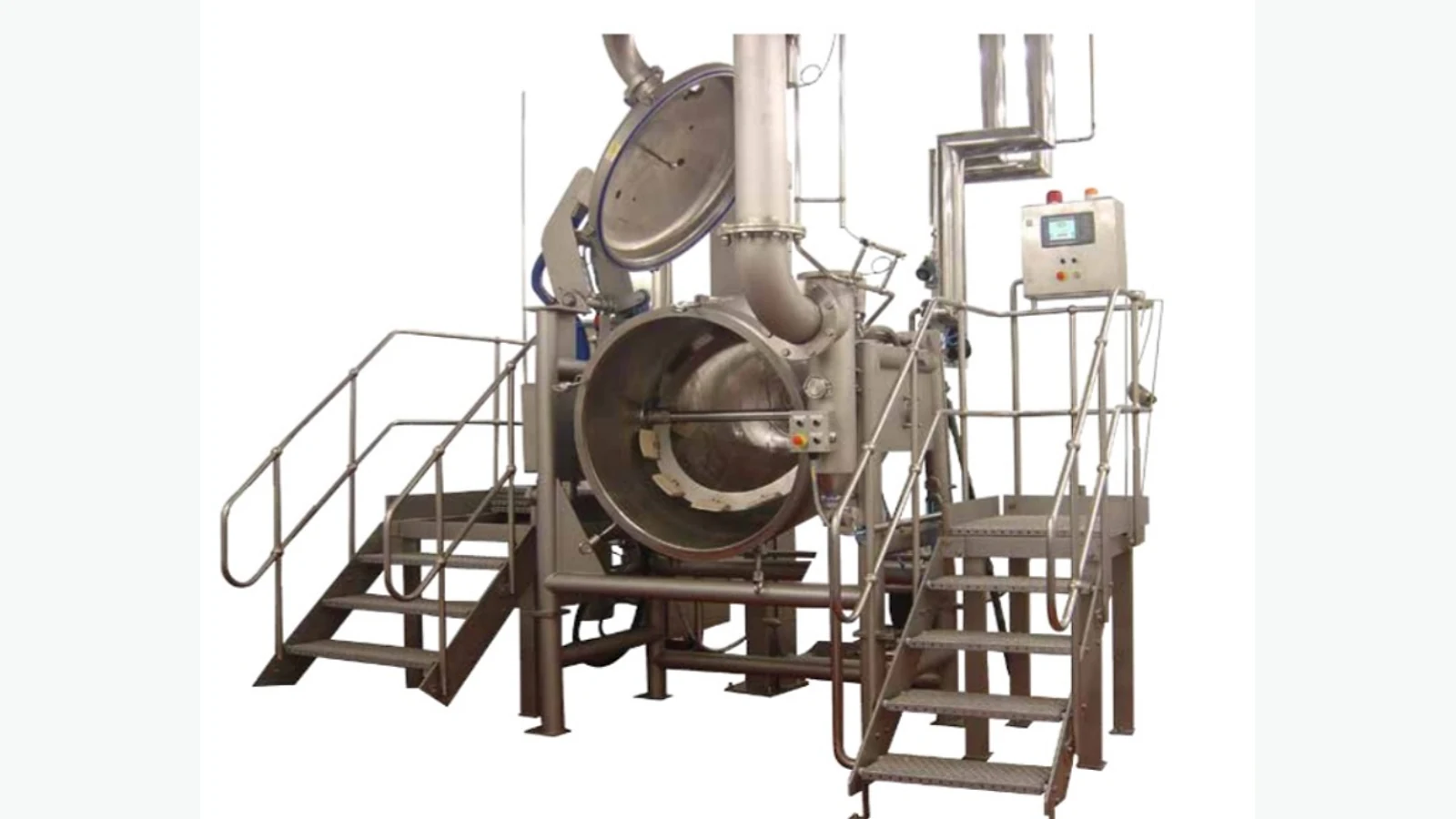
Carry-over protection should be inspectable and cleanable. The buyer should ask where entrained droplets are expected to stop, how collected product or condensate drains, which areas are included in routine sanitation, and how operators verify that no residue remains in protected vapor-side components. The answer depends on the selected machine configuration and sanitation plan; it should not be reduced to “stainless steel construction.”
Build the Trial Around Failure Boundaries
A useful commissioning trial does more than demonstrate one successful batch. It identifies the approved operating window and the conditions that require corrective action. The test plan should deliberately cover normal variation without turning production into uncontrolled experimentation.
| Variable | Validation question | Possible failure signal |
|---|---|---|
| Maximum fill | What fill ratio remains below the protected foam limit? | Foam contact, splashing, or carry-over |
| Pressure ramp | Which stages control boiling without missing the cooling limit? | Early eruption or excessive cycle extension |
| Recipe range | Do solids, fat, protein, and viscosity changes need separate programs? | Different foam stability, cooling curve, or separation |
| Vapor load | Can the loaded system follow the required pressure-temperature path? | Pressure plateau or unstable control |
| Product release | Are safety, yield, concentration, and quality all acceptable? | Temperature passes while flavor or yield fails |
FDA’s HACCP guidance emphasizes identifying hazards, critical limits, monitoring, corrective actions, verification, and records.[6] For this application, a practical corrective-action plan could specify what operators do after an over-foam event, an incomplete cooling curve, a probe failure, a batch outside the approved fill range, or evidence of carry-over.
What Buyers Should Send Before Requesting a Proposal
A supplier cannot responsibly size a liquid-food vacuum cooling project from “liters per batch” alone. Before requesting a proposal, prepare:
- product names, recipes, and permitted variation;
- start and target temperatures and the applicable cooling limit;
- batch mass or volume, maximum daily production, and peak batches per hour;
- density, viscosity or consistency data, solids content, and particulate size;
- foaming tendency and any existing anti-foam restrictions;
- container or vessel drawings, dimensions, opening design, and proposed fill level;
- current cooling method, measured curves, yield loss, and quality problems;
- cleaning method, allergen changeover requirements, and hygiene zoning;
- available power, cooling water, drainage, room conditions, and installation constraints;
- required records, recipe control, data export, alarms, and batch identification.
These details also make a vacuum-cooler quotation easier to compare. Chamber dimensions, vacuum capacity, condenser duty, controls, sanitation scope, and acceptance testing should connect to the product brief rather than appear as isolated component claims.
Commissioning Checklist for Soups and Sauces
- The food-safety team has defined the applicable time-temperature limits.
- The trial uses the commercial recipe, maximum approved fill, and actual vessel or container.
- Freeboard and a protected maximum foam level are documented.
- Pressure, product temperature, cycle time, and foam behavior are recorded together.
- Probe locations cover liquid zones and representative particulates.
- Mass loss is separated into expected evaporation, spills, and carry-over where possible.
- Concentration, viscosity, flavor, appearance, separation, and reheating performance are checked.
- Loaded vapor-handling performance is confirmed, not inferred from an empty-chamber test.
- Cleaning and inspection procedures include areas exposed by an over-foam event.
- Approved recipes, fill limits, programs, alarms, corrective actions, and revalidation triggers are released as controlled documents.
Frequently Asked Questions
Does vacuum cooling make soup more concentrated?
It can. Water evaporation provides the cooling effect, so mass and concentration may change. The acceptable change must be measured with the actual recipe and may require a controlled formulation or water-balance strategy approved by the product team.
Can one pressure program cool every sauce?
Not safely by assumption. Protein, starch, fat, sugar, solids, viscosity, initial temperature, fill ratio, and particulate content can change foaming and cooling behavior. Similar products may share a program only after comparative validation supports it.
Is a deeper container more efficient because it holds more product?
It may improve nominal loading density while reducing freeboard and changing internal circulation or particulate cooling. The approved depth is the maximum that meets foam-control, temperature, quality, and handling limits—not the deepest container that fits.
Should the vacuum be pulled as fast as possible?
No. Fast pressure reduction may shorten one part of the cycle but increase violent boiling, foam expansion, carry-over, and product loss. The target is the fastest repeatable program that stays inside all safety and quality limits.
Can the machine’s built-in probe release the batch?
Only if the facility’s validation demonstrates that its location and response reliably represent the approved slowest point. Independent mapped probes are normally needed during development, and the monitoring strategy must be approved by the facility’s process authority.
When should a liquid-food process be revalidated?
Revalidation should be considered after significant changes to recipe, supplier, solids, viscosity, vessel geometry, fill level, batch size, pressure program, mixing, utilities, equipment configuration, cleaning method, target temperature, or regulatory requirements.
Final Takeaway
The central design question is not “Can a vacuum cooler reach the target pressure?” It is “Can the complete loaded process cool the slowest part of the commercial batch while controlling foam, carry-over, concentration, texture, hygiene, and throughput?”
For soups and sauces, usable capacity is defined by the validated operating window. Headspace, vapor handling, pressure control, and recipe behavior can matter as much as chamber volume. Buyers who provide real product and process data can move from a generic machine discussion to a defensible acceptance test. To review a project brief, contact Allcold with the product, batch, container, temperature, utility, and validation requirements.
References
- U.S. Food and Drug Administration. Cooling Cooked Time/Temperature Control for Safety Foods and the FDA Food Code.
- Yang, Y., Zou, T., Chen, B., et al. (2025). Experimental and mechanism analysis of vacuum cooling for high temperature liquid food. Journal of Food Science and Technology, 62, 1978–1987.
- Wang, L. and Sun, D.-W. (2001). Rapid cooling of porous and moisture foods by using vacuum cooling technology. Trends in Food Science & Technology, 12(5–6), 174–184.
- Houska, M., Sun, D.-W., Landfeld, A., and Zhang, Z. (2003). Experimental study of vacuum cooling of cooked beef in soup. Journal of Food Engineering, 59(2–3), 105–110.
- Food Processing. Evaporative Cooling’s New Twist.
- U.S. Food and Drug Administration. HACCP Principles & Application Guidelines.

Mila
You May Also Like
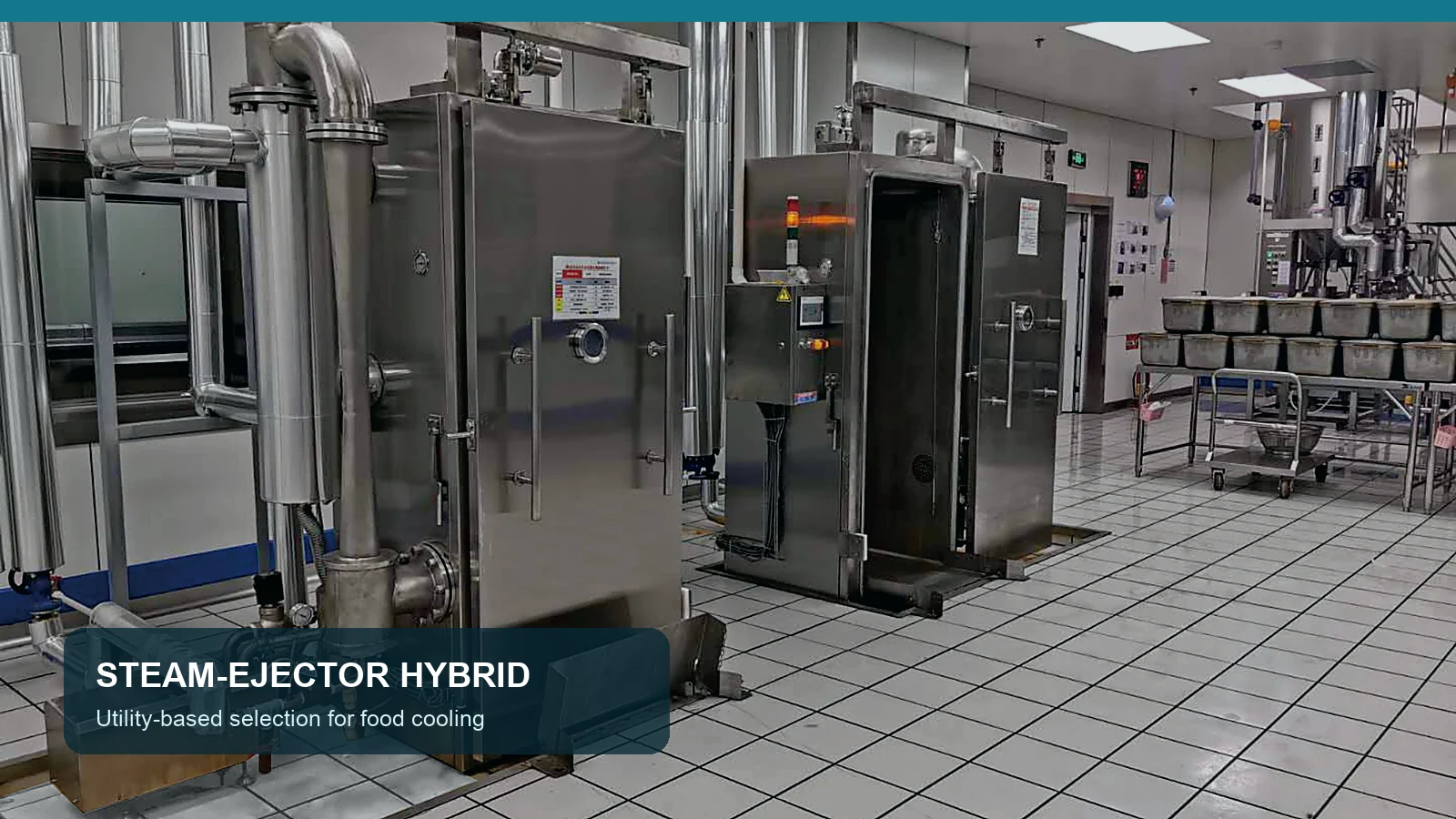
Steam Ejector or Vacuum Pump? Choosing the Right Vacuum System for Food Cooling
A utility-based guide to choosing between a mechanical vacuum package and a steam-ejector hybrid for bakery and cooked-food cooling projects.
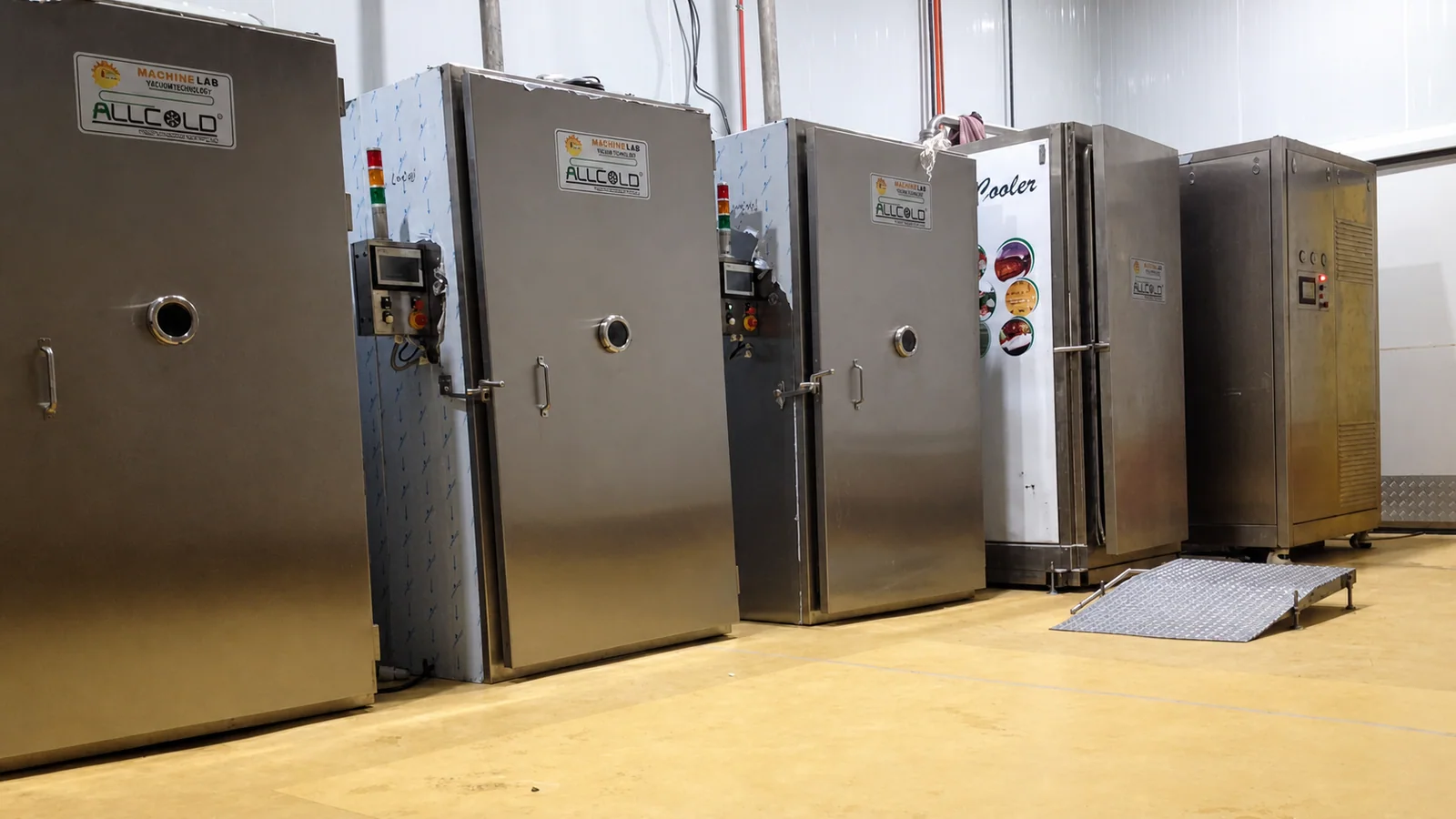
Vacuum Cooling Cooked Rice: A Validation Guide for Central Kitchens
Cooked rice can be vacuum cooled rapidly, but the process must be validated with the actual recipe, tray depth, batch mass, temperature map, yield target, and production rhythm. This guide shows central kitchens what to test, record, and approve.
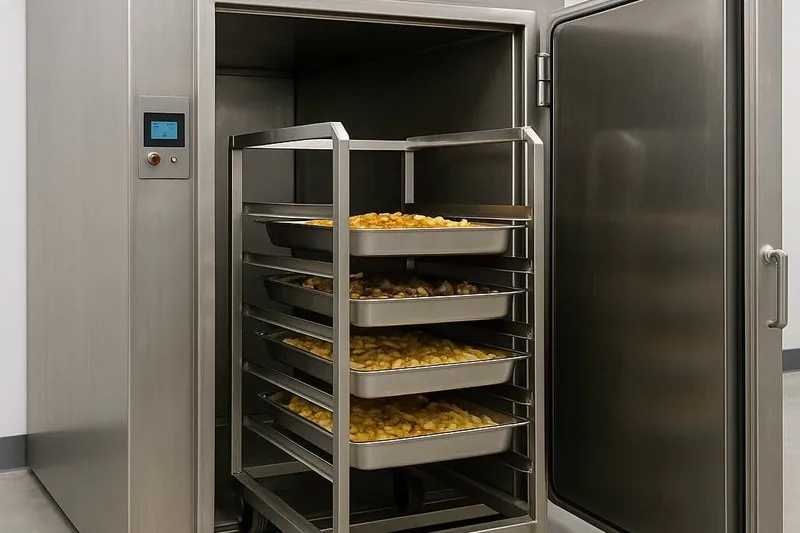
Vacuum Cooling Cooked Noodles and Pasta: A Validation Guide for Central Kitchens
Vacuum cooling cooked noodles and pasta sounds straightforward—it’s just cooling food, and vacuum cooling is a proven technology. In practice,
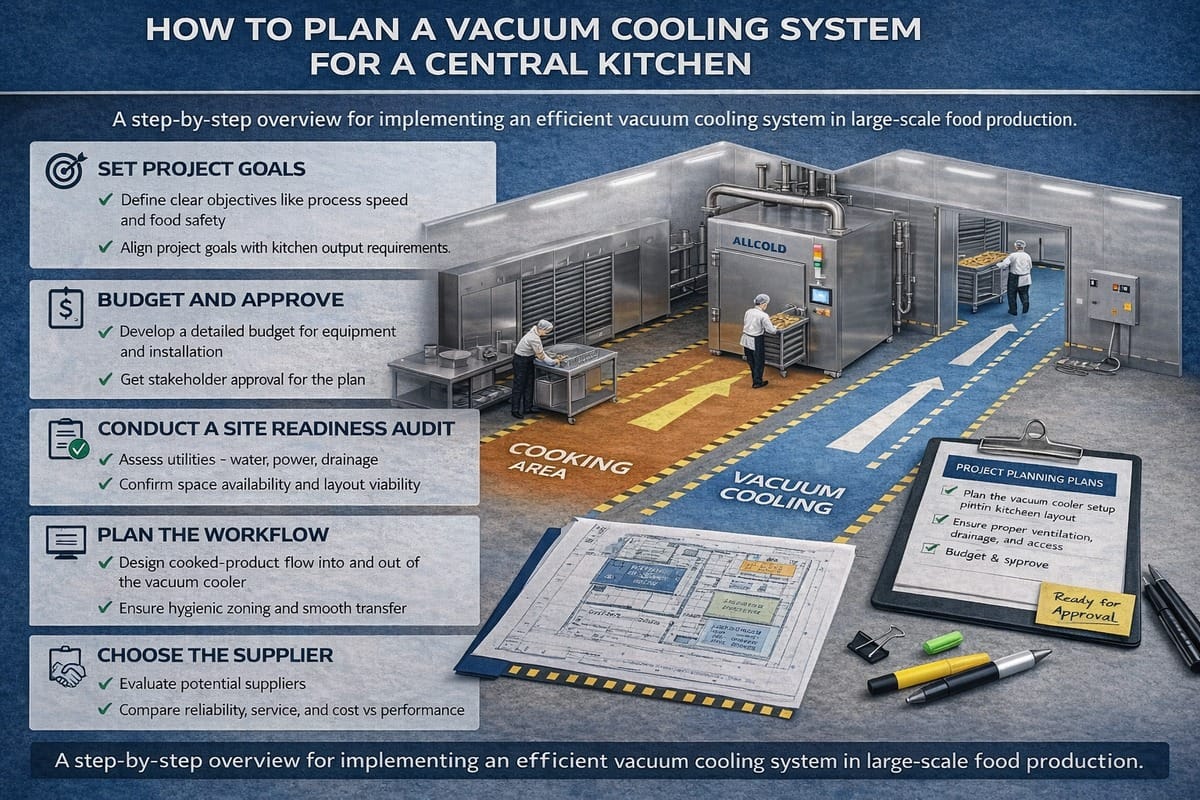
How to Plan a Vacuum Cooling System for a Central Kitchen
Learn how to plan a vacuum cooling system for a central kitchen with a practical factory-side view on throughput, workflow, hygiene zoning, utilities, and supplier evaluation.
Is Your Cooling Process Holding Back Your Ready-Meal Business?
Your kitchen produces delicious, complex ready-meals, but the slow cooling process introduces food safety risks and production delays. This critical
How Can Vacuum Cooling Revolutionize Meat and Poultry Processing?
You’ve cooked a thousand kilograms of chicken perfectly, but now it sits for hours, slowly passing through the temperature danger
What's Really Inside Your Vacuum Cooler that Makes it Work?
Ever wondered what makes a vacuum cooler tick, transforming warm produce into perfectly chilled goods in minutes? It’s not magic,
What Are the Preservation Techniques for Ready-to-Eat Foods?
As consumers increasingly prefer ready-to-eat (RTE) foods, extending their shelf life effectively becomes a critical challenge. Currently, the most effective