
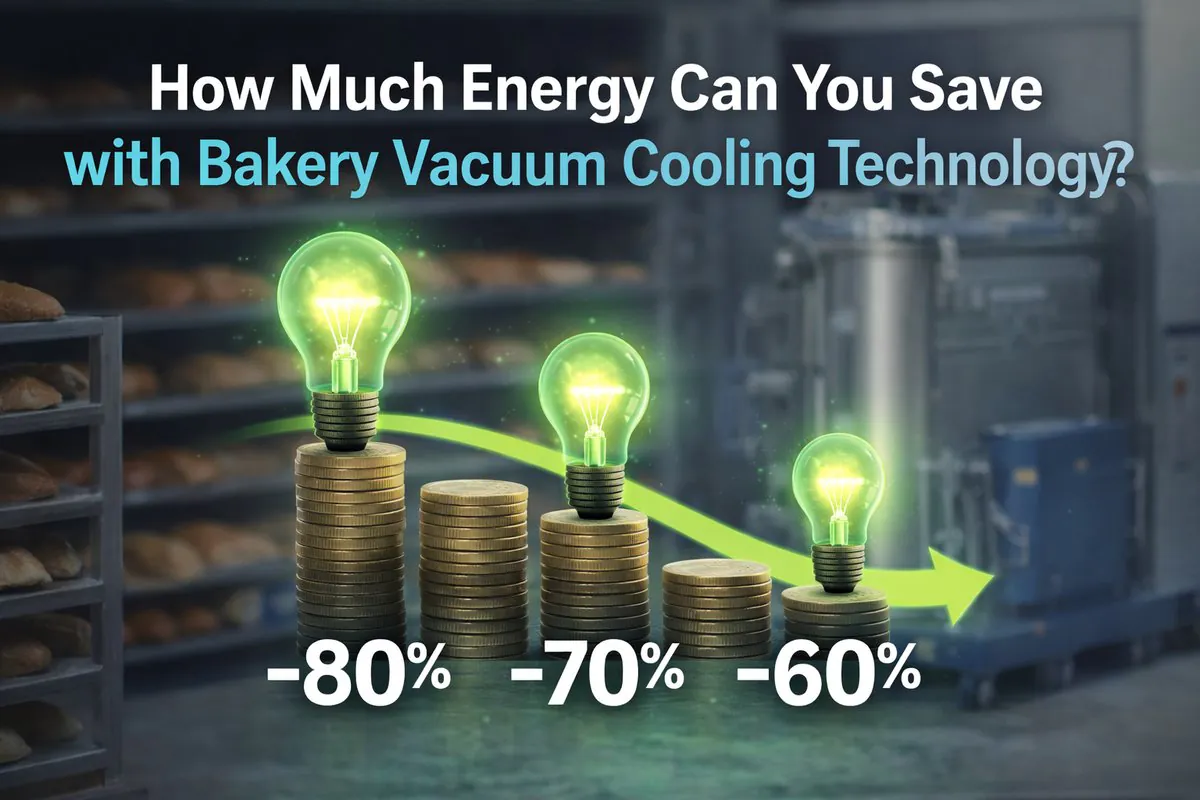
How Much Energy Can You Save with Bakery Vacuum Cooling Technology?
You dread opening your electricity bill every month. You see the numbers, and you know that a huge chunk of that profit is disappearing into your cooling rooms and air conditioning systems. You wonder if there is a way to stop this financial bleeding without compromising the quality of your bread.
Bakery vacuum cooling can reduce the energy associated with a long cooling stage, but the saving must be calculated from measured kWh and production output. The Allcold catalogue gives an example of about 1-2 kWh to cool 100 kg of bread during the final bake/cooling stage; it is a catalogue example, not a universal percentage saving.
Machine price and running cost must be reviewed together. Compare electrical energy per saleable kilogram, cycle utilisation, water use, maintenance, heat released to the room, and the existing system’s measured consumption. This article provides a calculation method rather than a guaranteed saving.
Why Is Traditional Air Cooling So Energy Inefficient?
You might think that putting hot bread in a cold room is simple. But from a physics perspective, it is one of the most wasteful ways to remove heat. You are fighting a losing battle against thermodynamics.
Air is a terrible conductor of heat. To cool a loaf of bread with air, you have to run large compressors for hours to overcome the heat resistance of the crust. This wastes massive amounts of electricity cooling the space, not just the product.
The Hidden "Heat Load" of Your Bakery
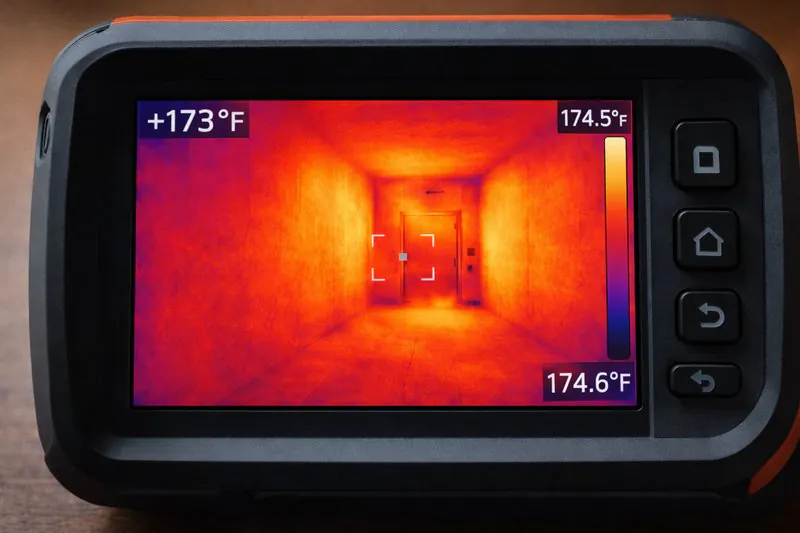
To understand a cooling energy bill, separate the bread-cooling load from room conditioning, fans, pumps, standby time, defrost, and unrelated production equipment. Record the current system over representative production days.
When you push a rack of hot bread into a cooling room or a spiral cooler, you are introducing a massive "heat load1." Let’s say the bread is 95°C. The room is 20°C.
In a traditional system, you rely on convection2. Cold air blows over the bread. The problem is that the crust of the bread acts like a winter coat. It insulates the hot crumb inside. The heat is trapped. Your Air Conditioning (AC) system has to work incredibly hard to push cold through that barrier.
But here is the real waste: You are not just cooling the bread.
- You are cooling the steel racks: Hundreds of kilograms of stainless steel absorb heat from the bread and hold it. Your AC has to cool that metal down too.
- You are cooling the room: The walls, the floor, and the ceiling all absorb heat.
- You are cooling the infiltration air: Every time a baker opens the door to push a rack in, hot bakery air rushes in. Your system has to cool that down instantly.
Air-based systems cool bread together with circulating air and may also add heat to the production room. The size and efficiency of those systems vary widely, so compressor horsepower and the share of wasted electricity must be taken from site data rather than a generic example.
| Energy Factor | Traditional Air Cooling | The Hidden Cost |
|---|---|---|
| Heat Transfer Method | Convection (Air to Surface) | Very slow, requires constant power input. |
| Target Area | The entire room volume | Wasted cooling on empty space and walls. |
| Equipment Runtime | Record actual compressor and fan runtime | Include part-load operation, standby, defrost, and room load |
| Insulation Barrier | The Bread Crust | Traps heat, forcing longer cooling times. |
How Does a 5-Minute Cycle Drastically Reduce kWh Usage?
People see our vacuum coolers and see a large motor. They assume "Big Motor = Big Electricity Bill." This is a common misunderstanding. You must look at the total time the motor is running.
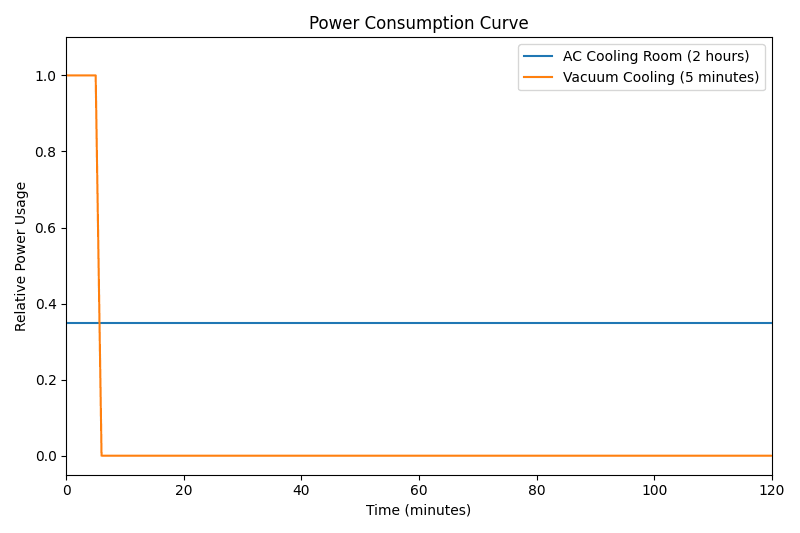
Vacuum cooling uses relatively high instantaneous power for a short cycle. The catalogue gives about 3-5 minutes as the typical bakery cooling stage. Total kWh must be measured across the complete cycle and divided by saleable kilograms; instantaneous kW alone does not establish efficiency.
The Physics of Flash Evaporation
This is where the magic happens. I want to explain why the 5-minute cycle is the hero of your energy bill3.
In vacuum cooling, we do not use cold air. We use pressure4.
We place the bread in the chamber and seal the door. The pump turns on. As the pressure drops, the boiling point of water drops. The moisture inside the bread starts to boil (evaporate) at a low temperature, say 30°C.
When water turns to steam, it sucks up a huge amount of heat energy. This is called the "Latent Heat of Vaporization5."
This process happens uniformly throughout the entire loaf. We are not trying to push cold in from the outside; we are extracting heat from the inside.
The Allcold catalogue shows a typical bakery cooling stage of about 3–5 minutes, but the electrical comparison must use the complete measured cycle, including pump-down, cooling, vacuum break, loading, unloading, and standby.
For a project comparison:
- Current system: meter kW and runtime across representative production batches.
- Proposed system: use the quoted model’s measured full-cycle energy and validated throughput.
- Common basis: divide both totals by saleable kilograms at the same product quality and packaging temperature.
Do you see the difference?
Calculate the difference using metered kWh per saleable kilogram. Do not convert a shorter cycle directly into a universal energy-saving percentage.
When a selected model uses variable-speed control, record its actual power profile across pump-down, cooling, hold, vacuum break, and standby. Control hardware may improve part-load operation, but the saving must be measured on the quoted configuration.
| Comparison Point | Continuous Cooling Tunnel | Allcold Vacuum Cooler |
|---|---|---|
| Power Rating | 40 kW | 60 kW |
| Time to Cool | 90 Minutes | 6 Minutes |
| Energy per Batch | Enter metered baseline | Enter validated full-cycle kWh |
| Electricity Cost | Use the site’s tariff and demand charges | Use the same tariff basis |
| Savings per Batch | — | Calculate only after both systems use comparable product loads and targets |
Does Vacuum Cooling Reduce the Load on Your Freezers?
Many of you are not just selling fresh bread; you are freezing dough or par-baked bread for later distribution. The energy cost of freezing hot products is astronomical. This is a hidden energy killer in your factory.
Pre-cooling before freezing may reduce the freezer’s heat load, but the target temperature and energy effect depend on the product and freezer process. Measure freezer kWh and throughput before and after; no universal 30% saving is assumed.
The "Chain of Cold" Efficiency
I have a client, let’s call him Mark, who runs a par-baked baguette factory. He used to take bread that was "cool enough" (maybe 35°C or 40°C) and throw it directly into his blast freezer.
He thought he was saving time. He was actually destroying his profits.
When you put a 40°C baguette into a -20°C freezer:
- The Freezer Spikes: The compressors have to ramp up to maximum power to fight the sudden influx of heat.
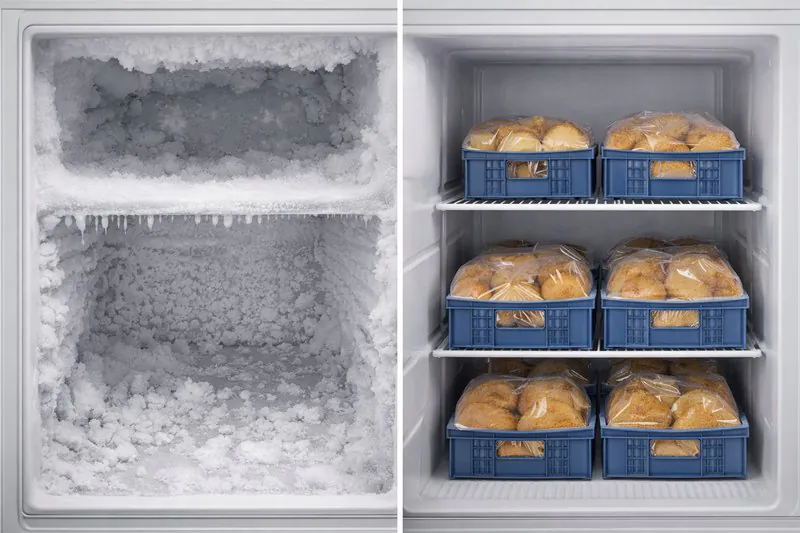
- Ice Formation: The steam coming off the warm bread hits the cold freezer coils and turns to ice instantly. This ice acts as an insulator on the coils, making the freezer less efficient.
- Defrost Cycles: Because of the ice build-up, the freezer has to run "defrost cycles" more often. A defrost cycle uses heat (electricity) to melt ice. So you are paying for electricity to heat up the machine you are paying electricity to keep cold. It is madness.
With Allcold vacuum cooling technology, we can bring that baguette down to 10°C or even 5°C before it enters the freezer.
The vacuum cooler handles the heavy lifting of heat removal. Vacuum cooling is much more energy-efficient at removing high heat (from 90°C to 10°C) than a mechanical freezer is.
By feeding your freezer with cold product:
- Your freezer runs at a steady, low-energy state.
- You have almost no ice build-up on the coils.
- You reduce defrost cycles by half.
This "Pre-Cooling" strategy is one of the smartest things a large-scale bakery can do. It protects the lifespan of your expensive freezers and slashes the electricity bill for your most power-hungry department.
Can You Save Money on Maintenance and HVAC Infrastructure?
Energy costs are not just about the machine running. They are also about the infrastructure you need to support that machine. Traditional cooling requires complex ducting, massive fans, and huge air conditioning units that break down.
A chamber-based system can reduce the heat released by long rack cooling, but building HVAC requirements remain site-specific. Include ventilation, ambient conditions, equipment heat rejection, and occupied-space targets in the engineering review.
The Holistic Energy View
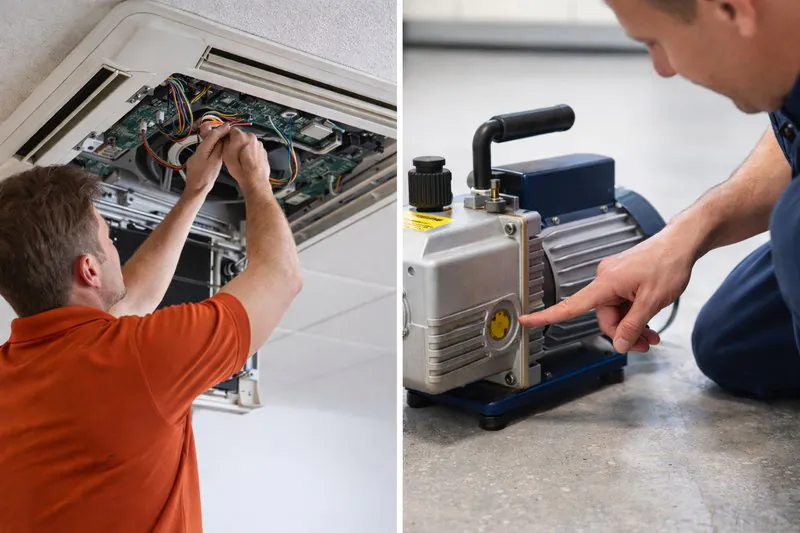
Energy performance should be evaluated at factory level as well as per batch, including maintenance condition and heat released into occupied production areas.
1. The "heat spill6" effect:
In a standard bakery, the cooling area spills heat into the rest of the factory. If you have open racks of hot bread, that heat drifts into the packaging area. Now, you have to turn up the AC in the packaging room to keep your workers comfortable. You are paying twice: once to cool the bread, and once to cool the room heated by the bread.
A vacuum cooler7 is a sealed chamber. The heat is extracted and exhausted outside the building (or into a water loop). It does not heat up your factory. Your general building AC works less, saving you money on the facility’s total electric bill.
2. Maintenance energy8:
Think about the maintenance of a large cooling tunnel or a climate-controlled room. You have:
- Huge condenser fans on the roof.
- Evaporator fans inside.
- Miles of copper piping that can leak refrigerant.
- Filters that need changing constantly.
Maintenance condition affects energy use. Establish a clean, serviced baseline before comparing systems.
An Allcold vacuum cooler is much simpler. It has a pump, a chamber, and a water circuit. It is easier to maintain. When a machine is easy to maintain, it stays efficient. You do not have the slow "efficiency drift9" that happens with complex HVAC systems.
In hot climates, shortening rack residence may reduce heat released into the production room. Quantify this with room-temperature and HVAC electricity measurements rather than a customer anecdote.
| Infrastructure Item | Traditional Cooling | Vacuum Cooling |
|---|---|---|
| Building AC Load | Increases (Heat spill) | Neutral (Heat exhausted) |
| Complexity | High (Ducts, multiple units) | Low (Plug and Play) |
| Efficiency Drift | High (Dirty coils = high cost) | Low (Sealed system) |
| Maintenance Cost | Frequent AC repair | Routine pump oil changes |
Conclusion
Energy is not a fixed cost; it is a controllable cost. By switching to vacuum cooling, you move from an inefficient, slow, passive process to a rapid, active, and precise method. You save money on the direct cooling cycle, you save money on freezing, and you save money on your facility’s total power load. It is the greenest choice for your wallet.
Learn about heat load to better manage your bakery’s cooling efficiency and save on energy bills. ↩
Understanding convection can help you optimize your cooling system and reduce energy costs. ↩
Discover effective strategies to lower your energy costs through advanced cooling solutions. ↩
Understanding pressure’s role in vacuum cooling can enhance your knowledge of energy-efficient technologies. ↩
Exploring this concept will deepen your understanding of energy transfer during phase changes. ↩
Understanding the heat spill effect can help optimize energy efficiency in your facility. ↩
Discover the advantages of vacuum coolers for energy savings and improved working conditions. ↩
Learn how maintenance energy affects costs and efficiency, crucial for managing factory operations. ↩
Explore the factors leading to efficiency drift to enhance your HVAC system’s performance. ↩

Mila
You May Also Like

When Should You NOT Use Vacuum Cooling for Your Bakery?
Are you tired of waiting hours for your bread to cool down while your profits evaporate? You might think vacuum

Is Your Cooling Strategy Burning Your Profits? A Cost-Benefit Analysis of Vacuum vs. Conventional Cooling
As a bakery owner, you look at your balance sheet every month. You see the cost of ingredients, labor, and
Hybrid Cooling Solutions: Can Combining Vacuum and Traditional Methods Save Your Bakery?
Are you torn between the speed of new technology and the reliability of traditional freezing? Many bakery owners feel they
Blast Freezers vs Vacuum Coolers: Which Is the Right Choice for Your Bakery?
Are you tired of watching your freshly baked bread sit on racks for hours, taking up valuable space while you

Bakery Vacuum Cooling vs Spiral Cooling Systems: Which Is Better for Your Business?
Are you struggling with slow production lines because your bread takes forever to cool down? You are not alone. Cooling
Is a Vacuum Cooler the Missing Ingredient in Your Hotel or Restaurant Bakery?
Imagine your kitchen is in full swing, and the freshly baked bread is finally out of the oven, but it
Can One Cooling System Handle Your Entire Bakery Menu?
You juggle sourdough, delicate pastries, and frozen dough lines daily. Yet, one cooling mistake ruins the texture of your artisan

Is Your Frozen Dough Production Losing Quality Before It Hits the Freezer?
You watch your energy bills climb month after month while your blast freezers work overtime. You see production bottlenecks form
How Can Organic Bakeries Extend Shelf Life Without Preservatives?
You pour your heart into sourcing the finest organic flours and perfecting natural fermentation, only to watch your hard work

Can Vacuum Cooling Finally Fix the "Gummy" Texture in Gluten-Free Bread?
You watch your perfectly risen gluten-free loaves come out of the oven, only to see them sink or turn gummy