
Is Your Bakery's Vacuum Cooler Smart Enough to Run Itself?
You have invested in the best ovens, the finest ingredients, and skilled bakers. But when it comes to cooling, are you still relying on guesswork?
In the past, cooling was a manual game. You watched the clock, checked the core temperature with a handheld probe, and hoped for the best. Today, that is not enough. Modern bakeries demand consistency, speed, and data. This is where the brain of the machine—the Automated Control System—changes everything.
A PLC and HMI can coordinate the machine sequence and display operating values. The supplied control functions, product-temperature inputs and operator responsibilities should be documented for the actual configuration; automation does not by itself validate a cooling result.
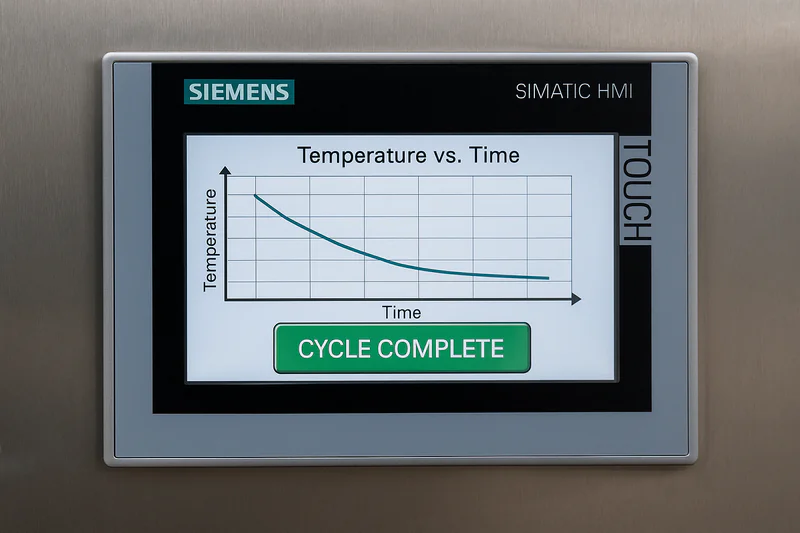
A useful control system makes the operating state understandable and supports an approved procedure. Buyers should assess the delivered functions and instructions alongside the hardware specification.
What Are the Key Components of the Control System?
The controller, HMI, sensors and protective devices work as a system. Evaluate the actual component schedule and its service requirements rather than assuming a particular brand is necessary or sufficient for reliable operation.
Allcold’s confirmed controls include PLC/HMI operation, live values, automatic and manual modes, alarms and password protection. For a bakery project, these functions provide an operating foundation that can be discussed alongside the actual process. Ask for a written list of supplied screens and functions; stored recipes, historical records, remote access and factory-system integration must be confirmed separately.
Allcold’s confirmed baseline includes PLC/HMI control, live values, automatic and manual operation, alarms and password protection. Component brands, protective functions and interfaces are confirmed for the quoted configuration.
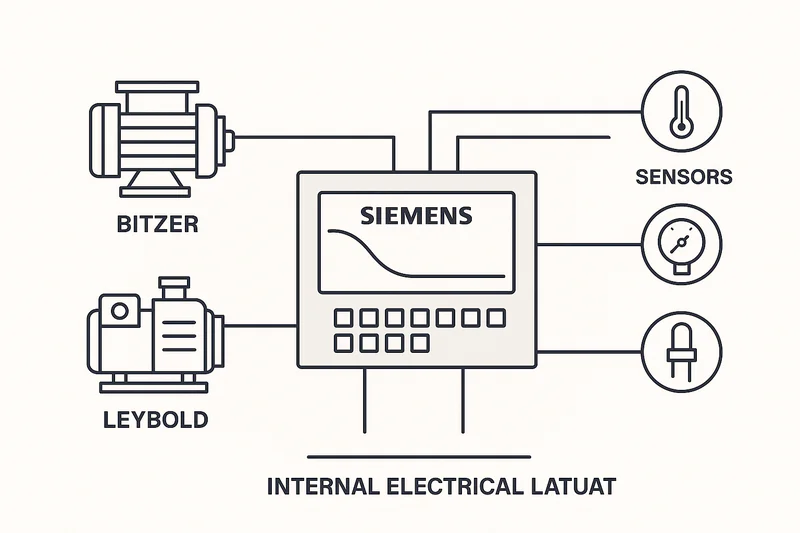
The Hardware Behind the Intelligence
For maintenance planning, request the installed component identifiers and check replacement availability through the intended service route.
1. The Core Processor (PLC)
The PLC coordinates equipment according to its supplied program and inputs. Request the actual control description and component schedule, including the vacuum and refrigeration arrangement, before comparing two proposals.
2. The Human Machine Interface (HMI)
The HMI presents the operating information and controls included in the machine. Confirm the available screens and access levels during the project review.
- Check the live values and machine state shown on the supplied HMI.
- Follow the approved start and monitoring procedure; the operator still checks the product and load.
3. Safety and Protection
Electrical protection must be selected for the installed supply and components. Ask for the protection scope in the approved electrical documentation rather than inferring universal protection from a brand name.
- Confirm the electrical protection provided for the approved site supply.
- Follow the fault and isolation instructions; no device guarantees protection from every electrical event.
| Item | What to confirm | Why it matters |
|---|---|---|
| PLC / HMI | Quoted model, functions and access levels | Defines the operating interface |
| Sensors | Inputs, locations and calibration requirements | Defines what the displayed values represent |
| Electrical devices | Approved supply and protection scope | Supports the specified installation |
| Data functions | Storage, export and interfaces if required | Separates optional records from live values |
How Does Automation Guarantee Product Consistency?
Consistency is the holy grail of baking. You want every loaf of bread to have the same crust, the same moisture, and the same shelf life. Manual cooling cannot guarantee this.
Automation can repeat a defined sequence, but loading errors, misplaced probes and unsuitable settings can still affect the result. Operators remain responsible for the checks in the approved procedure.
Confirm the supplied completion logic and available recipe functions. A product-temperature input can support control, but the agreed sampling method and the rest of the load still matter. Neither a universal 3°C endpoint nor a particular recipe library should be assumed.
Modes of Operation
For quality management, control settings and records must be interpreted within the site’s validated process. A machine display is not proof of food-safety compliance on its own.
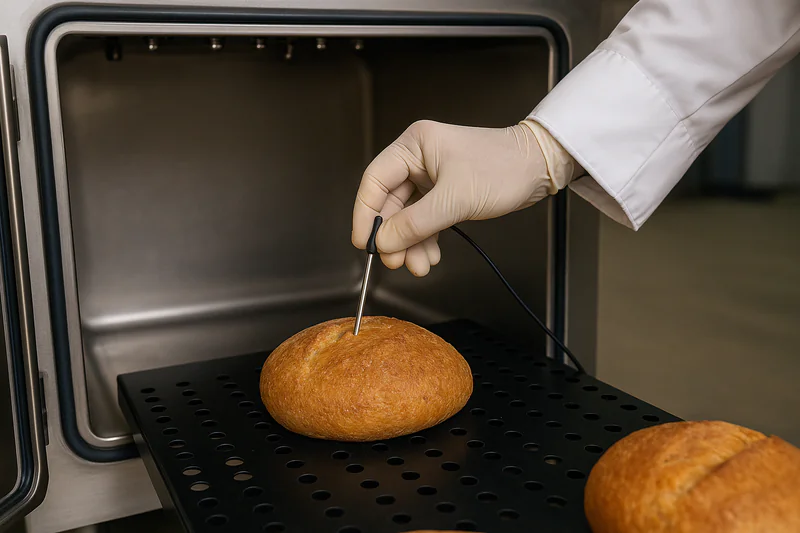
Temperature-Based Control3
Where product temperature is used for control, place the probe at an approved, representative point and confirm how its reading is used.
- Use the approved product-temperature target and probe location.
- Confirm the supplied completion logic and how other parts of the load are verified.
Time-Based Control
Time-based operation, where provided, requires a validated load and approved procedure. It should not replace required temperature verification merely to save handling time.
- Use a time-based mode only if it is supplied and approved for the product and load.
- Retain the temperature checks required by the site procedure.
Vacuum Delay Facility4
If the product needs a staged pressure sequence, confirm that the proposed controls provide it and agree the trial conditions.
- Confirm whether a staged-pressure or delay function is included.
- Assess product structure and load temperatures in the agreed trial; the feature name is not a performance guarantee.
Can the System Save Energy and Reduce Maintenance?
A "dumb" machine runs at full power until you turn it off. A "smart" machine knows when to rest. This intelligent management is key to lowering your operational costs.
Standby behavior, energy-saving modes, runtime counters and maintenance reminders are configuration-specific. Ask which functions are included and how they work; their presence does not establish a measured energy saving or prevent all failures.
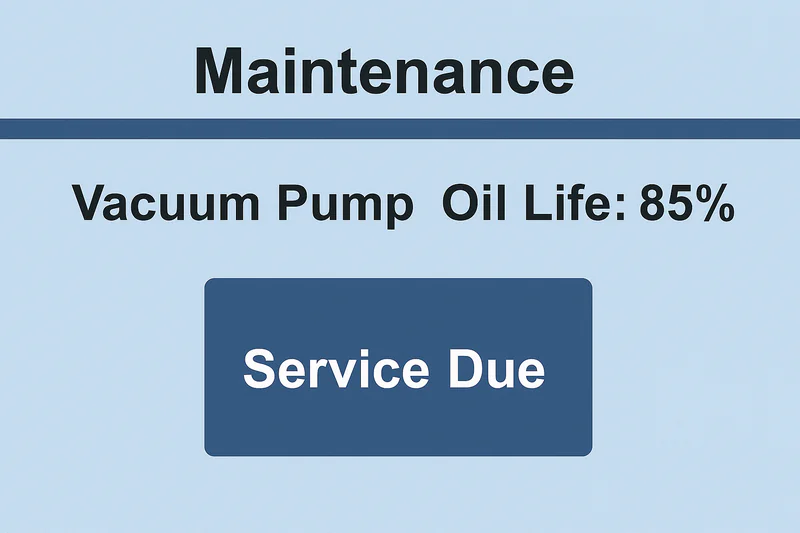
Intelligent Efficiency & Diagnostics
For an owner like Norman, this translates directly to the bottom line.
Energy Saving Logic5
Separate the controls actually supplied from features that would need additional engineering or software.
- Confirm any standby function and the permitted restart sequence.
- Follow the installed pump manual for warm-up, drying and shutdown; there is no universal 40-minute no-load instruction.
Predictive Maintenance6
Alarms help identify a condition requiring attention; they do not replace diagnosis and planned maintenance.
- Plan maintenance from the actual component manuals and operating duty.
- Record alarm details for diagnosis and confirm the support method; reminders and remote connectivity are separate functions.
Conclusion
The useful benefit of automation is a defined operating sequence and clear information for the operator. Assess the actual controls, training and approved product procedure together rather than treating a touchscreen as a guarantee of quality.
When you choose a vacuum cooler, look beyond the steel. Look at the brain. A smart machine works harder, so you don’t have to.
Explore this link to understand why Siemens PLCs are considered the industrial standard for reliability and performance. ↩
Discover the benefits of Bitzer compressors and why they are essential for efficient cooling and refrigeration systems. ↩
Understanding Temperature-Based Control is essential for ensuring food safety and quality in HACCP compliance. ↩
Exploring the Vacuum Delay Facility can enhance your knowledge of advanced cooling techniques for delicate products. ↩
Explore how Energy Saving Logic can significantly reduce operational costs and enhance efficiency in your systems. ↩
Learn how Predictive Maintenance can prevent costly downtimes and extend the lifespan of your machinery. ↩
Need vacuum cooling for your production line?

Mila
You May Also Like

When Should You NOT Use Vacuum Cooling for Your Bakery?
Are you tired of waiting hours for your bread to cool down while your profits evaporate? You might think vacuum

Is Your Cooling Strategy Burning Your Profits? A Cost-Benefit Analysis of Vacuum vs. Conventional Cooling
As a bakery owner, you look at your balance sheet every month. You see the cost of ingredients, labor, and
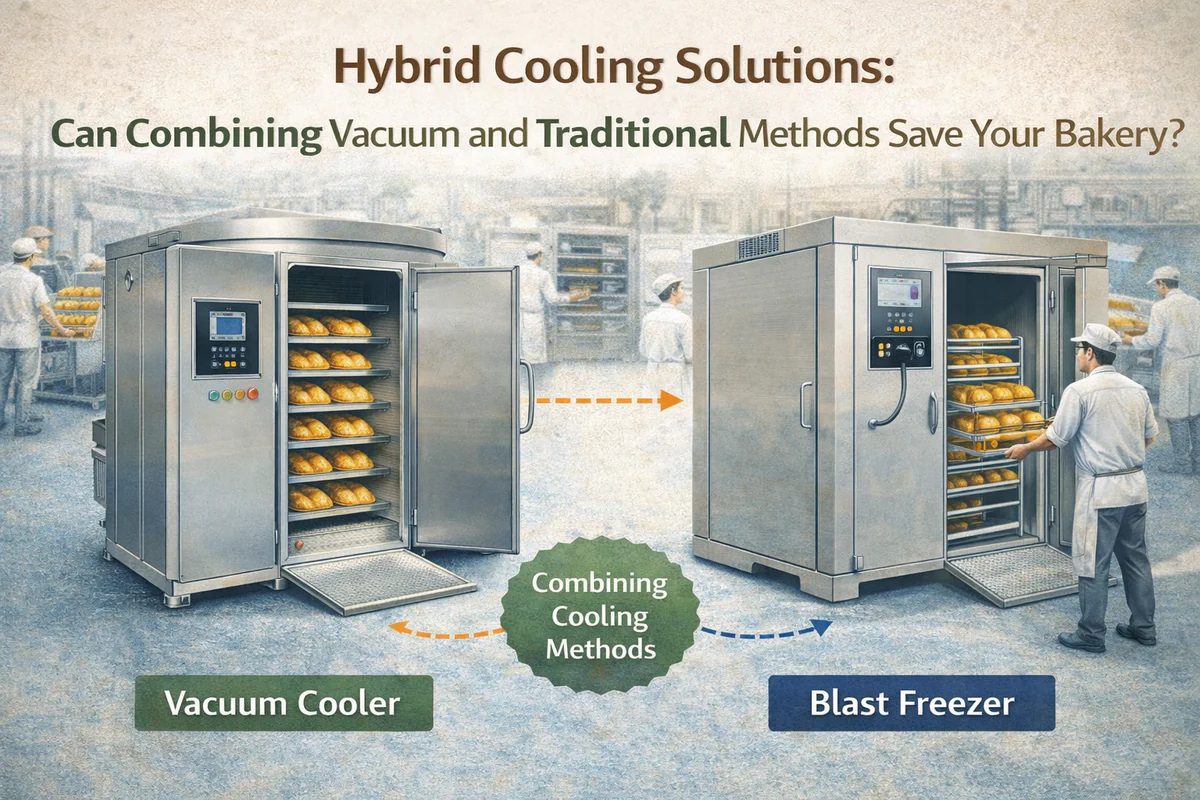
Hybrid Cooling Solutions: Can Combining Vacuum and Traditional Methods Save Your Bakery?
Are you torn between the speed of new technology and the reliability of traditional freezing? Many bakery owners feel they
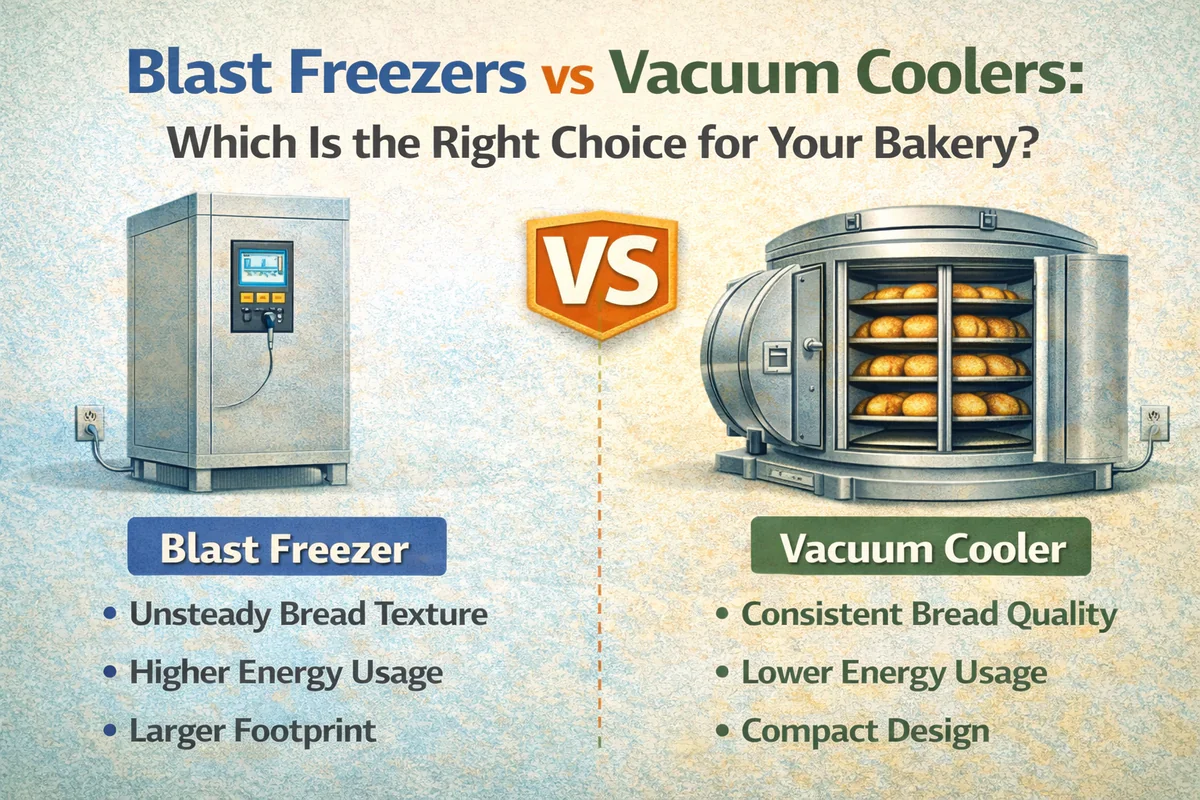
Blast Freezers vs Vacuum Coolers: Which Is the Right Choice for Your Bakery?
Are you tired of watching your freshly baked bread sit on racks for hours, taking up valuable space while you

Bakery Vacuum Cooling vs Spiral Cooling Systems: Which Is Better for Your Business?
Are you struggling with slow production lines because your bread takes forever to cool down? You are not alone. Cooling
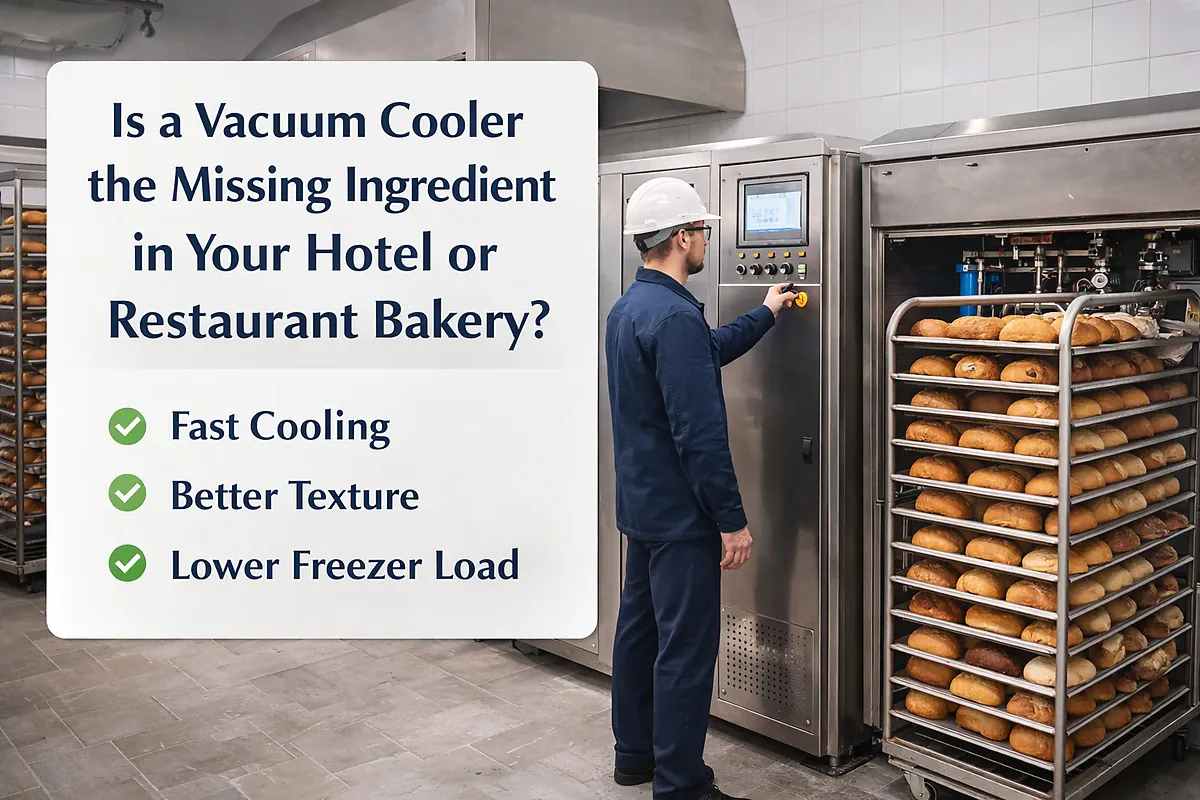
Is a Vacuum Cooler the Missing Ingredient in Your Hotel or Restaurant Bakery?
Imagine your kitchen is in full swing, and the freshly baked bread is finally out of the oven, but it
Can One Cooling System Handle Your Entire Bakery Menu?
You juggle sourdough, delicate pastries, and frozen dough lines daily. Yet, one cooling mistake ruins the texture of your artisan

Is Your Frozen Dough Production Losing Quality Before It Hits the Freezer?
You watch your energy bills climb month after month while your blast freezers work overtime. You see production bottlenecks form
How Can Organic Bakeries Extend Shelf Life Without Preservatives?
You pour your heart into sourcing the finest organic flours and perfecting natural fermentation, only to watch your hard work
Can Vacuum Cooling Finally Fix the "Gummy" Texture in Gluten-Free Bread?
You watch your perfectly risen gluten-free loaves come out of the oven, only to see them sink or turn gummy