Application-Based Cooling Systems · Manufacturer Since 2005

Industrial Vacuum Cooling Systems and Rapid Food Coolers

Allcold configures cooling equipment around the product, load, target temperature, utility conditions, and production flow. Compare six system families for fresh produce, bakery, cooked food, automatic lines, soups, sauces, and other liquid foods.

20+
Years Manufacturing
6
Cooling System Families
30+
Countries Served
Custom
Capacity and Layout

Direct Answer

Which cooling system should you start with?

Start with the product and workflow, not the machine name. Palletized vegetables, bread trolleys, prepared-food trays, pumpable sauces, and automated kettle lines have different loading, heat-transfer, hygiene, vapor, and capacity requirements. A defensible selection needs the actual product, batch or hourly output, inlet and target temperature, loading format, available utilities, and site layout.

Important distinction

Not every Allcold product uses the same cooling principle. The micro soup-and-sauce rapid cooler uses direct heat exchange. Tap water can be used for its initial cooling stage when site water temperature is suitable; that statement does not apply to every vacuum cooling system.

Six Product Routes

Choose the system family that matches your process

Each route below solves a different loading or production problem. Published capacities and cycle ranges are starting points for engineering discussion, not universal guarantees.

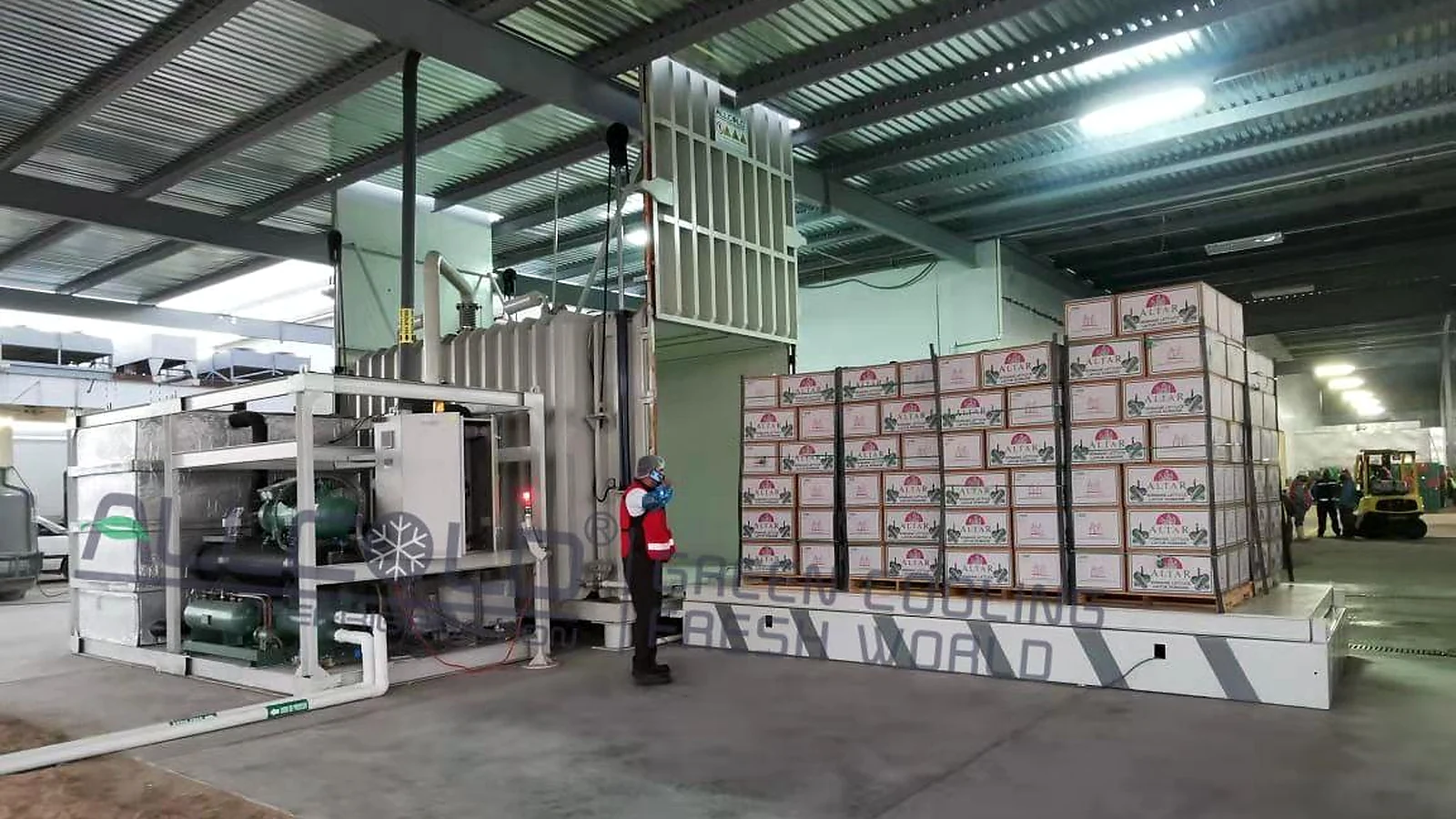
Allcold pallet vacuum cooling installation with fresh produce cartons and refrigeration system

Post-HarvestPallet / Crate

Fresh Produce Vacuum Coolers

For leafy greens, broccoli, herbs, mushrooms, flowers, asparagus, and other products that need fast field-heat removal before cold storage or transport.

  • ✓ Capacity planned by pallets, crates, cartons, or batch weight
  • ✓ Custom chamber and door configuration
  • ✓ Typical selection reference: about 20-30 minutes

View Fresh Produce Systems

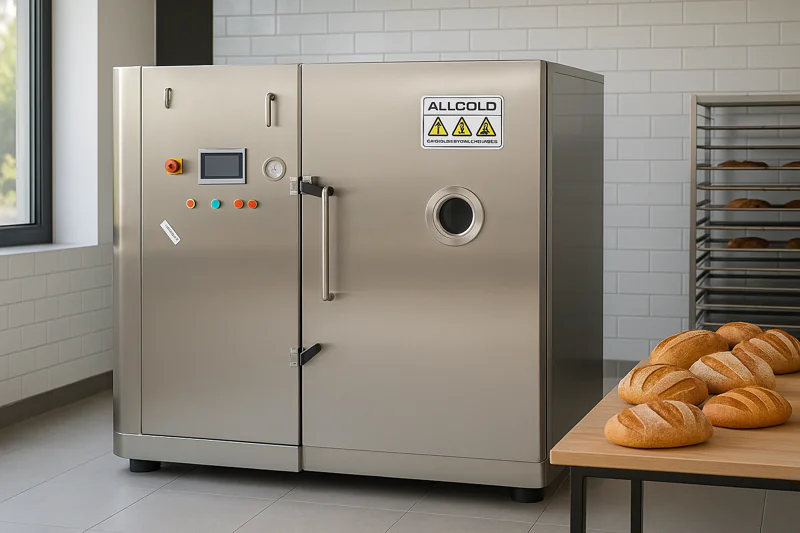
Allcold trolley vacuum cooling system for bakery and cooked food

Hot FoodTray / Trolley

Bakery and Cooked Food Vacuum Coolers

For bread, buns, selected pastries, cooked rice, noodles, meat, poultry, prepared meals, catering, and central-kitchen batches.

  • ✓ Bakery selection by trolley, tray size, and oven rhythm
  • ✓ Cooked-food selection by batch weight and container format
  • ✓ Recipe-specific vacuum and temperature programs

View Bakery and Cooked Food

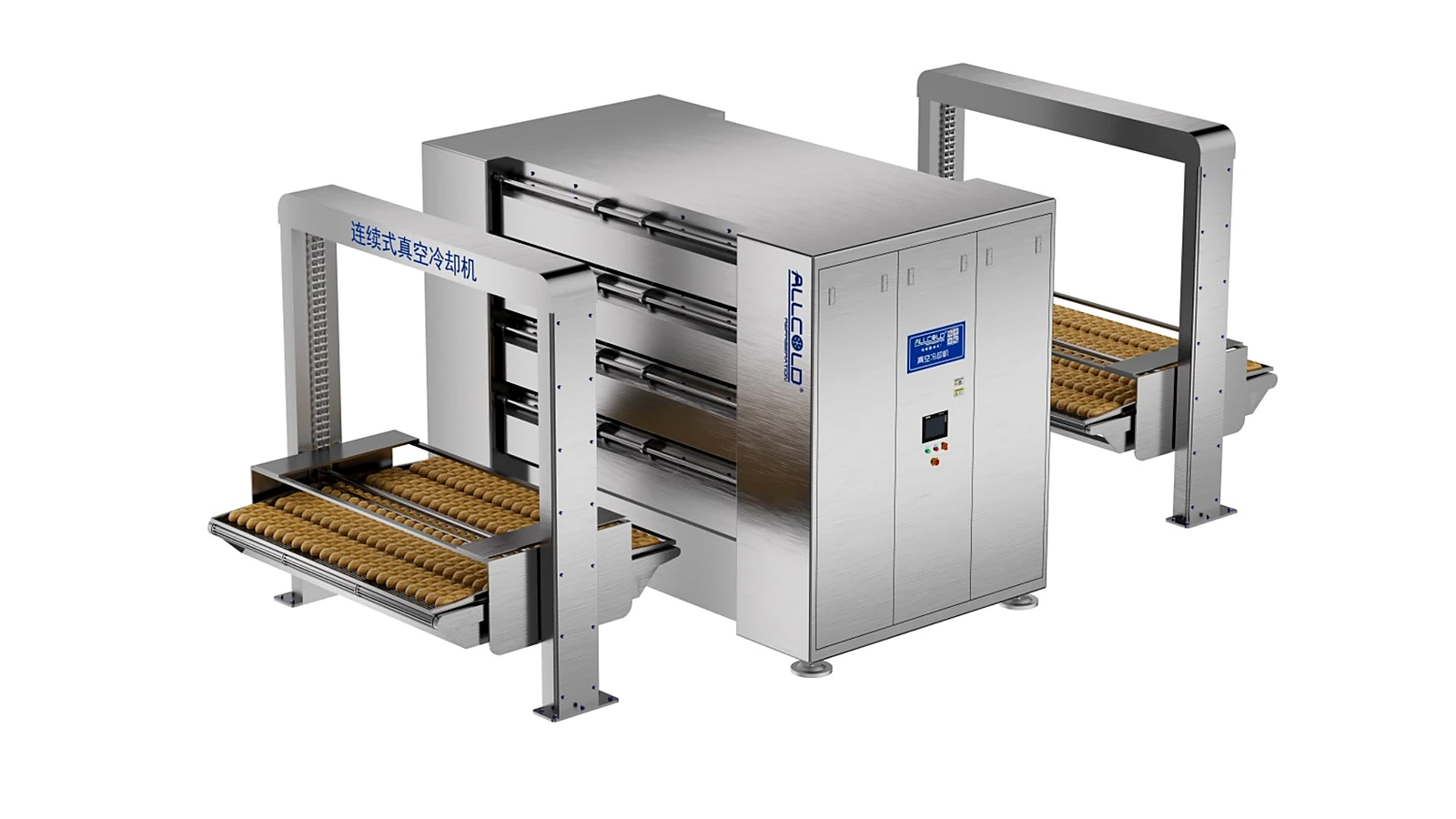
Allcold automatic continuous vacuum cooling line with modular chambers and conveyor transfer

AutomationContinuous Flow

Automatic Continuous Vacuum Cooling Lines

For production lines that need automated transfer from the upstream process through cooling and into downstream handling without trolley queues.

  • ✓ Modular chamber and conveyor engineering
  • ✓ Capacity discussed by hourly throughput and product rhythm
  • ✓ Layout, guarding, controls, and interfaces reviewed by project

Discuss a Continuous Line

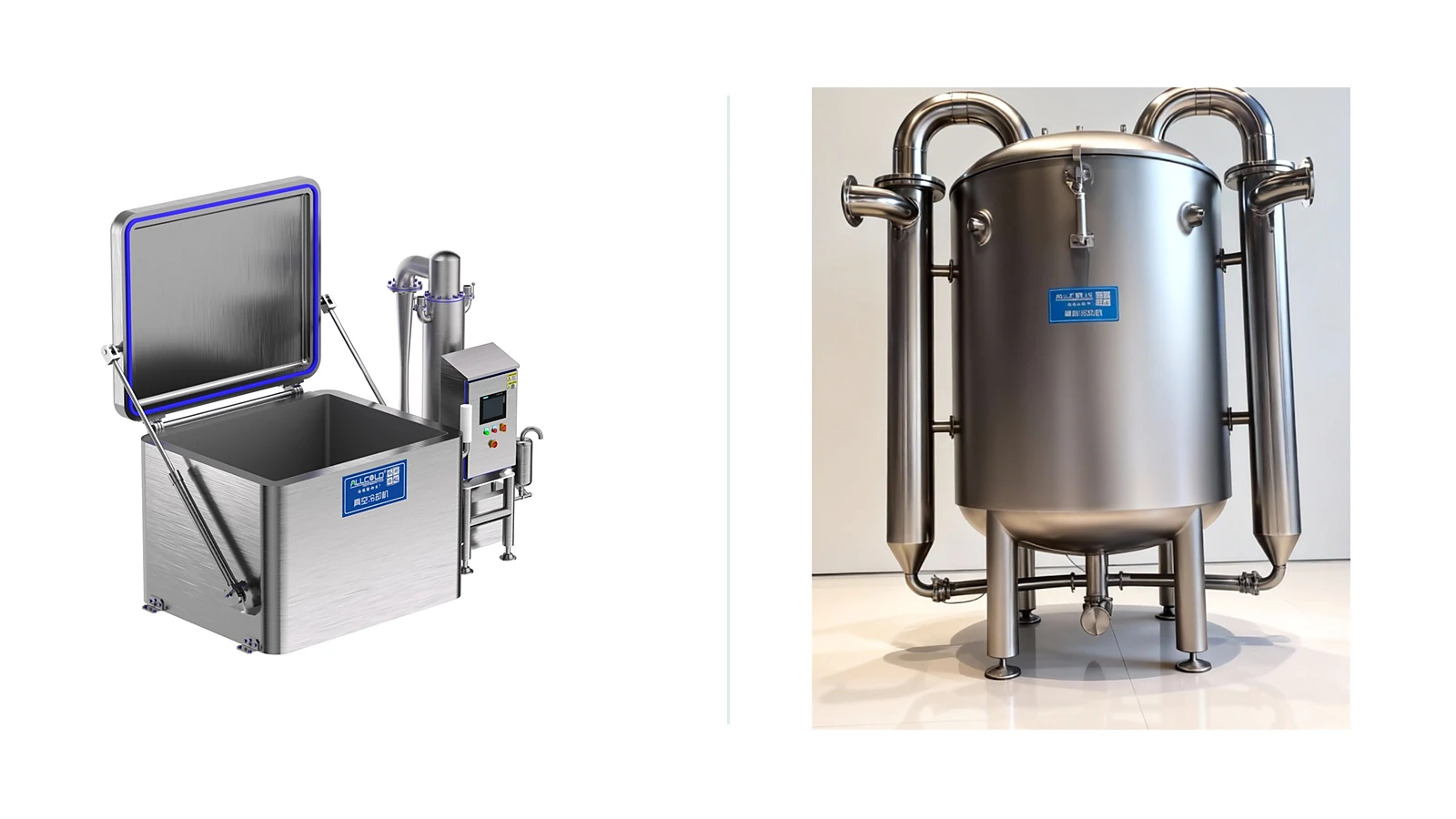
Allcold square and round top-opening vacuum cooling systems

Project EngineeringTop Opening

Top-Opening and Integrated Systems

Square or round top-opening configurations for kettle, hoist, basket, retort, or automated loading workflows, including project-specific cook-and-cool integration.

  • ✓ Square and round vessel concepts
  • ✓ Hoist, travelling crane, basket, or line integration
  • ✓ Custom controls, drainage, cleanability, and access

Send Your Layout

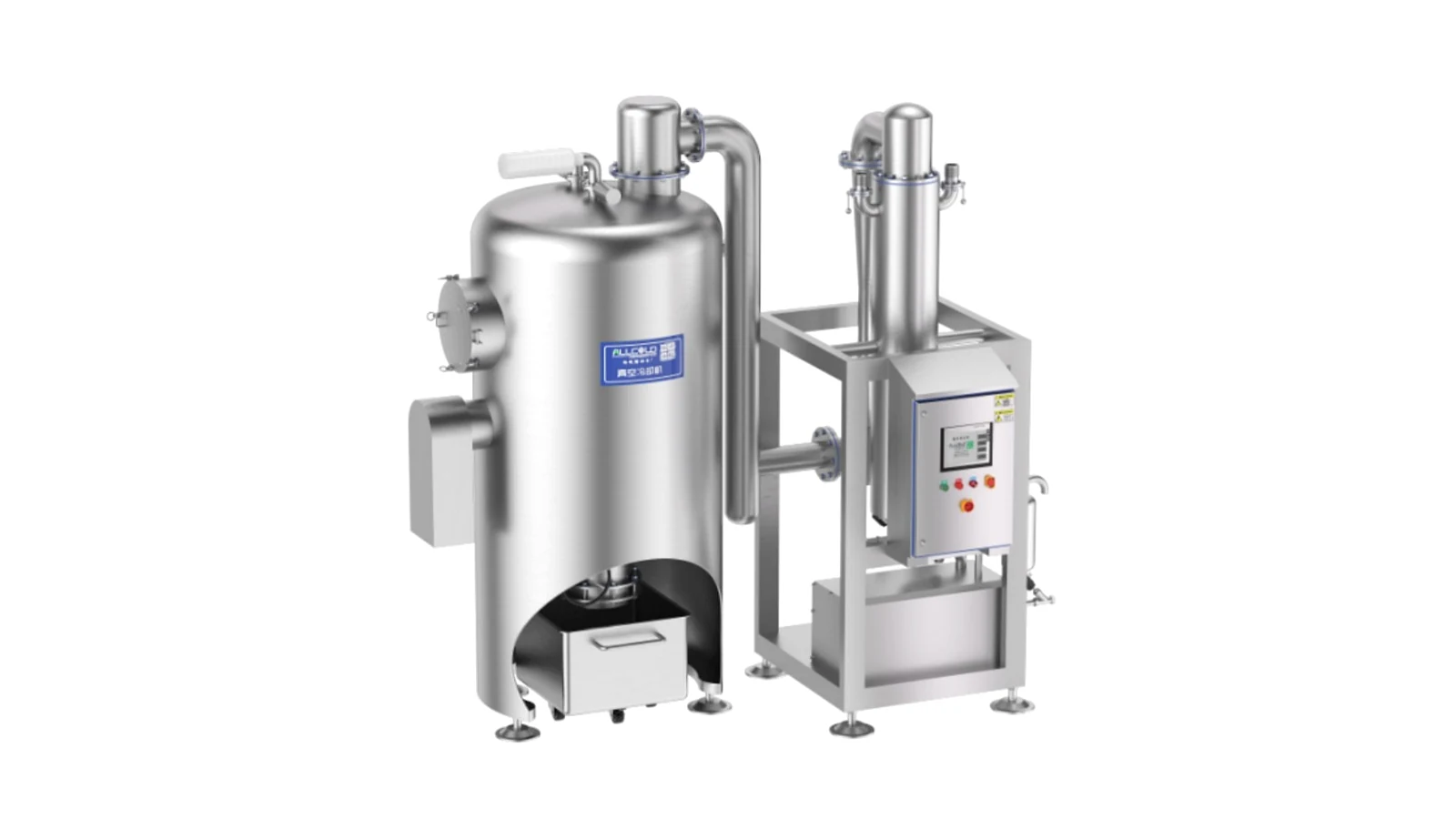
Allcold continuous vacuum cooling system for soups and sauces

Liquid FoodVacuum Route

Continuous Soup and Sauce Vacuum Cooling

For pumpable soups, sauces, broths, curries, purées, and viscous foods requiring engineered vapor handling, controlled pressure reduction, hygienic transfer, and optional CIP.

  • ✓ Project range discussed by vessel volume and throughput
  • ✓ Foam, carry-over, viscosity, yield, and concentration validation
  • ✓ Can be integrated with cooking, transfer, cooling, and storage

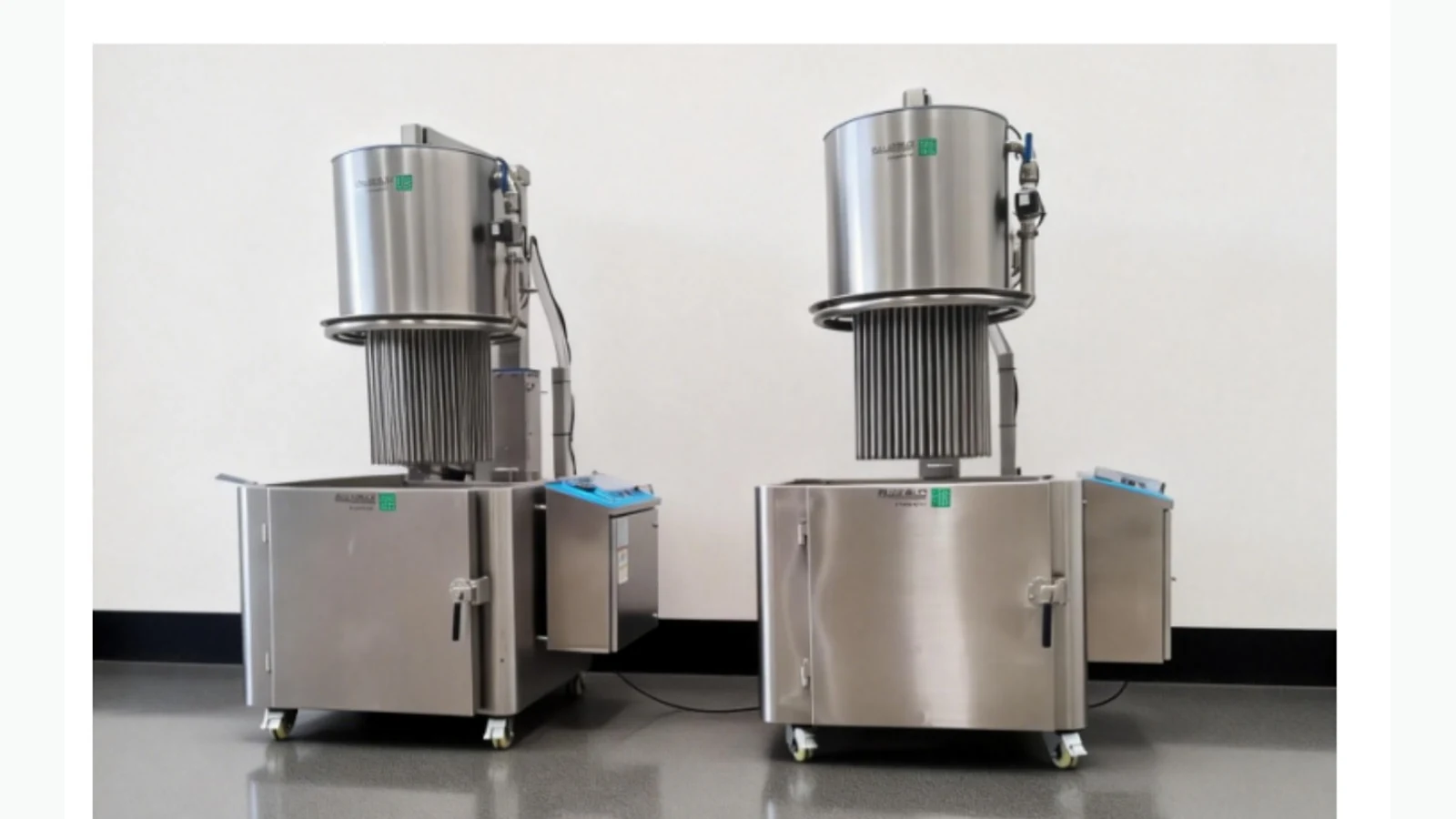
Two real Allcold micro rapid cooling machines for soup and sauce batches

Small BatchDirect Heat Exchange

Micro Soup and Sauce Rapid Coolers

For smaller barrels or vessels cooled through an immersed heat-exchange assembly with product movement. This route does not use vacuum flash evaporation.

  • ✓ Tap water may serve the initial cooling stage
  • ✓ Ice water or a chiller can support lower endpoints
  • ✓ Validate viscosity, particulates, probe hygiene, and cleaning

Selection Matrix

Compare the six cooling routes

Use this table to identify the right starting point. Final configuration depends on product trials and project data.

System familyBest starting fitLoading / flowCapacity logicMain validation focus
Fresh produce vacuum coolerLeafy vegetables, herbs, mushrooms, flowersPallets, crates, cartonsPallets or kg per batch; hourly throughputProduct moisture, packaging airflow, field temperature, target core temperature
Bakery and cooked-food vacuum coolerBread, rice, noodles, ready meals, meat and poultryTrays, racks, trolleys, containersTray or trolley count; kg per batch; production rhythmRecipe behavior, core temperature, moisture loss, texture, loading uniformity
Automatic continuous lineHigh-throughput production with limited buffer spaceConveyor or automated transferHourly throughput and upstream/downstream takt timeLine balance, transfer, controls, guarding, chamber modules, recovery time
Top-opening / integrated systemKettle, basket, retort, hoist, or automated vessel workflowsTop-loaded baskets, vessels, or project-specific carriersVessel geometry, batch size, handling sequenceLifting interface, sealing, drainage, cleanability, access, automation
Continuous liquid-food vacuum systemPumpable soups, sauces, broths, curries, puréesVessel and hygienic pipeline transferLitres per batch or hour; recipe and vapor loadFoam, carry-over, viscosity, vapor capacity, concentration, yield, CIP
Micro soup and sauce rapid coolerSmaller barrels of pumpable or semi-liquid foodDedicated barrel with immersed cooling assemblyLitres per batch; barrel depth; water temperatureDirect heat transfer, product movement, particulates, sanitation, final temperature

Cooling-cycle and capacity figures shown in product literature are selection references. Confirm performance against the actual product, load, initial and target temperatures, recipe, packaging, and site utilities.

Buyer Checklist

What to send before requesting a model

A product name alone is not enough for defensible sizing. Send the following information so the first recommendation is based on your real production conditions.

Send Project Information

1. Product

Product name, recipe or moisture characteristics, viscosity, particulates, and packaging.

2. Capacity

Kg or litres per batch, batches per hour, pallets, trays, racks, or trolleys.

3. Temperatures

Product inlet temperature, required endpoint, allowable cycle, and release criteria.

4. Loading

Pallet, carton, tray, trolley, vessel, barrel, conveyor, or other handling dimensions.

5. Utilities

Voltage, frequency, cooling-water temperature, steam, compressed air, drainage, and ventilation.

6. Site and hygiene

Available footprint, door route, layout drawing, cleaning method, CIP, and validation requirements.

Project Support

Built around the process, not a generic model list

Allcold reviews product behavior, loading, utilities, space, hygiene, and throughput before finalizing a system configuration.

01

Application Review

Product, load, temperature, quality, and food-safety requirements.

02

Engineering Selection

Chamber, vessel, vacuum, refrigeration, heat exchange, controls, and loading.

03

Layout Coordination

Footprint, door route, conveyors, platforms, drainage, access, and utilities.

04

Build and Verification

Manufacturing, inspection, documentation, shipment, and commissioning support.

FAQ

Questions buyers ask before selection

These answers define the selection boundary before model-level engineering begins.

Which Allcold cooling system is suitable for my product?

Selection starts with the product, batch or hourly output, loading format, inlet and target temperature, available utilities, and production workflow. Fresh produce, bread, ready meals, liquid foods, and continuous lines do not use the same sizing logic.

Do all Allcold systems use vacuum cooling?

No. Most product families use vacuum cooling, but the micro soup-and-sauce rapid cooler uses direct heat exchange with an immersed cooling assembly. It should not be described as a vacuum flash-cooling machine.

Can the micro soup and sauce cooler use tap water?

Tap water can provide the first cooling stage when its actual seasonal temperature is suitable. Ice water or a chiller may be needed for a lower endpoint. This utility statement applies to the micro direct-heat-exchange route, not every Allcold system.

Can chamber size, doors, and loading be customized?

Yes. Chamber size, door arrangement, trolley or pallet format, conveyors, vessel geometry, controls, and electrical specifications can be reviewed around the project requirements.

Are the cooling times on this page guaranteed?

No universal cycle time applies to every product. Published ranges are selection references. Final performance must be confirmed against the product, load, initial temperature, target temperature, recipe, packaging, and site utilities.

Ready to identify the right cooling route?

Send the product, capacity, loading format, inlet and target temperature, utilities, project country, and available layout. Allcold will review the application before recommending a configuration.