
Vacuum Cooling Systems for Bakery and Cooked Food
Allcold vacuum cooling systems are designed for bakery products and selected cooked food applications. Different products use different cooling cycles, loading formats, and configuration logic, so we recommend systems based on trays, trolleys, batch size, and workflow requirements.
Bakery Applications
Suitable for bread and bakery products that need shorter cooling time before slicing, packing, or further handling.
Cooked Food Applications
Suitable for cooked rice, prepared meals, catering, and central kitchen workflows that require faster post-cooking cooling.
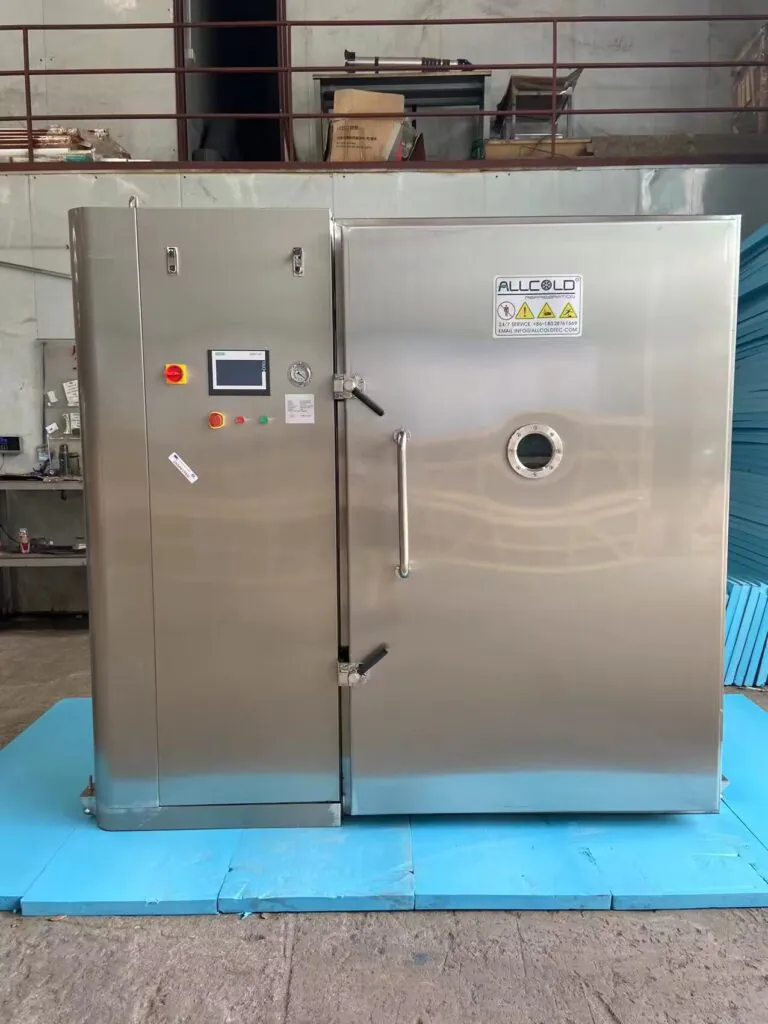
Application Paths for Bakery and Cooked Food
Bakery products and cooked food applications use different cooling cycles, loading formats, and configuration logic. We recommend vacuum cooling systems based on the actual product and workflow.
For Bakery
Bread and bakery product cooling
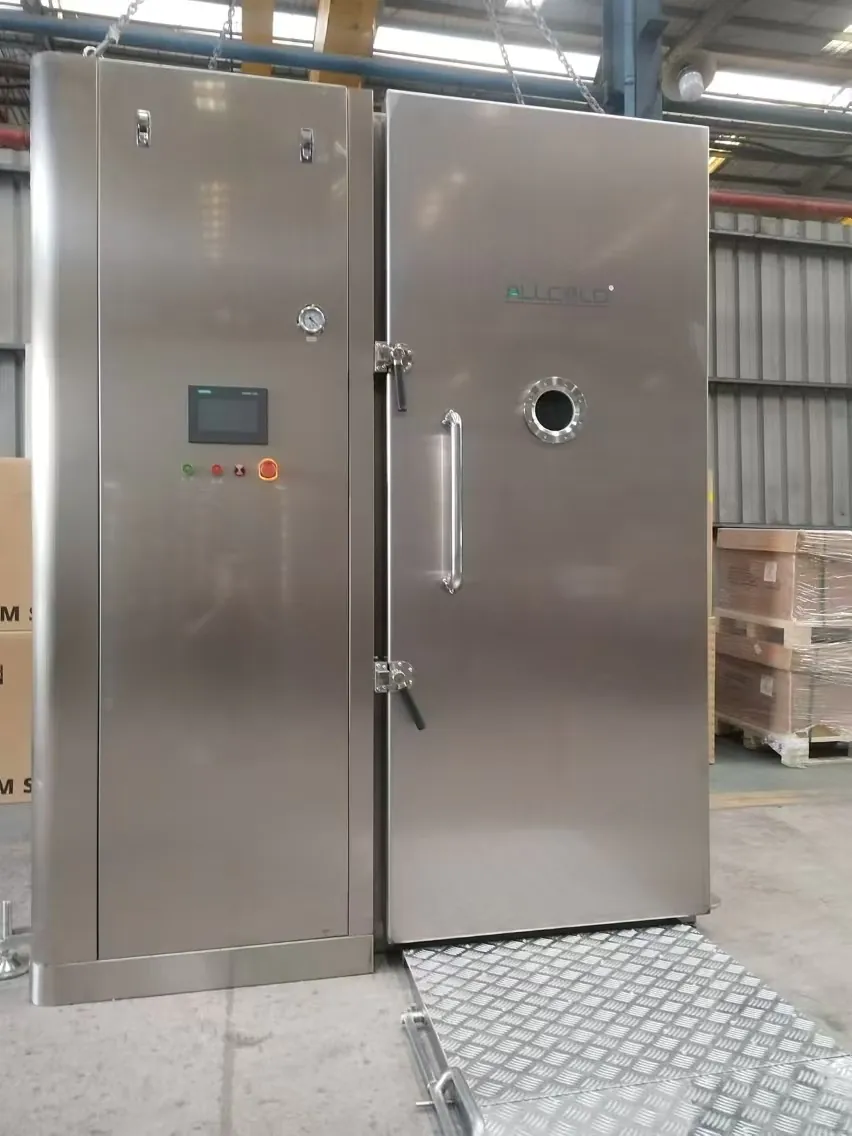
- ✓ Suitable for bread and selected bakery products
- ✓ Shorter cooling time after baking before slicing or packing
- ✓ Configuration can be discussed by trolley quantity and process requirement
- ✓ Suitable for bakery workflow that needs more controlled cooling after baking
For Cooked Food
Prepared meals and kitchen cooling
- ✓ Suitable for cooked rice, prepared meals, catering, and kitchen applications
- ✓ Fast post-cooking cooling before packing, storage, or distribution
- ✓ Configuration can be discussed by batch size, tray format, and workflow requirement
- ✓ Suitable for central kitchen and industrial food handling environments
Shared Advantages of Vacuum Cooling
Faster handling after baking or cooking
Supports more organized post-process handling
Configured according to product and loading format
Discussed by trays, trolleys, batch size, and project need
Need Help Choosing the Right Cooling Solution?
Tell us whether your project is for bakery products or cooked food, and share your tray, trolley, or batch requirement. We will help you evaluate a suitable vacuum cooling system.
Typical Configuration Logic and Common Applications
Bakery and cooked food applications use different cooling cycles, loading formats, and capacity logic. We recommend systems based on actual workflow, product type, and production requirements.
ALLCOLD Model Range
Bakery Vacuum Cooler Models
| Model | Reference Loading Capacity | Cooling Type | Typical Cooling Time | Typical Applications |
|---|---|---|---|---|
| AVCF-50 | 5 trays / cycle | Air cooled | 5–10 min / cycle | Bread, rolls, pastries and other bakery products |
| AVCF-100 | 1 trolley / cycle | Air cooled | 5–10 min / cycle | Bread, rolls, pastries and other bakery products |
| AVCF-120 | 1 trolley / cycle | Air cooled | 5–10 min / cycle | Bread, rolls, pastries and other bakery products |
| AVCF-140 | 1 trolley / cycle | Air cooled | 5–10 min / cycle | Bread, rolls, pastries and other bakery products |
| AVCF-200 | 1 trolley / cycle | Air cooled | 5–10 min / cycle | Bread, rolls, pastries and other bakery products |
| AVCF-320 | 2 trolleys / cycle | Air cooled | 5–10 min / cycle | Bread, rolls, pastries and other bakery products |
Typical bakery cooling cycle: 5-10 minutes, depending on bread type, load, and processing conditions.
Cooked Food Vacuum Cooler Models
| Model | Reference Loading Capacity | Cooling Type | Typical Cooling Time | Typical Applications |
|---|---|---|---|---|
| AVCF-100 | 1 trolley / cycle | Air cooled | 15–25 min / cycle | Prepared meals, cooked rice, meat, catering and central kitchens |
| AVCF-200 | 1 trolley / cycle | Air cooled | 15–25 min / cycle | Prepared meals, cooked rice, meat, catering and central kitchens |
| AVCF-300 | 2 trolleys / cycle | Air cooled | 15–25 min / cycle | Prepared meals, cooked rice, meat, catering and central kitchens |
| AVCF-400 | 2 trolleys / cycle | Air cooled | 15–25 min / cycle | Prepared meals, cooked rice, meat, catering and central kitchens |
Typical cooked food cooling cycle: 15-25 minutes, depending on the product and processing conditions.
Common discussion points:
• Customer trolley length, width, and overall loaded height
• Tray size, trolley quantity, and loading direction
• Product type, target temperature, and workflow requirements
• Door arrangement and final system configuration
Common Applications
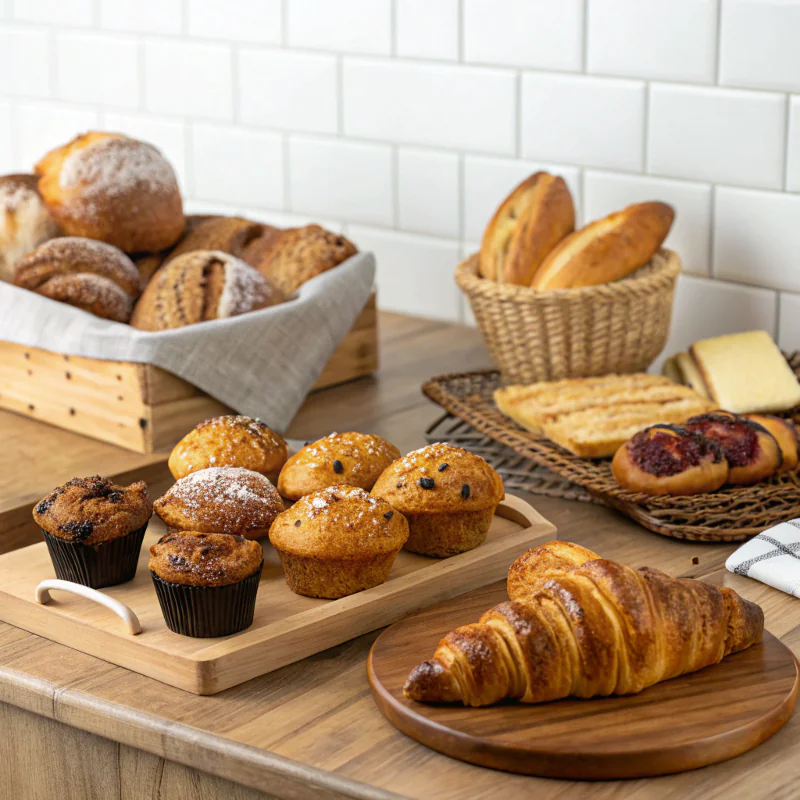
Bakery Products
Suitable for bread and selected bakery products that need shorter cooling time before slicing, packing, or further handling.
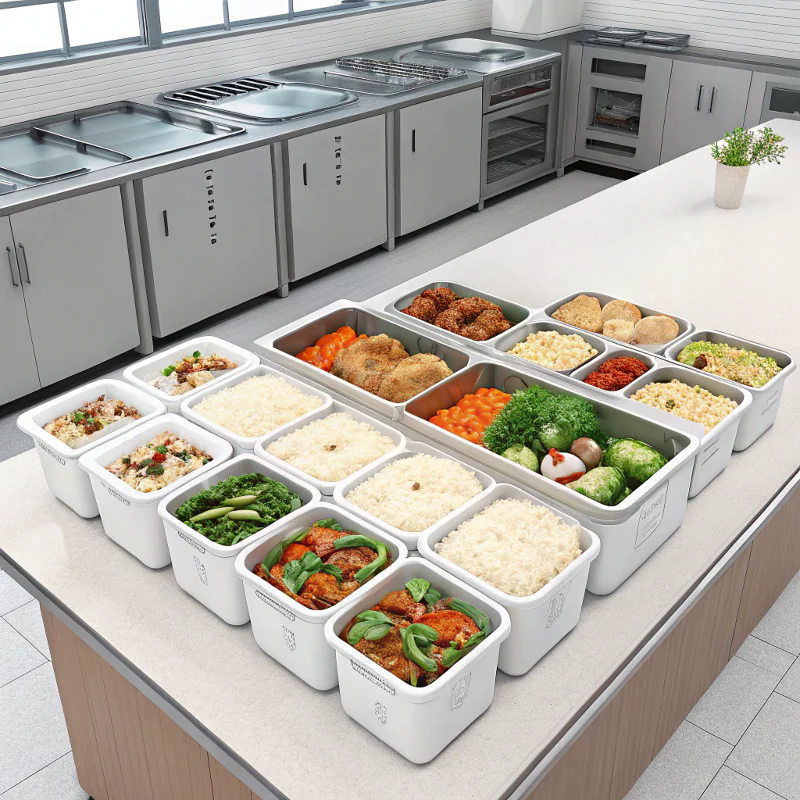
Ready Meals
Suitable for prepared meals that require faster post-cooking cooling before packing, storage, or distribution.
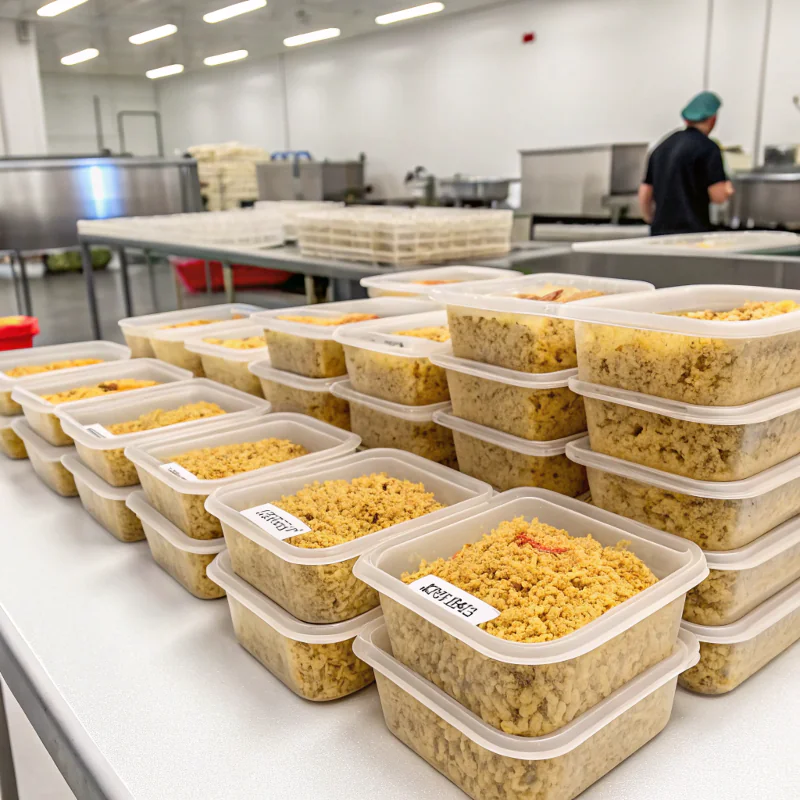
Pasta & Rice Products
Used for cooked pasta and rice applications where more controlled cooling is needed before the next handling step.
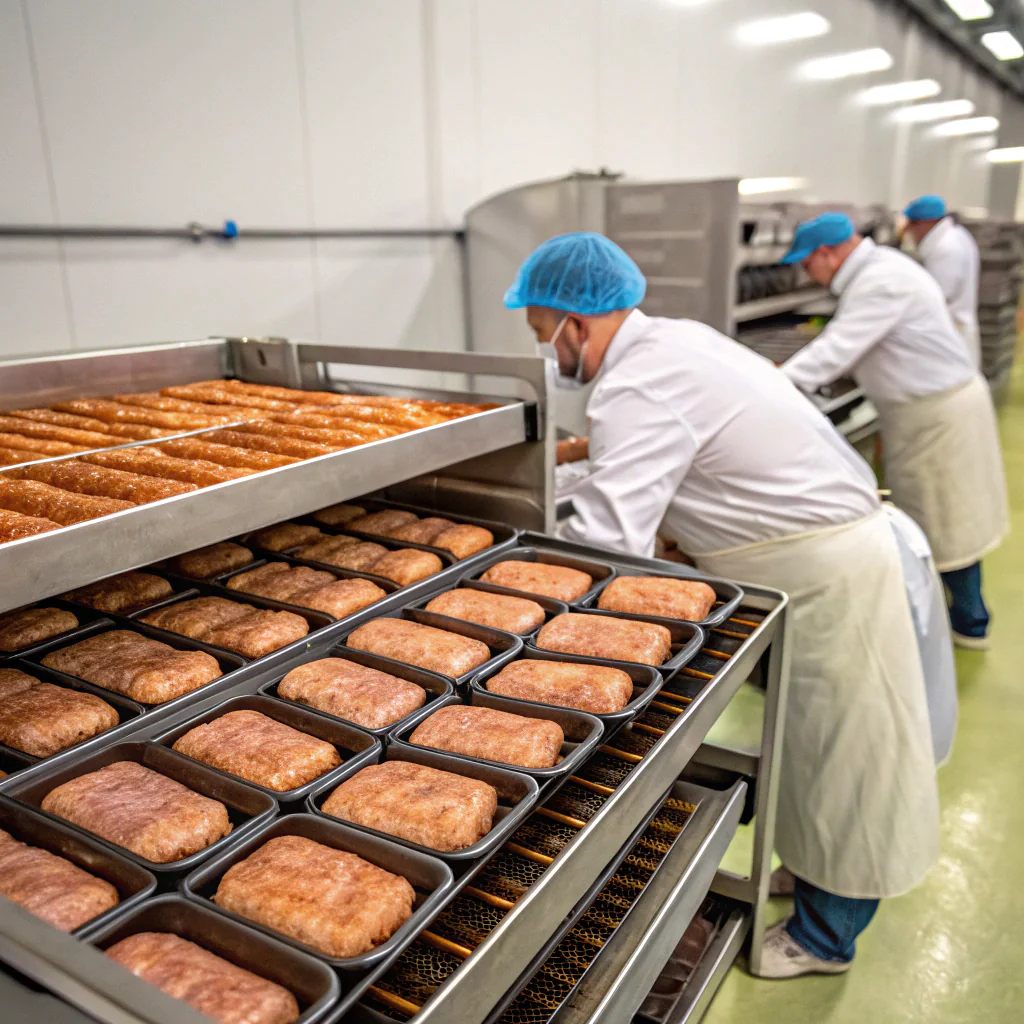
Cooked Meat & Poultry
Suitable for cooked meat and poultry processing where faster cooling is required before storage, packing, or distribution.
Frequently Asked Questions
For many bakery applications, the typical cooling time is around 5–10 minutes, depending on bread type, load, and processing conditions.
For many cooked food applications, the typical cooling cycle is around 15–25 minutes, depending on product type and workflow conditions.
Not always. Bakery projects are often discussed by trays, trolleys, or bread trolley quantity, while cooked food projects are often discussed by batch size, tray format, or workflow requirement.
Yes. Chamber size, door type, tray format, trolley structure, and other configuration details can be discussed according to the project.
For faster quotation, please share your product type, tray or trolley format, batch requirement, project country, and any basic layout or installation information.
How Allcold Configures a Project-Specific Vacuum Cooling System
Catalog models provide a useful starting point, but the chamber and cooling system are selected around the actual food, trolley or tray format, batch load, target temperature, production flow, and site utilities.
Product and Cooling Target
Bread is normally cooled to about 28°C, while cooked food is commonly cooled to around 15°C. The final cooling profile is confirmed against the product, recipe, inlet temperature, target temperature, and required handling step.
Trolley, Tray and Batch Geometry
The chamber is designed around the customer's actual trolley or pallet loading height. We review trolley length, width and height, tray spacing, loaded height, batch weight, and clearance for safe loading.
One, Two or Multiple Chambers
Real projects include single-trolley chambers, two-trolley chambers in single- or double-line layouts, and multiple independent chambers connected to a shared cooling plant for production continuity.
Cooling-System Options
Air-cooled systems are the catalog standard. Water-chiller and steam-ejector configurations can also be evaluated for specific products, capacities, ambient conditions, or available site utilities.
Door and Loading Direction
Hinged or sliding doors, manual or automatic operation, and the loading direction are selected according to the floor plan, trolley route, hygiene zoning, and available operating space.
Site Utilities and Installation
Before final engineering, we confirm voltage, phase and frequency, ambient temperature, water or steam availability where required, floor loading, equipment access, service space, and pipe distance.
Custom Vacuum Cooler Selection Process
A model number is selected only after the product, loading hardware, required throughput, cooling target, and installation conditions have been checked together.
Product and Temperature Data
- • Product type, recipe, structure and moisture characteristics
- • Temperature when entering the chamber
- • Required final temperature: normally about 28°C for bread or about 15°C for cooked food
Initial Cooling Profile
Allcold establishes the practical temperature range, pressure-control approach and preliminary cycle-time window for the actual product.
Trolley, Tray or Pallet Details
- • Trolley or pallet length × width × height
- • Actual loaded height, tray quantity and tray spacing
- • Batch weight and single-line or double-line loading preference
Custom Chamber Dimensions
The internal chamber size, clearance and trolley arrangement are designed around the customer's real loading hardware—not a fixed generic box size.
Throughput and Workflow
- • Kilograms per batch and required batches per hour
- • Number of trolleys entering each cycle
- • Upstream oven or cooker output and downstream packing speed
Model and Chamber Quantity
Allcold matches pump capacity and recommends a single-trolley, two-trolley or multiple independent-chamber solution to avoid a production bottleneck.
Layout and Utilities
- • Voltage, phase, frequency and ambient temperature
- • Available water, chiller or steam utilities where applicable
- • Floor loading, doorway access, service space and production direction
System and Installation Layout
Air-cooled, water-chiller or steam-ejector options are evaluated together with hinged or sliding doors, loading direction and equipment placement.
A Configuration That Can Be Quoted and Built
The final cycle is confirmed against the actual product, load and inlet/target temperatures; project-reference times are not treated as a universal guarantee.
What We Need for an Accurate Proposal
- ✓Product or recipe to be cooled
- ✓Inlet and target temperatures
- ✓Kg per batch and batches per hour
- ✓Trolley L × W × H and loaded height
- ✓Trays per trolley and tray spacing
- ✓Number and arrangement of trolleys
- ✓Power, water and steam availability
- ✓Door direction, layout and access limits
Why Cooling Time Is Project-Specific
Catalog guidance is typically 5–10 minutes. Quotation projects reviewed include approximately 160–250 kg per trolley and about 5–10 minutes, depending on bread type, load, inlet temperature, and the required target near 28°C.
Catalog guidance is typically 15–25 minutes. Quotation projects reviewed cover approximately 100–600 kg per cycle and about 15–35 minutes, depending on the food, batch arrangement, inlet temperature, and the required target near 15°C.
These figures are project references, not guaranteed results. Final cycle time is confirmed against the actual product, batch, loading format, and inlet/target temperatures.
Low moisture loss with a controlled cooling profile
Our internal tests show low moisture loss when the pressure curve is correctly controlled. Because recipes and structures differ, Allcold confirms the profile against the customer's actual product instead of publishing one universal percentage for every application.
Project Examples for Bakery and Cooked Food Cooling
Below are selected project examples showing how Allcold vacuum cooling systems are used in bakery production, prepared food handling, and central kitchen environments.
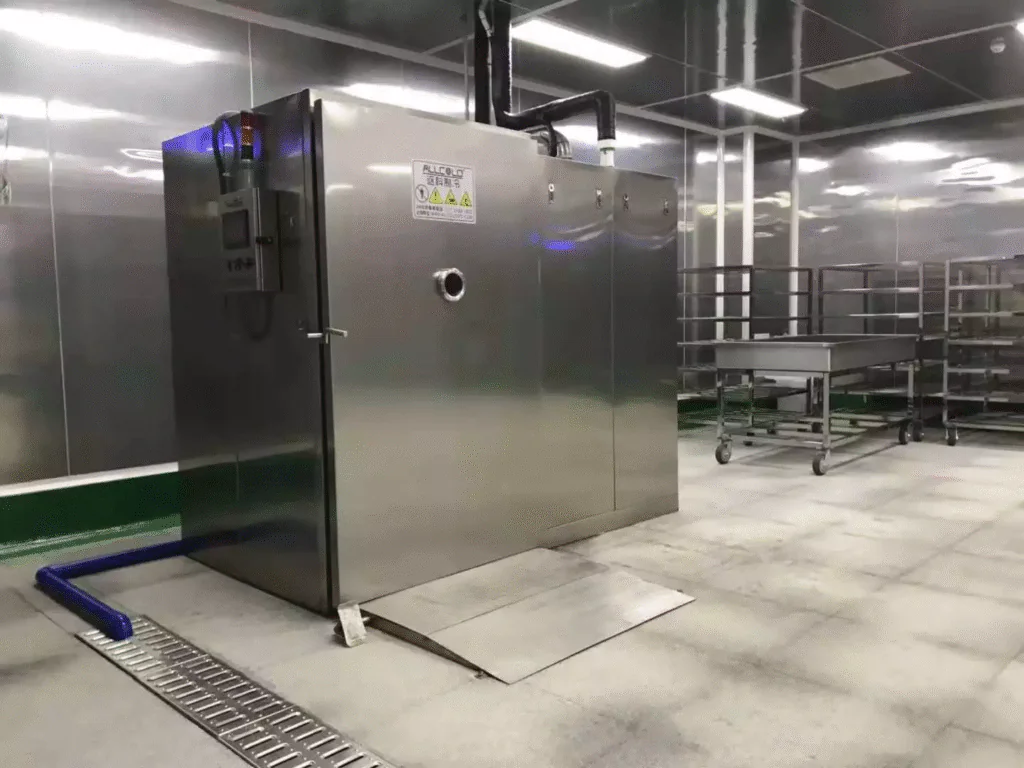
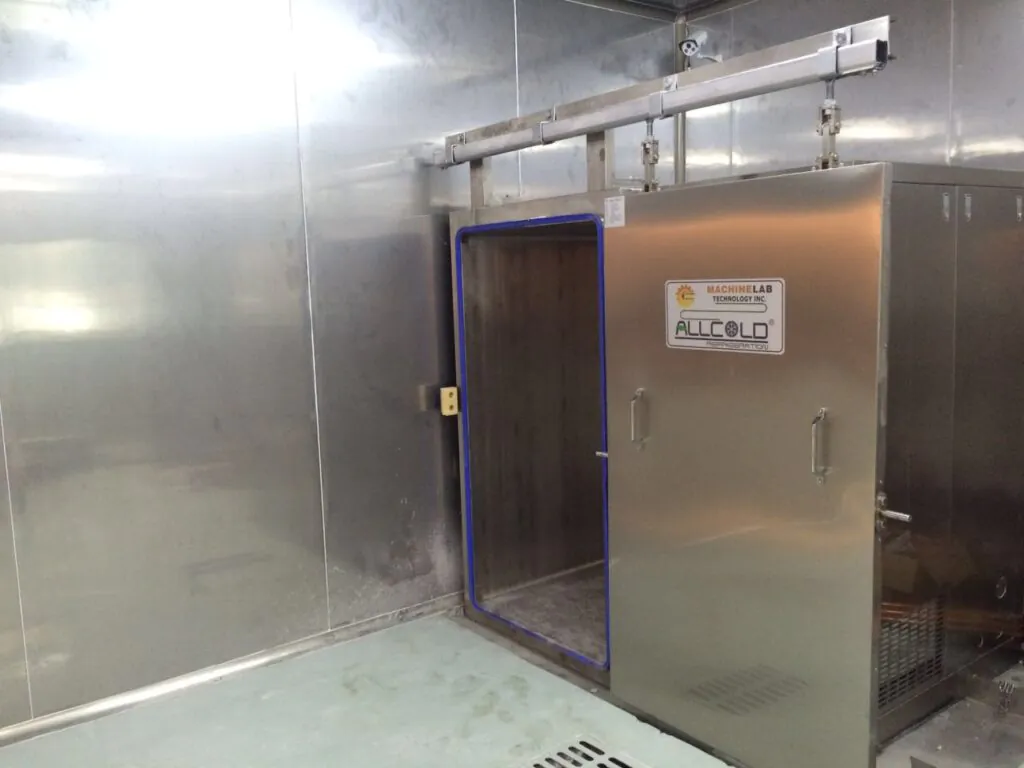
Industrial Bakery Installation
A vacuum cooling system installed in a bakery production environment to support shorter cooling time after baking and more consistent product handling before the next process step.
Application: Bread and bakery products
Focus: Faster post-baking cooling
Suitable for: Industrial bakery workflow
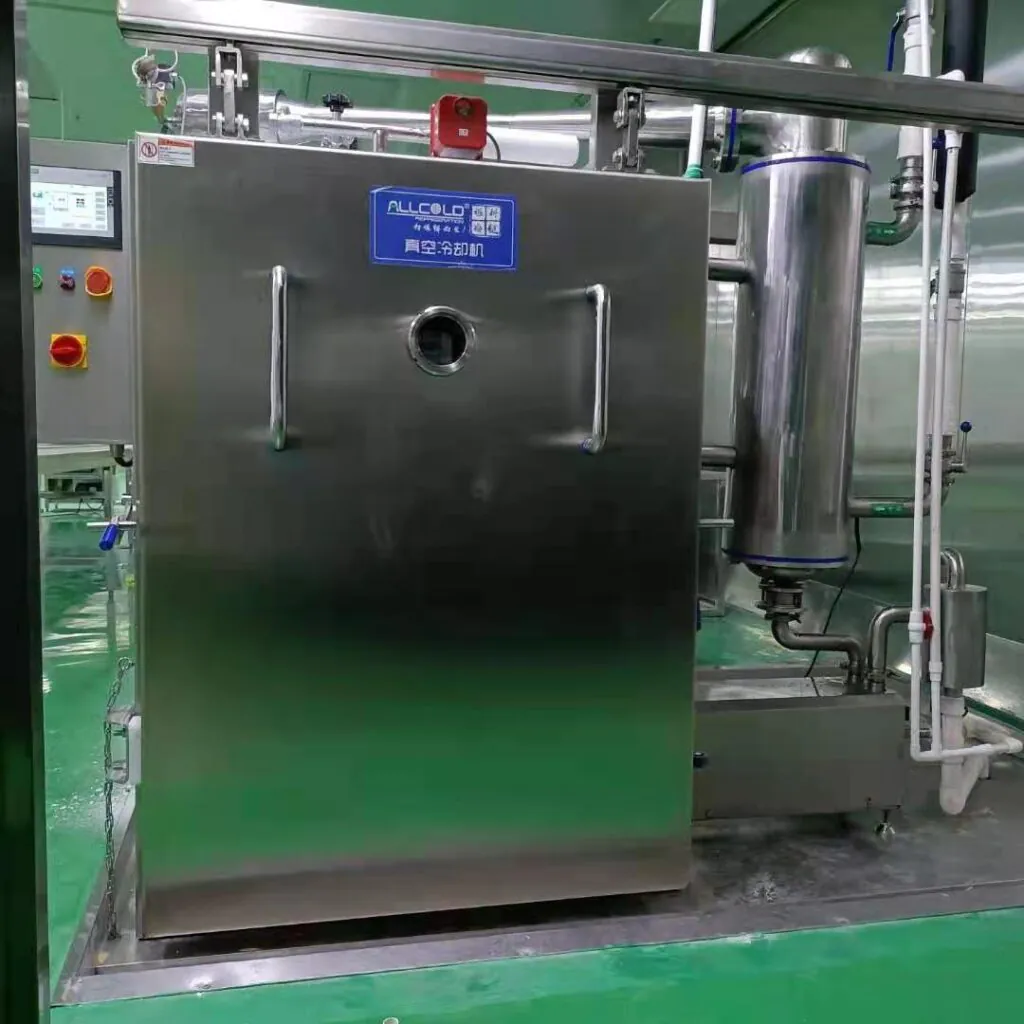
Ready Meal Production Line
A project designed for prepared meal handling, helping the customer cool products more efficiently before packing and improve workflow in the next production stage.
Application: Ready meals
Focus: Faster post-cooking cooling
Suitable for: Food processing and meal production
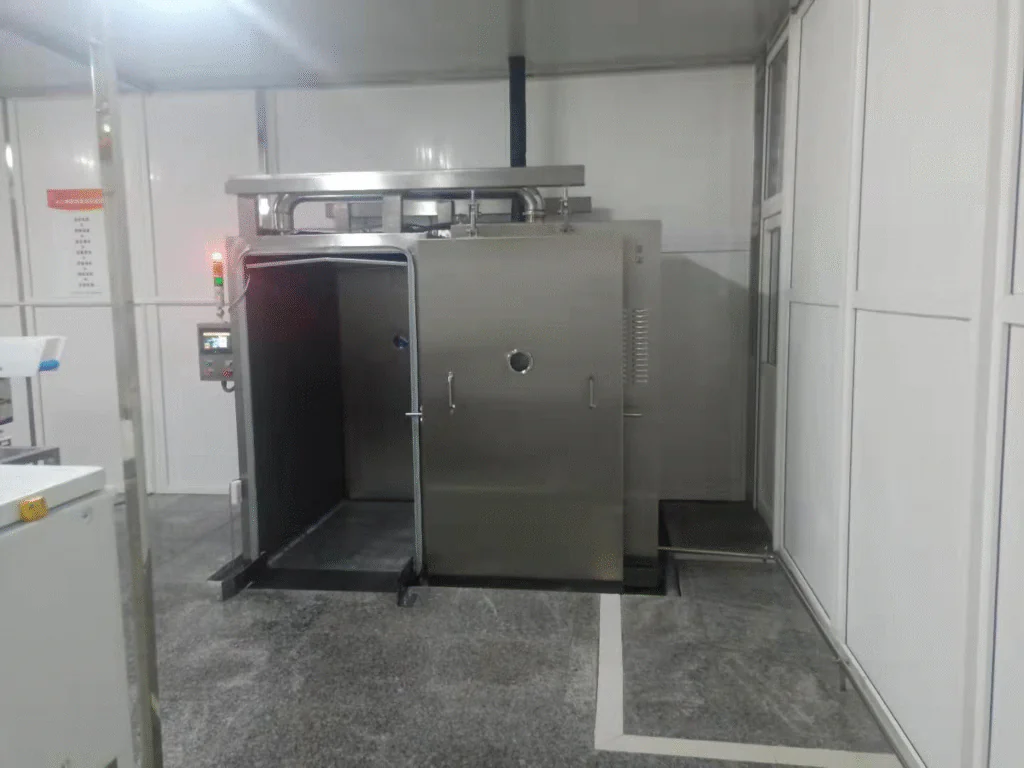
Hotel Chain Central Kitchen
A compact vacuum cooling solution used in a central kitchen environment to support batch handling, food preparation workflow, and more controlled cooling after cooking.
Application: Central kitchen meals
Focus: Batch handling and kitchen workflow
Suitable for: Hospitality and catering operations
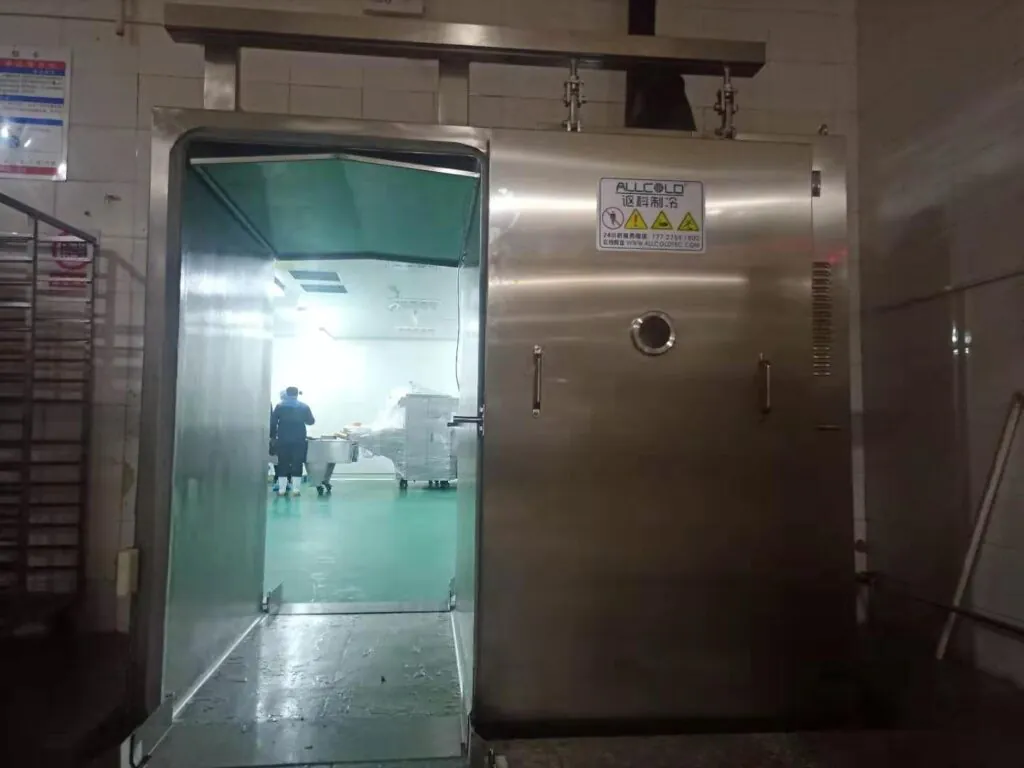
Artisan Bread Production
A smaller bakery vacuum cooling project designed for bread production that requires more controlled cooling before further handling or packaging.
Application: Artisan bread
Focus: Shorter cooling time after baking
Suitable for: Small and medium bakery operations
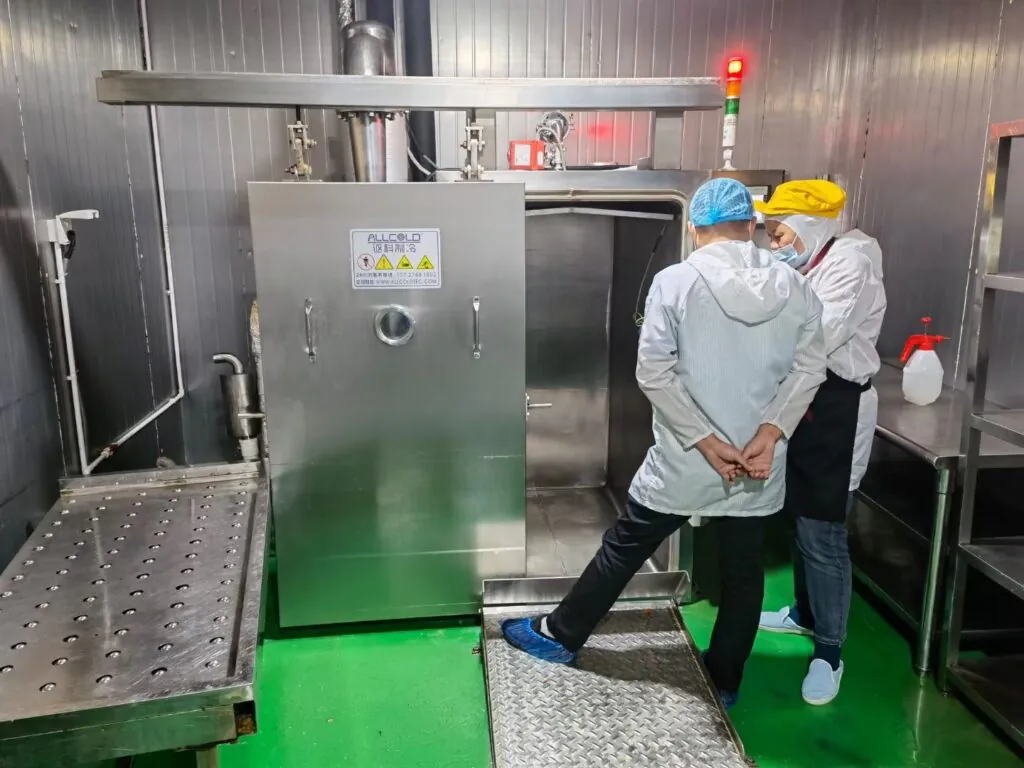
School Catering Facility
A vacuum cooling project for institutional food preparation where more controlled post-cooking cooling supports daily meal production and food handling.
Application: Institutional catering
Focus: Safe and efficient meal preparation workflow
Suitable for: School and group catering operations
Food Export Project
A larger vacuum cooling system used in a food export environment where cooked products require more stable cooling before packing and shipment.
Application: Cooked food export
Focus: Cooling before storage and shipment
Suitable for: Export-oriented food handling projects
Need a Bakery or Cooked Food Cooling Solution?
Tell us your product type, tray or trolley format, batch size, and project country. We will help you review a suitable vacuum cooling solution for your application.