
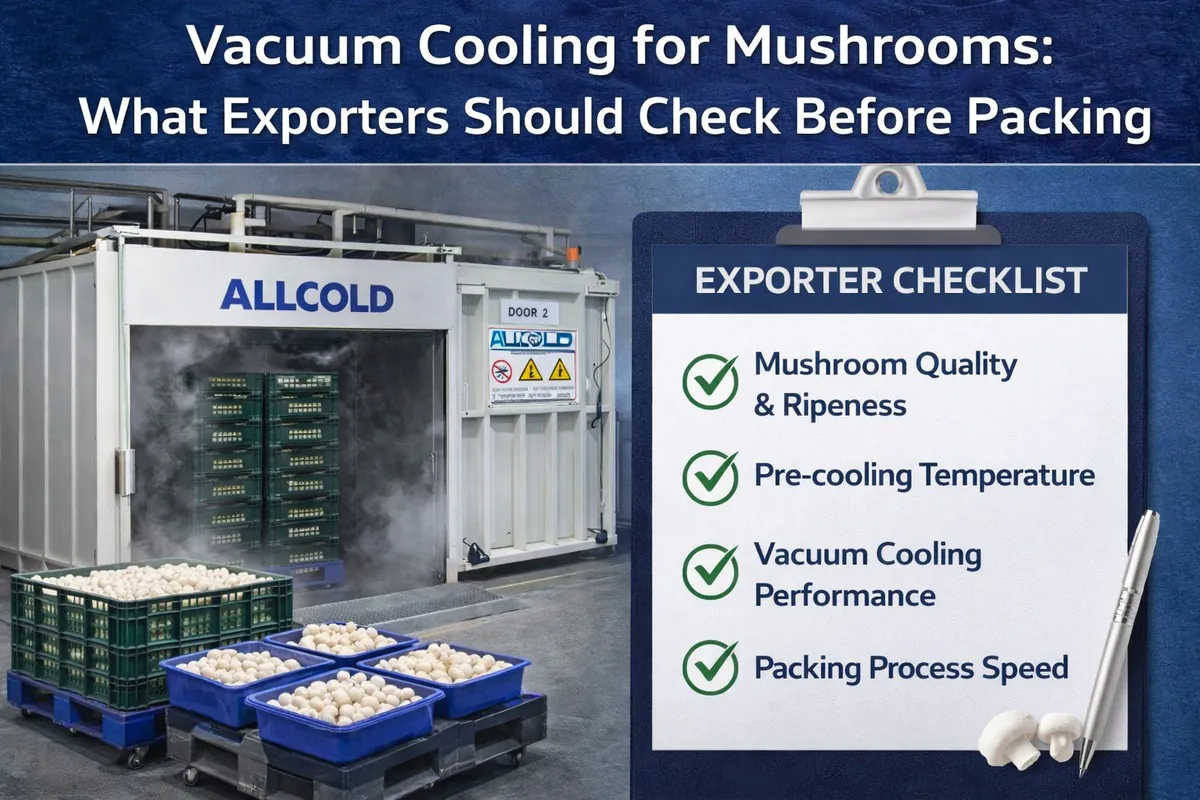
Vacuum Cooling for Mushrooms: What Exporters Should Check Before Packing
For most fresh mushroom export workflows, vacuum cooling before final packing is usually the safer choice when the goal is to remove field heat quickly, reduce later condensation risk, and stabilize product condition before cold storage and dispatch. But that does not mean every mushroom operation will get good results automatically.
From our factory-side perspective, the biggest mistake is not usually choosing the wrong machine first. It is assuming the cooling step will fix a weak harvest-to-packing workflow. It will not. If timing, staging, packing readiness, or moisture control are already unstable, vacuum cooling becomes a stressed step instead of a protective one.
Many mushroom exporters think the main risk starts in transit. We do not agree. In most export projects, the first serious quality risks appear before packing is finalized, before pallets are wrapped, and often before the cold room has had any chance to stabilize the product.
We have seen this mistake many times. A buyer improves cartons, upgrades the packing room, or secures better refrigerated transport, but still gets weaker results because the mushrooms entered packing with too much heat, too much waiting time, or inconsistent product condition.
If you export fresh mushrooms, the real question is not only whether vacuum cooling works. The better question is what you should check before packing so that the cooling step actually protects shelf life, appearance, and export consistency.
That distinction matters because a technically correct cooling machine can still deliver weak commercial results if the pre-packing workflow is badly controlled.
Most Mushroom Export Problems Begin with Timing, Not with the Machine
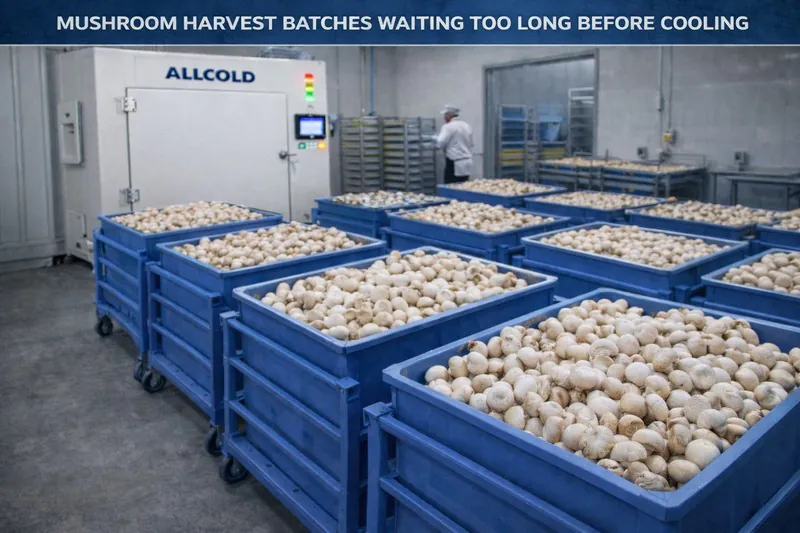
One of the clearest patterns we see in mushroom projects is this: quality loss often starts with delay, not with equipment failure.
A buyer may say:
- the mushrooms were harvested correctly
- the cooler capacity looks sufficient
- the cartons meet export requirements
- the cold room is already available
But those facts do not answer the real question: how long are the mushrooms waiting before the temperature is actually pulled down?
In our experience, mushrooms are one of the easiest products to mishandle through delay. They may still look acceptable during packing, but the commercial damage often appears later as:
- reduced shelf-life confidence
- softer texture on arrival
- higher condensation risk in the packed load
- darker appearance or weaker visual freshness
- more disputes about whether the issue came from packing, cooling, or transport
That is why we usually tell exporters to stop evaluating cooling as an isolated machine performance issue. The first thing to review is timing discipline between harvest, sorting, cooling, and packing.
If the product sits too long in a warm or unstable condition before cooling, the workflow has already lost part of the quality protection that export buyers are paying for.
Exporters Should Define the Pre-Packing Window Very Clearly
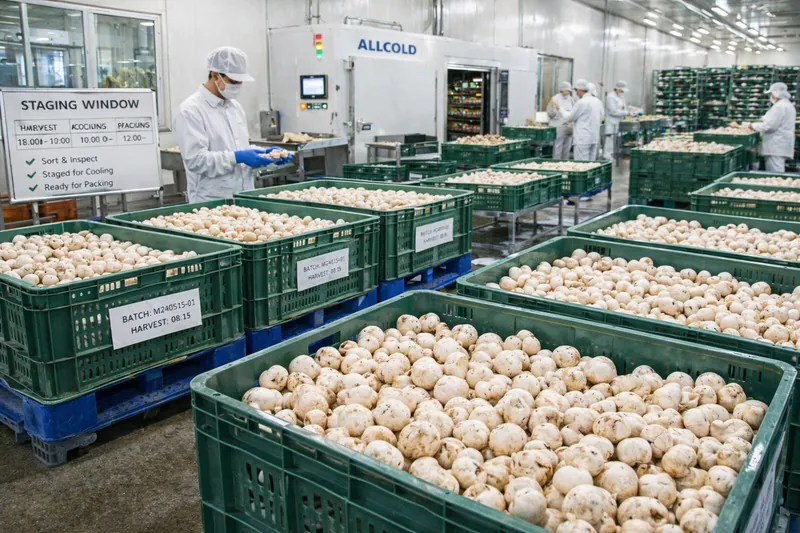
Many mushroom operations talk about daily output, but that is not the number we care about first.
What we usually want to know is:
- how long mushrooms wait after harvest
- how long they wait after sorting
- whether cooling happens before or after some packing steps
- how quickly cooled mushrooms move into final packing or cold storage
- how much product reaches the packing line during the busiest hour
We call this the pre-packing window because it is the period where a lot of quality risk accumulates quietly.
From our side, mushroom exporters often underestimate this stage because the product may still look visually acceptable in the room. But visually acceptable is not the same as export-ready. A shipment does not fail only because something looks obviously damaged. It also fails when the product arrives with less margin than the buyer expected.
That is why we prefer exporters to define the workflow as a sequence, not as departments:
- Harvest
- Transfer to sorting or grading
- Temporary staging
- Vacuum cooling
- Packing or final packing preparation
- Cold storage
- Dispatch loading
This kind of mapping usually reveals where time is being lost, where labor handoff is weak, and where the cooling step is too late to deliver its full value.
If you are still deciding where the cooling system should sit in the line, our article on what to check before installing a vacuum cooler is worth reviewing, because installation logic and process logic usually fail for the same reason: the workflow was never clearly mapped before the equipment decision.
Cooling Before Packing Is Often Better, but Only If the Workflow Supports It
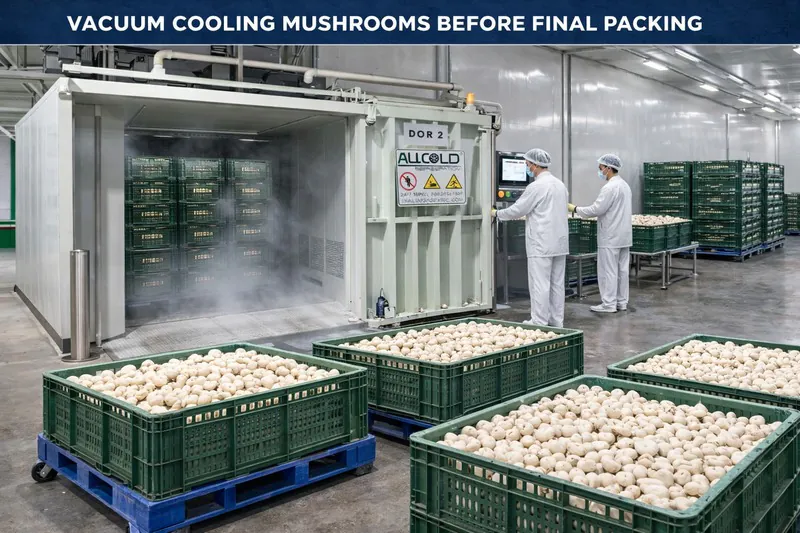
This is where buyers often want a simple yes-or-no answer: should mushrooms be vacuum cooled before packing?
In our view, cooling before packing is often the stronger option, but only if the workflow around it is controlled.
Why do we say that carefully? Because this decision changes more than temperature.
Cooling before final packing can help exporters by:
- reducing heat load before the product is enclosed
- lowering condensation risk later in the package
- making the packed product more stable for cold storage and dispatch
- giving the operation a clearer control point before final packing decisions are locked in
But it can also create problems if:
- the cooled product waits too long before packing
- the packing team is not ready when product exits the cooler
- the transfer route after cooling is too long or poorly controlled
- the packing format traps moisture too aggressively for the actual product condition
From our factory-side perspective, the real decision is not simply “before packing” or “after packing.” The real decision is whether the full pre-packing workflow can support the cooling step without creating new delays.
That is also why a generic vacuum cooler buyer’s guide is only a starting point. Mushroom exporters need to review workflow fit, not only machine features.
Should Mushrooms Be Vacuum Cooled Before or After Packing?
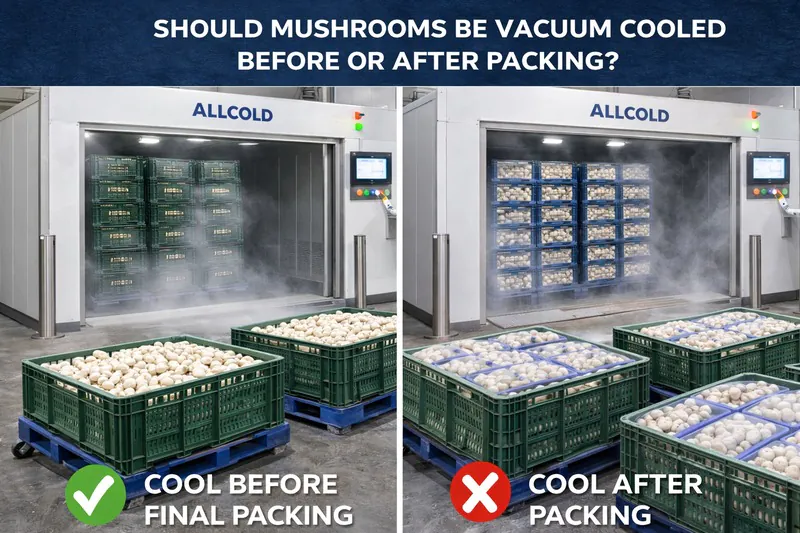
This is one of the most common search questions, and it deserves a direct answer.
In most export-oriented mushroom workflows, cooling before final packing is the better option because it allows the product to lose heat earlier, lowers the chance of trapping instability inside the final pack, and gives the exporter a clearer control point before cold storage and dispatch.
But that is not a universal rule. Cooling before packing only works well if:
- the product moves quickly into the next step after cooling
- the packing team is ready when the batch exits
- the transfer route stays controlled and hygienic
- the packaging format is matched to the cooled product condition
Cooling after packing may still be discussed in some operations, but exporters should be cautious if:
- the package design slows stabilization
- moisture management inside the pack is already sensitive
- the workflow creates longer hold time before final cold storage
- the operation cannot clearly control condensation risk
From our side, we would frame the decision this way: before packing is usually better for mushrooms when the workflow is disciplined, but it is not better if the product simply leaves the cooler and waits again.
That is why the right decision is not only a cooling decision. It is a workflow decision.
Throughput for Mushrooms Should Be Calculated by Peak Packing Pressure, Not by Daily Tonnage
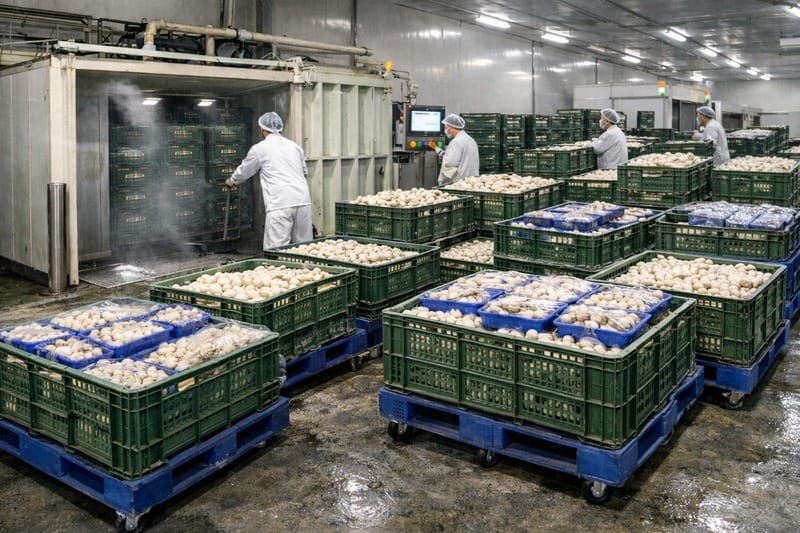
This is another point where exporters can make a very expensive mistake.
A project may say it handles 5 tons or 8 tons of mushrooms per day, but that number alone tells us very little about whether the cooling workflow is actually under control.
What we need to know is:
- how much product arrives during the busiest hour
- whether harvesting is evenly distributed or burst-based
- how many batches compete for the same cooling slot
- how much queue time is acceptable before quality margin starts shrinking
- whether dispatch deadlines create compression at the end of the shift
We have seen operations that looked fine on paper because the daily number was moderate, but still suffered in practice because too much product arrived in a short period. That is where cooling stops being a quality tool and starts becoming a bottleneck.
We usually frame it like this:
| Planning metric | Weak approach | Better approach |
|---|---|---|
| Capacity basis | Total daily tonnage | Peak-hour mushroom volume before packing |
| Cooling logic | Average batch estimate | Real batch rhythm under packing pressure |
| Workflow assumption | Product will flow evenly | Product may arrive in bursts and wait |
| Project result | Looks acceptable on paper | Matches the hardest operating window |
If exporters remember one planning point from this article, it should be this: do not size the mushroom cooling step by daily output alone. Size it by the period when packing pressure is highest and delay is most dangerous.
Packaging Format Can Protect the Shipment or Quietly Undermine It
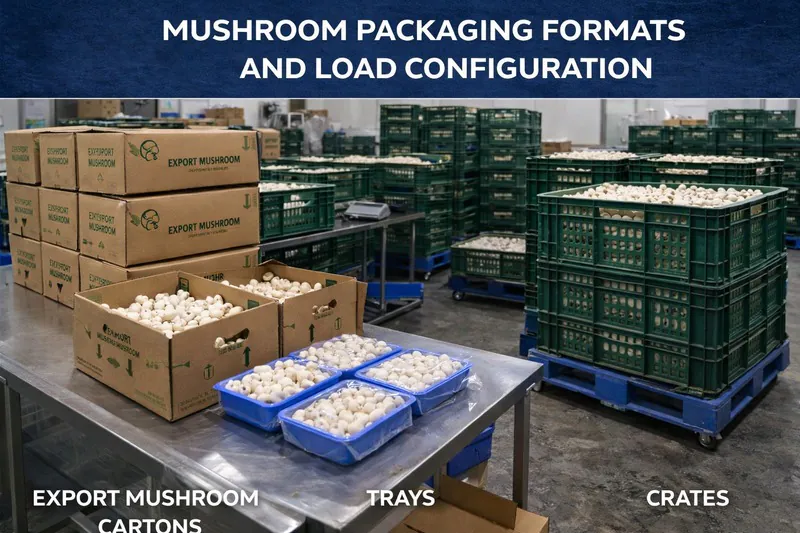
Some exporters think cooling and packaging are separate decisions. In mushroom export, they are tightly connected.
The product may be similar, but packaging behavior can change the outcome significantly. Exporters should check:
- tray format
- venting condition
- liner use
- carton density
- pallet wrapping pattern
- stack compression risk
- how long the packed product sits before cold-room transfer
From our side, this is one of the areas where commercial disputes become frustrating. A buyer may believe the cooling system underperformed, while the deeper issue was that the packaging format trapped moisture or slowed stabilization after cooling.
That does not mean the packaging was wrong in general. It means the cooling logic and packaging logic were not evaluated together.
This is especially important if you are trying to compare quotations or project options only by equipment price. Our article on how much a vegetable vacuum cooler really costs focuses on produce, but the same lesson applies here too: if the quotation does not force you to define the real operating conditions, it may not be helping you make a safe buying decision.
Hygiene and Condensation Control Matter More Than Many Exporters Expect
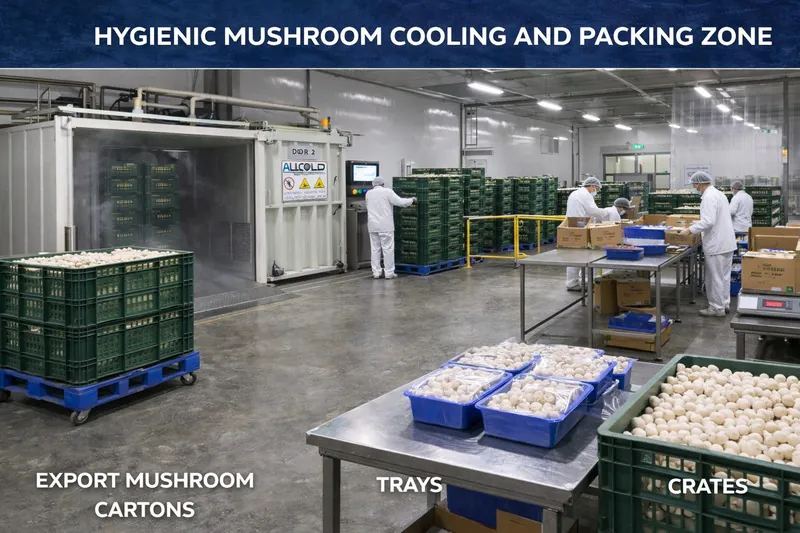
For mushrooms, cooling is not only about lowering temperature. It is also about reducing instability before the product enters a tightly controlled export chain.
We are careful not to make exaggerated claims here, but one point is very clear from both practice and food-handling guidance: unstable time-and-temperature control creates avoidable quality and handling risk.123
That means exporters should pay attention to:
- how clean the transfer route is after cooling
- how long the cooled product stays exposed before packing or storage
- whether worker movement crosses clean and less-clean zones unnecessarily
- whether condensation risk is being created by the sequence of cooling, packing, and holding
- whether the operation is trying to move too fast at the wrong point in the workflow
In our experience, mushroom export teams sometimes underestimate condensation because it does not always appear as a dramatic failure at once. But once moisture management becomes unstable inside the packed load, the exporter has less room to protect quality during the rest of the journey.
If a buyer wants to think beyond machine purchase and into long-term operating discipline, our article on how to reduce the energy costs of your vacuum cooler is also relevant, because energy efficiency and stable process control usually improve together when the workflow is designed properly.
A Good Mushroom Cooling Supplier Should Ask About Workflow, Not Only About Capacity
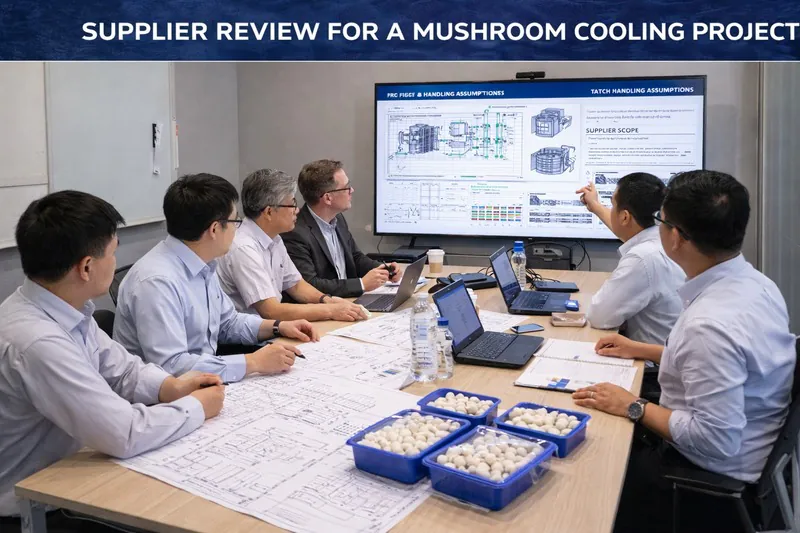
A supplier who only asks for daily tonnage and target temperature is not asking enough.
For mushroom export projects, we believe a serious supplier should also ask:
- what mushroom type is being handled
- how product is harvested and transferred
- whether cooling happens before or after key packing steps
- what the busiest hourly load looks like
- what the packaging format is
- how long the route is from cooling to packing or cold storage
- what site hygiene and utility constraints exist
- what service support is expected during export season
From our side, a supplier who asks harder questions is usually protecting the project, not making it unnecessarily complicated.
That is important because mushroom export projects can look simple in the quotation stage. But they stop being simple very quickly if the workflow assumptions were incomplete.
What Exporters Should Confirm Before Finalizing the Project
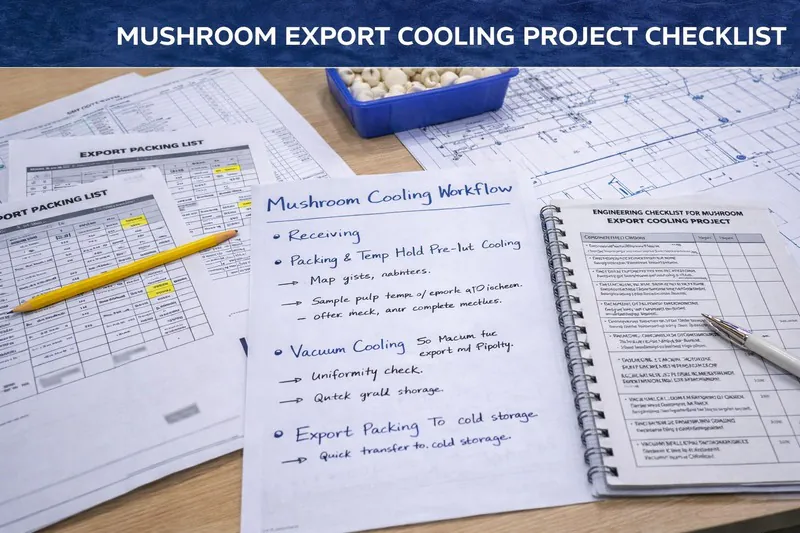
Before moving forward, we recommend locking down a practical checklist.
Mushroom Export Cooling Checklist
- harvest-to-cooling timing is clearly defined
- pre-packing window is measured, not guessed
- peak-hour throughput is confirmed
- cooling position in the workflow is fixed
- packing-team readiness after cooling is reviewed
- packaging format is checked together with cooling logic
- hygiene and condensation risks are reviewed
- cold-room transfer route is controlled
- utility and installation conditions are verified
- supplier scope and service expectations are documented
If this checklist is still vague, the project usually is too.
FAQ
Is vacuum cooling suitable for all mushrooms?
Not automatically. Suitability depends on the mushroom type, harvest condition, batch handling method, packaging logic, and how quickly the product moves through the pre-packing workflow. The machine may be suitable while the workflow is not.
Should mushrooms be cooled before final packing?
In many export workflows, yes. Cooling before final packing is often the better option because it helps remove heat earlier and reduces the chance of instability being trapped inside the final package. But it only works well if the product moves quickly and cleanly into packing after cooling.
What usually causes condensation problems after mushroom packing?
In our experience, condensation problems usually come from workflow mismatch rather than one single cause. Common triggers include late cooling, unstable product temperature before packing, moisture-trapping packaging choices, and long waiting time between cooling, packing, and cold storage.
What is the biggest mistake mushroom exporters make when planning cooling?
The most common mistake is sizing or buying the cooling step around daily output alone. The real pressure usually appears in the busiest pre-packing window, where delay, queueing, and packing readiness matter more than average daily tonnage.
Final Thoughts
If we had to reduce this whole article to one message, it would be this:
For mushroom export, vacuum cooling works best when it protects the pre-packing workflow, not when it is treated as a last-minute rescue step.
We have seen exporters focus too much on temperature reduction alone and not enough on timing discipline, packing sequence, condensation risk, and peak-hour pressure. That is usually where quality margin is quietly lost.
From our factory-side perspective, the best mushroom cooling projects are not only about machine size. They are about whether the product reaches packing in a controlled, stable, export-ready condition.
If you send us your mushroom type, batch size, packaging format, peak-hour volume, and current cooling-to-packing sequence, we can help you review the main workflow risks before you compare suppliers or finalize the project.
Footnotes
FAO guidance on post-harvest handling and loss prevention: https://www.fao.org/3/x5055e/x5055e00.htm ↩
UC Davis postharvest resources and produce handling references: https://postharvest.ucdavis.edu/ ↩
FAO combined methods guidance for post-harvest handling and preservation: https://www.fao.org/3/y4893e/y4893e00.htm ↩
Looking for the right vacuum cooler for your operation?
Allcold engineers work with packhouses and exporters to spec the right system for your product, volume, and site conditions.

Mila
You May Also Like
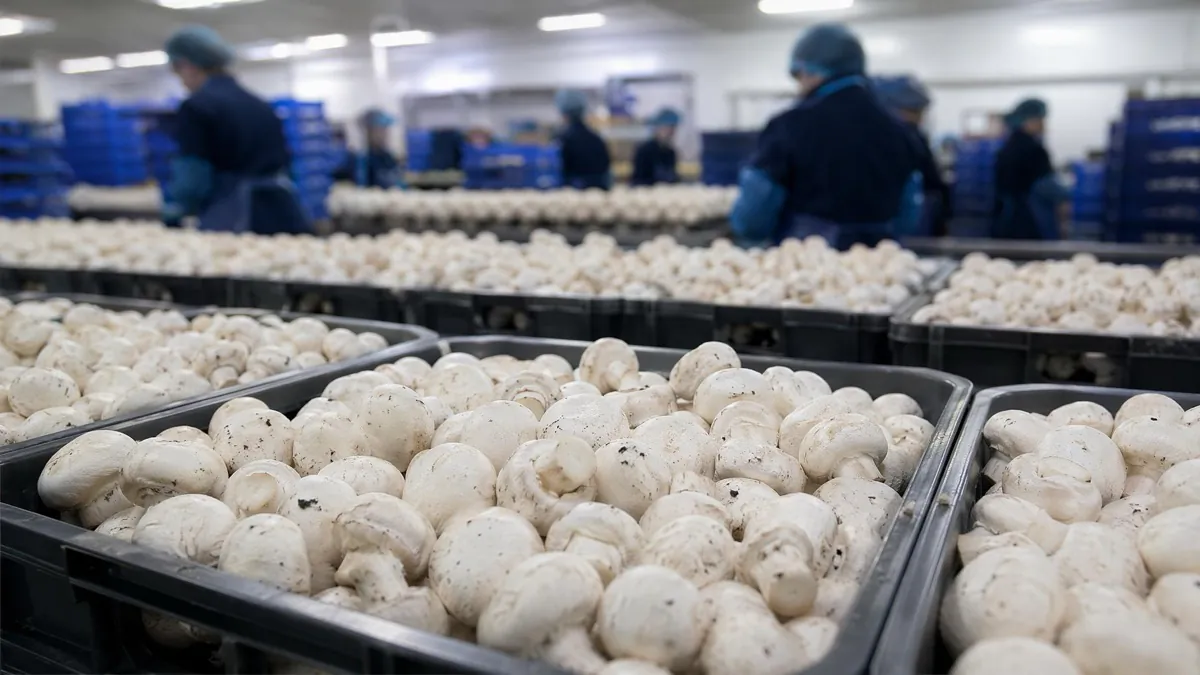
Why Mushroom Exporters Lose the Most Shelf Life in the First Hour After Harvest
The complaint usually sounds the same: the mushrooms looked fine at packing, temperature was controlled during transport, and the cold
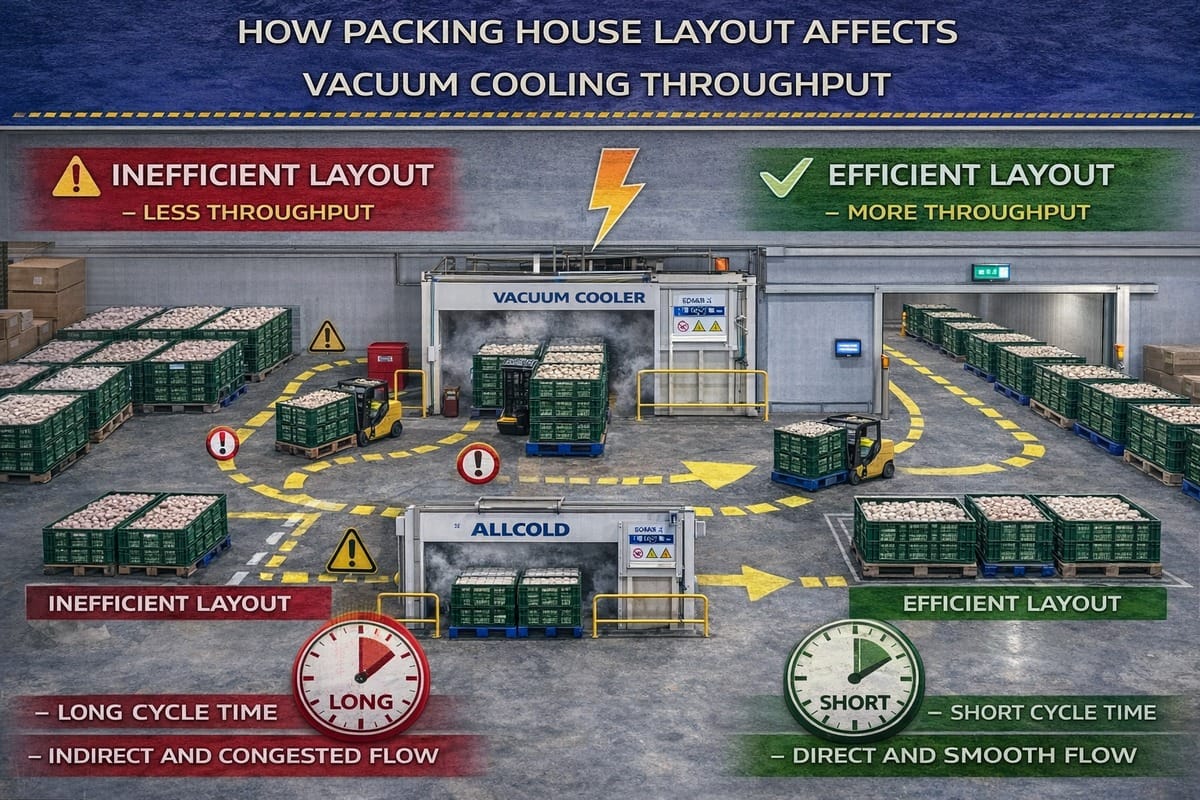
How Packing House Layout Affects Vacuum Cooling Throughput
Learn how packing house layout affects vacuum cooling throughput, including staging space, forklift flow, cold-room connection, and peak-hour pallet movement.