ALLCOLD · MULTI-SITE COOLING & EQUIPMENT PLANNING
Sharing one cooler across two growing regions can look efficient on an annual production plan. The harder question is whether it can leave the first farm and be ready at the second before the next harvest needs cooling.
A truck booking is not a relocation plan. Between the last batch at one farm and the first batch at the next, the machine may need shutdown preparation, disconnection, loading, transport, installation and checks before returning to production. The receiving site also needs more than an empty patch of ground.
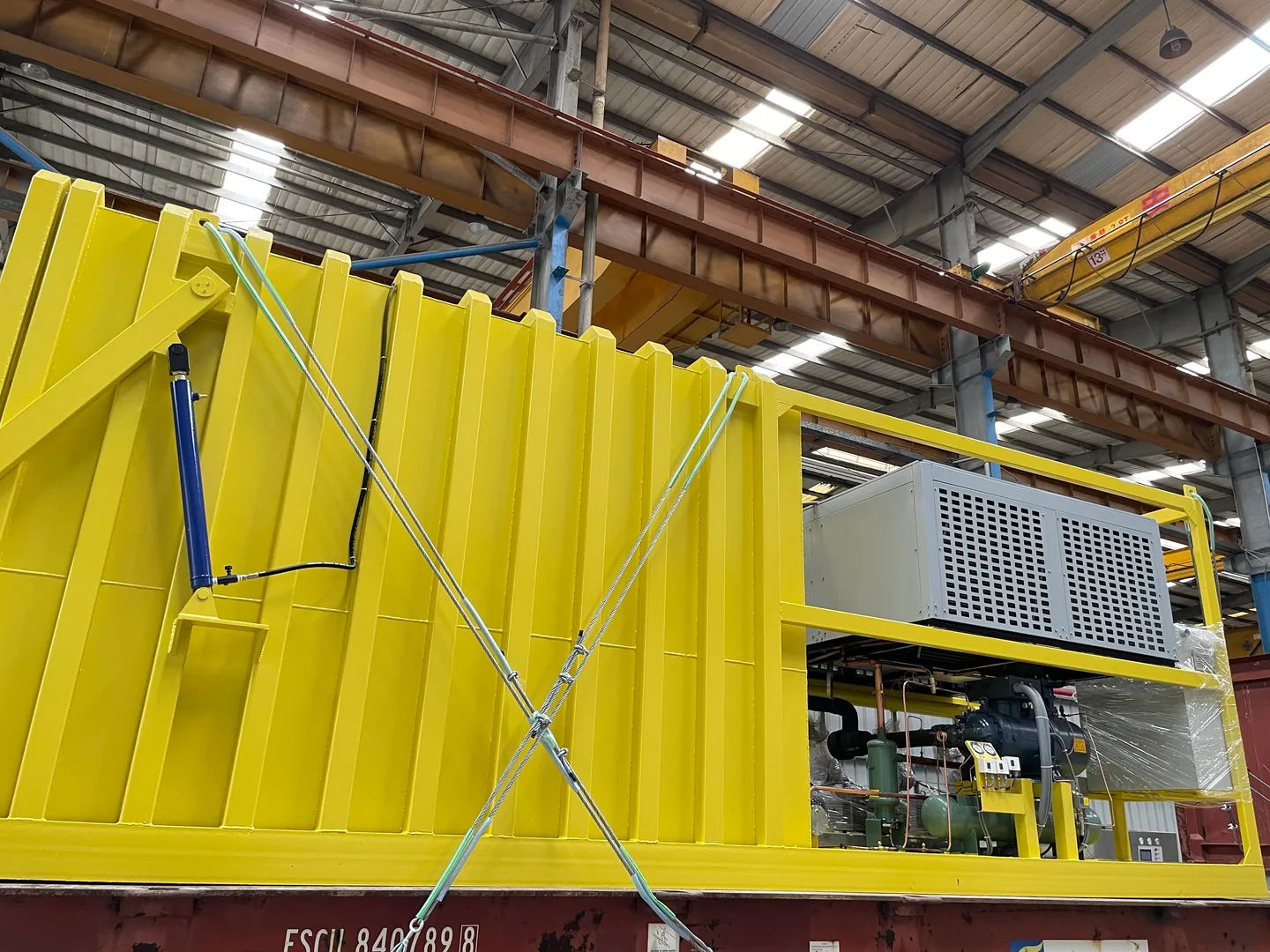
Can a vacuum cooler be moved between farms? Potentially, yes—but only when the specific machine, transport arrangement and both sites have been reviewed for that use. Treat seasonal relocation as a project requirement before ordering. A machine that can be delivered once is not automatically suitable for repeated moves, and a container-style enclosure does not establish road mobility or freight-container approval.
Start with the gap between harvests—not the annual tonnes
Two farms can have enough combined volume to keep a cooler busy for much of the year and still be poor candidates for sharing it. If their critical cooling periods overlap, the same machine cannot cover both locations simultaneously.
Build the calendar around the last required cooling batch at Site A and the first required cooling batch at Site B. Count backward from the second event. The useful milestone is not “truck arrives”; it is “the installed system is ready to cool the required product.”
A planning example: four free days may not be enough
Suppose a buyer has a four-day gap between sites. Their provisional schedule allows one day for shutdown and dispatch preparation, two for transport, one for reconnection, one for checks and a representative loaded run, and one contingency day.
That is a six-day sequential plan against a four-day window: a two-day shortfall. A cheaper truck does not solve the scheduling problem. The buyer needs an earlier release, a different work sequence confirmed by the responsible teams, or temporary cooling cover.
Illustrative scheduling assumptions only—not Allcold service times. Actual duration depends on the configuration, route, site readiness and personnel. Some work can run in parallel; reserve time for the tasks that cannot.
Test the plan against a late harvest finish and a transport delay, not just the preferred dates. Where the seasons overlap, compare fixed cooling at each location, temporary third-party cooling, or a different one-unit versus two-unit arrangement.
“Transportable,” “seasonally relocatable” and “mobile” are different requirements
Use a description of the intended operation instead of relying on a label in a quotation. These are useful purchasing distinctions, not formal equipment classifications:
| Intended use | What the buyer means | What needs confirmation |
|---|---|---|
| One-time installation | Delivered to a site and expected to stay there. | Initial shipment, unloading, positioning and installation. |
| Seasonal relocation | Shut down, move and reinstall between growing seasons. | Repeatable preparation, approved handling, service disconnections and restart work at every destination. |
| Frequent mobile use | Repeated short-interval moves, potentially with a dedicated vehicle or trailer. | A system and transport platform specifically reviewed for the proposed duty; operating while stationary versus in transit must be distinguished. |
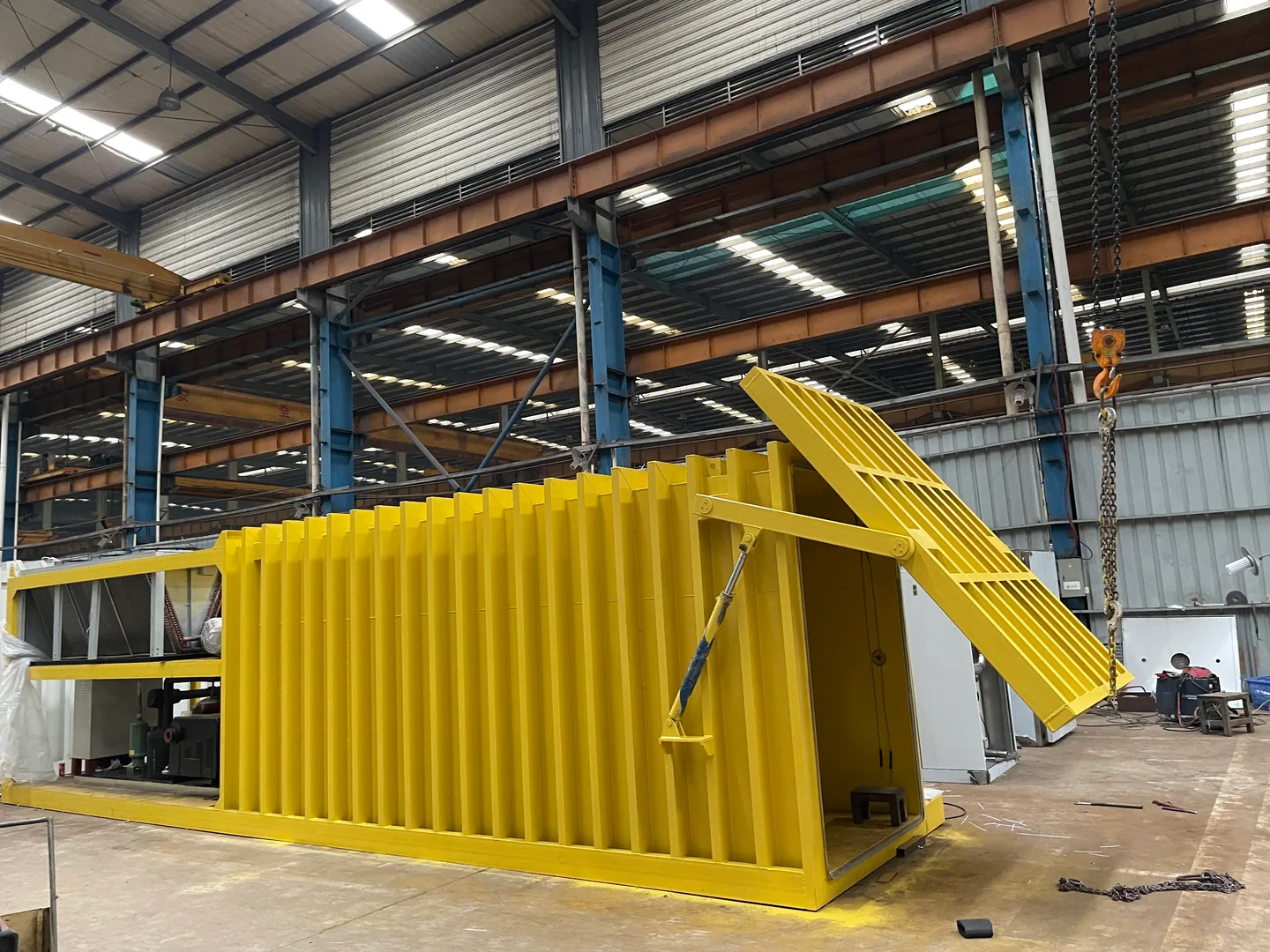
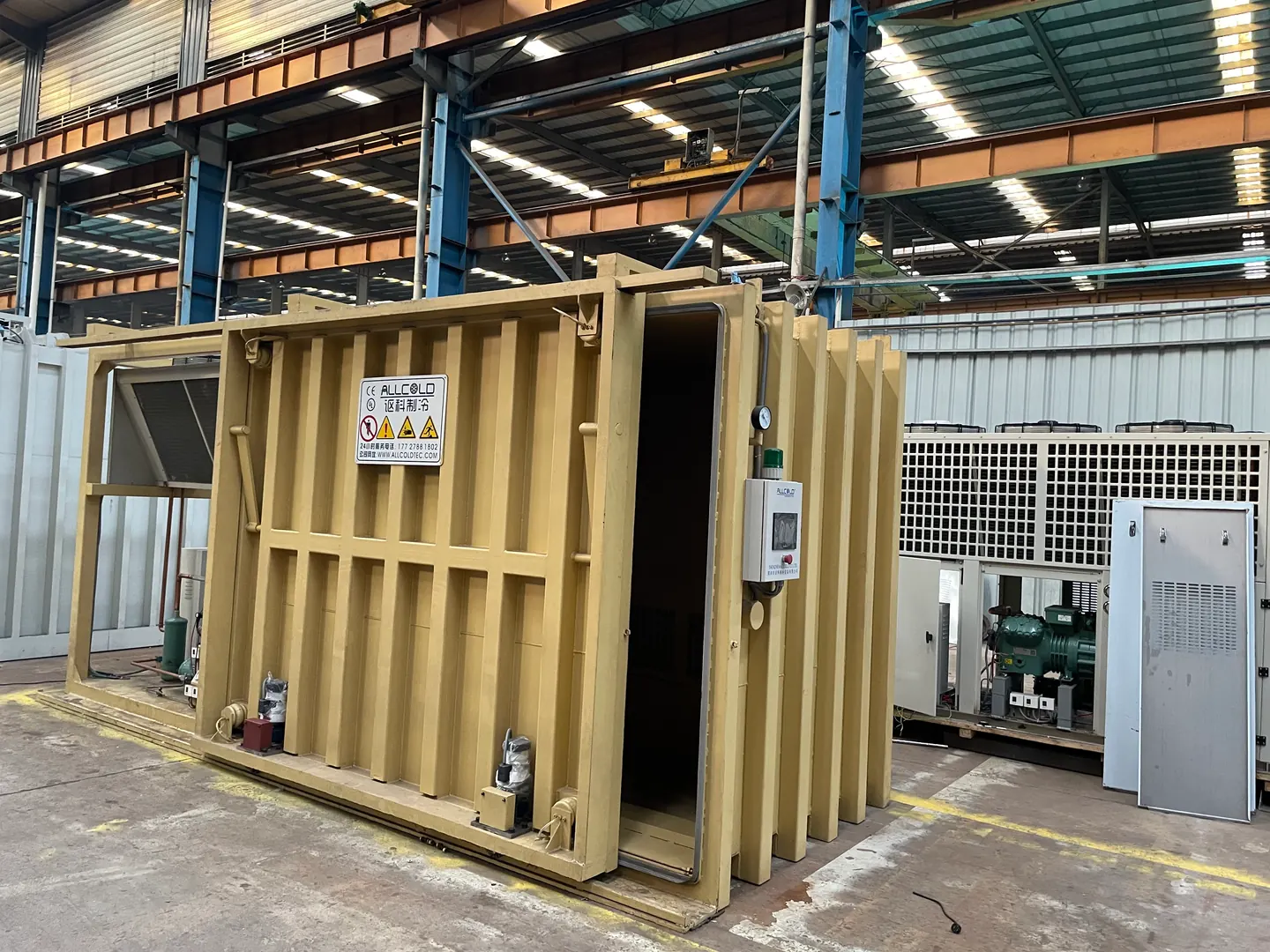
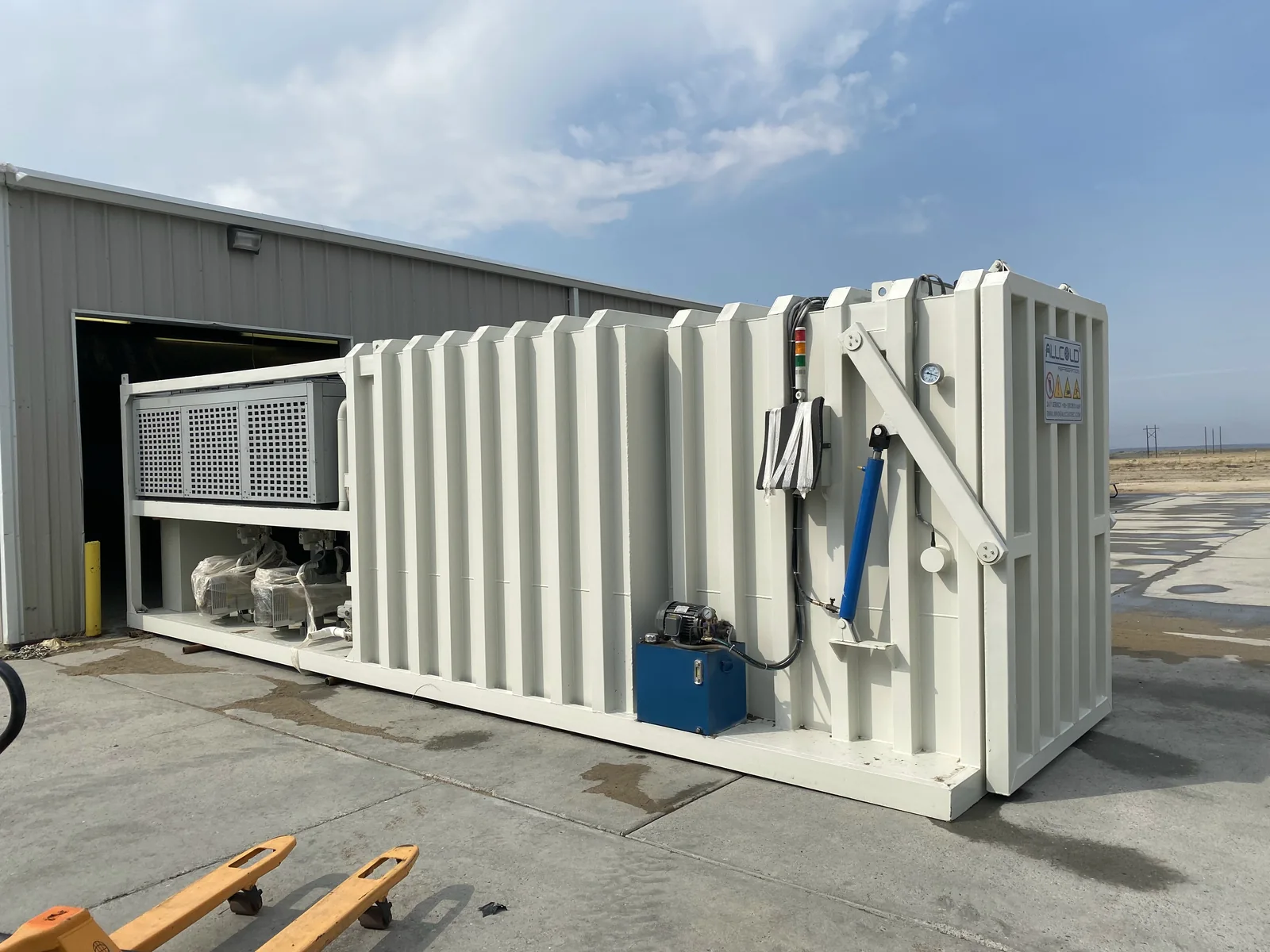
Do not infer transport status from rectangular dimensions, corrugated panels or a container-like appearance. For equipment proposed to travel as a freight container, ask the supplier and carrier to confirm the applicable approval and documentation. IMO’s CSC framework addresses freight-container safety approval, including modified containers; appearance alone is not the evidence.[1]
Also separate being transported while shut down from operating while moving. They are different design questions. This article addresses stationary operation after seasonal relocation, not cooling produce while the truck is on the road.
Compare both sites before choosing the machine
Do not approve the cooler against Site A and leave Site B for later. A second location can change the utilities, heat-rejection duty, installation work and product handling needed for the same machine.
- Electrical supply: voltage, frequency, phase, available capacity, protection and the actual connection arrangement. If either site uses a generator, review starting demand and whole-system generator sizing, not just running kW.
- Heat rejection and water: the selected condenser arrangement, site temperatures, required airflow and any water supply, treatment and drainage provisions. Include separately installed equipment in the comparison.
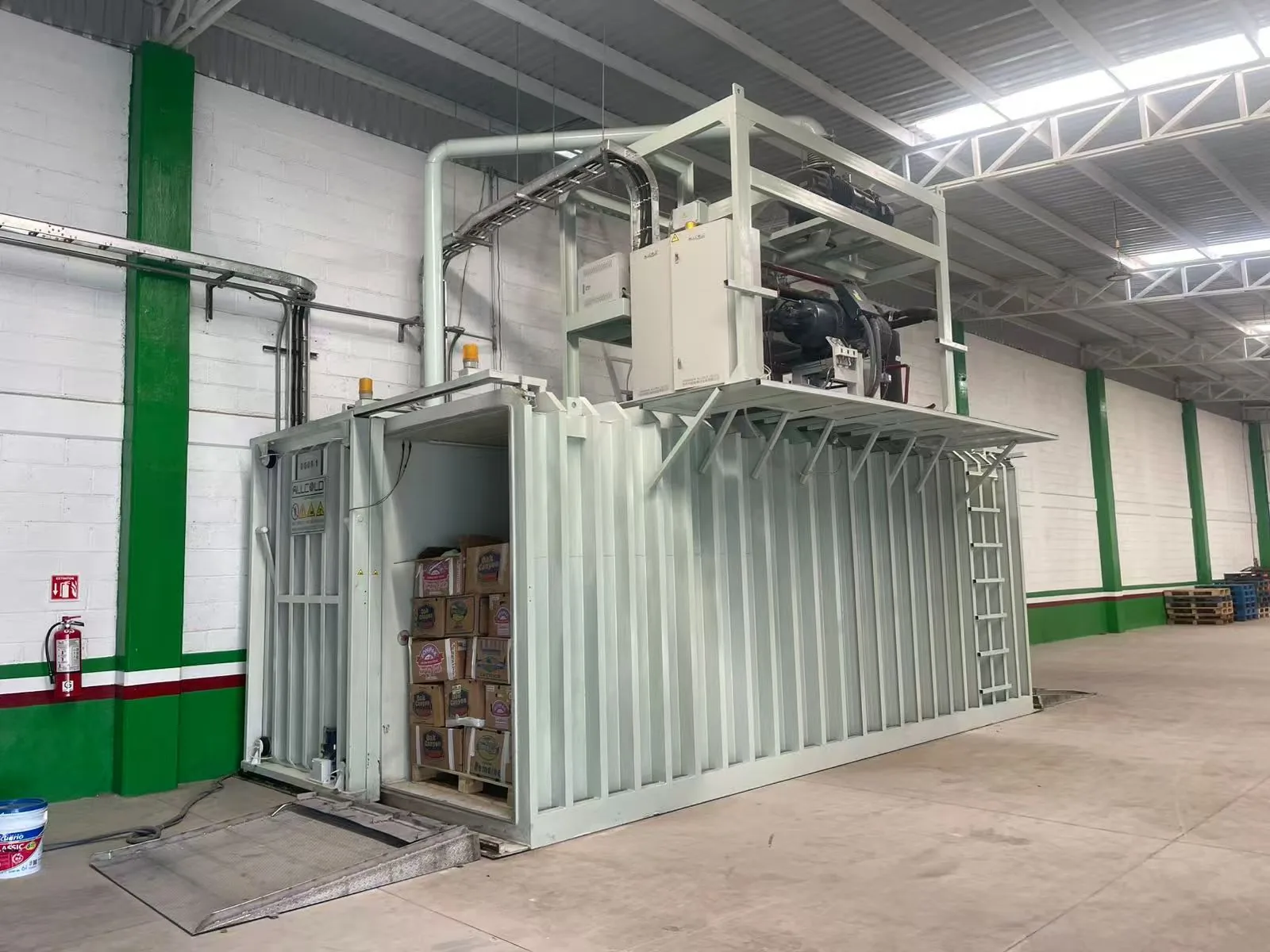
- Ground and access: equipment support, unloading space, the door’s working envelope and pallet or forklift routes. A hardstanding at one farm does not establish suitability at the other.
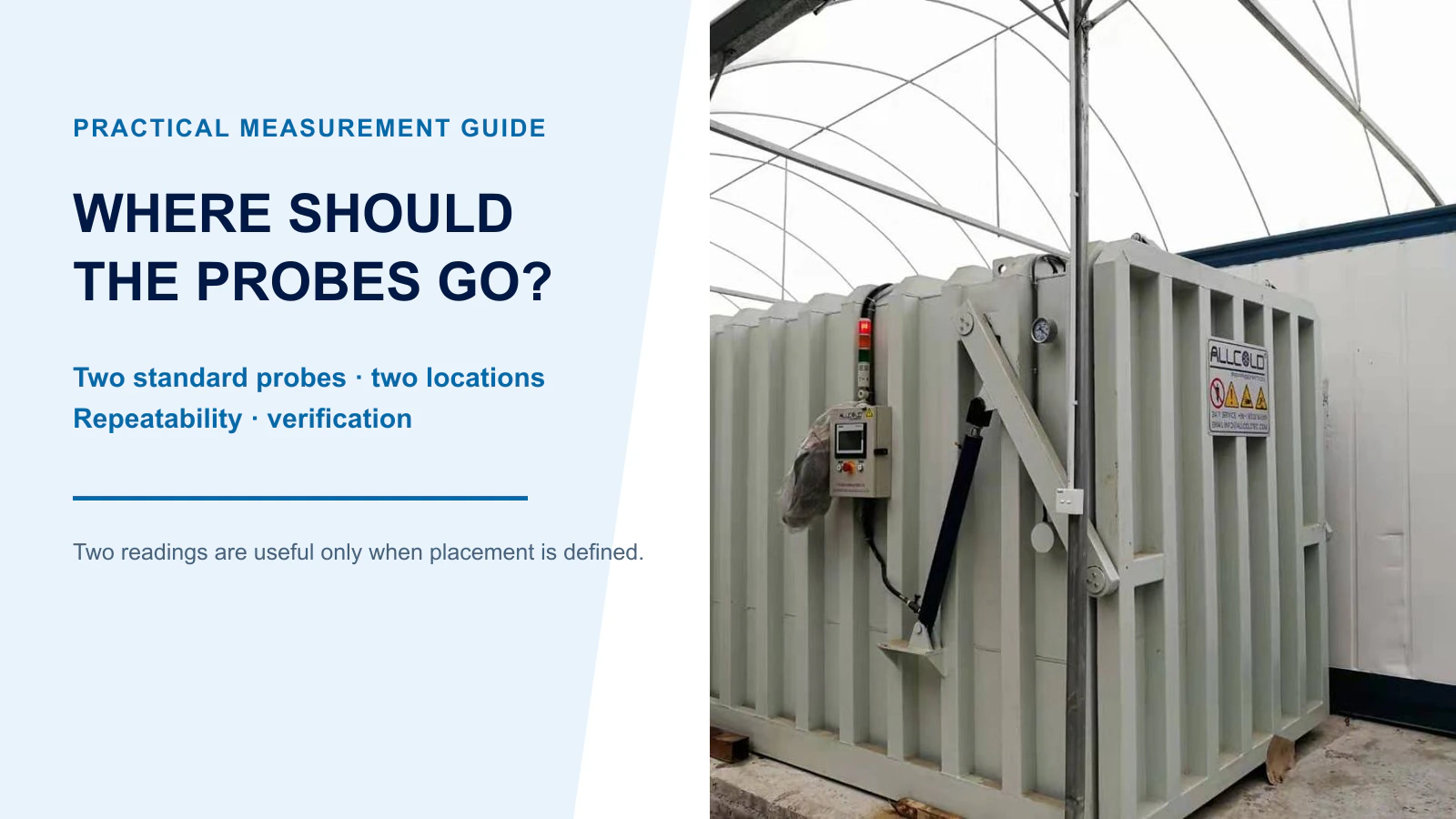
- Exposure: rain, dust, freezing conditions and protection of the machine and product. Check the outdoor installation plan for each location.
- Cooling duty: crop, packaging, batch mass, incoming temperature, required endpoint and peak arrivals. Different farms do not necessarily present the same cooling load.
Finally, specify where the cooled product goes. Pre-cooling removes field heat; it is not a substitute for suitable storage and onward handling. FAO discusses pre-cooling and refrigerated storage as connected parts of postharvest temperature management.[2] A ready cooler beside an unavailable cold room is an incomplete seasonal station.
Plan the move around the complete system
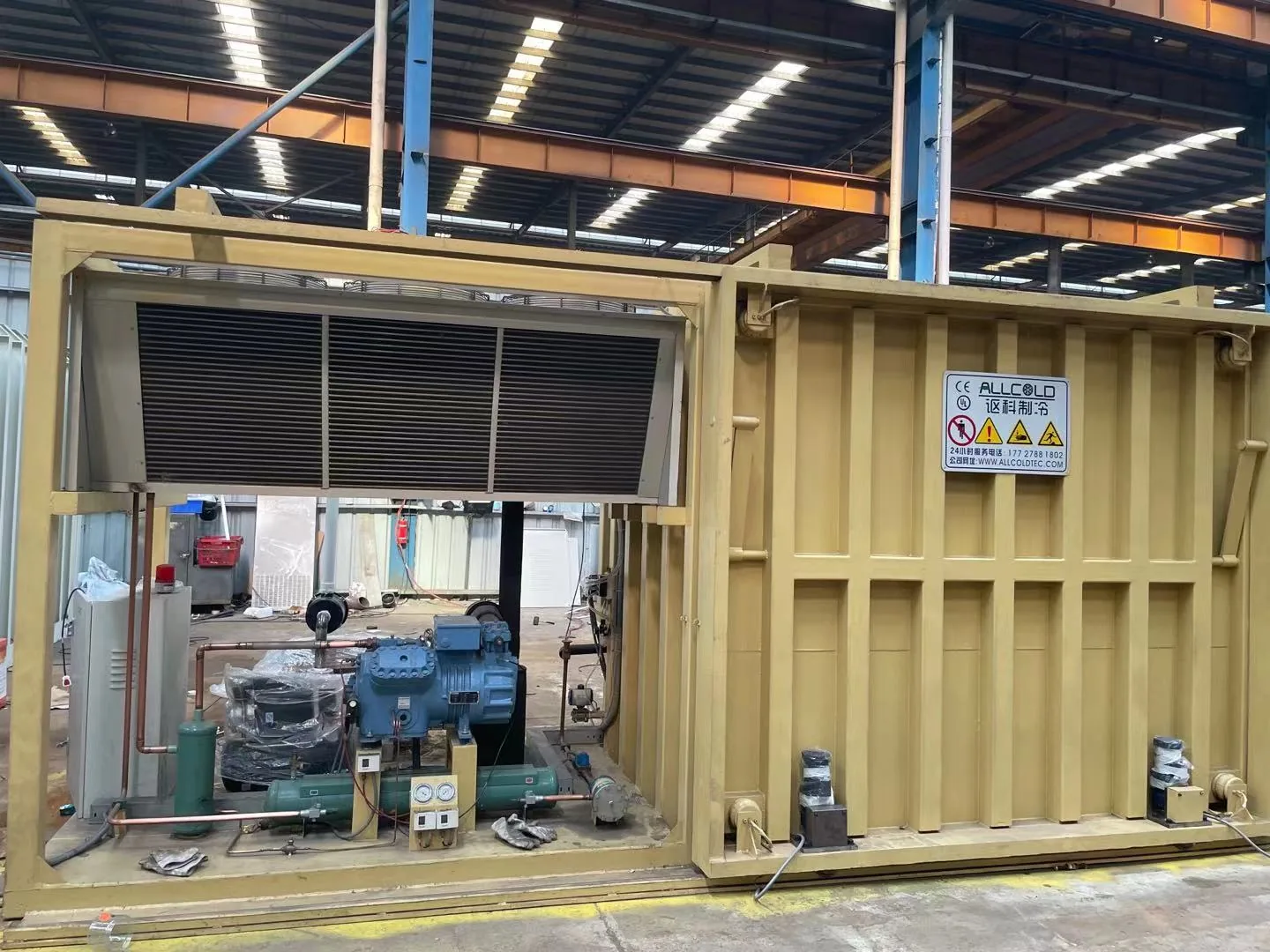
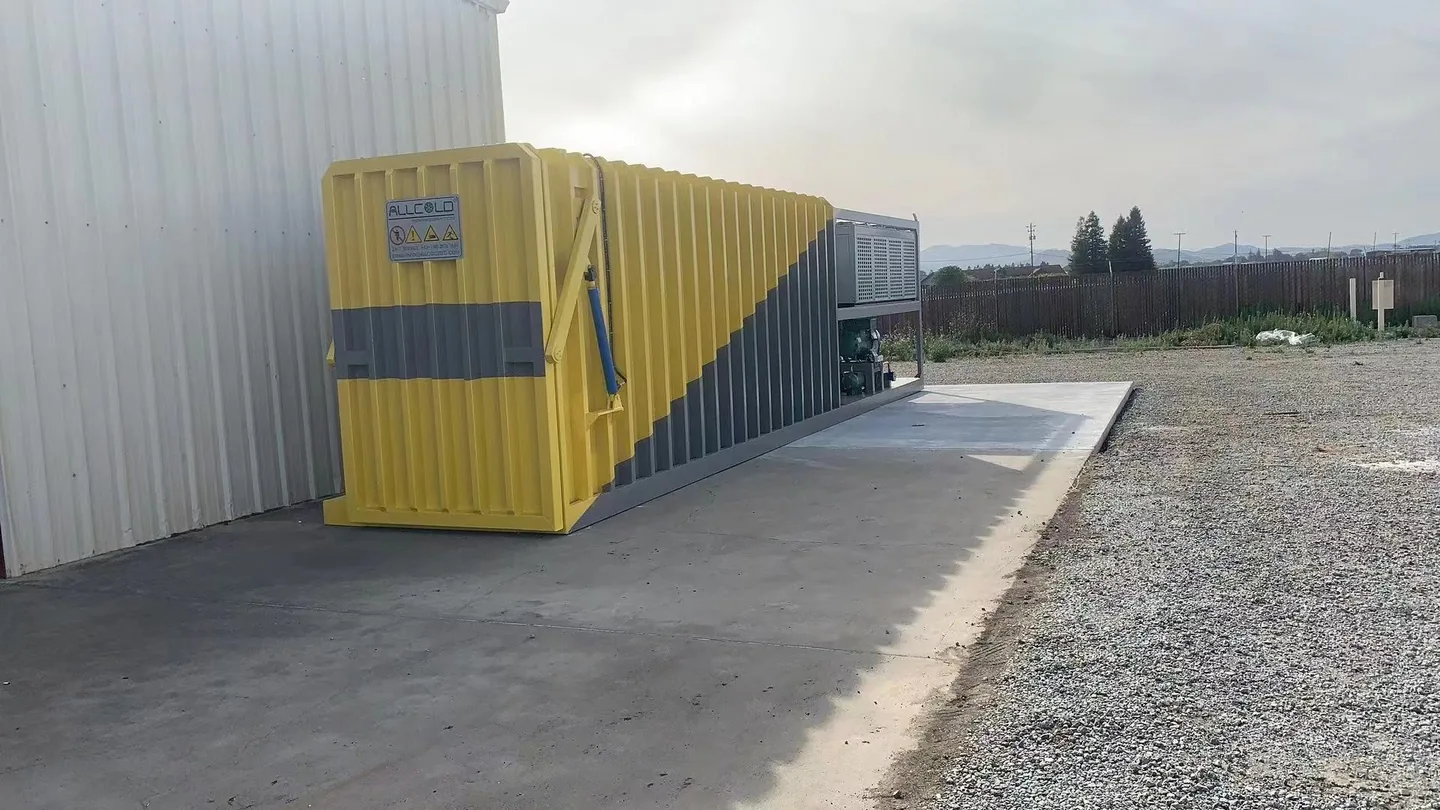
Request a relocation packing list, not merely chamber dimensions. Mark each item as travels assembled, travels separately or stays at the site. Apply that to the chamber, pumps, refrigeration equipment, condenser or cooling tower, control equipment, loading accessories and required connections.
For example, keeping an external cooling-water installation at each farm could reduce the equipment transported. It also means funding, maintaining and checking two compatible installations. Conversely, moving everything together does not remove the receiving site’s electrical, water, drainage or support requirements.
Define the disconnections before buying
Ask exactly which services must be disconnected and whether any refrigerant piping has to be opened. Do not assume a separate unit has reusable quick-disconnect connections, or that every move requires the same refrigeration work.
Danfoss condensing-unit instructions distinguish transport, installation, leak checking, electrical connection and commissioning tasks, with work assigned to qualified personnel.[3] Use the manuals for the actual supplied components and obtain a machine-specific procedure. This is not a claim that the pictured Allcold equipment uses the cited Danfoss unit.
Use a machine-specific handling plan
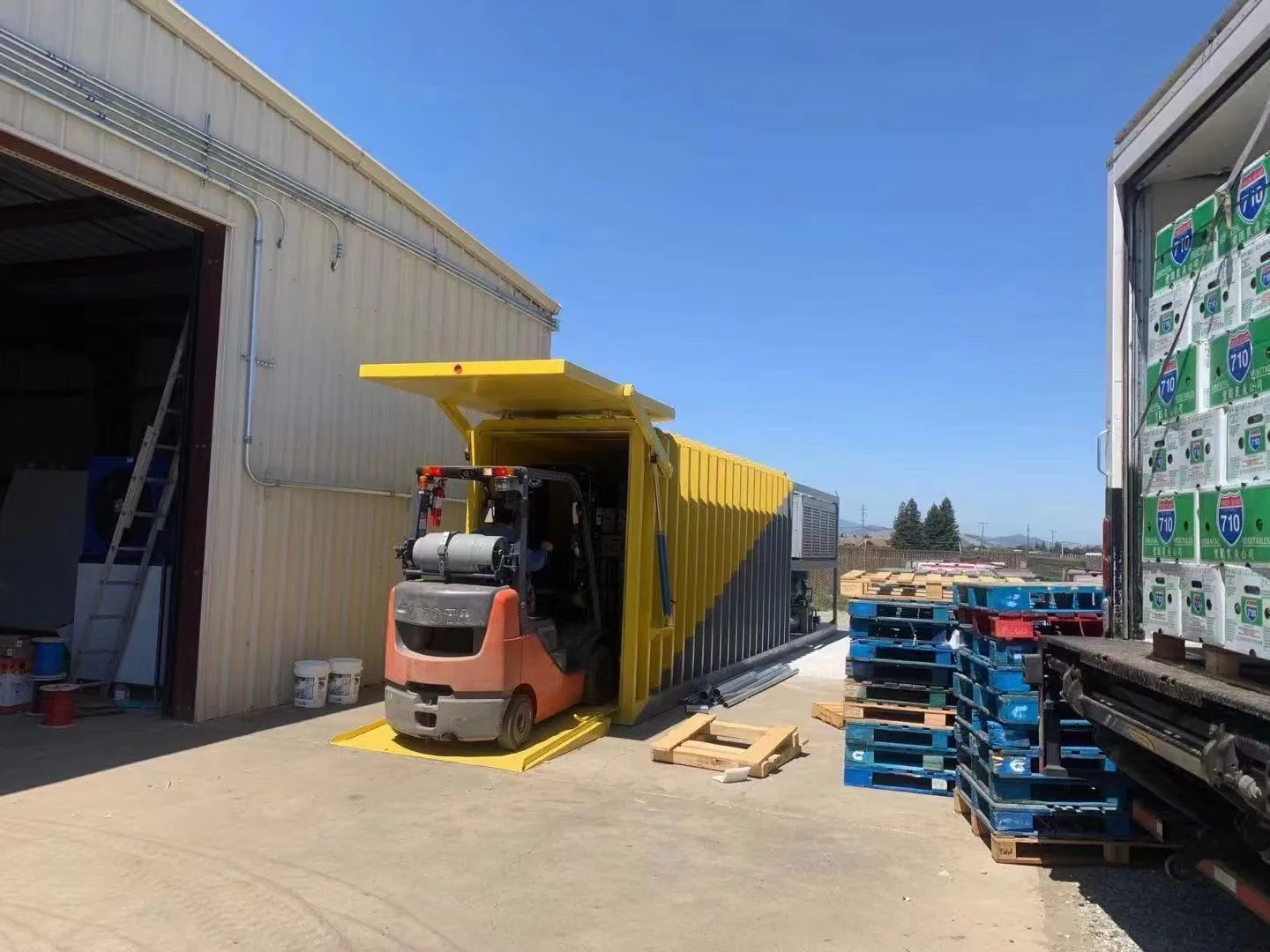
Have the supplier identify shipping mass, centre of gravity, approved lifting and restraint points, transport orientation and preparation of moving parts. The carrier and lifting contractor need that information for their plan. The delivery and rigging checklist covers the route and unloading questions in more detail.
Component instructions also matter. For example, Busch’s cited vacuum-system manual distinguishes lifting an assembly from lifting an individual pump and includes model-specific oil and transport precautions.[4] Do not use a pump’s lifting point to lift an entire machine or apply one pump model’s fluid instructions to every system.
For cargo transported in or on a transport unit, the IMO/ILO/UNECE CTU Code provides guidance on packing and securing through the transport chain.[5] A factory shipping photograph is useful context, but it is not a substitute for the approved plan for the next journey.
Budget for returning to production, not just arrival
Give the receiving team a defined handover. Record the machine’s identity and condition before dispatch, the items shipped separately, the disconnections made and the work still required. Keep responsibility for transport damage, reconnection and release to production explicit.
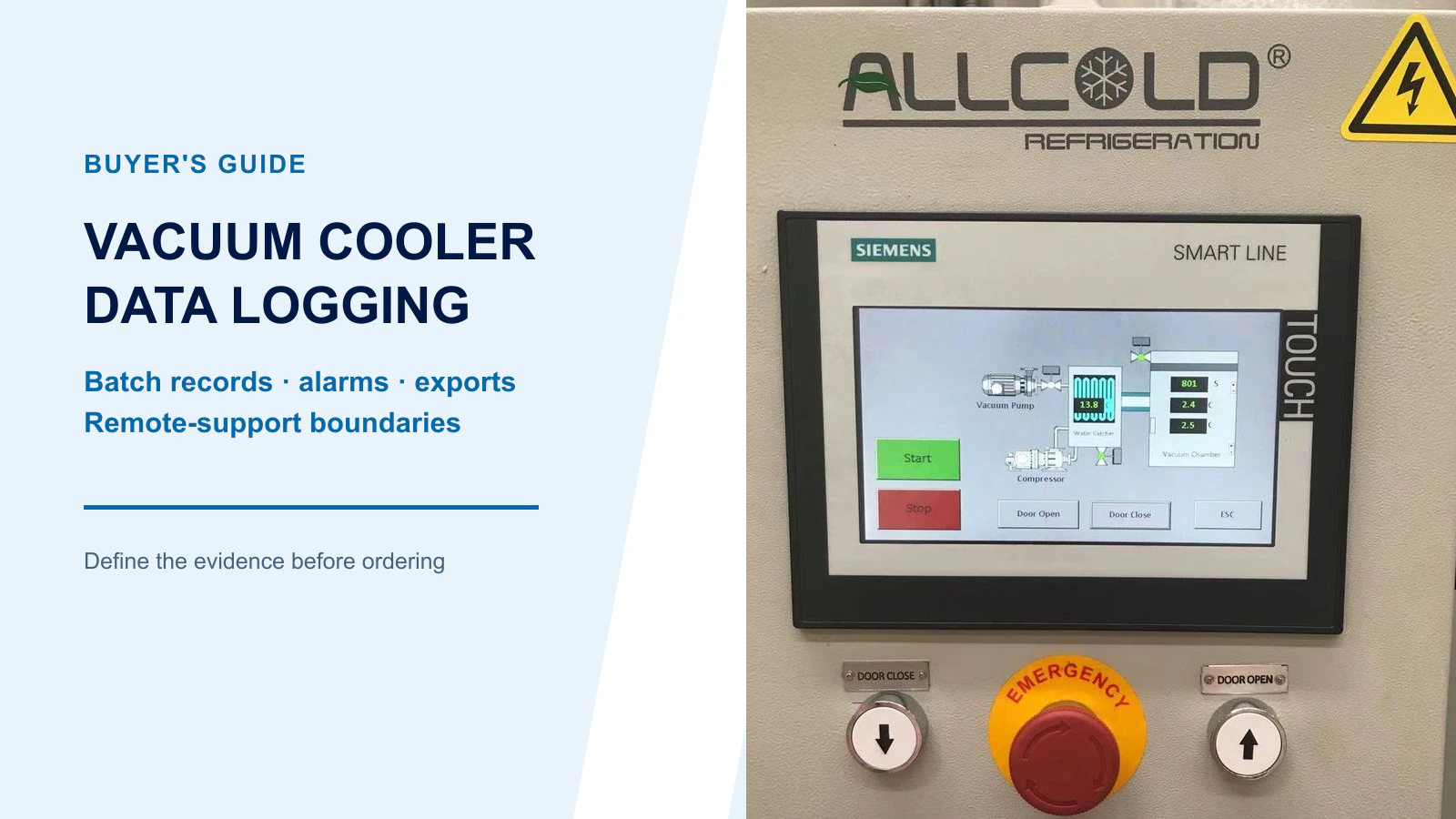
The restart scope should be agreed with the supplier. It may include inspection for transport damage, support and alignment checks, reconnection of services, relevant electrical and refrigeration checks, door and control-function checks, and confirmation of cooling with the intended product load. A motor running is not, by itself, evidence that the cooling process is ready.
Before dispatch, reserve the personnel and equipment needed at the destination. Avoid a plan in which the only available technician is booked after the first harvest—or the forklift used for unloading is also essential to packing on the same day.
Compare these costs across the whole season
- Shutdown preparation, cleaning, disconnection and packing.
- Loading, freight, unloading, insurance and any route-related requirements.
- Reconnection, specialist labour, checks and the return to productive cooling.
- Site infrastructure that remains at each farm, including off-season care.
- Return transport or the next move, plus temporary cooling during any gap.
Request separate allowances for the first installation and subsequent relocations. Reusable preparation may reduce repeat work, but that should come from a defined arrangement—not an assumed “plug-and-play” description.
Send a two-site brief, not a one-site equipment inquiry
Use the following structure to make the intended duty clear from the start:
Seasonal relocation inquiry
We need vacuum cooling for [products, packaging and peak throughput] at [Site A] and [Site B]. The machine would operate stationary at each site and move [number of times per year] over [route and distance].
Our latest required batch at Site A is [date], and the first required batch at Site B is [date]. Attached are both layouts, utilities and operating conditions.
Please confirm whether the proposed configuration is suitable for this relocation duty. Identify what travels, what stays at each site, the required disconnections, preparation and restart work, service responsibilities, and any limitations affecting warranty or support. Please state what remains to be verified before the transport plan is approved.
Keep one person responsible for the complete move, even if several contractors perform the work. The useful deliverable is a coordinated schedule and responsibility list—not separate promises that the machine can be shipped, a truck can be supplied and an electrician can attend.
Frequently asked questions
Can an existing fixed vacuum cooler be converted for seasonal relocation?
It needs a machine-specific review. Provide the serial number, drawings, service arrangement, condition and proposed move frequency. Do not infer suitability from the original delivery method alone.
Does an integrated frame mean no specialist installation is needed?
No. It may keep some components together, but the required site services, handling procedure and checks still depend on the design. Confirm the exact work rather than relying on the word “integrated.”
When is sharing one cooler between farms a poor fit?
When cooling demand overlaps, the relocation window is too short, either site lacks the required services, or repeat transport and restart work undermines the expected benefit. Resolve those constraints before comparing equipment prices.
Planning to cool at more than one farm?
Send Allcold both site layouts, harvest windows, utility details and the proposed move frequency. For an existing machine, include its serial number so relocation suitability can be discussed for the actual equipment.
Sources and technical references
These references support the general transport, equipment and postharvest principles. They do not certify a particular Allcold model for repeated relocation. Equipment-specific instructions and applicable local requirements govern the actual project.
- International Maritime Organization: 1972 Convention for Safe Containers (CSC 1972). Freight-container safety approval and modified containers. ↩
- FAO: Manual for the preparation and sale of fruits and vegetables, Chapter 3: Storage. Pre-cooling and refrigerated storage. ↩
- Danfoss: Bluestar & Optyma condensing-unit instructions (PDF), sections 2–10. Example of manufacturer-specific handling and installation requirements; not a substitute for the supplied model’s manual. ↩
- Busch: SIMPLEX VD 0025–0100 G instruction manual (PDF), section 4. Assembly versus component lifting and transport precautions. ↩
- IMO: IMO/ILO/UNECE Code of Practice for Packing of Cargo Transport Units. General packing and securing guidance for transport units. ↩
Prepared September 18, 2026. Photos: Allcold archive. The schedule is hypothetical; no relocation time, cost saving or model capability is guaranteed.