ALLCOLD · FRESH PRODUCE BUYER GUIDE
A short cooling cycle is useful only if the ears reach the right temperature, retain their marketable quality, and stay cold after unloading.
Imagine comparing two sweet-corn cooling proposals. One promises a shorter cycle; the other describes water management, your actual shipping pack, and temperature checks inside the load. Which tells you more about the corn your customer will receive?
For a grower or packing house, the real purchase is not a low temperature on a display. It is a repeatable process that delivers saleable ears on schedule. Sweet corn makes that distinction especially important.
Can sweet corn be vacuum cooled? Yes, but suitability should be demonstrated with your variety, pack and load. Assess moisture management alongside temperature reduction, and compare the proposal with hydrocooling. A vacuum cycle with added water is not the same process as chilled-water hydrocooling.[1][3][4]
Before requesting a price
- Describe the corn: variety, husk condition, harvest maturity and final sales format—not simply “sweet corn.”
- Define the result: an agreed product-temperature endpoint plus acceptable kernel, husk and pack condition after your intended cold holding period.
- Identify the complete process: water application, loading, unloading and refrigerated handoff, with responsibility assigned for each step.
1. “Sweet corn” is not a complete product specification
Standard sweet corn and supersweet varieties do not retain sweetness in the same way. UC Davis describes longer quality retention for supersweet corn, while emphasizing rapid field-heat removal and uninterrupted refrigeration. Its commodity guidance lists an optimum storage temperature of 0–1.5°C and relative humidity of 95–98%. These are storage references, not an instruction to set every vacuum cooler to the same endpoint.[2]
Cooling slows deterioration; it does not restore sweetness already lost or stop all quality change. A supplier should therefore know the variety and harvest-to-cooling delay before discussing the result you can expect.
Keep the trial commercially relevant. If your main product is husk-on supersweet corn sold after refrigerated distribution, testing a different variety immediately after cooling will not answer the whole purchasing question. Specify when and how the customer-facing quality will be assessed.
2. Water can play two very different roles
Hydrocooling removes heat through contact with chilled water. In vacuum cooling, reduced pressure enables evaporation that removes heat from the product. A hydro-vac system adds water before or during the vacuum cycle to help manage evaporative moisture loss; it is still a vacuum-cooling process.[3][4]
| Proposal | Role of water | What to clarify before buying |
|---|---|---|
| Hydrocooling | Chilled water carries heat away from the corn. | Water access through the load, refrigeration capacity, wet-pack compatibility, drainage and water management. |
| Vacuum cooling without added water | Evaporation draws on moisture already present. | Whether the resulting quality and moisture change are acceptable for this corn and distribution route. |
| Water-assisted vacuum cooling / hydro-vac | Added water helps manage moisture loss during evaporative cooling. | Where and when water is applied, how coverage is verified, and whether this equipment is included in the quotation. |
FAO identifies sweet corn as a common hydrocooling application. Treat that method as a genuine alternative, not a weak comparison chosen to make a vacuum cooler look better.[4] Neither method should be selected from a generic cycle-time claim alone.
A UF/IFAS archival report specifically warns that inadequate wetting during sweet-corn vacuum cooling can lead to moisture loss and kernel denting.[1] That is a reason to investigate water management—not a guarantee that spraying eliminates every loss. Do not assume a quoted Allcold machine includes a particular water-assisted configuration unless it is documented.
3. Test the format you intend to ship
Husk-on ears in crates, trimmed ears in cartons, and dehusked retail packs are different purchasing briefs. Write down the actual combination rather than asking whether the machine can cool corn in general.
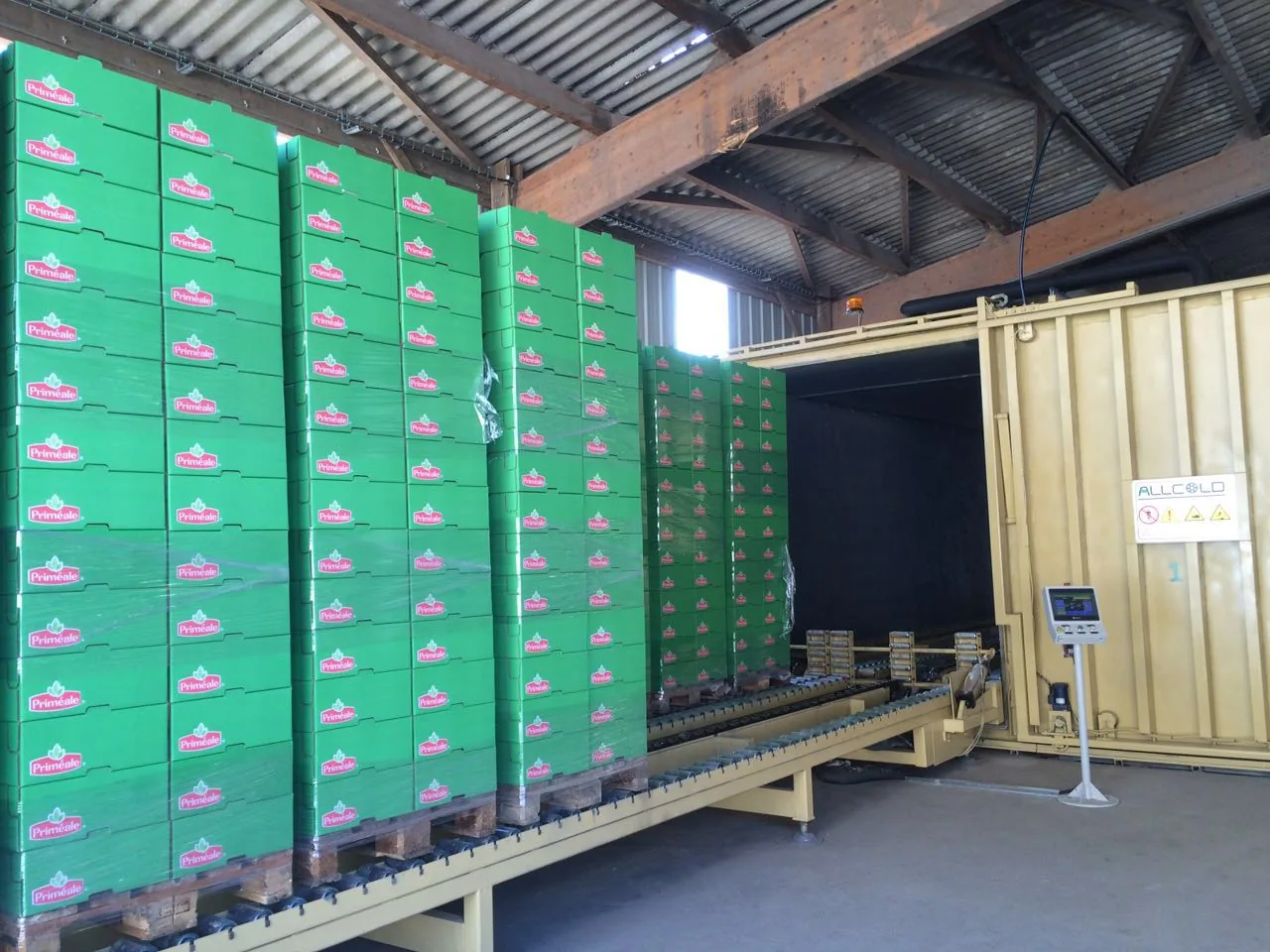
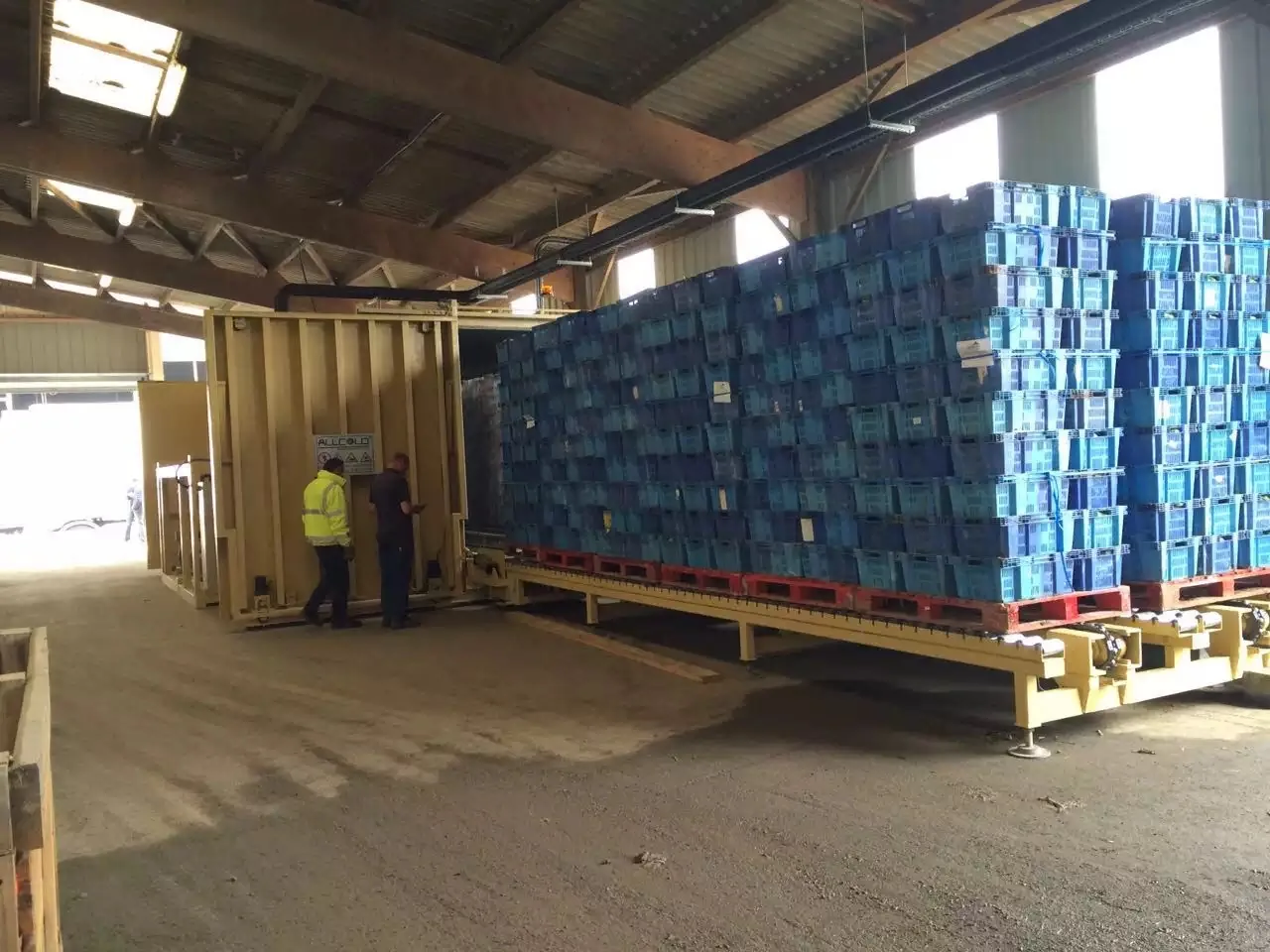
For each format, provide photographs of an open container, the closed pack and a complete pallet. Include liners, film, vents, ear count or net mass, and the point at which wrapping takes place. The UF/IFAS report notes that barriers to vapor escape can impede vacuum cooling.[1] A demonstration with loose ears should not automatically qualify your finished pack.
If you sell both wholesale crates and retail trays, ask for a separate decision on each format. You may choose to cool before final packing, but then the quotation review must account for the handling and temperature exposure between those steps.
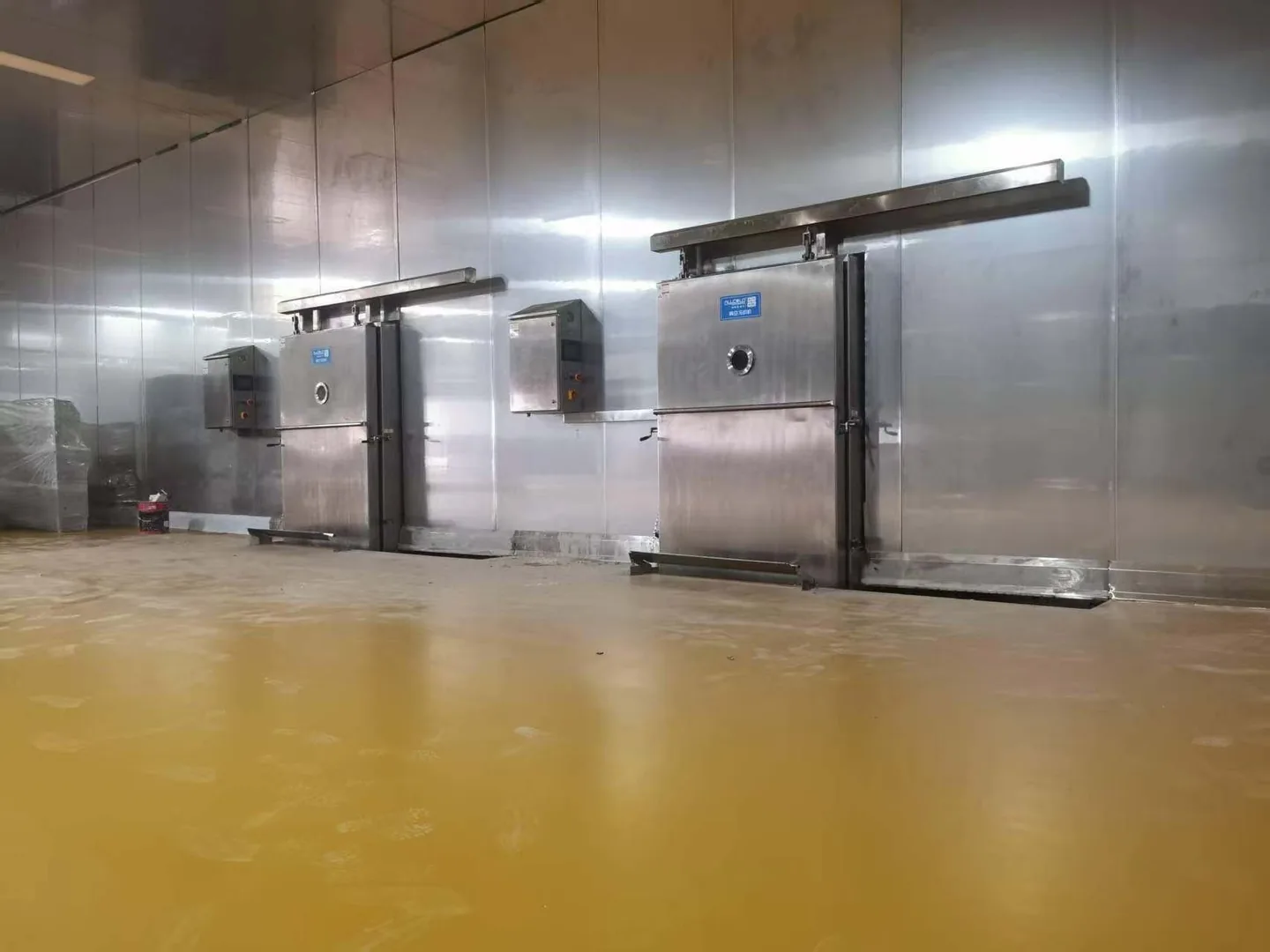
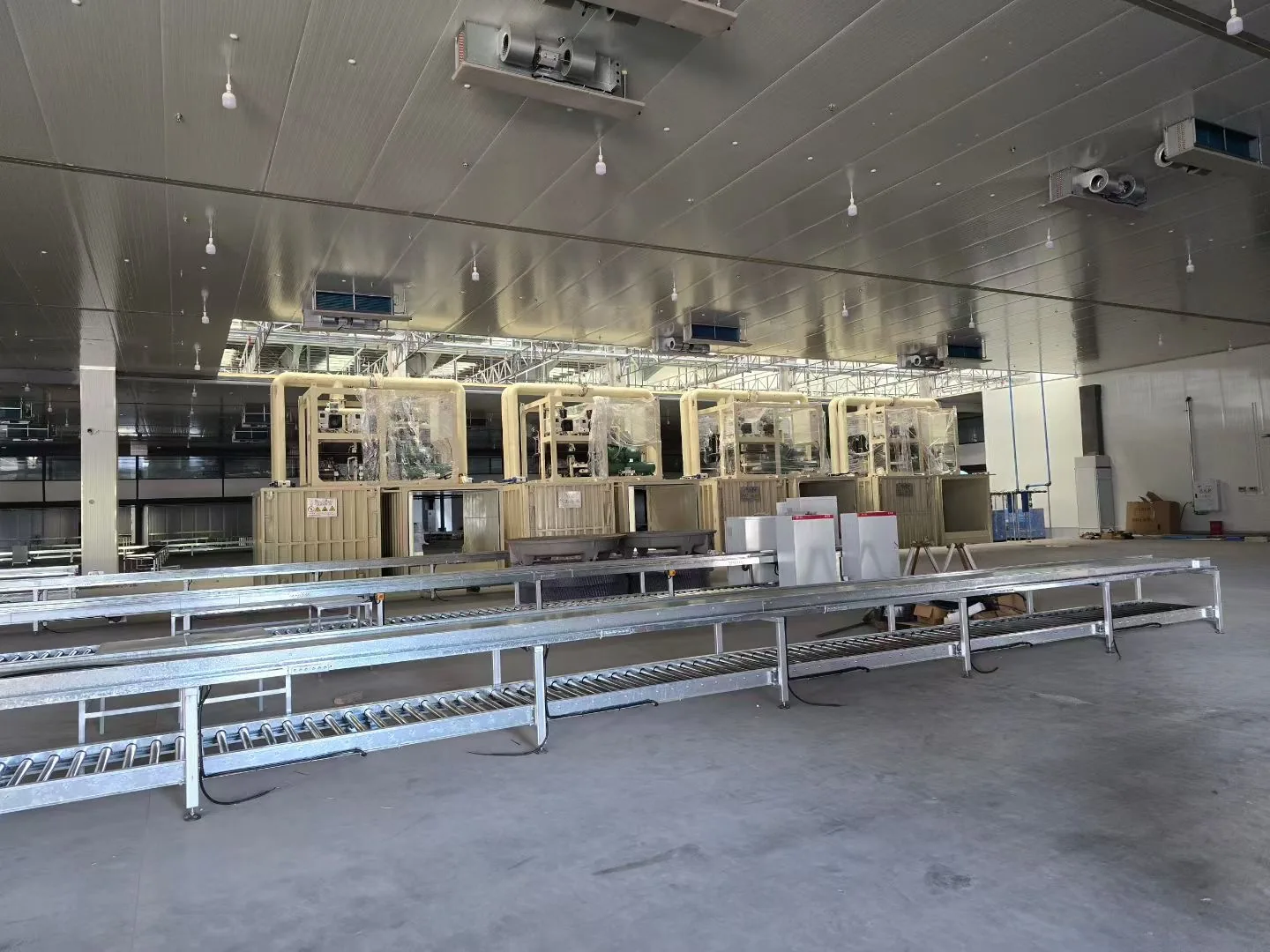
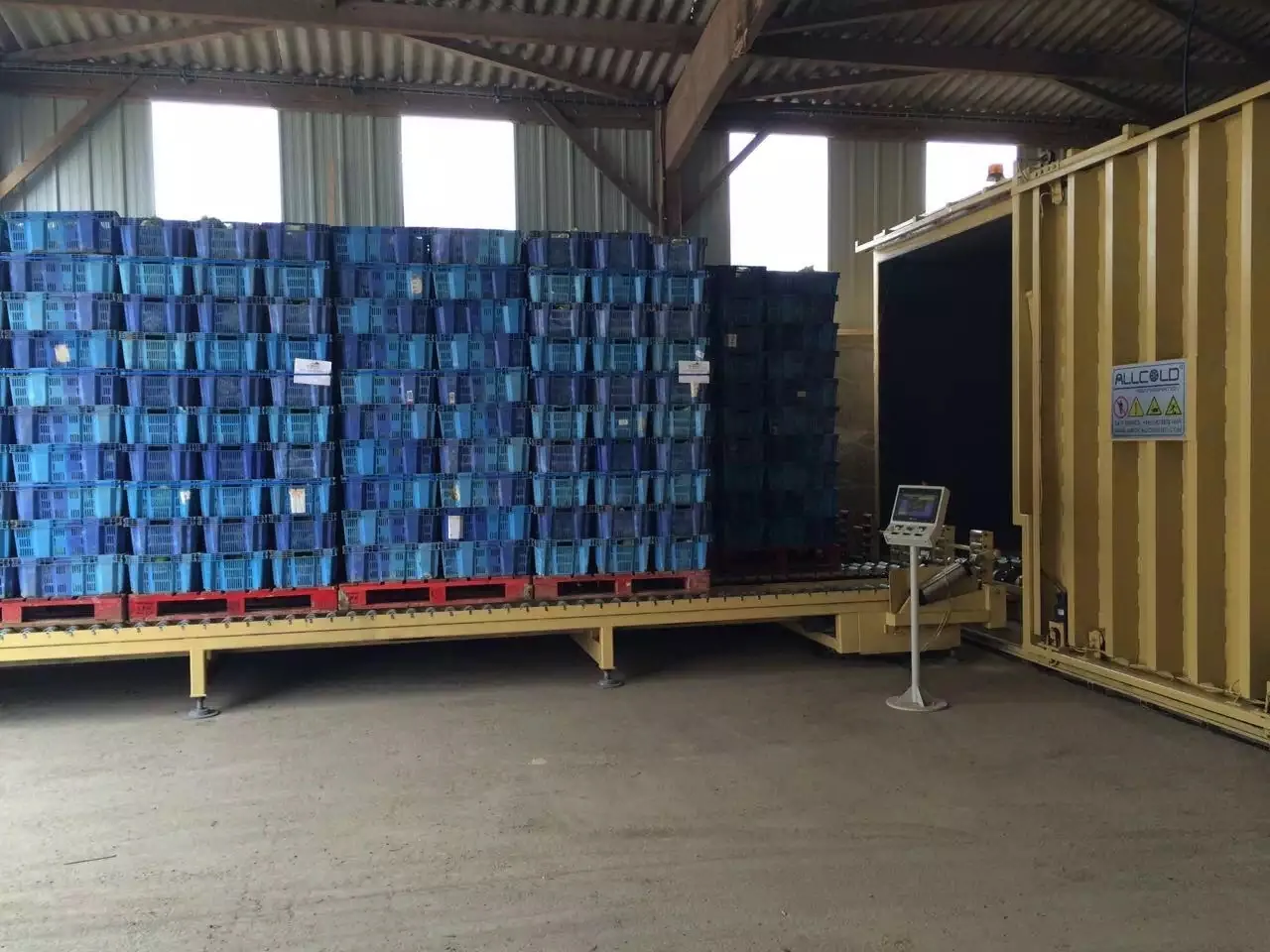
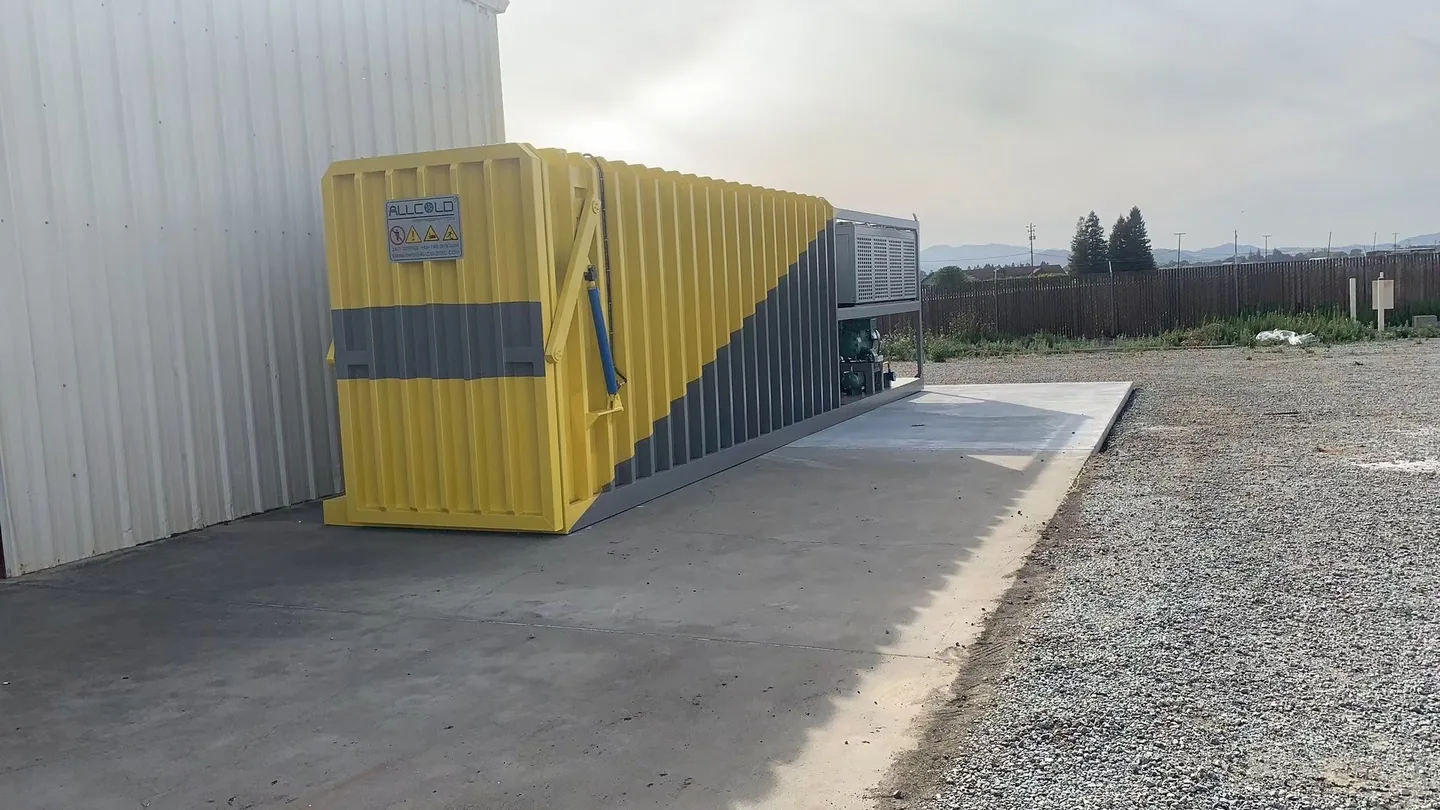
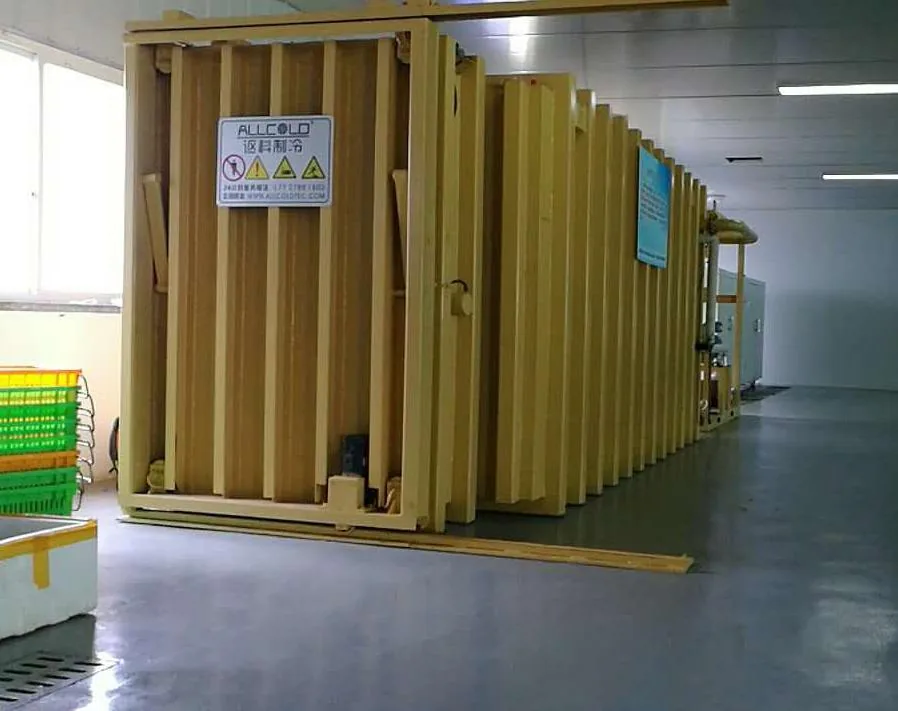
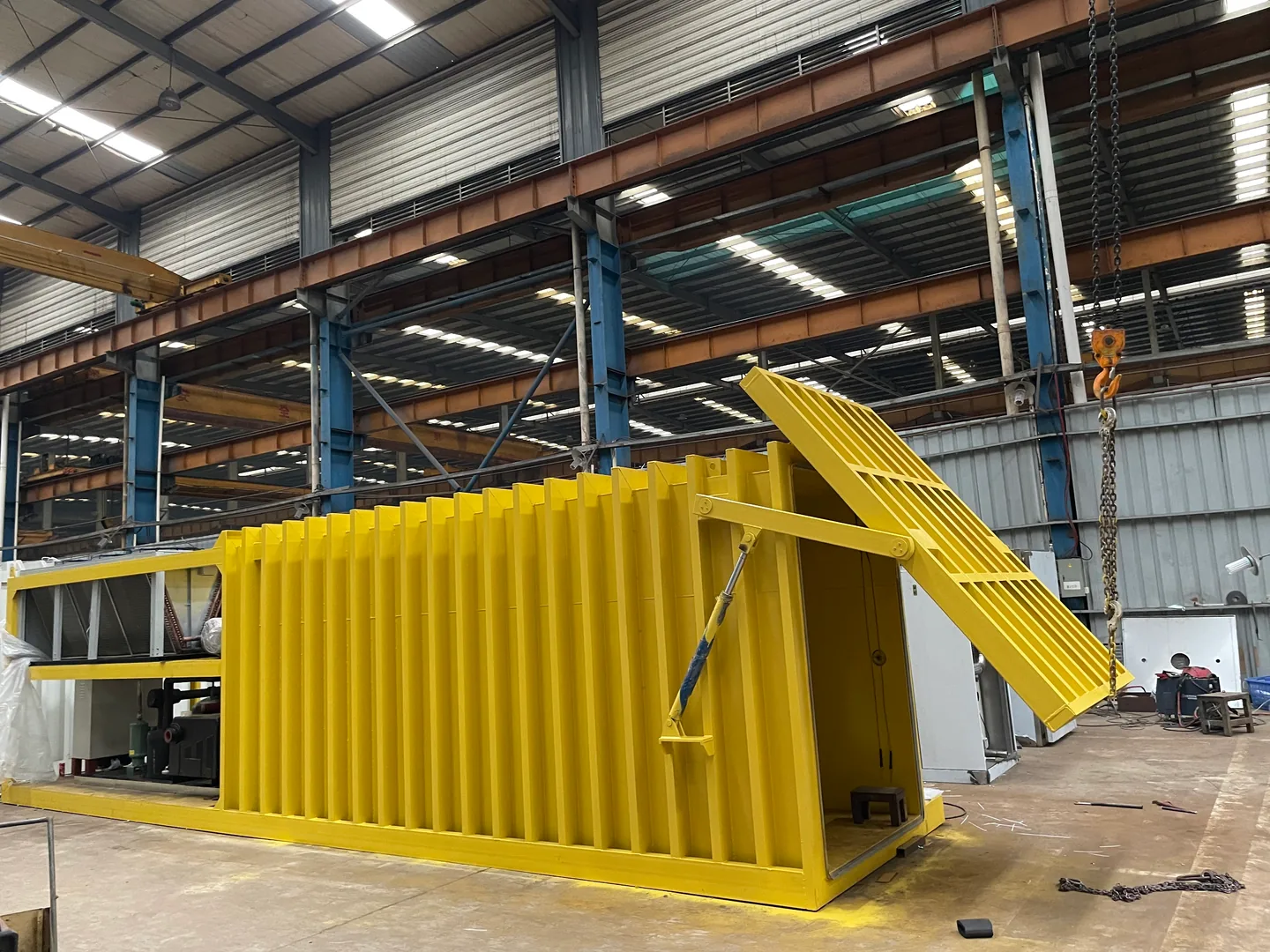
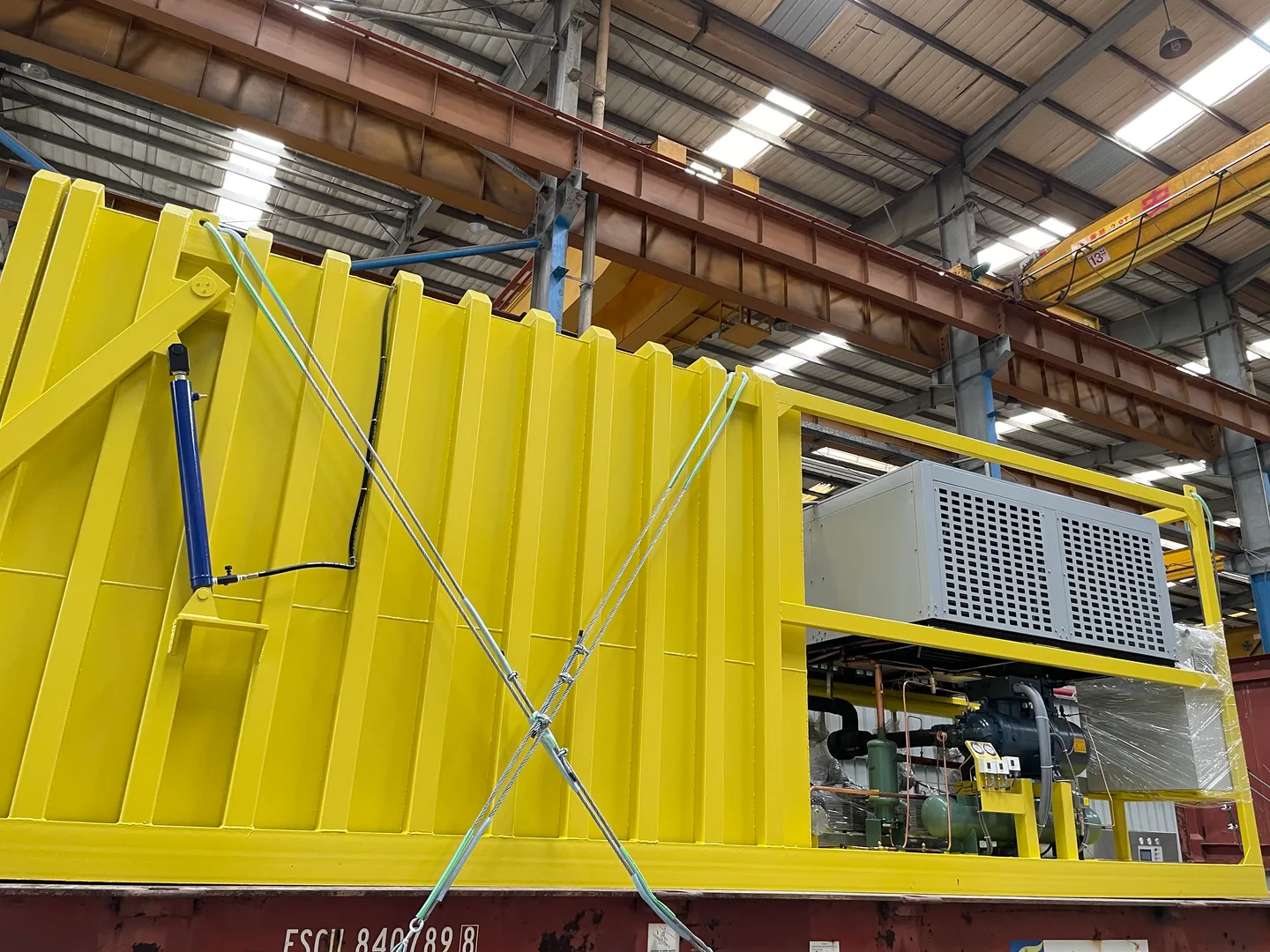
Allcold’s vacuum coolers for fresh produce are a starting point for discussing batch size and loading arrangements. Product and packaging suitability still require a project-specific review.
4. Ask for evidence about the ears, not just the display
Check the product at meaningful locations
A cool exposed ear is not proof that the interior of a pallet is equally cool; this distinction is also highlighted in the Florida report.[1] Agree on how product temperature will be measured, which load positions will be checked, and what endpoint constitutes a satisfactory result. A husk-surface reading or chamber-pressure reading alone should not be treated as evidence for the entire load.
Document the measurement arrangement with the supplier using the temperature-probe placement guide. Additional trial measurements, if needed, are separate from the machine’s standard installed instrumentation.
Separate product weight from retained surface water
Request a consistent weighing procedure: same sample, same tare basis and an agreed drainage interval. Otherwise, water left on the husks or inside the package can make a before-and-after comparison misleading. Evaluate cooling weight loss and saleable yield together rather than treating a wet pallet’s gross weight as the outcome.
Review quality at the point that matters commercially
Inspect comparable samples before cooling, after cooling and after the planned refrigerated holding period. Record kernel fullness, visible denting, husk presentation where applicable, and buyer-relevant eating quality. Establish the acceptance criteria in advance; do not decide afterward that whichever indicator improved was the only important one.
If comparing two cooling methods, use comparable harvest lots and record unavoidable differences in variety, maturity, starting temperature, packaging and storage. Otherwise, the trial may compare different corn rather than different cooling processes.
5. Count the time outside the chamber
Draw the actual route: harvest, field transport, queue, cooling, unloading, cold storage and dispatch. Then ask who is responsible for each transfer during the busiest harvest period.
A useful planning question is: Where will the next cooled pallet go if the loading dock is occupied? The answer should be a workable refrigerated holding arrangement, not an unplanned wait beside the machine. Continuous refrigeration remains important after precooling.[2]
For capacity discussions, provide the peak arrival pattern, not just daily tonnage. Include time for water application where specified, loading and unloading. A supplier’s chamber-cycle figure and your complete pallet turnaround time should be listed separately so that neither is mistaken for the other.
6. Send a quotation brief that reduces assumptions
Use this checklist when requesting a sweet-corn cooling proposal:
- Crop: variety, typical harvest maturity, husk condition and intended sales market.
- Pack: ear count or net weight, container dimensions, liners or film, pallet pattern and photographs.
- Conditions: expected incoming product temperatures, harvest-to-cooling delay and site ambient conditions.
- Output: peak arrivals, required batches, dispatch deadlines and refrigerated holding capacity.
- Quality: agreed product-temperature endpoint, presentation requirements and evaluation timing.
- Scope: proposed water application, water requirements, drainage, handling interfaces and trial responsibilities.
Ask the supplier to identify exclusions and unresolved assumptions in writing. That produces a more useful comparison than two prices attached to the same nominal pallet capacity.
Common questions
Does supersweet corn still need prompt cooling?
Yes. Better sweetness retention does not remove the need for temperature management. Evaluate the variety’s quality across your actual distribution schedule, not just at the cooling exit.
Is hydro-vac just another name for hydrocooling?
No. Hydrocooling transfers heat into chilled water. Hydro-vac combines water application with evaporation under reduced pressure. Ask which process the quotation actually describes.
Can we choose a machine from its lettuce cycle time?
Not reliably. Ask for a sweet-corn proposal based on your product and packaging. A successful demonstration on another commodity does not establish the same result for your corn.
Planning sweet-corn precooling?
Send Allcold your corn variety, pack photographs, incoming temperature range and peak handling requirement. Ask for a project-specific review of the cooling process, water-management scope and product checks before selecting equipment.
Sources and technical reading
These references support the cooling principles and crop-handling discussion. They do not certify an Allcold configuration or establish a guaranteed cycle time or shelf life.
- Talbot, Sargent and Brecht, UF/IFAS: Cooling Florida Sweet Corn, CIR941. Archival report, originally published in 1991 and reviewed in 2002; cited for documented process considerations, not as a current equipment-performance benchmark.
- Suslow and Cantwell, UC Davis Postharvest Research and Extension Center: Corn (Sweet). Commodity fact sheet dated August 1997; temperature, humidity and quality-retention guidance.
- NC State Extension: Chapter 3d: Vacuum Cooling (2025). Used for the evaporative mechanism and water-assisted vacuum-cooling concept, not to transfer lettuce cycle times to corn.
- FAO: Basic Harvest and Post-Harvest Handling Considerations, section 2.2.4. Used to distinguish chilled-water cooling from vacuum cooling and establish hydrocooling as a relevant sweet-corn alternative.