
What Are the Real Benefits of Vacuum Cooling for Vegetables?
You’ve successfully grown and harvested a beautiful crop. But the clock is ticking. From the moment a vegetable is picked, it begins to die. Field heat, the warmth it holds from the sun and the ground, acts like an accelerator pedal for decay, causing wilting, microbial growth, and an alarming loss of value with every passing hour.
The slow, uneven nature of traditional cooling methods means you’re fighting a losing battle against time. You watch a percentage of your hard-earned profit spoil in transit, get rejected by customers for poor quality, or simply lose the fresh, crisp appearance that commands a premium price. This post-harvest loss is a massive, frustrating, and often accepted cost of doing business.
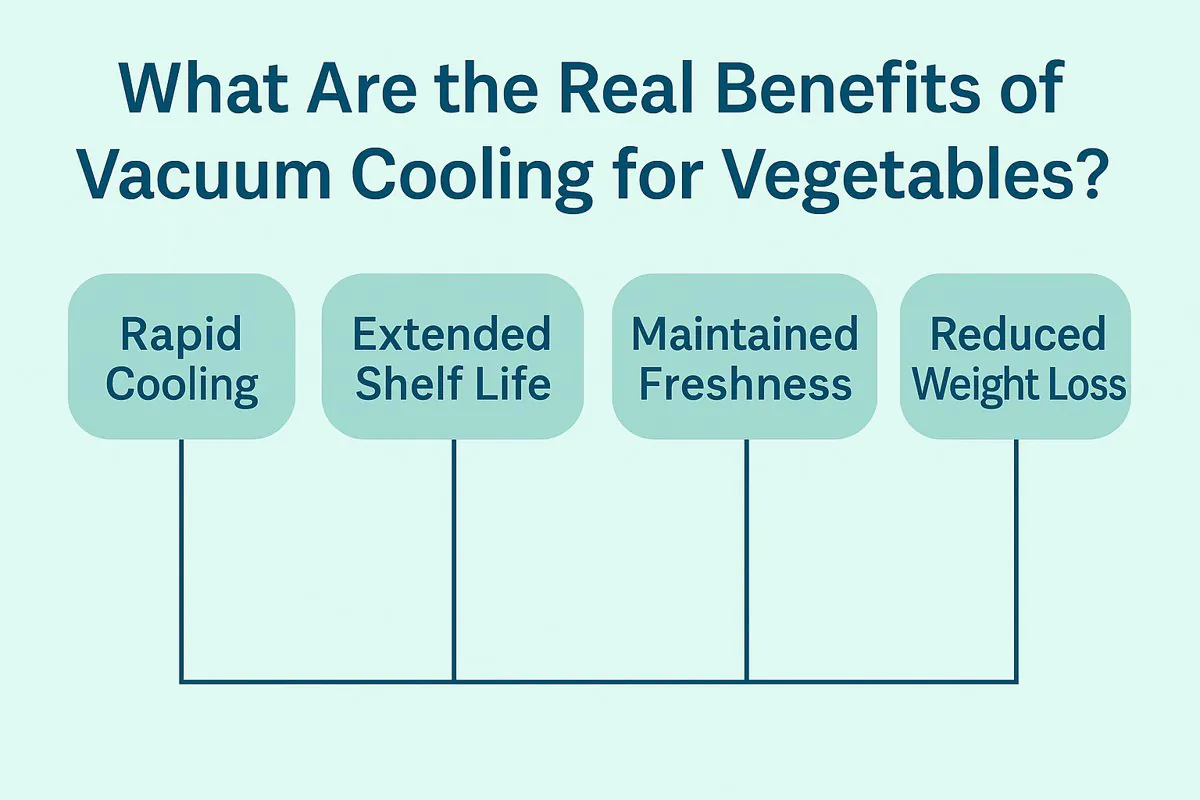
Vacuum coolers offer four transformative benefits: 1) Dramatically extending shelf life by days or even weeks. 2) Increasing operational efficiency through cooling cycles under 30 minutes. 3) Improving product quality, freshness, and salable weight. 4) Enhancing food safety by immediately stopping microbial growth. These advantages directly boost profitability and build your brand’s reputation.
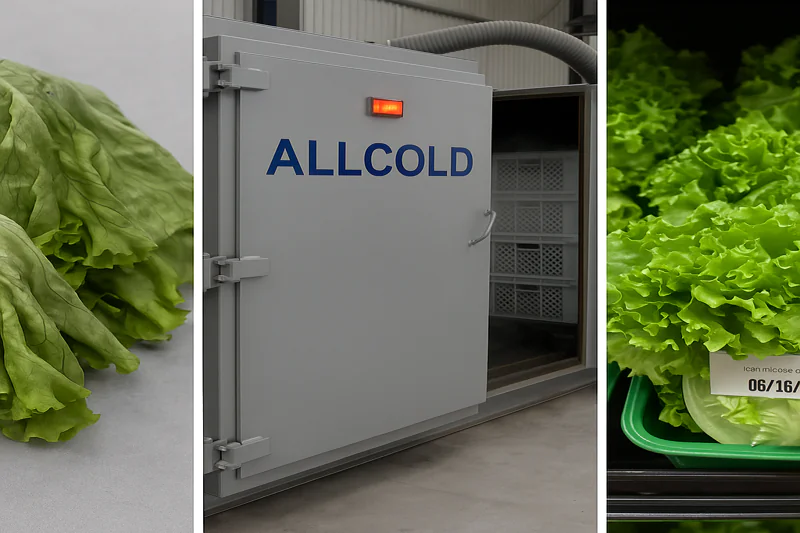
I’ve seen the financial pain that post-harvest losses cause for growers and processors. But I’ve also seen the incredible turnaround when they adopt this technology. A vacuum cooler isn’t just a piece of equipment; it’s a strategic tool that fundamentally changes your post-harvest process for the better. It allows you to sell more of what you grow, at a higher price, to more satisfied customers. Let’s break down the real-world benefits that make this possible.
How Does Rapid Cooling Extend Shelf Life So Dramatically?
The single biggest enemy of a harvested vegetable is its own "field heat." This residual warmth is a catalyst for decay. You might use a conventional cold room, but after 12 hours, the produce packed tightly in the center of the pallet is often still alarmingly warm.
This delay is catastrophic for shelf life. Every hour spent above 4°C (40°F) is an hour where the produce is rapidly aging, consuming its own sugars, becoming limp, and providing a perfect breeding ground for spoilage bacteria. By the time it’s finally "cold," you have already lost several days of marketability before the product has even left your facility.
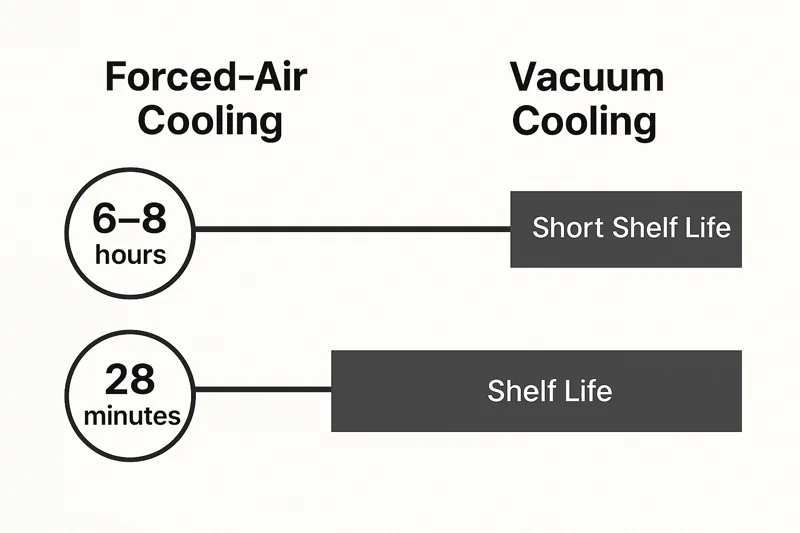
By removing field heat from the core of the product in under 30 minutes, a vacuum cooler drastically slows the vegetable’s respiration rate and halts microbial growth. This process effectively "pauses" the degradation clock, adding several days, or even weeks, to the product’s viable shelf life compared to slower cooling methods.
The Science of Preservation
For a large-scale farmer like Carlos, whose business depends on shipping produce across borders, shelf life1 is the ultimate currency. An extra five to seven days of freshness means he can ship his lettuce from Mexico to markets in Canada by truck, a journey that would be impossible with produce cooled in a conventional cold room. This technology doesn’t just improve his product; it expands his entire market.
Putting the Brakes on Respiration and Aging
A harvested vegetable is still a living organism that breathes. This process, called respiration, consumes stored sugars and oxygen to produce energy. A byproduct of this is heat, which further accelerates the process in a vicious cycle. Field heat supercharges this respiration. By rapidly dropping the core temperature of a head of broccoli from 30°C down to 2°C, we slam the brakes on its metabolic rate by over 80%. The vegetable enters a state of near-hibernation. It stops burning through its own nutrients, which means it retains its weight, its nutritional value, and its vibrant, fresh appearance for much, much longer. It also stops producing ethylene gas, a natural ripening hormone that causes leafy greens to yellow and fruits to soften. Slow cooling allows this self-destruction to continue for hours; vacuum cooling2 stops it in minutes.
Winning the Race Against Invisible Microbes
The second enemy is invisible: bacteria and fungi. Spores for organisms like Botrytis (grey mold) and Erwinia (bacterial soft rot) are present on virtually all produce coming in from the field. In the warm, moist environment of a freshly harvested vegetable, these microbes multiply exponentially. Slow cooling in a conventional cold room gives these pathogens a multi-hour head start to colonize and begin the process of decay. Vacuum cooling is like a lightning strike against this threat. By plunging the temperature below the "danger zone" (below 4°C) in minutes, we instantly put these microbes into a dormant state. They don’t have time to establish a foothold. This is a critical factor not only for reducing spoilage but also for ensuring the product meets the strict food safety standards3 demanded by procurement managers like Sophia for her central kitchen, which requires a low microbial count from the start.
| Cooling Method | Time to Remove Field Heat | Impact on Respiration Rate | Impact on Shelf Life |
|---|---|---|---|
| Vacuum Cooling | < 30 minutes | Immediately Halted | Maximally Extended |
| Forced-Air Cooling | 3 – 6 hours | Slow Decline | Reduced |
| Room Cooling | 12 – 24 hours | Continues for hours | Severely Shortened |
Can a Vacuum Cooler Increase Your Packing House Efficiency?
Your packing house is a hub of activity, but it often has a major bottleneck: the cooling process. Pallets of freshly harvested produce pile up, waiting their turn to go into the cold room or forced-air cooler. This creates logistical chaos, requires extra labor to manage inventory, and ties up thousands of square feet of valuable floor space.
This "wait time" is the silent killer of an efficient operation. It means your harvesting teams are outpacing your packing teams, and your shipping trucks are waiting for products that aren’t ready. You are paying your staff to move and manage pallets multiple times instead of packing and shipping them. The entire pace of your operation is dictated by your slowest step.
A vacuum cooler transforms post-harvest operations from a slow, unpredictable batch process into a rapid, continuous flow. By cooling an entire pallet in a predictable 20-30 minute cycle, it synchronizes cooling with harvesting and packing, eliminating delays, reducing labor costs, and dramatically increasing the daily throughput of your facility.
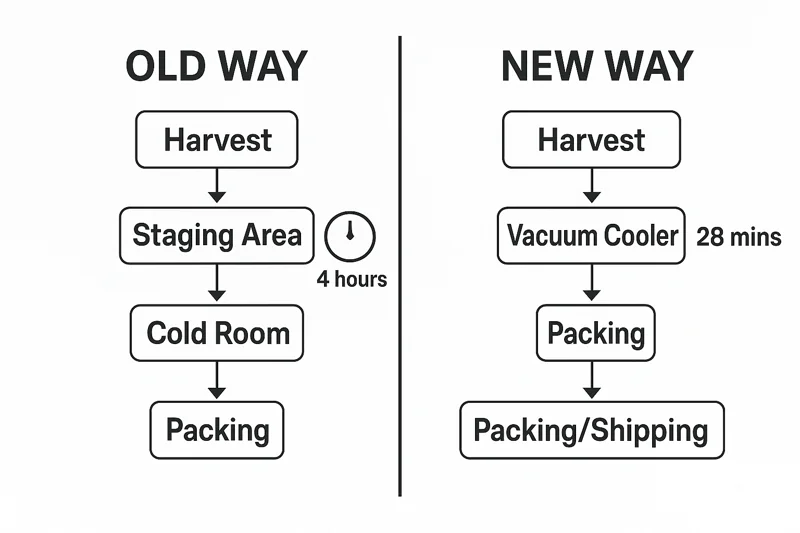 Staging Area (with a clock showing 4 hours) -> Cold Room -> Packing. The “New Way” shows Harvest -> Vacuum Cooler (28 mins) -> Packing/Shipping.”>
From Bottleneck to Superhighway
For a process-driven manager like Sophia, who runs a tight schedule for her fast-food chain’s central kitchen, predictability4 is paramount. Her entire production line depends on receiving fresh ingredients at a specific time, every time. The absolute consistency of a vacuum cooler5‘s cycle makes this possible and allows her to run a lean, just-in-time inventory system.
Creating a "Just-in-Time6" Workflow and Reducing Labor
Imagine your workflow with a vacuum cooler. A pallet comes in from the field. It goes directly into the cooler. Less than 30 minutes later, it comes out perfectly chilled and ready for immediate packing or shipment. There is no large, refrigerated "staging area" for precooling. Workers aren’t spending hours with pallet jacks shuffling product around. The cooling step is no longer a day-long process; it’s a quick, in-line step, just like washing or boxing. This continuous flow model7 means you can run a much leaner operation. You need less space, and you can often reduce your labor needs for the cooling process by 50% or more. During peak season, this means eliminating costly overtime pay. For Carlos’s farm, it allows his team to harvest, cool, and load a truck for export on the same day, which is a massive competitive advantage that traditional methods simply cannot match. A harvest at 5 PM can be on a truck and leaving the facility by 6 PM.
The Power of Predictability and Compact Footprint
A traditional cold room’s cooling time is highly variable. It depends on the ambient temperature and how densely the room is packed. It could take 12 hours one day and 18 the next. This makes planning impossible and leads to idle trucks, incurring costly demurrage fees. A vacuum cooler’s cycle is incredibly consistent. Whether it’s a hot day or a cool day, the 28-minute cycle to cool lettuce to 2°C remains 28 minutes. This allows you to schedule your labor and logistics with precision. Furthermore, a two-pallet vacuum cooler can process nearly 50 pallets in a single 24-hour period, a throughput that would require a cold room of several thousand square feet. The vacuum cooler achieves this in a footprint of less than 30 square meters. For facilities where space is at a premium, this is a game-changing advantage.
| Operational Factor | Traditional Cold Room | Vacuum Cooler System |
|---|---|---|
| Process Time | 12-24 hours (unpredictable) | < 30 minutes (highly predictable) |
| Workflow | Batch Process (with bottlenecks) | Continuous Flow (in-line) |
| Labor Needs | High (for moving/managing pallets) | Low (direct load/unload) |
| Footprint | Very large | Compact and efficient |
How Does Vacuum Cooling Improve Product Quality and Appearance?
Product that is technically "not spoiled" can still be low quality. Slow cooling causes produce to wilt, lose its vibrant color, and shed weight as it continues to respire. This "tired" looking produce gets you a lower price, or worse, gets rejected by discerning buyers.
The appearance of your product is your first, and often only, chance to make a sale. A head of lettuce that is limp and dull or broccoli that shows hints of yellowing sends a clear signal of poor quality and short remaining shelf life, even if it is perfectly safe to eat. You are forced to sell it at a discount.
Vacuum cooling preserves the "just-picked" quality of vegetables by locking in moisture at the cellular level. The rapid, uniform cooling prevents the wilting and water loss that occurs during slow cooling, resulting in a product that is crisper, has a more vibrant color, and maintains a higher salable weight.
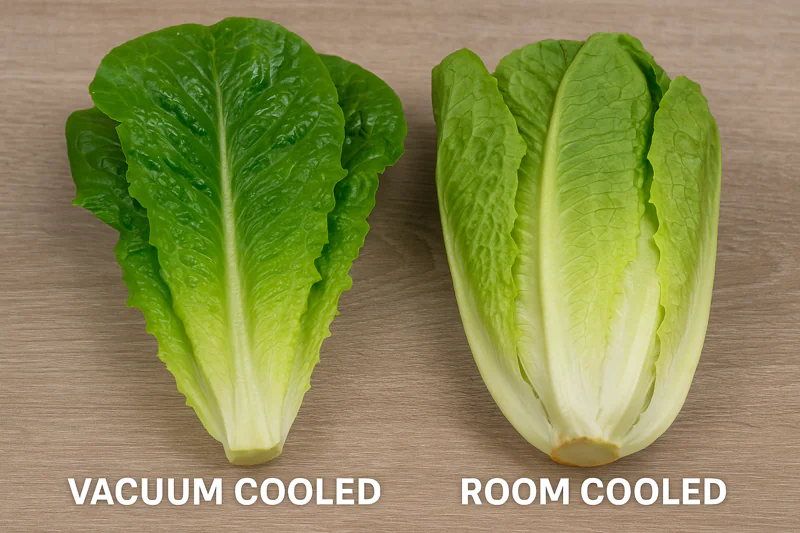
The Cellular Advantage
This tangible improvement in quality is a huge factor for buyers like Norman, who understand that a premium appearance translates directly to a premium price and faster sales at the retail level. It’s about maximizing the value of every single case.
Preserving Turgor Pressure and Crispness
The crispness of a vegetable comes from something called turgor pressure8—the water pressure inside its plant cells that keeps the cell walls rigid, like air in a tire. When produce loses moisture slowly in a warm environment, these cells lose pressure and the entire structure becomes limp and soft. This is wilting. The vacuum cooling9 process is so fast that it prevents this from happening. While it does evaporate a small amount of water (about 1% of its weight for every 6°C of cooling), this is a surface-level event that happens in minutes. This is far less damaging than the slow, systemic dehydration that occurs over 12 hours in a cold room as the product continues to respire and lose water to the dry air. By preserving the internal turgor pressure, we maintain that satisfying "snap" and crisp texture that consumers associate with absolute freshness.
Maximizing Salable Weight and Color
Paradoxically, even though vacuum cooling removes a small amount of water, it often results in a higher final salable weight10. Why? Because a product cooled slowly in a cold room can lose 3-5% of its weight over 24 hours through respiration and dehydration. The controlled, minimal moisture loss from vacuum cooling is often less than this uncontrolled, slow loss. You are literally selling more of the product you harvested. Furthermore, the process locks in color. For green vegetables, the rapid cooling stops the enzymes that break down chlorophyll, which is what causes the dreaded yellowing in broccoli and leafy greens. For a central kitchen manager like Sophia, receiving produce that is consistently vibrant and crisp is non-negotiable for her recipes and brand standards.
What Is the Real Financial Impact on Your Business?
Spoilage is more than just lost product; it’s lost profit. Every head of lettuce that wilts, every box of broccoli that yellows, represents the sunk costs of cultivation, labor, water, and fertilizer, with zero return. It is the most expensive garbage you will ever produce.
Relying on slow cooling methods means accepting a certain percentage of this loss as unavoidable. This directly eats into your profit margins and limits the potential of your business. You might avoid shipping to certain lucrative but distant markets because you know the product simply won’t survive the journey.
The primary financial benefit of a vacuum cooler is converting spoilage loss directly into salable revenue. By dramatically reducing waste, improving product quality to command a higher price, and enabling access to more distant markets, the technology delivers a powerful and rapid return on investment.
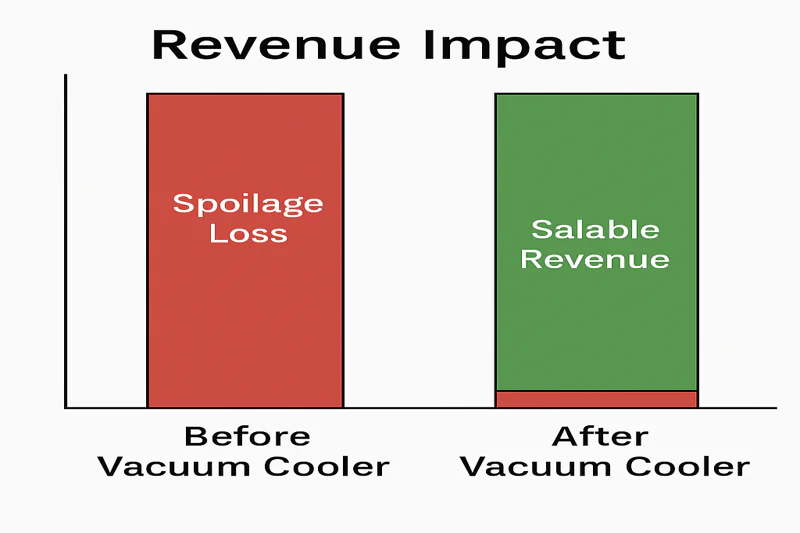
A Multi-Faceted Return on Investment
For a professional buyer and investor like Norman, the decision always comes down to the numbers. He needs to see a clear, logical path from the initial capital expenditure to a strong positive return. The financial case for vacuum cooling is one of the most compelling in all of agricultural technology, built on several pillars.
The Value of Saved Product
Let’s use a conservative, real-world example. A mid-sized farm harvests 200 tons of leafy greens per month, valued at $1,500 per ton.
- With traditional cooling: They experience an average spoilage and rejection rate of 12%.
- Loss = 200 tons * 12% = 24 tons per month.
- Annual Lost Revenue = 24 tons/month $1,500/ton 12 months = $432,000 per year.
- With an ALLCOLD vacuum cooler: The spoilage rate drops to just 3%.
- Loss = 200 tons * 3% = 6 tons per month.
- Annual Lost Revenue = 6 tons/month $1,500/ton 12 months = $108,000 per year.
The direct annual saving—or revenue gained—is $324,000. This number alone often provides a payback period of less than two years on the equipment investment.
New Markets and Premium Prices
The financial benefits don’t stop at preventing loss. The extended shelf life is an offensive weapon. For Carlos, it means he can now confidently bid on contracts with Canadian supermarket chains that were previously out of reach. These markets often pay 20-30% more than local ones. Furthermore, the superior quality—the crispness, color, and freshness—achieved through vacuum cooling allows his sales team to build a premium brand. High-end retailers will pay more for produce with longer code dates and a consistently excellent appearance, creating a second stream of new, higher-margin revenue. You are no longer competing just on price; you are competing on quality, and winning.
Conclusion
The benefits of vacuum cooling are not incremental; they are transformative. It is a strategic investment that extends shelf life, boosts operational efficiency, enhances product quality, and delivers a powerful financial return by converting waste into profit and opening doors to new markets. It’s a proven technology that empowers your business to grow.
Explore this link to discover innovative techniques that can significantly enhance the shelf life of your produce. ↩
Learn about vacuum cooling’s rapid effectiveness in preserving freshness and preventing spoilage. ↩
This resource provides essential insights into food safety standards that ensure quality and compliance. ↩
Understand the significance of predictability in supply chains and how it can lead to better planning and efficiency. ↩
Learn about vacuum coolers and their efficiency in food processing, which can revolutionize your workflow. ↩
Explore this link to understand how Just-in-Time can streamline operations and reduce costs. ↩
Discover the benefits of a continuous flow model and how it can enhance productivity and reduce waste. ↩
Understanding turgor pressure is essential for grasping how plants maintain their structure and freshness. ↩
Explore vacuum cooling to see how it effectively maintains food quality and extends shelf life. ↩
Learn about salable weight to understand how it impacts profitability and product quality in the market. ↩
Looking for the right vacuum cooler for your operation?
Allcold engineers work with packhouses and exporters to spec the right system for your product, volume, and site conditions.

Mila
You May Also Like
Used vs. New Vacuum Coolers: Is the Lower Price Worth It?
Buying a used vacuum cooler? Compare load fit, condition, relocation, installed cost and support with a new system before deciding if the saving is real.
Why Does Produce Sweat After Vacuum Cooling?
FRESH PRODUCE · POST-COOLING HANDLING The cooling cycle can finish correctly—and the load can still become wet on its way
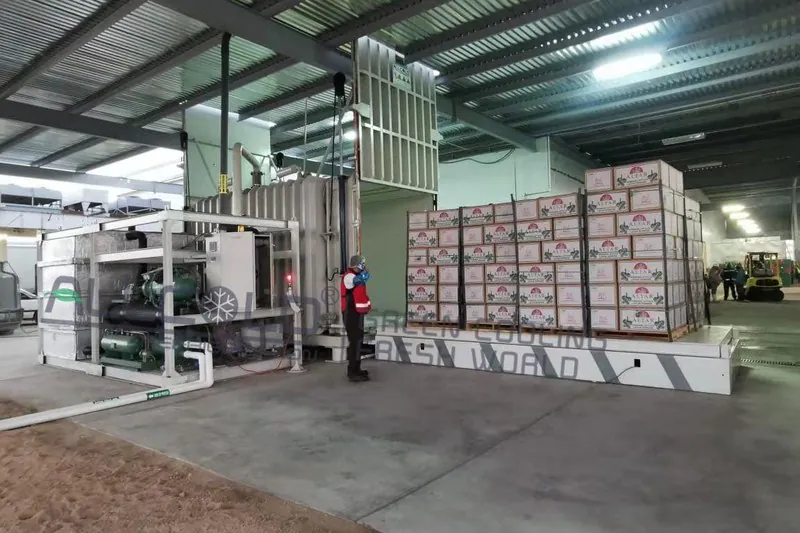
Vacuum Cooler Not Performing? Check Your Pallet Loading First
When a vacuum cooler produces inconsistent results—warm spots, longer cycle times, variable exit temperatures across the load—the machine is usually
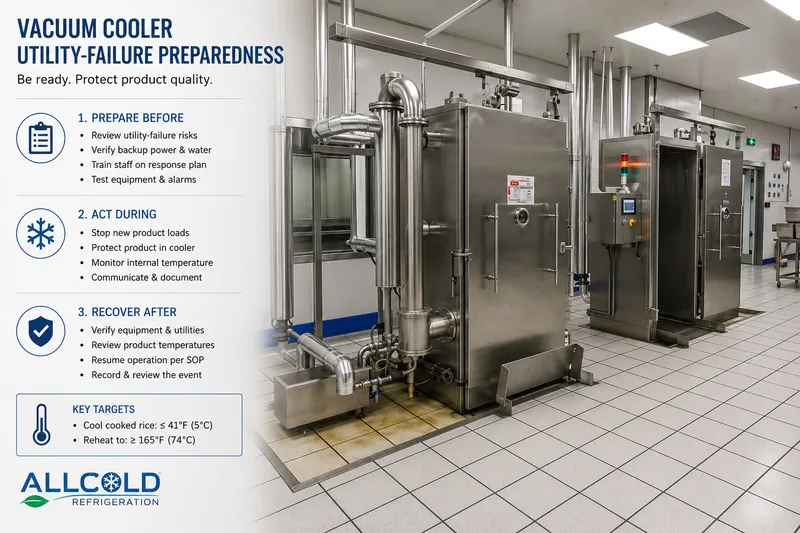
Why One Successful Cooked Rice Cooling Test Is Not Enough to Standardize a Central Kitchen Process
A cooked rice batch can pass a vacuum cooling test and still fail as a production process. That is the
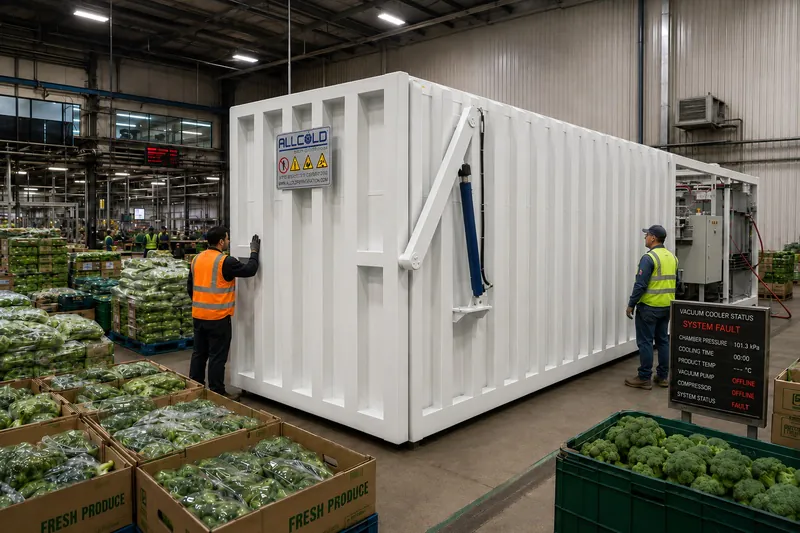
Why a Vacuum Cooler Utility Failure Becomes an Export Quality Problem Before It Becomes a Repair Problem
A vacuum cooler stoppage does not start as a maintenance problem. In a produce export operation, it becomes a quality
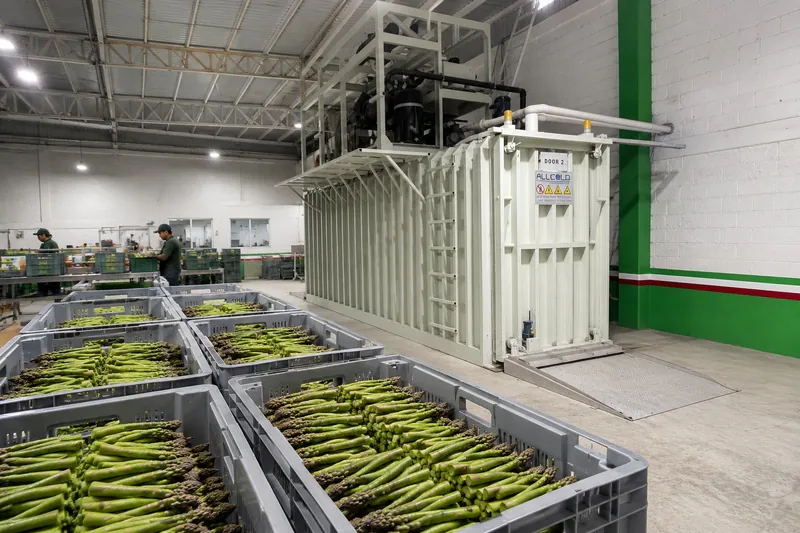
Why Asparagus Loses More Export Value in the First Two Hours After Cutting Than in the Entire Cold Chain That Follows
For fresh asparagus exporters, the most expensive quality loss often happens before the product even reaches the main cold chain.
Why Bean Sprouts Are One of the Hardest Vegetables to Pre-Cool Correctly and What Exporters Get Wrong
Bean sprouts look simple. They are light, moist, and usually packed in bulk or retail bags. But from a pre-cooling
Why Broccoli Loses Export Quality Faster Than Any Temperature Log Will Show
The complaint comes in from the buyer: yellowing, premature flowering, weak texture on arrival. The exporter reviews the cold room
Why Spinach Shipments That Leave Looking Perfect Arrive Looking Wrong
The complaint lands differently with spinach than with most other export vegetables. The exporter packed dark green, crisp product. The
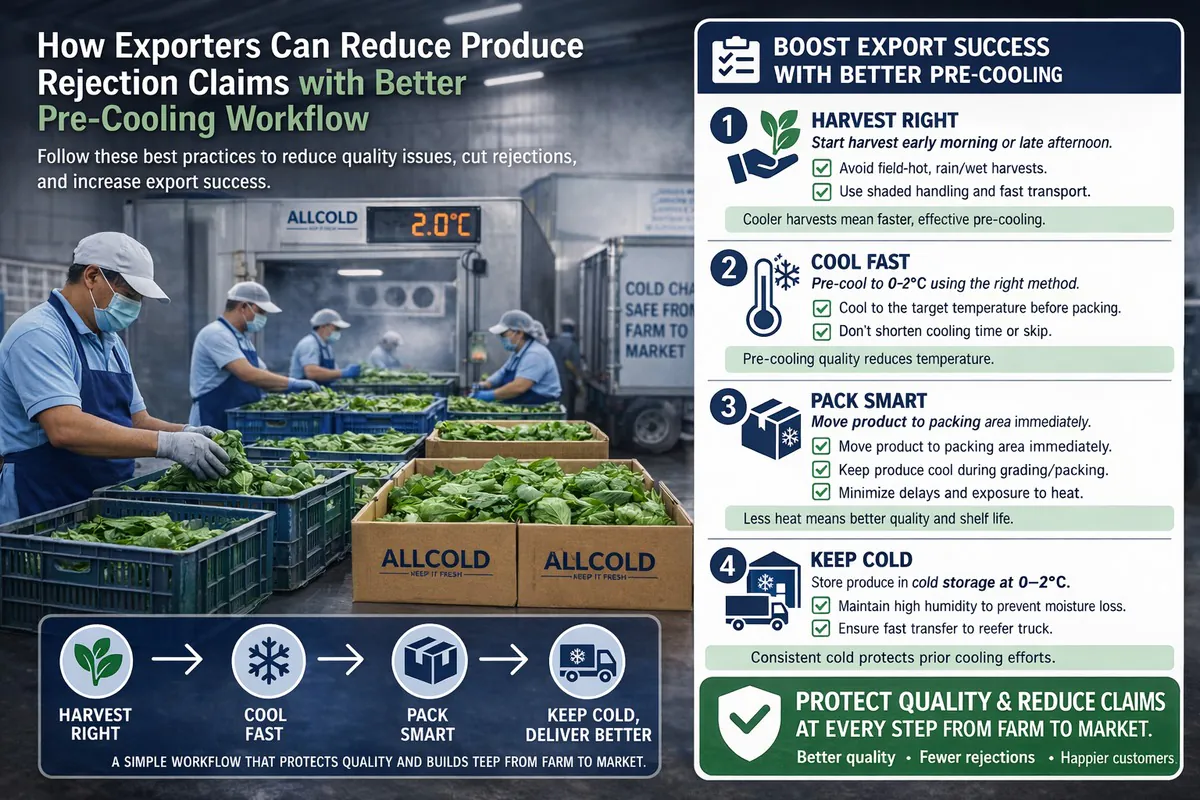
How Exporters Can Reduce Produce Rejection Claims with Better Pre-Cooling Workflow
Learn how exporters can reduce produce rejection claims by improving pre-cooling workflow, timing control, packing handoff, and first-mile cold chain stability.