
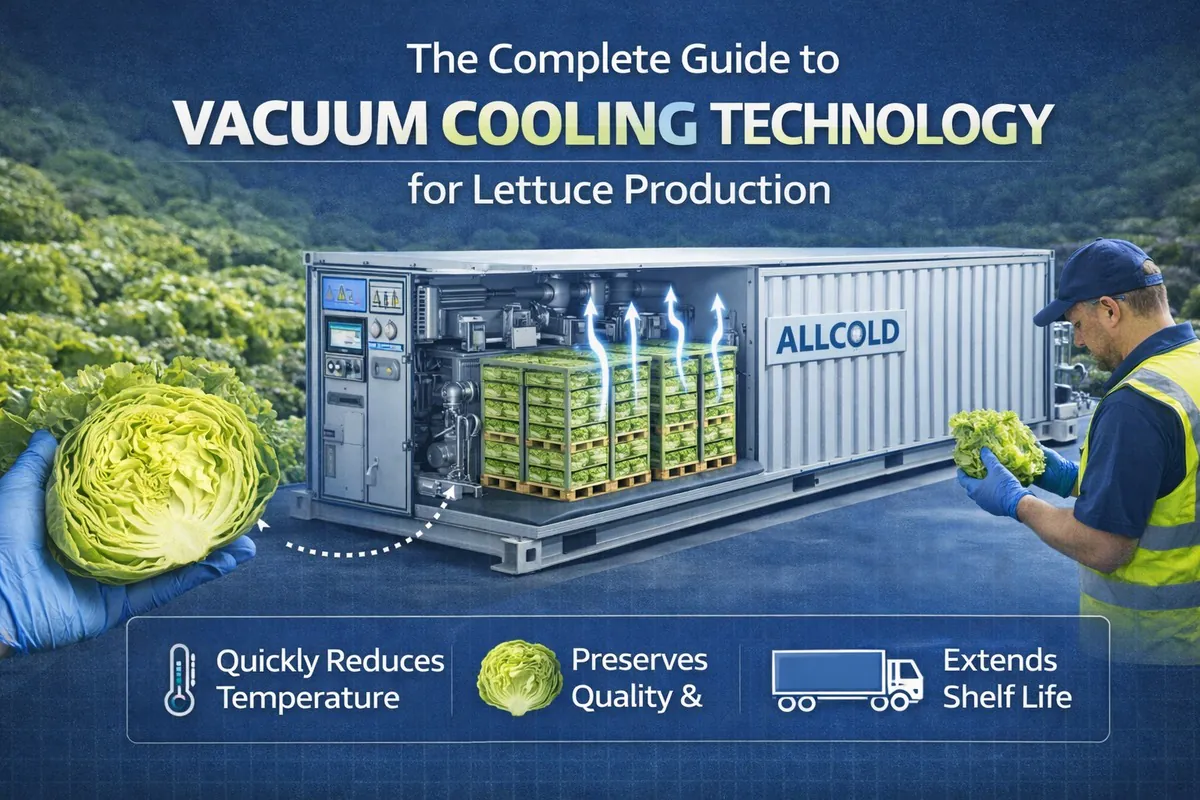
The Complete Guide to Vacuum Cooling Technology for Lettuce Production?
Lettuce is a race against nature. From the moment the stem is cut in the field, respiration heat begins to destroy the cell structure, turning a crisp harvest into wilted waste within hours. For modern farmers, the challenge isn’t just growing; it’s stopping the clock.
Vacuum cooling is the only technology capable of cooling leafy greens from field temperature (30°C) to storage temperature (2°C) in just 20 to 30 minutes. By utilizing the AVC series vacuum chambers, producers can ensure 100% uniform cooling, eliminate the risk of bacterial growth, and extend shelf life by up to 21 days for export markets.
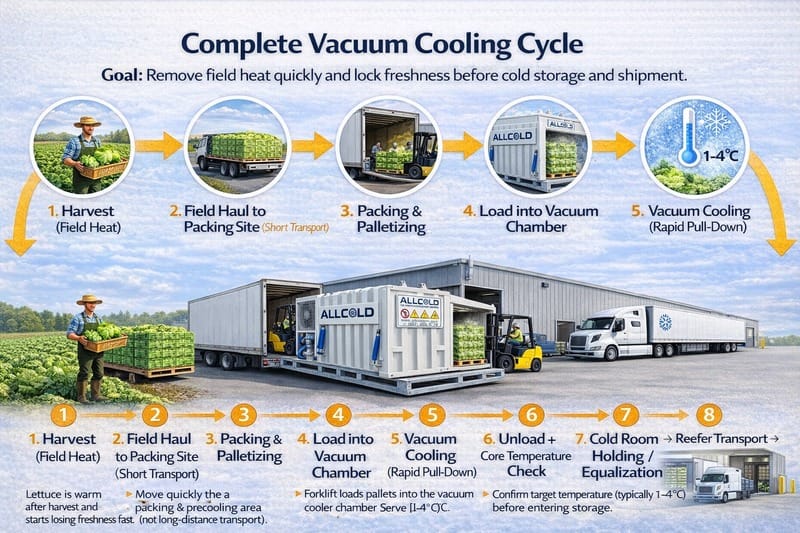
At Allcold, I have worked with growers worldwide—from huge operations in Mexico supplying US supermarkets to specialized farms in Vietnam. The question is always the same: "How do I secure my harvest against heat?" The answer lies in the physics of our AVC series. Unlike hydrocooling, which wets the product and invites rot, or forced air, which is too slow for peak season, vacuum cooling is fast, dry, and precise. But buying a machine is not enough; you must understand the technology to use it effectively. In this guide, I will take you deep into the mechanics, the operational logic, and the critical maintenance of the AVC system, ensuring you get the same results as my top clients.
The Core Physics: Why is Vacuum Cooling the "Silver Bullet" for Lettuce?
Why does boiling water make things cold? It sounds contradictory, but for lettuce, "boiling" moisture inside the leaf is the gentlest and fastest way to remove heat.
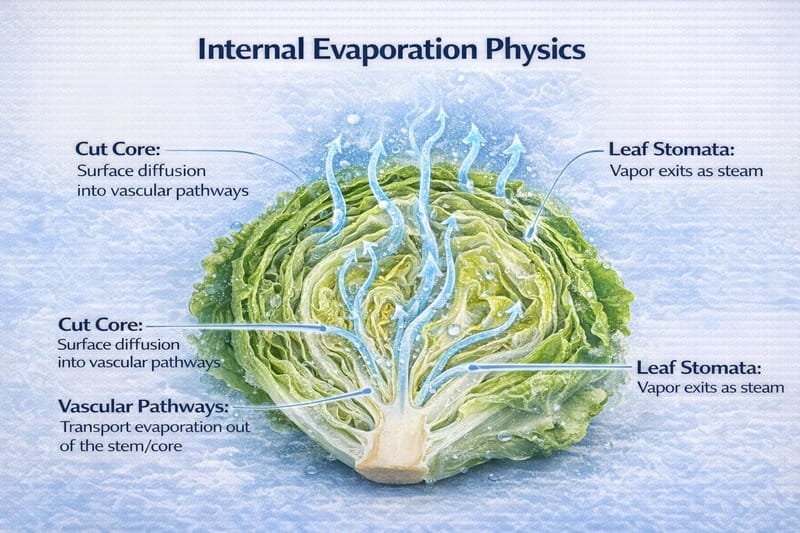
Vacuum cooling works on the principle of Latent Heat of Vaporization. By lowering the pressure in the AVC chamber, we lower the boiling point of water. As moisture inside the lettuce evaporates, it absorbs massive amounts of heat energy, cooling the product from the inside out instantly.
Understanding the Phase Change
To truly master lettuce preservation, we must look at the energy required for evaporation. The Latent Heat of Vaporization1 is the energy water needs to change from liquid to gas. In an Allcold AVC machine2, this energy is not supplied by a heater; it is stolen from the heat stored in the lettuce tissue itself.
As the vacuum pump evacuates the air from the chamber, the pressure drops. Once it hits the "Flash Point3" (around 6 millibars), the surface moisture on the leaves—and crucially, the moisture within the intercellular spaces—turns to vapor. This vapor carries the heat away with it.
According to our technical data for the AVC series, specifically designed for fresh vegetables, a standard cycle takes around 20 to 30 minutes (excluding loading time) to drop from an ambient 30°C to a finish temperature of 2-3°C. This speed is simply impossible to achieve with traditional refrigeration methods.
The "Inside-Out" Advantage
Traditional cooling methods like forced-air cooling push cold air from the outside. For a dense pallet of Iceberg lettuce, the outer leaves freeze while the core remains warm for 12+ hours. This "hot core" is where rot begins.
Vacuum cooling is omnidirectional. Because pressure equalizes instantly throughout the chamber, the evaporation happens in the center of the pallet at the exact same moment it happens on the outside. This uniformity is what allows our clients to ship to distant markets like Singapore or Dubai without fear of rejection upon arrival.
Table: Cooling Mechanism Comparison
| Feature | Allcold AVC Series | Forced Air Cooling | Hydrocooling |
|---|---|---|---|
| Mechanism | Latent Heat (Evaporation) | Convection (Air) | Conduction (Water) |
| Speed (30°C to 2°C) | 20 – 30 Minutes | 12 – 24 Hours | 40 – 60 Minutes |
| Uniformity | Perfect (Core = Skin) | Poor (Hot Cores) | Uneven |
| Moisture Status | Dry (Good for storage) | Dry (Dehydrating) | Wet (Risk of Rot) |
Intelligent Control: What is "Vacuum Delay" and Why Do You Need It?
Speed is dangerous if uncontrolled. If you pull the vacuum too fast, you can literally explode the cells of the lettuce. How do we cool fast but safe?
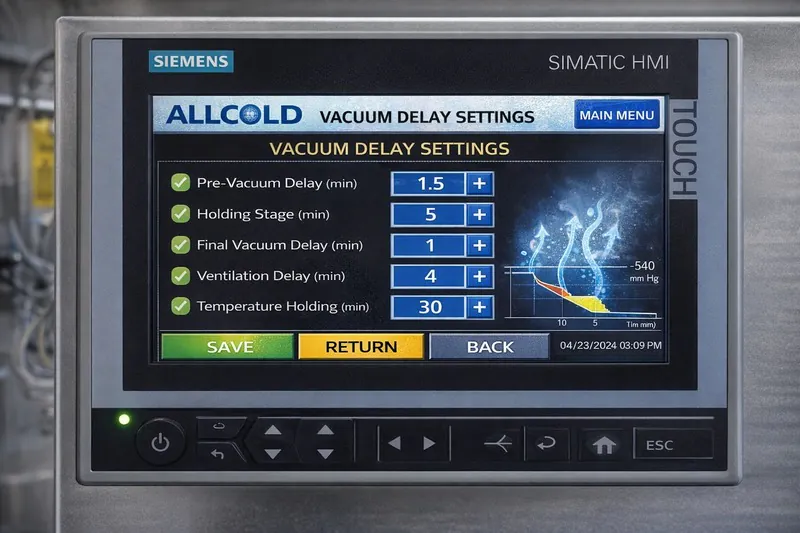
Our AVC machines feature a Vacuum Delay Facility. This system automatically pauses or slows the pressure drop for products with high "water yield resistance," allowing moisture to escape gently. Combined with a Siemens Touch Screen, operators can precisely manage the cooling curve to protect product quality.
The Science of "Vacuum Delay"
Not all vegetables release water at the same speed. Standard Iceberg lettuce is porous and "easy." However, denser items like Romaine hearts, Spinach, or Napa Cabbage have higher Water Yield Resistance4.
If the pressure in the chamber drops faster than the steam can escape from the plant cells, the internal pressure builds up. This causes the cells to burst, resulting in "transparent" or water-soaked leaves that turn slimy immediately. This is a common failure point for cheaper, less sophisticated machines.
The Vacuum Delay Facility5 is standard on our equipment. It detects the critical flash point and holds the vacuum level steady or slows the pump speed. This gives the moisture time to migrate gently to the surface before boiling off, ensuring the structure of the lettuce remains crisp and intact. This feature is the difference between a high-quality export product and a rejected shipment.
The "Brain" of the Machine
We equip our AVC units with a Touch Screen Operator Control. This isn’t just a display; it’s the command center.
- Visualization: It displays vacuum levels, product core temperature (via insertable probes), and elapsed time in real-time.
- Digital Processing Time: The screen provides a clear digital display of the processing time, allowing operators to predict exactly when the next load needs to be ready.
- Troubleshooting: The system includes a troubleshooting assist system, which is vital for remote farms. It helps diagnose issues without waiting for a technician to fly in.
Energy Efficiency: How to Minimize Operational Costs?
Running industrial refrigeration consumes significant power. In many agricultural regions, electricity is expensive or the grid is unstable. How do we keep costs down?
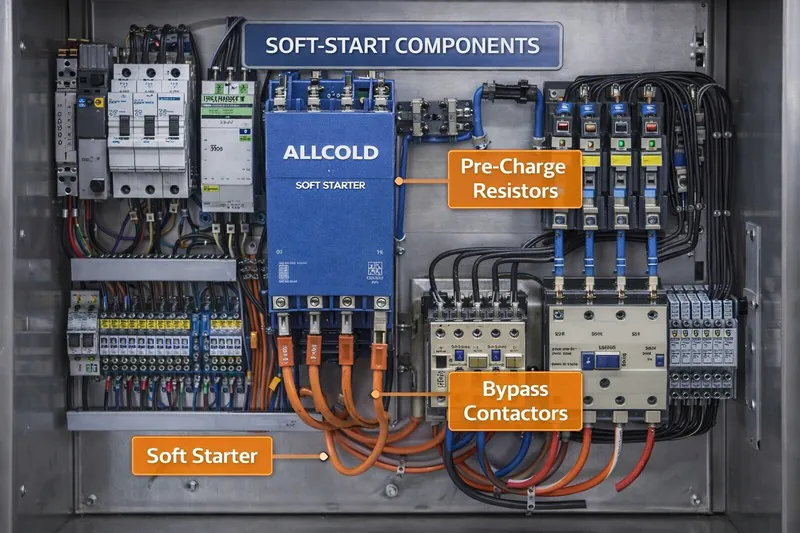
We utilize a Start Sequence to minimize electrical surges and an Auto-Sleep function that shuts the machine down when idle. High-efficiency evaporators and air-cooled condensers are matched to the compressor to ensure every kilowatt of power is used effectively.
Managing the Power Load
For clients like Carlos in Mexico or Norman in the USA, peak energy demand charges can be huge. We design our AVC machines to be grid-friendly.
- Sequential Starting: When you hit the start button, the machine does not turn on every motor at once. It uses a Start Sequence. The vacuum pump starts first, then the refrigeration fans, then the compressor. This minimizes the "Inrush Current6," preventing your farm’s main breaker from tripping and protecting your local transformer.
- Auto-Sleep Mode7: In a busy packing house, there are often gaps between harvests. Forklift drivers get distracted, and lunch breaks happen. If the vacuum cooler has not been operated for a set period, the machine will automatically shut down to save electricity. It wakes up instantly when the operator presses the cycle start button again.
- Optimized Components: We use high-efficiency air-cooled condensers and top-brand compressors (like Bitzer or Emerson) to minimize the KW rating required. This means you are not paying to cool the steel chamber, but only the produce inside it. Every component is sized to maximize the cooling effect per unit of energy consumed.
Installation & Mobility: Skid-Mounted vs. Fixed?
Do you need to pour concrete and run massive pipes? Not with modern design. Flexibility is key for seasonal farming.
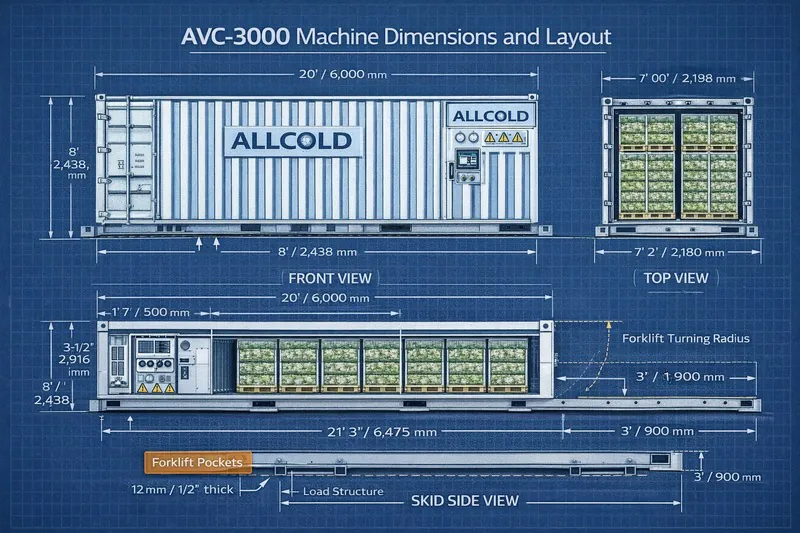
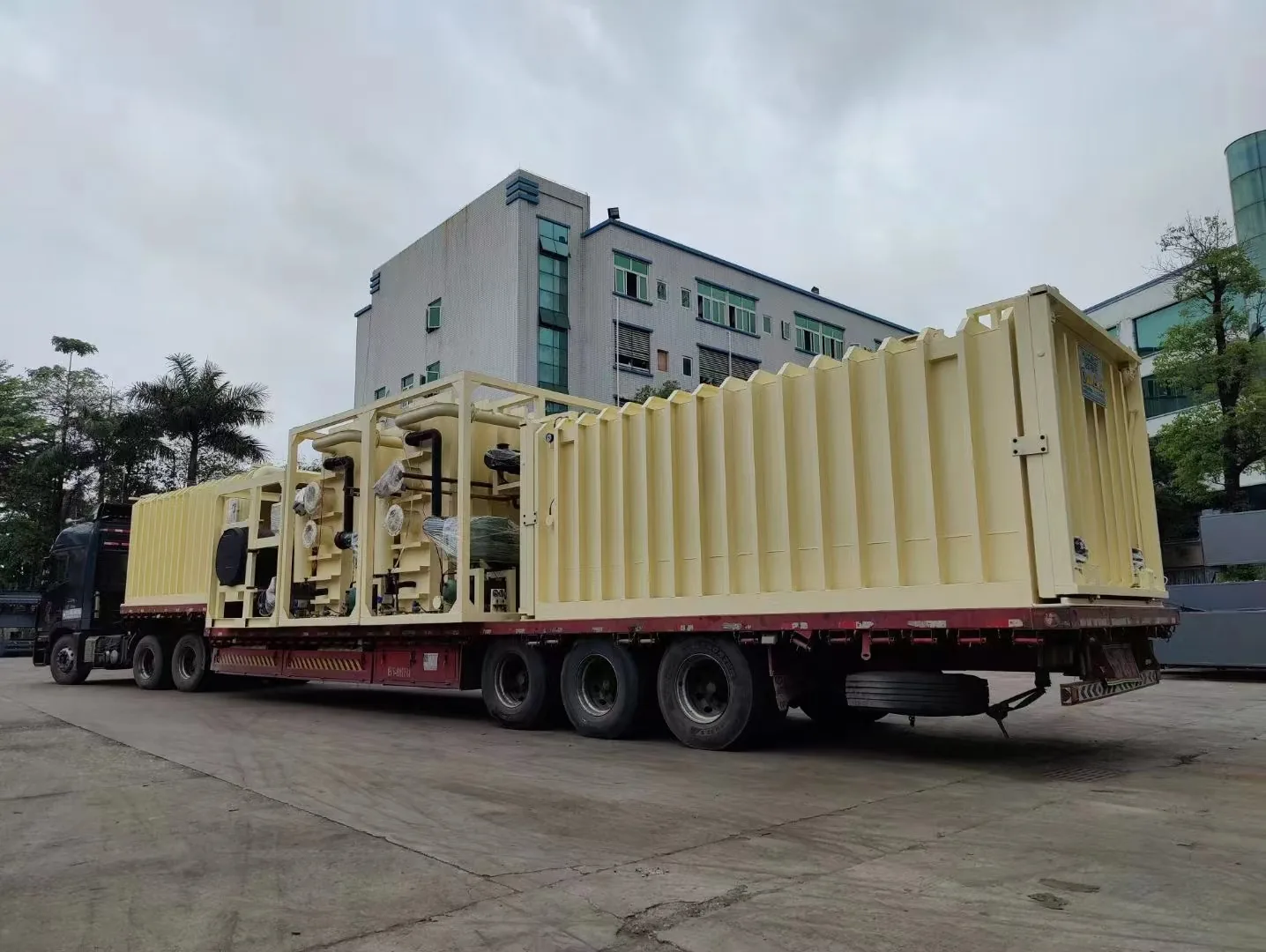
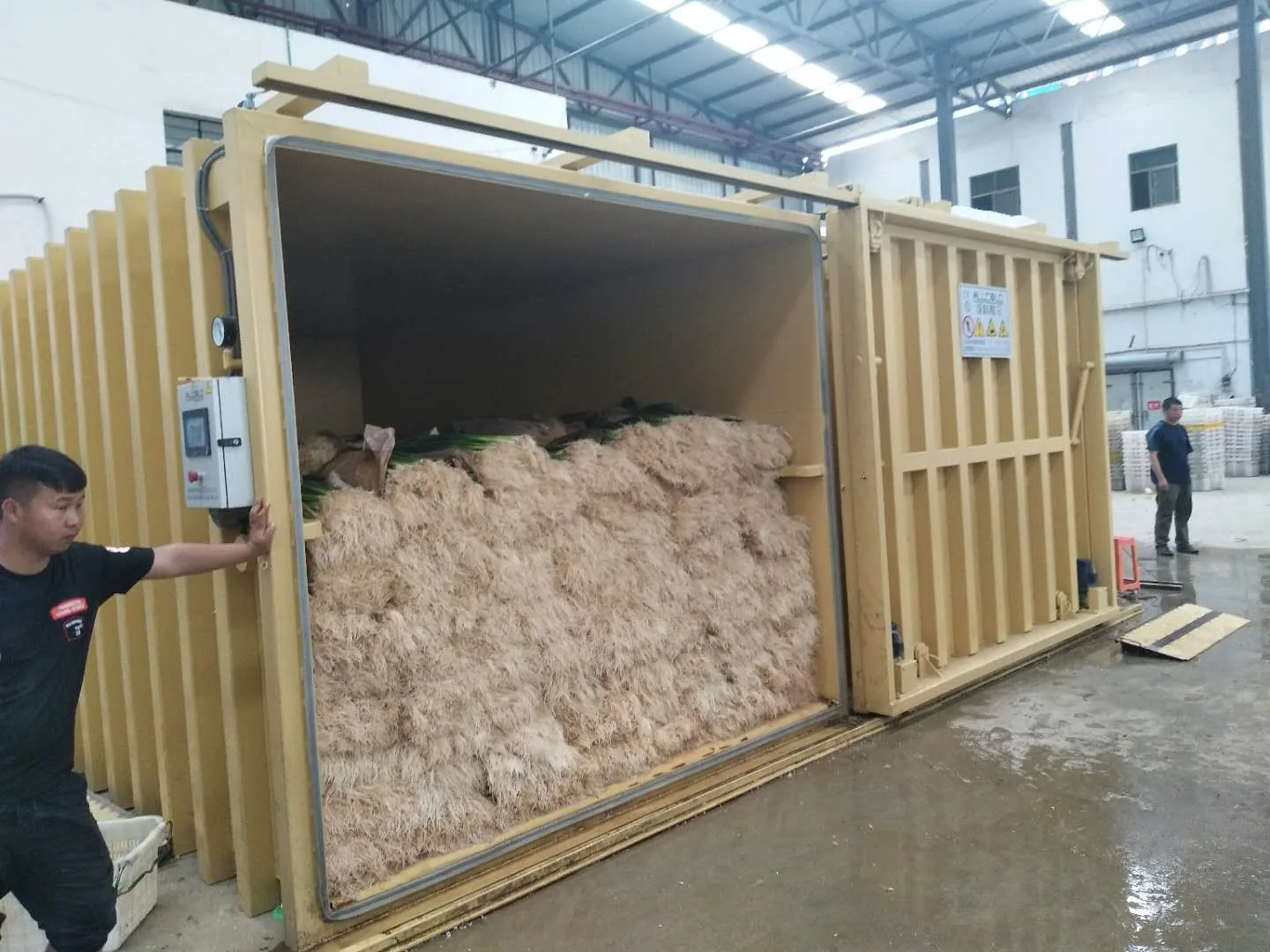
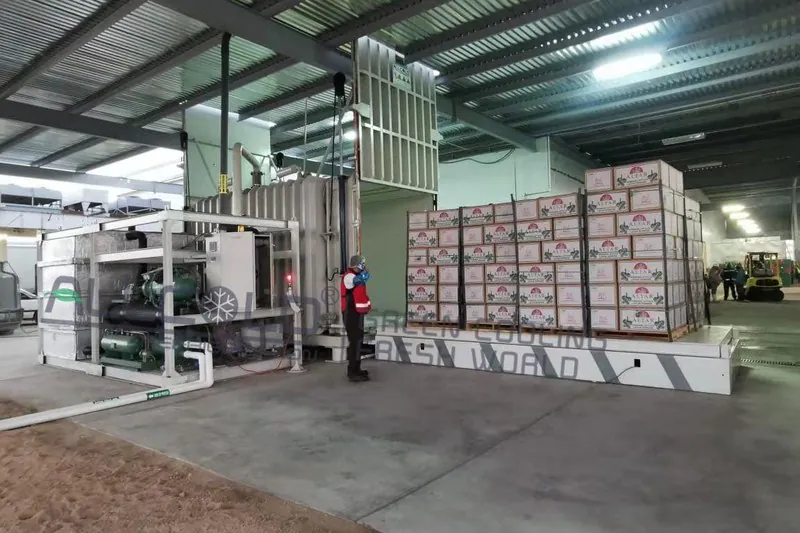
Allcold AVC units are typically designed as Skid-Mounted systems. This "Plug & Play" design integrates the vacuum chamber, cooling unit, and controls onto a single frame, allowing for easy installation and relocation without complex civil works.
The "Plug & Play" Advantage
In the past, installing a vacuum cooler was a construction project. Today, it is a logistics operation.
We offer Plug & Play models where the terminal connections are simple plug-in types. This dramatically reduces installation time and cost.
For example, a typical 2-pallet unit usually consists of an indoor unit (the chamber) and an outdoor cooling unit.
- Indoor Unit: Contains the chamber and controls. It is compact enough to fit inside your existing packing shed without major renovations.
- Cooling Unit: Contains the noisy compressor and condenser, placed outside for better airflow.
- Mobility: Because they are mounted on steel skids, if you lease land and move your operation next season, you can pick up the entire machine with a forklift and put it on a truck. You cannot do that with a concrete hydrocooler or a fixed cold room.
Robust Construction
The vacuum chamber is a pressure vessel. It must withstand the crushing force of the atmosphere every 20 minutes.
Our chambers are built with heavy-duty steel reinforced with I-beams. For example, even a small 150kg/cycle unit weighs over 3500kg to 4000kg. This weight is a testament to the durability and safety of the structure.
For international clients, we ensure compliance with safety standards. Our machines can be certified for the Pressure Equipment Directive (PED) for the European market or ASME standards for North America, ensuring safety and durability for years of operation.
Maintenance: The "Oil Water Separation" Rule
A vacuum cooler is a machine that "eats" water vapor. If you don’t manage that water, it will destroy your vacuum pump. What is the one daily task you cannot skip?
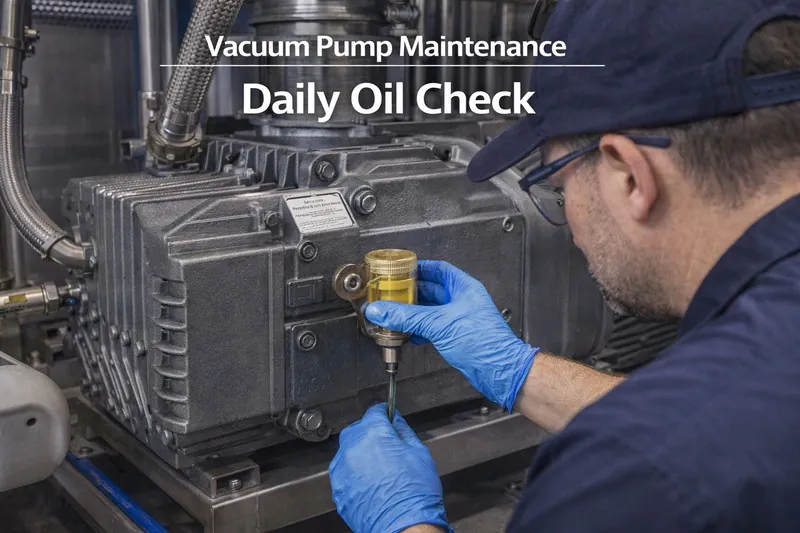
The most critical maintenance is the Daily Pump Warm-Up. You must run the vacuum pump for 15-20 minutes before operation to heat the oil. This evaporates any moisture trapped in the oil tank, preventing rust and pump failure.
Protecting the Heart of the Machine
The vacuum pump is the engine of the AVC system. During the cooling of lettuce, tons of water vapor flows through the system. While the Refrigeration Trap8 (typically set between -8°C and +2°C) catches most of it, some vapor inevitably enters the pump oil.
If the machine is turned off and cools down, that vapor condenses into water and settles at the bottom of the oil tank. Water in oil leads to emulsification (milky oil), poor lubrication, and eventually rust inside the pump.
The Protocol:
- Warm-Up: Before the first cycle (or after the last cycle), run the pump against a closed valve for roughly 20 minutes. This heats the oil to >80°C.
- Evaporation: At this temperature, the trapped water boils out of the oil and exits through the exhaust. This simple step can double the life of your pump.
- Seasonal Care: We recommend an overall hygiene maintenance every two seasons. If the equipment is left unused for a long period (like the off-season), you must cut off general power and ensure the unit is not affected by damp or dust.
Table: Maintenance Schedule
| Frequency | Task | Purpose |
|---|---|---|
| Daily | Pump Warm-Up | Remove water from oil |
| Weekly | Check Oil Level | Ensure lubrication |
| Monthly | Clean Condenser | Maintain cooling efficiency |
| Seasonally | Hygiene Clean | Food safety |
| Yearly | Check Door Seals | Maintain vacuum integrity |
Conclusion
For the dedicated lettuce producer, the Allcold AVC series is not just an equipment choice; it is a strategic asset. By distinguishing itself from the food-grade AVCF series, the AVC is purpose-built for the high-volume, rugged demands of agriculture. It combines the raw speed of physics with the intelligence of Vacuum Delay and the efficiency of Auto-Sleep modes. Whether you are fighting the heat in Vietnam or meeting strict quality standards in Europe, understanding these technical nuances ensures your harvest stays fresh, your costs stay low, and your buyers stay happy.
Understanding this concept is crucial for mastering energy transfer in food preservation. ↩
Discover the technology behind the Allcold AVC machine and its role in efficient lettuce preservation. ↩
Learn about the Flash Point to grasp how vacuum cooling effectively preserves freshness. ↩
Understanding Water Yield Resistance can help improve vegetable processing and quality control. ↩
Exploring the Vacuum Delay Facility can enhance your knowledge of advanced food processing techniques. ↩
Understanding Inrush Current is crucial for managing energy efficiency and preventing equipment damage. ↩
Exploring Auto-Sleep Mode can help you learn about energy conservation techniques that save costs and enhance efficiency. ↩
Understanding the Refrigeration Trap is crucial for maintaining optimal performance in cooling systems. ↩
Looking for the right vacuum cooler for your operation?
Allcold engineers work with packhouses and exporters to spec the right system for your product, volume, and site conditions.

Mila
You May Also Like
Used vs. New Vacuum Coolers: Is the Lower Price Worth It?
Buying a used vacuum cooler? Compare load fit, condition, relocation, installed cost and support with a new system before deciding if the saving is real.
Why Does Produce Sweat After Vacuum Cooling?
FRESH PRODUCE · POST-COOLING HANDLING The cooling cycle can finish correctly—and the load can still become wet on its way
Vacuum Cooler Not Performing? Check Your Pallet Loading First
When a vacuum cooler produces inconsistent results—warm spots, longer cycle times, variable exit temperatures across the load—the machine is usually
Why One Successful Cooked Rice Cooling Test Is Not Enough to Standardize a Central Kitchen Process
A cooked rice batch can pass a vacuum cooling test and still fail as a production process. That is the
Why a Vacuum Cooler Utility Failure Becomes an Export Quality Problem Before It Becomes a Repair Problem
A vacuum cooler stoppage does not start as a maintenance problem. In a produce export operation, it becomes a quality
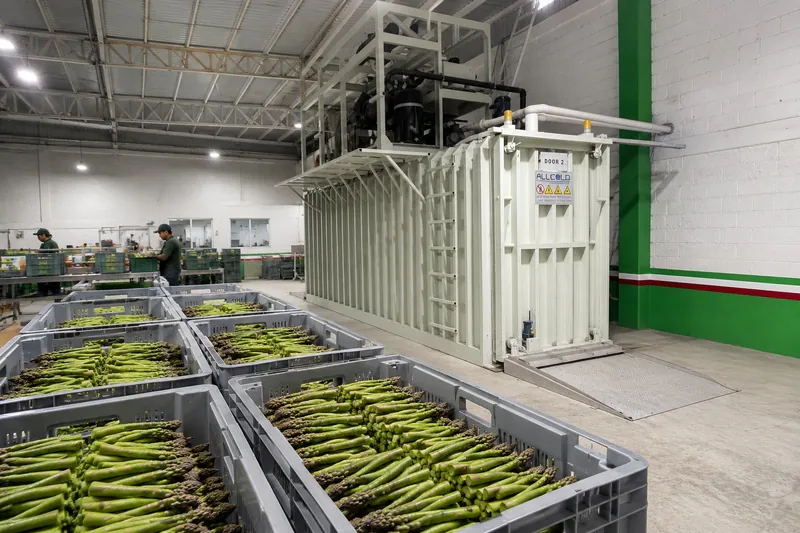
Why Asparagus Loses More Export Value in the First Two Hours After Cutting Than in the Entire Cold Chain That Follows
For fresh asparagus exporters, the most expensive quality loss often happens before the product even reaches the main cold chain.
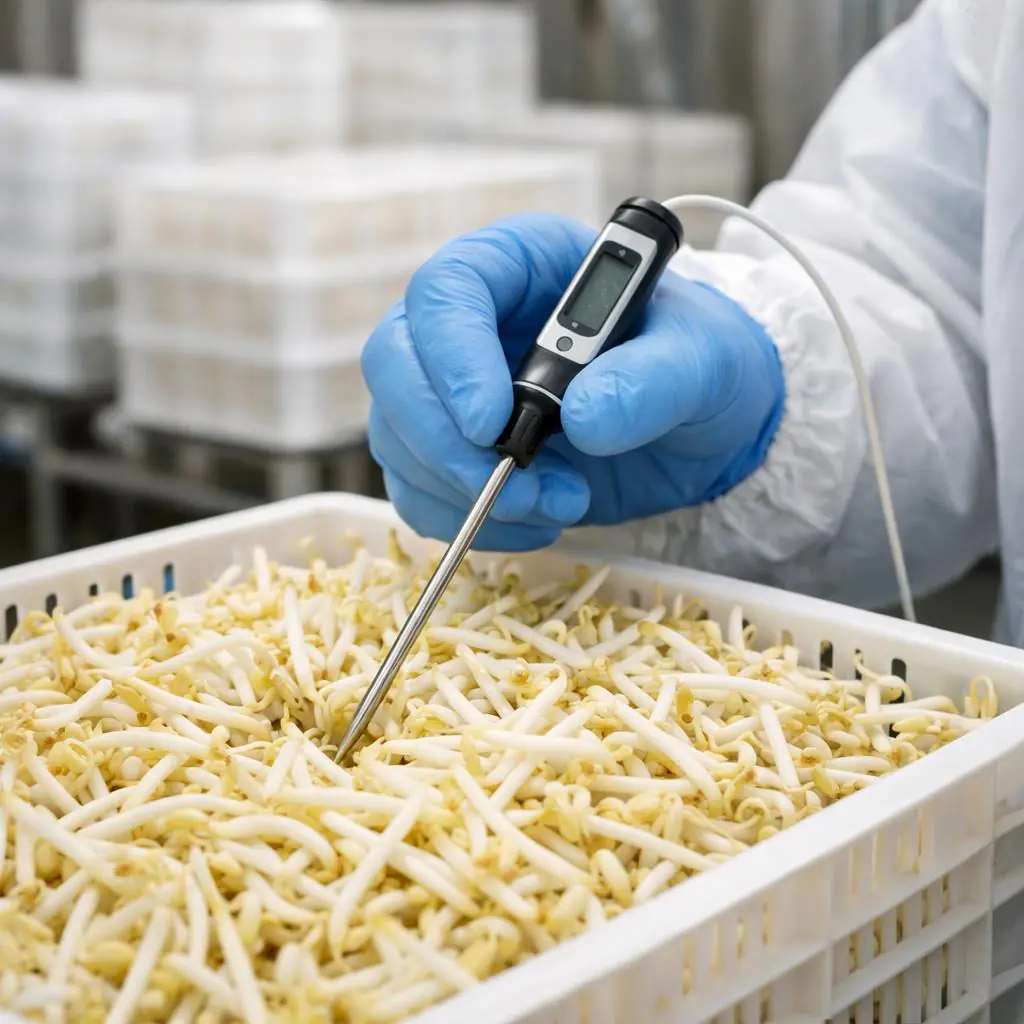
Why Bean Sprouts Are One of the Hardest Vegetables to Pre-Cool Correctly and What Exporters Get Wrong
Bean sprouts look simple. They are light, moist, and usually packed in bulk or retail bags. But from a pre-cooling
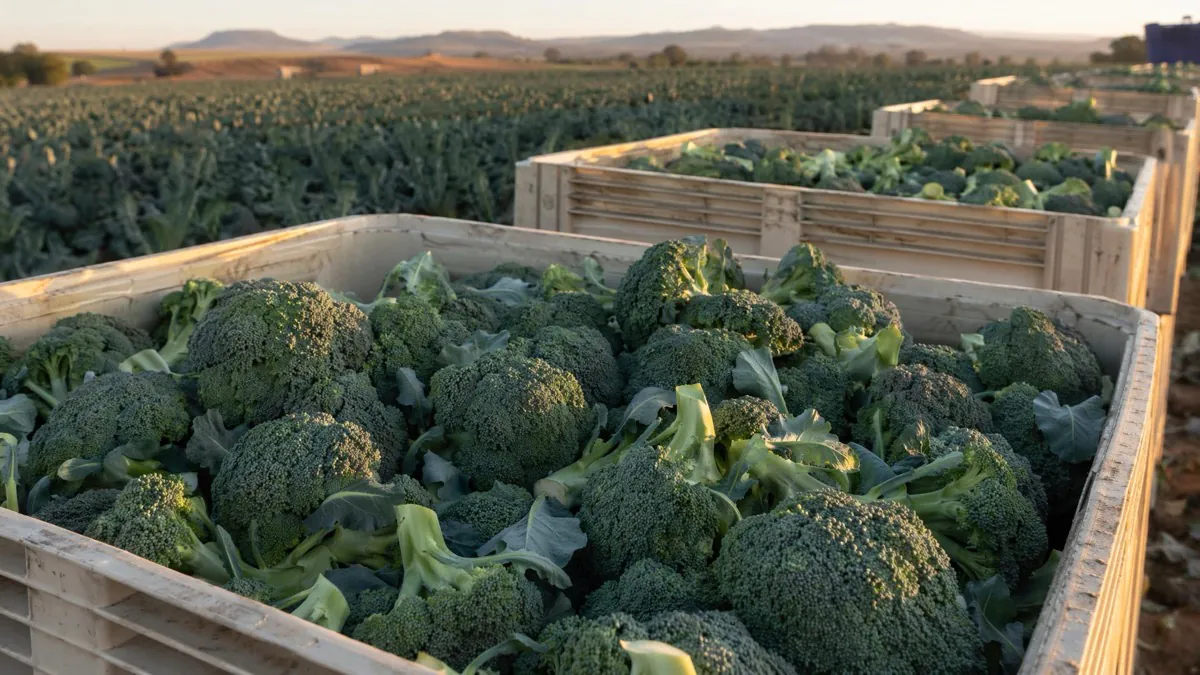
Why Broccoli Loses Export Quality Faster Than Any Temperature Log Will Show
The complaint comes in from the buyer: yellowing, premature flowering, weak texture on arrival. The exporter reviews the cold room
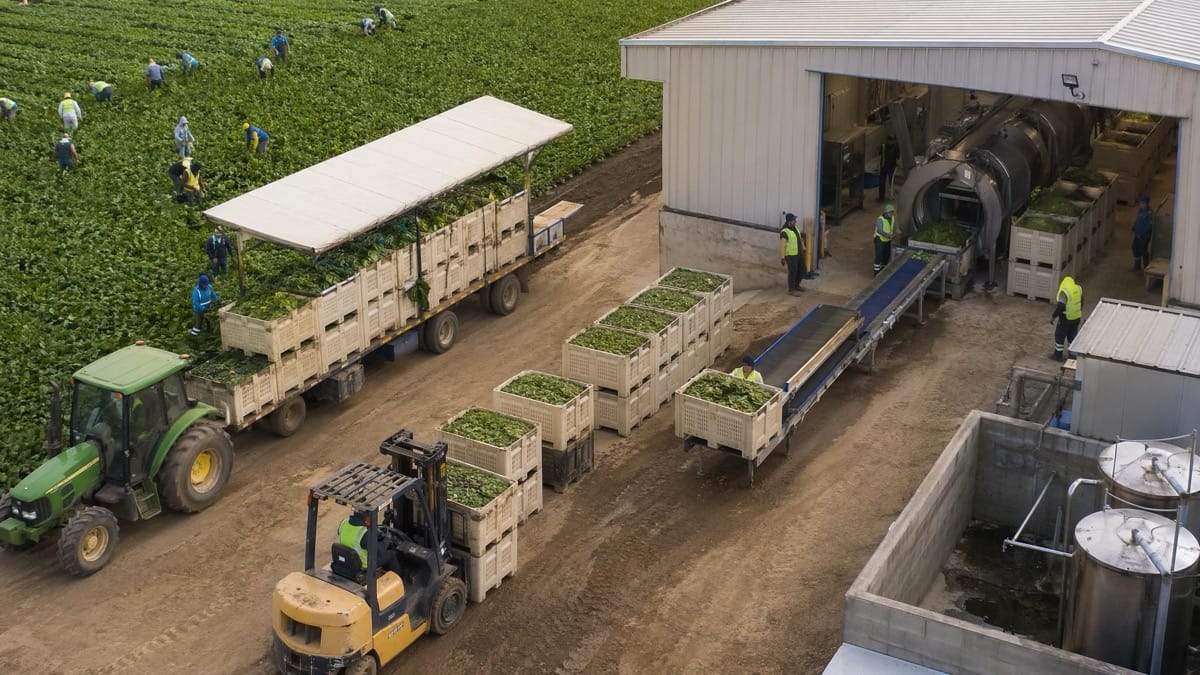
Why Spinach Shipments That Leave Looking Perfect Arrive Looking Wrong
The complaint lands differently with spinach than with most other export vegetables. The exporter packed dark green, crisp product. The
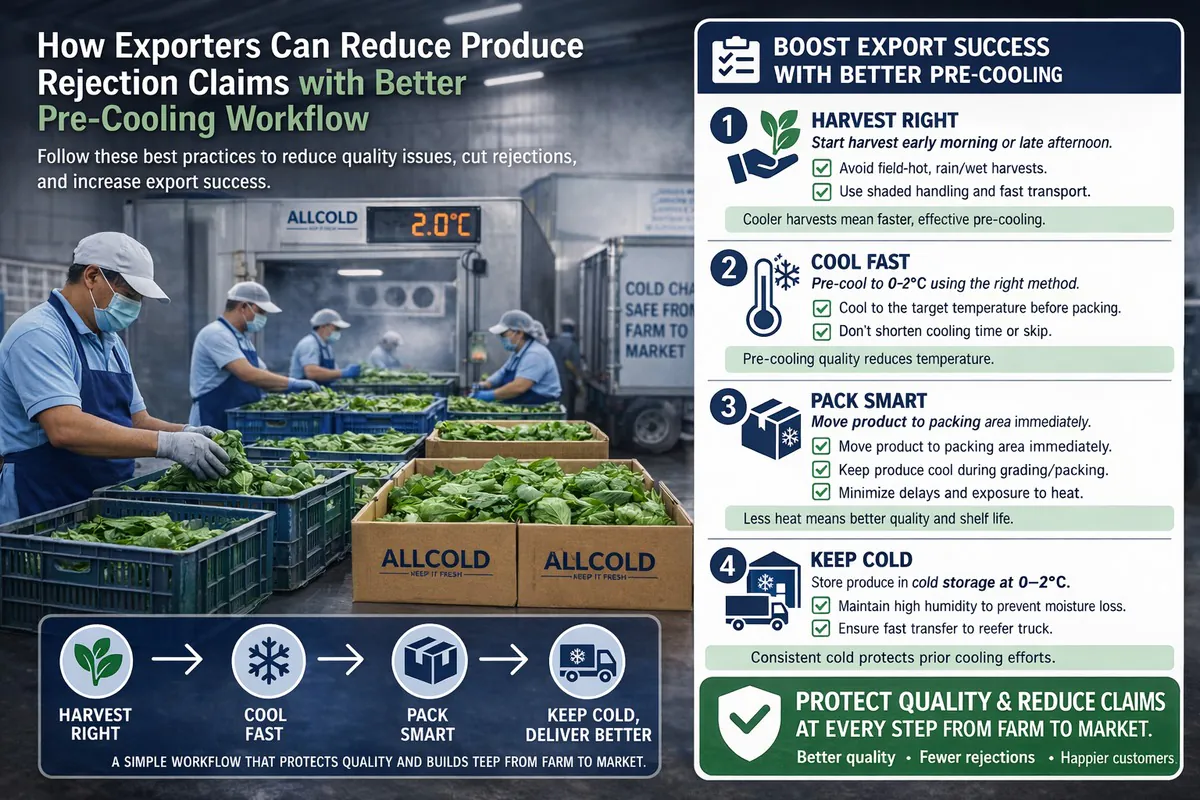
How Exporters Can Reduce Produce Rejection Claims with Better Pre-Cooling Workflow
Learn how exporters can reduce produce rejection claims by improving pre-cooling workflow, timing control, packing handoff, and first-mile cold chain stability.