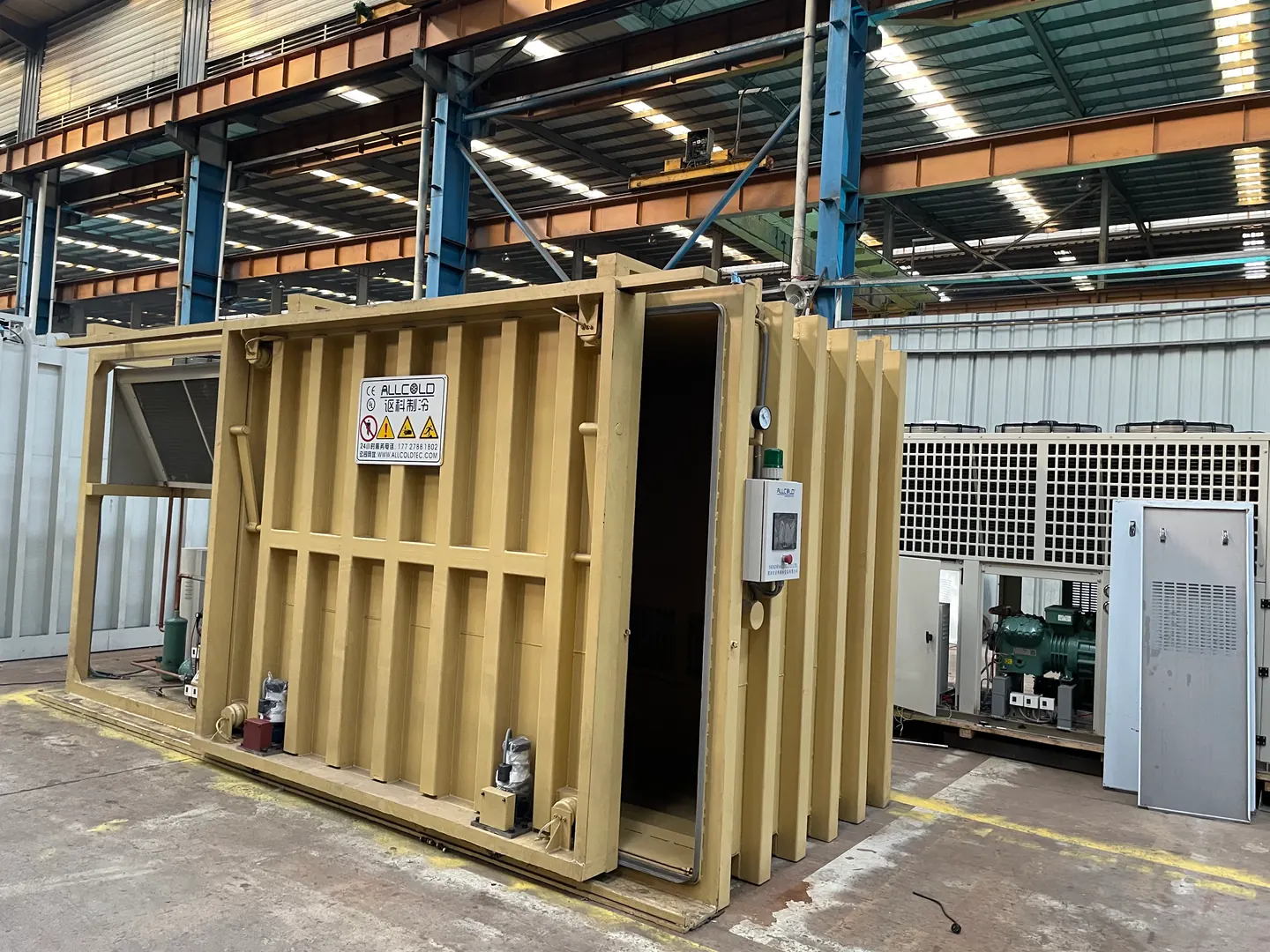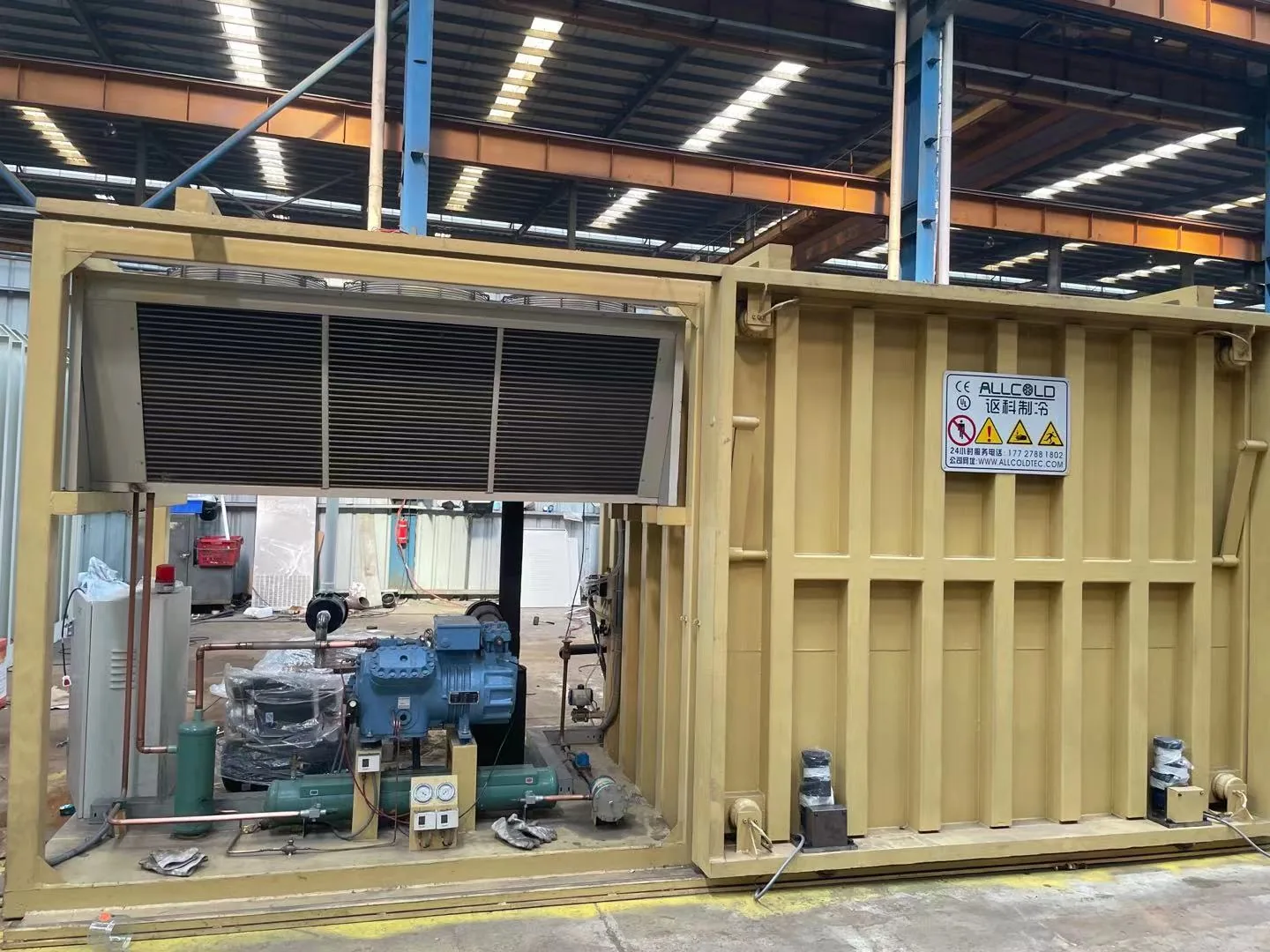
VACUUM COOLER BUYING GUIDE
A higher m³/h rating can help evacuate the chamber faster. It does not, on its own, tell you how quickly the next batch of produce will be ready.
Two vacuum cooler quotations arrive for the same packing operation. One advertises a larger vacuum pump. Both promise to handle your pallets. Is the bigger pump worth paying for?
Before comparing the price difference, ask what part of the batch it will shorten. Removing air, cooling the loaded product and exchanging pallets are not the same job. A stronger pump can be valuable, but only if pumping capacity is limiting the result you need.
The short answer: a larger, correctly matched vacuum pump may reduce evacuation time. Faster complete batches also depend on the chamber and pipework, water-vapour handling, refrigeration, product loading and handling time. Compare the proposed machine at an agreed product duty—not by nominal pump capacity alone.
Ask these three questions first
- What does the m³/h figure describe? Obtain the pump model, rating conditions and performance information for the relevant pressure range.
- What batch result is being promised? Specify product, net weight, packaging, starting temperature, target temperature and site conditions.
- What is included in the quoted time? Separate cooling time from the complete interval between starting successive batches.
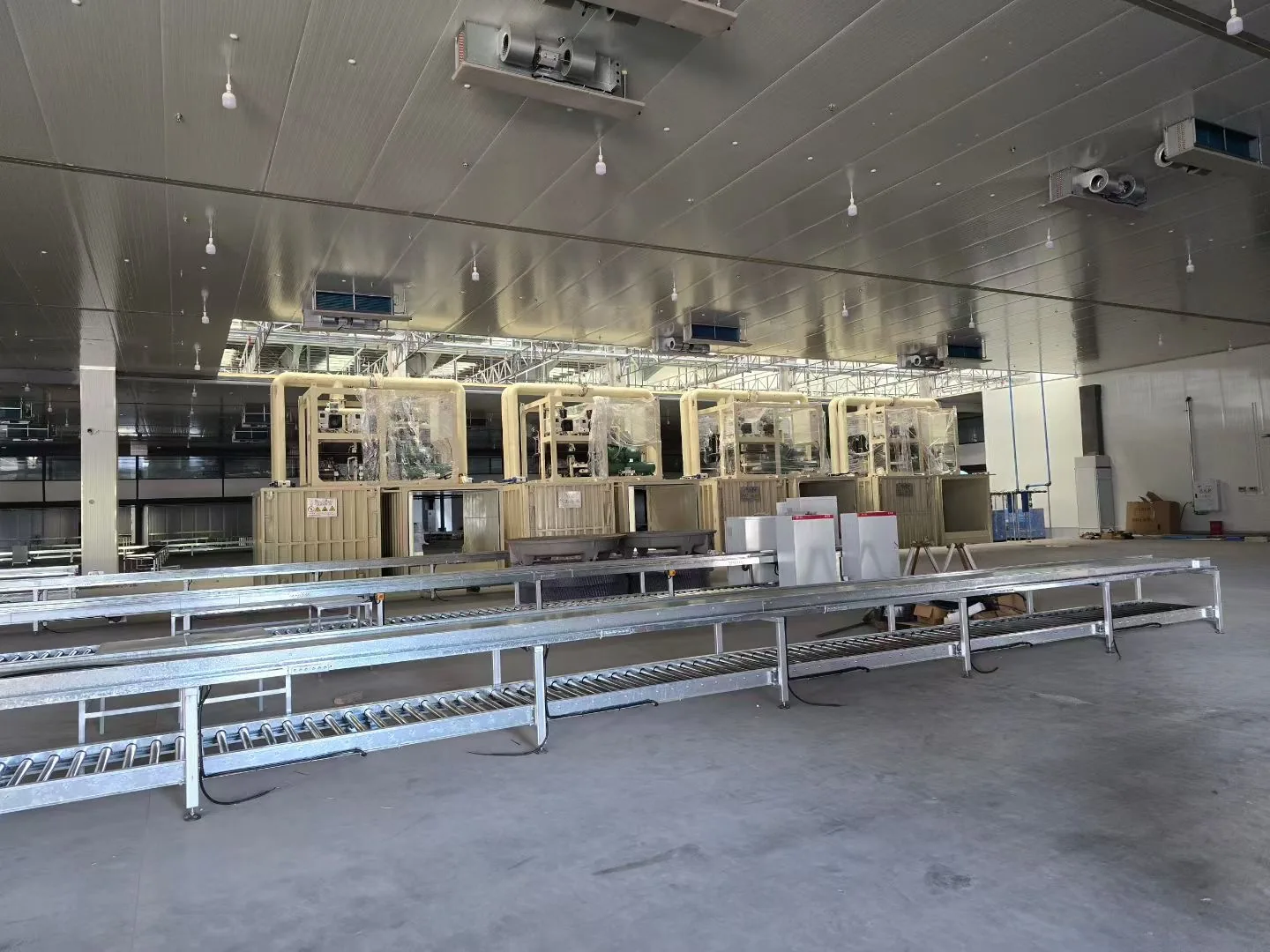
1. What the pump rating actually tells you
The unit m³/h describes volumetric pumping speed or displacement, depending on how the manufacturer labels the specification. It is not tonnes of vegetables cooled per hour. Ask whether the number is a nominal displacement, a measured pumping speed or a rating at a stated operating point.
Pump performance can vary with pressure. Leybold distinguishes initial vessel evacuation from maintaining pressure while gas and vapour are being released during a process.[1] That distinction matters in vacuum cooling: a loaded chamber is not simply an empty box of air.
For a useful comparison, request the exact model and relevant pumping-speed curve, not just a headline number. Confirm the electrical frequency and any stated operating conditions. If one quotation uses a 50 Hz rating and another uses a 60 Hz rating, have the supplier reconcile the figures for your actual supply. Our 50 Hz and 60 Hz compatibility guide explains the wider equipment check.
Do not confuse pumping speed with ultimate pressure. One describes volume flow; the other describes the limiting pressure attainable under specified conditions. A lower ultimate-pressure specification does not independently establish a faster loaded cooling cycle.
2. Why the complete system matters
The chamber does not receive the pump’s headline capacity unchanged
The path between the chamber and pump introduces flow resistance. Pipework, valves and other components affect the effective pumping speed available at the chamber. Leybold calls this a conductance problem and notes that conductance itself depends on pressure and the flow conditions.[2]
When comparing vacuum coolers for fresh produce, ask the machine supplier to stand behind the assembled system’s performance. A high-capacity pump on a poorly matched flow path should not be treated as proof of a high-capacity cooler. Equally, a well-matched system should not be dismissed because another brochure lists a larger pump.
The water vapour must be handled as the product cools
Vacuum cooling removes heat through evaporation of water from the product. In a refrigerated system with a water-vapour condenser or cold trap, that component captures vapour before it reaches the vacuum pump. Busch describes this arrangement in a published lettuce-cooling application.[3]
This gives the machine another important requirement: the refrigeration and vapour-handling arrangement must support the intended product load. If that part of the system is limiting performance, a pump upgrade alone is not evidence that the cooling target will be reached sooner. This is a system-selection conclusion, not a diagnosis of any particular machine.
Also keep two components distinct: the water-vapour condenser handles vapour from the chamber; the refrigerant condenser rejects heat from the refrigeration circuit. For the latter’s site requirements, see our air-cooled, water-cooled and evaporative cooling comparison.
Pressure is not a substitute for measuring the product
A low chamber-pressure reading is not proof that every part of the load has reached the required temperature. Ask how the supplier will establish the cooling endpoint for your product and packing arrangement. Use appropriate product-temperature probe placement when assessing a batch.
For the same reason, an impressive empty-chamber evacuation time should be identified as an empty-chamber result. Leybold’s pump-down guidance accounts for factors such as effective pumping speed, chamber volume, target pressure and gas inflow.[4] A dry evacuation calculation cannot, by itself, establish the cooling time of a loaded produce batch.
3. A faster evacuation is not the same as a faster batch
Consider this illustrative planning example—not Allcold test data or a performance promise. Suppose a proposed improvement saves three minutes during initial evacuation, while the rest of the batch remains unchanged.
| Time component | Starting case | Improved case |
|---|---|---|
| Initial evacuation | 6 minutes | 3 minutes |
| Remaining cooling period | 16 minutes | 16 minutes |
| Venting, unloading and loading | 8 minutes | 8 minutes |
| Total batch interval | 30 minutes | 27 minutes |
The initial evacuation is 50% shorter, but the total batch interval is only 10% shorter. At an assumed 600 kg of product per batch, the idealised steady-state rate changes from:
Before: 600 × 60 ÷ 30 = 1,200 kg/h
After: 600 × 60 ÷ 27 ≈ 1,333 kg/h
Calculated throughput increase: about 11%—not 50%.
This calculation excludes downtime, defrost or recovery where applicable, breaks and queues. It does not assume that doubling pump capacity will halve evacuation time. Real evacuation and evaporative cooling can overlap; the time categories here are simplified for planning.
The example’s purpose is to put the upgrade in commercial context. Ask whether the expected minutes saved will help you meet a dispatch deadline or remove a genuine bottleneck. A shorter cooling stage has limited value if the next batch is still waiting for a forklift or available labour.
4. When a larger pump is worth considering
A larger pump deserves consideration when the supplier’s engineering assessment shows that the existing or proposed pumping arrangement cannot meet the required evacuation or gas-handling duty. The rest of the system must support the improvement.
- A different chamber: a larger usable space changes the evacuation problem. Specify the actual chamber and load arrangement, not just a generic pallet count.
- A tighter batch interval: if initial evacuation takes a meaningful share of the available time, ask what improvement a different pump arrangement can deliver.
- A changed production requirement: new products, hotter incoming loads or different packaging require a fresh system assessment rather than an automatic pump-size increase.
For an existing machine that has become slower, first establish what changed. An earlier successful batch can be a useful comparison, provided the load and conditions were comparable. Our guide to reading vacuum cooling cycle data explains that investigation. Do not treat a larger pump as a substitute for identifying a fault.
5. How to compare quotations fairly
Send each supplier the same production brief. Then ask them to complete these fields:
| Field | What the offer should state |
|---|---|
| Product duty | Crop or product, net batch weight, incoming temperature range and required final product temperature |
| Physical load | Pallet or trolley dimensions, stack height, packaging and loading arrangement |
| Pump specification | Model, quantity, m³/h rating basis, relevant performance data and electrical frequency |
| System basis | How the proposed pumping and refrigeration arrangement supports the stated duty and site conditions |
| Timing boundary | What starts and stops the quoted timer; what handling or recovery time is excluded |
| Evidence | Whether the stated result is an estimate, a test with your product or a reference batch—and its conditions |
A reference batch is useful, but only when you can judge its relevance. A lighter load, cooler incoming produce or different packaging can make the same machine’s result look different. Keep those differences visible rather than comparing the headline minutes alone.
If a pump upgrade carries a price premium, request the expected change in complete batch interval and the assumptions behind it. If energy savings are also claimed, request the comparison per equivalent batch; pump motor size alone does not establish total machine energy consumption.
6. Common buyer questions
How many m³/h does my vacuum cooler need?
There is no universal m³/h-per-pallet rule that can size every installation. Provide the chamber and production requirements, and have the supplier select a complete system. Pallet count is useful for handling, but it does not describe all the gas and cooling loads.
Should I choose the machine with the lowest ultimate pressure?
Not on that figure alone. The machine needs to achieve the required product result at a suitable operating pressure and batch interval. A lower pump limit does not independently prove better product quality or higher throughput.
Should I insist on the largest pump offered?
Insist on a supported performance commitment instead. Choose the configuration that meets your agreed duty with an appropriate operating margin and service plan. Do not pay for a specification increase without understanding what it changes in your production day.
Compare the cooling result—not just the pump size
Send Allcold your product, net batch weight, packing dimensions, incoming and target temperatures, site conditions and required batch interval. Ask for the proposed vacuum cooler configuration and the assumptions behind its performance estimate.
Sources and further reading
Technical sources checked on 29 September 2026. These support the engineering principles, not an Allcold model rating or a guaranteed cycle time. The worked example is original illustrative arithmetic.
- Leybold: How to choose a pump size — evacuation and process gas-load duties.
- Leybold: Calculating conductance values — pump-inlet versus effective chamber pumping speed.
- Busch Vacuum Solutions: Pre-cooling lettuces reliably, thanks to cutting-edge vacuum technology — cold-trap and vacuum-pump arrangement in a third-party lettuce application; not an Allcold case study.
- Leybold: How to calculate pump-down time — conditions and limitations of evacuation calculations.