VACUUM COOLER BUYING GUIDE
The right answer depends on where the machine will operate, who will service it and how the refrigeration system is designed—not just the refrigerant name on a quotation.
Imagine approving a vacuum cooler for the next harvest season, then discovering that your local refrigeration contractor cannot support the specified refrigerant. The machine price has not changed, but the project now needs a different service plan, additional lead time or a revised equipment specification.
That is why refrigerant selection belongs in the purchasing discussion, before the machine is built. A familiar gas name is not enough, and a lower global warming potential does not, by itself, prove that a system will meet your cooling duty.
Which refrigerant is best for a vacuum cooler? There is no universal choice. Select a complete, documented refrigeration configuration that fits the destination requirements, operating conditions and local service capability. Ask the supplier to identify the proposed refrigerant and confirm performance with that configuration; do not treat different refrigerants as interchangeable options.
Before approving the quotation
- Identify it: ask for the exact refrigerant designation, not simply “environmentally friendly refrigerant.”
- Check the destination: establish which equipment category and current local requirements apply.
- Call the service contractor: verify support for the proposed refrigerant and equipment, including supply lead times.
- Compare the same duty: use the same product load, incoming temperature, target temperature and site conditions.
- Put the agreed configuration in writing: include charging, commissioning and service responsibilities.
1. What the refrigerant does—and what it does not
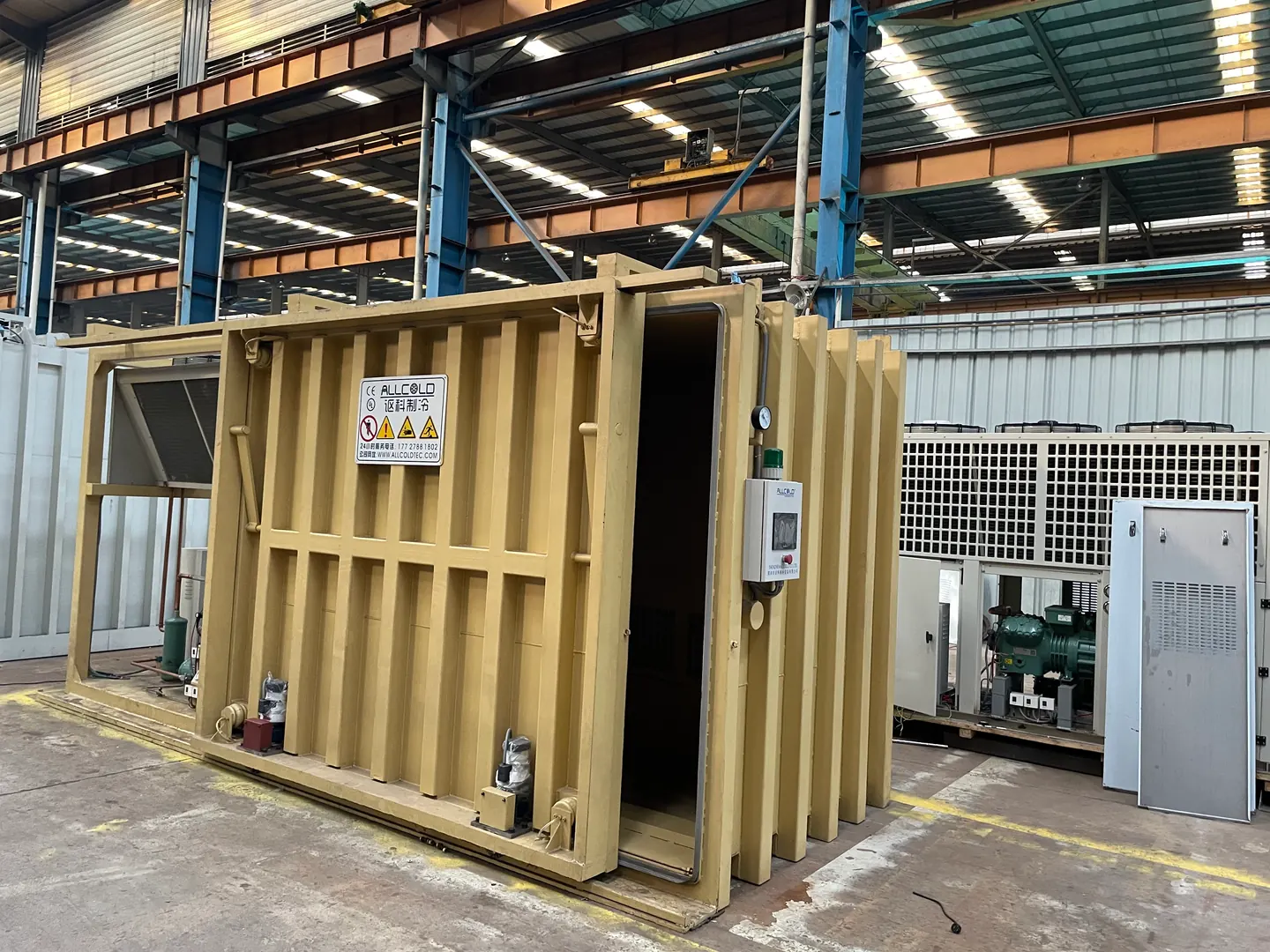
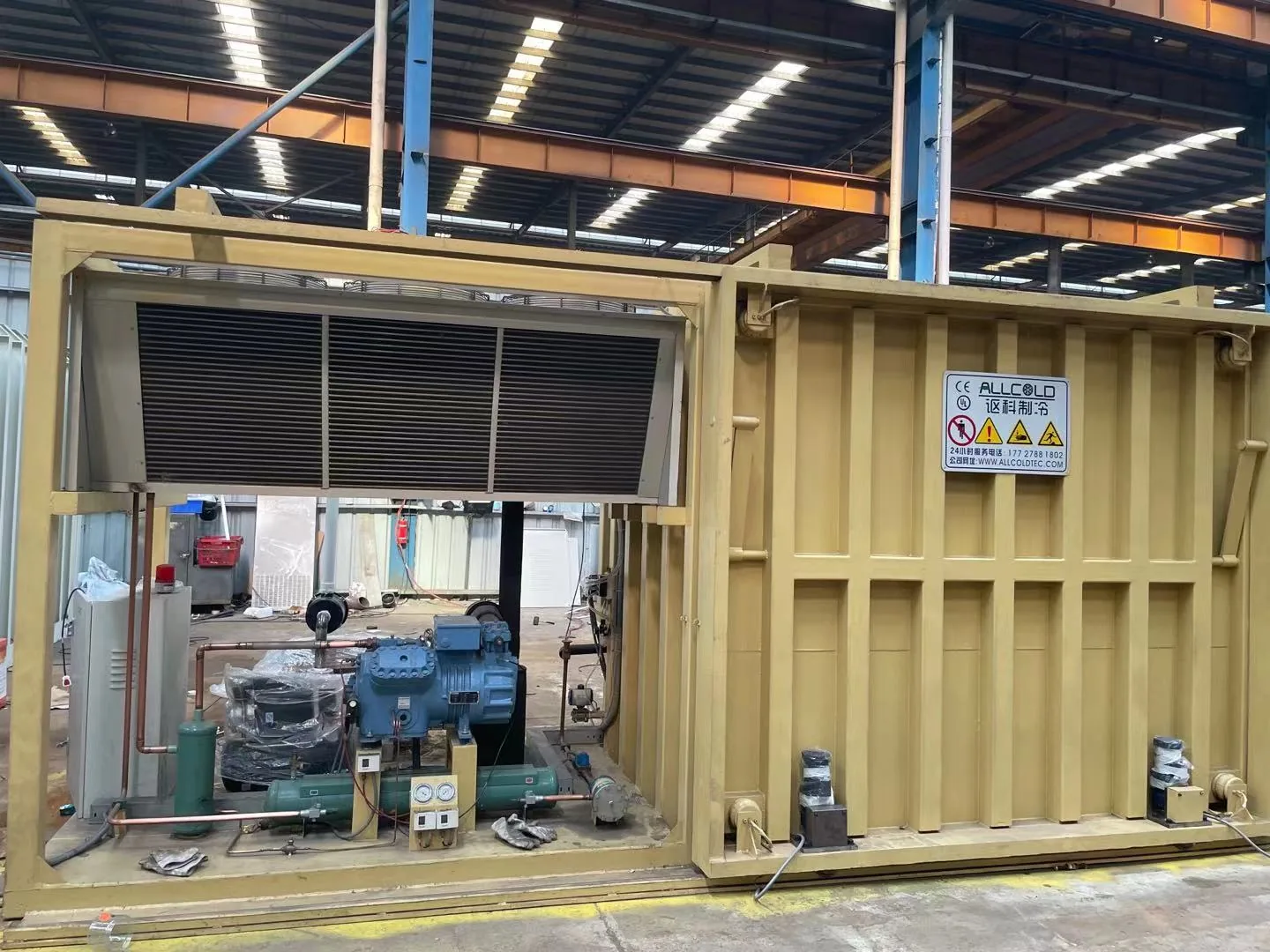
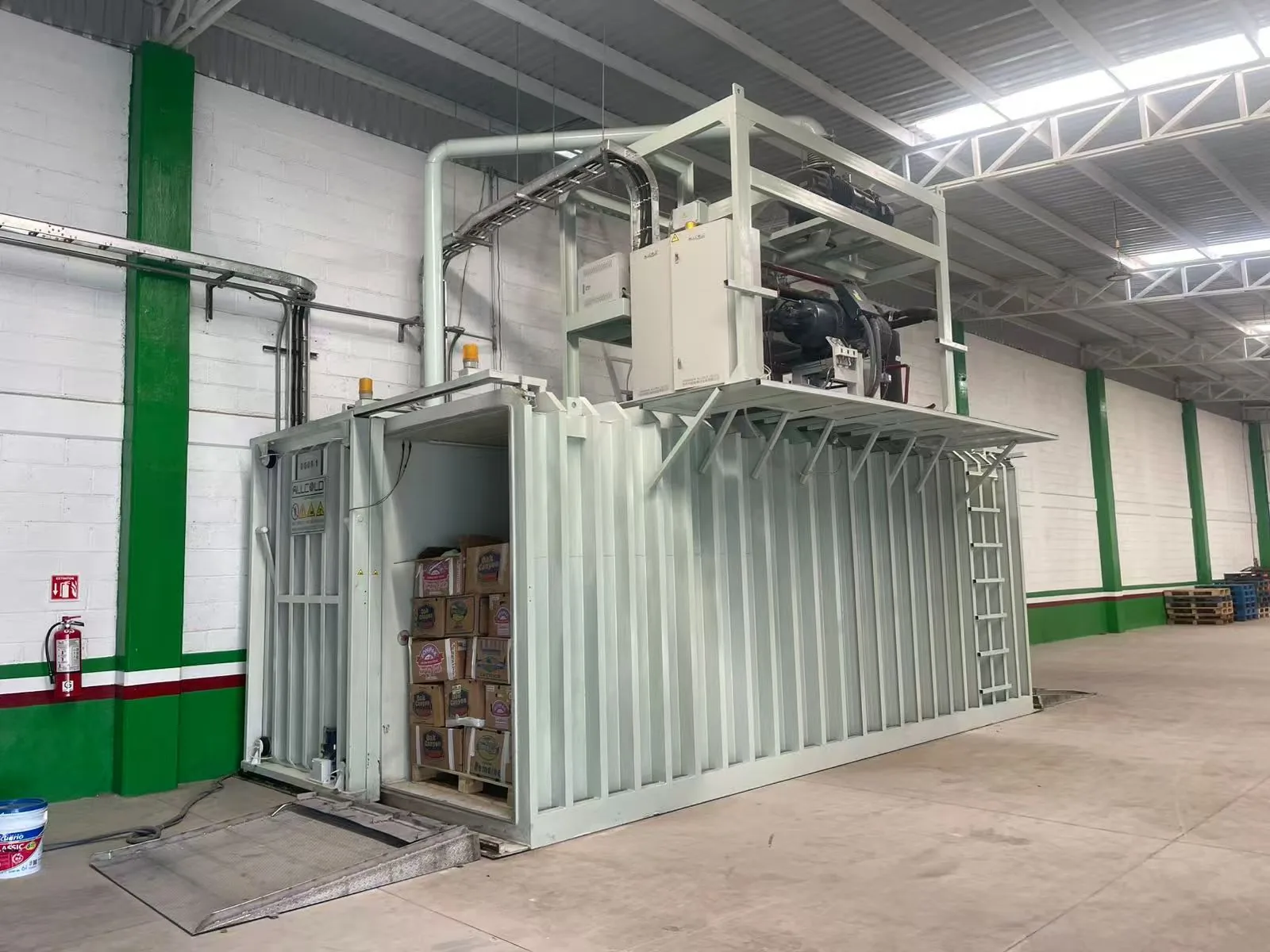
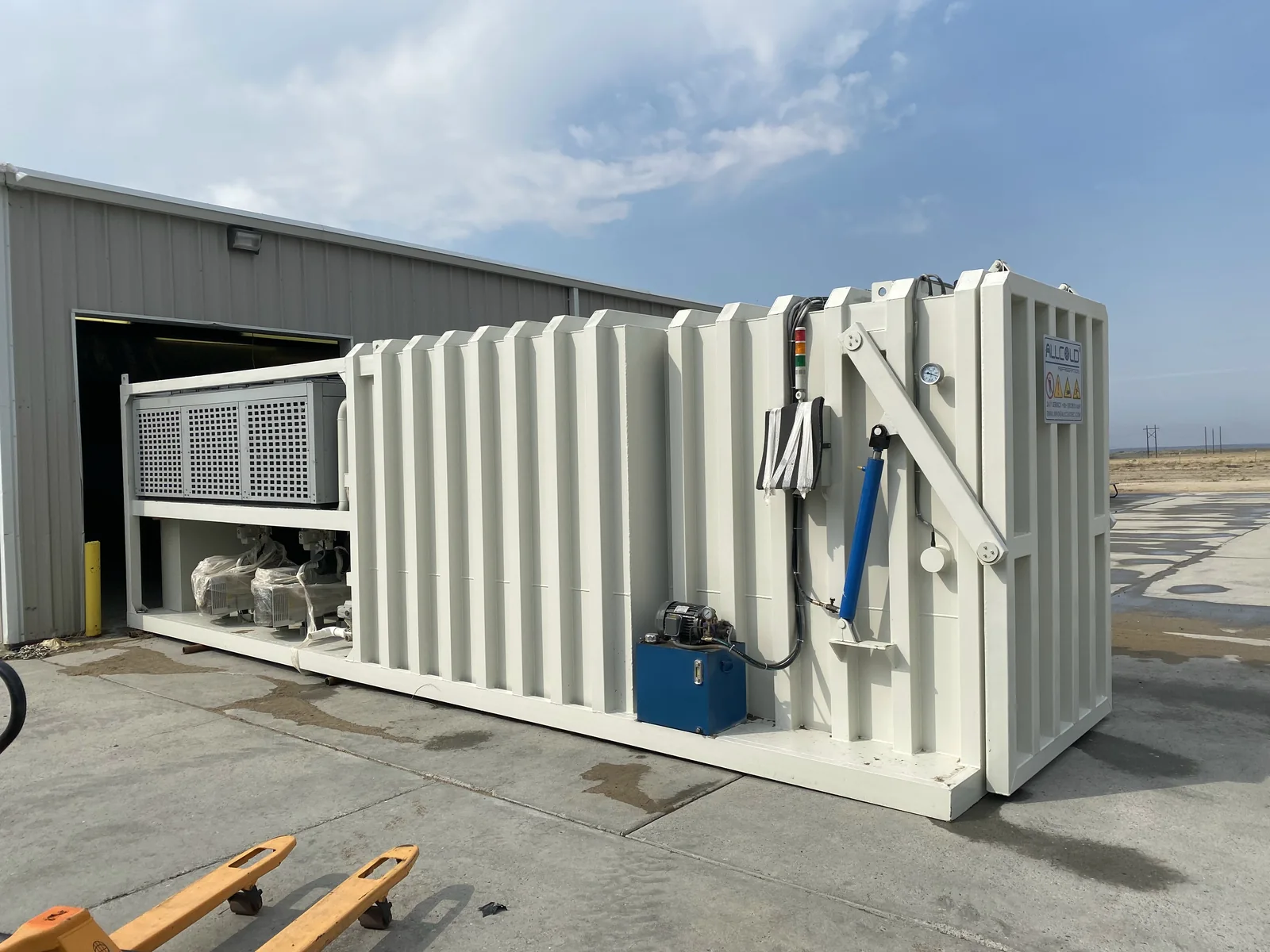
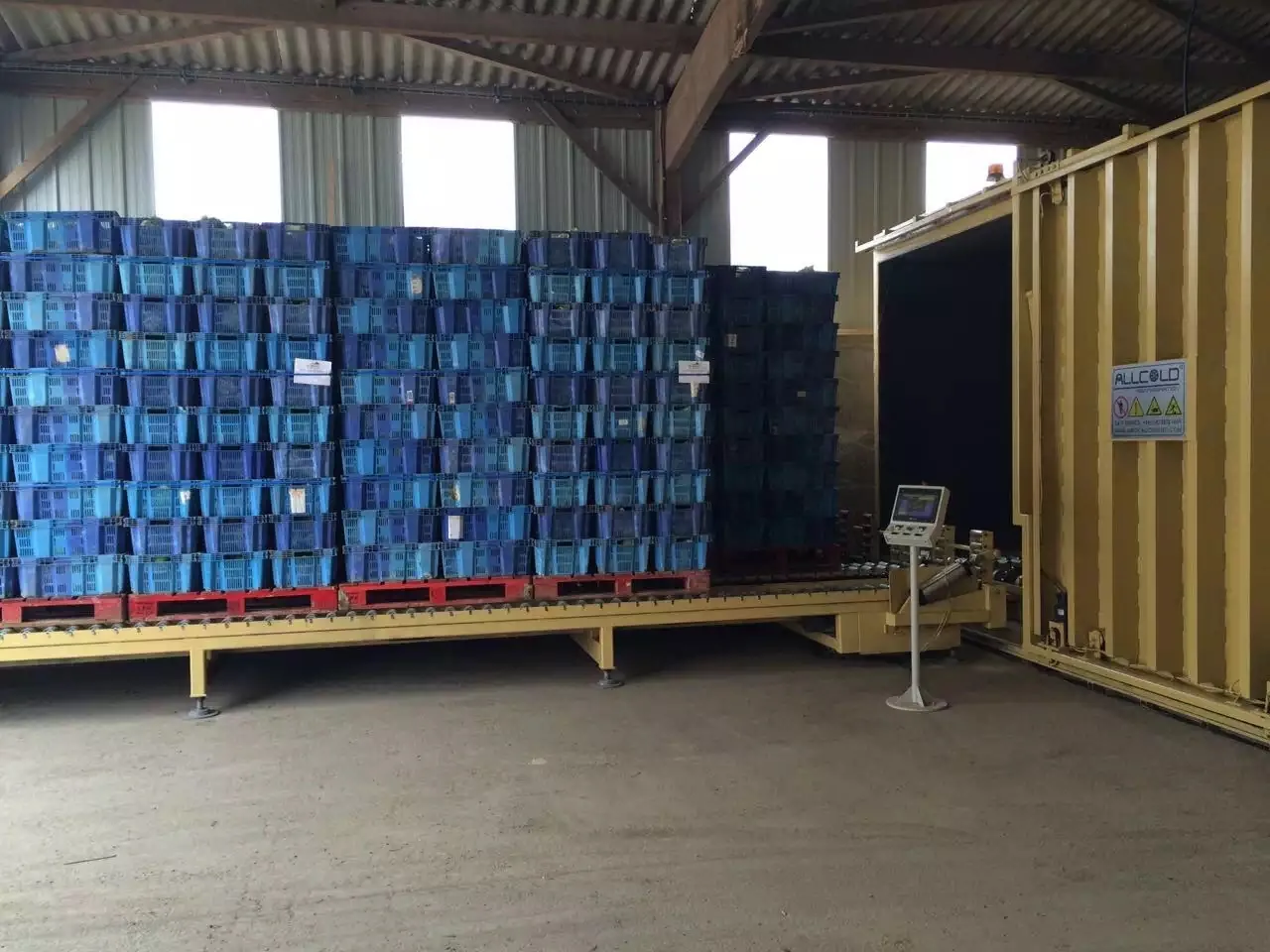
In a refrigerated vacuum-cooling system, the refrigerant circulates through a refrigeration circuit. It is not intentionally sprayed onto the vegetables or used to create the vacuum. Product cooling comes from evaporation of some of the product’s moisture as chamber pressure falls. The refrigeration system supports the process by cooling the surface that captures water vapour.
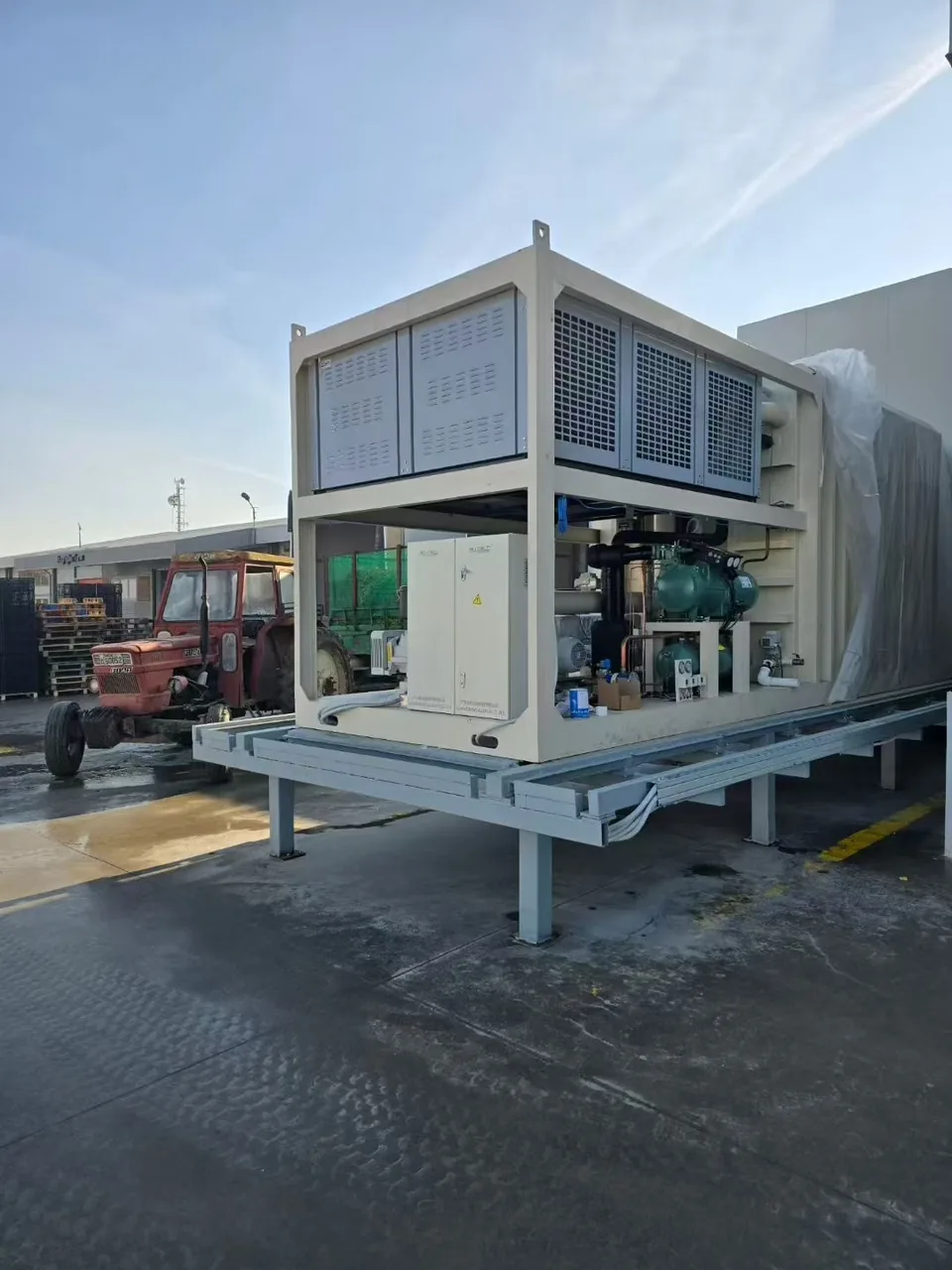
This also explains why two different decisions are sometimes confused. Refrigerant selection concerns the working fluid inside the refrigeration circuit. Air cooling, water cooling and evaporative cooling describe ways of rejecting heat. An “air-cooled” quotation does not tell you which refrigerant is inside. Review both items separately; our guide to air-cooled, water-cooled and evaporative heat rejection covers the site-utility side.
2. Four checks that matter more than a gas name
Check 1: Can the configuration be supplied and installed at the destination?
Tell the supplier the installation country and region at the enquiry stage. A refrigerant used in an older machine, or offered for another market, is not automatically suitable for a new installation at your site.
In the United States, EPA’s Technology Transitions Program applies HFC restrictions by sector and subsector; dates and permitted alternatives differ. EPA also points to separate SNAP requirements. In the European Union, the F-gas framework includes equipment restrictions, HFC quota controls and handling obligations. Neither should be reduced to a single worldwide “allowed gas” list.[1][2]
Buyer action: ask the supplier and your qualified local refrigeration contractor to identify the applicable category and requirements for the proposed equipment and project dates. Resolve uncertainty before placing the order. This guide is a procurement checklist, not a legal classification of a particular vacuum cooler.
Check 2: Can someone locally support the exact system?
“Available in our country” and “available from our service contractor when needed” are different answers. Send the proposed refrigerant designation and equipment details to the contractor who would actually attend your site.
Ask whether they can source the refrigerant, work on that system, obtain compatible service components and provide recovery or other required handling services. Request realistic lead times. A catalogue listing is weaker evidence than a named company confirming support for the proposed installation.
For a remote packhouse, this conversation may change the buying decision. If the closest suitable contractor is far away, record the response-time assumption and service arrangements in the project plan instead of leaving them until commissioning.
Check 3: Does the complete system meet the agreed cooling duty?
The refrigerant is one part of a matched design. BITZER’s technical guidance shows why refrigerant comparisons depend on operating conditions and system configuration, and why component compatibility needs checking when changing refrigerants.[3] A compressor brand or a gas name alone is not a performance specification.
For a fresh-produce vacuum cooler, ask for the promised batch performance to be tied to your product, load and temperature range. Include the intended site conditions and heat-rejection arrangement. Do not compare a quotation based on mild weather with another based on your hottest operating period.
Also distinguish electrical input from refrigerating capacity: both can be expressed in kW, but they describe different quantities. Ask the supplier to label them clearly. Where energy consumption is compared, use the same batch and operating assumptions—not just compressor motor size.
Check 4: Have environmental impact and safety been evaluated separately?
Global warming potential, or GWP, compares the climate effect of a gas with carbon dioxide over a specified time horizon. It is not a rating of machine efficiency or installation safety.[4] A lower-GWP proposal therefore still needs its own performance and site review.
ASHRAE refrigerant safety classifications are based on toxicity and flammability data.[5] Ask for the proposed refrigerant’s classification and current safety data sheet, then have the equipment supplier and local specialist confirm the installation requirements. Do not accept “green,” “natural” or “non-flammable” as a complete safety assessment.
3. How to compare two proposed configurations
Consider an illustrative purchase with two offers: one lists a familiar refrigerant at a lower price; the other describes its refrigerant as lower-GWP. Neither description tells you enough to choose. Send both suppliers the same comparison sheet.
| Compare | Evidence to request | Do not assume |
|---|---|---|
| Destination fit | Applicable equipment category and requirements for the planned supply and installation | A previous export proves this order is acceptable |
| Cooling performance | Batch duty and site conditions used for the proposed configuration | The same compressor motor kW means the same cooling result |
| Service support | A local contractor’s confirmation and supply lead times | International availability means prompt local supply |
| Installation scope | Equipment-specific requirements and who supplies each item | Every refrigerant option uses the same site arrangement |
| Project cost | Machine, installation, commissioning and service assumptions | The lowest equipment price gives the lowest total cost |
If one offer leaves these items unanswered, it is not yet a like-for-like comparison. Ask for clarification before negotiating the final price. The objective is not to select a refrigerant independently and ask any machine to use it; it is to select a supported equipment configuration.
4. What the quotation should confirm
A useful specification should remove ambiguity without requiring the buyer to design the refrigeration circuit. Ask the supplier to include:
- Refrigerant identity: exact designation, with the associated safety and environmental information.
- Equipment basis: the proposed configuration and the cooling duty it is intended to meet.
- Charge information: expected refrigerant quantity and how the final commissioned charge will be documented.
- Delivery condition: whether the machine is supplied charged or requires refrigerant charging on site, and who is responsible.
- Commissioning scope: work included by the supplier and work required from the local contractor.
- Service documents: operating and service information, component identification and the correct refrigerant specification.
- Change control: no substitution of refrigerant or relevant components without an agreed technical review.
These points should accompany the general commercial scope. For the wider purchasing discussion, see what a detailed vacuum cooler quotation should clarify.
5. What changes when buying a used machine?
For a used vacuum cooler, start with its current identification plate, service records and any documented refrigerant conversion. An original sales brochure may no longer describe the installed configuration.
Have the manufacturer or a qualified refrigeration specialist assess whether the existing system remains suitable for the destination and intended duty. If a conversion is proposed, request a machine-specific assessment of compatibility and expected performance. A recommendation for another compressor or installation is not approval for this one.
Do not buy on an undocumented promise that “we can change the gas later.” Treat that as unresolved scope and cost. Our used versus new vacuum cooler guide covers the broader purchasing comparison.
6. Common buyer questions
Which refrigerant does Allcold use as standard?
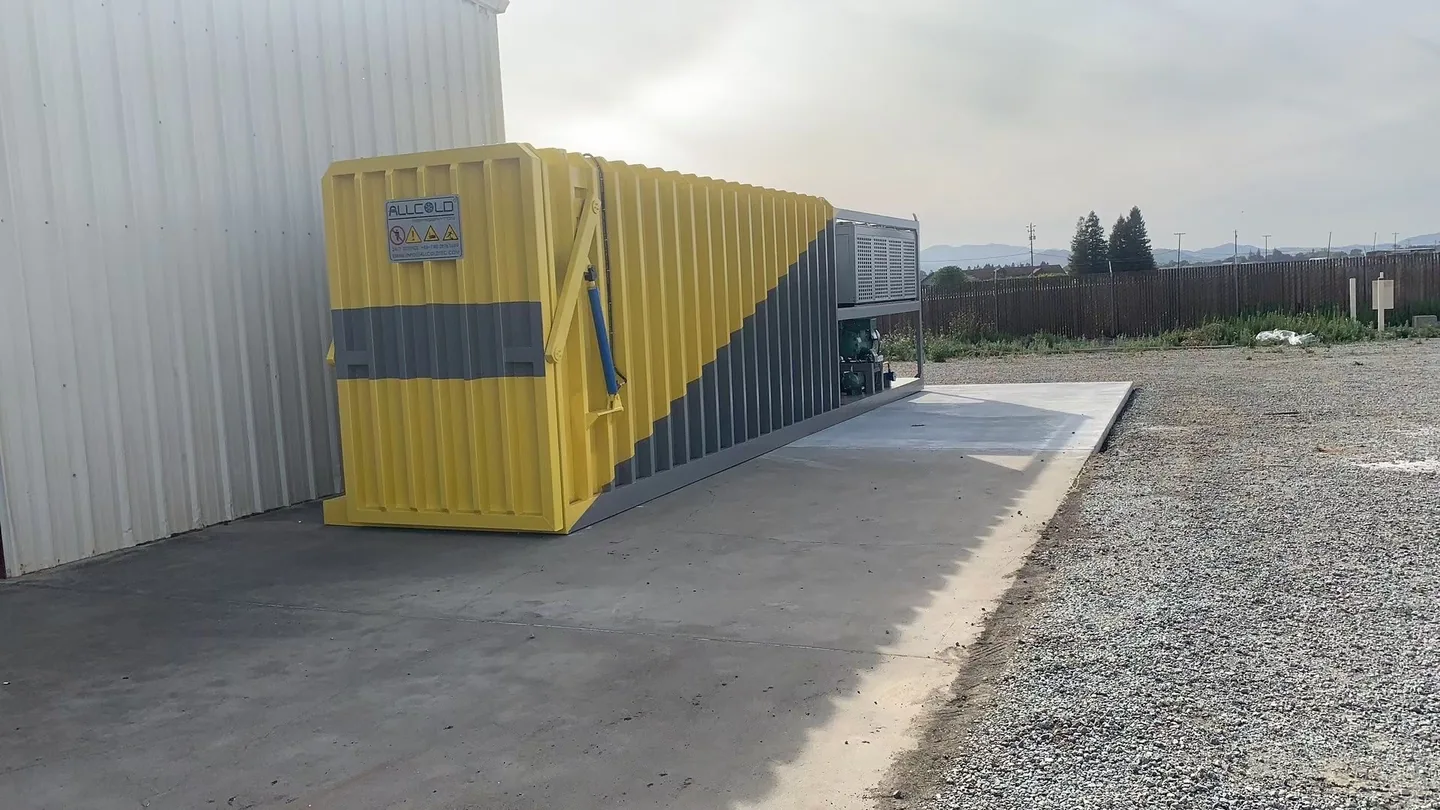
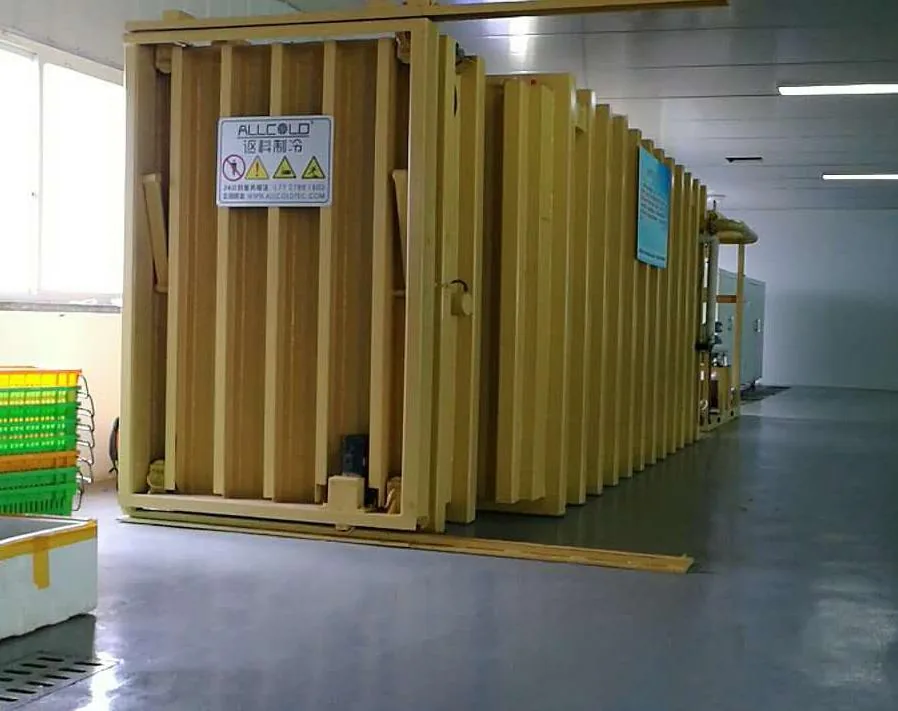
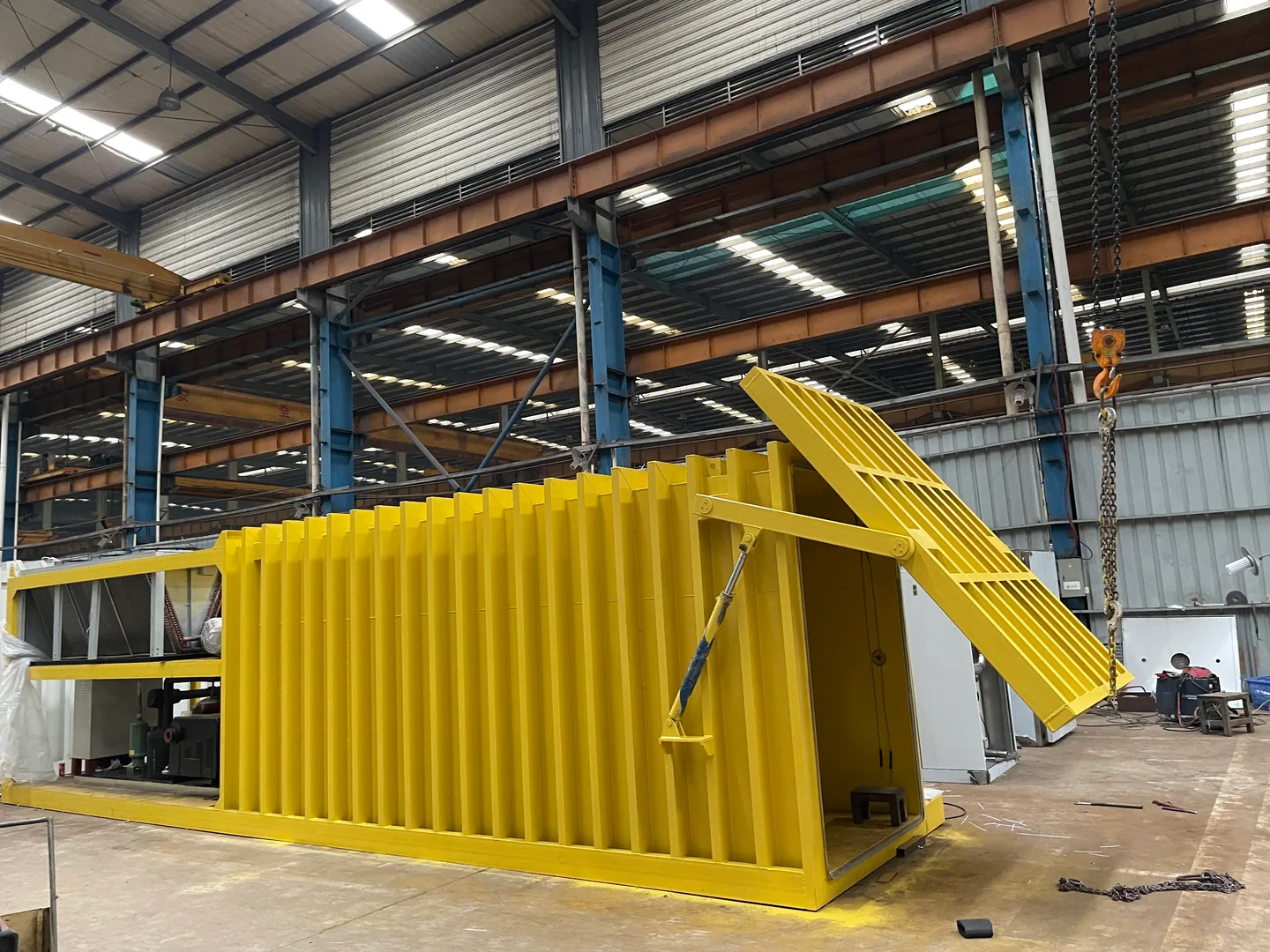
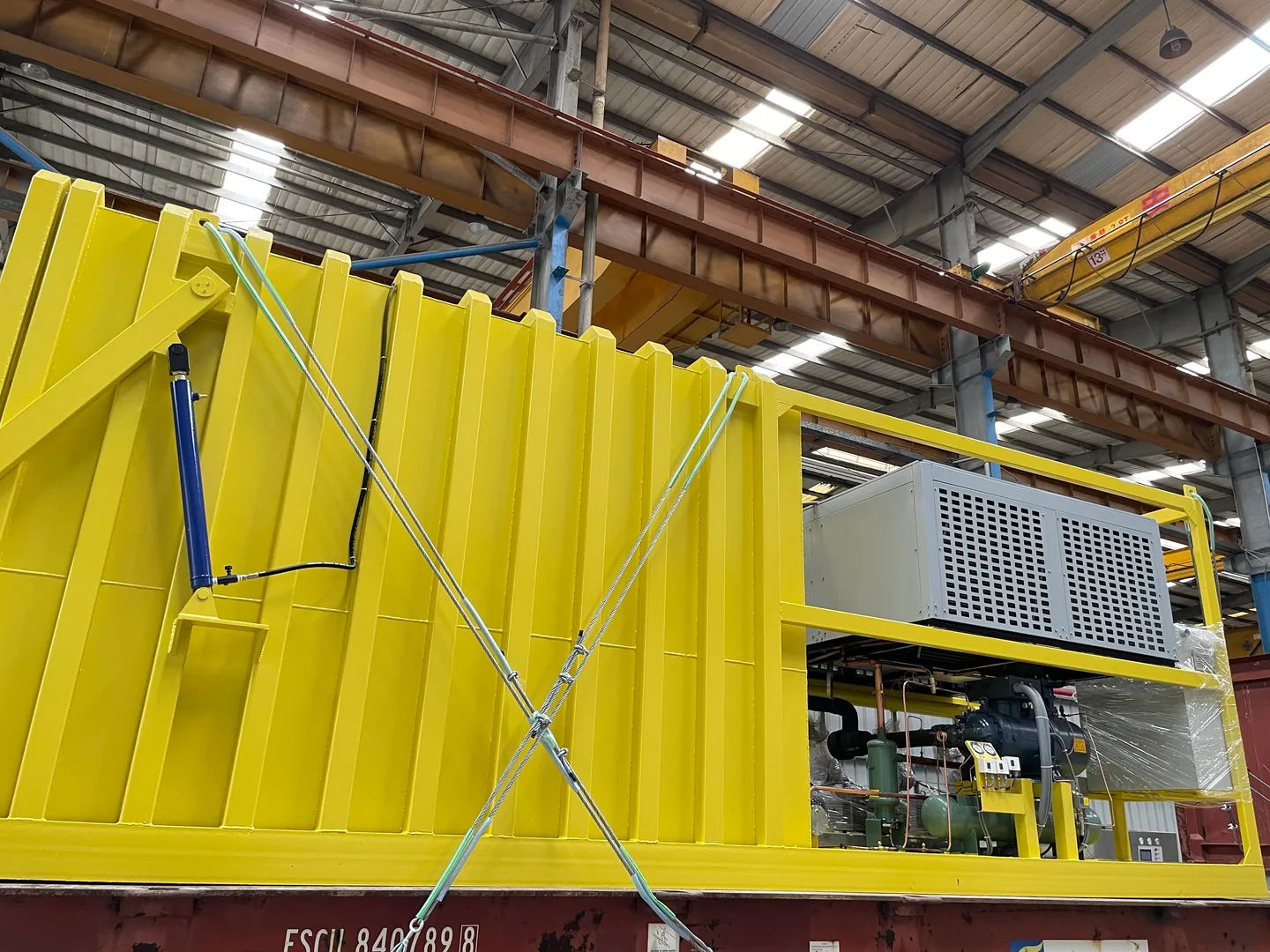
The confirmed project quotation and equipment specification should answer this. Do not infer a universal Allcold refrigerant from a photo, an older installation or a third-party compressor catalogue. State your destination and duty, and request the exact proposed configuration.
Does a lower-GWP refrigerant automatically reduce electricity use?
No. GWP describes the refrigerant’s climate impact, not the machine’s electricity consumption. Compare the proposed systems at the same duty and conditions, with clearly stated energy assumptions.
Can I request a particular refrigerant?
Yes—include it as a project requirement at the enquiry stage. The supplier must confirm whether a suitable configuration can be offered. A requested gas should not be treated as an approved replacement for a different gas in an existing design.
Specify the site before specifying the refrigerant
Send Allcold your installation country, product, batch load, incoming and target temperatures, site conditions and any refrigerant requirement from your local contractor. Ask for the proposed refrigeration configuration and quotation scope to be confirmed together.
Sources and further reading
Official sources reviewed on 27 September 2026. Regulations and product approvals can change; confirm the requirements for the specific project before ordering. These references explain general principles and do not certify an Allcold model or establish its available refrigerant options.
- US Environmental Protection Agency: Technology Transitions Program — sector-specific HFC restrictions and links to related requirements.
- European Commission: F-gas legislation — EU regulatory framework and official legislation links.
- BITZER: Refrigerant comparison: operating conditions and system design — technical context for performance comparisons and compatibility; not a vacuum-cooler-specific retrofit approval.
- US Environmental Protection Agency: Understanding Global Warming Potentials — what GWP measures.
- ASHRAE: Refrigerant Designations — refrigerant naming and the basis of safety classifications.