
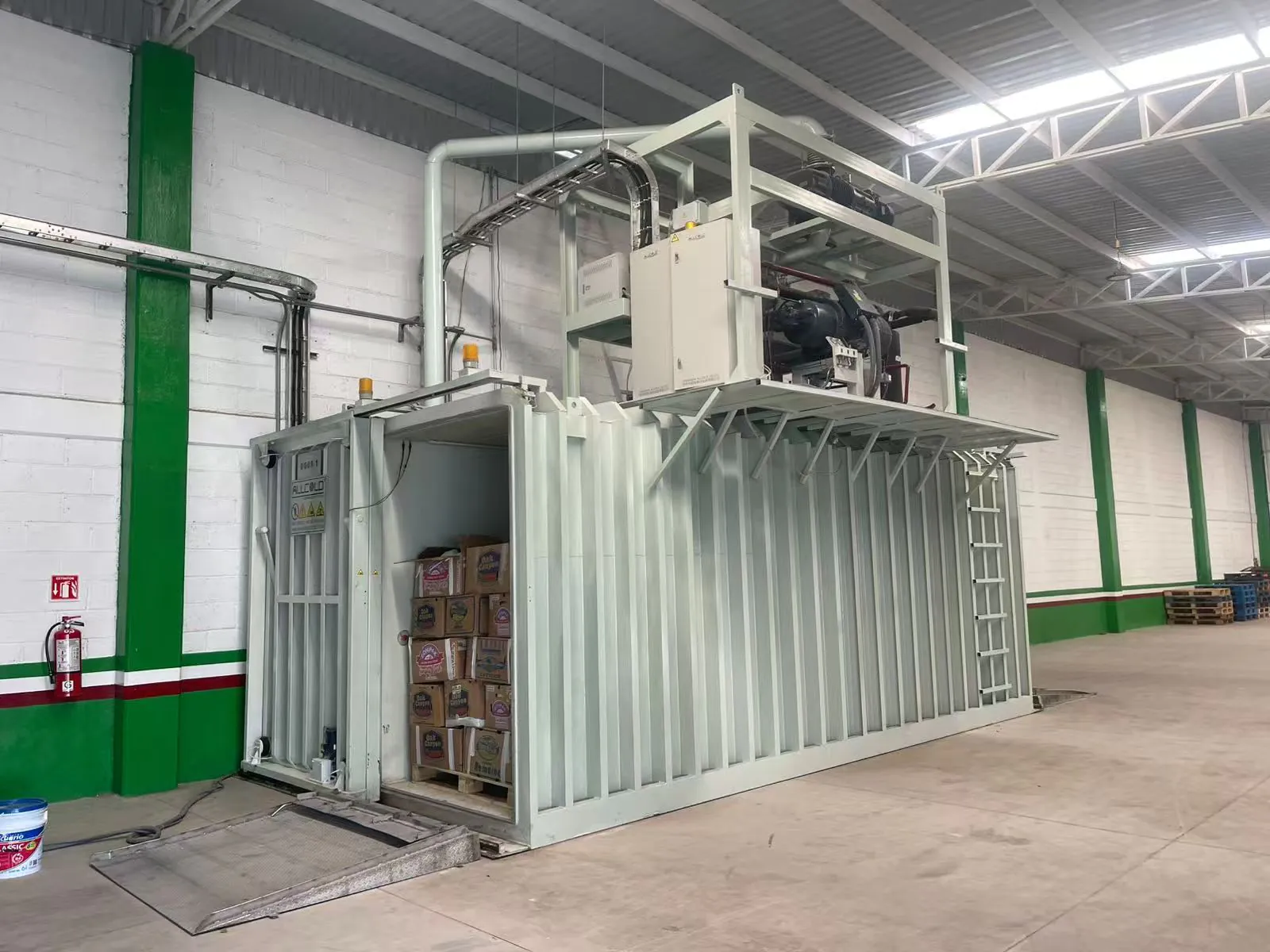
Vegetable Vacuum Cooler Doors: How to Choose Hydraulic Swing, Horizontal Sliding or Vertical-Lift Designs
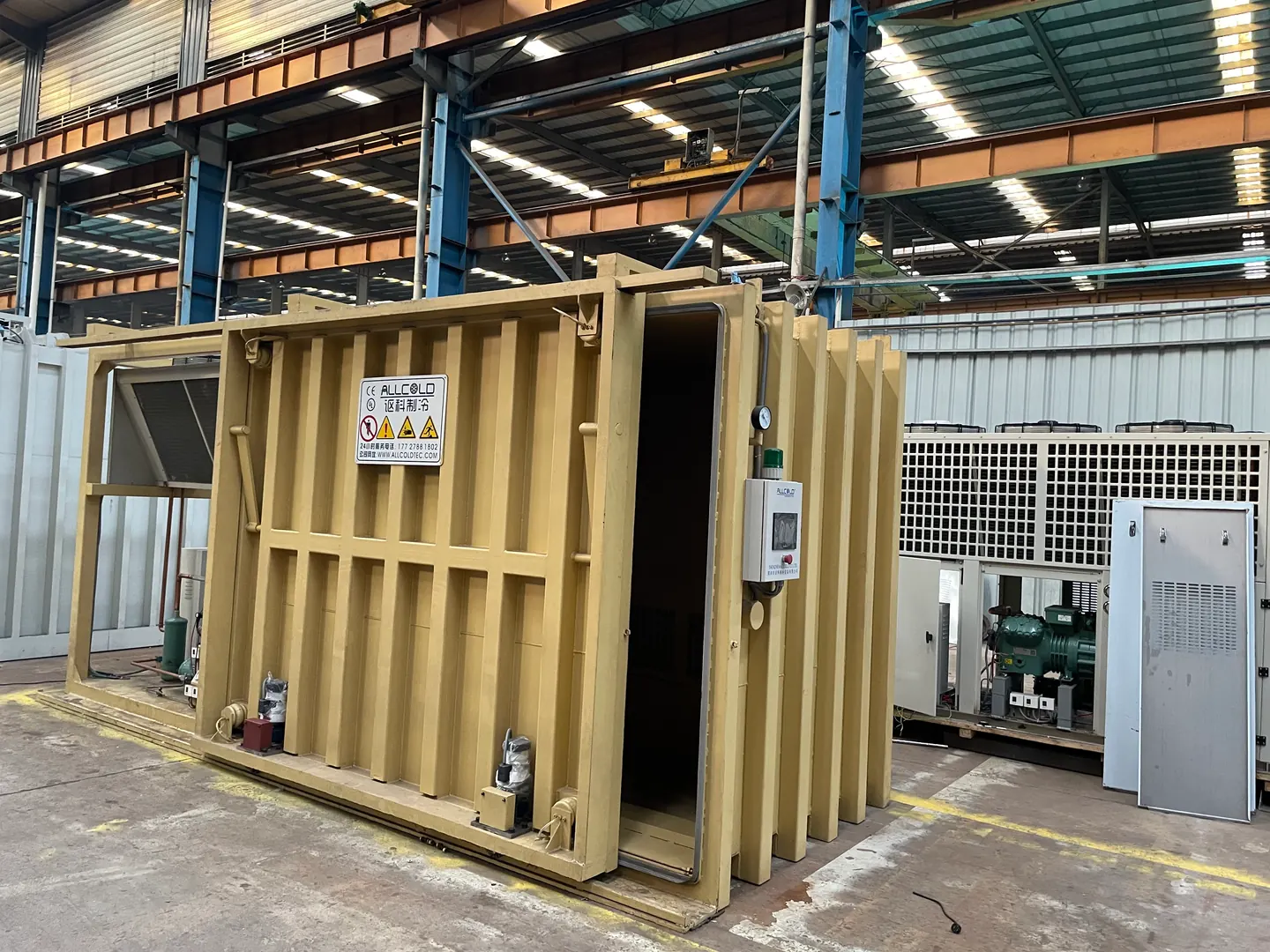
Direct answer: Allcold vegetable and fresh-produce pallet vacuum coolers can be configured with three main door motions: a hydraulic outward-opening door, a horizontal sliding door, or a vertical-lift door. Choose among them by checking the clear space in front of, beside and above the chamber, then confirm the pallet route. Door motion is separate from whether the machine has one loading end or two doors for pass-through flow.
The Three Door Motions Used on Vegetable Vacuum Coolers
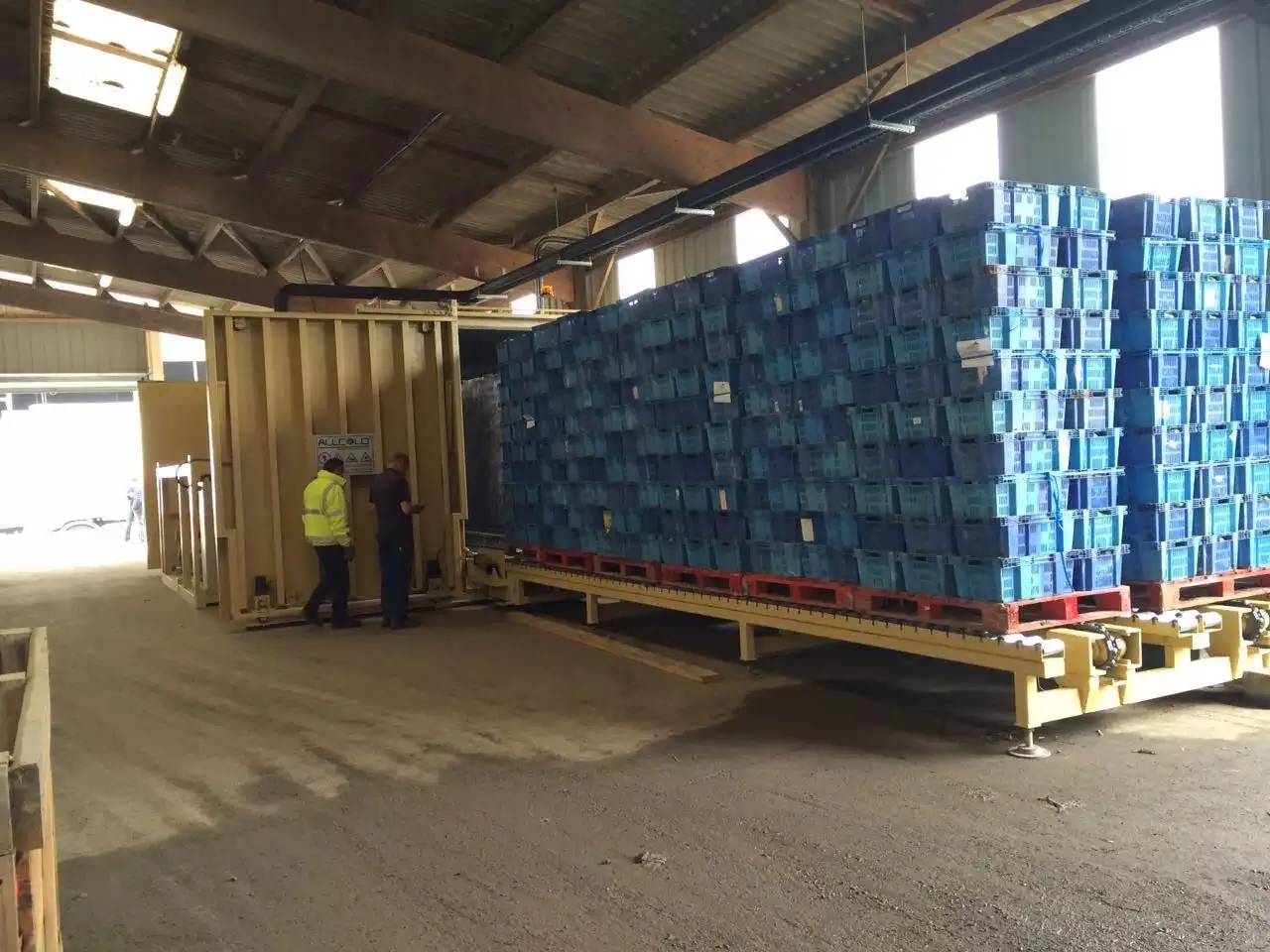
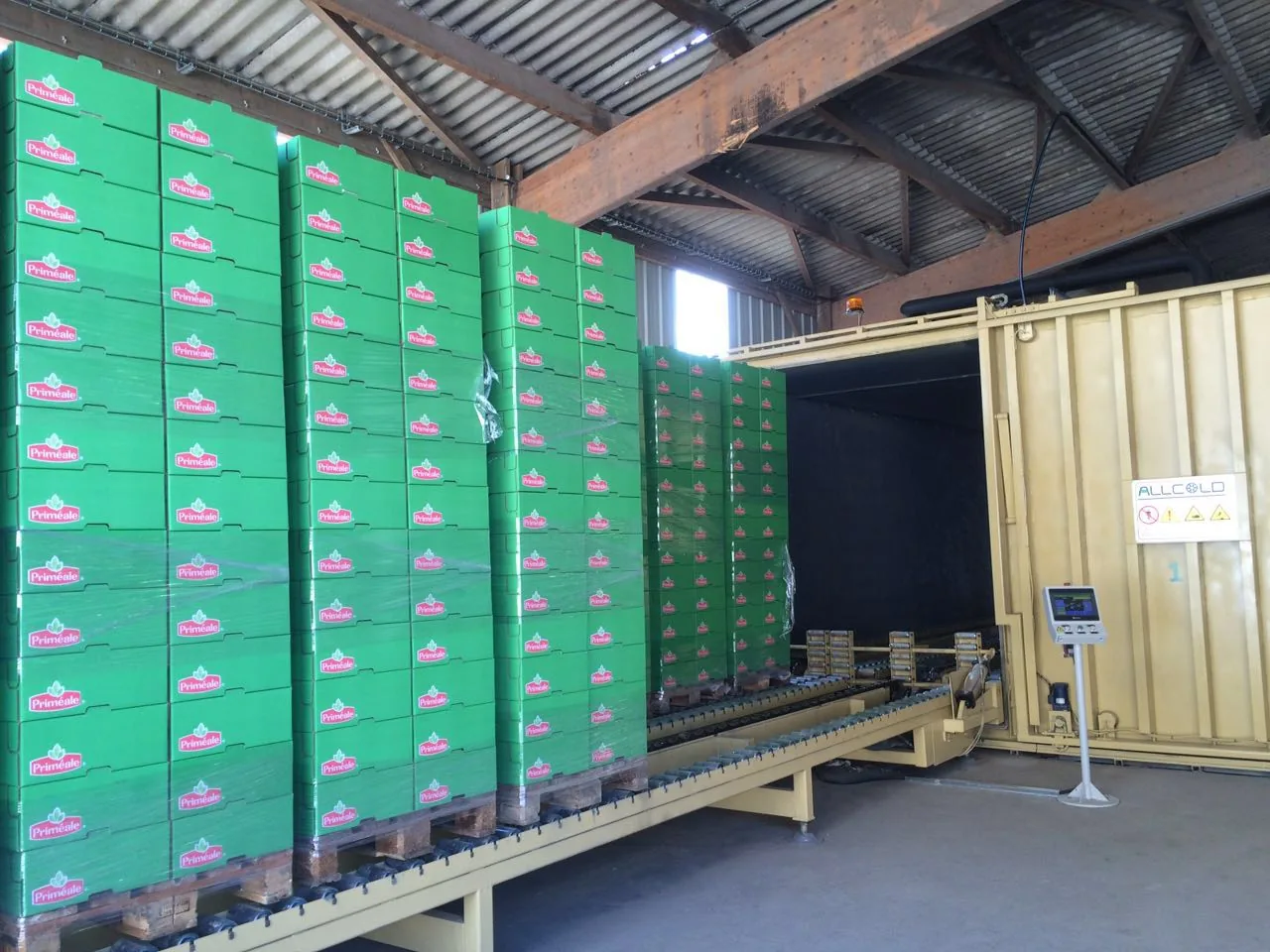
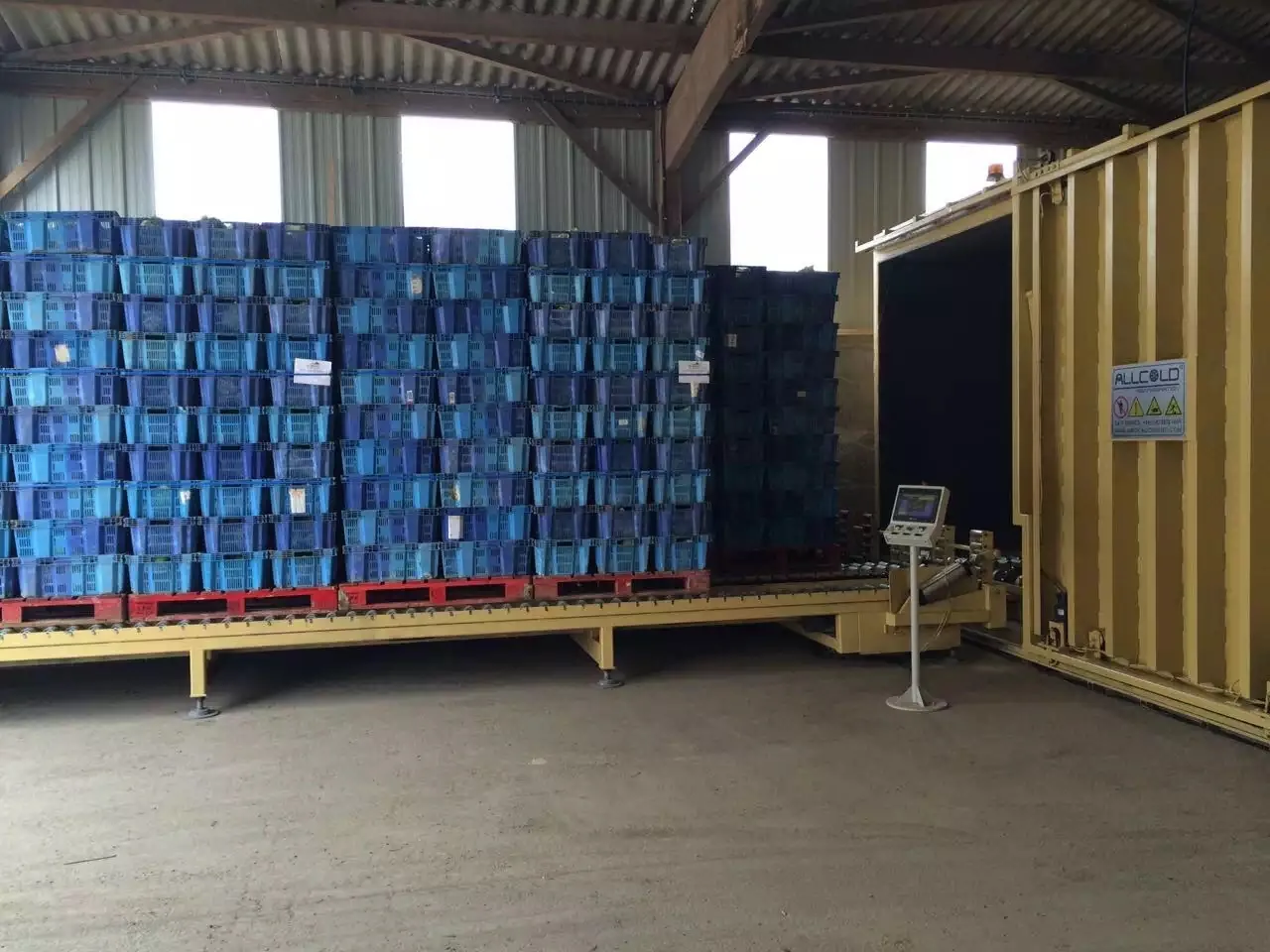
The correct door is the one that allows a loaded pallet to enter and leave safely without creating a conflict with forklifts, staging lanes, columns, walls, machine components or pedestrian routes. The comparison therefore starts with the building plan and pallet movement—not with appearance. If you are still defining the overall process, first review how a fresh-vegetable vacuum cooler works and what buyers should specify.
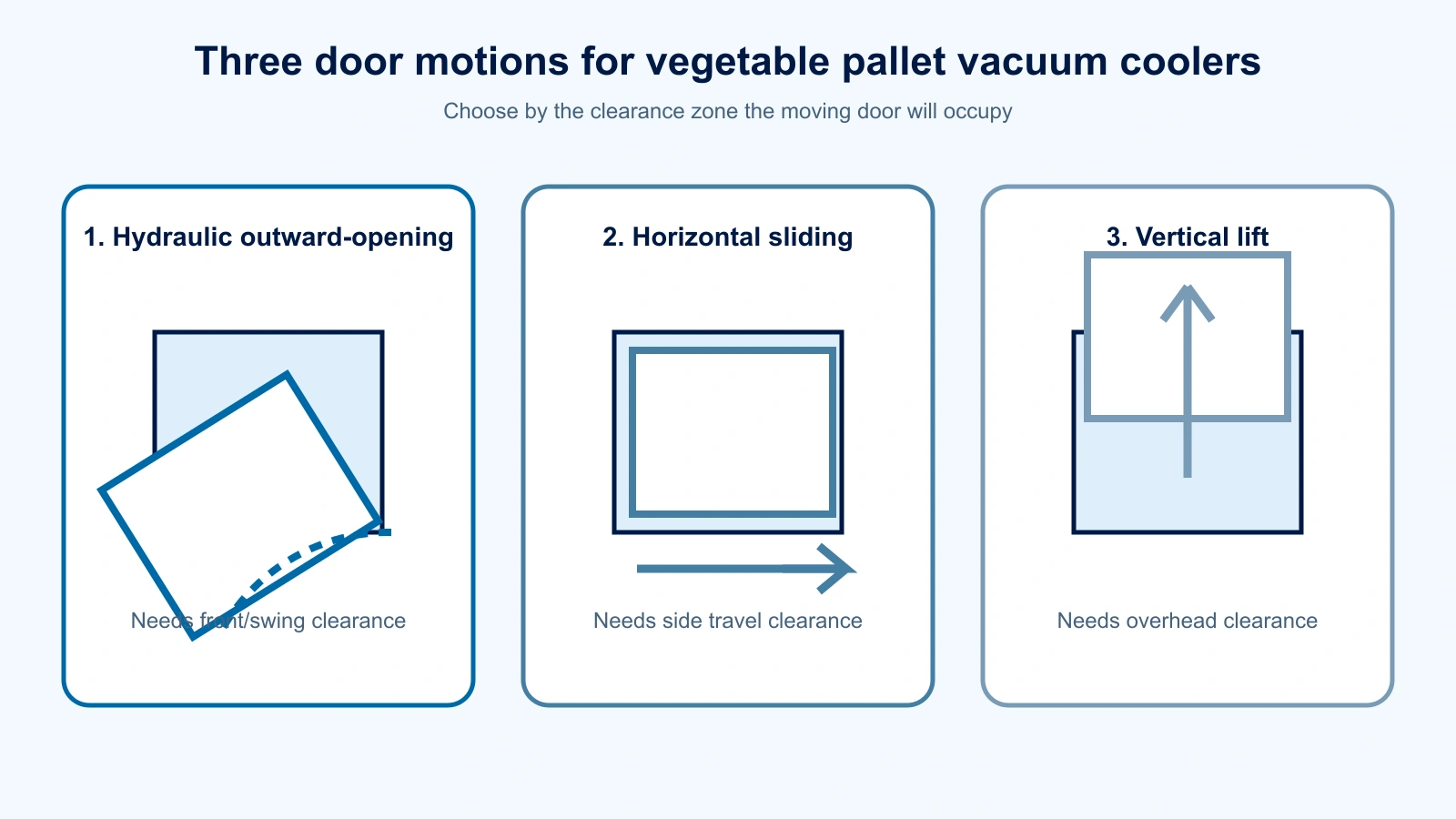
| Door motion | Clearance it needs | Strong fit | Check carefully |
|---|---|---|---|
| Hydraulic outward-opening | Clear apron in front and to the swing side | Open loading yards and straightforward pallet routes | Swing envelope, forklift turning and wind exposure |
| Horizontal sliding | Clear wall or chamber side for the door to travel | Narrow front aisles and controlled indoor layouts | Left/right travel, side equipment and maintenance access |
| Vertical lift | Clear height above the opening | Sites where front and side space are constrained | Roof height, lifting structure and overhead safety zone |
These names describe how the door moves. They do not describe chamber capacity, the number of pallets, the number of doors or whether the product flows through the chamber in one direction. Those decisions must be recorded separately in the general arrangement drawing.
1. Hydraulic Outward-Opening Door
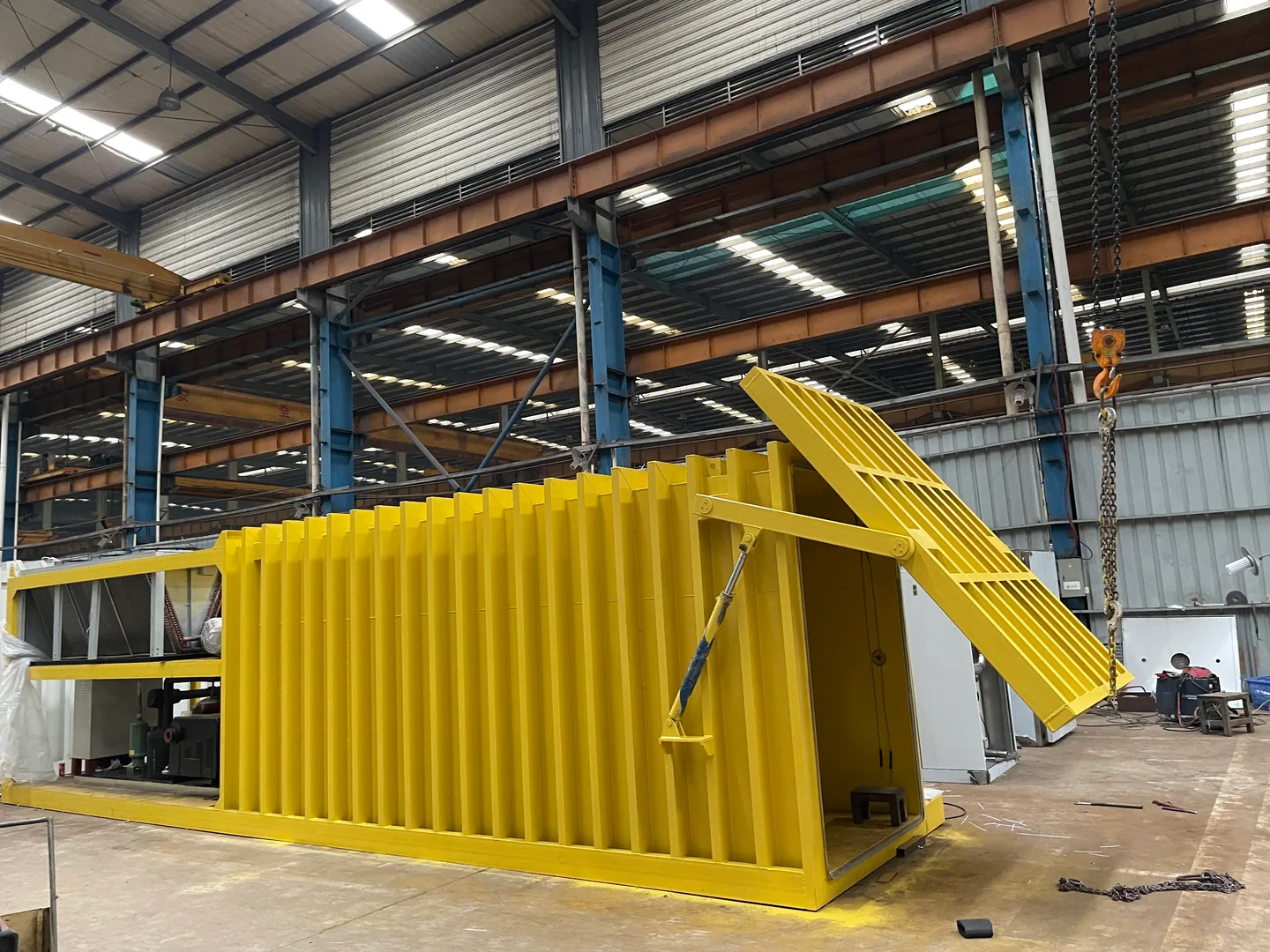
The hydraulic outward-opening design moves the complete door leaf away from the chamber opening. It is easy to understand on site and works well where there is a generous loading apron. The door and its operating mechanism remain visible, which can also make routine inspection straightforward.
Its main design requirement is an unobstructed movement envelope. A forklift route that looks wide enough when the door is closed may become too narrow when the door is fully open. Mark the entire swept area on the floor plan, then add the pallet approach lane, turning radius, safety separation and any ramp or dock interface. OSHA’s materials-handling rule requires sufficient safe clearances where mechanical equipment moves through aisles, loading docks, doorways and turns, and requires aisles to remain clear.1
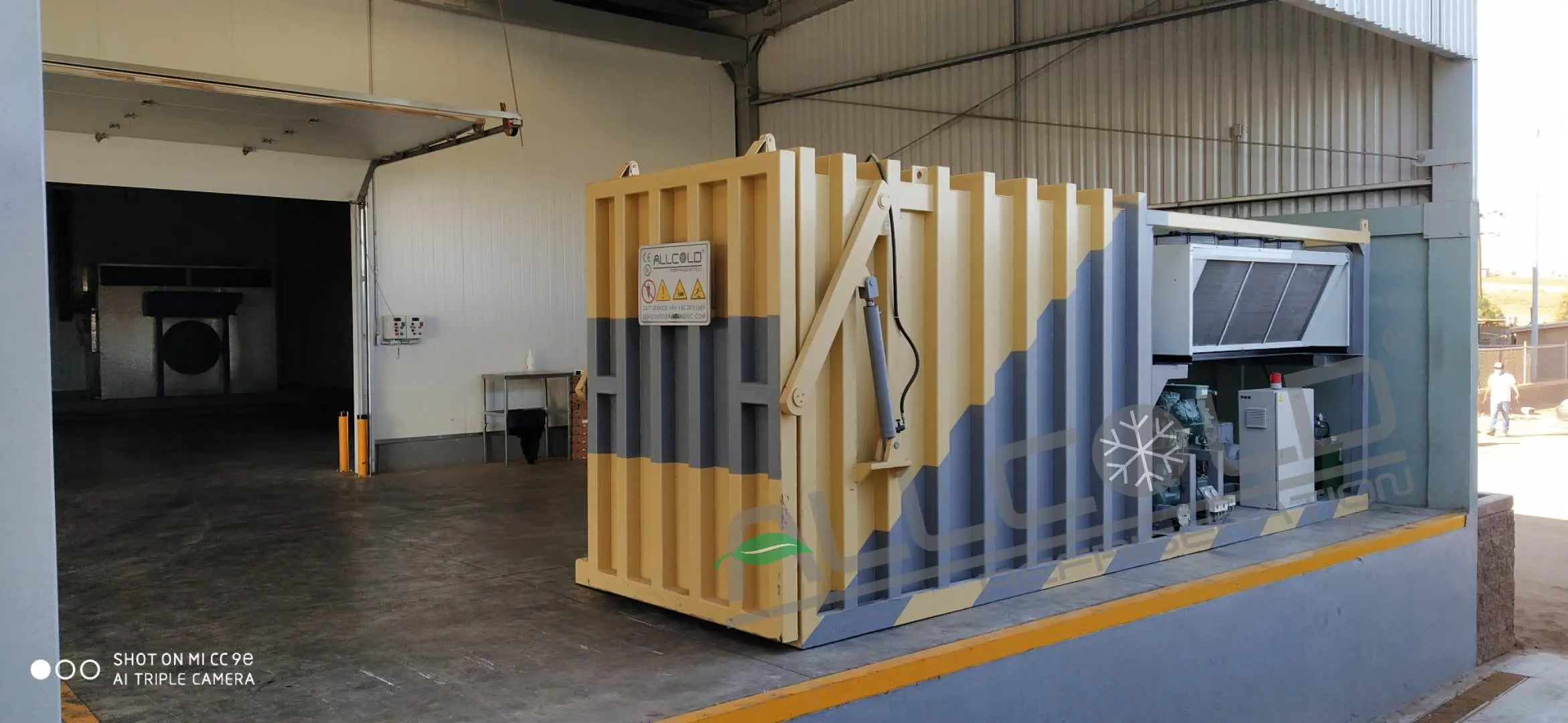
This arrangement is often practical outdoors, but exposure changes the design check. Wind, rainwater drainage, ice, vehicle impact protection and emergency access all belong in the site review. See our outdoor vacuum-cooler installation guide for the wider foundation and weather-planning questions.
Choose it when
- the loading face has a large, controlled apron;
- no wall, column or traffic lane enters the door envelope;
- the pallet route approaches the chamber directly;
- outdoor conditions and vehicle protection are addressed.
2. Horizontal Sliding Door
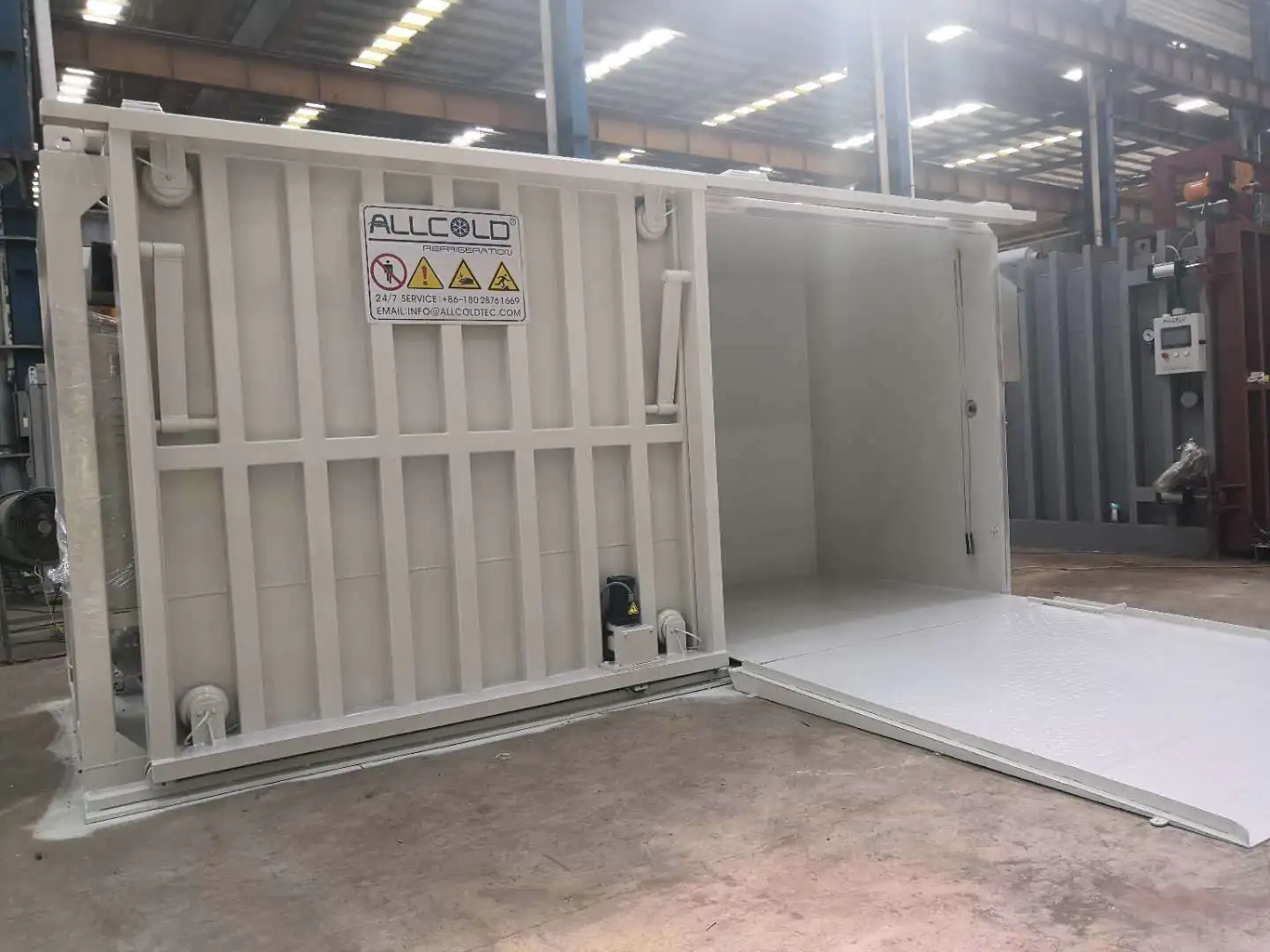
A horizontal sliding door travels sideways along the chamber. It preserves the space directly in front of the opening, so it can be a strong option when the forklift or pallet-jack aisle is narrow. Allcold can arrange the travel direction to suit the confirmed site layout, but the direction must be fixed before manufacture.
The front clearance saved by sliding is transferred to the side of the chamber. That side must have enough uninterrupted length for the door leaf, rail, drive and service access. A refrigeration module, vacuum-pump package, building column, wall or electrical panel placed in the same zone can make an otherwise attractive layout impossible.
Choose it when
- front aisle depth is limited but one chamber side is available;
- the pallet approaches squarely and must not wait for a swinging leaf;
- the machine pack and utility connections can stay outside the door travel zone;
- the customer can confirm left- or right-hand travel from a labelled plan.
Door movement should be considered together with loading time. A chamber that cools quickly can still miss the required hourly output when pallet staging, approach, door travel and unloading are ignored. Our packing-house layout and throughput guide explains how handling time enters the capacity calculation.
3. Vertical-Lift or Upward-Opening Door
A vertical-lift door rises above the chamber opening. It keeps both the front apron and chamber sides comparatively clear, which can solve layouts where neither a swing envelope nor a full side pocket is available.
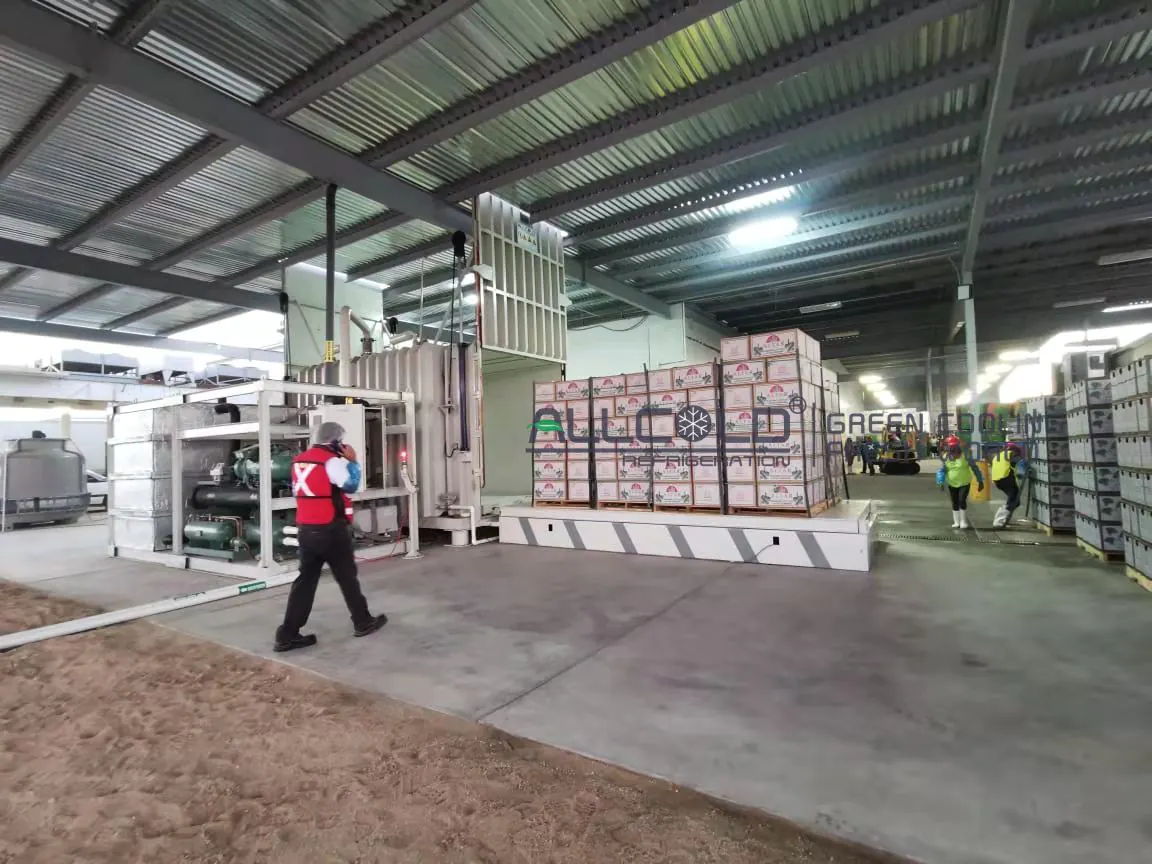
The trade-off is overhead clearance. Do not compare only the closed machine height with the roof. The layout must show the maximum open-door height, lifting structure, drive and safety clearance, together with lights, sprinklers, beams, ducts and overhead doors. Maintenance access at the top also needs to remain practical.
The moving door, tracks, drive and access points also require a machine-specific risk assessment. OSHA’s general machine-guarding rule requires protection from mechanical danger zones,2 while ISO 14120 addresses the design and selection of fixed and movable guards and ISO 14119 covers interlocking devices associated with guards.34 Related HSE guidance on powered doors and gates also stresses that safety depends on how components are combined for the actual environment and maintained over time.5 The final safety circuit and guarding must comply with the regulations and standards applicable at the installation site.
Choose it when
- the site needs an unobstructed front loading line;
- both chamber sides are constrained;
- the building has verified open-door height and service access;
- the overhead hazard zone can be isolated and interlocked.
Door Motion Is Not the Same as One-End or Pass-Through Loading
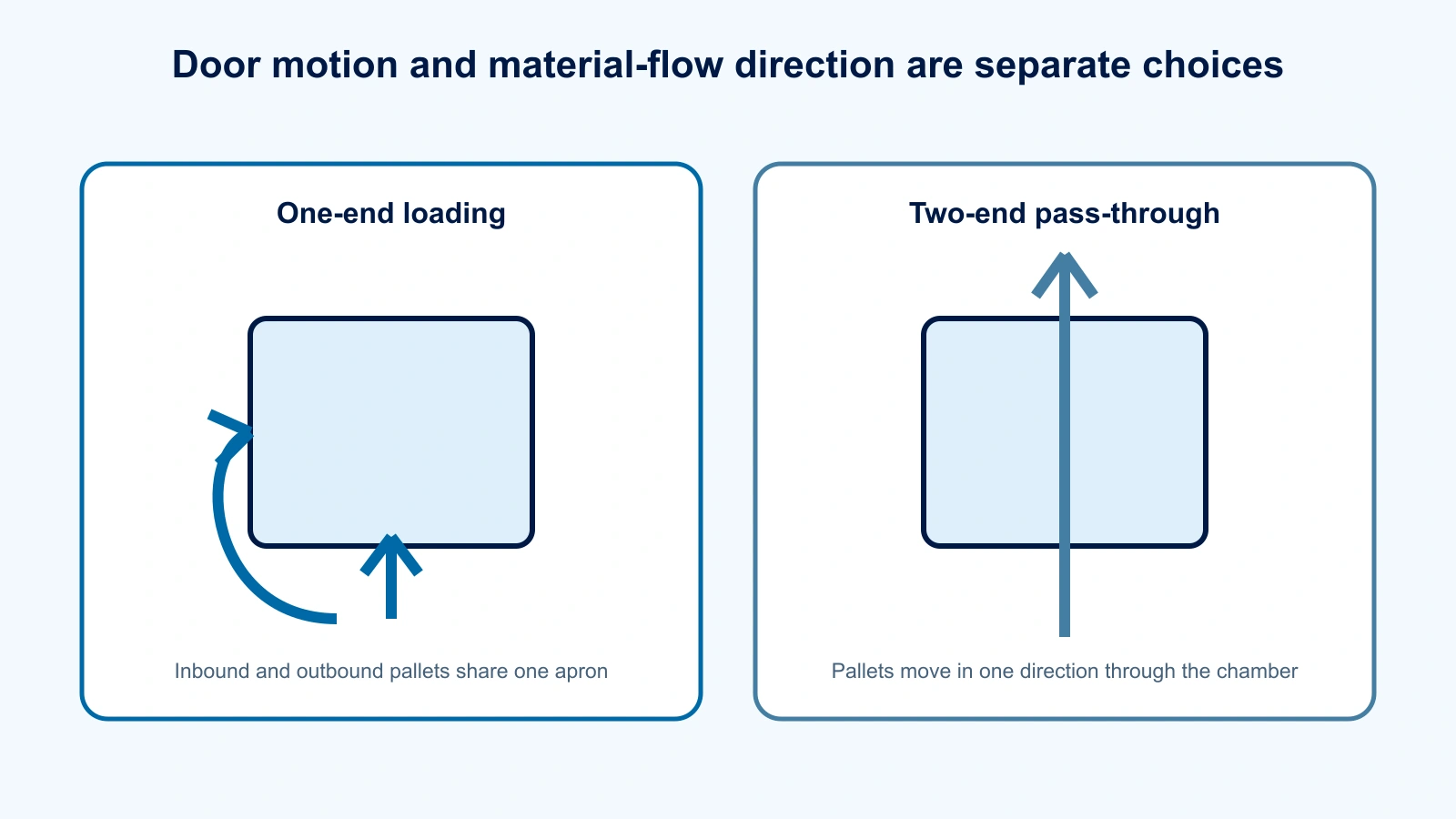
A buyer can choose a door motion and still need a separate decision about material flow:
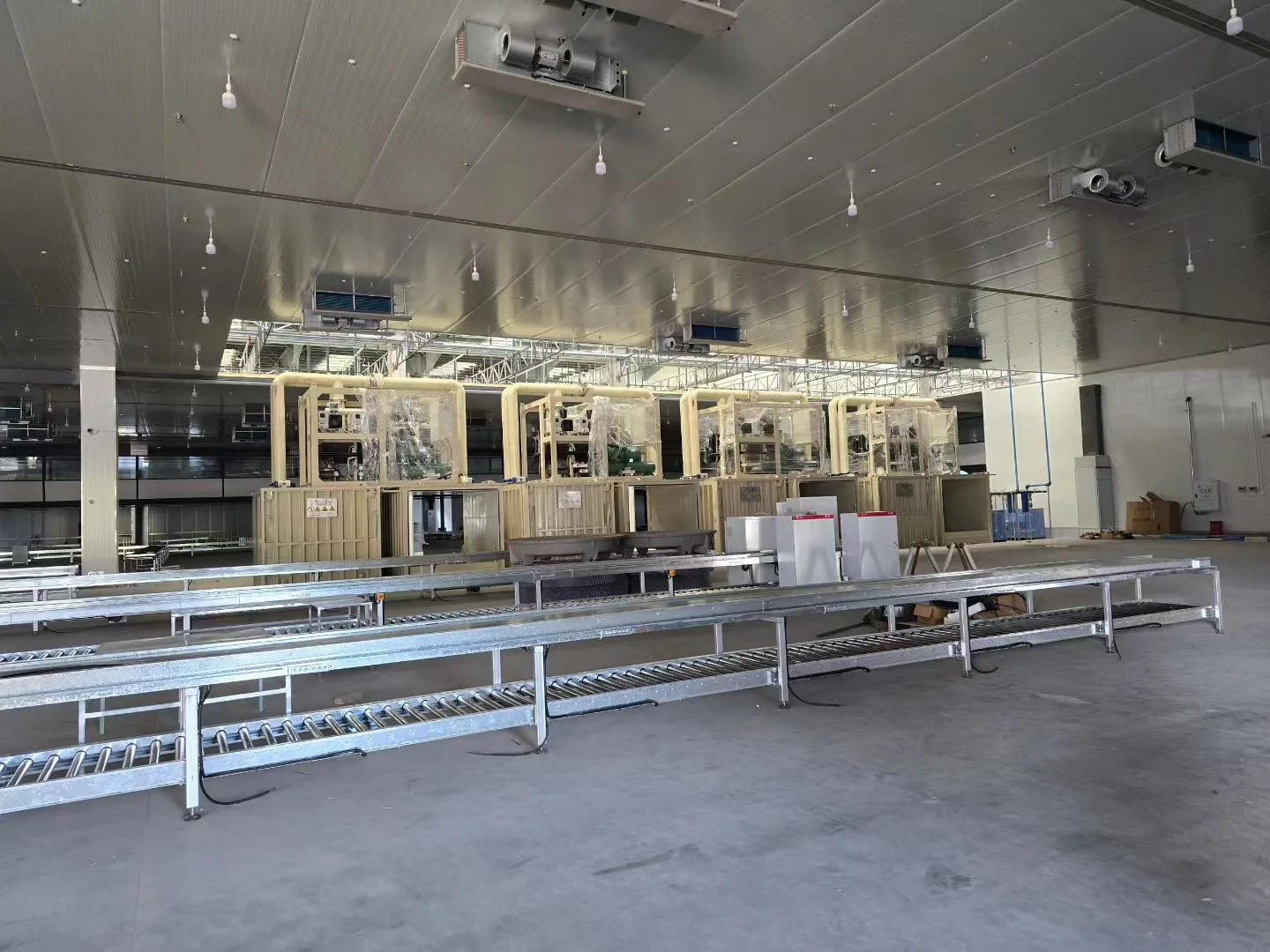
- One-end loading: pallets enter and leave through the same opening. It can reduce the number of doors and suit compact or lower-throughput layouts, but inbound and outbound movements share one apron.
- Pass-through loading: pallets enter through one end and leave through the opposite end. This can support one-way product flow and separation between warm receiving and cooled-product staging, but it requires access at both ends and additional door hardware.
A two-door chamber can use a specified door motion at each end, subject to the final engineering design. Never write only “double door” on an RFQ. State the motion, quantity, loading face and opening direction.
How to Confirm the Door Opening Direction Without Ambiguity
“Open to the left” is not a complete instruction. Left and right reverse when people look from opposite sides. The approval drawing should use a fixed viewpoint and label all surrounding objects.
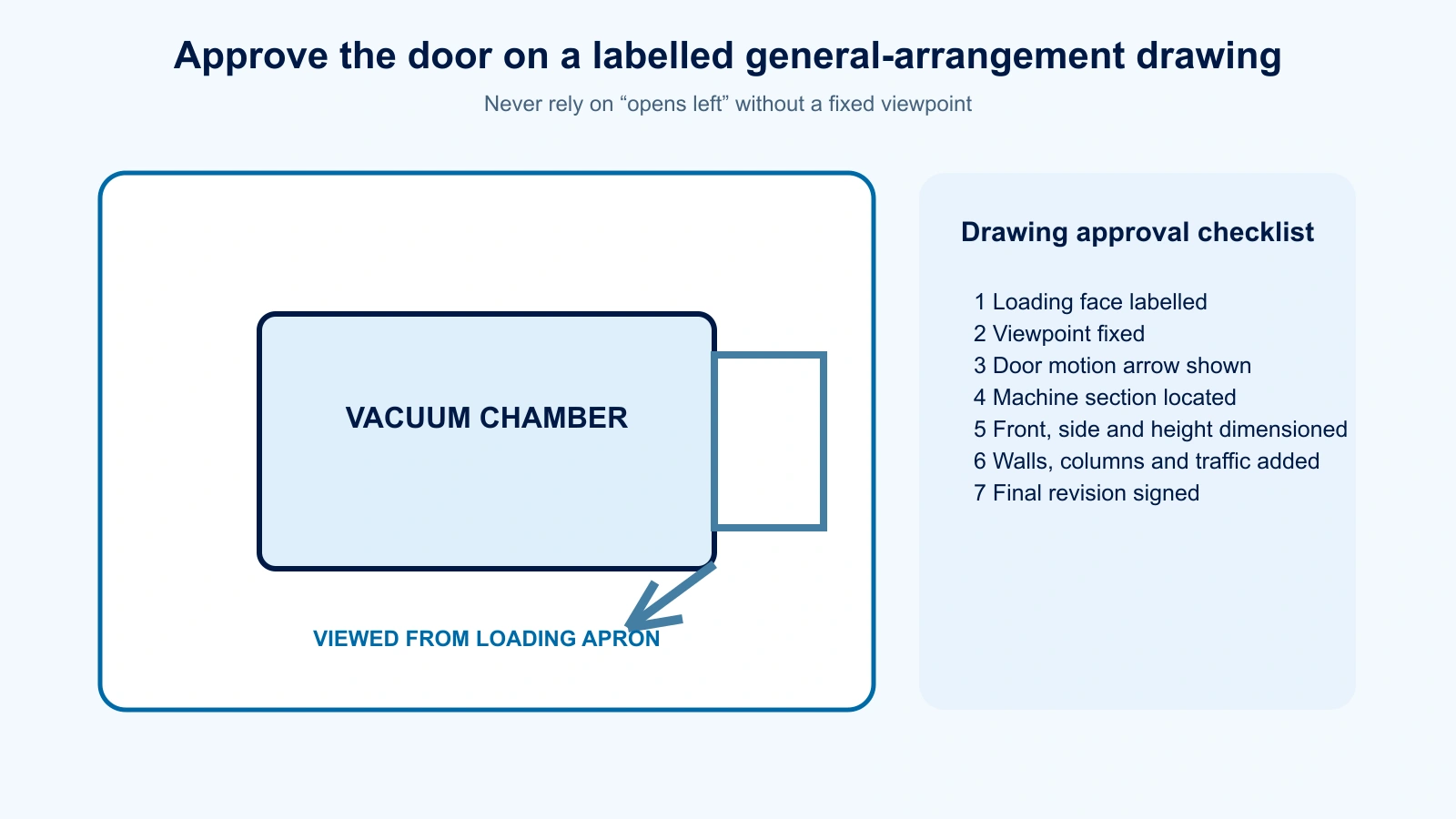
- Mark the loading side: receiving side, dispatch side or both.
- Fix the viewpoint: for example, “viewed from the loading apron toward the chamber.”
- Draw the movement: swing arc, horizontal travel arrow or raised position.
- Show the machine section: vacuum pumps, refrigeration equipment and control panel.
- Dimension all three zones: front apron, side clearance and open-door height.
- Add real obstacles: walls, columns, docks, drains, bollards, conveyors and traffic lanes.
- Approve the final drawing: operations, engineering and safety teams should review the same revision.
A useful quotation should attach these assumptions rather than naming a door without context. See why detailed vacuum-cooler quotations reduce project risk.
Important Boundary: Cooked-Food and Bakery Vacuum Coolers Use Different Door Decisions
Do not apply this article as a universal food-machine door guide. The three-way comparison above is for painted vegetable and fresh-produce pallet vacuum coolers. Cooked-food and bakery systems commonly use trolley loading, stainless-steel construction and different hygienic-room interfaces. Their hinged or sliding door arrangement must be selected from trolley size, cleaning access, room segregation and the production line.
For those applications, start with the specific process guide for cooked-food and bakery vacuum coolers and confirm the chamber drawing separately. Product category alone is not enough: trolley dimensions, tray projection, floor level and clean/less-clean zoning can change the door recommendation.
A Practical Selection Sequence
- Confirm pallet dimensions, loaded height, batch arrangement and handling equipment. Door selection should follow the same loading assumptions used in the vegetable vacuum-cooler capacity calculation.
- Choose one-end return flow or two-end pass-through flow.
- Measure the available front, side and overhead clearance.
- Shortlist the door motion that fits the available clearance zone.
- Place the machine section, utilities, safety devices and maintenance access.
- Run a pallet-movement check with the door fully open.
- Approve a labelled general arrangement drawing before manufacture.
The door should therefore be selected early, but only after the real pallet route is known. Choosing from a photograph and correcting the opening direction later can force changes to the chamber, machine layout, foundations or building interface.
Send the Site Plan Before Choosing the Door
For an Allcold vegetable vacuum-cooler proposal, send the pallet dimensions, batch layout, handling method, building plan, clear height, loading direction and photos of the installation area. We can then mark the door motion, travel direction and clearance on the project drawing.
Frequently Asked Questions
Which vegetable vacuum-cooler door needs the least front clearance?
A horizontal sliding door or vertical-lift door normally keeps the front loading apron clearer than an outward-opening hydraulic door. The final choice depends on whether the site has more usable side space or overhead height.
Can the horizontal sliding door open in either direction?
The travel direction can be arranged to suit the confirmed project layout, but it must be specified on the approved drawing. The side reserved for travel must remain free of equipment, walls and service obstructions.
Is a two-door vacuum cooler always faster?
No. Pass-through flow can reduce traffic conflicts, but total throughput still depends on pallet staging, handling equipment, door time, cooling cycle and downstream capacity.
Can I choose the door after ordering the chamber?
That is risky. Door motion and direction affect structure, drives, controls, machine placement and site clearance. They should be approved before manufacturing drawings are released.
References
- U.S. Occupational Safety and Health Administration. 29 CFR 1910.176 — Handling materials: general. Accessed 18 August 2026.
- U.S. Occupational Safety and Health Administration. 29 CFR 1910.212 — General requirements for all machines. Accessed 18 August 2026.
- International Organization for Standardization. ISO 14120:2015 — Safety of machinery: guards. Accessed 18 August 2026.
- International Organization for Standardization. ISO 14119:2024 — Interlocking devices associated with guards. Accessed 18 August 2026.
- UK Health and Safety Executive. Ensuring powered doors and gates are safe. Accessed 18 August 2026.

Mila
You May Also Like
Can a Vacuum Cooler’s Chamber, Pump and Chiller Go in Different Rooms?
Keep the chamber convenient for production without assuming the machinery must sit beside it. A practical guide to reviewing a split vacuum cooling installation.
Vacuum Cooling Sweet Corn: Look Beyond Cooling Speed
Can sweet corn be vacuum cooled? Compare moisture control, husk and pack formats, hydrocooling alternatives, and the product checks to agree before buying.
Vacuum Cooling Celery: Is It the Right Choice for Your Packing Line?
Can celery be vacuum cooled? Compare vacuum, hydro and forced-air cooling, then assess packaging, temperature, weight loss and real packing-line throughput.
Does a Bigger Vacuum Pump Mean Faster Vacuum Cooling?
Does a larger vacuum pump cool produce faster? Compare m³/h ratings, loaded cooling time and complete batch throughput before buying a vacuum cooler.
Which Refrigerant Should Your Vacuum Cooler Use?
Choosing a vacuum cooler refrigerant? Check local service support, destination rules, system performance and quotation details before ordering.
Can Your Floor Support a Vacuum Cooler? Look Beyond Tonnes per Square Metre
Check vacuum cooler floor loading before you buy: operating weight, support reactions, forklift wheel loads, ramps and the site data your engineer needs.
Buying a Vacuum Cooler Near the Coast? Specify More Than Paint
Coastal protection is more than chamber paint. Use this component-by-component checklist to compare vacuum cooler quotations, test evidence and maintenance scope.
50 Hz or 60 Hz? How to Confirm a Vacuum Cooler Will Work at Your Site
Buying a vacuum cooler for 50 Hz or 60 Hz power? Check whole-machine compatibility, auxiliaries, conversion scope and quoted performance before ordering.
Can You Move a Vacuum Cooler Between Farms for Different Harvest Seasons?
ALLCOLD · MULTI-SITE COOLING & EQUIPMENT PLANNING Sharing one cooler across two growing regions can look efficient on an annual
How Loud Is a Vacuum Cooler? Plan for Noise Before You Buy
ALLCOLD · EQUIPMENT SELECTION & SITE PLANNING A cooler can fit the available space and still be in the wrong