
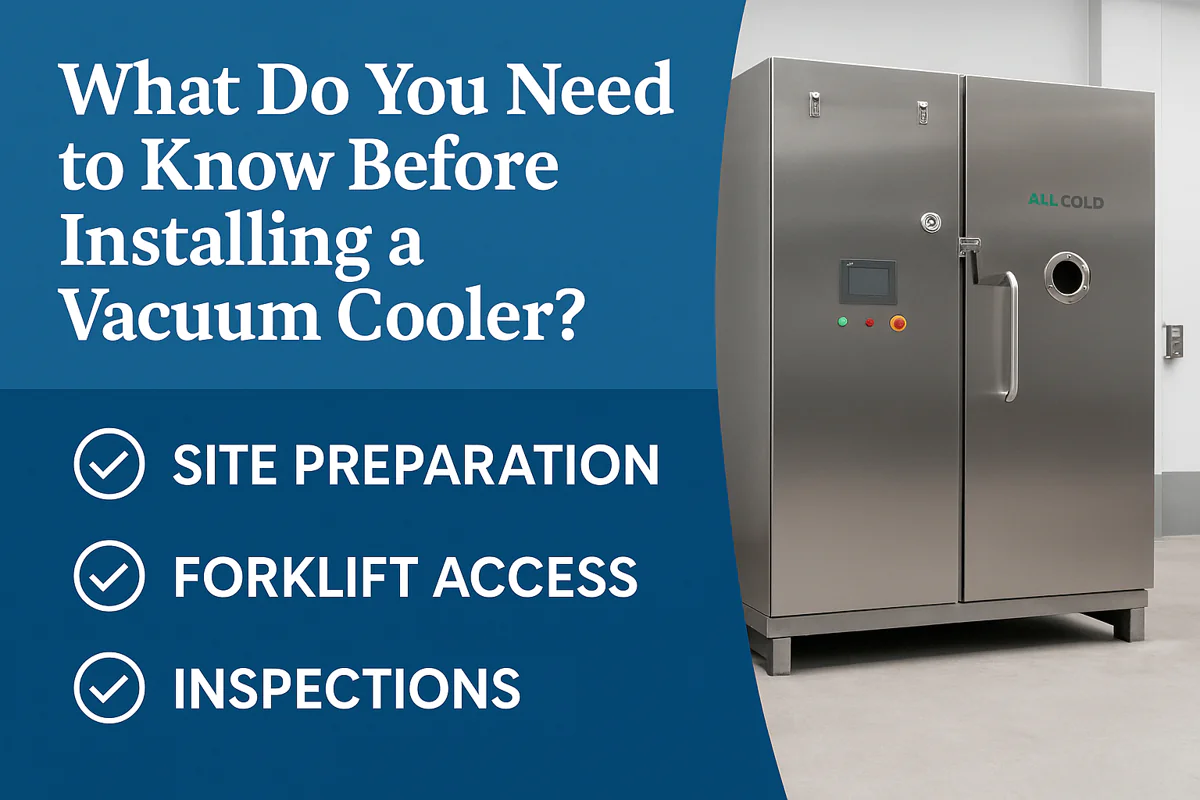
What Do You Need to Know Before Installing a Vacuum Cooler?
You are ready to upgrade your cooling process, but the thought of a complex installation is daunting. You worry about hidden requirements, unexpected costs, and lengthy downtime affecting your production schedule.
A successful vacuum cooler installation hinges on four key stages: proper site preparation, correct physical positioning, thorough pre-operation checks, and customized operational setup. Following a clear guide for these steps ensures a smooth and efficient commissioning process.
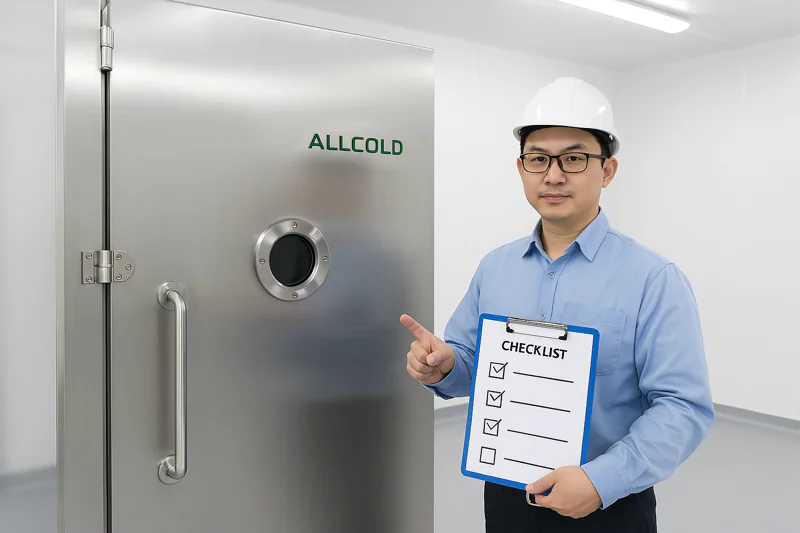
I’ve seen the relief on my clients’ faces when they realize how straightforward the installation can be. Our machines are designed to be "plug-in ready" to minimize complexity. However, being prepared is everything. A little planning goes a long way in making the setup process seamless. Let’s walk through the exact steps you need to take, from preparing the space to running your first cooling cycle.
What site preparations are necessary before delivery?
You’re concerned that your facility might not be ready for the new machine. The last thing you want is for the delivery truck to arrive, only to find the space is unsuitable.
Before the vacuum cooler arrives, you must ensure you have a stable, level foundation, the correct electrical power supply, and, if needed, a compressed air source. These elements are critical for safe and effective operation.
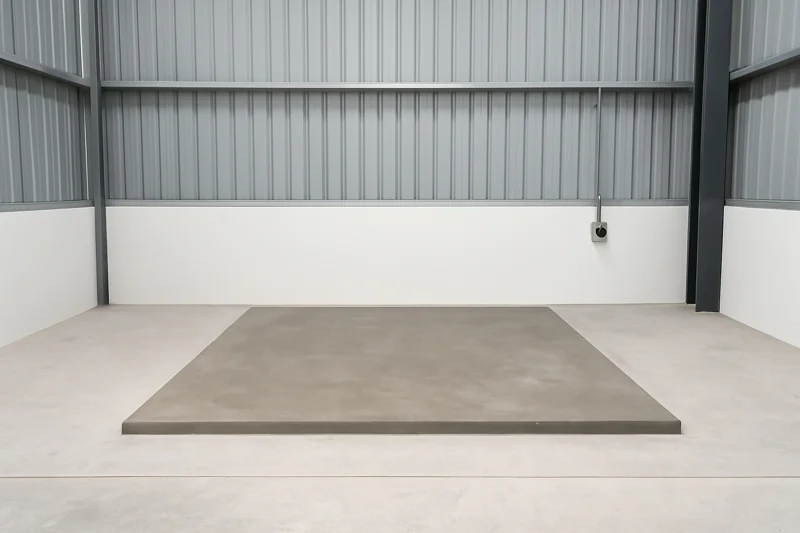
Building a Foundation for Success
Proper site preparation is the most important step for a trouble-free installation. Taking care of these details beforehand prevents delays and ensures your machine runs perfectly from day one. It’s about creating the ideal environment for your new investment to perform at its best.
First, the machine must be placed on stable ground and well-locked into position. An uneven or unstable floor can cause vibrations, leading to premature wear on components. Second is the power supply. You need to verify your electrical service matches the machine’s requirements. It is crucial that a professional electrician handles this connection to ensure safety. Finally, some models use a pneumatic system to close the door. For these, you must have an air compressor that can supply a steady pressure of 6-8 bars. If the machine is to be stored for a long time before use, ensure the location is protected from dampness and dust to protect sensitive components. Getting these three things right is 90% of the battle.
| Site Requirement | Specification Example | Why It’s Critical |
|---|---|---|
| Foundation | Stable, level concrete ground1 | Prevents vibration and ensures machine stability for safe operation. |
| Power Supply2 | Match machine specs (e.g., 380V/3Ph/50Hz) | Provides correct, safe power to prevent damage to electrical components. |
| Compressed Air | 6-8 bars (if required) | Ensures the pneumatic door system functions correctly and safely. |
| Environment | Protected from dampness and dust | Protects sensitive electricals and mechanical parts, especially during storage. |
How is the machine physically installed and positioned?
You’re imagining a complicated assembly process that will take days. You need the machine to be operational as quickly as possible with minimal disruption to your workflow.
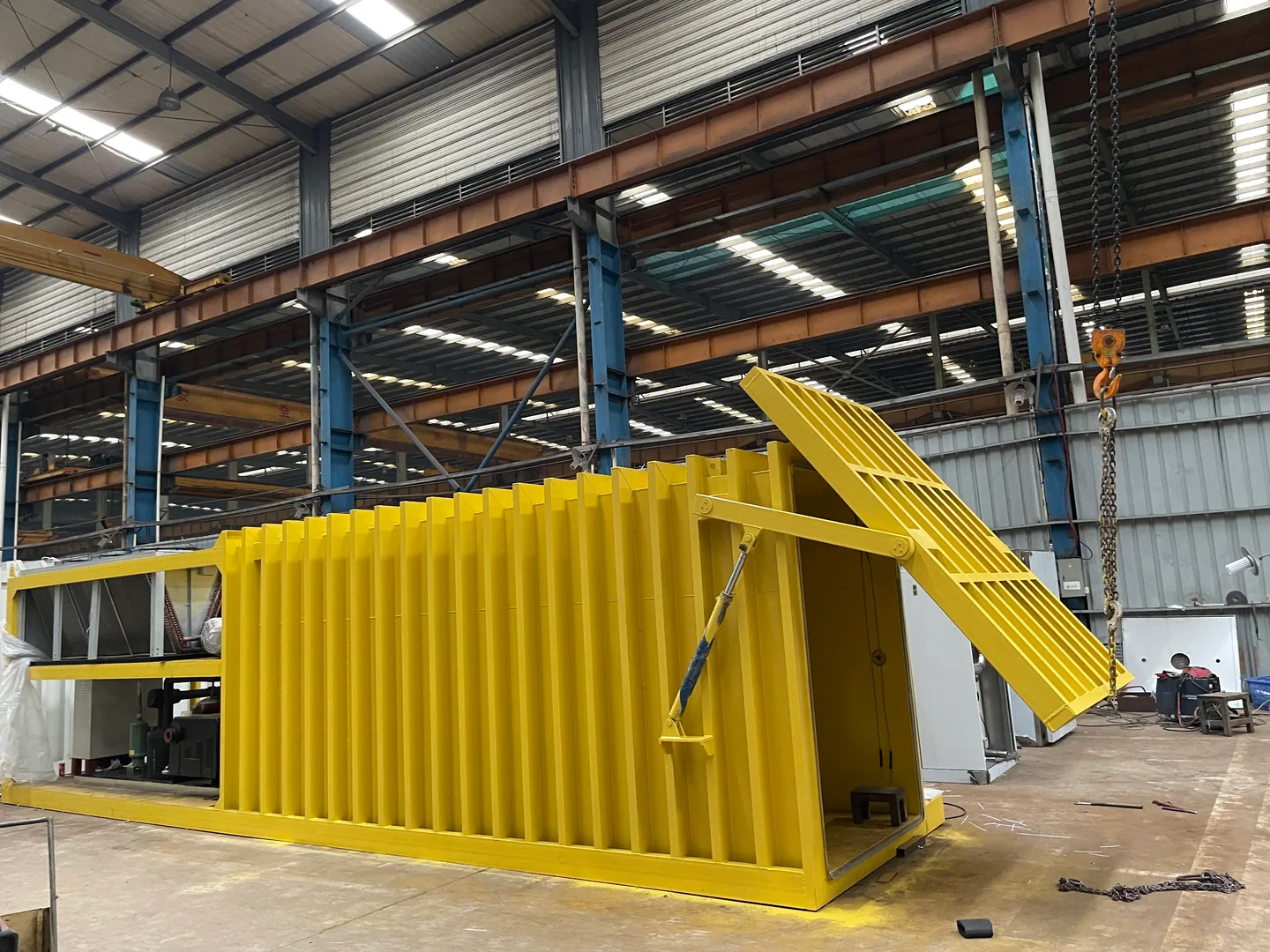
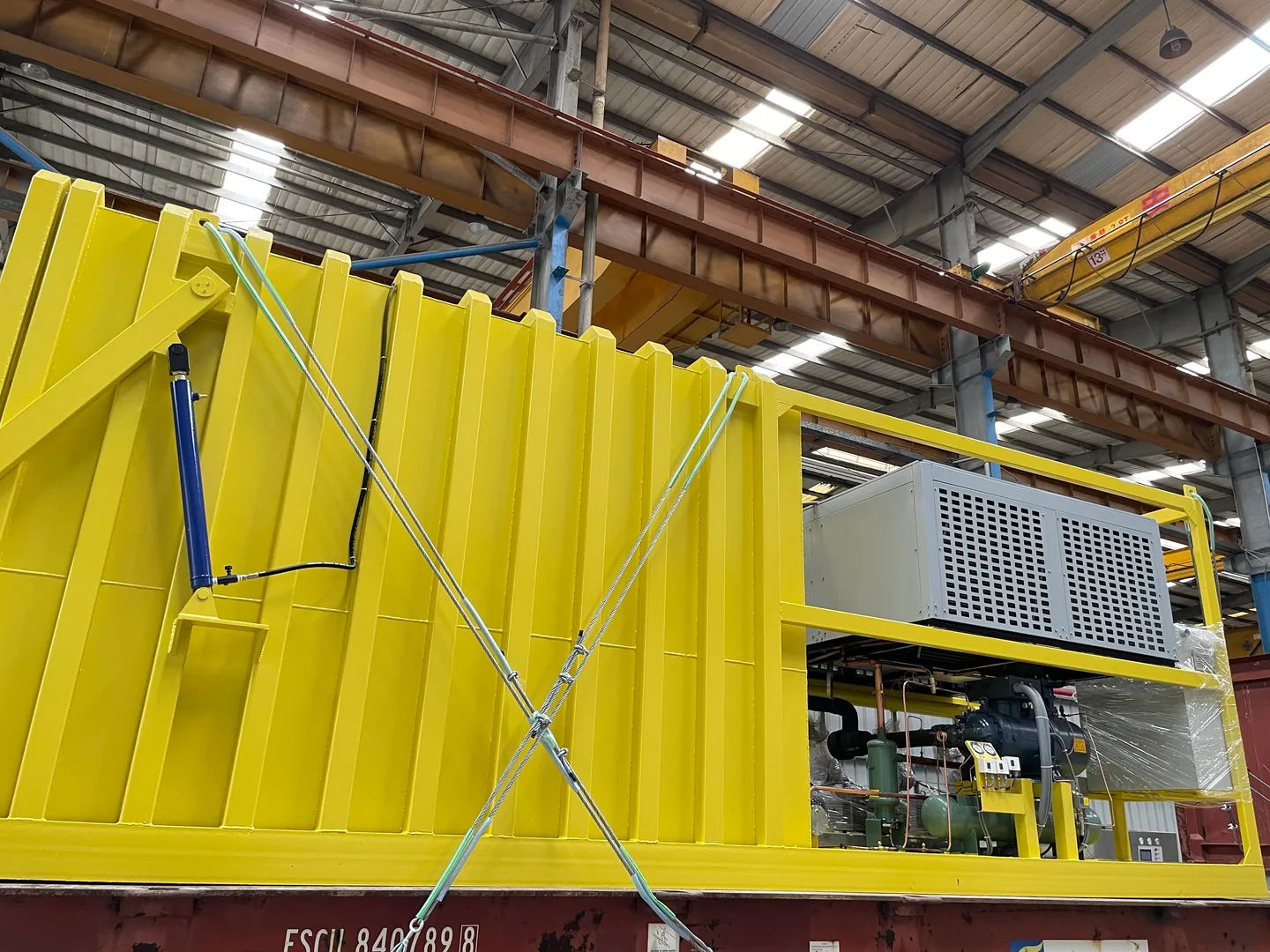
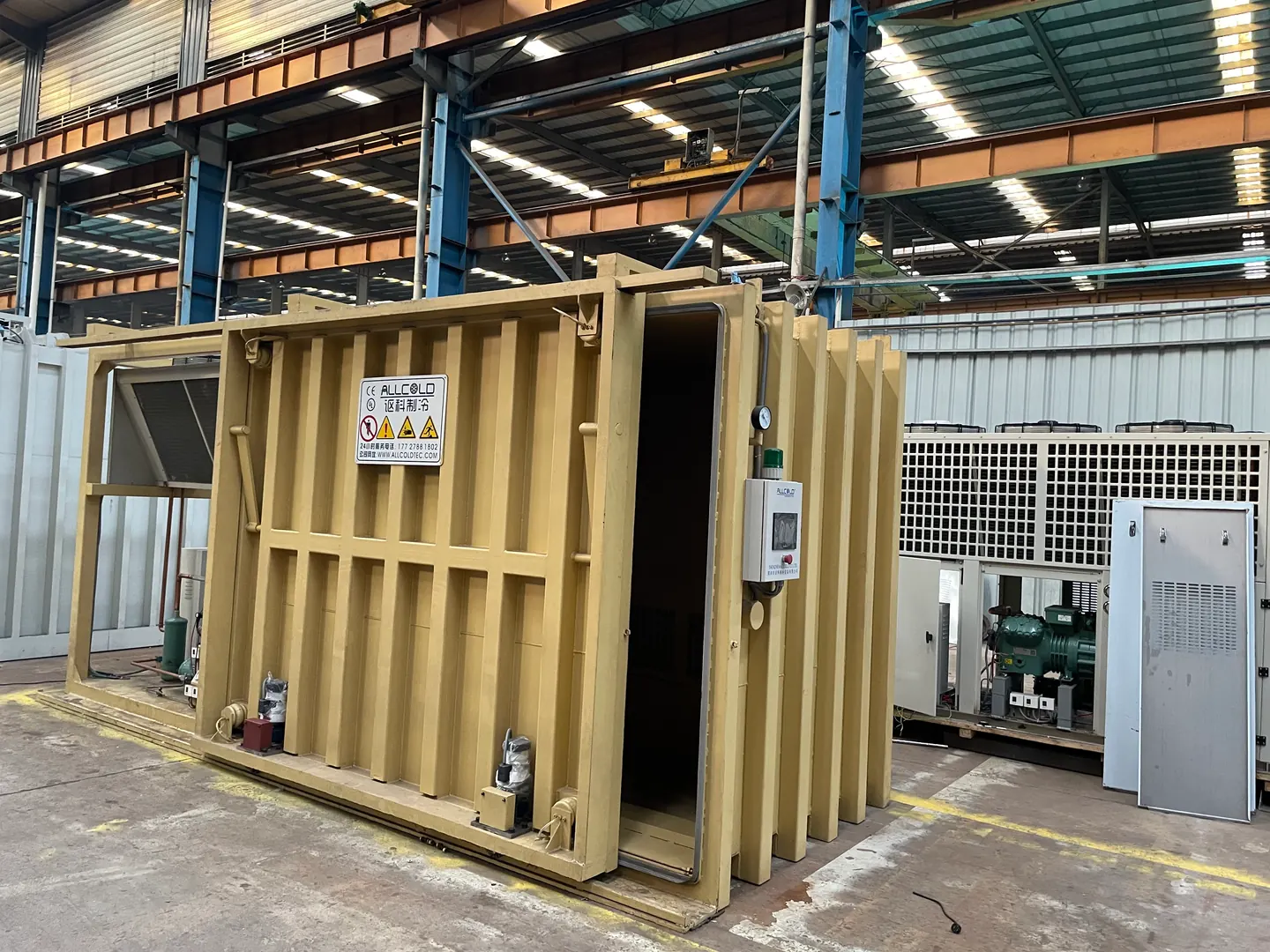
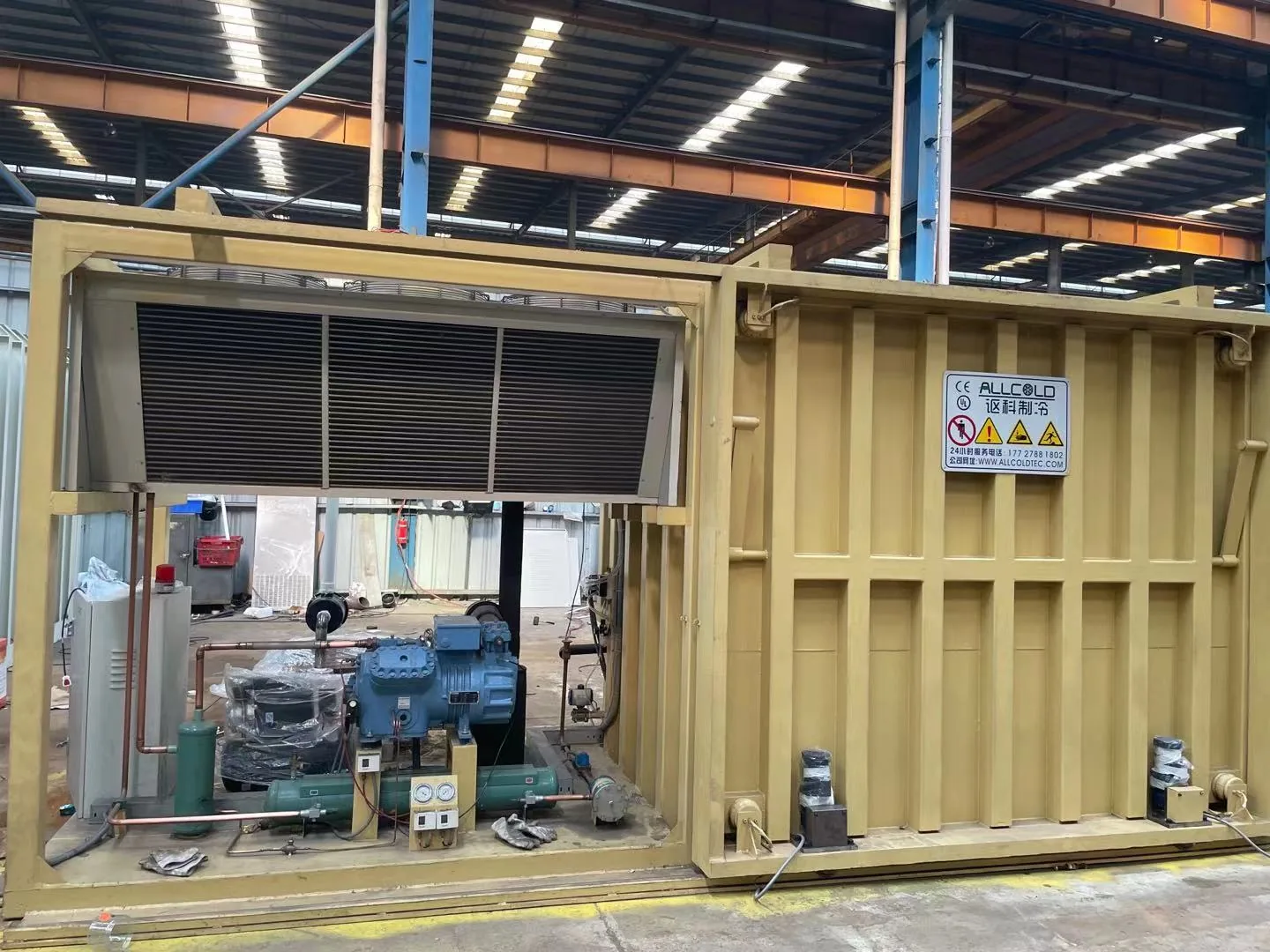
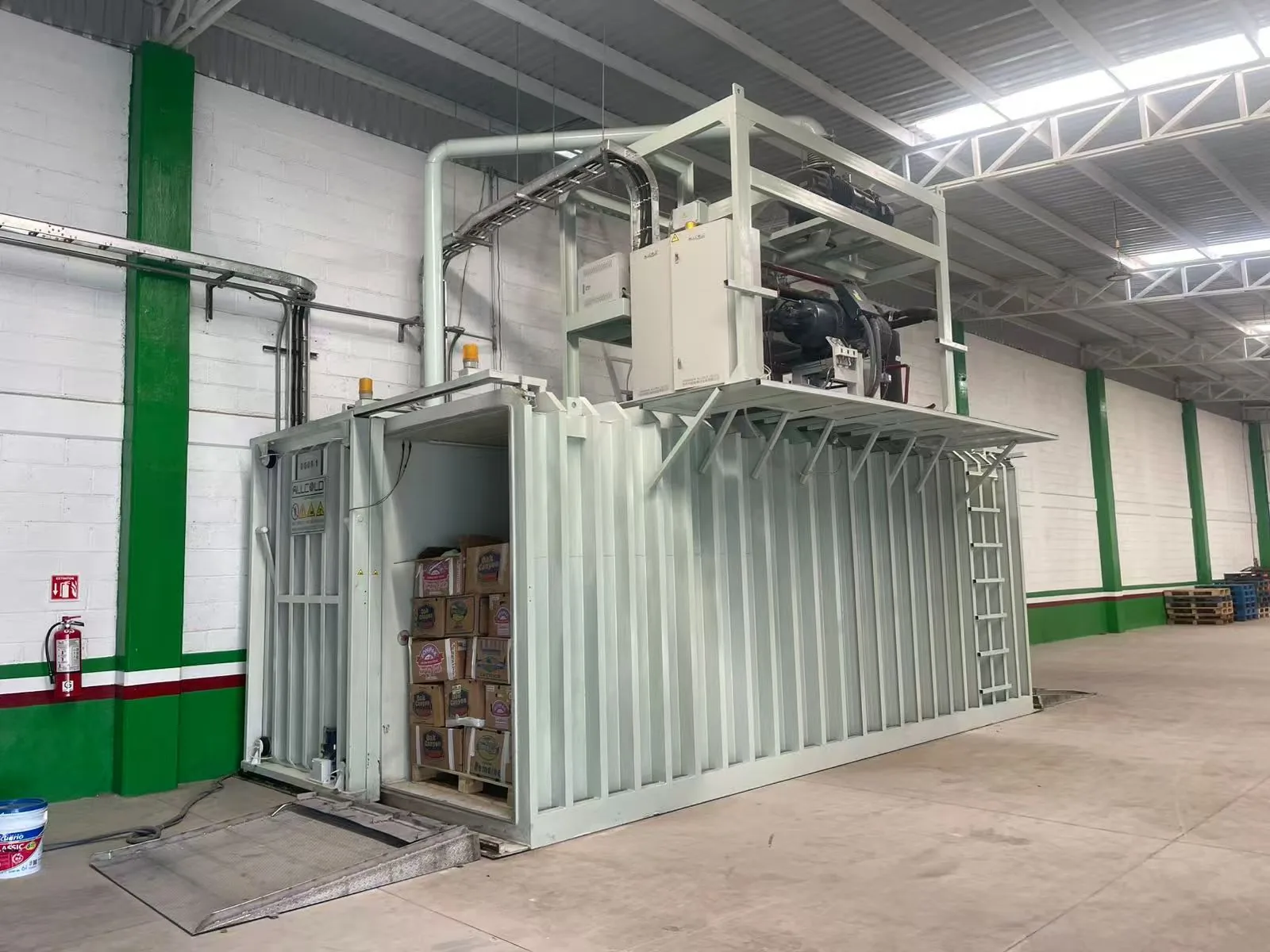
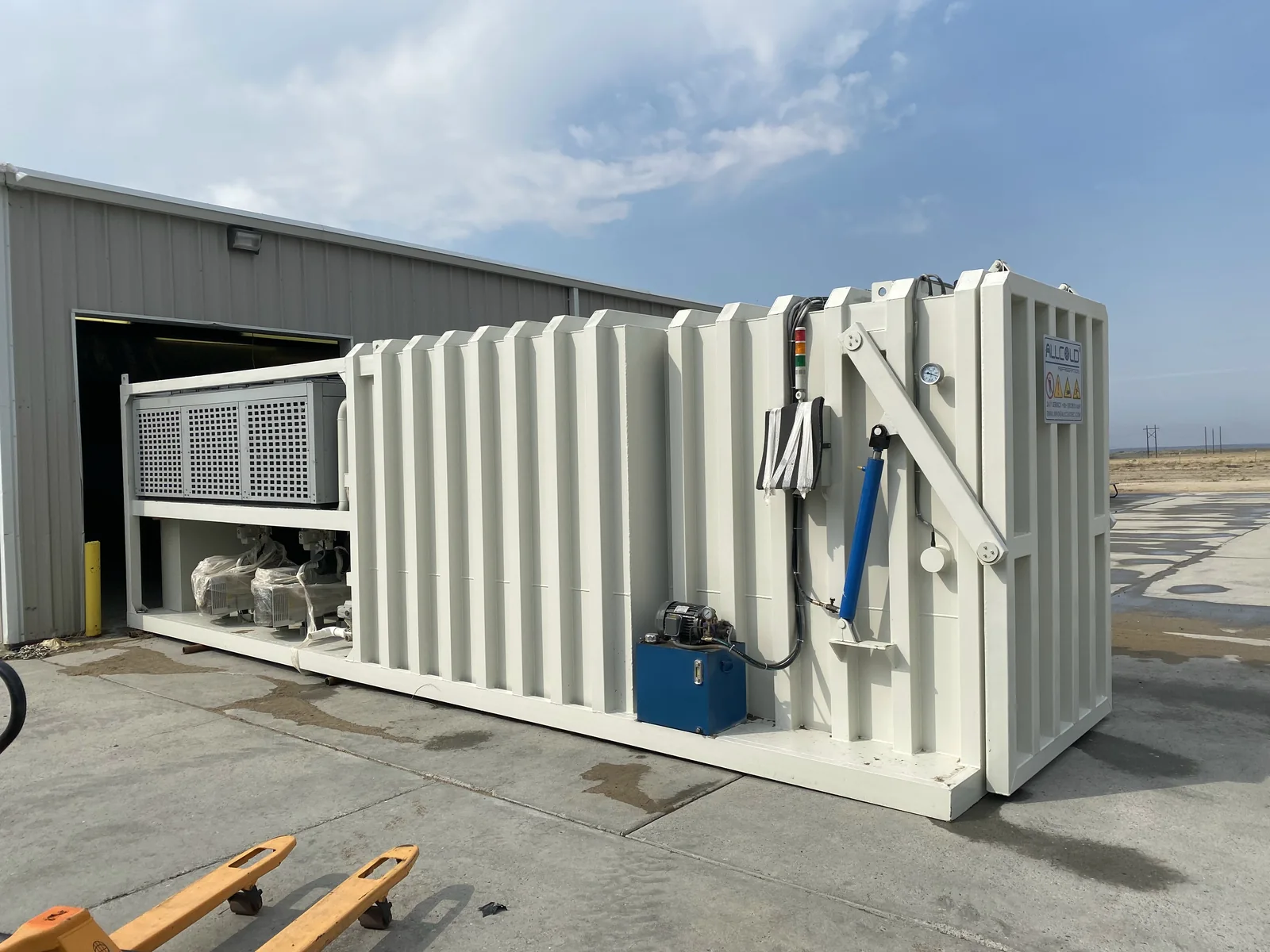
Our vacuum coolers are designed to be "plug-in ready". The unit is delivered as a whole skid type, which is then moved into position, secured, and connected to power, making the physical setup fast and straightforward.
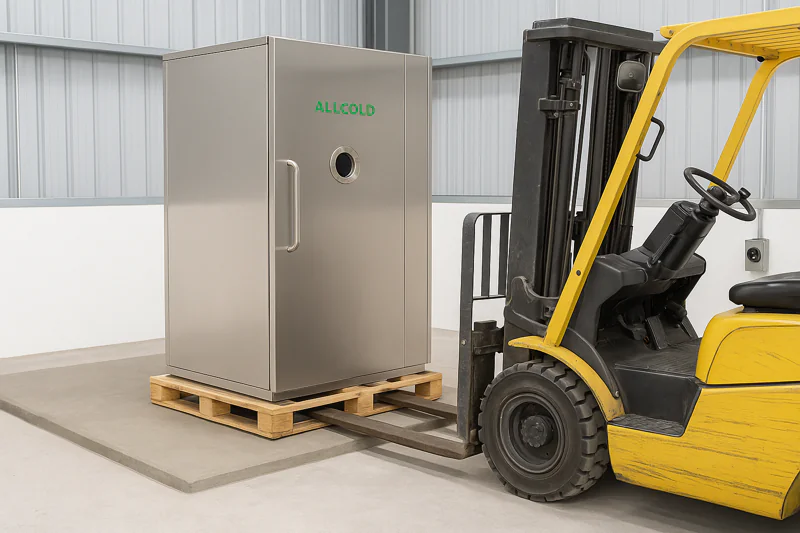
From Delivery Truck to Ready-to-Run
One of the biggest advantages of our design philosophy is the focus on easy installation3. My clients are often surprised by how quickly the machine is put in place. We deliver our vacuum coolers on a "whole skid type" basis, meaning the core components are already assembled, piped, and wired together. This is not a kit of parts; it’s a nearly complete system that arrives well piped.
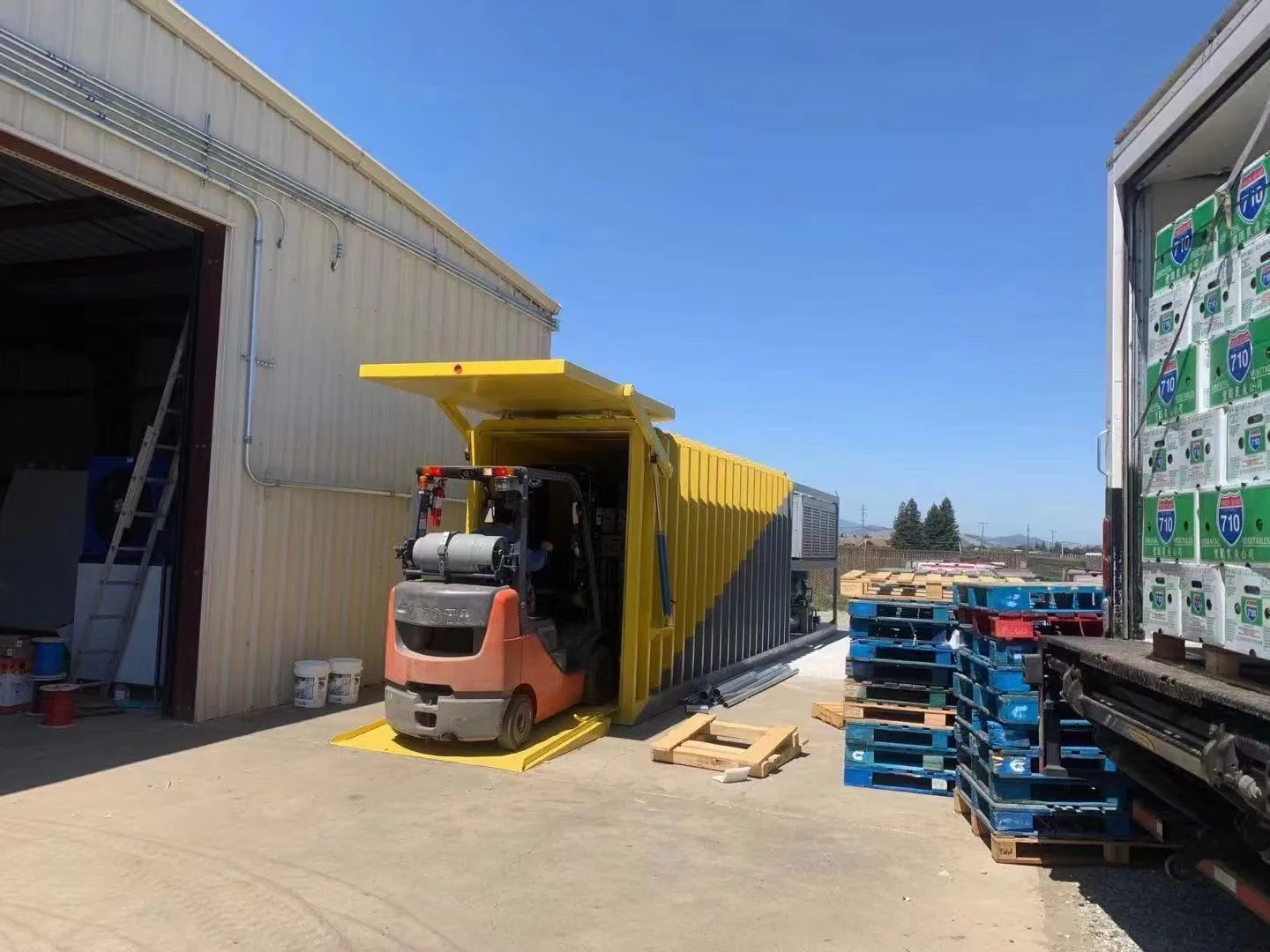
The physical installation process is therefore quite simple. The skidded unit is unloaded from the truck and carefully moved, often with a forklift, to its prepared location. Once in position, the machine needs to be leveled and securely locked down to the stable ground. This prevents any movement during the powerful vacuum cycles. After it is secured, the final connections are made. This mainly involves connecting the main power supply, which must be done by a qualified technician, and hooking up the compressed air line if your model requires it. Because the machine is already configured as a plug-in-ready unit4, this entire process is much faster and less disruptive than traditional equipment installations. It minimizes on-site work and gets you operational without lengthy delays.
What initial checks should be performed before the first use?
You are anxious about starting the machine for the first time. You want to be sure everything is correct to avoid causing any damage or encountering an immediate failure.
Before the first operation, a series of checks is essential. This includes a visual inspection of all components, verifying all external connections like power and air, and ensuring fluid levels are correct.
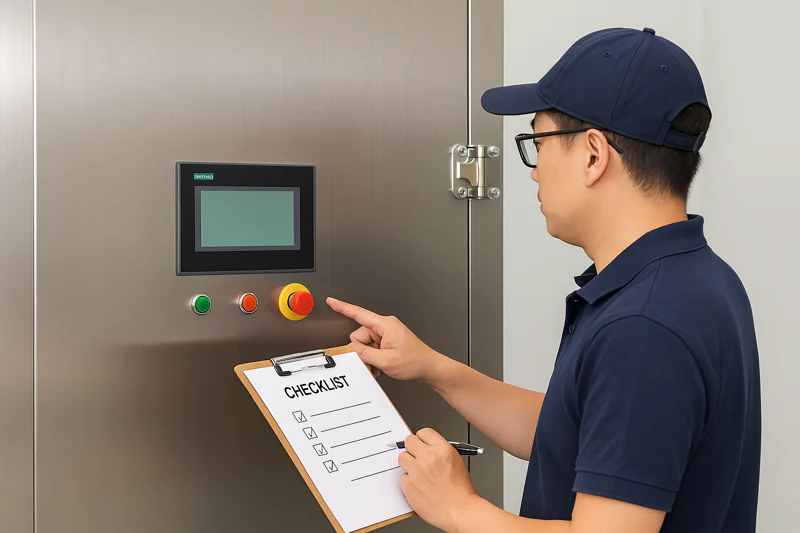
The Pre-Flight Checklist
Starting a new machine is an important moment, and a systematic check ensures everything goes smoothly. This is a process we guide all our clients through. It’s about being methodical and confirming every part of the system is ready. Safety is the top priority, so any examination of electrical appliances should only be done by professionals.
First, we do a complete visual inspection. We check that all the high-quality components, like the Bitzer compressor5 and Leybold vacuum pump6, are secure after shipping. We then check critical fluid levels. It’s important to ensure the oil level of the compressor is within the normal range of 1/3 to 2/3. Similarly, we check the observation spot on the vacuum pump to confirm its oil level is also in the normal 1/3 to 2/3 range. Next, we verify the external connections are secure. Once these pre-power checks are complete, we can turn on the main power. We then check the Siemens touch screen control panel to ensure it powers up correctly. The very first run, especially after any major work, must be started under confirmation that everything is in order.
How do you set up the machine for a specific product?
Your products have unique cooling requirements. You need to know how to program the machine to achieve the perfect cooling cycle every time, ensuring both efficiency and product quality.
Setting up the cooler is done through the simple touch screen control panel. You can program the target temperature and let the machine run its automated cooling cycle for consistent, perfect results.
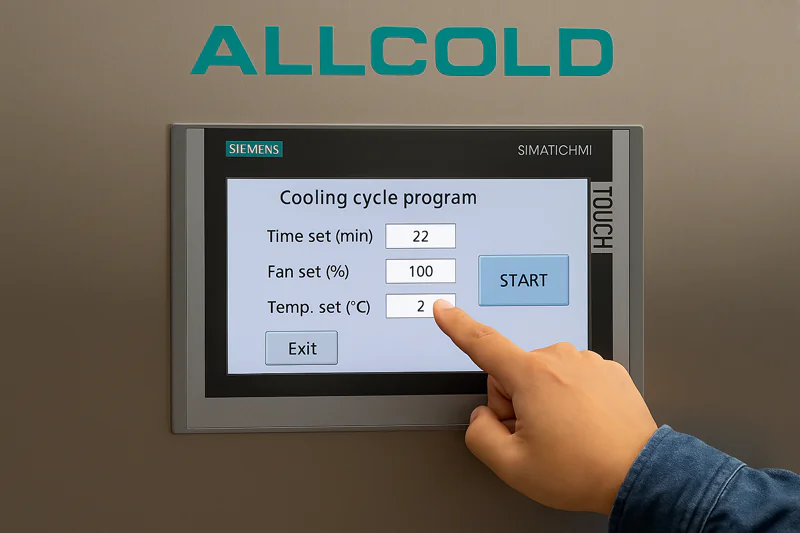
Dialing in the Perfect Cool
This is where the machine’s intelligence really shines. Customizing the cooling cycle for your product is simple, thanks to the intuitive Siemens touch screen operator control7. This system gives you precise command over the cooling process to get reliable and repeatable outcomes.
The primary setting you will adjust is the target temperature8. This is the final temperature you want your product to reach at the end of the cycle, and it is important to set it above 0°C to prevent any risk of freezing. The entire cycle can then be run automatically. You simply press the ‘Start’ button on the touch screen. The machine begins the cooling process by orderly running the necessary pumps and the compressor. Once the product reaches your set target temperature8, the system will automatically stop the compressor and condenser fans. The control system handles the entire sequence, making it easy for any operator. This level of automation not only simplifies operation but also ensures that every batch is cooled to the exact same specification, guaranteeing product quality and consistency.
Conclusion
Proper installation is a straightforward process when you prepare the site, position the plug-in ready unit, perform key checks, and program the intuitive controls. This ensures your vacuum cooler is set up for success.
A stable foundation is essential to prevent vibrations and ensure the longevity of your machine. ↩
Understanding power supply requirements is crucial for safe and efficient machine operation. ↩
Exploring this link will reveal how easy installation can save time and reduce disruption in your operations. ↩
This resource will help you understand the efficiency and convenience of plug-in-ready units in modern installations. ↩
Explore this link to understand the Bitzer compressor’s functionality and its importance in refrigeration systems. ↩
Discover the various applications of Leybold vacuum pumps and how they contribute to industrial processes. ↩
Explore this link to understand how Siemens’ technology enhances user experience and operational efficiency. ↩
Learn about the importance of setting the right target temperature for optimal cooling and product quality. ↩ ↩
Interested in vacuum cooling for your operation?
Allcold has delivered systems to 30+ countries for fresh produce, bakery, and cooked food applications. Share your requirements with our engineering team.

Mila
You May Also Like
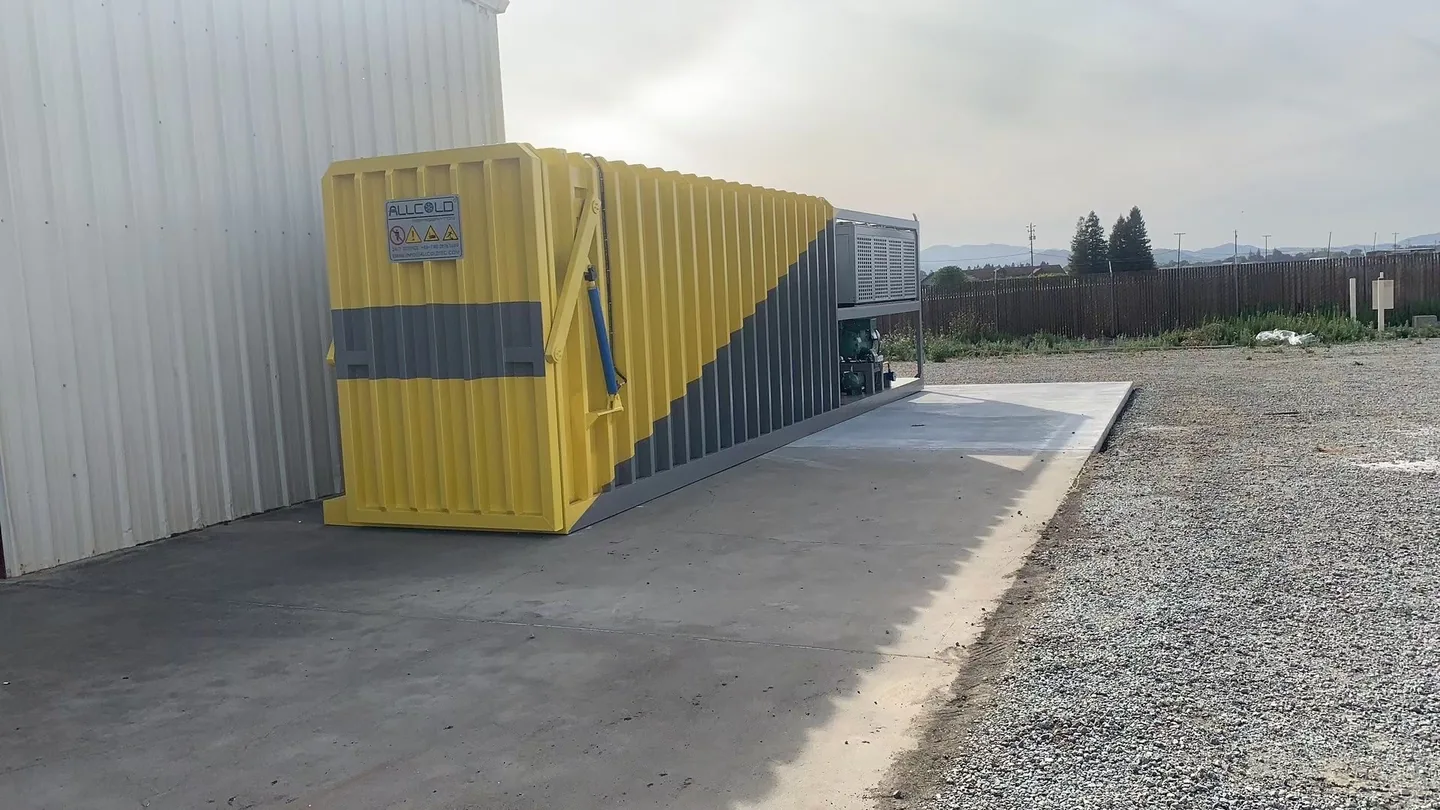
Can Your Floor Support a Vacuum Cooler? Look Beyond Tonnes per Square Metre
Check vacuum cooler floor loading before you buy: operating weight, support reactions, forklift wheel loads, ramps and the site data your engineer needs.
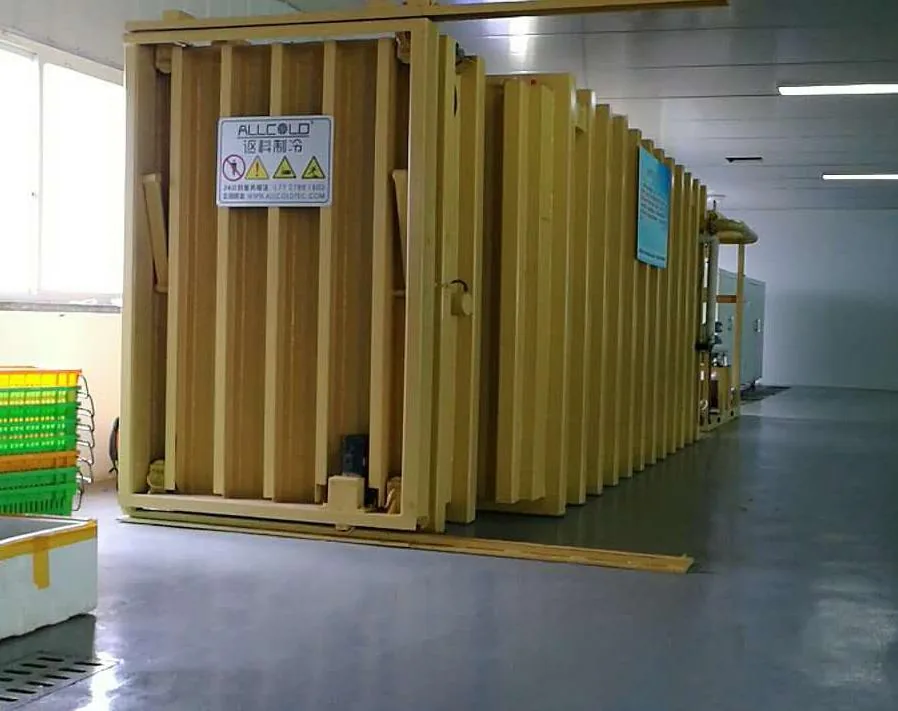
Buying a Vacuum Cooler Near the Coast? Specify More Than Paint
Coastal protection is more than chamber paint. Use this component-by-component checklist to compare vacuum cooler quotations, test evidence and maintenance scope.
50 Hz or 60 Hz? How to Confirm a Vacuum Cooler Will Work at Your Site
Buying a vacuum cooler for 50 Hz or 60 Hz power? Check whole-machine compatibility, auxiliaries, conversion scope and quoted performance before ordering.
Can You Move a Vacuum Cooler Between Farms for Different Harvest Seasons?
ALLCOLD · MULTI-SITE COOLING & EQUIPMENT PLANNING Sharing one cooler across two growing regions can look efficient on an annual
How Loud Is a Vacuum Cooler? Plan for Noise Before You Buy
ALLCOLD · EQUIPMENT SELECTION & SITE PLANNING A cooler can fit the available space and still be in the wrong
Air-Cooled, Water-Cooled or Evaporative: Which Vacuum Cooler Fits Your Site?
VACUUM COOLER BUYER’S GUIDE · SITE UTILITIES Three heat-rejection arrangements can mean very different utilities, maintenance and installed costs. Compare
Vacuum Cooling vs. Vacuum Packaging: Which Machine Do You Need?
ALLCOLD · EQUIPMENT SELECTION Two machines can both use a vacuum chamber and still solve completely different production problems. Before
Should You Buy a Vacuum Cooler or Use a Third-Party Cooling Service?
FARM INVESTMENT · OWNERSHIP VS. OUTSOURCING The cooling fee is easy to see. The cost of getting your harvest cooled
Can a Vacuum Cooler Work at High Altitude? A Buyer’s Guide for Farms
Buying a vacuum cooler for a high-altitude farm? Learn how altitude affects pressure readings, equipment selection and the site details your supplier needs.
Where Should Two Product Temperature Probes Go in a Vacuum Cooler?
Learn how to place a vacuum cooler’s two standard product temperature probes, avoid false cold readings and define repeatable production locations.