
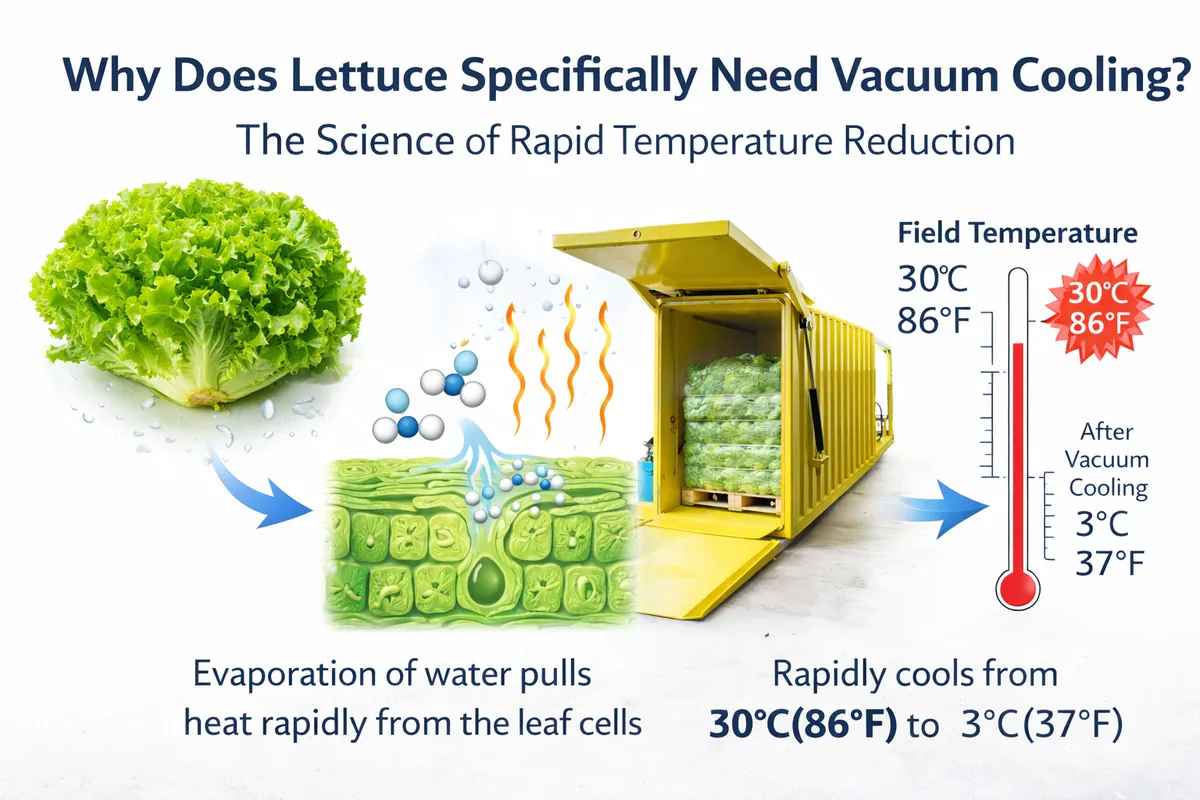
Why Does Lettuce Specifically Need Vacuum Cooling? The Science of Rapid Temperature Reduction?
Lettuce is the most perishable leafy green on the planet. From the moment it is cut, it begins a race against time, wilting and rotting due to its high respiration rate. Are you losing valuable harvest weight to evaporation?
Lettuce needs vacuum cooling because of its massive surface-area-to-weight ratio. Unlike density-packed fruits, lettuce leaves allow water to evaporate freely. Vacuum cooling exploits this trait, forcing rapid internal evaporation that cools the entire head uniformly in 20 minutes, extending shelf life by up to 21 days.
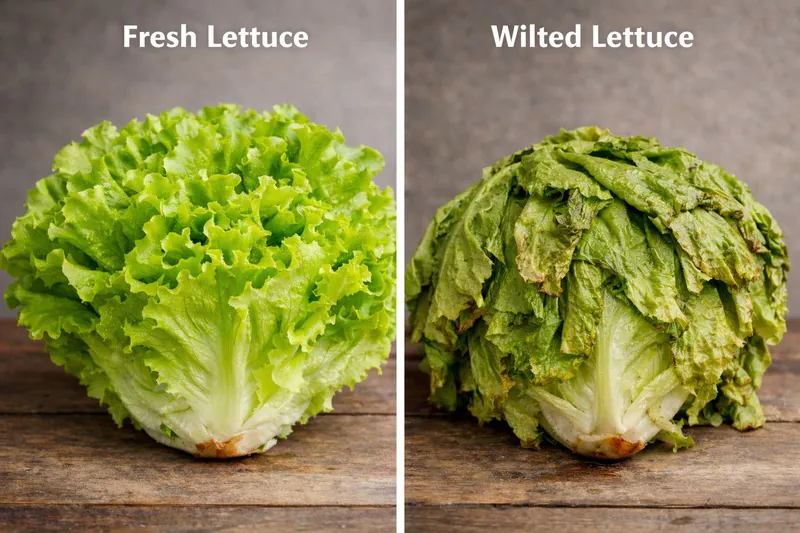
I have seen too many farmers like Carlos in Mexico struggle with traditional cold rooms. They stack pallets of iceberg lettuce in a fridge, blow cold air on them, and wonder why the centers are still warm 12 hours later. The answer lies in the biology of the plant itself. Lettuce is 95% water and acts like a living sponge. To save it, you cannot just cool the air around it; you must cool the water inside it. This is why vacuum cooling isn’t just an option for lettuce—it is a biological necessity. Let’s dive into the science of respiration, surface area, and why physics favors the leaf.
The Biological Clock: What is Respiration Heat?
Plants do not die immediately when you cut them. They panic. This biological reaction creates heat that destroys your profit margin.
Post-harvest lettuce continues to "breathe" (respire), consuming oxygen and burning stored sugars to survive. This process generates significant Respiration Heat. Without rapid cooling, this internal heat accelerates decay, turning a crisp head into slime within 48 hours.
The Self-Destruct Mechanism
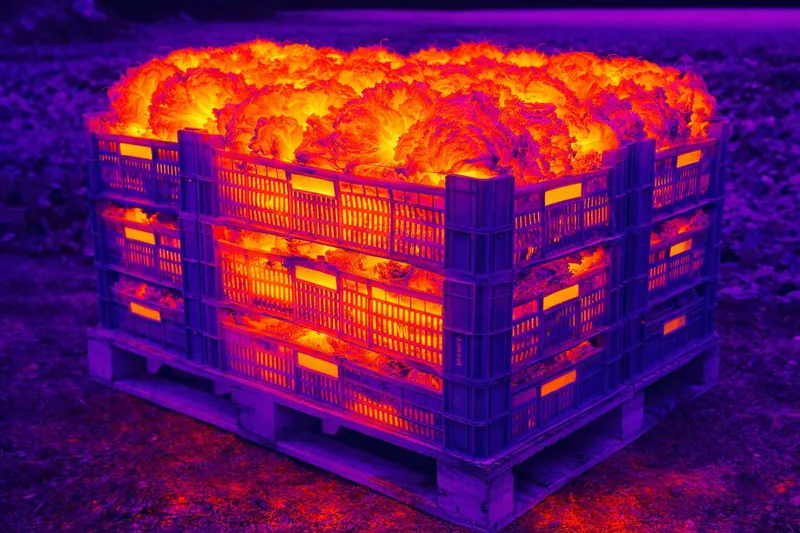
When you severe a lettuce head from its root, you trigger a stress response. The plant tries to repair itself and stay alive. To do this, it breaks down its stored carbohydrates (sugars) and absorbs oxygen. The byproduct of this chemical reaction is Carbon Dioxide, Water, and—most critically—Heat1.
I explain this to buyers like Norman using a simple rule: For every 10°C increase in temperature, the respiration rate creates a 2x to 3x increase in deterioration.
- At 25°C (harvest temp), lettuce breathes furiously, burning up its sugar reserves and generating its own heat. It is literally cooking itself.
- At 1°C (storage temp), the respiration rate slows down to a crawl. The plant goes into hibernation.
Why Vacuum Cooling Wins
A traditional cold room fights a losing battle. It tries to push cold air into the pallet from the outside. But the lettuce is generating heat from the inside. It takes hours for the cold air to overcome the respiration heat deep in the center of the pallet.
Vacuum cooling2 stops this process instantly. By dropping the temperature to 2°C in 20 minutes, we slam the brakes on respiration immediately. We preserve the sugars (taste) and the structure (crispness) before the plant has time to consume them.
The Geometry of Cooling: Why Surface Area Matters?
Why does vacuum cooling work perfectly for lettuce but poorly for tomatoes or melons? The secret is in the shape of the leaf.
Vacuum cooling relies on evaporation. The more surface area a product has relative to its weight, the faster moisture can escape. Lettuce is essentially hundreds of thin sheets of water, offering a massive surface area for steam to escape, making it the ideal candidate for this technology.

The Surface-Area-to-Volume Ratio3
This is the physics principle that dictates cooling speed.
Imagine a watermelon. It is a dense ball of water with a thick, waxy skin. The water inside is trapped. If you put a watermelon in a vacuum cooler, the pressure drops, but the water cannot escape the skin easily. It takes a long time to cool, and the fruit might explode.
Now, look at an Iceberg or Romaine lettuce. It is not a solid ball; it is a collection of individual leaves packed together.
- High Porosity4: Even a tight head of Iceberg is porous. Air (and steam) can travel between the leaves.
- Thin Barriers: The distance from the water cell to the leaf surface is microscopic.
- Massive Surface Area: If you unfolded a head of lettuce, it would cover a square meter.
This geometry allows the vacuum to access every single gram of water in the head simultaneously. When the pressure drops, water molecules on the surface of every leaf inside the head vaporize at once. This is why lettuce is the "King" of vacuum cooling. It is physically designed by nature to release vapor, which allows us to extract heat with incredible efficiency.
The Evaporative Mechanism: How Do We Cool From the Inside Out?
Traditional cooling works from the outside in. Vacuum cooling works from the inside out. Why is this reversal the key to shelf life?
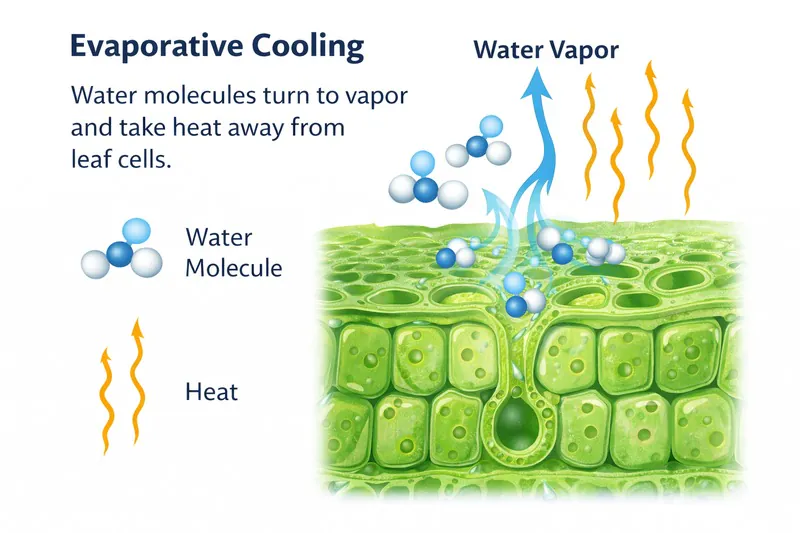
By lowering the atmospheric pressure, we force the water inside the lettuce tissues to boil at 2°C. This phase change absorbs Latent Heat from the plant’s core instantly. It ensures the "heart" of the lettuce is as cold as the outer leaves, preventing internal rot.
The "Flash" Effect
We aren’t blowing cold air; we are manipulating physics.
- Pressure Drop5: The vacuum pump removes air, creating a low-pressure environment.
- Boiling Point Shift: At standard pressure, water boils at 100°C. Inside our machine (at roughly 6 millibars), water boils at 0.5°C.
- Energy Theft: To turn from liquid to gas, water needs energy. It steals this energy (heat) from the lettuce leaf itself.
The Uniformity Advantage
I frequently encounter clients like Sophia who complain about "Pink Rib" or internal browning in their Romaine hearts. This is caused by uneven cooling. In a forced-air tunnel, the outside leaves might be 1°C, but the dense core is still 12°C. That warm core continues to respire and rot.
With vacuum cooling, the pressure is the same everywhere in the chamber. Therefore, the evaporation happens everywhere at once. The core cools at the exact same speed as the surface. This uniformity6 is the single biggest factor in extending the shelf life of exported vegetables. You eliminate the "hot spots" that bacterial pathogens love.
The Weight Trade-Off: Is Moisture Loss Bad?
Farmers sell produce by weight. Vacuum cooling works by evaporating water. Does this mean you are losing money?
Vacuum cooling typically causes a 2% to 3% weight loss due to evaporation. However, this is a necessary trade-off. Without this loss, you cannot achieve the rapid temperature drop. The 3% loss saves the remaining 97% of the product from rotting during transit.
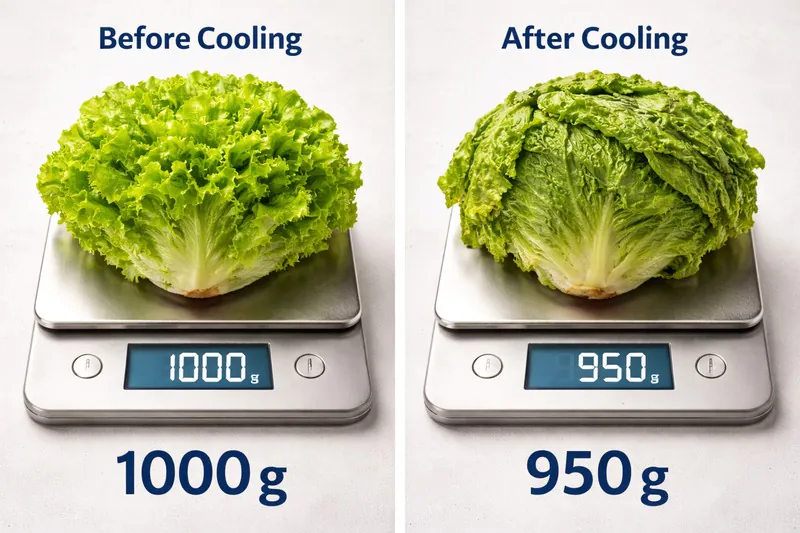
The Economics of Evaporation
This is the most common objection I hear from farm owners. "Mila, if I lose 3% weight on 10 tons of lettuce, that is 300kg of product gone!"
I always answer with the "Rejection Calculation":
- Scenario A (No Vacuum): You keep that 3% water weight. You ship the lettuce warm. It arrives with slime and browning. The supermarket rejects 20% of the load. You lose money.
- Scenario B (Vacuum Cooled): You sacrifice 3% water weight to cool the product to 2°C in 25 minutes. The lettuce arrives crisp and fresh 14 days later. The supermarket accepts 100% of the load.
How to Mitigate the Loss
For high-value crops where every gram counts, we can add a Hydro-Spray System7. Before the vacuum cycle starts, we mist the lettuce with water.
When the vacuum pulls down, it evaporates this surface water first, instead of the internal water of the plant. This reduces the product weight loss from 3% down to roughly 1%. However, for standard Iceberg lettuce, the 3% loss actually helps tighten the head and improves texture, making it less prone to mechanical damage during trucking.
Table: Cooling Method vs. Moisture Impact
| Method | Moisture Effect | Cooling Time | Risk |
|---|---|---|---|
| Vacuum Cooling8 | 2-3% Loss (Controlled) | 20-30 Mins | Minimal (High Shelf Life) |
| Forced Air Cooling | High Loss (Drying effect) | 12-24 Hours | High (Dehydration & Wilt) |
| Room Cooling | Moderate Loss (Slow wilt) | 24-48 Hours | Very High (Yellowing) |
| Hydro-Cooling | Adds Moisture | 40 Mins | Rot / Pathogen Spread |
The Hygiene Factor: Why Dry Cooling is Safer?
Food safety is the priority for buyers like Norman in the USA. Why do they prefer vacuum cooling over wet methods like hydro-cooling?
Lettuce is eaten raw. Wet cooling methods (hydro-cooling) use recirculated water that can spread bacteria like E. coli or Listeria from one dirty head to the entire batch. Vacuum cooling is a dry process that occurs in a sealed chamber, drastically reducing the risk of cross-contamination.
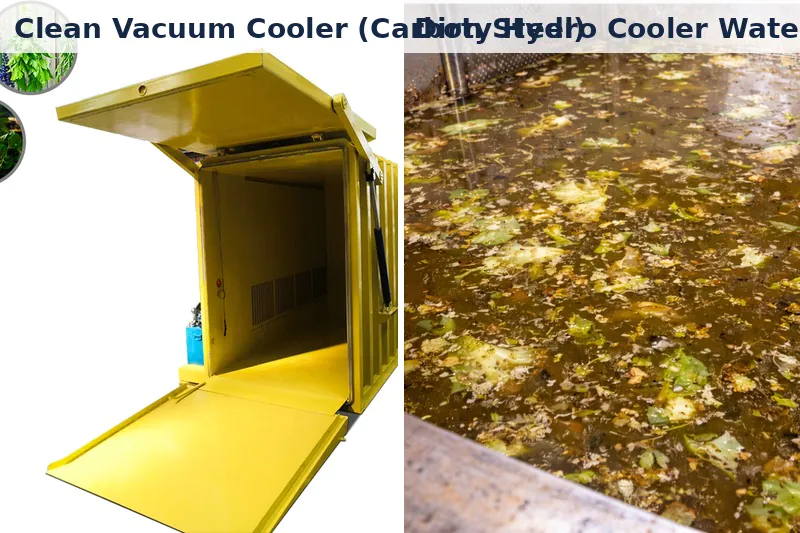
The Cross-Contamination Nightmare
In hydro-cooling, you dump thousands of pounds of lettuce into a common water bath. If one head of lettuce has bird droppings or Salmonella on it, the water washes it off and coats every other head in the tank with bacteria. You have to use massive amounts of chlorine to manage this risk, which leaves chemical residues.
The Clean Solution
Vacuum cooling removes heat, not by touching the vegetable with dirty water, but by removing air.
- Isolation: The lettuce stays on the pallet, inside its box or crate.
- Filtration: The air entering the chamber to break the vacuum passes through HEPA filters (optional) or high-grade mesh to remove dust.
- Sealed Environment: No foreign water is introduced. The moisture that leaves the lettuce is distilled water vapor.
For supermarket chains and fast-food giants (like the ones Sophia supplies), this "HACCP-friendly" process is often a mandatory requirement. They cannot risk a food poisoning outbreak. Dry, cold lettuce is safe lettuce.
The Logistics: How Does It Enable Global Export?
How can lettuce grown in Spain appear fresh in a Canadian supermarket 10 days later? Vacuum cooling is the bridge between the farm and the world.
Vacuum cooling is the only technology fast enough to lock in freshness immediately after harvest. By removing field heat before the lettuce enters the "Cold Chain," it prevents temperature fluctuations in the reefer truck, enabling transport times of 21 to 28 days without quality loss.
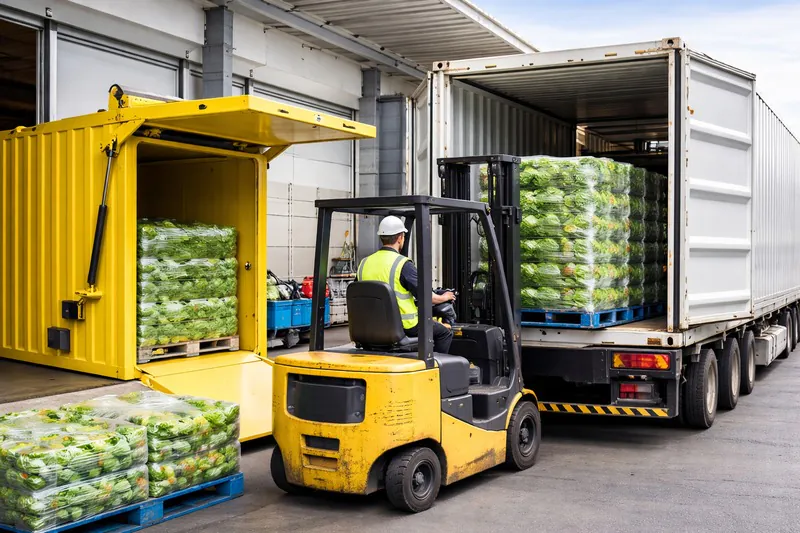
Breaking the "First Mile" Bottleneck
The most critical link in the cold chain is the first hour after harvest. If you load warm lettuce (25°C) into a refrigerated truck (set to 2°C), the truck’s refrigeration unit cannot cool the load. Truck units are designed to maintain temperature, not lower it.
The warm lettuce will stay warm for days inside the truck, rotting in transit. The truck unit will run at 100% capacity, burning diesel and likely freezing the top layer of pallets while the middle rots.
The Pre-Cooling Standard
This is why exporters insist on Allcold machines.
- The Process: Harvest -> Vacuum Cool to 2°C -> Load into Reefer.
- The Result: The lettuce enters the truck already cold. The truck’s unit acts as a "babysitter," gently maintaining the temperature.
- The Reach: Because the metabolic rate of the lettuce is effectively zero from the moment it leaves the farm, it can survive a 3-week sea voyage. Without vacuum cooling, the limit is 3 to 5 days. This technology allows a farmer in China to sell to a buyer in Dubai.
Conclusion
Lettuce requires vacuum cooling not just because it is fast, but because it is biologically adapted to the plant’s structure. The high surface area allows for rapid evaporation, the porous nature enables uniform cooling, and the dry process ensures food safety. By understanding the science of Respiration Heat and Latent Heat, you realize that vacuum cooling is not a luxury for leafy greens—it is the essential tool that transforms a perishable local crop into a durable global commodity.
Understanding the role of heat in plant respiration can help you grasp how temperature affects plant health and storage. ↩
Exploring vacuum cooling techniques reveals innovative methods to enhance vegetable freshness and quality during storage. ↩
Understanding this principle can enhance your knowledge of thermodynamics and its applications in various fields. ↩
Exploring this concept can provide insights into innovative cooling techniques and improve food storage methods. ↩
Understanding Pressure Drop is crucial for grasping how vacuum cooling enhances food preservation and quality. ↩
Exploring uniformity in vacuum cooling reveals its vital role in preventing spoilage and extending shelf life. ↩
Explore this link to understand how Hydro-Spray Systems can enhance crop quality and reduce weight loss during cooling. ↩
Learn about Vacuum Cooling to see how it preserves freshness and extends shelf life for your produce. ↩
Looking for the right vacuum cooler for your operation?
Allcold engineers work with packhouses and exporters to spec the right system for your product, volume, and site conditions.

Mila
You May Also Like
Used vs. New Vacuum Coolers: Is the Lower Price Worth It?
Buying a used vacuum cooler? Compare load fit, condition, relocation, installed cost and support with a new system before deciding if the saving is real.
Why Does Produce Sweat After Vacuum Cooling?
FRESH PRODUCE · POST-COOLING HANDLING The cooling cycle can finish correctly—and the load can still become wet on its way
Vacuum Cooler Not Performing? Check Your Pallet Loading First
When a vacuum cooler produces inconsistent results—warm spots, longer cycle times, variable exit temperatures across the load—the machine is usually
Why One Successful Cooked Rice Cooling Test Is Not Enough to Standardize a Central Kitchen Process
A cooked rice batch can pass a vacuum cooling test and still fail as a production process. That is the
Why a Vacuum Cooler Utility Failure Becomes an Export Quality Problem Before It Becomes a Repair Problem
A vacuum cooler stoppage does not start as a maintenance problem. In a produce export operation, it becomes a quality
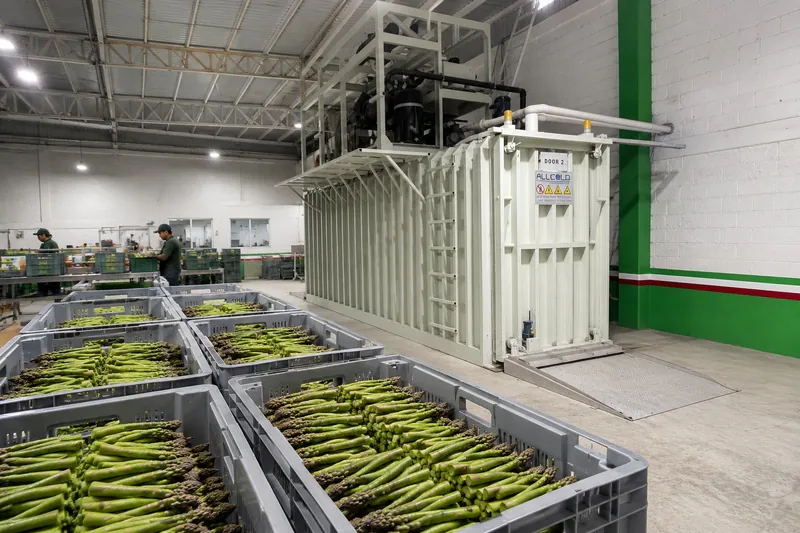
Why Asparagus Loses More Export Value in the First Two Hours After Cutting Than in the Entire Cold Chain That Follows
For fresh asparagus exporters, the most expensive quality loss often happens before the product even reaches the main cold chain.
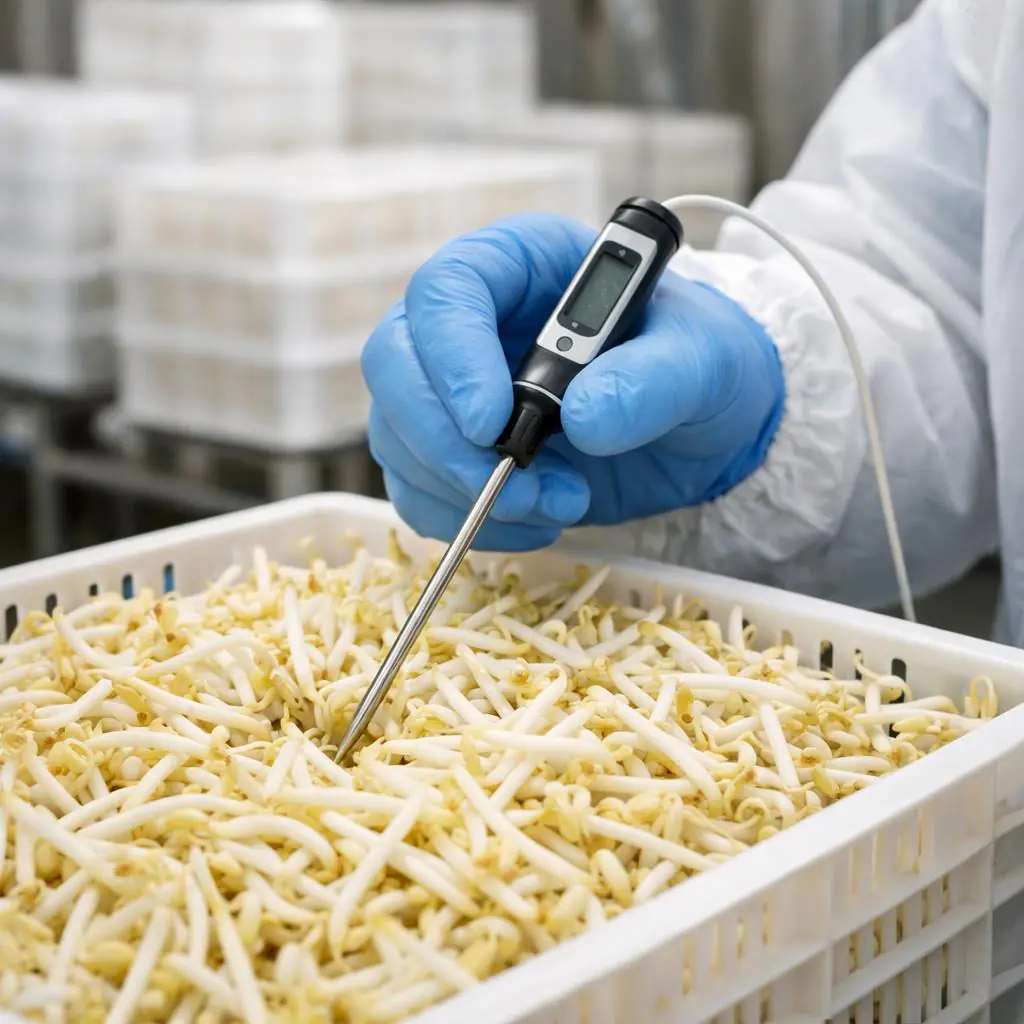
Why Bean Sprouts Are One of the Hardest Vegetables to Pre-Cool Correctly and What Exporters Get Wrong
Bean sprouts look simple. They are light, moist, and usually packed in bulk or retail bags. But from a pre-cooling
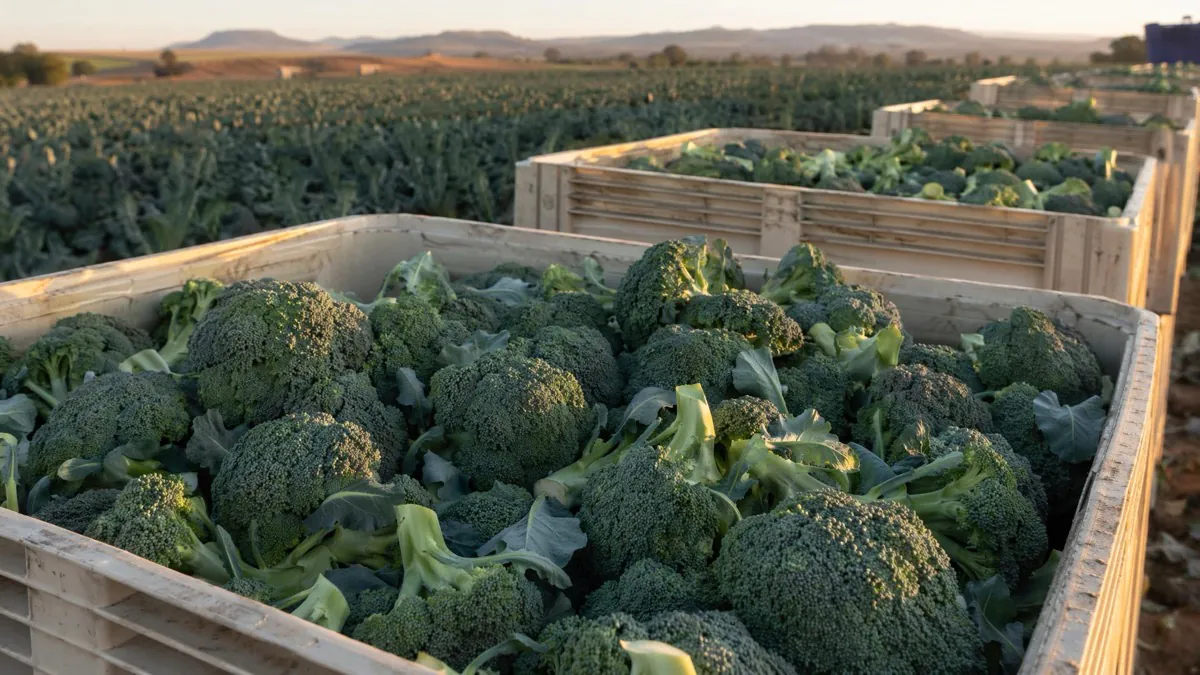
Why Broccoli Loses Export Quality Faster Than Any Temperature Log Will Show
The complaint comes in from the buyer: yellowing, premature flowering, weak texture on arrival. The exporter reviews the cold room
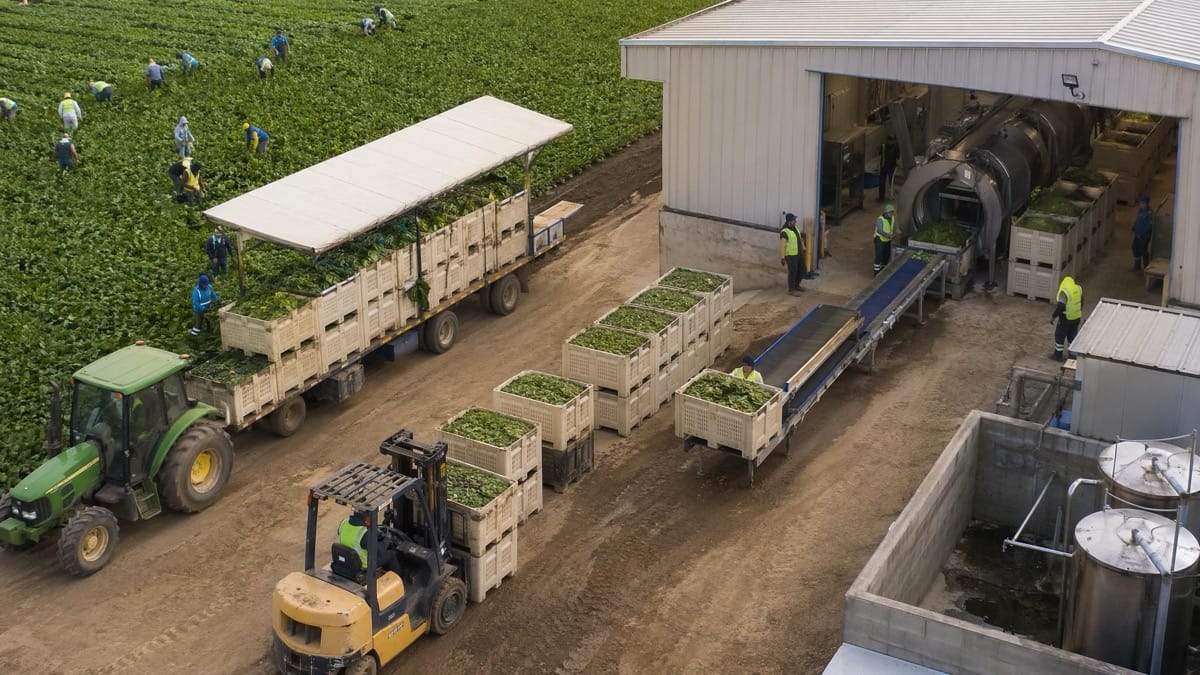
Why Spinach Shipments That Leave Looking Perfect Arrive Looking Wrong
The complaint lands differently with spinach than with most other export vegetables. The exporter packed dark green, crisp product. The
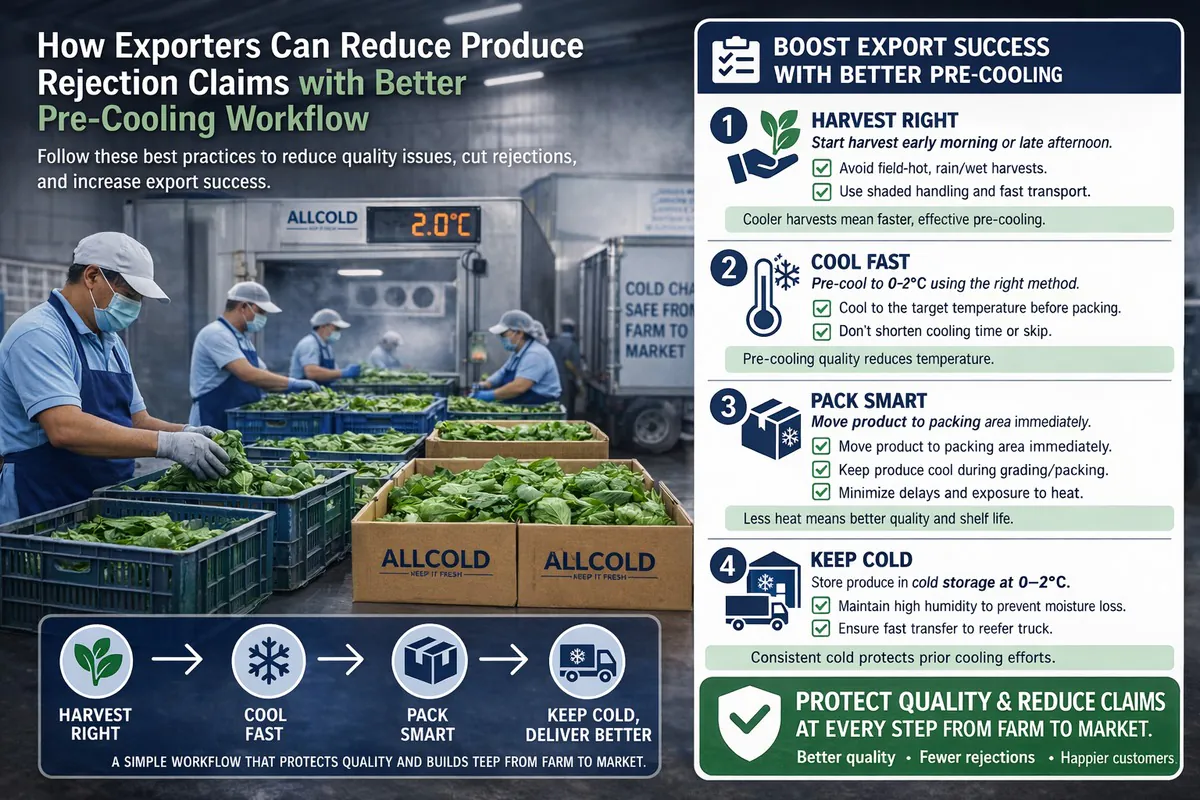
How Exporters Can Reduce Produce Rejection Claims with Better Pre-Cooling Workflow
Learn how exporters can reduce produce rejection claims by improving pre-cooling workflow, timing control, packing handoff, and first-mile cold chain stability.