
Why is Evaporation the Secret Engine of Vacuum Cooling?
You see a pallet of hot, freshly baked bread or warm, just-picked spinach. You know that slow cooling means lower quality and lost profits. You need a way to pull that heat out fast, but traditional methods are just too inefficient.
Evaporation is the engine because when water turns to gas, it absorbs huge amounts of heat from its surroundings. Vacuum cooling creates the perfect low-pressure conditions for this to happen with incredible speed, cooling the product from the inside out.
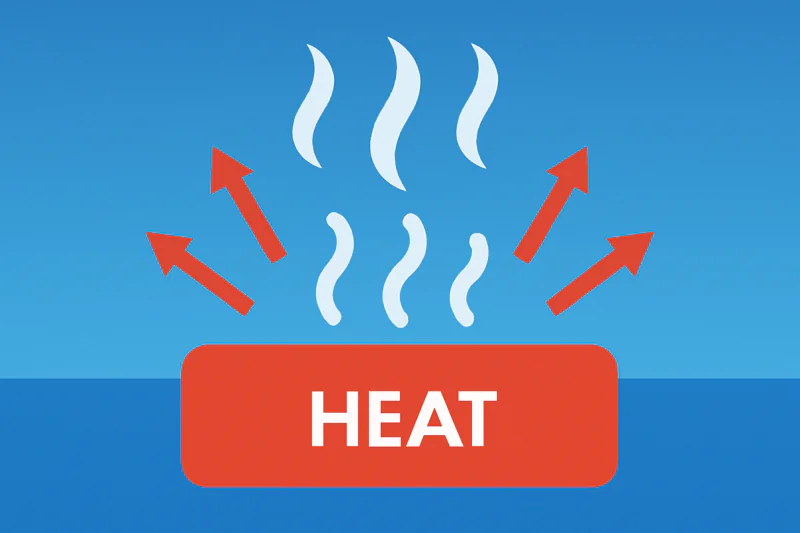
This isn’t some new-age trick; it’s the same principle that cools you down after a swim. But when we harness this natural process inside a high-tech chamber, it becomes the most powerful cooling method for many food products. Let’s explore exactly how this mechanism works and why it’s so effective.
Why Do You Feel Cold After a Swim?
We’ve all experienced it. You step out of the pool on a warm day, and a slight breeze makes you shiver. You’re not cold because the air is cold; you’re cold because the water on your skin is actively pulling heat from your body.
You feel cold because the evaporating water requires energy to change from a liquid to a gas. It takes this energy directly from the nearest source—your skin—leaving the surface cooler.
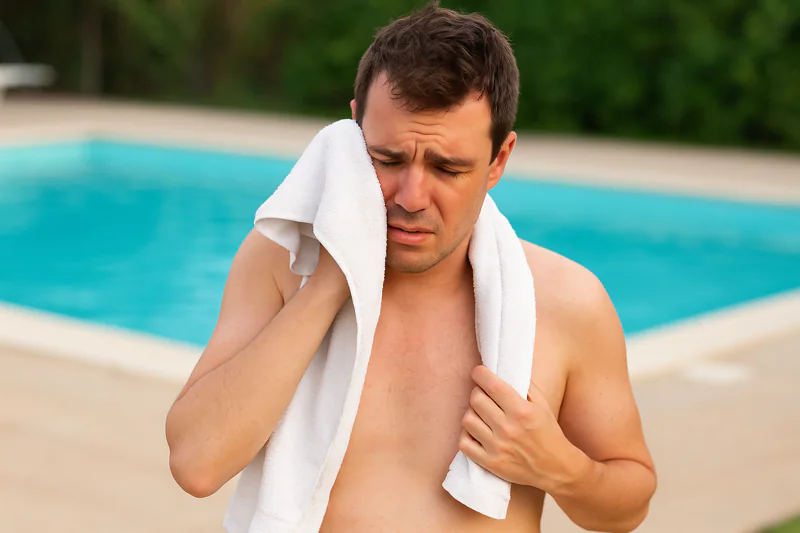
Let’s dive deeper into the physics, but keep it simple. Water is made of tiny molecules. In liquid form, these molecules are close together and moving around. Some molecules move faster than others. The very fastest-moving molecules, those with the most energy, can break free from the surface and escape into the air as a gas (water vapor). This process is called evaporation. When these high-energy molecules leave, the average energy of the remaining molecules drops. Since heat is just a measure of this energy, the water left behind is cooler. Your skin is in direct contact with this now-cooler water, and the process continues, with the evaporating water constantly drawing heat away from your body. This is a perfect, everyday example of the evaporative cooling mechanism. In my business, we’ve simply created a machine that takes this natural phenomenon and puts it on an industrial scale. We don’t change the physics; we just create the ideal environment for it to happen with maximum efficiency.
How Does Low Pressure Supercharge Evaporation?
The cooling effect you feel after a swim is gentle and slow. A vacuum cooler, however, can chill a ton of mushrooms in 20 minutes. What’s the difference? The secret ingredient is the vacuum itself.
Air pressure constantly pushes down on the surface of water, making it difficult for molecules to escape. By removing this air pressure in a vacuum, we make it incredibly easy for water to evaporate, supercharging the cooling effect.
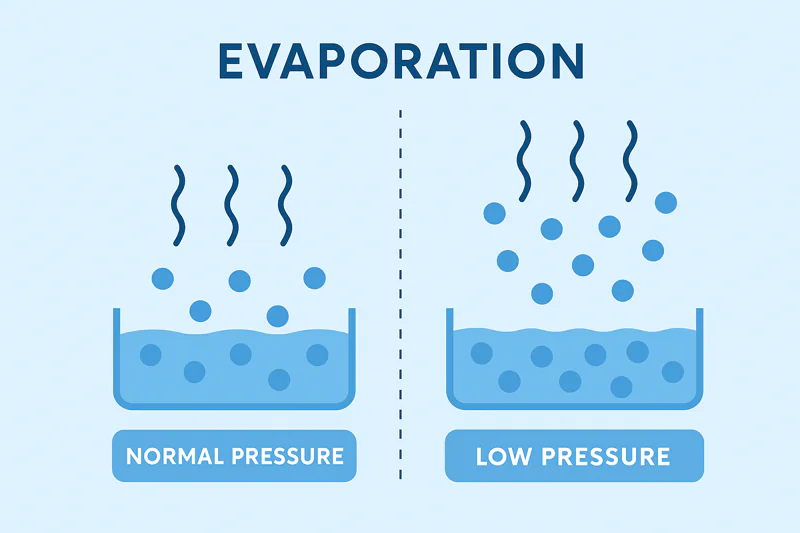
I often use this analogy with my clients: imagine trying to leave a very crowded room. It’s difficult and slow because you have to push past so many people. Now imagine leaving a nearly empty room. You can exit almost instantly. Air pressure is like that crowd. At normal atmospheric pressure, water molecules have to fight their way through a "crowd" of air molecules to evaporate. Inside a vacuum chamber1, we pump out almost all the air. We create that "empty room." With no air pressure holding them back, water molecules can escape with very little energy. This has a profound effect: it dramatically lowers the boiling point of water2. We’re not heating the water to boil it; we are creating an environment where it boils at a very low temperature. For a technical decision-maker like Carlos, seeing these numbers makes it click.
| Environment | Atmospheric Pressure | Water Boiling Point |
|---|---|---|
| Normal (Sea Level) | 101.3 kPa | 100°C (212°F) |
| Mount Everest Peak | ~33.7 kPa | ~70°C (158°F) |
| Allcold Vacuum Cooler | 0.6 kPa | ~1°C (34°F) |
This is the key. We can make water "boil" at a temperature that is safe and even beneficial for fresh produce, achieving rapid cooling without any risk of heat damage.
Where Does the Heat Energy Actually Go?
When a product cools, its heat energy has to go somewhere. In a standard freezer, it slowly leaks into the cold air. But in vacuum cooling, the heat is removed much more directly and forcefully.
Allcold can configure fresh-produce vacuum cooling or bakery and cooked-food vacuum cooling equipment around the actual load and temperature duty. That makes moisture loss a product-selection question rather than a universal percentage. Share the starting temperature, target, package and acceptable yield change so cooling performance and saleable product quality can be considered together.
The heat is captured and carried away by the water vapor itself. This process, called "latent heat of vaporization," is an incredibly efficient way to transfer energy. The evaporating water acts like a sponge, soaking up heat and removing it.
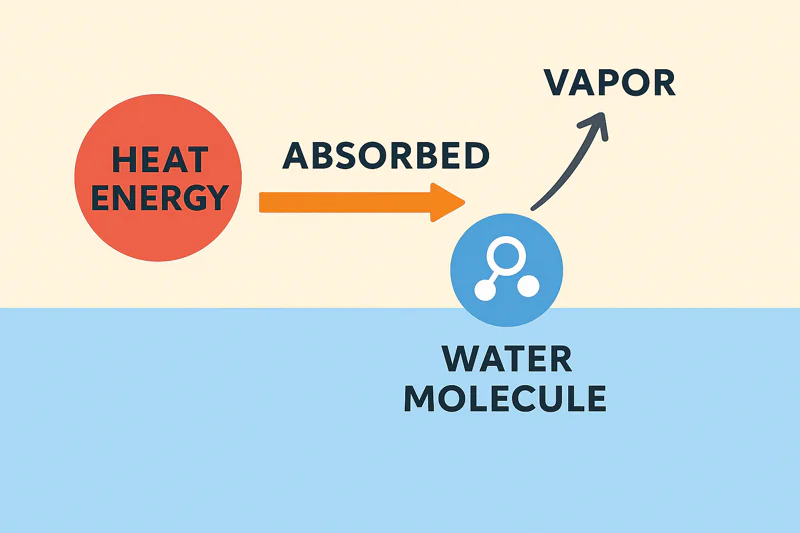
Evaporation requires latent heat, which is drawn from the product and its surroundings. The value varies with temperature; it is roughly 2,500 kJ/kg near ordinary produce-cooling temperatures. Vapor must then be handled by the configured system. This principle explains cooling, not a universal cycle time or endpoint for every food.
Is There a Trade-Off to Using Evaporation for Cooling?
When I explain this process, smart buyers like Norman always ask the right question: "This sounds great, but what’s the catch?" They are right to be skeptical. In business, there are always trade-offs, and transparency is key to building trust.
Yes, there is one main trade-off: a small and predictable weight loss. Because cooling is caused by water turning to vapor and leaving the product, that water has mass. Therefore, the product’s final weight is slightly reduced.
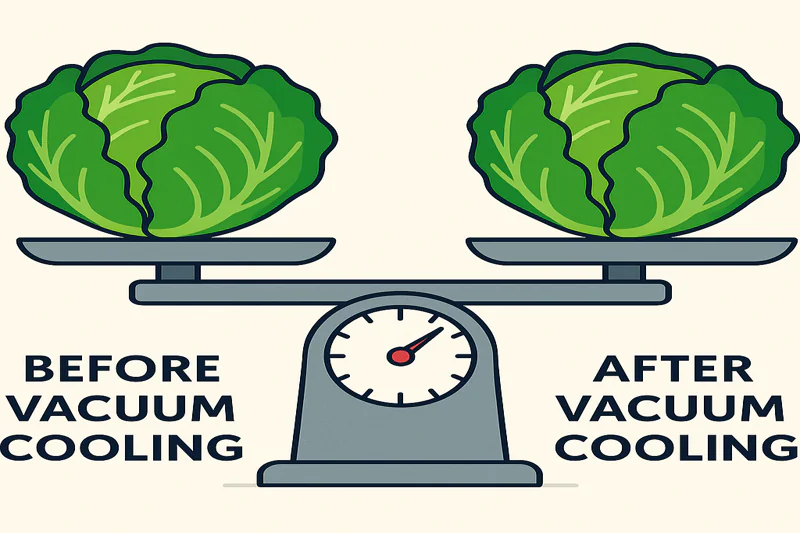
A common produce rule of thumb is about 1% weight loss for each 5°C of cooling, but measured results depend on the commodity, moisture additions and process. Use before-and-after weights from the actual load. Compare any yield change with demonstrated quality and waste outcomes rather than assumed spoilage percentages.
Evaporative Weight Loss: A Balanced View
| The "Con" (The Cost) | The "Pro" (The Benefit) |
|---|---|
| A predictable 1% weight loss5 per 5°C of cooling. | Prevents 15-30% of spoilage and quality loss. |
| Only pure water weight is removed. | Greatly extends product shelf life6 and saleable window. |
| Requires the product to have available moisture. | Locks in freshness, color, and texture. |
| This is a cost that can be calculated and managed. | Drastically reduces product waste and financial losses. |
Conclusion
Evaporation is the basis of vacuum cooling. Its commercial value depends on achieving the required temperature and saleable quality at an acceptable yield and operating cost.
Exploring how vacuum chambers operate can provide insights into their applications in various scientific and industrial fields. ↩
Understanding the boiling point in a vacuum is crucial for applications in food preservation and cooling techniques. ↩
Exploring this term will enhance your grasp of energy transfer in phase changes, vital for various scientific and industrial applications. ↩
Understanding this concept is crucial for efficient cooling processes in food production, especially in large-scale operations. ↩
Understanding weight loss in food preservation can help you appreciate its role in extending shelf life and reducing waste. ↩
Exploring shelf life insights can enhance your knowledge of food quality management and waste reduction strategies. ↩
Interested in vacuum cooling for your operation?

Mila
You May Also Like
Vacuum Cooler Water Quality: What to Check Before Connecting the Supply
Identify the water circuits, review a representative water analysis and clarify the utility scope before connecting a vacuum cooler. A practical guide for Allcold equipment buyers.
Buying a Vacuum Cooler for a Cold Climate? Plan for the Hours It Is Off
A winter specification should cover more than the temperature during production. Compare running, idle, power-loss and restart conditions before choosing the equipment.
Can a Vacuum Cooler’s Chamber, Pump and Chiller Go in Different Rooms?
Keep the chamber convenient for production without assuming the machinery must sit beside it. A practical guide to reviewing a split vacuum cooling installation.
Vacuum Cooling Sweet Corn: Look Beyond Cooling Speed
Can sweet corn be vacuum cooled? Compare moisture control, husk and pack formats, hydrocooling alternatives, and the product checks to agree before buying.
Vacuum Cooling Celery: Is It the Right Choice for Your Packing Line?
Can celery be vacuum cooled? Compare vacuum, hydro and forced-air cooling, then assess packaging, temperature, weight loss and real packing-line throughput.
Does a Bigger Vacuum Pump Mean Faster Vacuum Cooling?
Does a larger vacuum pump cool produce faster? Compare m³/h ratings, loaded cooling time and complete batch throughput before buying a vacuum cooler.
Which Refrigerant Should Your Vacuum Cooler Use?
Choosing a vacuum cooler refrigerant? Check local service support, destination rules, system performance and quotation details before ordering.
Can Your Floor Support a Vacuum Cooler? Look Beyond Tonnes per Square Metre
Check vacuum cooler floor loading before you buy: operating weight, support reactions, forklift wheel loads, ramps and the site data your engineer needs.
Buying a Vacuum Cooler Near the Coast? Specify More Than Paint
Coastal protection is more than chamber paint. Use this component-by-component checklist to compare vacuum cooler quotations, test evidence and maintenance scope.
50 Hz or 60 Hz? How to Confirm a Vacuum Cooler Will Work at Your Site
Buying a vacuum cooler for 50 Hz or 60 Hz power? Check whole-machine compatibility, auxiliaries, conversion scope and quoted performance before ordering.