
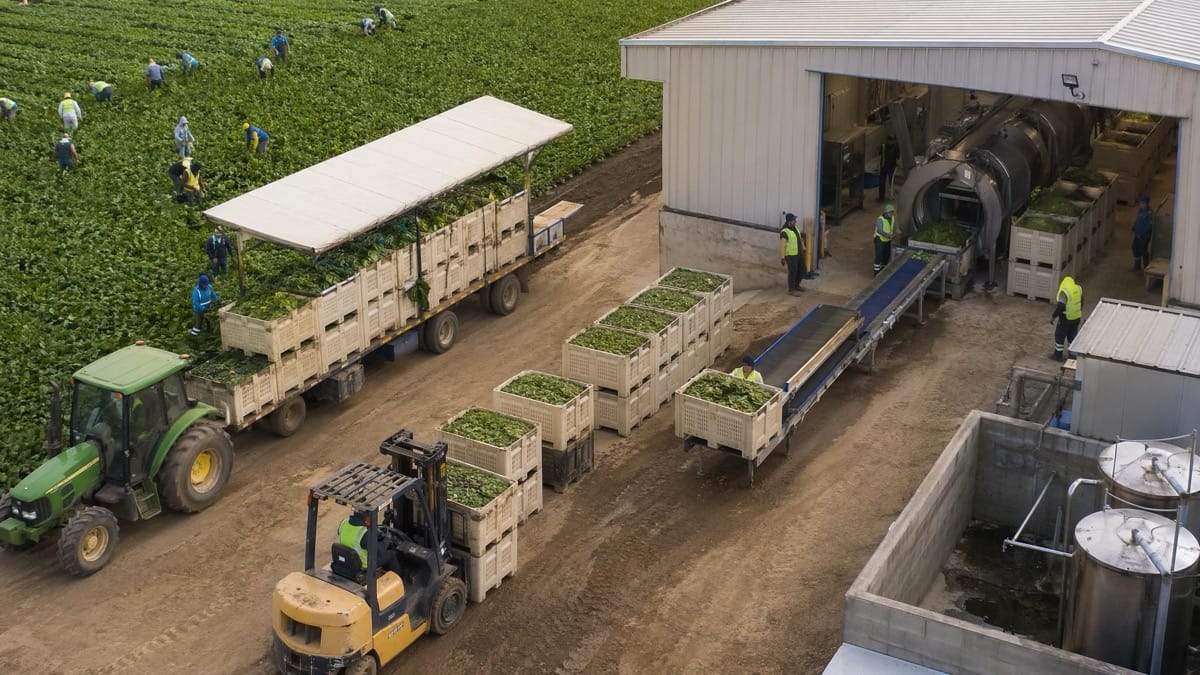
Why Spinach Shipments That Leave Looking Perfect Arrive Looking Wrong
The complaint lands differently with spinach than with most other export vegetables. The exporter packed dark green, crisp product. The temperature records are clean. The transit conditions were controlled. And the buyer received wilted, yellowing, or off-smelling spinach that does not match what left the facility.
What makes spinach particularly frustrating to diagnose is that it genuinely does look excellent right up until it does not. It holds its color and structure through handling, through packing, through dispatch. Then it collapses — often within a short window at destination — in a way that looks sudden but was not.
That is the pattern worth understanding: spinach does not fail suddenly at destination. It fails gradually during the pre-cooling window, at the cellular level, in ways that are completely invisible until the product hits the distribution environment and stops being able to hold itself together.
By the time the spinach reaches the buyer looking wrong, the decision that caused it was made hours earlier, before dispatch, before cold storage, often before packing. The clean temperature log is not evidence that nothing went wrong. It is evidence that the problem was not in the part of the process the log was measuring.
Spinach Looks Fresh Long After It Has Stopped Being Fresh
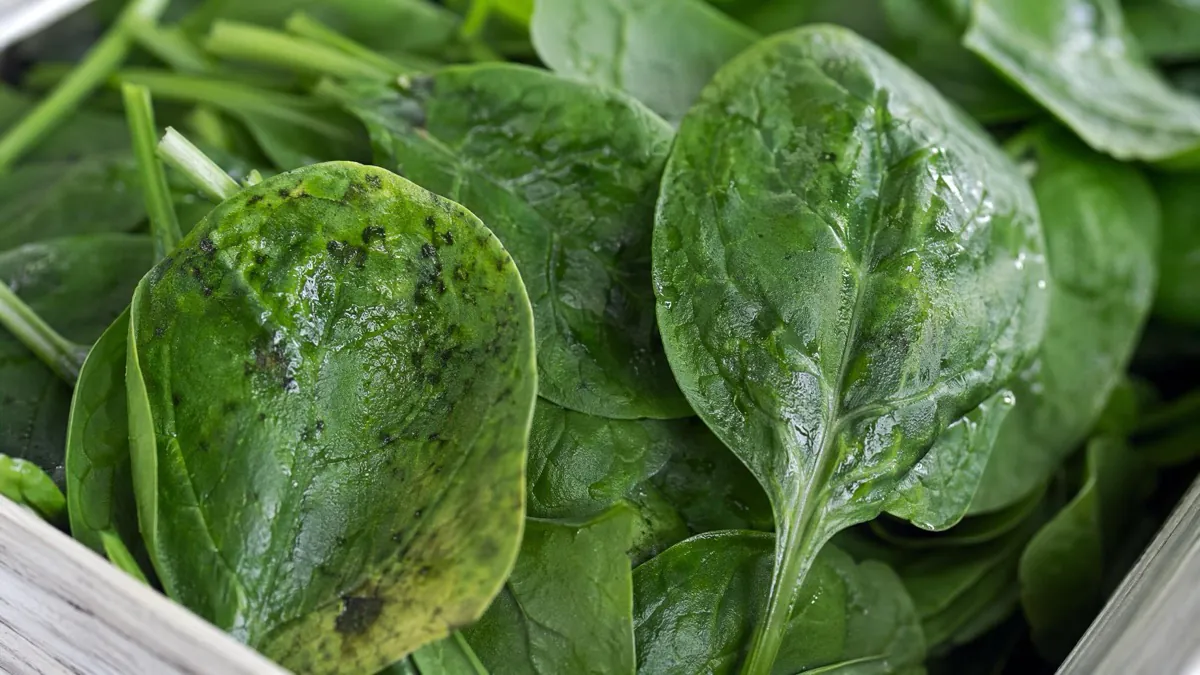
Of all the visual traps in fresh produce export, spinach may be the most reliable. It holds its dark color and leaf structure remarkably well under short-term warm conditions. A leaf that has been sitting at ambient temperature for 90 minutes looks almost identical to one that was cooled immediately after harvest. The surface still reflects light the same way. The texture still feels acceptable under a quick handling check.
This visual resilience is what makes warm pre-cooling delay so commercially dangerous for spinach export. The product passes every check that can be performed at dispatch, not because it is in good condition, but because the damage it has accumulated is not expressed on the surface.
What has actually been happening during that 90 minutes is cellular. Spinach has a relatively high water content and a leaf structure that maintains its rigidity through cellular turgor — internal water pressure in the leaf cells. That turgor is maintained as long as the cellular membranes are intact and functioning. Warm handling and delayed pre-cooling begin degrading the cellular membrane integrity that keeps those water reserves in place.[^1]
The damage does not express visibly at dispatch because the cells have not yet collapsed. But they are weaker. When the product reaches the distribution environment at destination — warmer handling, more physical stress, longer time between protective cold environments — the compromised cells cannot hold their structure under conditions that undamaged product would tolerate without visible change.
The spinach that looked perfect at loading fails at destination because it arrived with less structural reserve than it appeared to have. The cold chain did not fail it. The two hours before the cold chain started did.
Spinach Is More Sensitive to Ethylene Than Most Exporters Realize
Most fresh produce exporters are aware that some products — bananas, tomatoes, stone fruit — produce ethylene as part of their ripening process. Fewer pay close attention to which products are sensitive to ethylene produced by others.
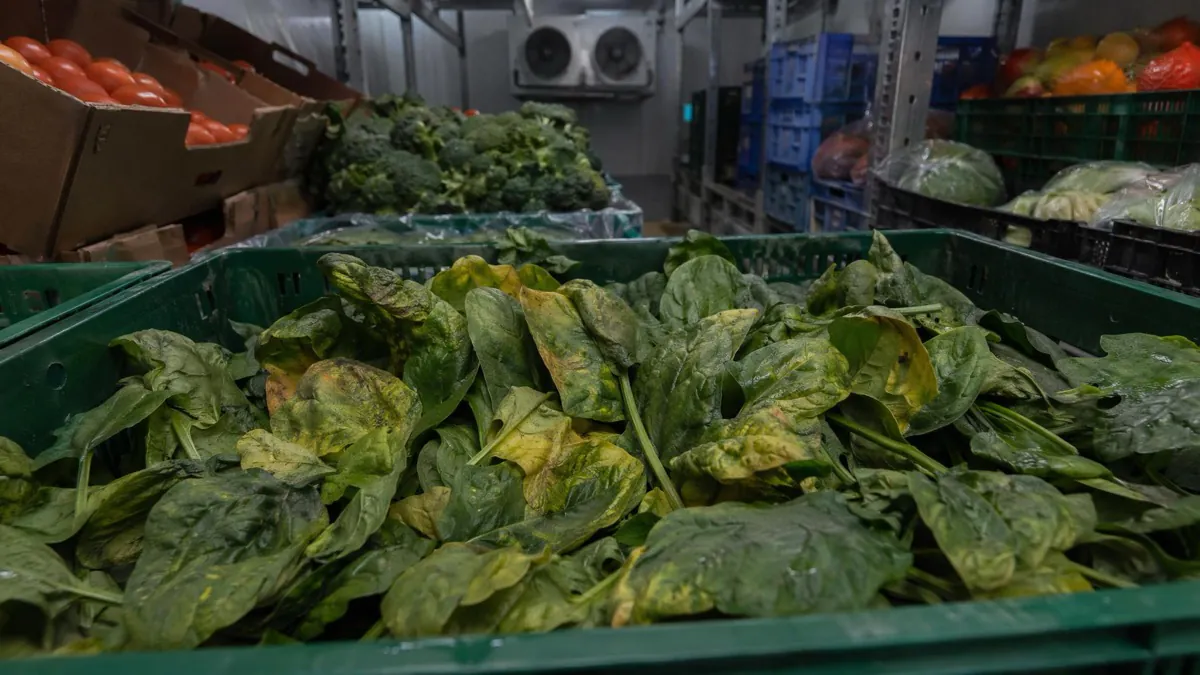
Spinach is notably ethylene-sensitive. Exposure to ethylene accelerates chlorophyll breakdown in spinach leaves — the same biochemical process that eventually produces the yellow color buyers complain about at destination. At low temperatures, this process is slow. At warm staging temperatures, with ethylene present from nearby produce or from the spinach’s own stressed metabolism, it runs much faster.[^2]
This matters operationally in two ways.
First, spinach that is staged near other produce — or even in a shared staging area where ethylene-producing products have recently been handled — may be accumulating ethylene stress before pre-cooling begins. That exposure is not visible, does not affect the surface appearance at dispatch, and is not recorded anywhere in the cold chain log.
Second, spinach that is stressed by warm handling produces slightly more ethylene itself, creating a self-reinforcing cycle: warm conditions increase stress, stress increases ethylene production, ethylene accelerates chlorophyll breakdown, visible quality loss eventually follows.
The practical implication is that spinach staging environments matter. Where the product waits before pre-cooling, what it is staged near, and how long it waits are not secondary logistical details. They are quality-determining variables that most export operations have never formally reviewed.
The Collapse at Destination Is Not Sudden — It Is the Accumulated Cost of Pre-Cooling Delay
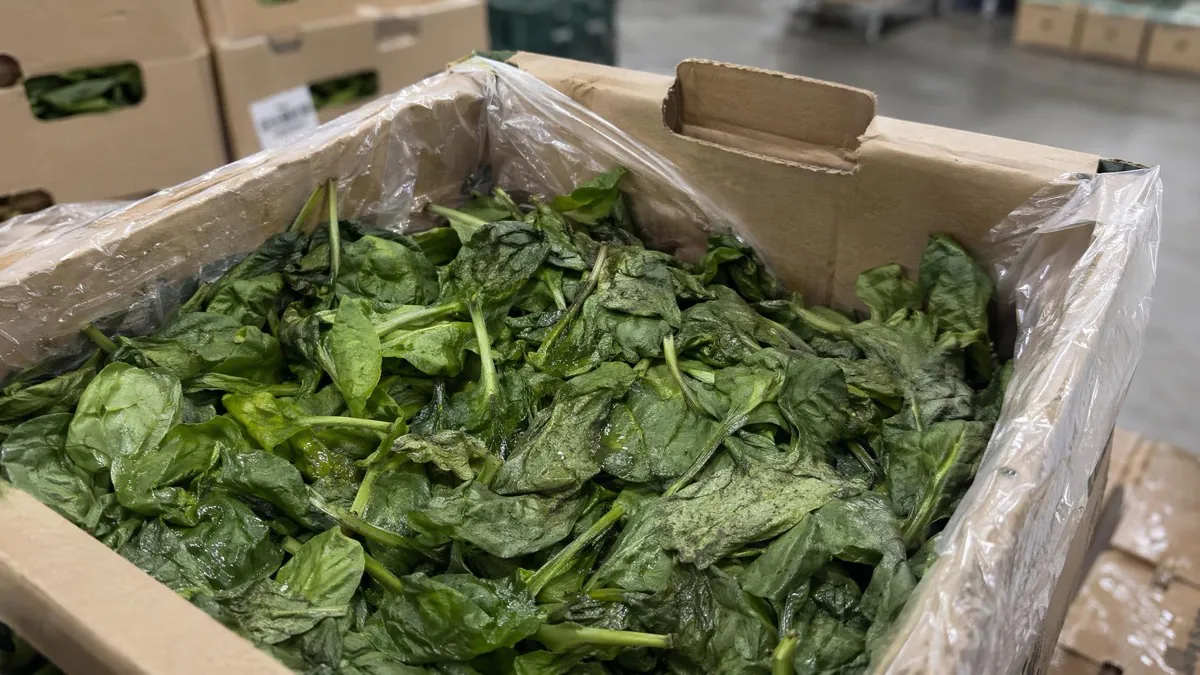
One of the most commercially damaging things about spinach failure is its timing. The product that fails at destination on day two or three does not fail in the cold room, does not fail during transport, and does not show any clear single point of failure in the cold chain record. It fails when the buyer removes it from controlled cold conditions and subjects it to normal distribution handling.
That timing makes it look like a destination cold chain problem, a transport temperature deviation, or a buyer handling issue. In many cases, it is none of those things.
What actually happened is that the cellular reserve of the spinach was reduced enough during warm pre-cooling delay that the product cannot tolerate the distribution stress that undamaged product handles routinely. A spinach leaf with full cellular integrity can survive short periods of suboptimal temperature, handling pressure, or ethylene exposure during distribution. A spinach leaf with compromised cellular membranes from warm pre-cooling delay cannot survive the same exposure — and the collapse, when it comes, looks sudden even though it was accumulating for the entire journey.
This is why we often describe spinach quality not as a binary pass/fail but as a margin question. Properly pre-cooled spinach arrives at destination with a cellular reserve that gives it tolerance for the variability of distribution. Spinach that was pre-cooled late arrives with a thinner reserve, and the distribution environment finds and exposes that thinness. The cold chain worked. The product just did not have enough left when it got there.[^3]
Harvest Timing, Staging Sequence, and Pre-Cooling Position All Shape the Result More Than Cold Room Specification Does
When spinach exporters look at their quality results and want to improve them, the first place most look is the cold room specification or the transport refrigeration record. Those are the easiest things to measure and adjust.
They are also rarely where the problem is.
In our factory-side experience, the variables that most consistently shape spinach export results are earlier in the workflow:
Harvest timing in relation to ambient temperature. Spinach harvested during the coolest part of the day starts with a lower initial heat load. Operations that harvest during midday temperatures because of labor scheduling or customer timing are starting the whole process at a disadvantage that the cooling step will have to work harder to overcome.
Staging sequence before pre-cooling. How long the product waits in what conditions between harvest and the start of pre-cooling is often the single largest controllable variable in the spinach export quality chain. An operation that consistently achieves a harvest-to-cooler interval of under 30 minutes will deliver a different destination result than one where the product regularly waits 90 minutes or more — regardless of whether both operations have the same cold room specification.
Position of the cooling step relative to sorting and packing. Sorting and packing that happen before pre-cooling extend the warm-handling window. Operations that move the cooling step earlier — before detailed sorting rather than after — protect the product during the highest-value part of its post-harvest life.
Cold room loading discipline. Loading warm spinach into a cold room that already contains pre-cooled product creates a temperature environment that serves neither batch well. The warm product stays warm longer; the pre-cooled product is exposed to a warmer microenvironment than the room setpoint suggests.
None of these variables appears on a standard temperature log. All of them shape the product’s cellular condition more than the cold room specification the operation spent the most time choosing.[^4]
What Operations Should Track to Find Where Quality Is Actually Being Lost
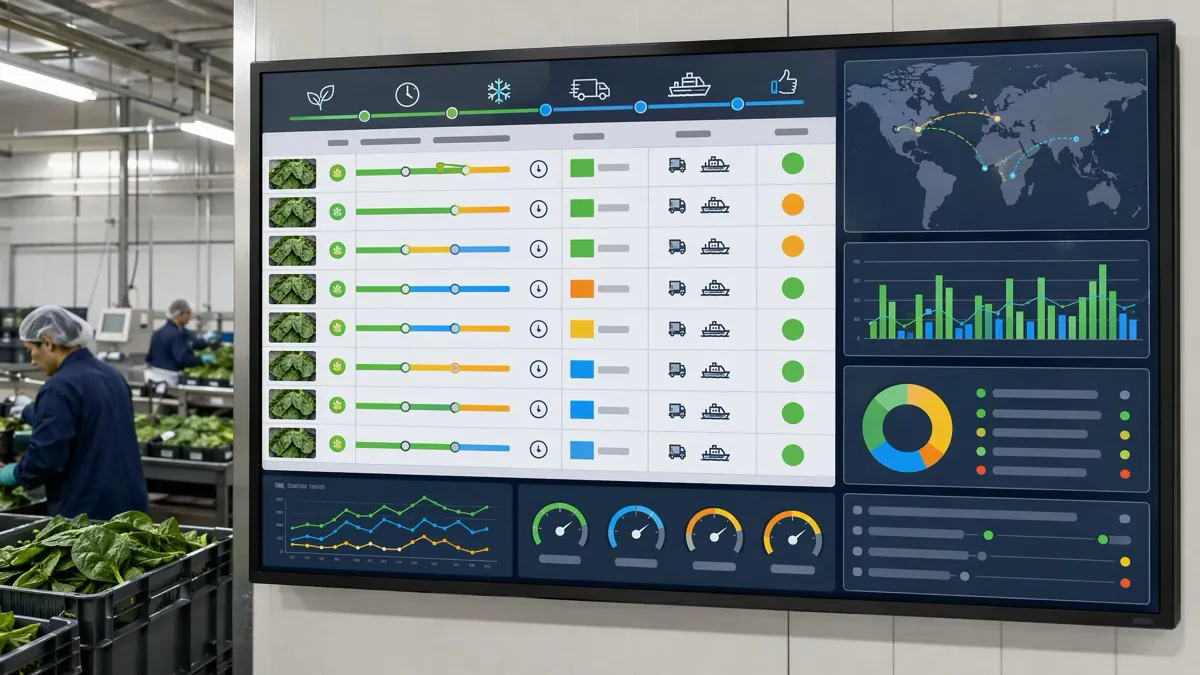
If you are regularly receiving spinach quality complaints that your cold chain records cannot explain, the most likely cause is that you are not measuring the part of the process where the problem is being created.
The data that would actually explain most spinach destination complaints includes things that most operations have never formally tracked:
- Harvest-to-cooler interval per batch — not estimated from the schedule, but measured per batch with timestamps
- Staging environment — what temperature was the product held at while waiting, and was it near any ethylene-producing products
- Sorting and packing duration — how long is the product spending at ambient temperature between harvest and the cooling step, across the whole sorting and packing process
- Product leaf temperature after cooling — not chamber air temperature, but actual product temperature at the leaf surface before packing
- Batch-to-destination correlation — when a complaint arrives, can you identify the harvest batch, harvest time, pre-cooling interval, and staging conditions for that specific shipment?
Operations that begin tracking these data points consistently almost always find a correlation they were not previously measuring. The batches that produce complaints are not random. They tend to be the batches with the longest harvest-to-cooler intervals, the warmest staging conditions, or the most staging time near ethylene-sensitive co-products.
Spinach Export Pre-Cooling Quality Checklist
- harvest-to-cooler interval is measured per batch, not assumed from the production schedule
- staging area temperature and ethylene exposure risk are reviewed before each packing run
- sorting and packing duration is measured periodically under real production conditions
- product leaf temperature is confirmed after cooling, not only chamber temperature
- warm spinach is not loaded into cold rooms containing already-cooled product
- cooling step is positioned as early in the post-harvest workflow as the operation layout allows
- destination quality feedback is matched to upstream batch data for systematic review
FAQ
Why does spinach sometimes fail quickly at destination even when the exporter’s cold chain records look correct?
Because cold chain records measure the conditions after pre-cooling. Spinach failure at destination is usually caused by cellular damage accumulated during the warm pre-cooling window — before the cold chain begins. That damage is not recorded in cold room or transport logs, does not affect surface appearance at dispatch, and only expresses as visible collapse when the product encounters distribution stress at destination.
How does ethylene exposure affect spinach quality differently from temperature stress?
Ethylene accelerates chlorophyll breakdown in spinach, producing yellowing independently of mechanical or thermal stress. A spinach batch that was adequately cooled but staged near ethylene-producing produce can still develop yellowing at destination faster than expected — because the ethylene exposure is not stopped by cold storage, only slowed. Staging environment is as relevant as staging temperature for spinach quality.
Is vacuum cooling significantly better than cold room pre-cooling for spinach?
For spinach specifically, the speed of cooling matters because cellular membrane integrity is temperature-time dependent. Rapid pull-down through vacuum cooling minimizes the duration of warm-stage biological activity. Cold room pre-cooling can achieve the same end temperature but over a longer time window during which the cellular damage process continues. For export operations with tight dispatch schedules or high-value product, the difference in speed is commercially relevant.
What is the most actionable change a spinach exporter can make without major infrastructure investment?
Start measuring the harvest-to-cooler interval per batch. That single data point, tracked consistently for one export season, will almost always reveal the timing pattern that correlates most strongly with destination complaints. Once that pattern is visible, the operational change needed to address it becomes clear — and it is almost always simpler than replacing equipment.
Final Thoughts
Spinach does not fail because the cold chain stopped working. It fails because the cold chain started too late.
The product that leaves your facility looking perfect has been accumulating biological stress since the moment it was harvested. How much stress, and how much cellular reserve remains when it reaches the buyer, is determined almost entirely by what happened in the pre-cooling window — a window that most export quality systems do not measure, most cold chain logs do not capture, and most destination complaints never correctly identify.
From our factory-side perspective, the spinach exporters who consistently deliver better destination results have one thing in common: they treat the time between harvest and the cooling step as the most important quality window in the whole export chain. Not the cold room. Not the refrigerated truck. The 30, 60, or 90 minutes before either of those began.
If you want to review your harvest-to-cooler workflow, staging environment, and pre-cooling position against your destination quality record, send us the details. We can help you find where the cellular reserve is being spent before the cold chain has a chance to protect it.
Footnotes
[^1]: UC Davis Postharvest Technology Center — spinach commodity fact sheet including ethylene sensitivity, respiration rates, and cooling recommendations: https://postharvest.ucdavis.edu/commodity-resources/commodity-fact-sheets/
[^2]: FAO guidance on ethylene management and post-harvest handling for fresh leafy vegetables: https://www.fao.org/3/x5055e/x5055e00.htm
[^3]: ASHRAE Refrigeration Handbook — pre-cooling methods, temperature-time relationships, and quality preservation for fresh produce: https://www.ashrae.org/technical-resources/bookstore/refrigeration-handbook
[^4]: Postharvest Biology and Technology — cellular integrity and turgor in leafy vegetables as a function of temperature and handling conditions: https://www.sciencedirect.com/journal/postharvest-biology-and-technology
[^5]: UC Davis Postharvest Technology — vacuum cooling principles and application for leafy vegetables: https://postharvest.ucdavis.edu/
Looking for the right vacuum cooler for your operation?
Allcold engineers work with packhouses and exporters to spec the right system for your product, volume, and site conditions.

Mila
You May Also Like
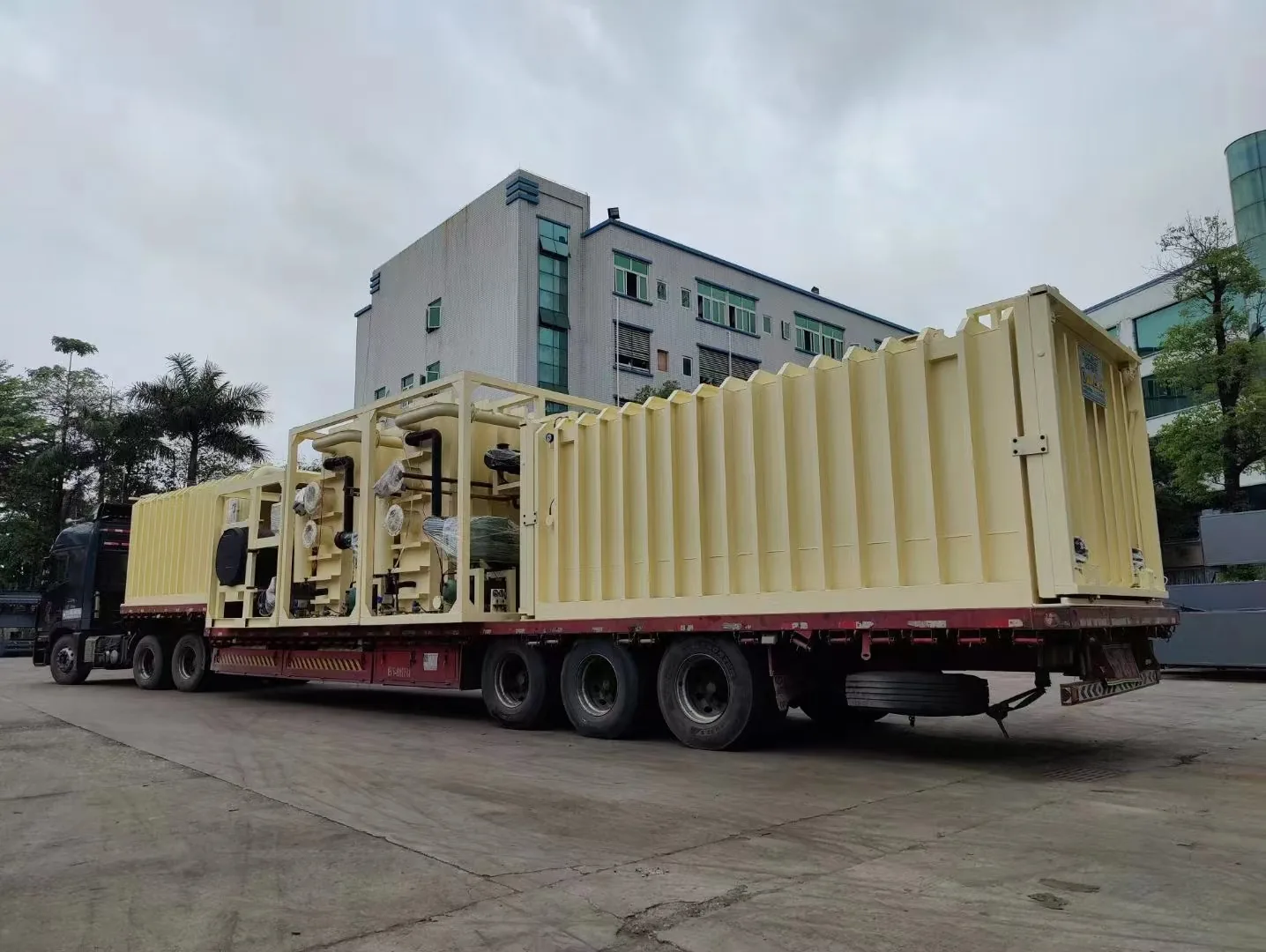
Used vs. New Vacuum Coolers: Is the Lower Price Worth It?
Buying a used vacuum cooler? Compare load fit, condition, relocation, installed cost and support with a new system before deciding if the saving is real.
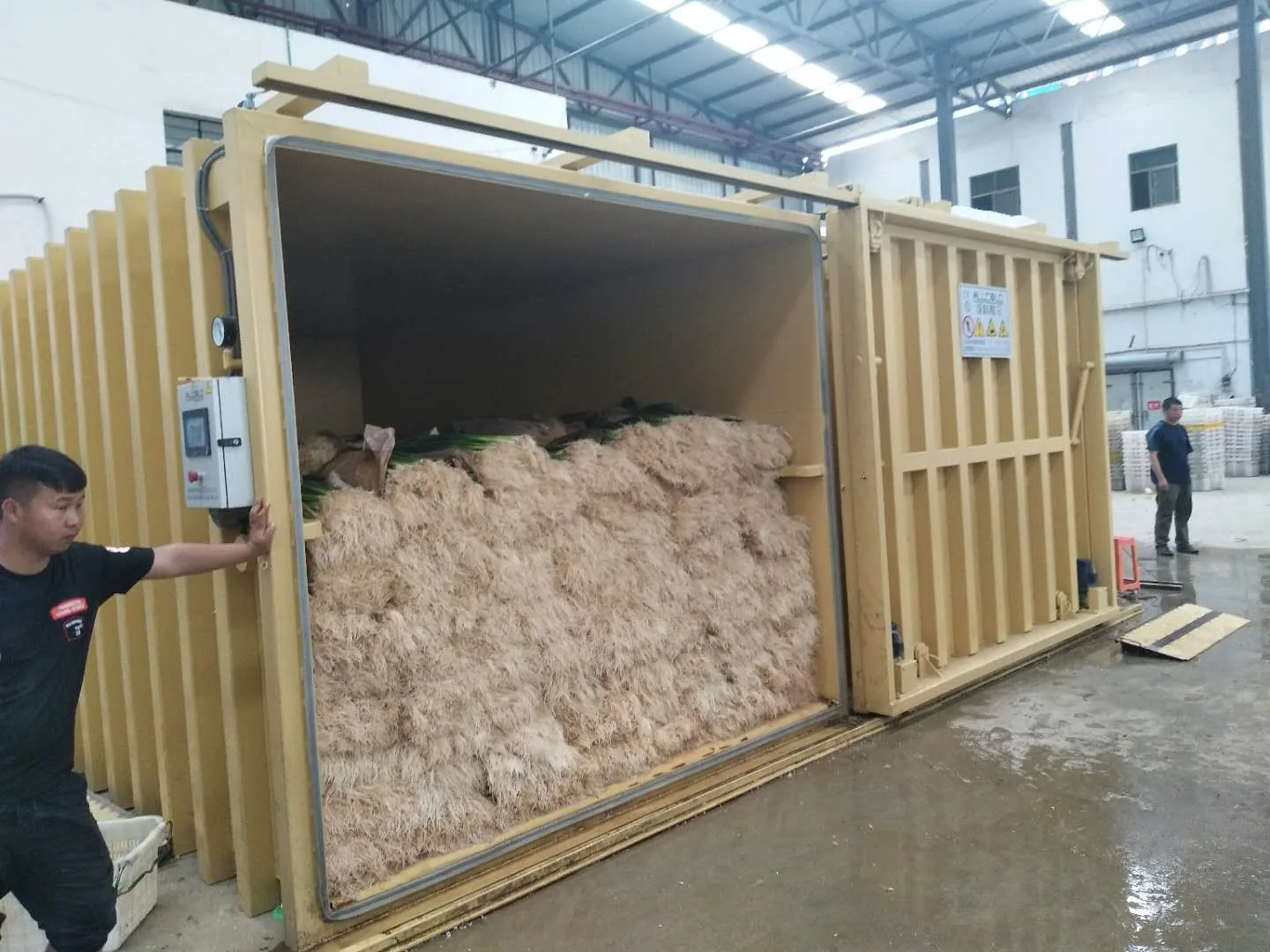
Why Does Produce Sweat After Vacuum Cooling?
FRESH PRODUCE · POST-COOLING HANDLING The cooling cycle can finish correctly—and the load can still become wet on its way
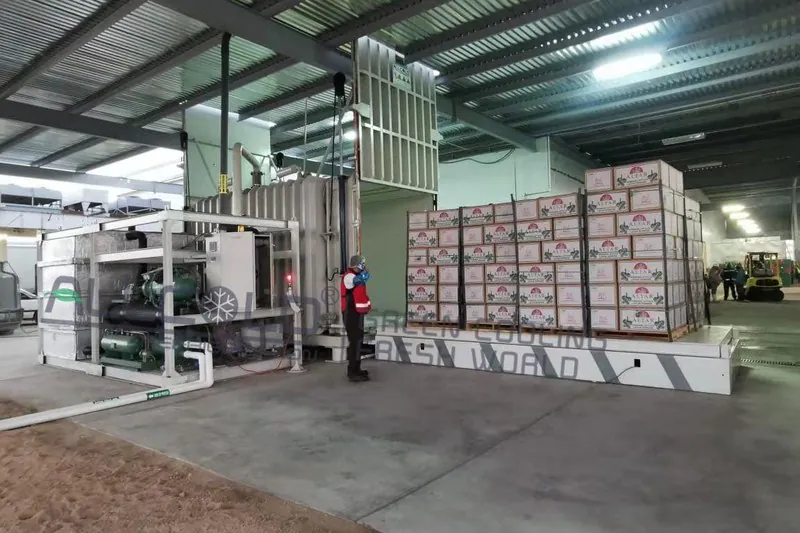
Vacuum Cooler Not Performing? Check Your Pallet Loading First
When a vacuum cooler produces inconsistent results—warm spots, longer cycle times, variable exit temperatures across the load—the machine is usually
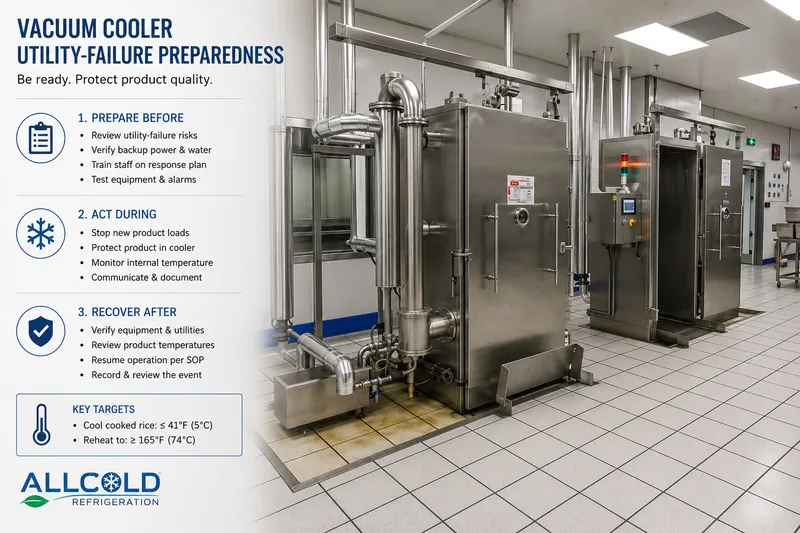
Why One Successful Cooked Rice Cooling Test Is Not Enough to Standardize a Central Kitchen Process
A cooked rice batch can pass a vacuum cooling test and still fail as a production process. That is the
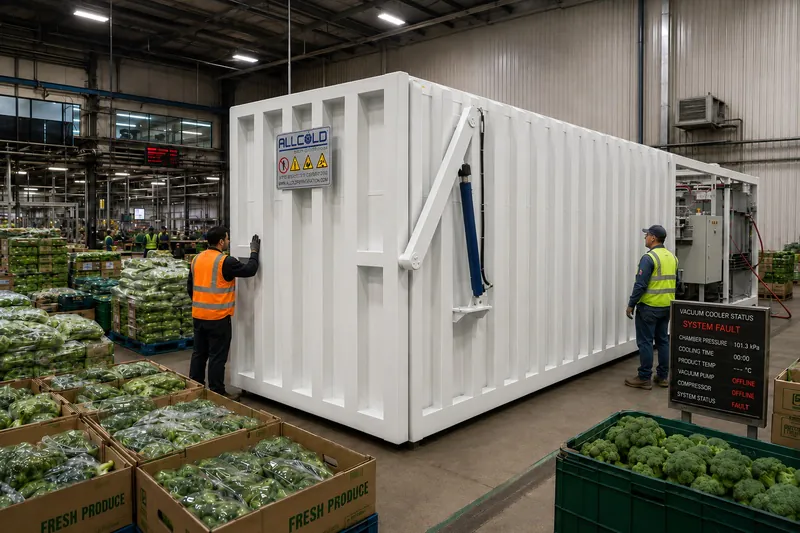
Why a Vacuum Cooler Utility Failure Becomes an Export Quality Problem Before It Becomes a Repair Problem
A vacuum cooler stoppage does not start as a maintenance problem. In a produce export operation, it becomes a quality
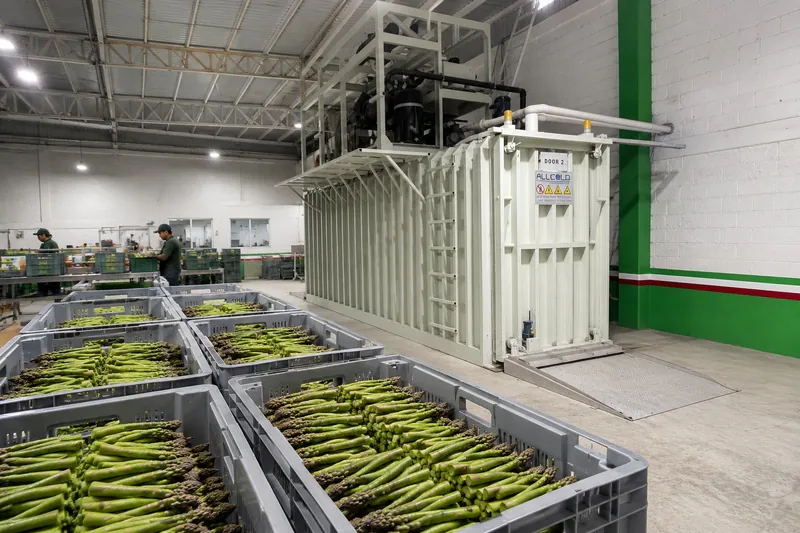
Why Asparagus Loses More Export Value in the First Two Hours After Cutting Than in the Entire Cold Chain That Follows
For fresh asparagus exporters, the most expensive quality loss often happens before the product even reaches the main cold chain.
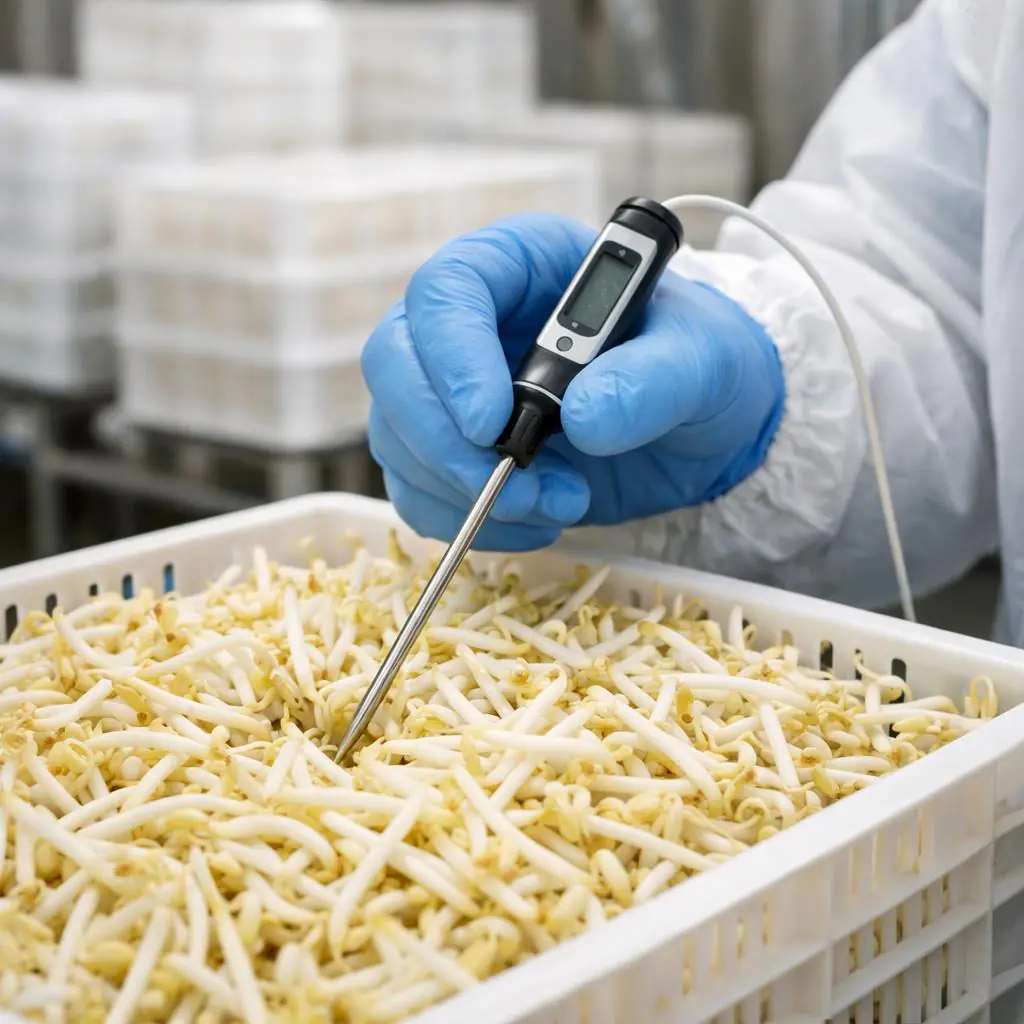
Why Bean Sprouts Are One of the Hardest Vegetables to Pre-Cool Correctly and What Exporters Get Wrong
Bean sprouts look simple. They are light, moist, and usually packed in bulk or retail bags. But from a pre-cooling
Why Broccoli Loses Export Quality Faster Than Any Temperature Log Will Show
The complaint comes in from the buyer: yellowing, premature flowering, weak texture on arrival. The exporter reviews the cold room
How Exporters Can Reduce Produce Rejection Claims with Better Pre-Cooling Workflow
Learn how exporters can reduce produce rejection claims by improving pre-cooling workflow, timing control, packing handoff, and first-mile cold chain stability.
Buying a Vacuum Cooler for Fresh Produce Export? Avoid These Costly Procurement Mistakes
Buying a vacuum cooler for fresh produce export is not simply a machine purchase. It is a project decision that