

Beyond the Box: What Architectural Designs Make a Great Vacuum Cooler?
You’re looking to invest in a vacuum cooler, and many of them look the same: a simple steel box. But the hidden architectural designs—how it’s built and what’s inside—are what separate a reliable, high-performing machine from a constant headache.
A vacuum cooler’s architecture is its core design, covering the chamber’s physical layout, the type of refrigeration system, and the control software. Key designs include pallet vs. trolley chambers, advanced condenser types, and smart PLC controls, each impacting workflow and final product quality.
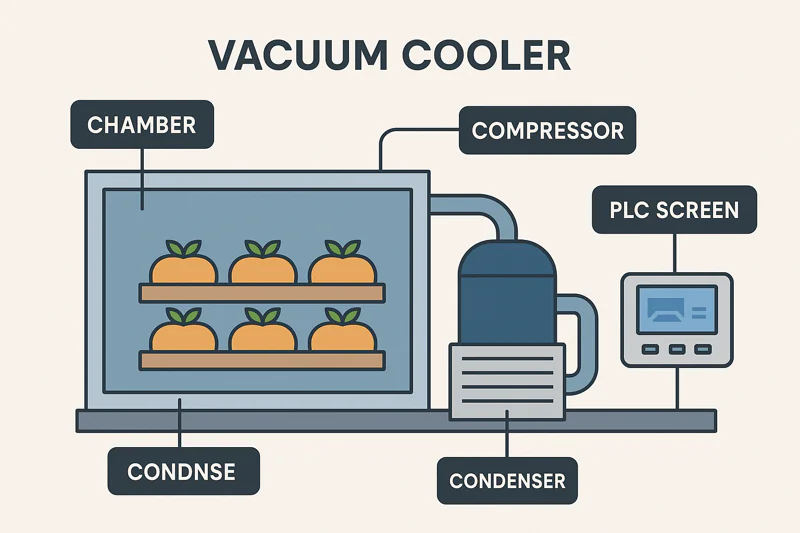
I often tell my clients that buying a vacuum cooler is like building a house. The foundation and structure are invisible when it’s done, but they determine its strength and livability. Let’s dig into the key architectural designs that truly define a machine’s performance and value.
Pallets or Trolleys: How Should You Load Your Chamber?
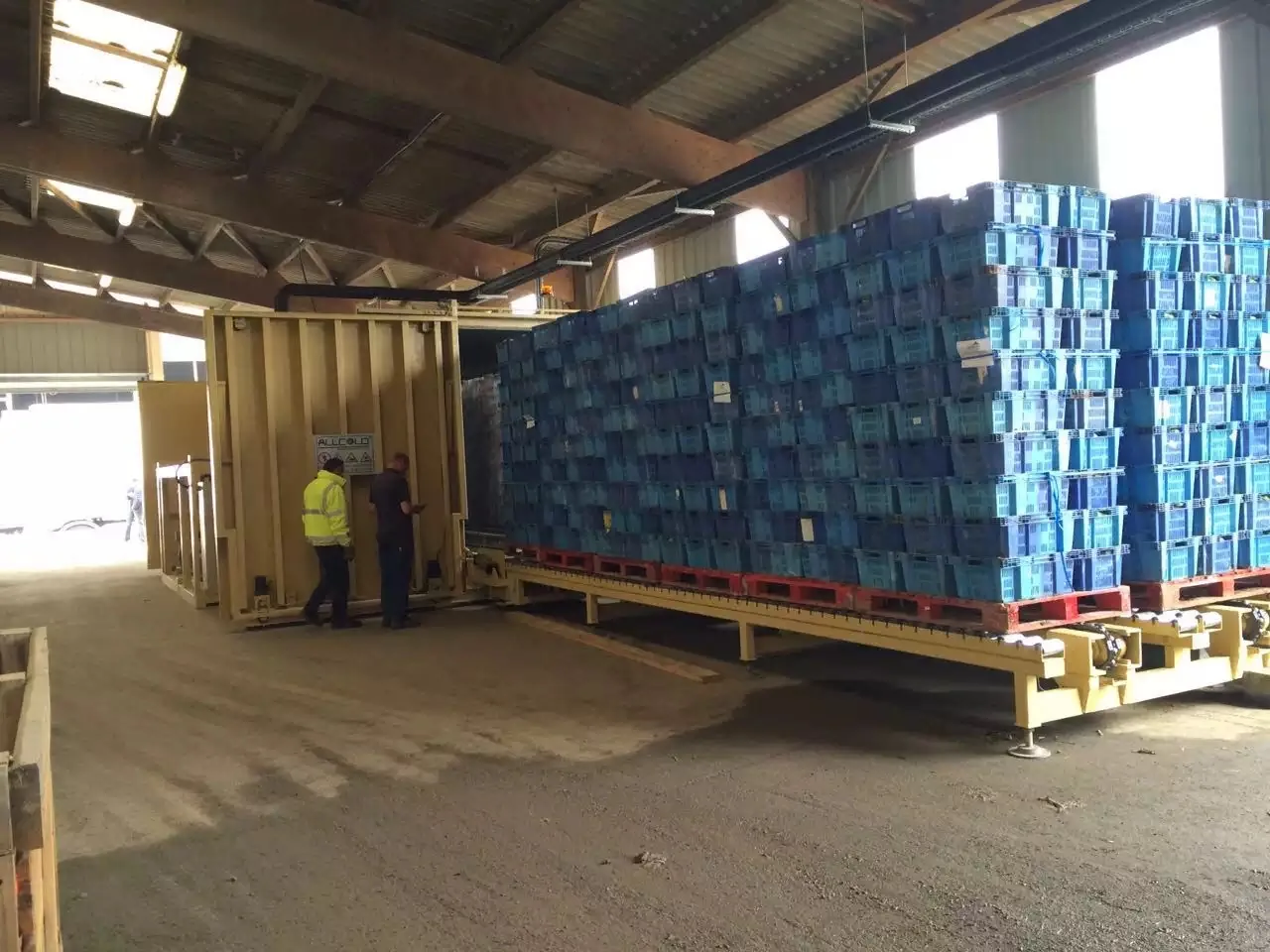
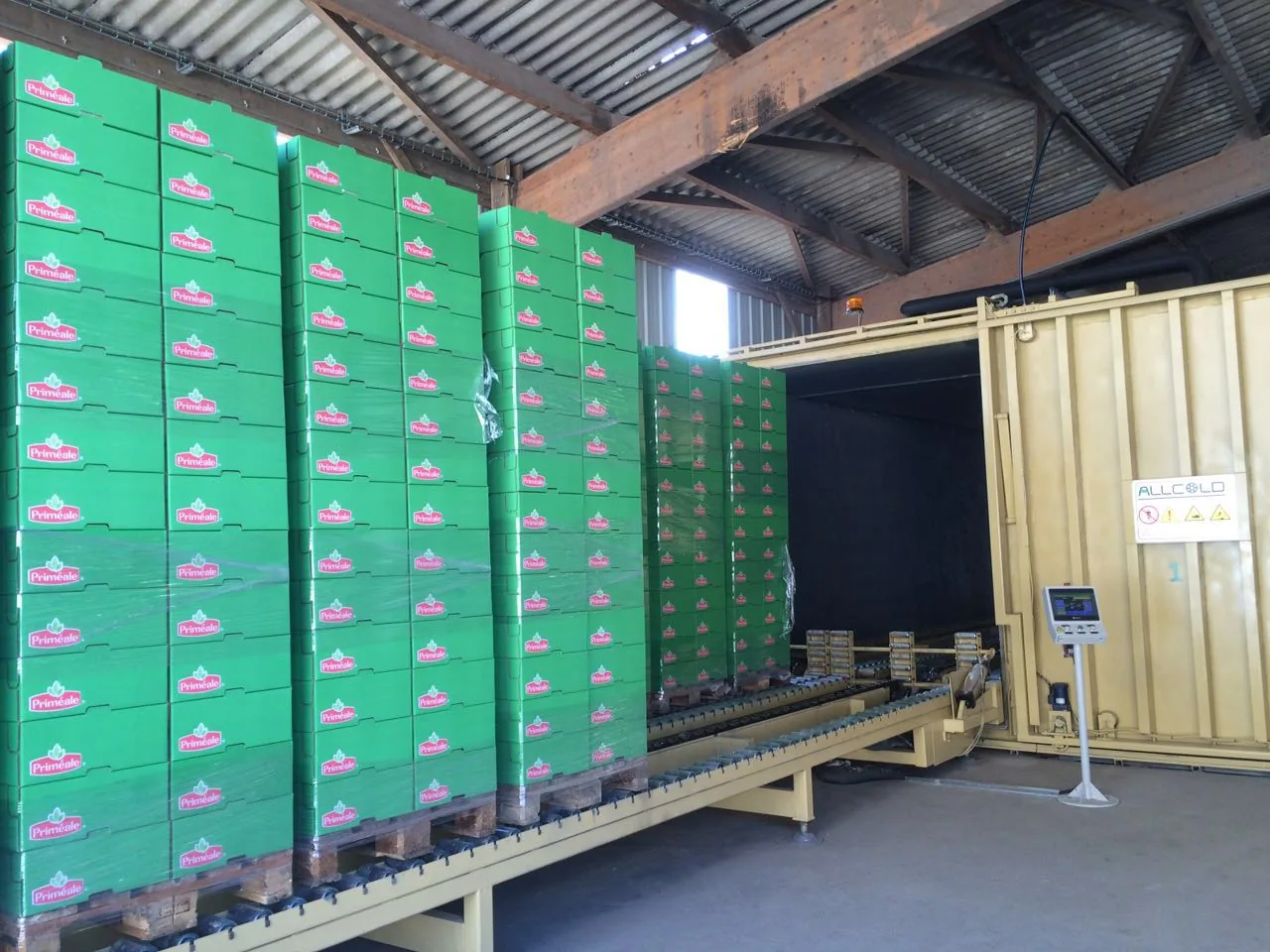
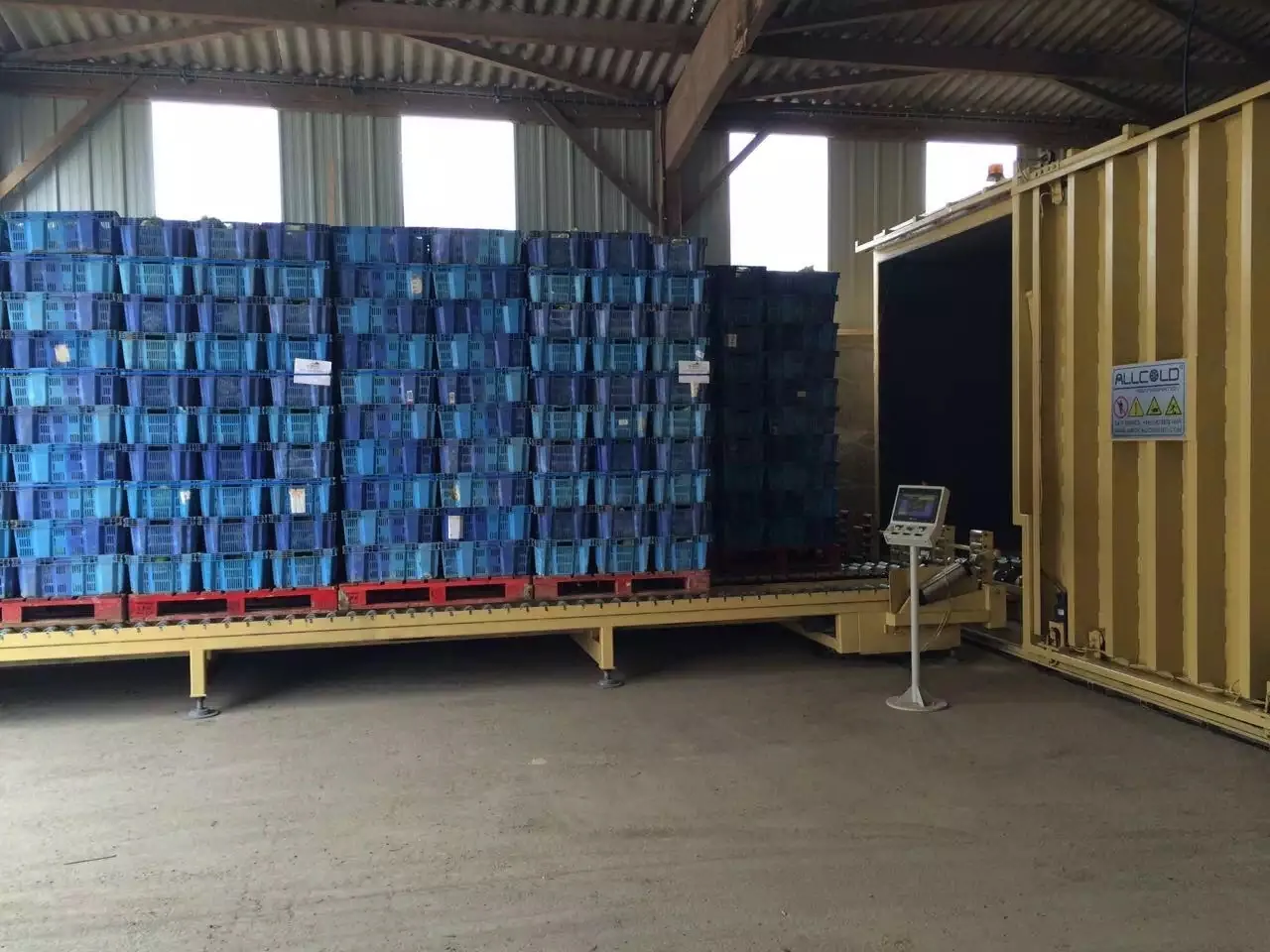
Getting your product into the machine seems trivial, but the daily workflow of loading and unloading has a huge impact on your efficiency. The wrong chamber design can create bottlenecks that slow down your entire operation.
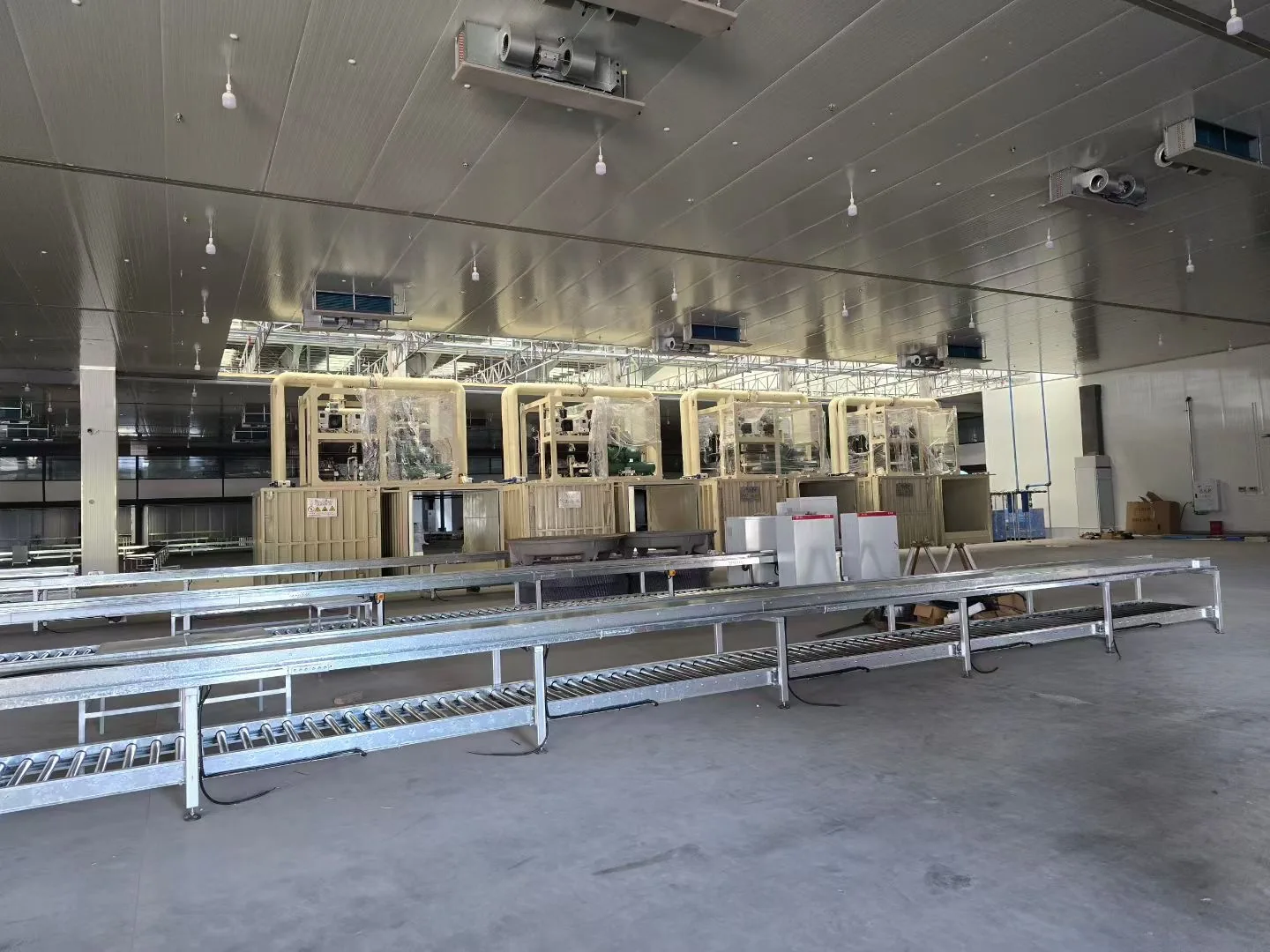
Allcold’s application range includes pallet-based fresh-produce equipment and tray- and trolley-based bakery and cooked-food systems. Chamber and loading configurations can be discussed around those formats, while suitable split systems allow a separate review of equipment locations. This gives buyers practical architecture choices tied to handling and site conditions. Confirm the component arrangement and connection responsibilities for the proposed configuration before comparing model names.
Pallet-based systems are designed for high-volume, forklift-loaded operations, like cooling harvested produce. Trolley-based systems are built for batch-processed foods, such as baked bread, offering more manual control and flexibility.

Designing for Your Workflow
Choose the loading architecture around the actual product flow. Allcold’s produce equipment uses pallet-based configurations, while bakery and selected cooked-food systems are considered around trays and trolleys. Confirm the batch load and usable dimensions for the proposed model; model names do not establish a universal loading arrangement.
| Design | Target User & Product | Key Benefit |
|---|---|---|
| Pallet System | High-volume produce farms | Maximum throughput, forklift compatible. |
| Trolley System1 | Bakeries, Central Kitchens | Better handling for delicate batches, workflow flexibility. |
Air, Evaporative, or Water: Choosing the Right Condenser Architecture?
Your machine’s refrigeration system generates a lot of heat. Getting rid of it efficiently impacts your energy bill and performance. The choice between air, a hybrid evaporative system, or water is critical.
Air-cooled is simple and very low-maintenance. Evaporative condensers are a high-efficiency hybrid using air and water, ideal for saving energy in hot climates. Traditional water-cooled systems are powerful but require complex external cooling towers.

Matching Heat Rejection to Your Climate and Costs
Air-cooled heat rejection is one option in Allcold’s range, depending on the model and site. Confirm ambient conditions, ventilation and the stated operating range in the quotation. No universal maximum ambient temperature applies across all configurations.
However, for clients in very hot and dry climates, we often recommend an evaporative condenser3. This is an intelligent hybrid architecture. It works by spraying a small amount of water over the refrigerant coils while fans pull air through them. The rapid evaporation of this water creates a powerful cooling effect, much more efficient than using air alone. For a client like Carlos in Mexico, this could mean significant energy savings4 during the hottest months, as it reduces the workload on the Bitzer compressor.
Water-cooled and evaporative arrangements have different utility and maintenance requirements. Compare the actual site water conditions and complete supplied scope. Neither a cooling tower nor a ranking by cost and efficiency should be assumed from the label alone.
| System Type | Mechanism | Best For |
|---|---|---|
| Air-Cooled | Uses fans and ambient air to cool refrigerant. | Simplicity, reliability, low maintenance, most climates. |
| Evaporative | Sprays water over coils while fans pull air through. | High-efficiency in hot/dry climates, energy savings. |
| Water-Cooled | Pumps water from an external cooling tower. | Very large industrial applications, highest complexity. |
Simple Start or Smart Control: What Is the Brain of the Machine?
You might think you just need a start button, but for many products, a simple "on/off" vacuum pull is too aggressive. Uneven cooling or surface damage can ruin your product quality and hurt your bottom line.
Allcold supports PLC/HMI operation, live values, automatic and manual modes, alarms and password protection. Specify additional cycle functions for the selected application.

The Power of Programmable Control
Ask which pressure-control functions, stored recipes and data features are included in the proposed system. A programmed sequence must be assessed with the actual product and loading pattern; it does not by itself guarantee uniform cooling or food safety.
Standard Parts or Premium Components: Does Brand Name Matter?
All coolers use common parts like compressors and pumps. But the architectural philosophy of which specific brands to use has a massive impact on the machine’s day-to-day reliability and long-term serviceability.
Request the actual component schedule and rating conditions. Recognizable brands may assist service planning, but the supplied brands, compatibility and spare-parts availability must be confirmed for the order.

An Architecture of Quality
Allcold’s configuration discussion can connect the load, equipment arrangement and component scope before purchase. Agree inspection evidence and acceptance conditions for the actual machine. Do not assume a universal 72-hour test, worldwide parts availability or lowest ownership cost from a component brand.
Conclusion
The best architecture isn’t about one feature. It’s how the chamber design, condenser system, smart controls, and premium components are integrated into one cohesive system that delivers reliable, perfect cooling for your specific product.
Discover how a Trolley System enhances workflow flexibility and product handling, ideal for bakeries and central kitchens. ↩
Explore the advantages of air-cooled condensers for efficient cooling solutions in various climates. ↩
Learn how evaporative condensers enhance cooling efficiency, especially in hot and dry climates. ↩
Find effective strategies for maximizing energy savings in cooling systems, crucial for cost efficiency. ↩
Discover the complexities and benefits of water-cooled systems for large industrial applications. ↩
Exploring Siemens touch screens can reveal their advantages in user interface design and operational efficiency. ↩
Understanding the vacuum delay facility can enhance your knowledge of food cooling processes and improve product quality. ↩

Mila
You May Also Like
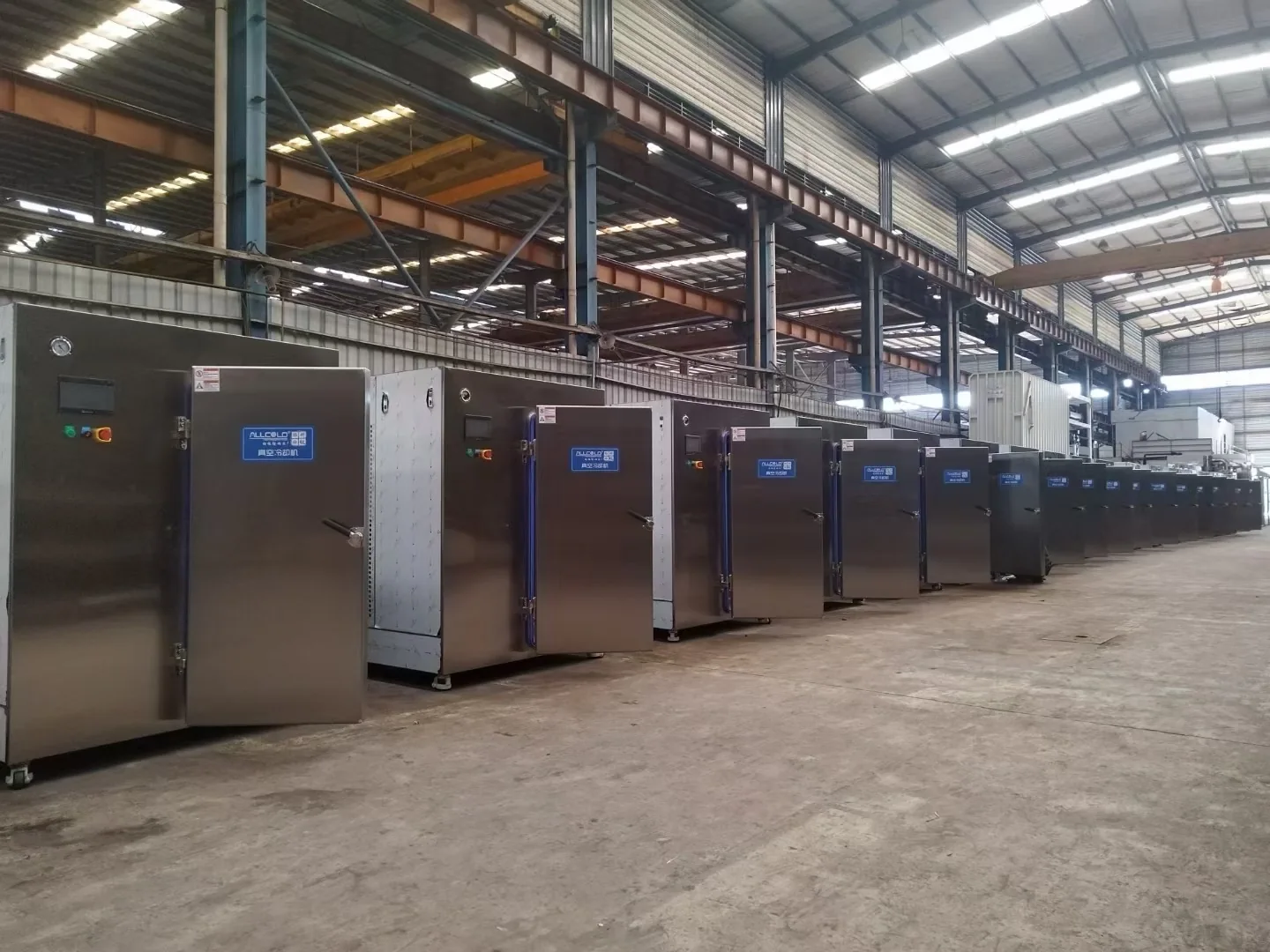
Vacuum Cooler Water Quality: What to Check Before Connecting the Supply
Identify the water circuits, review a representative water analysis and clarify the utility scope before connecting a vacuum cooler. A practical guide for Allcold equipment buyers.
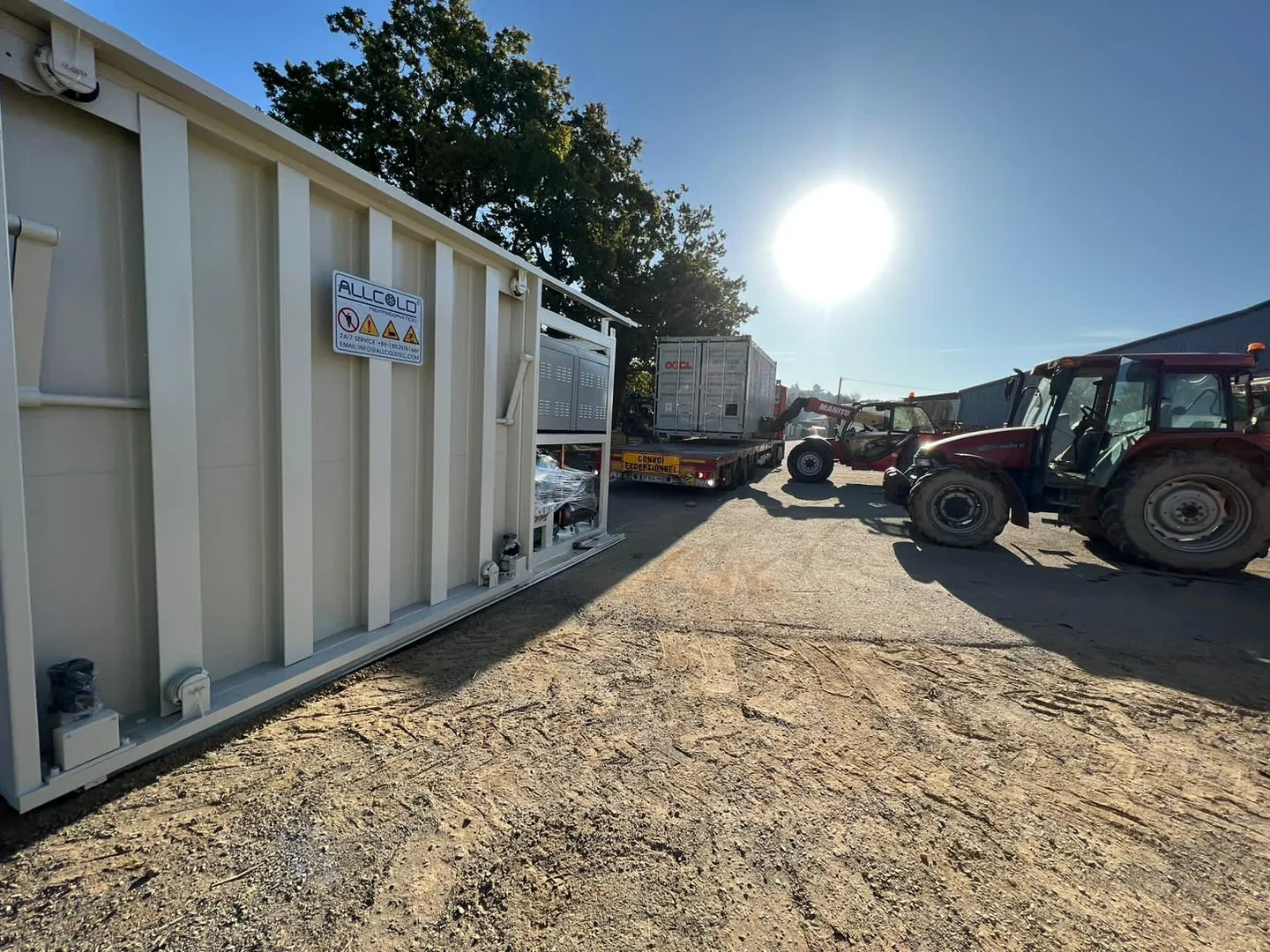
Buying a Vacuum Cooler for a Cold Climate? Plan for the Hours It Is Off
A winter specification should cover more than the temperature during production. Compare running, idle, power-loss and restart conditions before choosing the equipment.
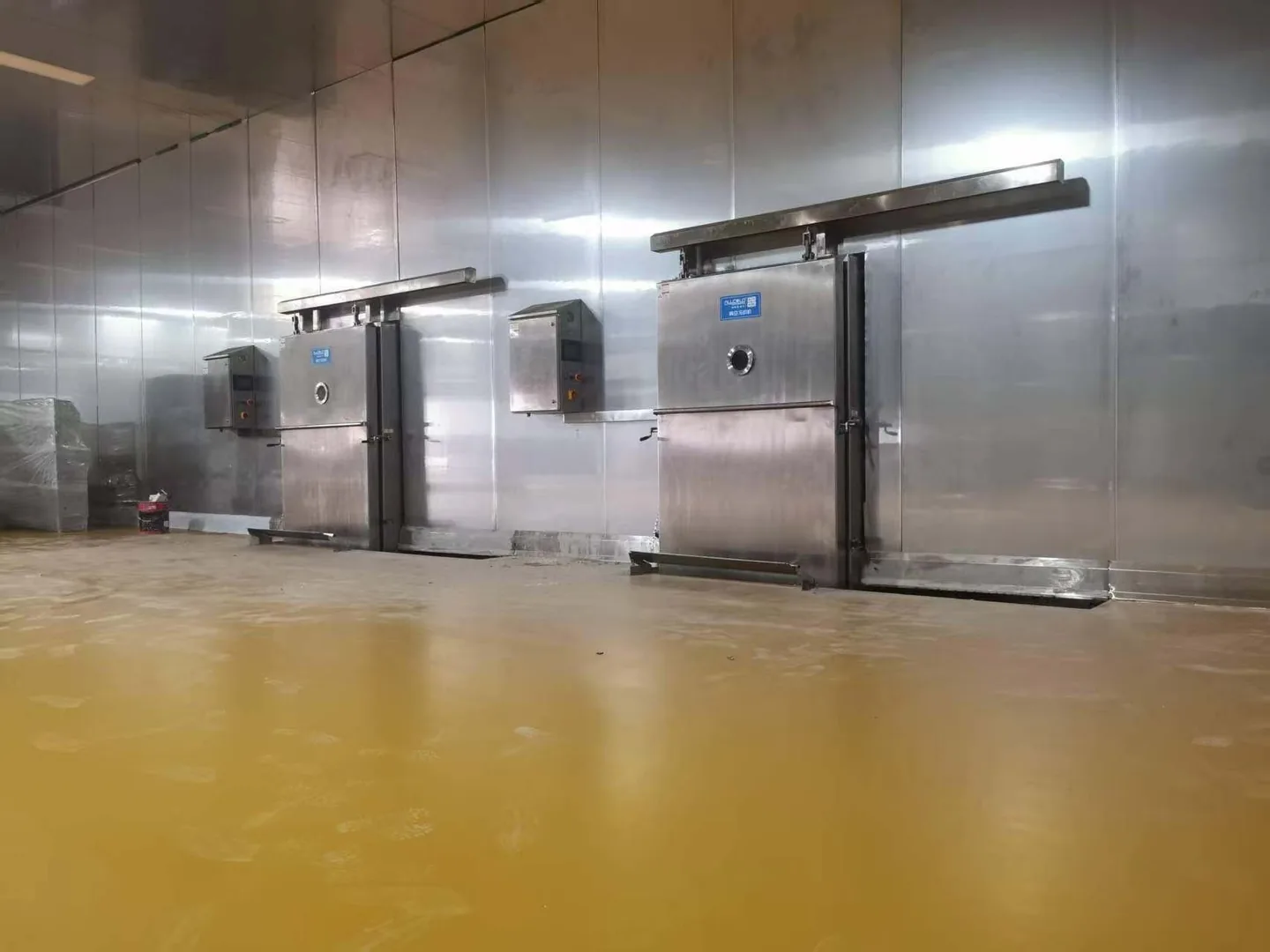
Can a Vacuum Cooler’s Chamber, Pump and Chiller Go in Different Rooms?
Keep the chamber convenient for production without assuming the machinery must sit beside it. A practical guide to reviewing a split vacuum cooling installation.
Vacuum Cooling Sweet Corn: Look Beyond Cooling Speed
Can sweet corn be vacuum cooled? Compare moisture control, husk and pack formats, hydrocooling alternatives, and the product checks to agree before buying.
Vacuum Cooling Celery: Is It the Right Choice for Your Packing Line?
Can celery be vacuum cooled? Compare vacuum, hydro and forced-air cooling, then assess packaging, temperature, weight loss and real packing-line throughput.
Does a Bigger Vacuum Pump Mean Faster Vacuum Cooling?
Does a larger vacuum pump cool produce faster? Compare m³/h ratings, loaded cooling time and complete batch throughput before buying a vacuum cooler.
Which Refrigerant Should Your Vacuum Cooler Use?
Choosing a vacuum cooler refrigerant? Check local service support, destination rules, system performance and quotation details before ordering.
Can Your Floor Support a Vacuum Cooler? Look Beyond Tonnes per Square Metre
Check vacuum cooler floor loading before you buy: operating weight, support reactions, forklift wheel loads, ramps and the site data your engineer needs.
Buying a Vacuum Cooler Near the Coast? Specify More Than Paint
Coastal protection is more than chamber paint. Use this component-by-component checklist to compare vacuum cooler quotations, test evidence and maintenance scope.
50 Hz or 60 Hz? How to Confirm a Vacuum Cooler Will Work at Your Site
Buying a vacuum cooler for 50 Hz or 60 Hz power? Check whole-machine compatibility, auxiliaries, conversion scope and quoted performance before ordering.