
Direct vs. Indirect: Which Vacuum Cooling Method is Right for You?
You’ve decided on vacuum cooling, but a hidden technical choice emerges: direct or indirect cooling. This single design decision can make or break your product quality, cooling speed, and even your machine’s lifespan.
Direct cooling systems place the evaporator coils inside the vacuum chamber for the fastest cooling. Indirect systems use an external heat exchanger, offering maximum hygiene separation. For most food applications, direct cooling’s speed is the winning factor.
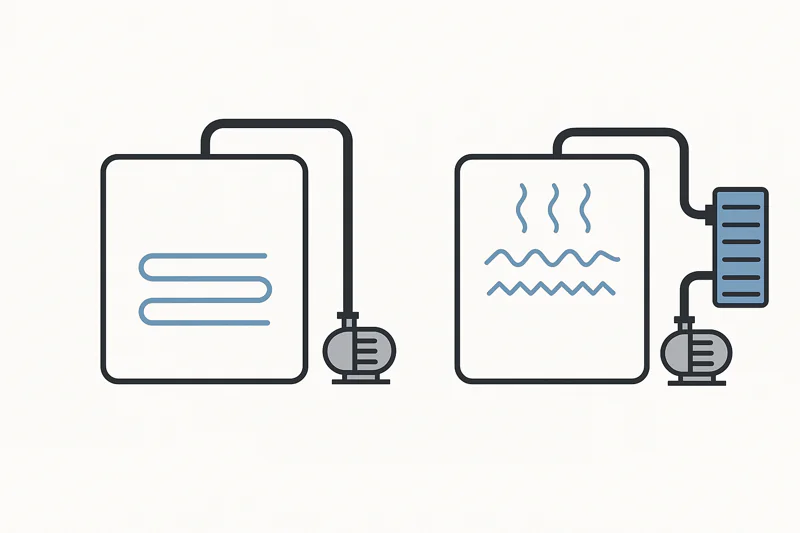
This seems like a minor engineering detail, but it impacts everything my clients care about. For a farm owner like Carlos, it’s about speed to preserve freshness. For a central kitchen manager like Sophia, it’s about balancing speed with hygiene. Let’s dig into why this one choice matters so much.
How does direct cooling achieve such incredible speed?
When you need to stop bacterial growth and lock in freshness, every second counts. Traditional cooling methods are simply too slow. You need a system that attacks the heat with maximum force and efficiency.
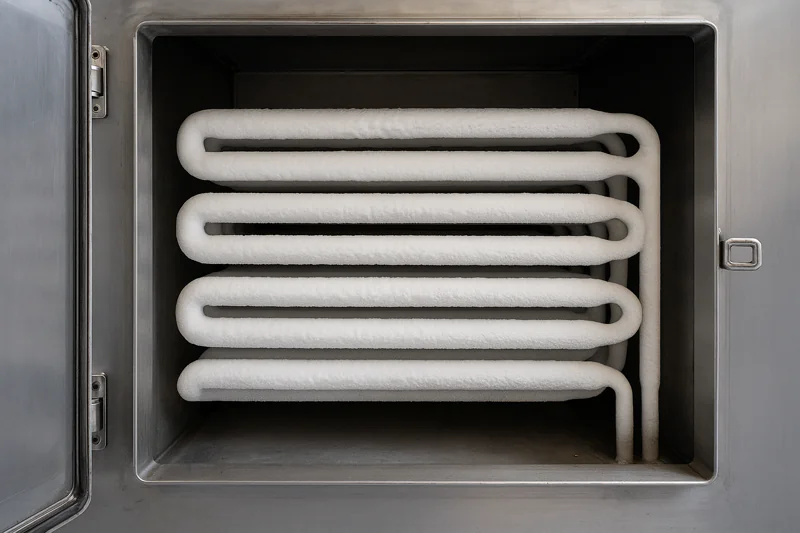
Direct cooling is incredibly fast because the super-cold evaporator coils (the "water catcher") are inside the chamber. Steam from the product instantly freezes onto these coils, causing a rapid pressure drop and accelerating the entire cooling process.
The Direct Advantage: Speed and Power
In vacuum cooling, moisture evaporates from the product and carries heat away. The selected system must handle the released vapour using its designed arrangement. Ask the supplier to identify the vapour path and heat-exchange components; a fixed coil temperature or one internal layout should not be generalized to all Allcold systems.
| Feature | Direct Cooling System | Justification |
|---|---|---|
| Cooling Speed2 | Fastest possible | Vapor is trapped instantly at the source. |
| Pump Protection | Excellent | The coils act as a shield for the pump. |
| Product Suitability | All food (fresh & cooked) | The only method that can handle high steam loads. |
| Efficiency | Very High | Direct heat exchange is the most efficient method. |
What are the hygiene challenges of direct cooling?
Having the cooling mechanism inside the food chamber is great for speed, but it naturally raises questions about cleaning. If not designed or maintained properly, it can be a weak point in your sanitation plan.
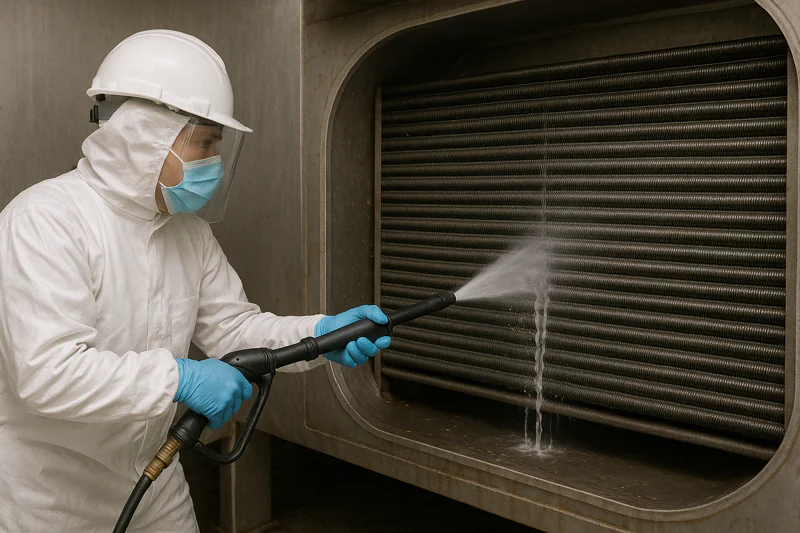
The main challenge of direct systems is cleaning the evaporator’s densely packed fins, which can trap food particles. This requires robust cleaning protocols, like pressure washing or automated Clean-In-Place (CIP) systems, to ensure total hygiene.
Managing Hygiene in Direct Systems
Review access, drainage and the approved cleaning procedure for the actual heat-exchange arrangement. Do not apply a high-pressure wash or chemical procedure without checking equipment compatibility. Automated cleaning or CIP, if required, must be separately confirmed in the configuration and assessed for the product and process.
| Challenge | Solution |
|---|---|
| Food Debris Trapping | Smart Design: Wider fin spacing, better drainage. |
| Cleaning Labor | Standardized pressure washing protocols; Optional automated CIP. |
| Hygiene Verification | Easy visual inspection; Data logging of CIP cycles. |
Why would anyone choose a slower, indirect cooling system?
If direct cooling is the champion of speed and efficiency for food, it begs the question: why does the indirect method even exist? Why add extra steps, complexity, and cost to a process if it makes it slower?
Different heat-exchange arrangements may suit different process and cleaning requirements. Ask the supplier to define the components and product interface on the proposed system. Equipment layout alone does not establish sterility or regulatory suitability.
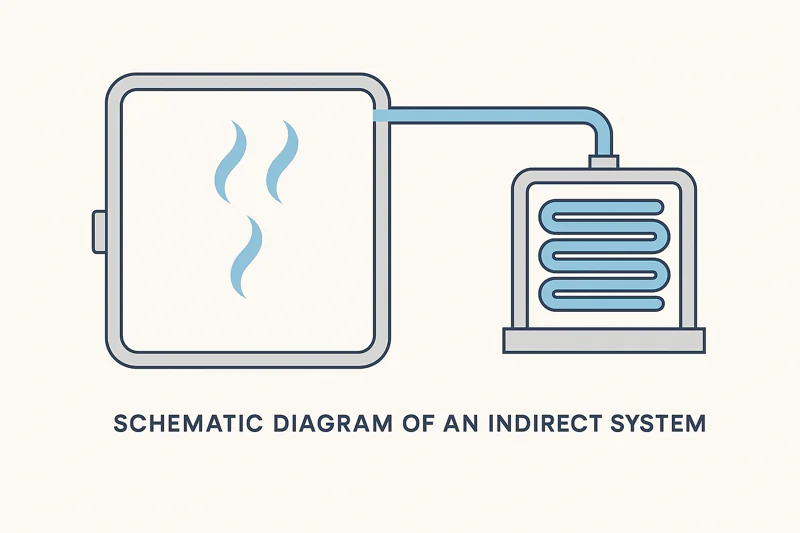
The Case for Indirect Cooling: Absolute Separation
In an indirect system, the vacuum chamber is simply a clean, empty, stainless steel box. There are no coils or fins inside, which makes it incredibly easy to clean and sterilize. This is its single greatest advantage. So how does it cool? The water vapor that boils off the product is sucked out of the chamber by the vacuum pump. However, before the vapor gets to the pump, it is routed through an external condenser unit. This condenser is typically a plate or shell-and-tube heat exchanger. In a separate, closed loop, a refrigeration unit chills a liquid (usually water or a glycol mix), which is then pumped through the external condenser. The hot vapor from the chamber hits the cold surfaces inside this external unit, condenses back into liquid water, and is drained away. Only the "dry" air continues to the vacuum pump. The primary reason for this complex setup is to eliminate any possibility of a refrigerant leak inside the food zone. While modern direct systems are extremely safe, in industries like pharmaceuticals, even a 0.001% risk is unacceptable. The trade-offs, however, are significant. The process is slower because the heat exchange is not happening right at the source. The system is also far more complex and expensive, with extra pumps, piping, and a large external condenser5, all of which add maintenance points.
| Aspect | Indirect Cooling System |
|---|---|
| Hygiene | Absolute physical separation of product and refrigerant. |
| Chamber Cleaning | Effortless; it’s a simple, empty vessel. |
| Complexity & Cost | Higher due to extra components (pumps, condenser). |
| Cooling Speed | Slower due to less efficient, indirect heat transfer. |
How do you choose between direct and indirect for your food?
Now that the technical differences are clear, we arrive at the final, practical question. For your lettuce, your bread, or your ready-to-eat meals, which system do you actually need to buy?
Allcold’s food and bakery configurations and produce systems are selected around the actual product and loading requirement. Use that application review to define what a supplier means by “direct” or “indirect”: identify the product chamber, vapour path, heat exchanger and cooling medium on the proposed arrangement. Allcold can discuss the product and equipment configuration together; suitability, cleanability and the required cooling result must be confirmed for that specific design.
For over 99% of all food applications, direct cooling is the correct and superior choice. Its unmatched speed and efficiency are essential for food quality and safety. Indirect cooling is a specialized solution primarily for non-food industries.
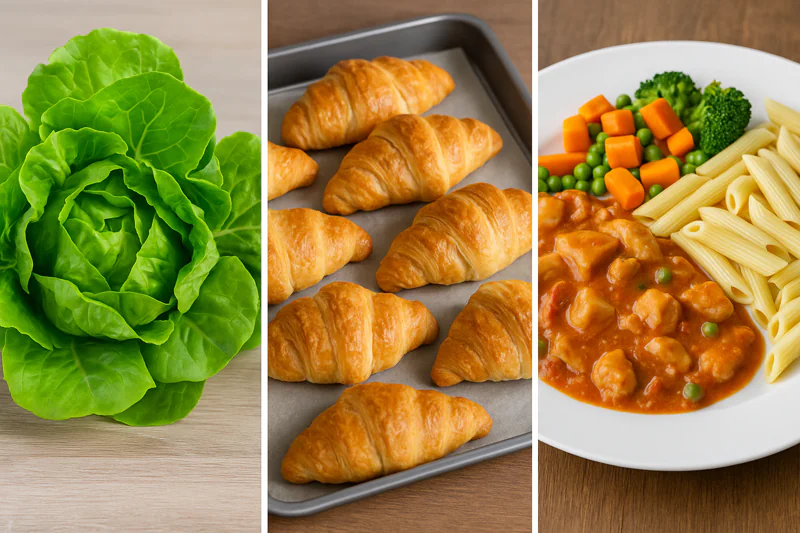
The Final Decision Matrix for Food Applications
Choose from a defined process arrangement and product duty rather than a label alone. Ask how the proposed system handles vapour, supports cleaning and meets the agreed cooling requirement. No arrangement automatically meets all food-safety requirements, and an automated cleaning function must not be assumed to be supplied.
| Product Type | Recommended System | Key Justification |
|---|---|---|
| Fresh Vegetables & Fruits | Direct | Maximum speed is critical for shelf life. |
| Bakery & Bread | Direct | Handles high moisture and is gentle on structure. |
| Cooked & Ready Meals | Direct | Only method to handle massive steam loads efficiently. |
| Pharmaceuticals | Indirect | Absolute separation is a regulatory requirement. |
Conclusion
The choice is simple. Direct cooling offers the speed and power that modern food production demands, with proven, reliable cleaning systems. Indirect cooling is a specialized tool for non-food industries with unique regulatory needs.
Understanding vacuum cooling can enhance your knowledge of efficient food preservation methods. ↩
Exploring cooling speed factors can help you optimize food storage and extend shelf life. ↩
Learn about HACCP rules to grasp their critical role in maintaining food safety and preventing contamination in food production. ↩
Explore this link to understand how CIP systems enhance hygiene and efficiency in food processing, ensuring compliance with safety standards. ↩
Learn about the role of external condensers in cooling systems, enhancing efficiency and safety in various applications. ↩
Explore this link to understand how direct cooling enhances food safety and shelf life, crucial for producers. ↩
Learn about the importance of CIP systems in maintaining hygiene standards, vital for food safety and quality. ↩
Interested in vacuum cooling for your operation?

Mila
You May Also Like
Vacuum Cooler Water Quality: What to Check Before Connecting the Supply
Identify the water circuits, review a representative water analysis and clarify the utility scope before connecting a vacuum cooler. A practical guide for Allcold equipment buyers.
Buying a Vacuum Cooler for a Cold Climate? Plan for the Hours It Is Off
A winter specification should cover more than the temperature during production. Compare running, idle, power-loss and restart conditions before choosing the equipment.
Can a Vacuum Cooler’s Chamber, Pump and Chiller Go in Different Rooms?
Keep the chamber convenient for production without assuming the machinery must sit beside it. A practical guide to reviewing a split vacuum cooling installation.
Vacuum Cooling Sweet Corn: Look Beyond Cooling Speed
Can sweet corn be vacuum cooled? Compare moisture control, husk and pack formats, hydrocooling alternatives, and the product checks to agree before buying.
Vacuum Cooling Celery: Is It the Right Choice for Your Packing Line?
Can celery be vacuum cooled? Compare vacuum, hydro and forced-air cooling, then assess packaging, temperature, weight loss and real packing-line throughput.
Does a Bigger Vacuum Pump Mean Faster Vacuum Cooling?
Does a larger vacuum pump cool produce faster? Compare m³/h ratings, loaded cooling time and complete batch throughput before buying a vacuum cooler.
Which Refrigerant Should Your Vacuum Cooler Use?
Choosing a vacuum cooler refrigerant? Check local service support, destination rules, system performance and quotation details before ordering.
Can Your Floor Support a Vacuum Cooler? Look Beyond Tonnes per Square Metre
Check vacuum cooler floor loading before you buy: operating weight, support reactions, forklift wheel loads, ramps and the site data your engineer needs.
Buying a Vacuum Cooler Near the Coast? Specify More Than Paint
Coastal protection is more than chamber paint. Use this component-by-component checklist to compare vacuum cooler quotations, test evidence and maintenance scope.
50 Hz or 60 Hz? How to Confirm a Vacuum Cooler Will Work at Your Site
Buying a vacuum cooler for 50 Hz or 60 Hz power? Check whole-machine compatibility, auxiliaries, conversion scope and quoted performance before ordering.