EQUIPMENT BUYING GUIDE · FRESH PRODUCE
A used vacuum cooler can be a sensible purchase. The important question is how much of the discount remains once it is ready to cool your crop at your site.
The listing looks promising: the right number of pallets, a recognizable compressor brand and a price below a new machine. But does the sale include the equipment connected outside the photograph? Can it run on your electricity supply? And who will get it working after it has been disconnected and moved?
Those answers separate a useful second-hand system from an unfinished installation project. Before negotiating the price, compare the two options at the same end point: installed, operational and suitable for your actual packed load.
When is a used vacuum cooler worth considering? When its identity and condition can be established, it fits the new application with limited changes, and its complete installed cost leaves a meaningful saving after known work and uncertainty. A new system deserves preference when adapting the old one removes that saving or leaves important performance and support questions unresolved.
Make these three decisions before requesting a discount
| What you find | What to do next |
|---|---|
| Known history, suitable configuration, complete package and available service | Keep the used machine on the shortlist. Price the move and any documented work. |
| Wrong load format, major electrical changes or several missing subsystems | Compare a new configuration before paying for redesign of the old one. |
| Unknown machine identity, uncertain condition or no clear route to operation | Pause the purchase. A larger discount does not resolve a missing technical answer. |
1. “Four pallets” does not mean the same cooling job
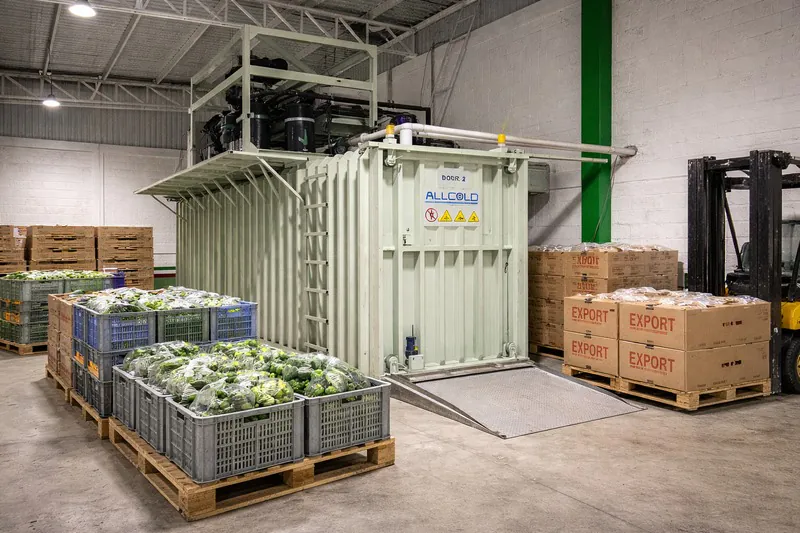
Start with your crop, packaging, net batch weight, incoming temperature, required product temperature and busiest operating period. Ask the seller for the conditions behind any capacity or cycle-time claim. A past result for a different crop or lighter load is background information, not proof of your output.
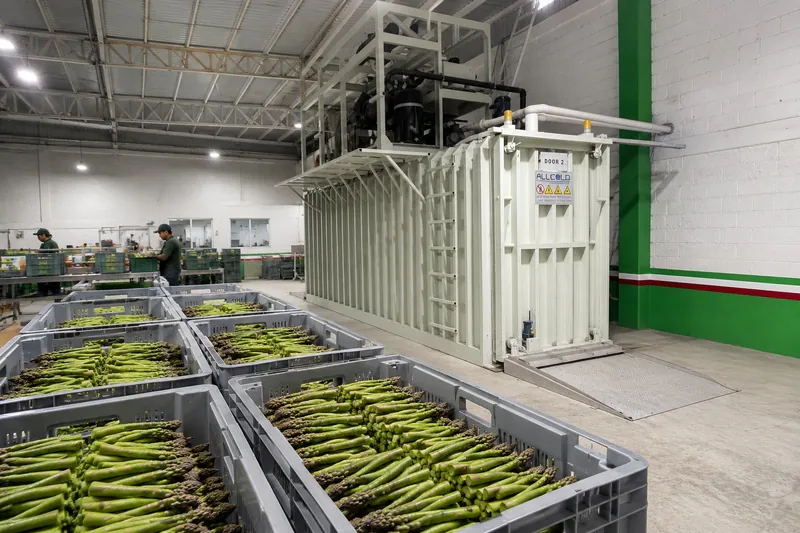
Measure the loaded pallet, including overhang and stack height. Check the usable chamber space, door opening and handling route—not just the external dimensions. The chamber and pallet-fit guide explains this distinction. Repacking every load to suit a bargain machine can introduce a permanent labor cost.
Next, match the utilities. Record voltage, phase and frequency, plus the available electrical supply capacity and the cooling arrangement required by that particular machine. ABB explains that a motor’s rated voltage and frequency define its operating conditions; alternate ratings must be read with their corresponding parameters.[1] A dual-frequency rating on one motor does not establish compatibility of the complete cooler. Have the machine documentation reviewed for the destination supply.
A vegetable cooler should not be assumed suitable for cooked food merely because a trolley fits inside. The application, hygienic design and process requirements need a separate assessment. This guide concerns equipment for fresh produce.
2. Buy an identifiable system, not a reassuring photograph
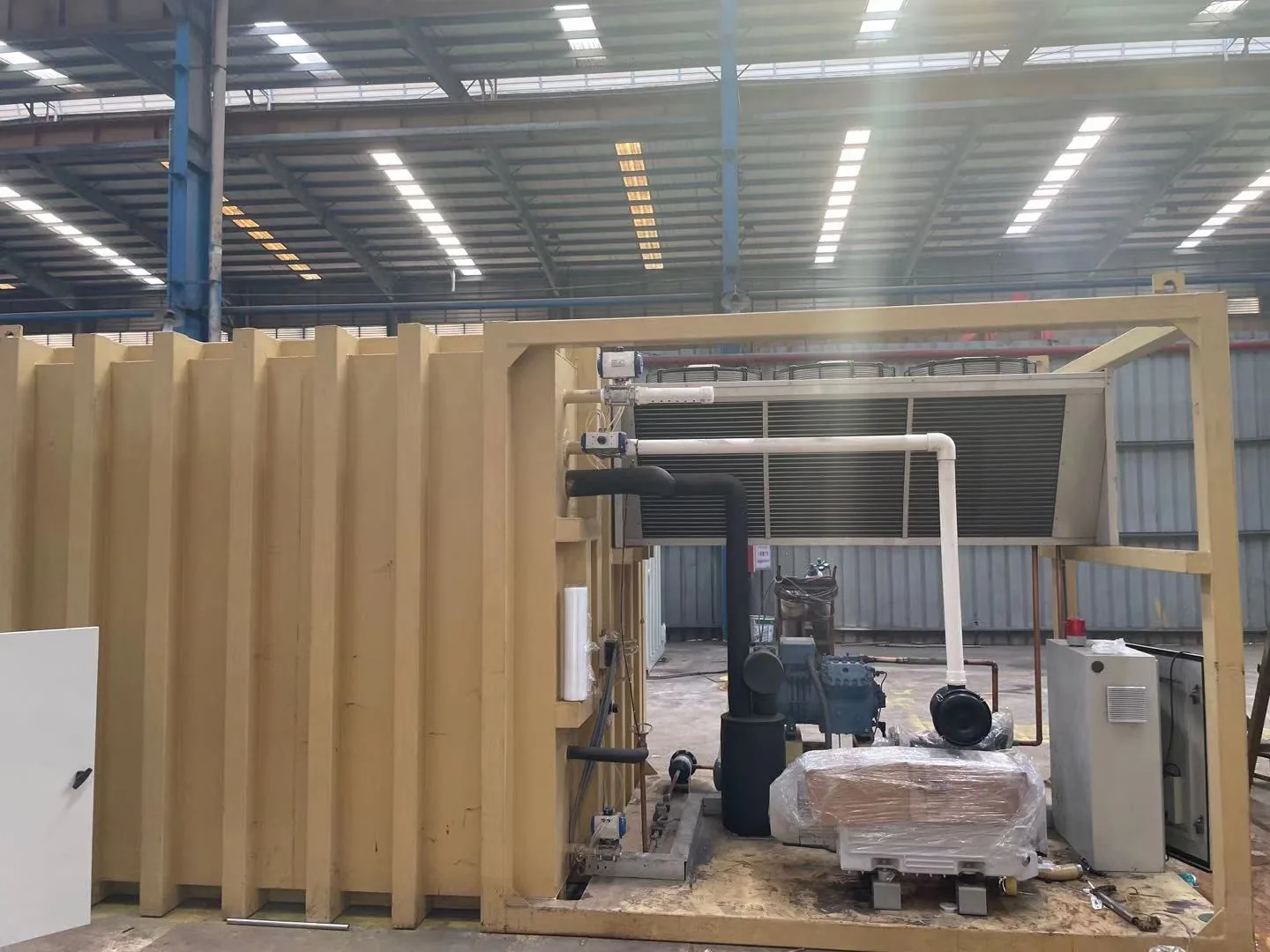
Obtain the machine model and serial number, component nameplates, available drawings and maintenance history. Ask which major components or controls have changed since manufacture, why the machine is being sold and how it has been stored since last use. Missing records are an information gap—not automatic proof of a fault.
Age, appearance and operating hours answer different questions. New paint does not establish chamber integrity, seal condition or refrigeration performance. A low hour count is useful only with context: whether the meter is original, what it measures and whether the reading covers the machine’s service history.
If the listing says “refurbished,” ask for an itemized scope: what was inspected, repaired or replaced, by whom, and with what supporting records. Cleaning and repainting should not be confused with documented mechanical refurbishment.
Component-level support can help, but it is not whole-machine support. For example, Busch advertises repair services for vacuum pumps, blowers and compressors.[2] That does not establish who will diagnose the cooler’s controls, chamber or refrigeration circuit. Ask the proposed service provider about the exact equipment and location before relying on it.
Use a suitably qualified technician to assess unresolved condition questions, including safety devices and undocumented modifications. Ask for a written scope and repair estimate where needed. Do not open electrical cabinets, operate suspect equipment or bypass interlocks to obtain a sales demonstration.
3. Calculate the saving after the machine is ready to work
Prepare two columns—used and new—and price the same scope in each. Mark every amount as included, quoted, estimated or unresolved. An unresolved cost is not zero.
| Cost line | What belongs in the comparison |
|---|---|
| Purchase | Machine price, sale fees where applicable, and the exact included equipment. |
| Removal and transport | Safe disconnection, dismantling, packing, loading, freight, insurance and destination unloading. |
| Known work | Documented repairs, missing equipment and approved changes required for the new application. |
| Site and start-up | Foundations, utilities, connections, installation labor and agreed start-up assistance. |
| Destination requirements | Applicable import charges and any locally required compliance work, confirmed with appropriate advisers. |
| Uncertainty allowance | A separate reserve based on identified gaps, not a universal percentage added without explanation. |
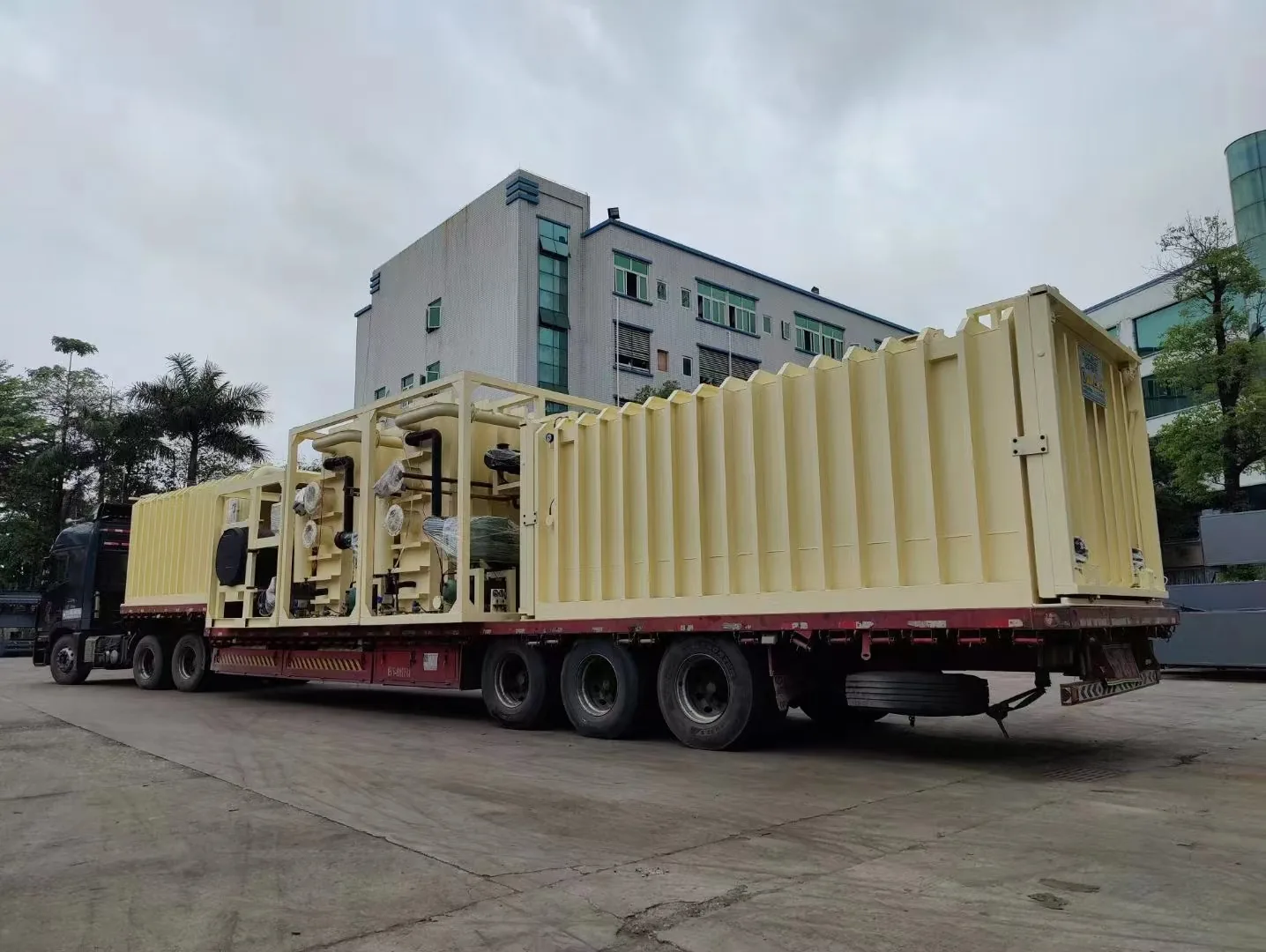
The delivery and installation-access checklist helps define the move. For an existing installation, confirm whether external water equipment, pumps, pipework, cables and control panels belong to the cooler sale or remain with the building.
A useful way to read the discount
Suppose a used system costs $25,000 less than a comparable new offer. Additional work and relocation costs unique to the used option total $12,000. The initial advantage is now $13,000—before unresolved costs, operating differences or downtime are considered.
Hypothetical US-dollar arithmetic, not Allcold pricing or a market estimate. It assumes the two options have equivalent scope after those adjustments.
Then compare likely costs over the same planned ownership period: energy under comparable loads, routine upkeep, known upcoming work and support arrangements. Do not assume a fixed energy penalty simply because a machine is older, or claim a resale value without evidence. Keep the initial cash requirement separate from the longer-term cost comparison.
4. “Available now” is not the same as “ready for harvest”
A used machine may avoid a manufacturing lead time. It may still require access to the seller’s site, professional disconnection, transport, repairs and an available installation team. Compare the date each option can realistically enter service, not just its collection or dispatch date.
Put responsibility in writing for removal, any preservation during storage, reassembly, connections and start-up. Identify who will respond if the machine powers on but cannot complete the agreed cooling task. Warranty discussions should specify the provider, covered equipment, exclusions, location and whether labor and travel are included.
Request the available operating manuals, wiring information and any agreed control backups or access rights needed for ongoing service. Do not assume that editable software, historical data logging or remote access is included. The general principles in our quotation-scope guide apply to both offers.
Cross-border purchases need a destination-specific check. For example, UK HSE guidance explains that certain second-hand equipment first placed on the UK market or brought into use can create conformity-assessment responsibilities for the importer or user.[3] This is a UK example, not a worldwide rule. Confirm current local requirements before committing; prior use elsewhere is not sufficient evidence of suitability for the destination.
5. Send a first enquiry that produces a comparable answer
Copy this into your enquiry
We need to cool [crop] in [packaging], with [pallet dimensions, loaded height and net weight], from [incoming temperature] to [target temperature]. Our peak requirement is [batches or tonnes within a stated time window]. The installation is in [location], with [voltage, phase and frequency], and we need it operational by [date].
Please confirm the complete supplied scope and application basis. For the used unit, please provide its identity, current configuration, service and modification records, known outstanding work, and removal arrangements. For both options, identify excluded site work, installation responsibilities and support terms.
Once those answers are available, the decision becomes more concrete. A documented used machine that needs little adaptation may be good value. A heavily altered or poorly documented unit may be a less attractive project even at a lower price. A new machine still needs a properly defined specification and delivery scope.
Frequently asked questions
How much cheaper should a used vacuum cooler be?
There is no reliable universal discount. Compare the complete installed scope, condition, remaining uncertainty and intended ownership period. A percentage off a new machine’s list price does not answer those questions.
Does a successful demonstration prove it will work at our site?
It provides useful evidence under the demonstrated conditions. It does not establish performance for a different packed load, supply, ambient condition or installation. Record those conditions and compare them with your requirement.
Can an older machine be upgraded instead of replaced?
Possibly. Obtain a model-specific scope covering compatibility, safety, documentation, cost and responsibility for the finished system. Compare that complete proposal with a new configuration before treating an upgrade as the cheaper route.
Compare the used offer with a defined new-machine proposal
Considering a new Allcold fresh-produce vacuum cooling system? Share your crop, packed load, peak schedule and site supply details so the configuration discussion starts with the job you need done.
This guide is not a used-equipment listing and does not imply inspection, refurbishment or support services for every existing machine.
References and scope
Sources checked 13 September 2026. The buying framework and cost example are editorial analysis, not manufacturer condition reports or quoted equipment prices.
- ABB. How to read a NEMA motor nameplate. Rated electrical conditions and alternate-frequency information; this is motor-level guidance, not whole-machine approval. ↩
- Busch. Repair Service. An example of component-level service scope, not a commitment to support a particular vacuum cooling installation. ↩
- UK Health and Safety Executive. Second-hand (re-supplied) products. UK-specific guidance on supply, safety information and certain imports; obtain destination-specific advice. ↩