ALLCOLD BUYER’S GUIDE · WATER & SITE UTILITIES
A water connection is only ready when the supply matches the circuit it serves. Here is how to turn “we have water” into a useful equipment specification.
Your site has a water pipe, a storage tank and enough pressure. Does that mean it is ready for a vacuum cooler? Not yet. The missing detail is often what the water will pass through: a heat exchanger, a liquid-ring pump, an evaporative condenser, or a product-contact system, if fitted.
That distinction affects treatment, maintenance and the installation budget. Buying a filter before identifying the circuit can solve the wrong problem. A clear water sample can still contain dissolved minerals, while a suitable laboratory report says nothing about the flow available when other production equipment is running.
Can a vacuum cooler use ordinary tap water? Sometimes, provided it meets the selected circuit’s water-quality and operating requirements. There is no single water specification for every vacuum cooler. Confirm the circuit, wetted materials, temperature, flow and pressure first; then compare a representative water analysis with the equipment supplier’s limits.
Before you order: get these four items in writing
- A water-connection schedule: which connections are required, what each one serves, and where the return or discharge goes.
- Conditions at the machine: allowable inlet temperature, required flow, pressure range and water-quality limits for each applicable circuit.
- A supply boundary: who provides the tank, circulating pump, strainer, treatment, connecting pipes and commissioning water checks.
- An operating plan: who checks water condition, cleans accessible strainers and maintains any external cooling-water equipment.
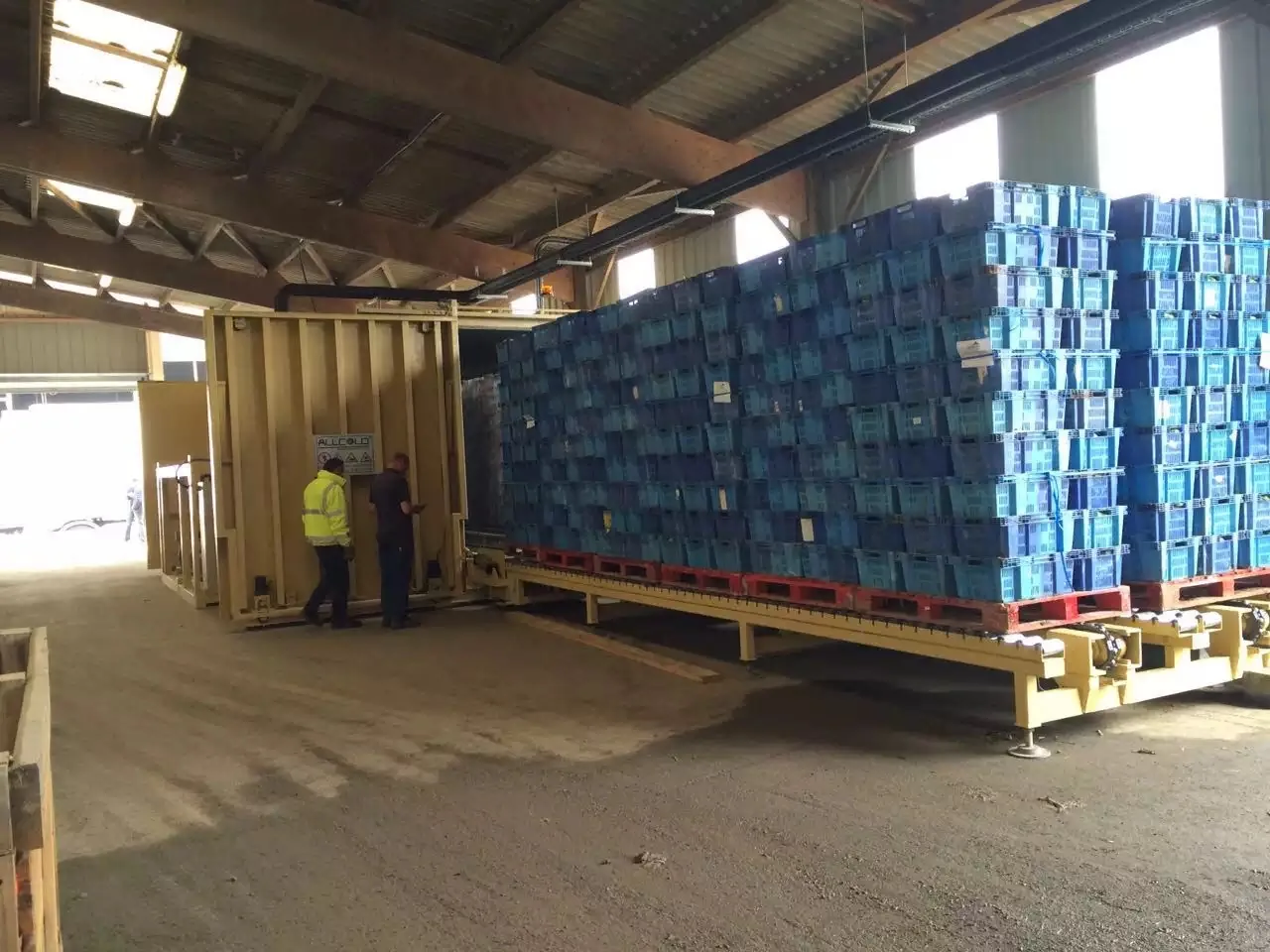
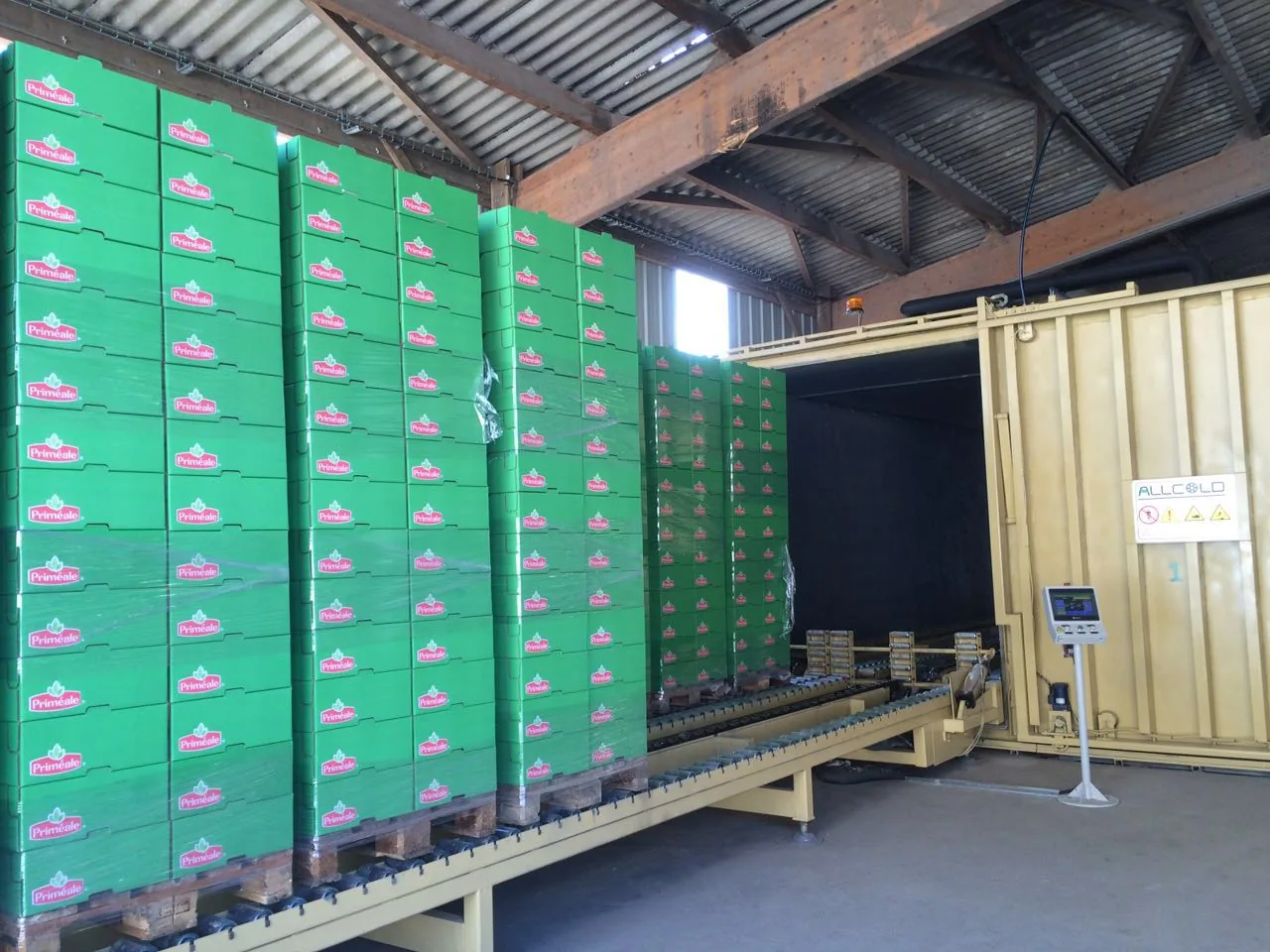
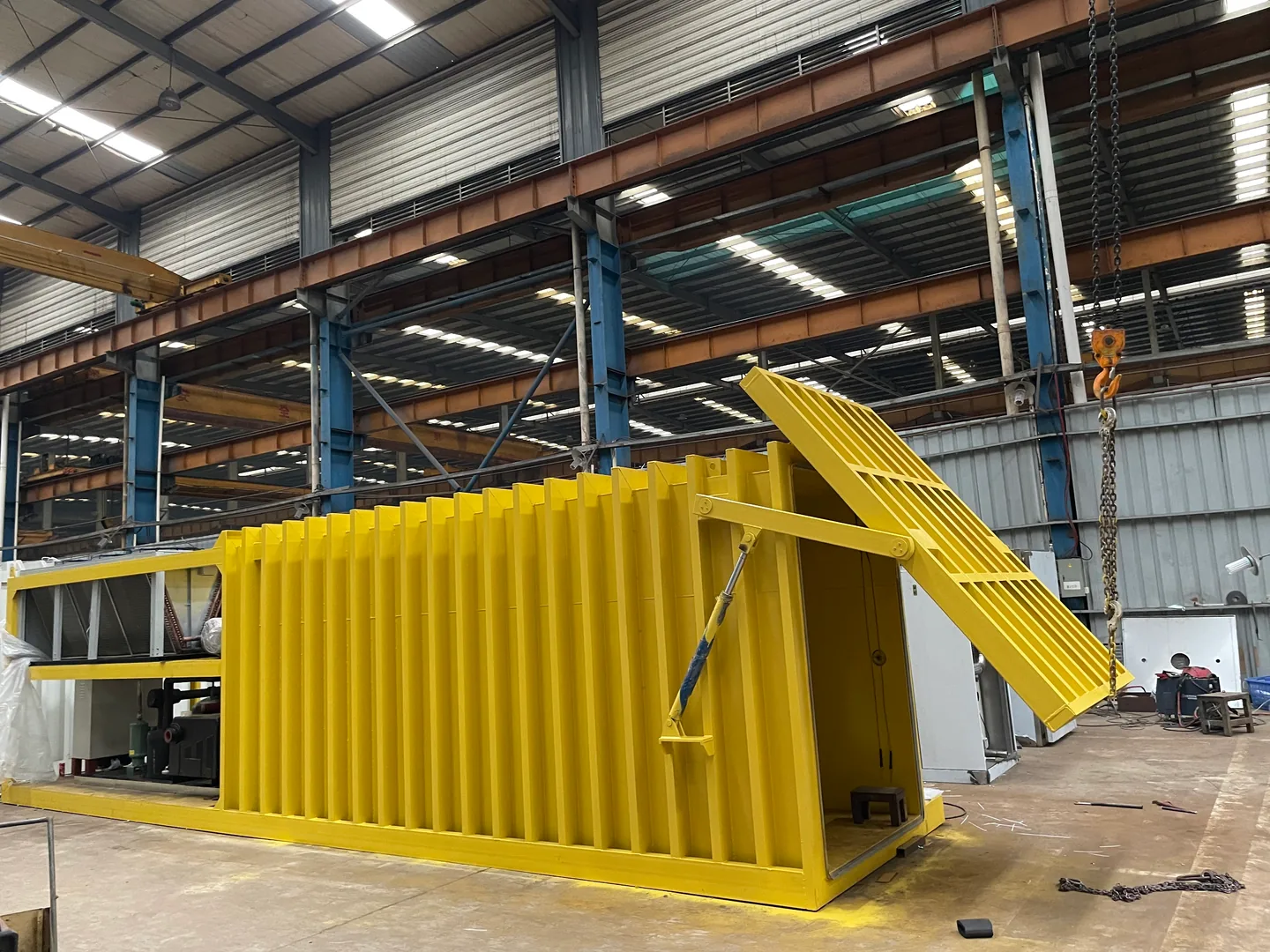
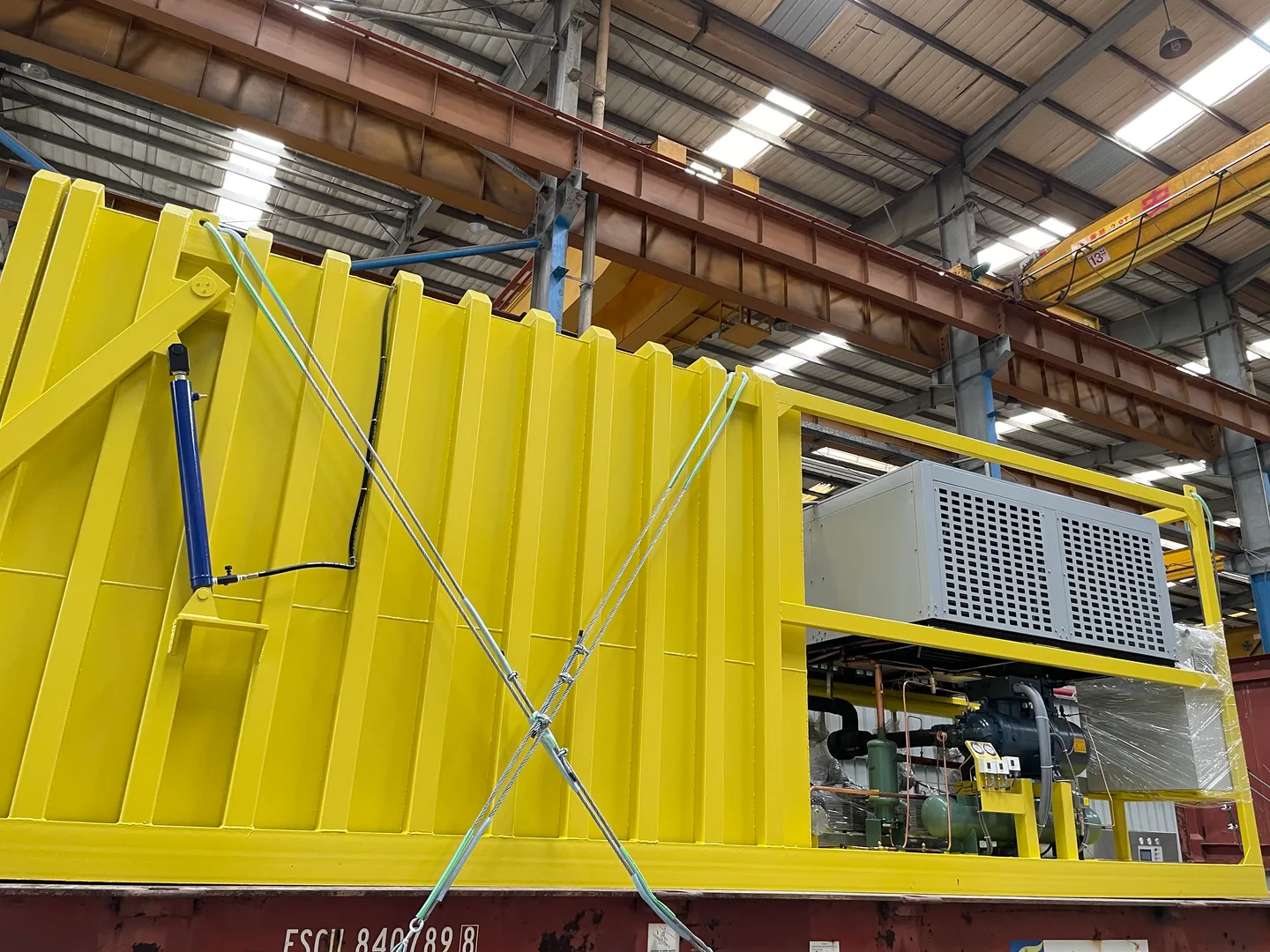
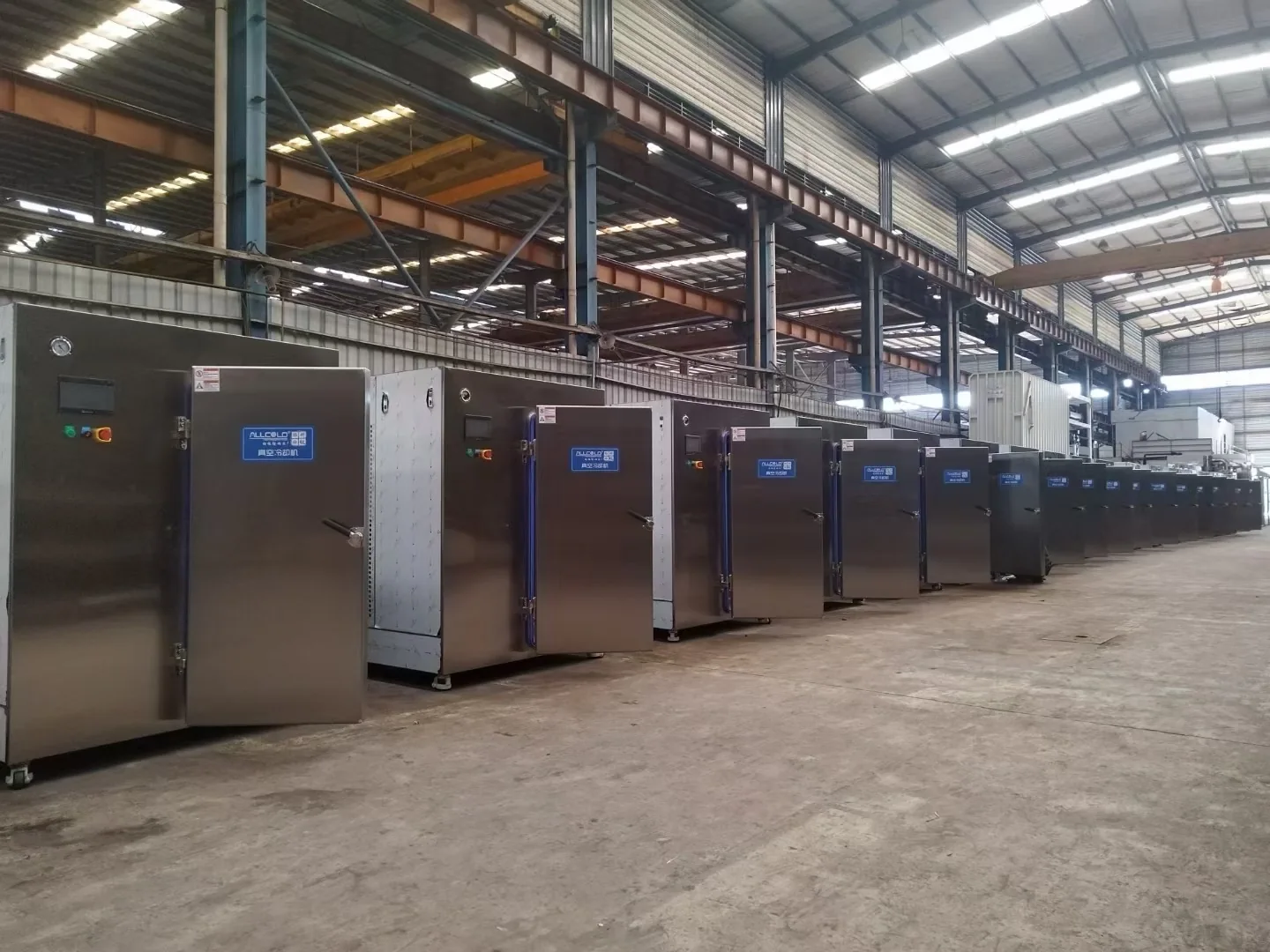
Allcold’s fresh-produce vacuum coolers can be configured around batch volume, pallet or crate format, loading method and plant layout. Reviewing utilities alongside those requirements helps the proposed machine fit the site as well as the product.
1. Identify the circuit before specifying the water
A vacuum cooler may use some of the arrangements below. The table is a discussion tool, not a list of systems installed on every machine.
| Circuit or connection | What the water does | What to confirm |
|---|---|---|
| Water-cooled heat exchanger | Transfers heat between separate fluids through a heat-transfer surface. | Which exchanger it serves, materials, quality limits, inlet conditions and whether water is recirculated. |
| Closed chilled-water loop | Circulates a specified heat-transfer fluid between equipment. | Approved fill water and additives, fluid concentration if applicable, and maintenance requirements. |
| Liquid-ring pump service liquid | Forms the working liquid ring when this pump type is fitted. | Pump model, liquid specification, supply temperature and flow, and any recirculation arrangement. |
| Cooling-tower or evaporative-condenser water | Rejects heat using evaporation in the external water system. | Makeup-water quality, circulating-water limits, blowdown, treatment and service responsibility. |
| Product-contact water, if fitted | Contacts produce or food in a separately specified process. | Applicable hygiene requirements and separation from treated utility-water circuits. |
“Air-cooled” does not identify every water requirement in the package. It describes a heat-rejection arrangement. Check the vacuum-pump type and any other connected equipment separately. Our comparison of air-cooled, water-cooled and evaporative condensers explains that selection; this guide focuses on the water supply once the arrangement is known.
For a liquid-ring pump, water is a working fluid rather than merely a utility somewhere else in the plant. NASH’s maintenance guidance identifies calcium buildup as a cause of capacity loss, increased power demand and pump damage.[1] This concern applies where that pump technology is selected; it should not be assigned to every Allcold machine.
2. Ask for a useful water report, not just a “clean water” description
Identify the actual source: municipal supply, borehole, stored water or an existing plant loop. Record where and when the sample was taken and whether it was collected before or after treatment. A report from the mains does not automatically describe water that has passed through a storage tank or recirculating system.
For an initial engineering review, useful information includes pH, hardness, alkalinity, chloride, conductivity or total dissolved solids, and suspended solids. The selected components may require additional measurements. FRICK’s water-analysis guidance includes dissolved compounds and the nature of solids, and notes that source-water composition can change with weather and season.[2]
Hardness and chloride answer different questions
Hardness helps assess mineral-scale concerns. Deposits on a heat-transfer surface can reduce its performance, and restricted passages can increase pressure drop. FRICK describes both as indicators of heat-exchanger fouling.[3] A water-treatment decision should therefore consider the water chemistry together with the operating conditions.
Chloride is a separate materials question. Alfa Laval’s guidance for its fusion-bonded stainless-steel exchangers relates corrosion risk to chloride, pH and temperature.[4] It illustrates why a limit from one component cannot simply be copied into a specification for another. It also does not establish that an Allcold machine contains that particular exchanger.
Keep units visible. “Hardness: 120” is incomplete without a unit and reporting basis. Ask for the original laboratory report, rather than a manually shortened list that may lose those details.
Check the water under operating conditions
Measure temperature and confirm available flow and pressure at the intended connection while competing users are operating. Keep these measurements separate from the chemistry report. If the concern is a longer cycle during hot weather, see our guide to cooling-water temperature and summer vacuum-cooling performance.
3. Choose treatment for the identified problem
“Add a filter” is not a complete water specification. A sediment filter or strainer targets particles within its rated capability; it does not establish that dissolved salts or corrosive conditions are acceptable. The U.S. Department of Energy distinguishes cooling-tower side-stream filtration from the broader treatment needed to manage water condition.[5]
A conventional ion-exchange softener addresses calcium and magnesium hardness. That does not make the treated water suitable for every circuit or remove the need to check other constituents. The U.S. EPA describes how this exchange process works.[6] Likewise, reverse osmosis or demineralized water should not be specified automatically: the final fluid must match the equipment materials and approved treatment plan.
For a cooling tower or evaporative condenser, assess circulating water as well as fresh makeup water. Evaporation leaves dissolved solids behind. DOE’s cooling-tower guidance explains why blowdown and makeup are part of controlling their concentration.[7] Water use and wastewater arrangements therefore belong in the operating-cost discussion.
A closed loop needs its own fill-fluid specification. Have the equipment supplier and water-treatment provider agree any additives and maintenance checks. Keep product-contact water separate from these utility decisions; a treatment suitable for an industrial cooling loop is not a product-contact approval.
4. A practical example: the same source, two different duties
Consider a hypothetical packing site using borehole water. The buyer plans to add a sediment filter and supply both an external cooling-water system and a separate product-contact line.
The filter may address visible particles, but two questions remain. Does the cooling-water chemistry meet the selected equipment’s limits? And does the product-contact supply meet the applicable hygiene requirements? Those are separate acceptance decisions, even when both lines begin at the same source.
The useful next step is a representative analysis and a clearly marked connection plan. If treatment is needed, compare its purchase cost, consumables, servicing and discharge requirements with any alternative source or equipment arrangement. This is a planning example, not a reported Allcold installation or a promised treatment outcome.
5. Include water conditions in the Allcold project brief
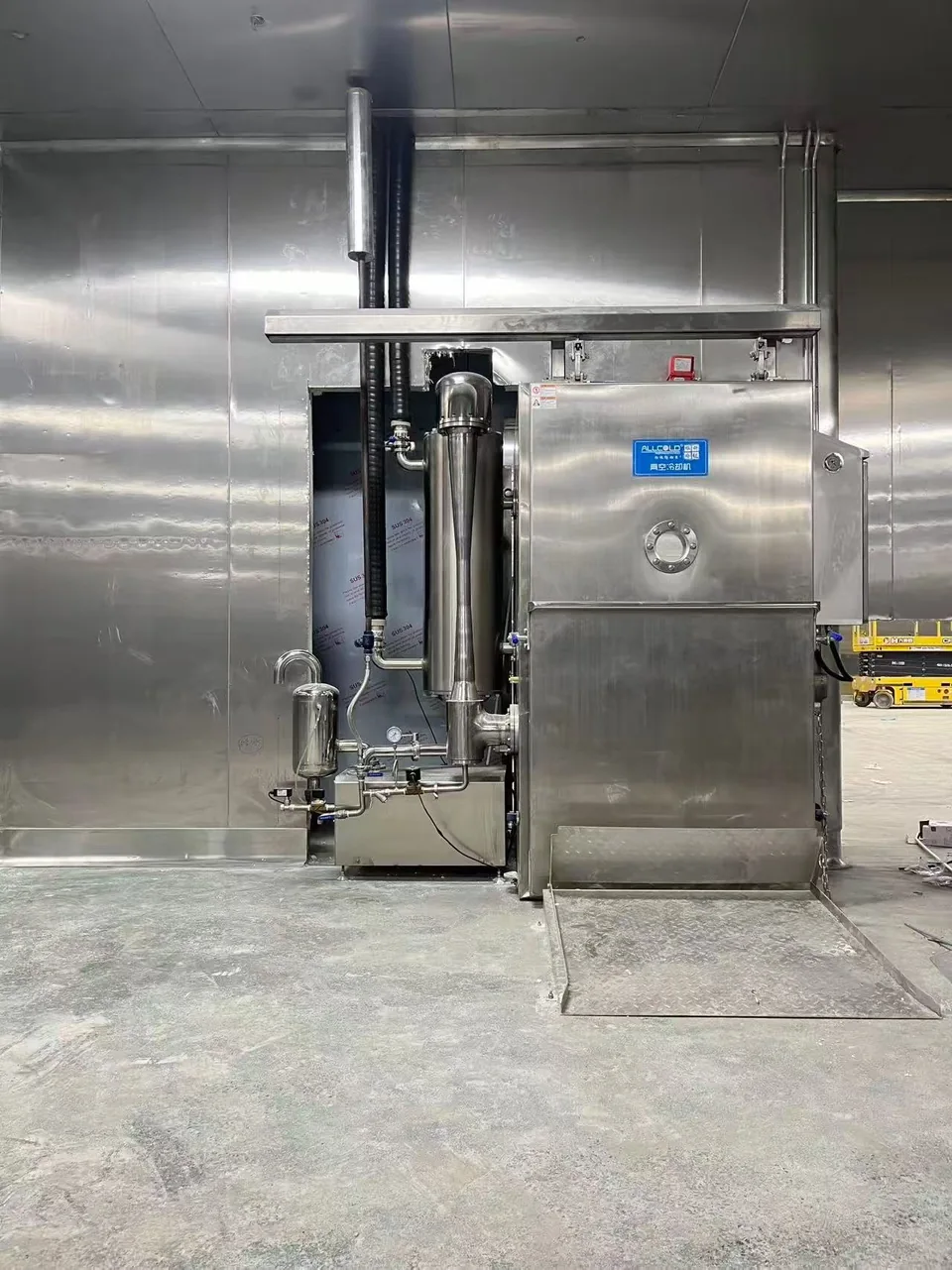
A good quotation connects the cooling duty to a workable installation. Allcold can discuss chamber size and loading arrangements around the product, batch volume and facility layout. Include water availability at the same stage, so utility assumptions are reviewed before the configuration is finalized.
For vegetables, send pallet or crate dimensions, batch weight and peak daily demand. For cooked-food and bakery vacuum cooling, include the product, trolley or tray arrangement, and starting and target temperatures. These are different application discussions; a utility specification from a produce project should not be reused without review.
Copy this into your enquiry
- Cooling task: product, kg per batch, loading dimensions, temperatures and batches per shift.
- Water source: source type, storage arrangement, existing treatment and recent analysis with units.
- Site conditions: seasonal inlet temperature, available flow and pressure, and other equipment sharing the supply.
- Existing infrastructure: any chiller, cooling tower, tank or circulating pump, with its specification and proposed connection location.
- Requested scope: identify what the machine quotation includes and what the site or local contractor must provide.
Ask for the agreed requirements to accompany the quotation and connection drawing. Treatment equipment, strainers, water monitoring and external utility packages should be individually identified where required; inclusion depends on the agreed project scope.
Common buyer questions
Does every vacuum cooler need a cooling tower?
No. That depends on the heat-rejection and water-circuit arrangement. Establish the proposed configuration before budgeting for a tower, pump or treatment package.
Can we use our existing factory water loop?
Possibly. Confirm its fluid chemistry, treatment additives, operating temperature, available flow and pressure, and simultaneous demand. An existing pipe connection alone does not prove spare capacity or compatibility.
Should we specify a universal hardness or chloride limit?
No. Request limits for the selected components and operating conditions. A number copied from another machine or an unrelated material table can create a misleading purchase requirement.
Will poor water quality always cause an immediate alarm?
Do not rely on that. A gradual change in heat transfer or flow may need maintenance measurements to identify. Confirm which measurements the selected system provides and which checks remain part of site maintenance.
Match the vacuum cooler to the product—and the site
Send Allcold your product, batch size, loading dimensions, cooling target and available water information. We can discuss the chamber and loading configuration alongside your installation conditions, with the utility scope made clear in the project proposal.
Sources and technical references
These references support the general engineering principles above. Component-specific limits must come from the selected equipment documentation.
- NASH — Liquid-ring pump maintenance tips, including calcium buildup. ↩
- Johnson Controls / FRICK — Water analysis. ↩
- Johnson Controls / FRICK — Scaling in heat exchangers. ↩
- Alfa Laval — Water characteristics to avoid corrosion in fusion-bonded plate heat exchangers (PDF). ↩
- U.S. Department of Energy — Side-stream filtration for cooling towers. ↩
- U.S. EPA — Cation exchange water softeners. ↩
- U.S. Department of Energy — Cooling tower management. ↩