
Can Small Farms Actually Afford a Vacuum Cooler?
You’ve poured your heart into your farm, producing the highest quality vegetables. But as soon as they’re picked, the summer heat begins its assault. You’re in a desperate race against time, knowing that a portion of your hard work will wilt and spoil before it ever reaches a paying customer.
This isn’t just frustrating; it’s a direct hit to your income. Every crate of produce you lose is money vanishing into thin air. It feels like you’re stuck, unable to expand your sales beyond the immediate local market because your product’s freshness just doesn’t last.
A compact vacuum cooler can be feasible for a small farm when utilization, product response and installed cost support the investment. It does not automatically eliminate spoilage, create premium prices or pay for itself. Compare the complete proposal with measured losses and realistic market demand.
I’ve spoken with many small farm owners who initially believed this technology was only for the giant agricultural corporations. They saw it as a luxury they could never afford. But the reality is that a vacuum cooler is one of the most powerful strategic tools a small farm can invest in to level the playing field. Let’s run the numbers and see how it works.
What is the Real Cost of Not Owning a Vacuum Cooler?
When you look at the price of a machine, it’s easy to get sticker shock and end the conversation there. But the most successful farmers I know ask a different question: "What is it costing me not to have this?" You are already paying a "spoilage tax" every single day, and it’s likely much higher than you think.
This hidden tax shows up in many ways: the produce you have to discard, the lower price you accept for less-than-perfect vegetables, and the customers you can’t sell to because they are too far away. It’s a constant drain on your potential profit.
Quantify losses using the farm’s records and identify which losses a better cooling process could actually reduce. Do not assume every rejected or unsold item is attributable to cooling, or that a machine will recover its cost within a fixed number of seasons.
A Simple ROI Calculation
Illustrative planning example only: the following harvest and price inputs are assumptions, not a customer case or an Allcold quotation. Replace them with the farm’s own records before evaluating an investment.
Leo has 2 acres dedicated to high-value organic lettuce.
- Yield per acre: 20,000 heads of lettuce
- Total Harvest: 40,000 heads
- Price per head: $1.50
- Total Potential Revenue: $60,000
For this hypothetical example, assume 15% of the stated sales volume is lost. This is an input for arithmetic, not a typical spoilage rate or a forecast of the recoverable loss.
- Loss Calculation: 40,000 heads * 15% = 6,000 heads lost
- Lost Revenue: 6,000 heads * $1.50/head = $9,000 lost per season.
Suppose equipment cost is $30,000 and the farm models $9,000 in recovered sales plus a possible $2,500 price uplift. These figures are assumptions, not promised benefits. Additional saleable product has costs, a price premium needs actual buyer demand, and installed cost may exceed the machine price.
- Assumed extra sales revenue: 10,000 heads × $0.25 = $2,500.
- Assumed annual gross benefit before costs: $9,000 + $2,500 = $11,500. This is not net profit.
| Illustrative Item — Before Costs | Calculation | Financial Impact |
|---|---|---|
| Initial Investment | Machine Price | -$30,000 |
| Year 1: Assumed Recovered Sales | 15% of $60,000 revenue | +$9,000 |
| Year 1: Premium Pricing | $0.25 premium on 10,000 heads | +$2,500 |
| Year 1: Cumulative Gross Benefit Less Machine Price | -$30,000 + $11,500 | -$18,500 |
| Year 2: Assumed Gross Benefit | +$11,500 | -$7,000 |
| Year 3: Assumed Gross Benefit | +$11,500 | +$4,500 (Before Operating and Other Costs) |
The simplified table accumulates hypothetical gross benefits before energy, labor, maintenance, financing and other costs. It is not a net-profit or payback forecast. Calculate annual net benefit and installed cost from the actual project before deciding whether ownership is affordable.
Where Would a Compact Vacuum Cooler Even Fit on My Farm?
When you hear "vacuum chamber," you might picture a massive, room-sized piece of industrial equipment that requires a dedicated concrete pad and a team of engineers to install. For a small farm with a crowded barn or a simple packing shed, that’s an impossible thought.
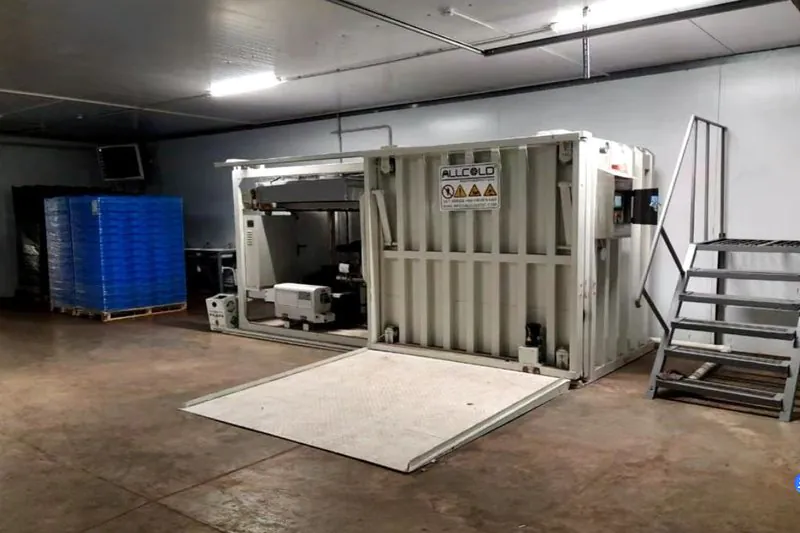
Allcold’s fresh-produce vacuum cooling range includes smaller pallet configurations as well as larger systems, with chamber dimensions reviewed for the real load. A small farm can therefore start the discussion with its actual peak harvest rather than a large factory model. Send batch weight, pallet size, power supply and available space for a relevant comparison.
This mental image is one of the biggest barriers for small growers. The fear is that the infrastructure requirements are just as prohibitive as the price. You don’t have a spare warehouse, and you certainly don’t have access to heavy-duty industrial power lines.
A small pallet configuration may suit a smaller operation, but confirm the complete dimensions, electrical supply, loading space and service access. Compact does not mean that every machine uses household single-phase power or requires no installation work.
The New Generation of Farm-Ready Coolers
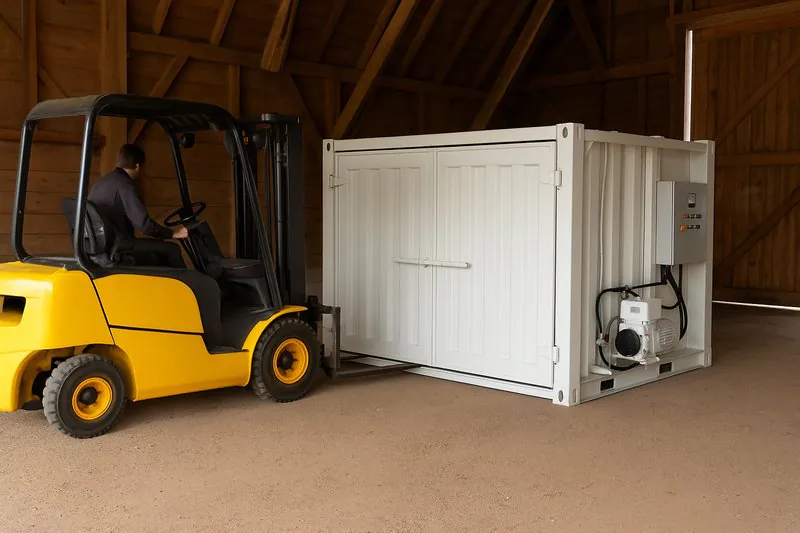
Allcold can assess smaller pallet applications using the actual crop, batch weight and site conditions. A dimensioned proposal is the useful basis for deciding whether the machine fits the farm.
Footprint and Mobility
Check the full installed layout, including chamber, auxiliary equipment, door movement, loading and maintenance space. Obtain shipping weights and approved lifting information for the selected configuration. Do not assume a two-pallet footprint or standard forklift relocation is suitable.
Power and Utilities
Confirm voltage, frequency, phase and starting load with the actual machine specification and site supply. Heat-rejection utilities also depend on configuration. Single-phase supply, air cooling and connection-only installation are not universal Allcold capabilities.
Ease of Use
Allcold’s PLC/HMI offers live values, alarms and automatic/manual operation for the supplied sequence. Training should cover loading, probe placement, settings, hygiene and safety. Agree any recipe functions and training scope for the selected machine.
How Does This Machine Help Me Grow My Business?
Right now, your business is defined by the short life of your product. Your sales radius is limited to how far you can drive in a few hours. You sell to customers who will use the produce immediately. This severely limits your growth potential.
This limitation keeps you in a cycle of small-scale sales, competing with dozens of other local growers for the same limited pool of customers at the farmers’ market. You’re a price-taker, not a price-maker.
Improved precooling may help a farm meet a buyer’s temperature and quality requirements. New contracts and transport routes still depend on demonstrated product life, the refrigerated chain, price and customer demand.
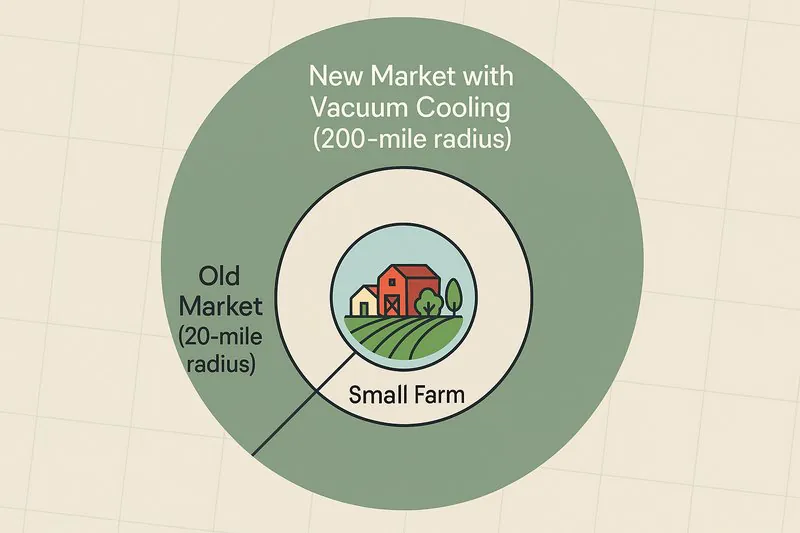
From Local Farmer to Regional Supplier
Assess potential revenue opportunities separately from proven operating benefits. A cooling investment should be justified by the work and markets the farm can realistically support.
Accessing Wholesale and Retail Markets
Ask prospective buyers for their receiving temperature, quality and remaining-life requirements. Validate representative batches through the intended route before promising a delivery outcome or including a new contract in the investment case.
Becoming a Premium Restaurant Supplier
A quality improvement can be commercially useful, but premium pricing requires actual buyer acceptance. Describe the cooling method accurately and support freshness claims with product evidence; vacuum cooling and hydrocooling are different processes.
Reducing Labor and Increasing Efficiency
Measure whether precooling changes sorting losses, handling time or the sales window in the actual operation. Extra usable time or output is valuable only when the farm can put it to productive use.
Conclusion
A small farm should select vacuum cooling when the crop, capacity, site and financial case fit. Start with a product and layout review, then compare installed cost with conservative, evidence-based operating benefits.
Explore how vacuum coolers can significantly reduce spoilage and enhance product quality for farmers. ↩
Understanding spoilage rates can help farmers like Leo minimize losses and maximize profits. ↩
Discover methods to calculate total gains from investments, crucial for making informed business decisions. ↩
Understanding the term ‘compact’ is crucial for small farms looking to optimize space and efficiency in their cooling solutions. ↩
Exploring the advantages of this power type can help small farms save on installation costs and improve operational efficiency. ↩
Discover how user-friendly controls can empower farm workers and streamline operations, making cooling easier and more efficient. ↩
Understanding consistent shelf life can help farmers meet market demands and secure contracts with retailers. ↩
Exploring how to supply premium ingredients can elevate a farm’s brand and profitability in the restaurant sector. ↩
Discovering the hydro-cooling process can help farmers market their produce effectively and attract quality-conscious buyers. ↩
Learning about vacuum coolers can enhance efficiency and reduce waste, leading to better business outcomes for farmers. ↩
Looking for the right vacuum cooler for your operation?

Mila
You May Also Like
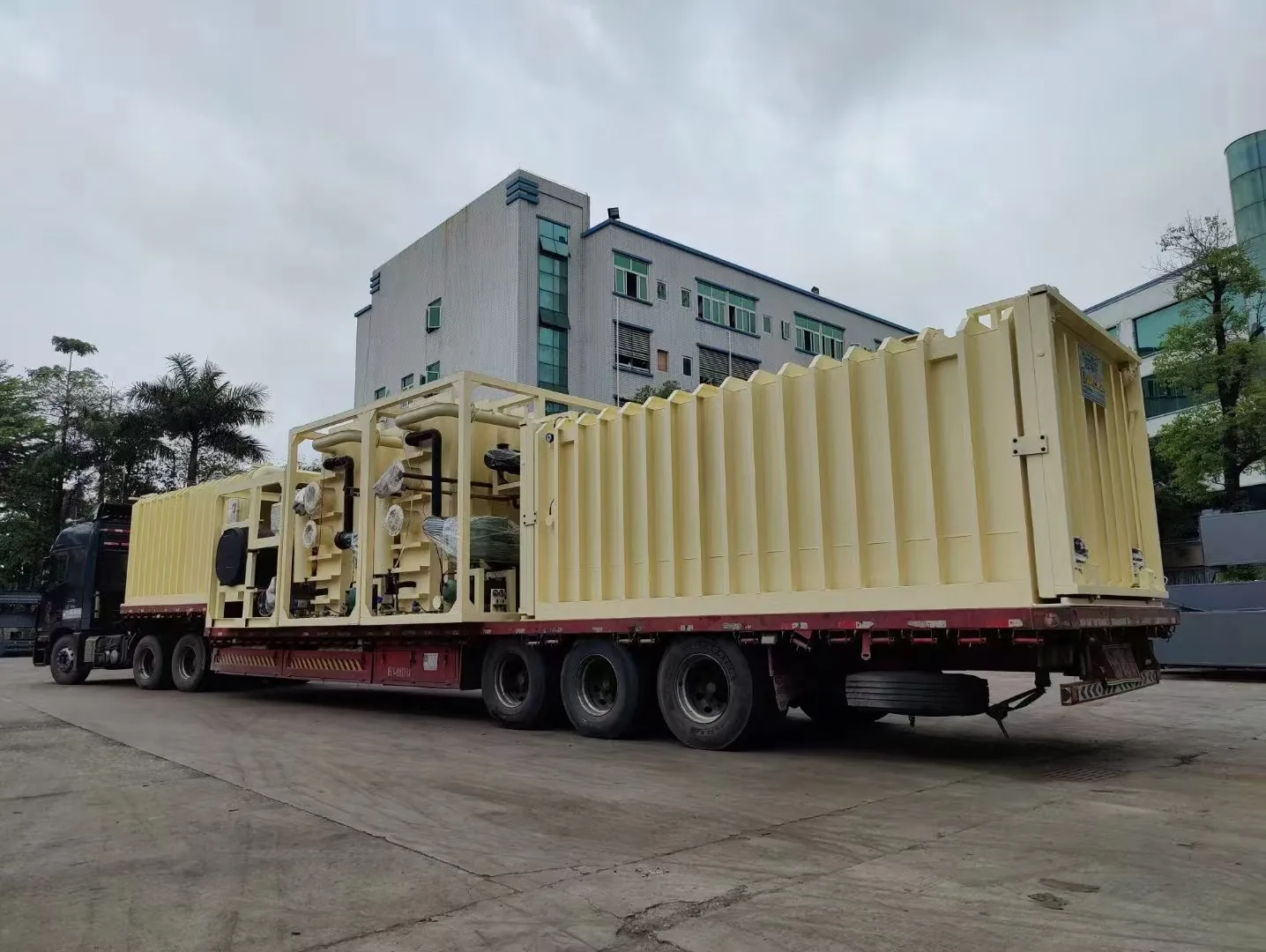
Used vs. New Vacuum Coolers: Is the Lower Price Worth It?
Buying a used vacuum cooler? Compare load fit, condition, relocation, installed cost and support with a new system before deciding if the saving is real.
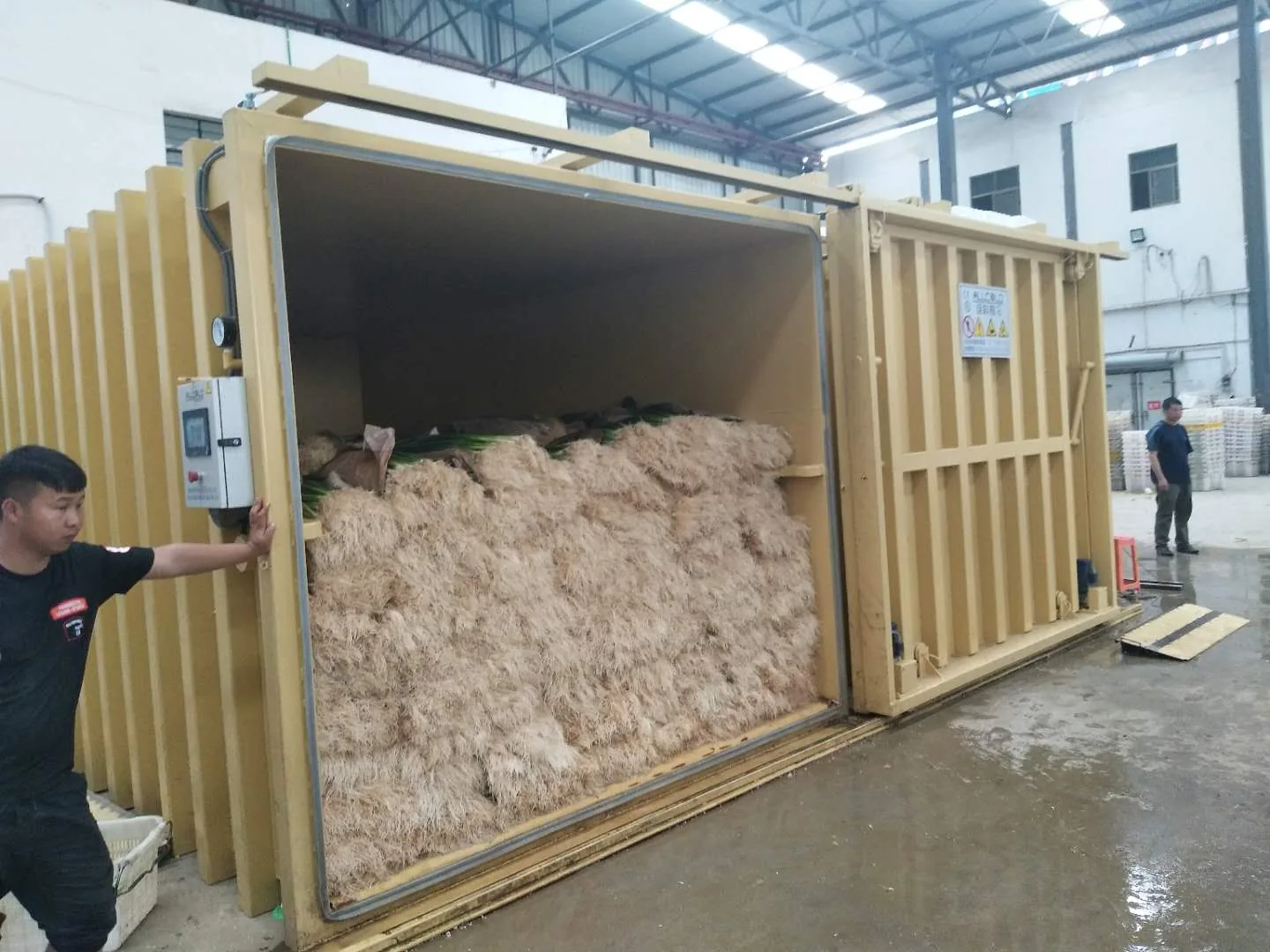
Why Does Produce Sweat After Vacuum Cooling?
FRESH PRODUCE · POST-COOLING HANDLING The cooling cycle can finish correctly—and the load can still become wet on its way
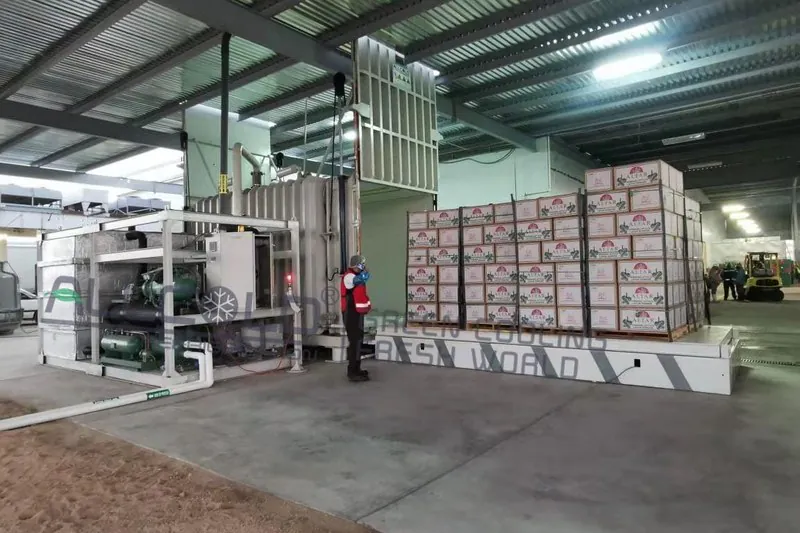
Vacuum Cooler Not Performing? Check Your Pallet Loading First
When a vacuum cooler produces inconsistent results—warm spots, longer cycle times, variable exit temperatures across the load—the machine is usually
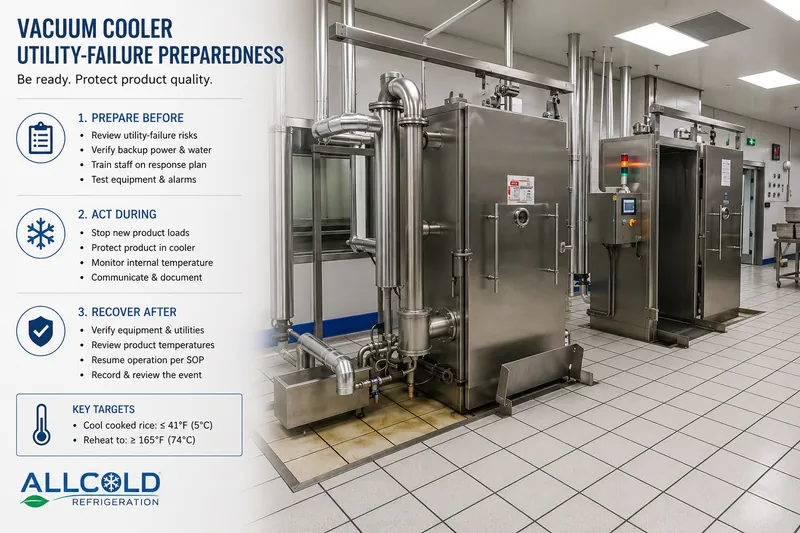
Why One Successful Cooked Rice Cooling Test Is Not Enough to Standardize a Central Kitchen Process
A cooked rice batch can pass a vacuum cooling test and still fail as a production process. That is the
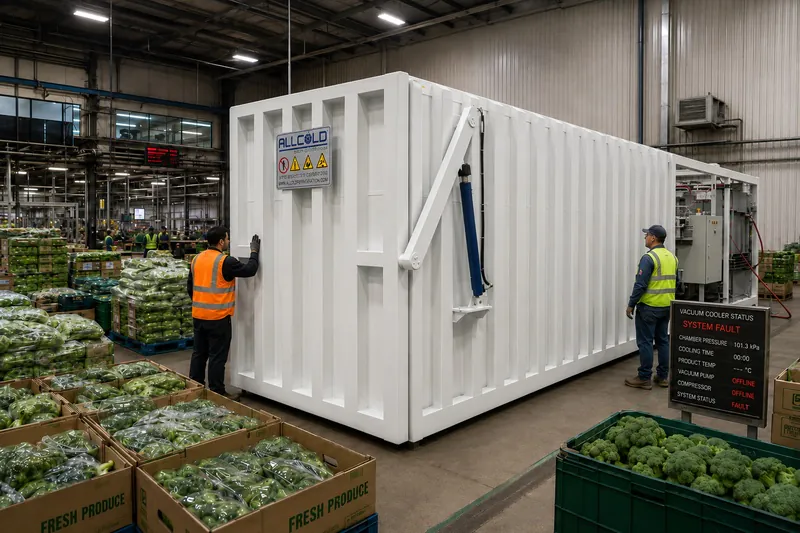
Why a Vacuum Cooler Utility Failure Becomes an Export Quality Problem Before It Becomes a Repair Problem
A vacuum cooler stoppage does not start as a maintenance problem. In a produce export operation, it becomes a quality
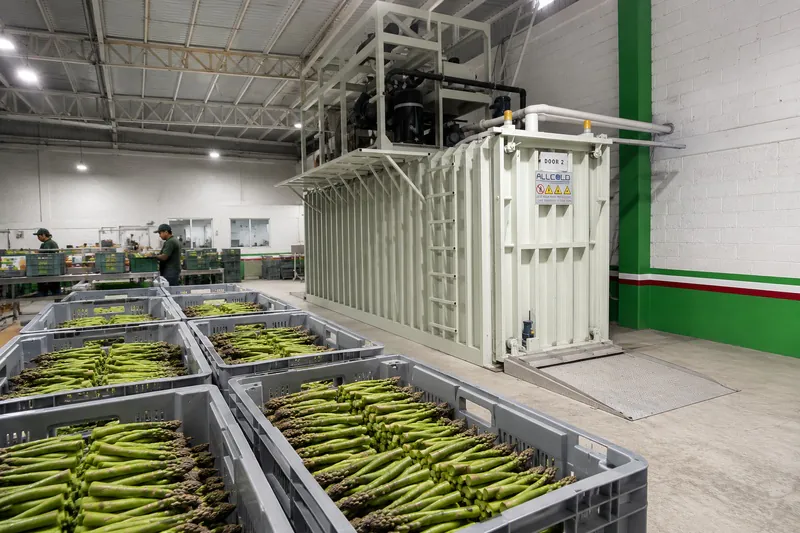
Why Asparagus Loses More Export Value in the First Two Hours After Cutting Than in the Entire Cold Chain That Follows
For fresh asparagus exporters, the most expensive quality loss often happens before the product even reaches the main cold chain.
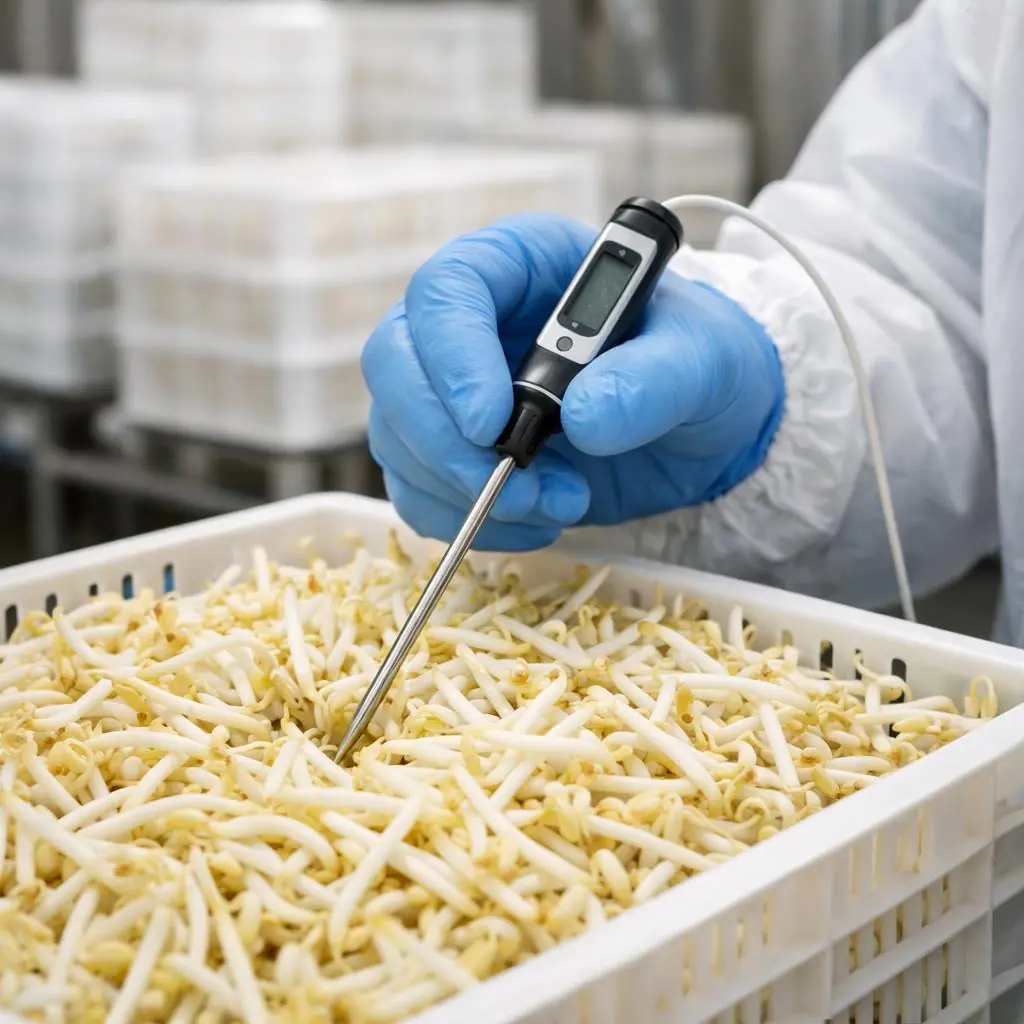
Why Bean Sprouts Are One of the Hardest Vegetables to Pre-Cool Correctly and What Exporters Get Wrong
Bean sprouts look simple. They are light, moist, and usually packed in bulk or retail bags. But from a pre-cooling
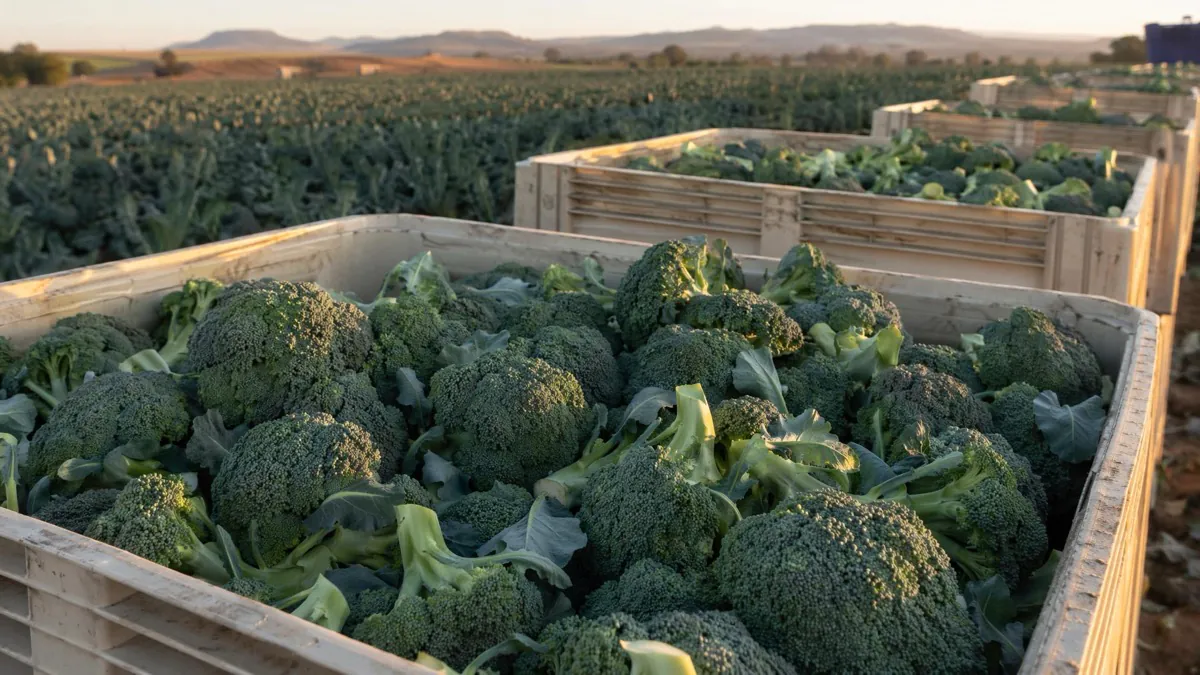
Why Broccoli Loses Export Quality Faster Than Any Temperature Log Will Show
The complaint comes in from the buyer: yellowing, premature flowering, weak texture on arrival. The exporter reviews the cold room
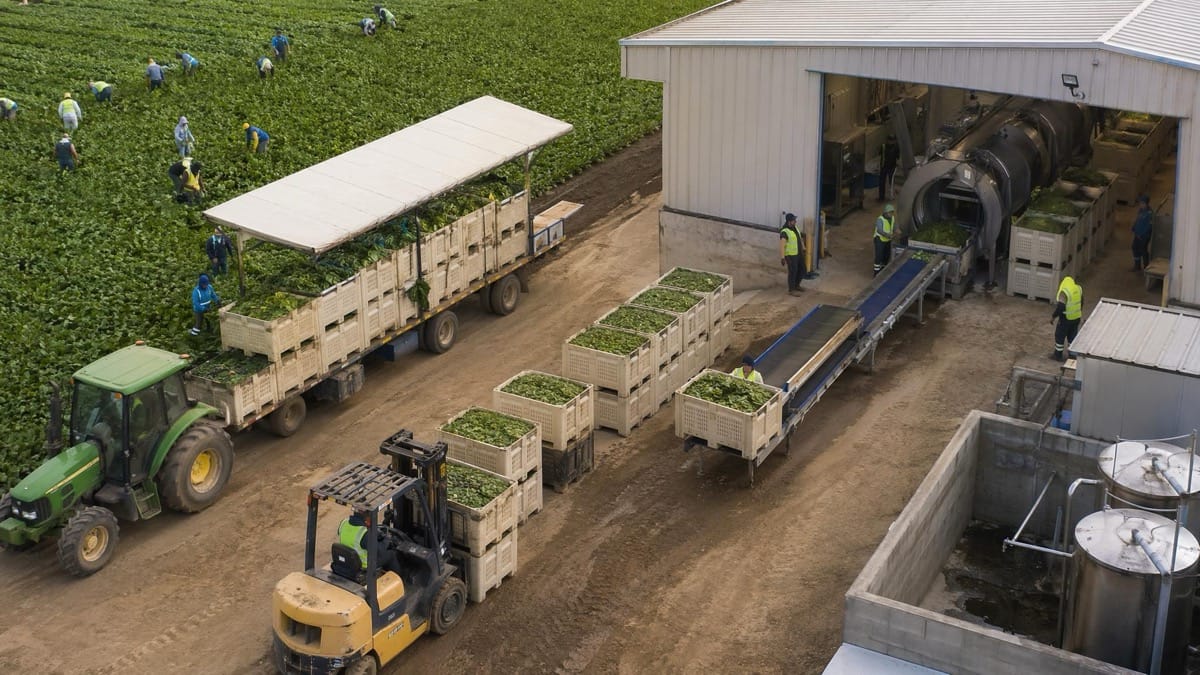
Why Spinach Shipments That Leave Looking Perfect Arrive Looking Wrong
The complaint lands differently with spinach than with most other export vegetables. The exporter packed dark green, crisp product. The
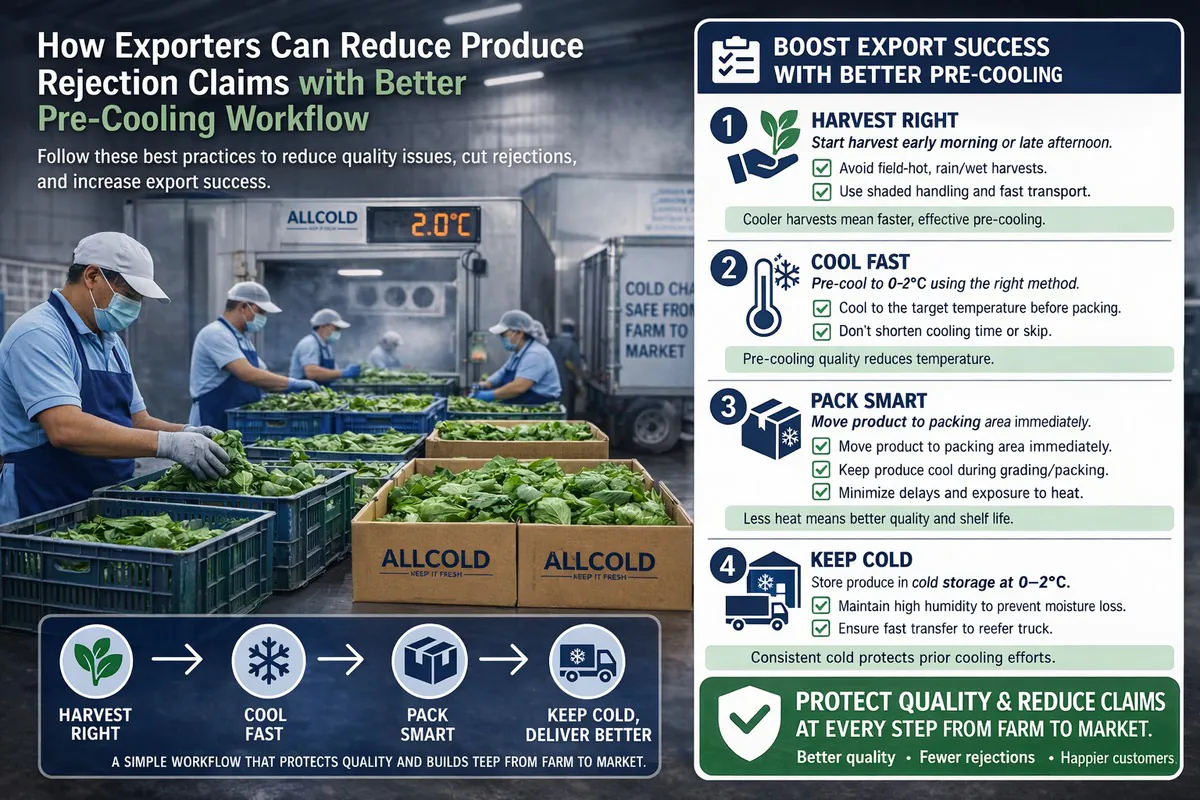
How Exporters Can Reduce Produce Rejection Claims with Better Pre-Cooling Workflow
Learn how exporters can reduce produce rejection claims by improving pre-cooling workflow, timing control, packing handoff, and first-mile cold chain stability.