
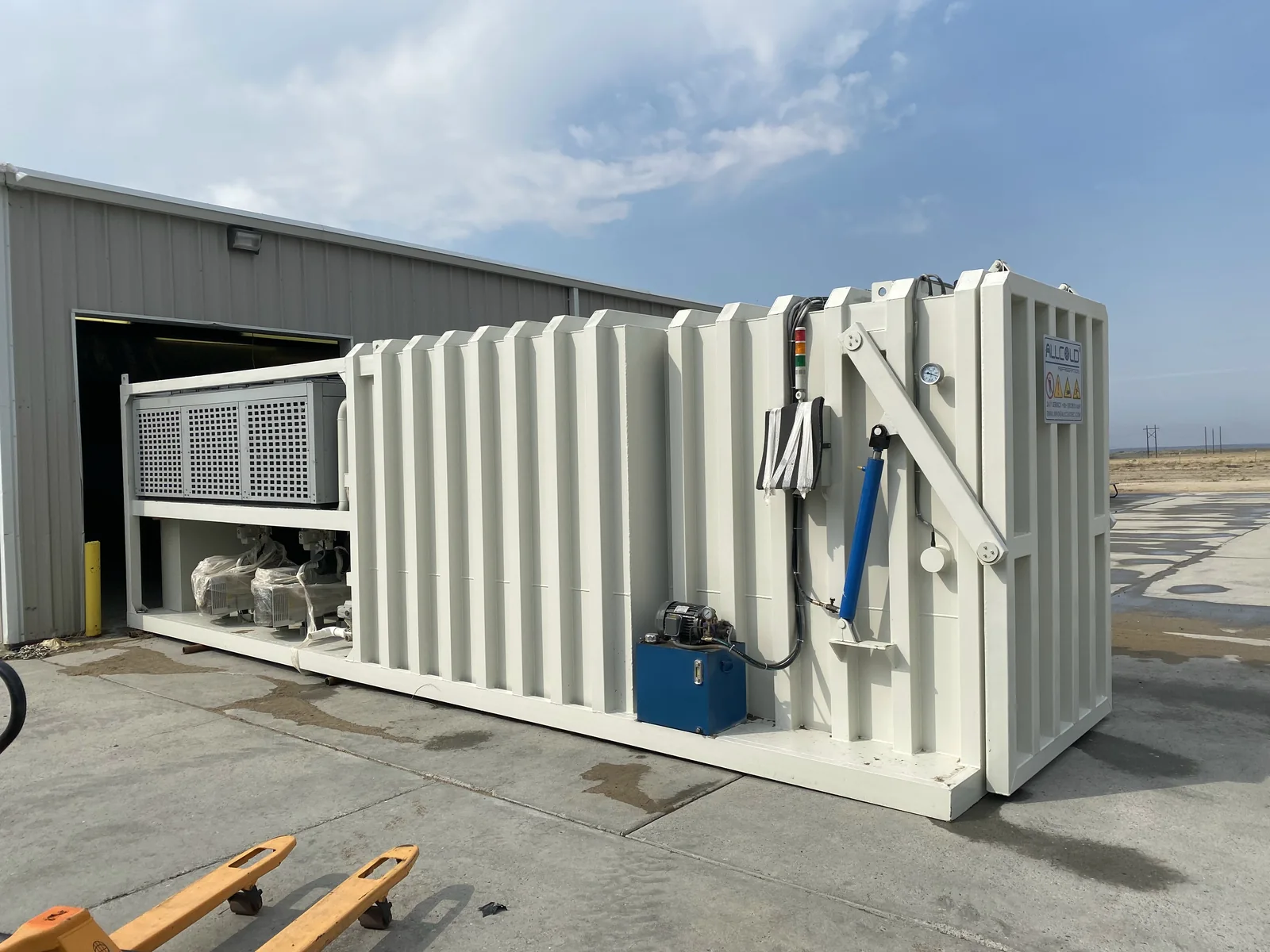
Can a Vacuum Cooler Work at High Altitude? A Buyer’s Guide for Farms
FRESH PRODUCE · SITE PLANNING
Your vacuum gauge shows a less negative reading at a mountain farm than at a sea-level site. Is the pump struggling—or are you comparing different pressure references?
Vacuum cooling can work at high altitude. But a familiar gauge reading is not the right buying criterion. The complete machine must be selected to cool your actual product load under your site conditions.
When choosing a fresh-produce vacuum cooler, start with these checks. The example below explains why a weaker-looking gauge reading can be misleading; the enquiry checklist helps you get comparable quotations.
1. Compare absolute pressure, not just a negative gauge number
Absolute pressure is measured relative to a perfect vacuum. Gauge pressure is measured relative to a reference—usually the local atmosphere. For a gauge referenced to local ambient pressure:
Atmospheric pressure falls with elevation, so the same absolute chamber pressure can produce different gauge readings. Leybold’s vacuum fundamentals explain these pressure references.[1]
A worked example: the same vacuum, two different readings
Assume a chamber reaches 10 mbar absolute. Compare a standard sea-level reference with an illustrative highland site where the local atmospheric pressure is 750 mbar:
| Pressure value | Sea-level reference | Illustrative highland site |
|---|---|---|
| Local atmospheric pressure | 1,013.25 mbar | 750 mbar |
| Chamber absolute pressure | 10 mbar | 10 mbar |
| Calculated gauge pressure | −1,003.25 mbar | −740 mbar |
| Same gauge value in bar | −1.00325 bar | −0.740 bar |
Calculated illustration, not a machine specification. The assumed 750 mbar ambient pressure is not tied to a particular elevation; actual local pressure varies.
The highland gauge looks less impressive, but the absolute pressure is identical. Before treating that difference as a pump problem, check the instrument’s reference, units and measurement point. If a supplier quotes a percentage, ask how it is defined.
2. The water temperature–pressure relationship stays the same
Altitude changes the starting atmosphere, not the equilibrium relationship between pure water’s temperature and its saturation pressure. Calculations using NIST water vapour-pressure data give approximately:[2]
| Pure-water temperature | Saturation pressure, absolute |
|---|---|
| 5°C | 8.72 mbar / 0.872 kPa |
| 10°C | 12.27 mbar / 1.227 kPa |
| 20°C | 23.37 mbar / 2.337 kPa |
Rounded pure-water reference values—not crop cooling setpoints or recommended storage temperatures.
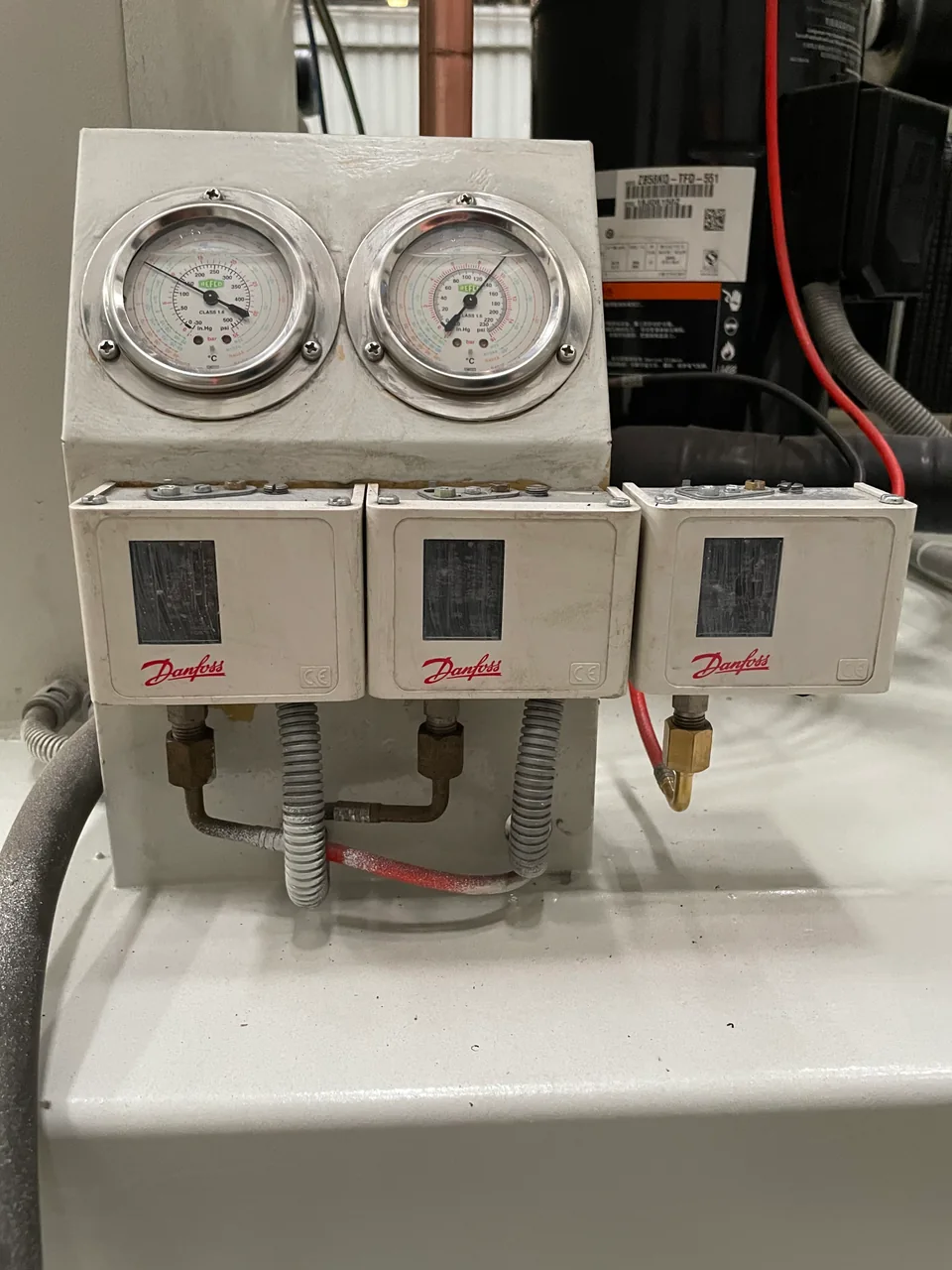
A vacuum cooler contains produce, packaging, water vapour and residual gases. Chamber pressure alone does not prove that the product has reached its target temperature. Product temperature measurement still matters; the target must suit the commodity and the agreed process. See our guide to placing product-temperature probes.
3. Ask for a whole-machine site check
Do not reduce a high-altitude quotation to the vacuum pump’s nameplate. Ask the supplier to review the complete configuration and state the conditions behind its proposed batch time.
Heat rejection: the cooling method changes the questions
For an air-cooled system, condenser selection should account for altitude and design air temperature. Heatcraft’s technical guide includes altitude corrections and distinguishes evaporator duty from total heat rejection, which also includes compressor input.[3]
This is why “it is cool in the mountains” is not a sufficient design assumption. Give the supplier the hot conditions during your actual production period, not only an annual average or a cool morning reading.
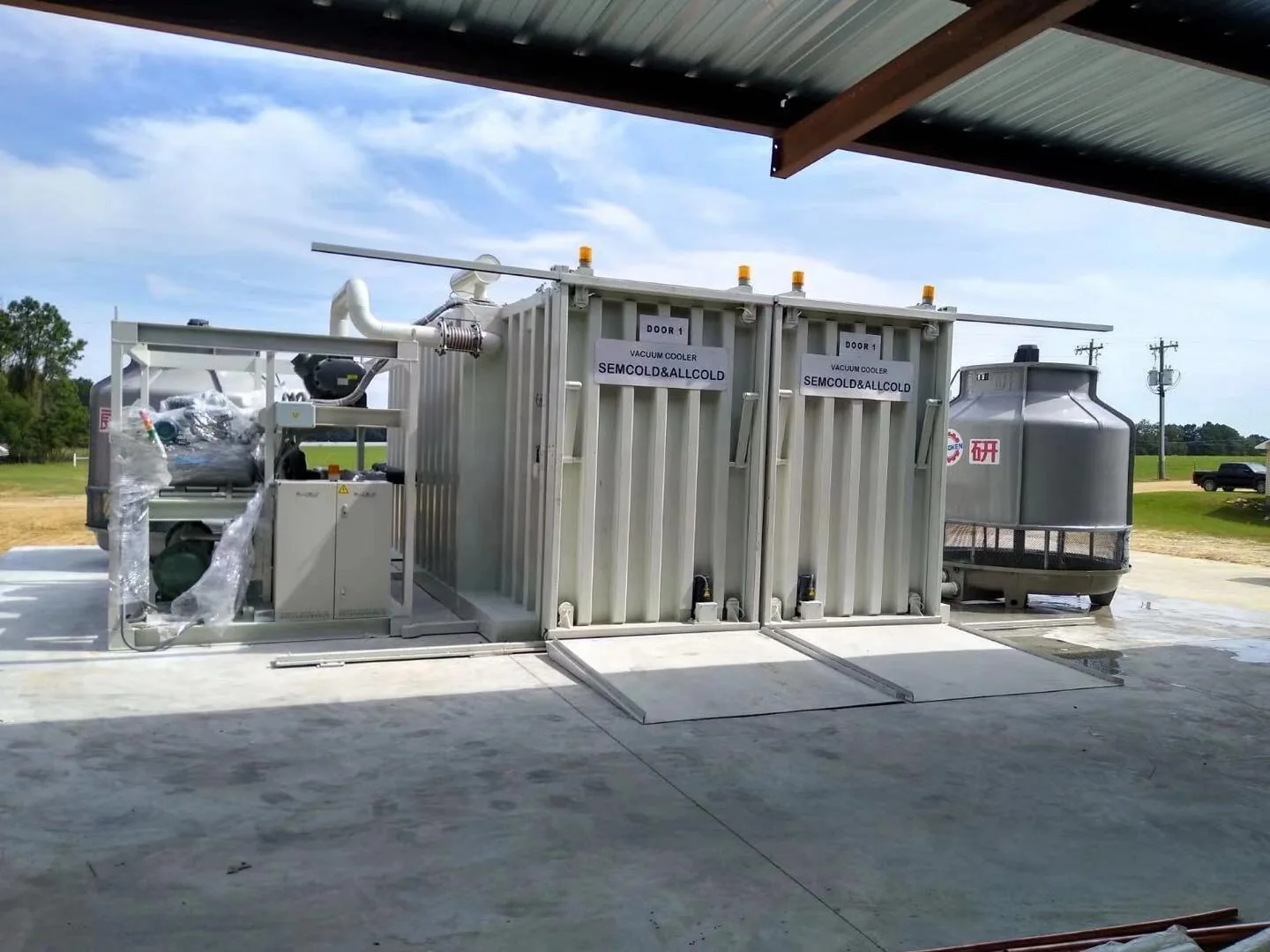
For a water-cooled arrangement, ask which entering-water temperature and flow the refrigeration selection requires. If a cooling tower is included, provide site altitude and the local design wet-bulb condition so the tower supplier can check its selection. Confirm who supplies the tower, pumps and connecting pipework. Our article on cooling-water temperature and slow summer cycles covers the operating side of this issue.
Do not apply one condenser’s altitude correction to the entire machine. The correct adjustment depends on the selected components and system arrangement.
Motors and drives: check the actual model
Ask the supplier to check the selected motors, drives and electrical equipment against their manufacturers’ altitude and ambient-temperature limits together. ABB’s ACS580-07 manual, for example, includes altitude derating for that drive range.[4] Use the manual for the component actually supplied—not a generic percentage.
If a generator will supply the farm, include that information in the enquiry. The generator supplier should review its own site rating and the machine’s starting loads. See our separate guide to generator sizing and starting load.
Vacuum performance: keep measurement and production assumptions visible
Request the proposed operating-pressure reference and the basis for the estimated cycle time. Make sure the load description includes product, incoming temperature, target temperature, batch mass, packaging and pallet arrangement.
Lower starting atmospheric pressure does not guarantee a shorter cooling cycle. Compare loaded production cycles, not an empty-chamber pump-down time against a full-batch estimate.
Also ask where chamber pressure is measured. Leybold’s guidance explains how instrument placement and flow conditions affect readings.[5] A reading near the pump is not automatically interchangeable with one at the chamber.
4. Send a site brief that makes quotations comparable
A useful enquiry lets each supplier work from the same conditions. “A cooler for a mountain farm” leaves too much room for different assumptions. Copy the following outline into your project brief:
High-altitude vacuum cooler enquiry
- Location: country, town or coordinates, and site elevation in metres above sea level.
- Climate: expected hot operating-period air temperature; for tower selection, the available local design wet-bulb data.
- Product: commodity, incoming temperature range and required final product temperature.
- Load: kilograms per batch, pallet count and dimensions, stack height, and packaging photographs.
- Production: peak daily volume, operating hours, and time available for loading, cooling and unloading.
- Utilities: voltage, frequency, phases, grid or generator supply, and available cooling-water conditions.
- Installation: indoor or outdoor location, ventilation and service space; identify existing towers or cooling-water equipment.
- Requested confirmation: proposed configuration, altitude/temperature design basis, pressure units and reference, and assumptions behind batch-time estimates.
If you provide a barometric-pressure reading, state whether it is actual local station pressure. A sea-level-corrected weather value is not interchangeable with the local ambient pressure used in the gauge-pressure calculation above. If you do not have a reliable local reading, provide the location and elevation rather than guessing one.
What a useful quotation should make clear
Look for an explicit site design basis, a defined scope of supply and a load description behind any throughput figure. If one quotation includes a tower and another assumes a customer-supplied water circuit, those are different packages—not directly comparable machine prices.
For any reference project at a similar elevation, ask which load, climate and configuration its results represent.
Frequently asked questions
Does Allcold have one maximum altitude for every vacuum cooler?
A single limit is not established here. Request written confirmation for the proposed configuration at your site altitude and operating temperature.
Should the target product temperature be changed because the farm is at altitude?
Do not change the product target simply to match a familiar negative gauge number. Specify the temperature appropriate to the commodity and process, then have the supplier confirm the operating recipe for the machine and site.
Can I compare “99% vacuum” between two suppliers?
Not reliably without its definition and reference. Ask both suppliers to state absolute chamber pressure in the same units and explain the operating conditions associated with the claim.
Can an existing sea-level machine be moved to a mountain site?
Treat the move as a site-change review. Send the manufacturer the machine identification, available component details, new elevation, climate and utilities. Do not assume it needs no changes—or that it definitely needs a larger pump—before that review.
Sources and technical references
- Leybold. Units and ranges of pressure. Absolute and gauge pressure definitions. ↩
- NIST Chemistry WebBook. Water: Antoine equation parameters. Source of the calculated saturation-pressure values. ↩
- Heatcraft Refrigeration Products. Air Cooled Condensers Technical Guide (PDF). Altitude correction and total heat rejection. ↩
- ABB. ACS580-07 hardware manual (PDF, approximately 12 MB). Model-specific altitude derating. ↩
- Leybold. How is vacuum pressure measured? Measurement location and interpretation. ↩
These references explain engineering principles, not Allcold’s fitted component brands or certified operating limits. Confirm equipment selection and performance conditions for your project.

Mila
You May Also Like
50 Hz or 60 Hz? How to Confirm a Vacuum Cooler Will Work at Your Site
Buying a vacuum cooler for 50 Hz or 60 Hz power? Check whole-machine compatibility, auxiliaries, conversion scope and quoted performance before ordering.
Can You Move a Vacuum Cooler Between Farms for Different Harvest Seasons?
ALLCOLD · MULTI-SITE COOLING & EQUIPMENT PLANNING Sharing one cooler across two growing regions can look efficient on an annual
How Loud Is a Vacuum Cooler? Plan for Noise Before You Buy
ALLCOLD · EQUIPMENT SELECTION & SITE PLANNING A cooler can fit the available space and still be in the wrong
Air-Cooled, Water-Cooled or Evaporative: Which Vacuum Cooler Fits Your Site?
VACUUM COOLER BUYER’S GUIDE · SITE UTILITIES Three heat-rejection arrangements can mean very different utilities, maintenance and installed costs. Compare
Vacuum Cooling vs. Vacuum Packaging: Which Machine Do You Need?
ALLCOLD · EQUIPMENT SELECTION Two machines can both use a vacuum chamber and still solve completely different production problems. Before
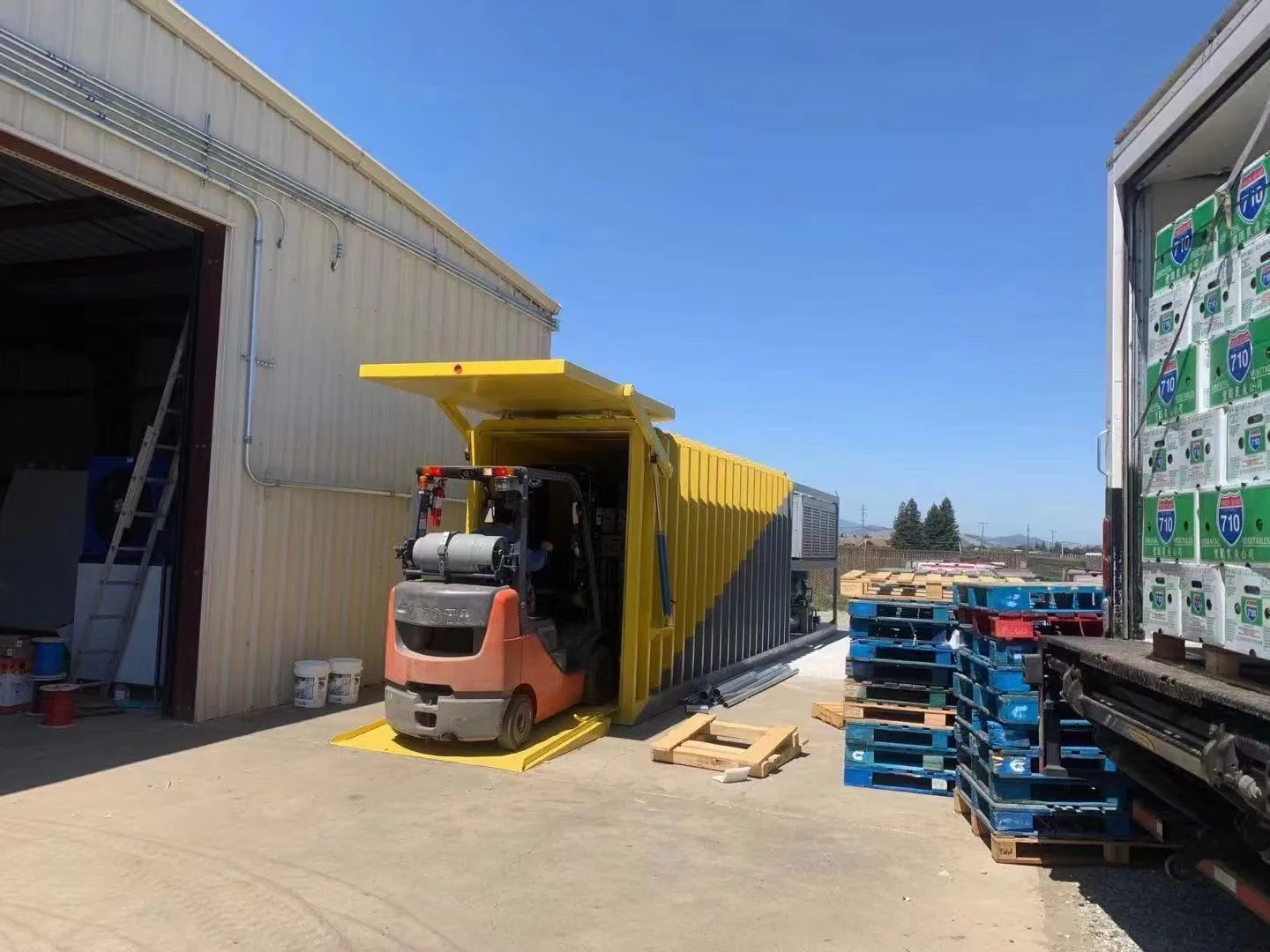
Should You Buy a Vacuum Cooler or Use a Third-Party Cooling Service?
FARM INVESTMENT · OWNERSHIP VS. OUTSOURCING The cooling fee is easy to see. The cost of getting your harvest cooled
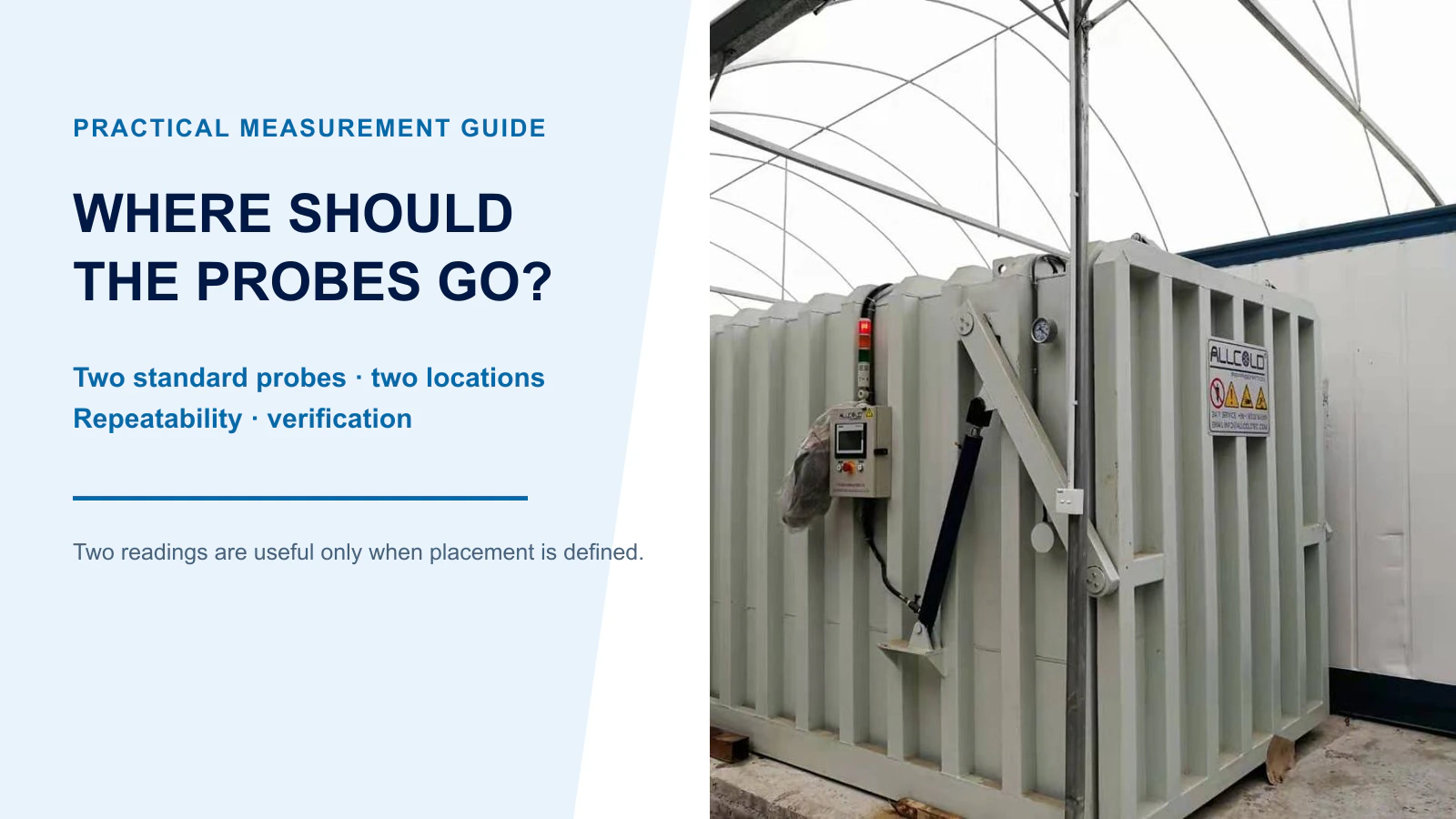
Where Should Two Product Temperature Probes Go in a Vacuum Cooler?
Learn how to place a vacuum cooler’s two standard product temperature probes, avoid false cold readings and define repeatable production locations.
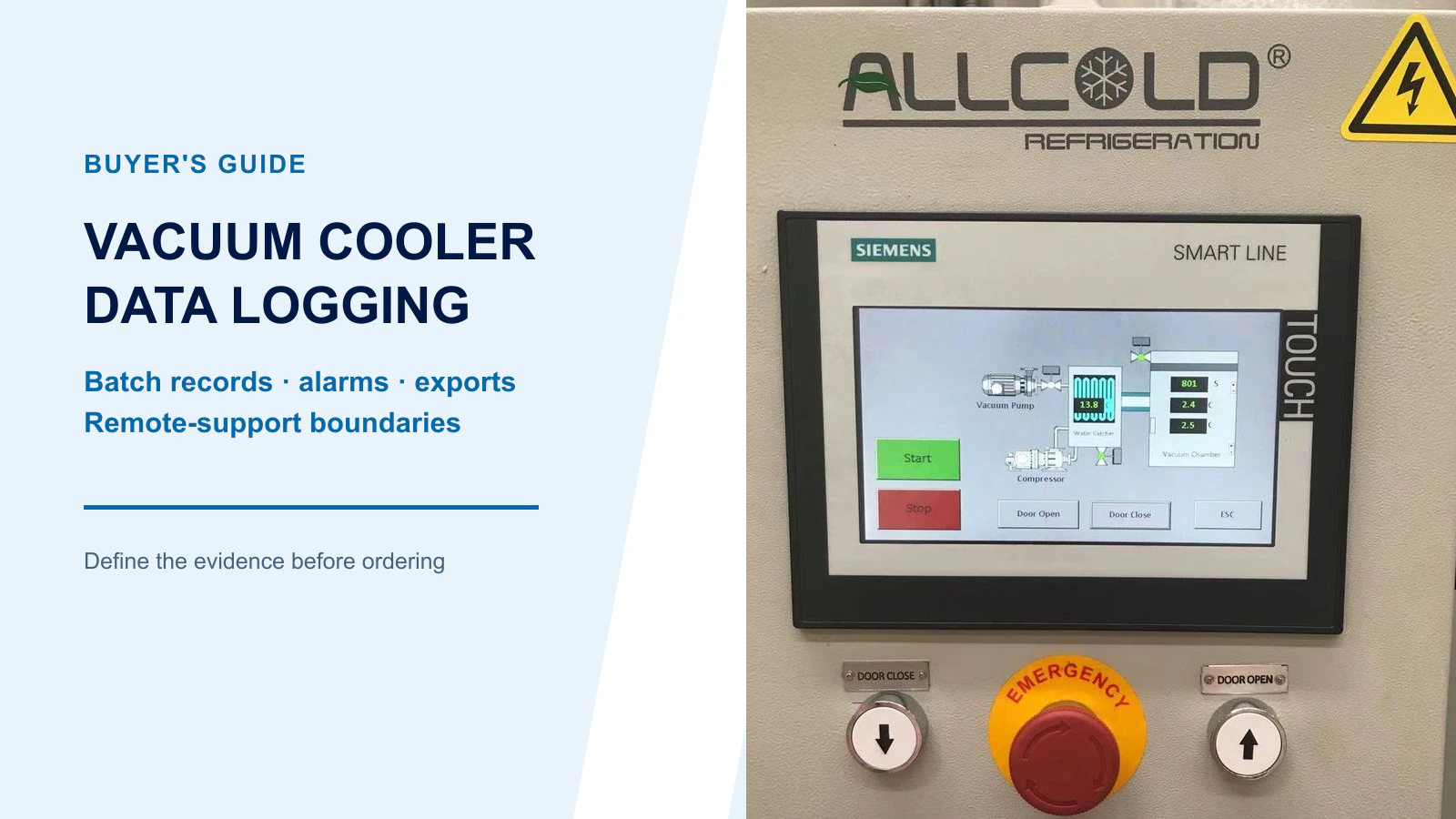
What Should a Vacuum Cooler Record? A Buyer’s Guide to Batch Data, Alarms, and Remote Support
A practical buyer’s guide to specifying vacuum cooler batch records, sensor data, alarm history, exports, backups and controlled remote support.
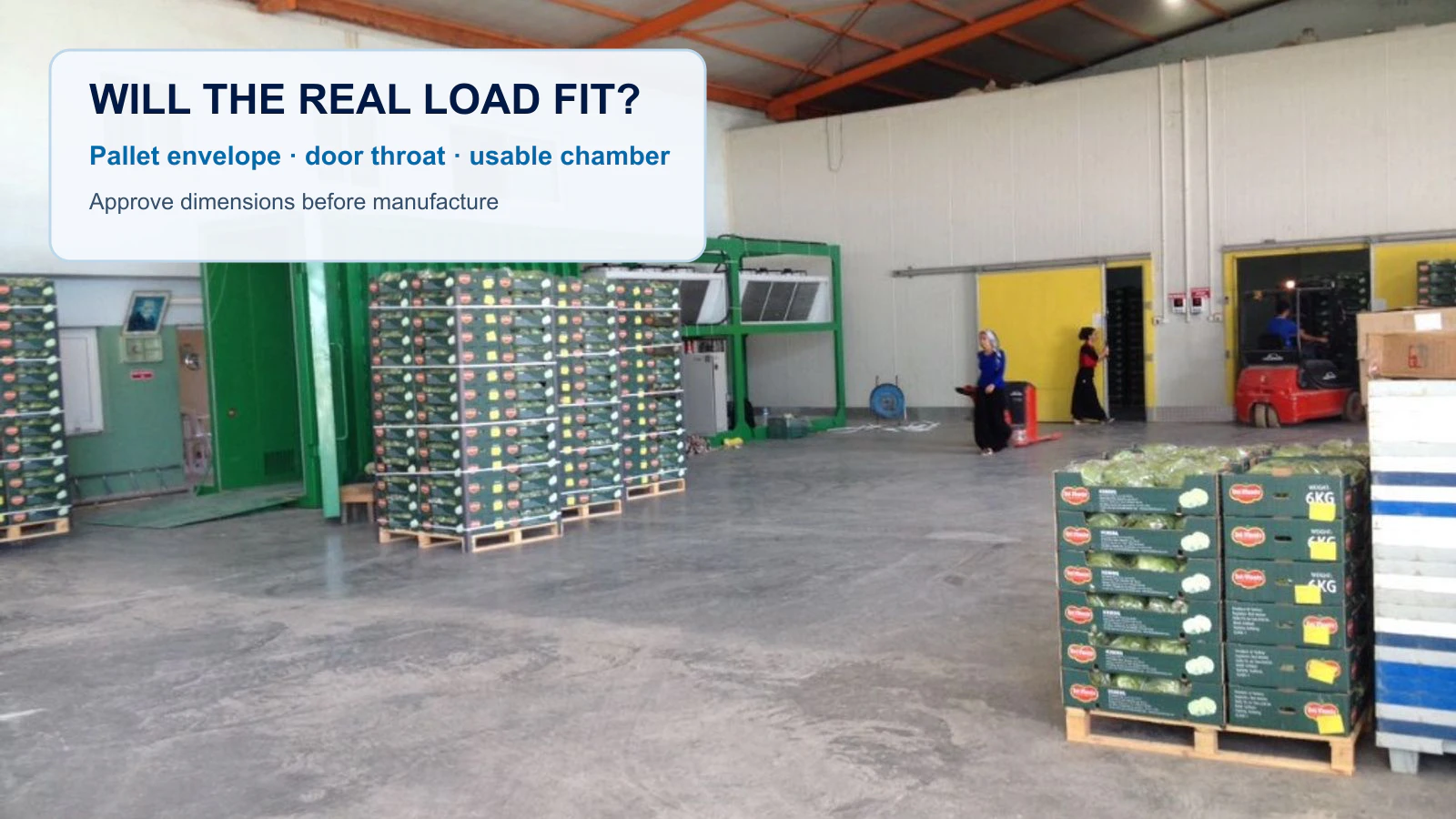
Will Your Pallets Actually Fit? How to Specify the Usable Chamber Size of a Vacuum Cooler
A pallet count does not prove the real production load will fit. Learn how to define the loaded-pallet envelope, door throat, usable chamber space, handling path and drawing-approval evidence before ordering a vacuum cooler.
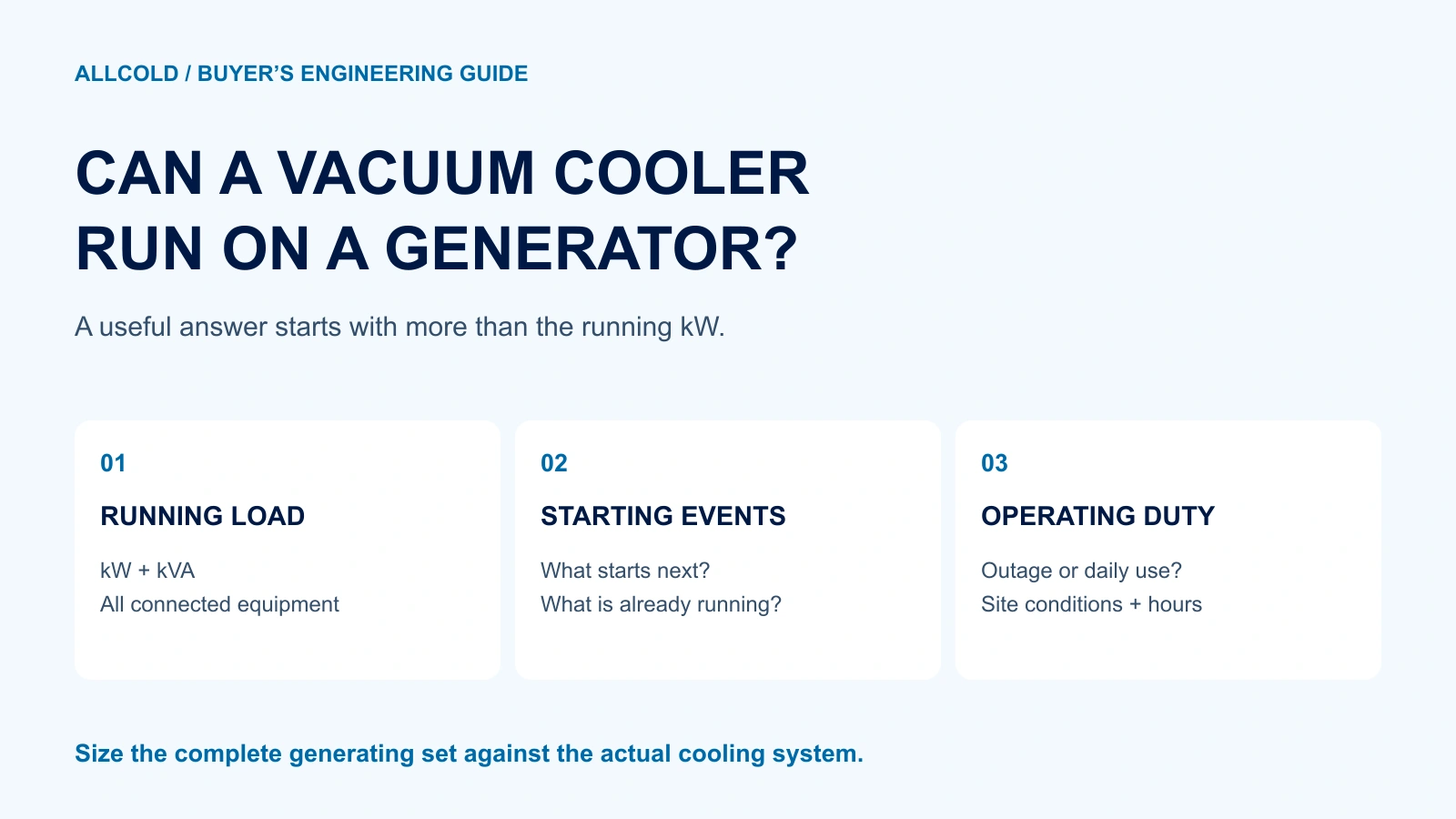
Can a Vacuum Cooler Run on a Generator? A Buyer's Guide to Sizing Beyond Running kW
A generator can have enough running power and still struggle when a vacuum cooler starts. Learn how to define the operating duty, starting events, supporting utilities and supplier responsibilities before selecting the generator set.