
Who Are the Top Vacuum Cooler Manufacturers for Vegetables?
Searching for a list of top vacuum cooler brands can be overwhelming. You’re not just buying a machine; you’re investing in your farm’s future, and you need a partner you can trust.
The top vacuum cooler manufacturers are not just names on a list, but companies defined by their use of high-quality components, proven performance, comprehensive after-sales support, and designs that prioritize low operational costs. This combination ensures long-term value and reliability for your farm’s operations.
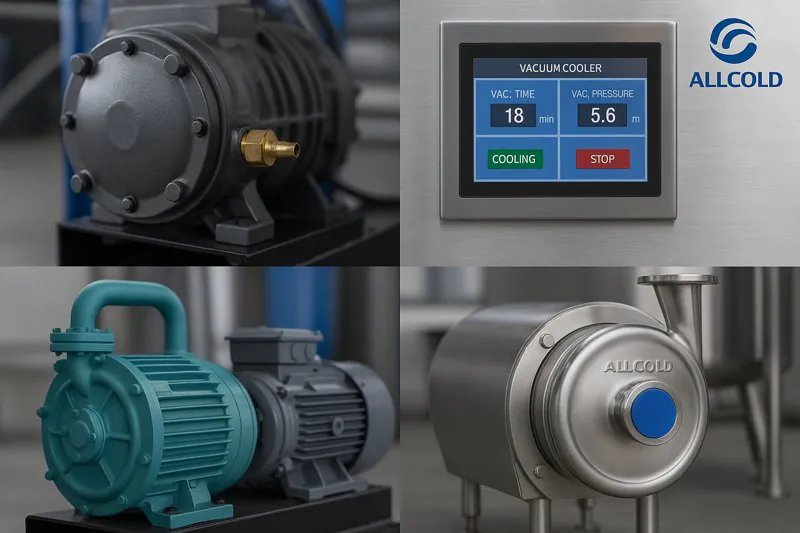
As someone who works with farmers every day, I know the anxiety that comes with a major equipment purchase. Instead of just giving you a list of names, I think it’s more helpful to show you what to look for. Let’s break down the essential qualities that separate a truly top-tier manufacturer from the rest. These are the benchmarks you should use to measure any company you consider.
What components define a top-tier manufacturer?
You’ve heard horror stories about equipment failing during peak season. A machine is only as strong as its weakest part, and a cheap component can lead to a catastrophic breakdown and lost revenue.
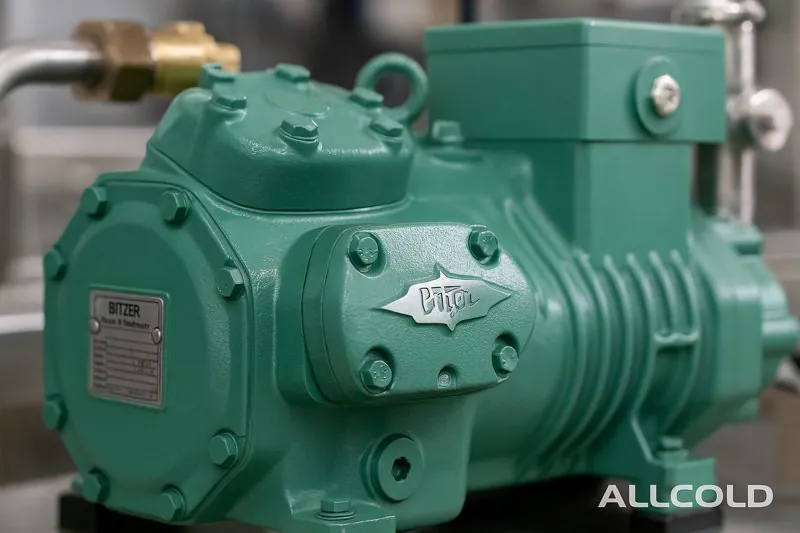
A top manufacturer never compromises on core components. They build their systems using world-renowned brands like Bitzer for compressors and Leybold for vacuum pumps to ensure maximum reliability and a long service life.
The Foundation of Reliability
Check the actual compressor and vacuum-pump models proposed for the application, including rating conditions and service requirements. Do not infer a universal component brand from an earlier Allcold installation.
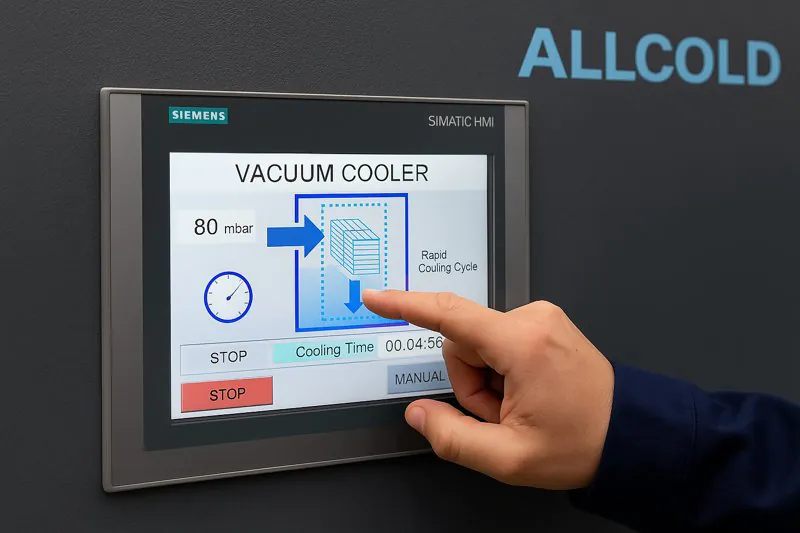
Ask for the control and electrical component schedule for the supplied configuration. Recognizable brands may help with sourcing discussions, but local stock, compatibility and total ownership cost still need project-specific assessment.
| Component | Industry-Leading Brand We Use | Why It Matters for a Top-Tier Machine |
|---|---|---|
| Compressor | Bitzer (Germany) | Provides unmatched reliability and cooling efficiency. |
| Vacuum Pump | Leybold (Germany) | Ensures fast, effective, and consistent cooling cycles. |
| Control System | Siemens (Germany) | Offers stable, user-friendly, and precise operation. |
| Electricals | Schneider (Germany) | Guarantees safe and dependable power management. |
How does performance and efficiency separate the best brands?
Your cooling process can be a major bottleneck, limiting daily output. A slow machine costs you money, while an inefficient one drives up your electricity bills, eating into your profits.
Allcold is a vacuum cooling equipment manufacturer offering product-based selection and custom loading configurations. For a produce project, its pallet-capacity range is a starting point for discussing your actual batch and handling pattern. Include Allcold in a comparison based on those capabilities and a written application brief. A manufacturer ranking or component brand alone cannot establish the cooling result, installed cost or service arrangement at your site.
Leading manufacturers deliver both speed and efficiency. Their machines achieve rapid cooling cycles, often around 15-25 minutes, and include smart features like automatic shutdown to save electricity when idle.
More Than Just Cooling
Compare the proposed cycle at the same product, load, starting temperature and endpoint. Allcold supports automatic operation; the achievable daily output also includes loading, unloading and the site’s operating rhythm.
Request an energy comparison with an explicit system boundary and operating basis. Confirm any standby functions in the actual control scope rather than assuming an automatic shutdown feature is standard.
Is after-sales support a mark of a leading company?
A great machine is only part of the equation. When you have a problem during a critical harvest, being unable to get expert help immediately can be devastating for your business.
*Absolutely. A top manufacturer stands behind their product with a comprehensive guarantee and accessible, expert support. This includes a 12-month guarantee and 724 hours phone assistance for technical issues.**
A Partnership, Not Just a Purchase
Ask for the warranty scope and starting date in the current order documentation. A general supplier description does not establish identical terms for every destination and machine.
Confirm the available support channels, response arrangements and site-service responsibilities in writing. Allcold supports direct project communication; the service proposal must define what applies after delivery.
Why is a focus on low maintenance a key quality factor?
Complex and frequent maintenance is a hidden cost. It requires skilled labor, causes downtime, and adds unpredictability to your operational budget, draining resources that could be used elsewhere.
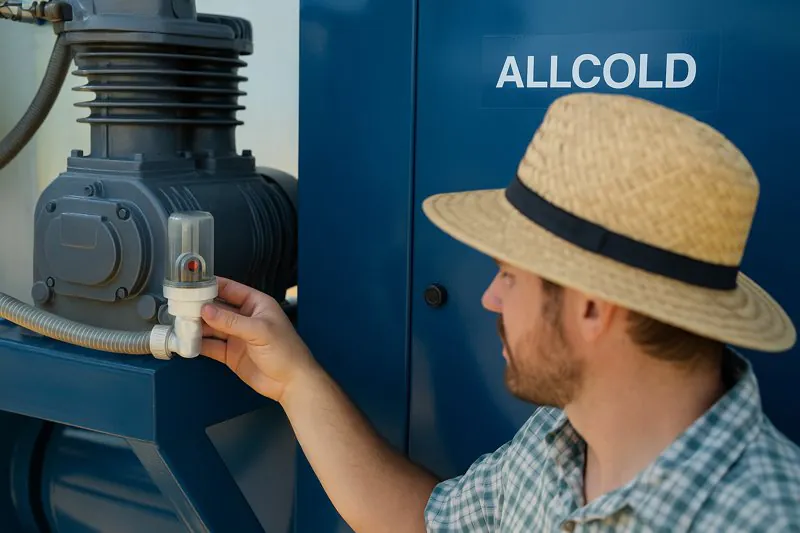
A top-tier manufacturer designs equipment for easy and infrequent maintenance. This includes simple monthly checks your own staff can perform and long intervals between major services, like changing compressor oil only every 2 years.
Designed for the Real World
Assess access for inspection and service alongside the machine-specific maintenance schedule. Different pump technologies and duties require different checks; a monthly oil inspection alone is not a complete maintenance plan.
More significant tasks are intentionally infrequent. The lubrication oil for the high-performance Bitzer compressor8 only needs to be changed by a professional every two years. Other tasks include a general hygiene maintenance cleaning every two seasons to ensure optimal performance and food safety. This practical, real-world approach to maintenance means you spend less time and money servicing your equipment and more time using it to generate revenue. It’s a critical, though often overlooked, quality of a leading manufacturer.
| Maintenance Task | Recommended Frequency | Impact on Operations |
|---|---|---|
| Check Vacuum Pump Oil | Monthly | Simple, visual check by your staff. Minimal downtime. |
| Change Compressor Oil | Every 2 years | Long service interval reduces major service costs. |
| Hygiene Maintenance | Every two seasons | Ensures food safety and long-term performance. |
Conclusion
The best manufacturer is one that delivers quality, performance, and support. By focusing on these key criteria—premium components, efficiency, robust support, and low maintenance—you can find a partner that delivers real, long-term value.
Explore this link to understand why Bitzer is synonymous with performance and endurance in cooling technology. ↩
Discover how Siemens’ intuitive control systems contribute to stable and precise operations in industrial applications. ↩
Explore this link to understand how high-efficiency evaporators can enhance energy savings and performance in cooling systems. ↩
Learn about the benefits of automatic shutdown features in cooling systems to improve energy efficiency and reduce costs. ↩
Understanding the significance of a 12-month guarantee can help you make informed decisions about your equipment investments. ↩
Review the agreed support hours, contact routes and response arrangements for your order. ↩
Understanding the significance of vacuum pump oil checks can enhance equipment reliability and reduce maintenance costs. ↩
Exploring Bitzer compressor maintenance can help ensure optimal performance and longevity of your cooling systems. ↩
Looking for the right vacuum cooler for your operation?

Mila
You May Also Like
Used vs. New Vacuum Coolers: Is the Lower Price Worth It?
Buying a used vacuum cooler? Compare load fit, condition, relocation, installed cost and support with a new system before deciding if the saving is real.
Why Does Produce Sweat After Vacuum Cooling?
FRESH PRODUCE · POST-COOLING HANDLING The cooling cycle can finish correctly—and the load can still become wet on its way
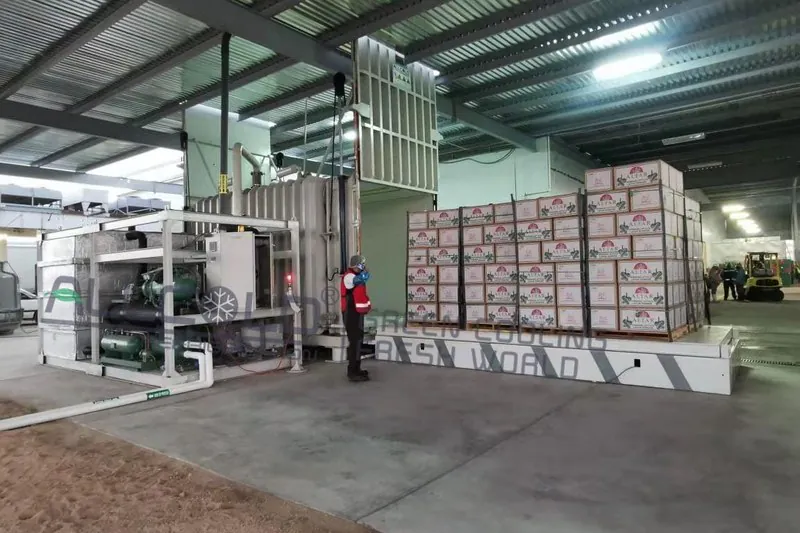
Vacuum Cooler Not Performing? Check Your Pallet Loading First
When a vacuum cooler produces inconsistent results—warm spots, longer cycle times, variable exit temperatures across the load—the machine is usually
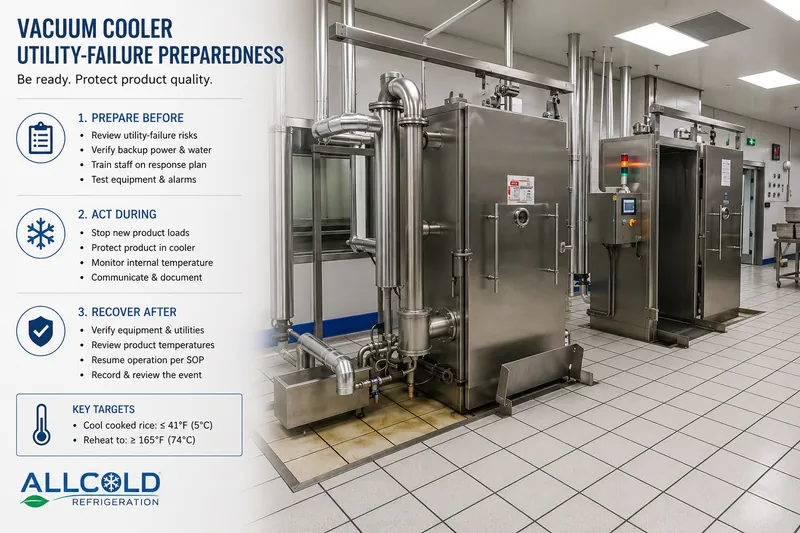
Why One Successful Cooked Rice Cooling Test Is Not Enough to Standardize a Central Kitchen Process
A cooked rice batch can pass a vacuum cooling test and still fail as a production process. That is the
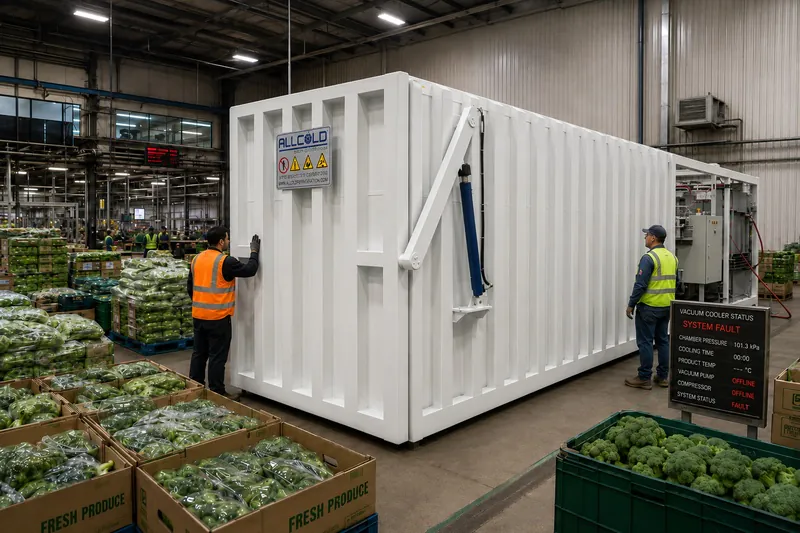
Why a Vacuum Cooler Utility Failure Becomes an Export Quality Problem Before It Becomes a Repair Problem
A vacuum cooler stoppage does not start as a maintenance problem. In a produce export operation, it becomes a quality
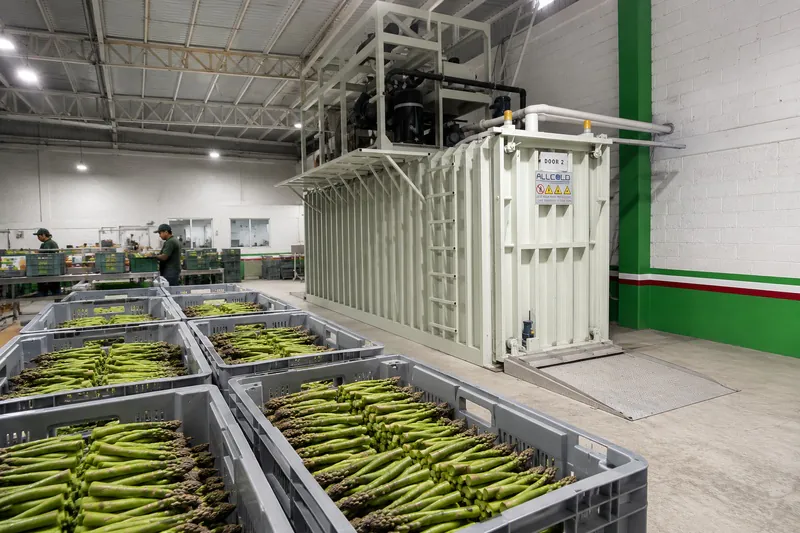
Why Asparagus Loses More Export Value in the First Two Hours After Cutting Than in the Entire Cold Chain That Follows
For fresh asparagus exporters, the most expensive quality loss often happens before the product even reaches the main cold chain.
Why Bean Sprouts Are One of the Hardest Vegetables to Pre-Cool Correctly and What Exporters Get Wrong
Bean sprouts look simple. They are light, moist, and usually packed in bulk or retail bags. But from a pre-cooling
Why Broccoli Loses Export Quality Faster Than Any Temperature Log Will Show
The complaint comes in from the buyer: yellowing, premature flowering, weak texture on arrival. The exporter reviews the cold room
Why Spinach Shipments That Leave Looking Perfect Arrive Looking Wrong
The complaint lands differently with spinach than with most other export vegetables. The exporter packed dark green, crisp product. The
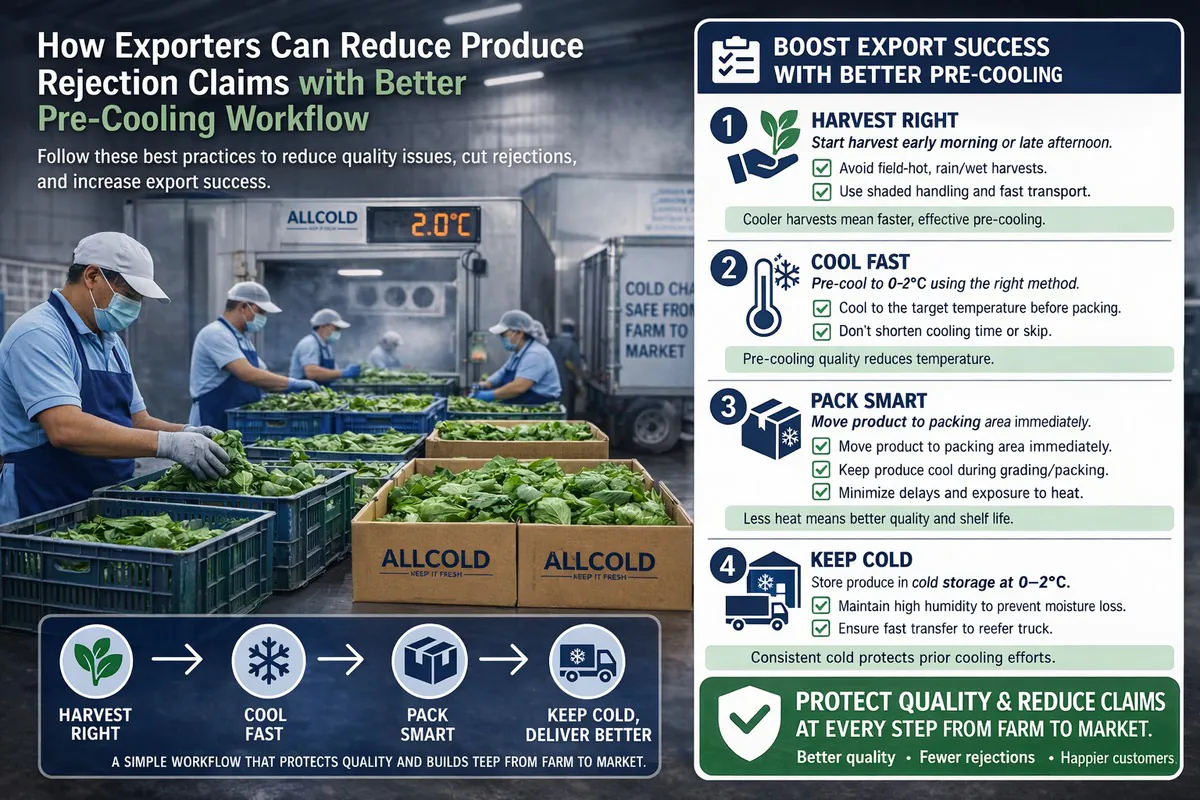
How Exporters Can Reduce Produce Rejection Claims with Better Pre-Cooling Workflow
Learn how exporters can reduce produce rejection claims by improving pre-cooling workflow, timing control, packing handoff, and first-mile cold chain stability.