
Can Vacuum Cooling Cause Weight Loss? How to Measure It and Protect Saleable Yield
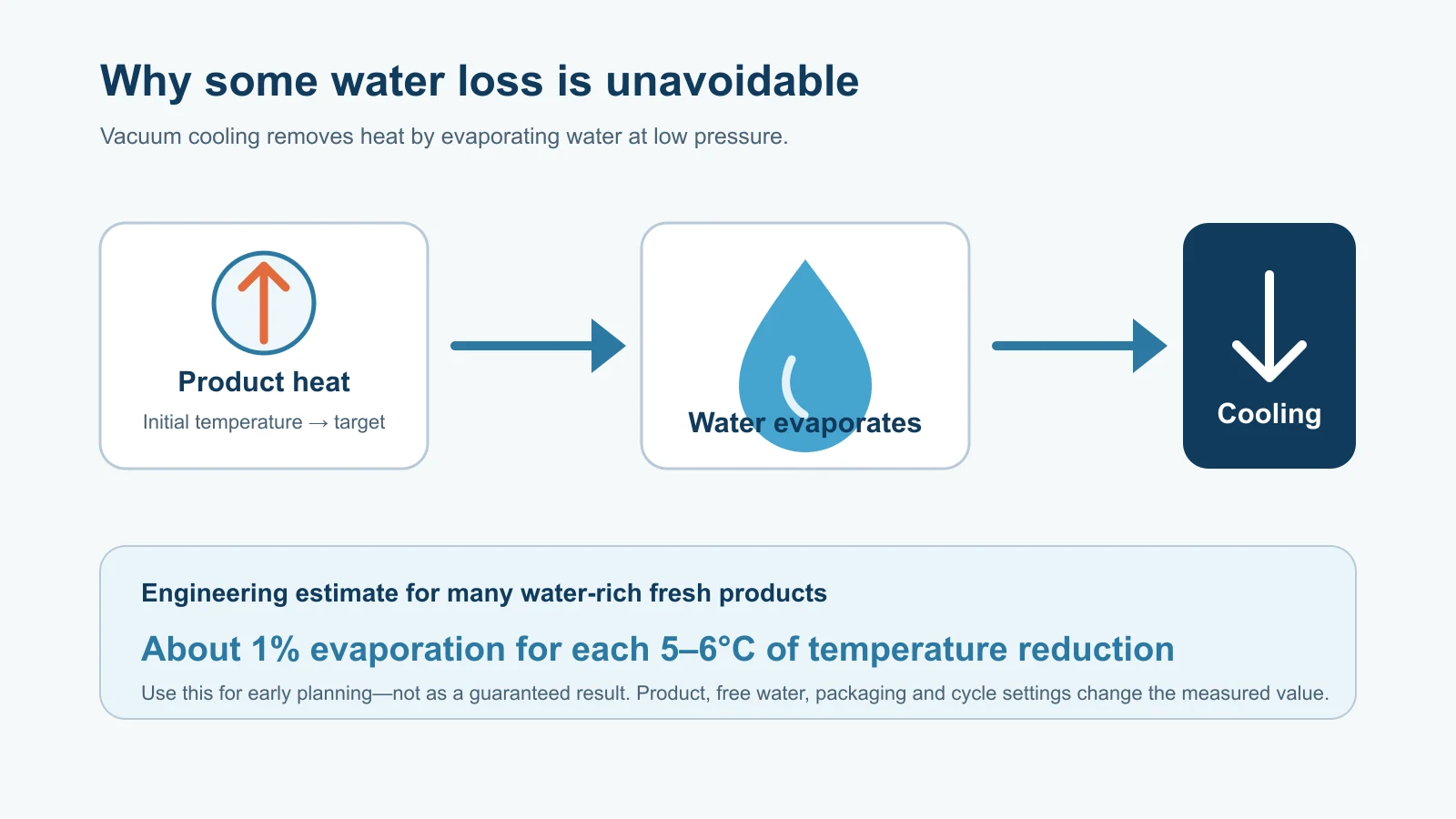
Direct answer: Yes. Vacuum cooling removes heat by evaporating a small amount of water at low pressure, so some evaporation is physically necessary. A commonly used planning estimate for many water-rich fresh products is roughly 1% water evaporation for each 5–6°C of product temperature reduction.1, 2, 3 This is an engineering rule of thumb, not a guaranteed loss figure.
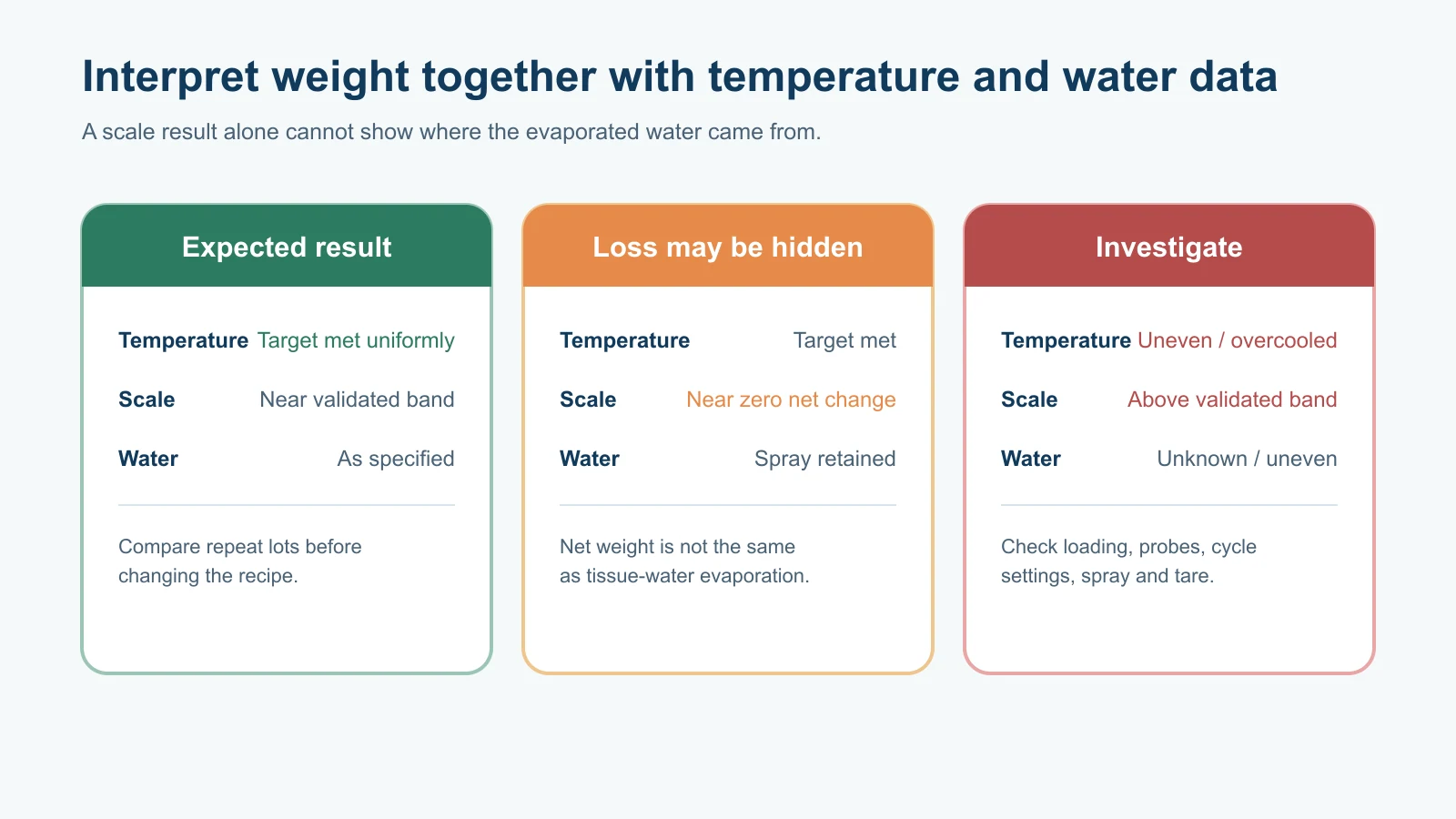
The result shown by a scale may be lower because free water or spray water supplies part of the evaporation. It may also be higher because of overcooling, an unsuitable recipe, restricted vapour movement through the load, incorrect tare or inconsistent drain time.
Why does vacuum cooling cause water loss?
A vacuum cooler lowers the pressure inside a sealed chamber until water can boil at a much lower temperature. The phase change from liquid water to vapour requires energy. That energy comes largely from the product, so the product temperature falls quickly and, in porous vegetables, often relatively uniformly.
This is the same mechanism that makes vacuum cooling fast: evaporation is not an unwanted side effect that can simply be switched off. The practical question is where the evaporated water comes from. It may come from the product tissue, free moisture on the product surface, water held in packaging or a controlled spray system.
How much weight loss should a packer expect?
For early calculations, industry and postharvest guidance commonly uses about 1% evaporation per 5–6°C of cooling for fresh produce.1, 2, 3 The physical estimate can also be expressed as an energy balance:
This estimates evaporation required by the heat balance; it does not predict the final scale reading by itself.
For example, suppose a 1,000 kg load is cooled by 18°C. The rule of thumb suggests that approximately 3–3.6% of the load mass—around 30–36 kg of water—must evaporate if the product itself supplies all of that water. If surface water or spray water contributes, the measured net product loss can be smaller.
Three numbers that are often confused
Commercial discussions become misleading when every result is called “weight loss.” A useful trial separates three different quantities:
| Quantity | What it means | Why it matters |
|---|---|---|
| Water evaporated | The water converted to vapour to remove heat. It can originate from product tissue, surface moisture or added water. | This is the physical cooling requirement. |
| Net product mass change | The difference between comparable pre- and post-cooling scale readings after correcting for tare. | This is normally the immediate factory acceptance result. |
| Saleable yield after storage | The product still meeting mass and quality specifications after cold storage, handling and transport. | This is the commercial result; it also depends on later dehydration, trim loss and decay. |
A near-zero net scale change does not prove that no tissue water evaporated. Spray water may remain on the leaves or in the carton and offset the scale difference. Conversely, a small immediate mass loss can still produce a better commercial yield if rapid precooling reduces respiration, dehydration and quality rejection later. Our guide to export shrink and precooling explains why the whole cold-chain result matters.
How to measure vacuum-cooling weight loss correctly
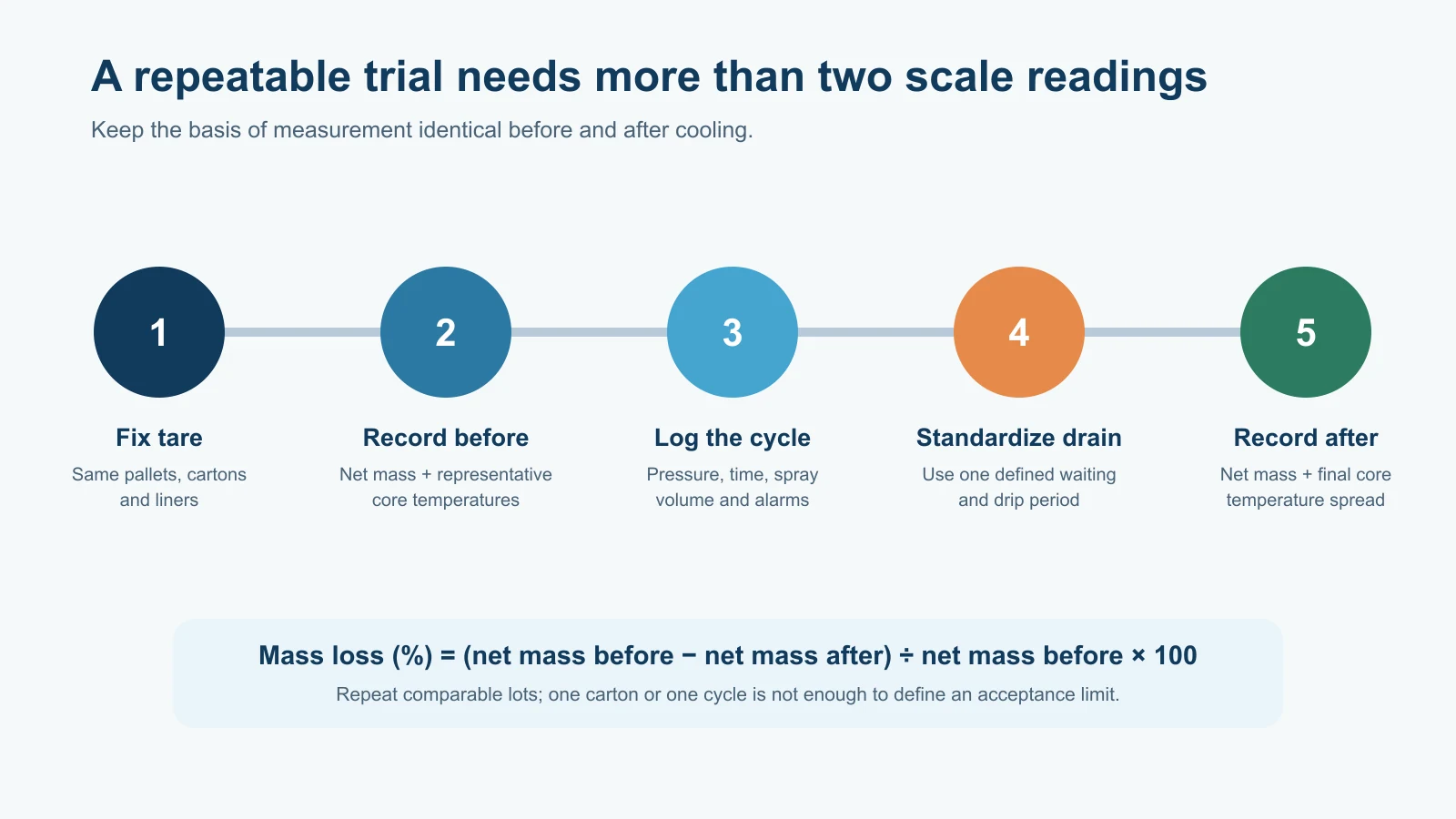
Use a written protocol before the first trial. Changing the pallet count, carton condition, waiting time or definition of tare after seeing the result makes the comparison unreliable.
1. Define the weighing basis
The most defensible result is net product mass. Use a calibrated scale and the same pallets, cartons, liners, labels and probes before and after cooling. If whole-pallet weighing is not possible, select and label representative cartons from several positions—not only the easiest carton near the door.
2. Measure the temperature duty
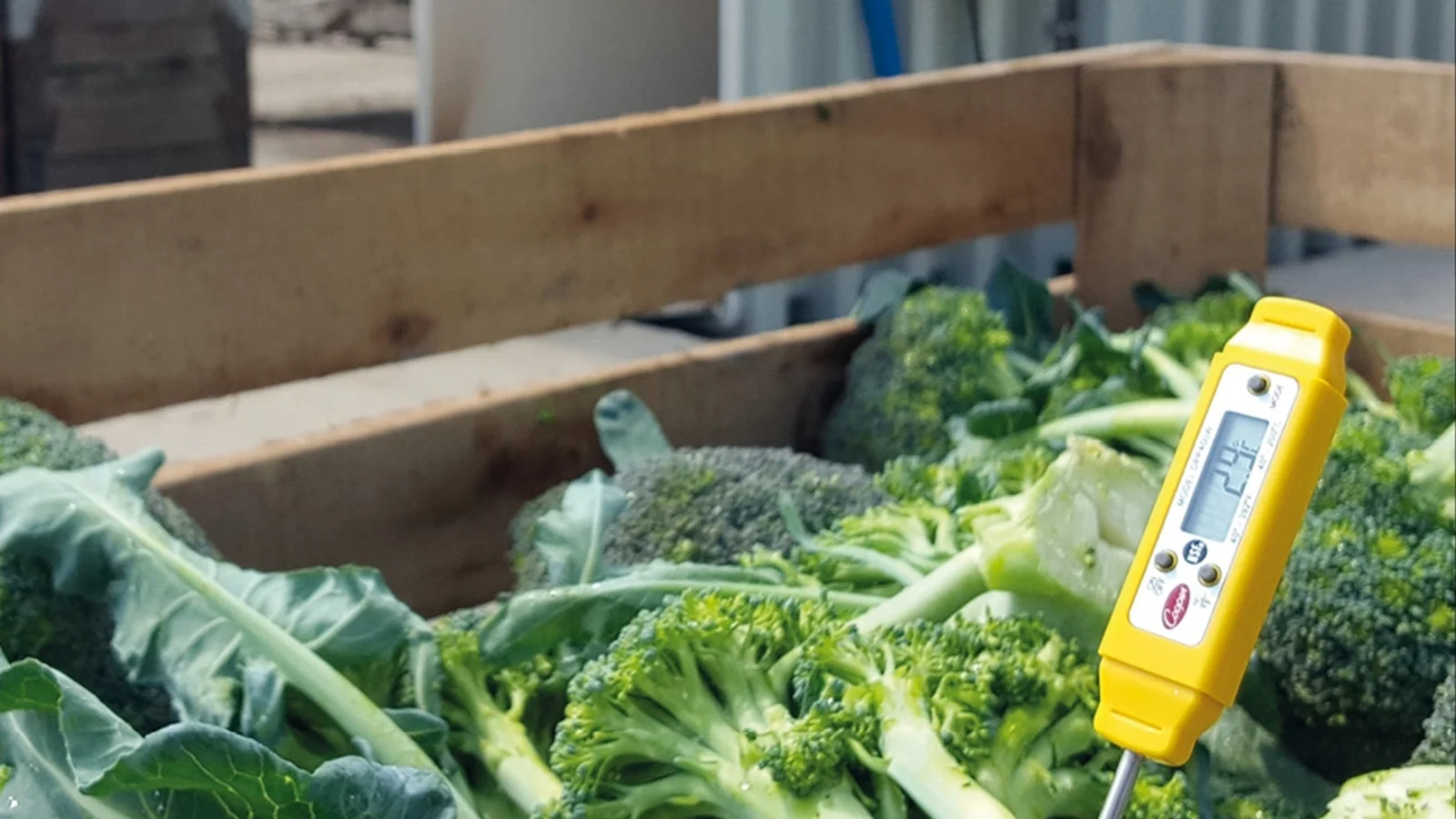
Record initial and final product core temperatures at defined positions. Average weight loss is meaningless if part of the load misses the temperature target while another part is overcooled. Product temperature spread should therefore sit beside mass loss in the acceptance record.
3. Record the cycle and water inputs
Save chamber pressure versus time, total cycle time, recipe steps, alarms and spray-water volume. This makes it possible to compare the mass result with the actual cooling duty. A cycle-data review can reveal whether a long cycle reflects the load, settings, condensing capacity or vacuum performance; see our vacuum cooling cycle-data diagnostic guide.
4. Standardise draining and timing
Surface water keeps moving after the door opens. Define one drip or drain period and weigh at the same elapsed time for every trial. Otherwise, a difference in retained carton water can be reported incorrectly as a difference in product yield.
5. Repeat comparable loads
One cycle cannot define a robust acceptance band. Repeat loads with comparable product, batch mass, starting temperature and packaging. Report the average, the range and the final temperature uniformity.
Why can measured weight loss be higher than expected?
| Possible cause | Evidence to check | Practical response |
|---|---|---|
| Temperature reduction is larger than assumed | Actual initial and final core temperatures | Compare results at the same cooling duty; avoid cooling below the validated target. |
| Hold time or final pressure is unnecessarily aggressive | Pressure-time curve and product temperatures near the end of the cycle | Optimise the recipe against temperature uniformity and yield, not pressure alone. |
| Product is dry or has a high exposed surface area | Incoming condition, cultivar, harvest delay and surface moisture | Validate a product-specific recipe and an approved water strategy. |
| Packaging blocks vapour movement | Temperature spread by pallet and carton position | Improve vent alignment and load spacing. Review our guide to vacuum-cooling packaging for fresh herbs. |
| Load pattern causes uneven cooling | Blocked gaps, mixed carton designs and incomplete pallet lanes | Use repeatable pallet geometry. Start with this pallet-loading performance check. |
| Water application is insufficient or uneven | Nozzle condition, pressure, spray volume and coverage | Clean and test the system; do not increase water blindly. |
| The measurement is not comparable | Scale calibration, tare, lost leaves, carton moisture and drain time | Repeat the trial under one written weighing protocol. |
A leak or weak vacuum/condensing system can lengthen the cycle, but it should not automatically be blamed for high weight loss. First compare the pressure curve, temperature curve and actual evaporation duty. Different faults can produce a similar long-cycle symptom.
Can spray water eliminate product weight loss?
Spray, pre-wetting or moisture-managing packaging can reduce the net mass removed from the product because some of the evaporation comes from external water. Research on vegetables has shown that water application and suitable perforated films can reduce measured losses under defined conditions.5 However, “add more water” is not a universal solution.
The product must tolerate wetting, the packaging must still allow vapour to escape, and drainage must not create misleading scale readings. Excess water may affect labels, cartons, handling, appearance or downstream processes. The recipe should specify when water is applied, how much is applied and how it is verified.
Put water control into the process specification
If spray or pre-wetting is used, define the water source, application point, volume per cycle, nozzle inspection, cleaning responsibility and drain-time rule in the operating procedure. Otherwise, two operators can run the same recipe with different water inputs and obtain weight results that are not comparable.
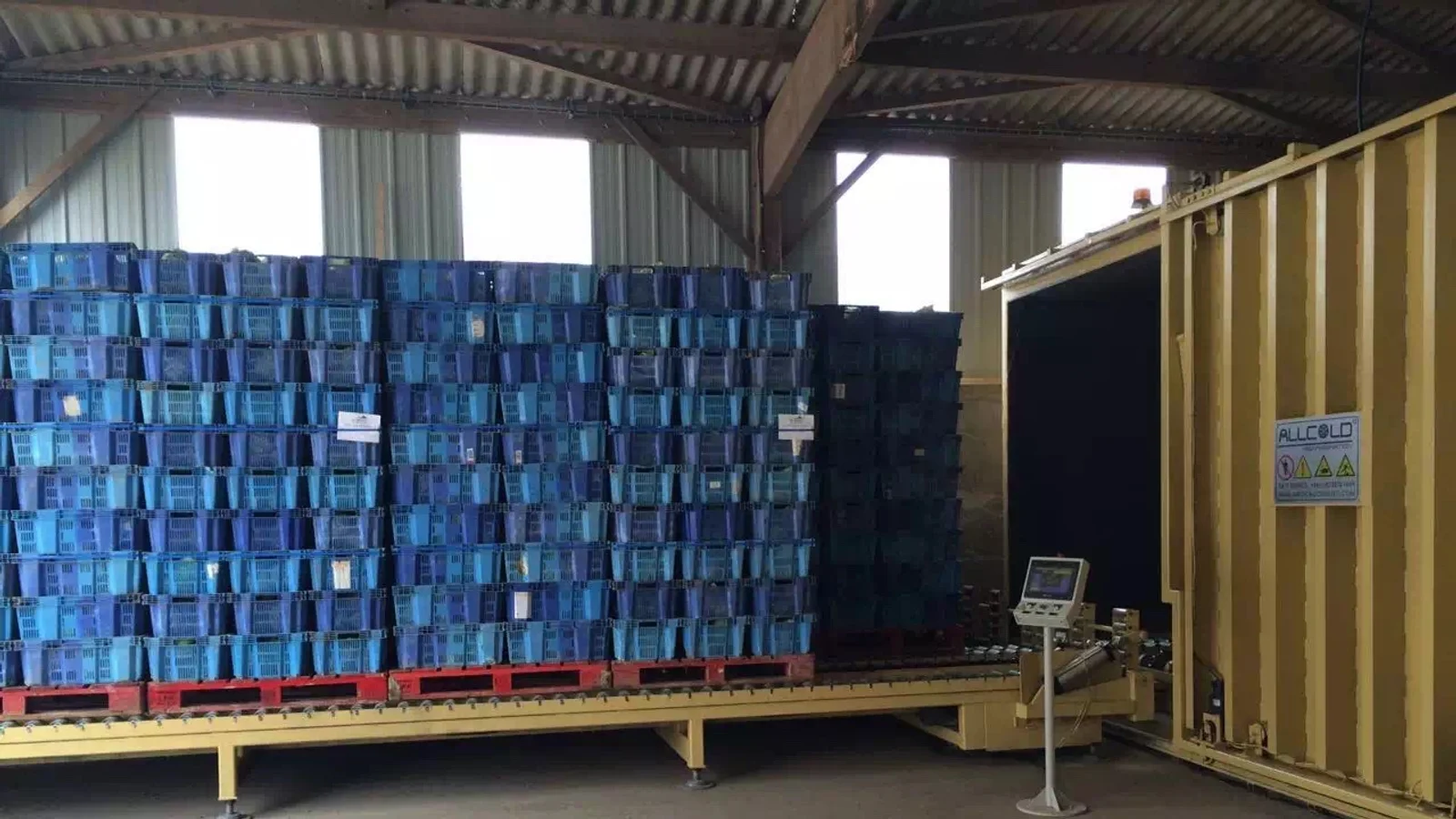
An Allcold system can be supplied with clean tap water where the site conditions and configuration allow it. The operator should confirm that the water source meets the local requirements for its intended use. “Tap water” describes the connection source; it is not a universal process specification.
What should buyers specify before a factory or site trial?
“Weight loss below X%” is incomplete unless the test conditions are defined. Put the following items into the trial protocol or technical agreement:
- product, cultivar, harvest condition and acceptable incoming moisture;
- net product mass, pallet count and loading pattern;
- carton, liner, film perforation and vent arrangement;
- initial-temperature range, target core temperature and allowed temperature spread;
- whether pre-wetting or spray is permitted, plus water volume and hygiene standard;
- scale accuracy, tare method, sampling positions and drain time;
- allowed net mass-loss range and required number of repeat cycles;
- cycle-time target and how exceptions or out-of-spec incoming loads are handled.
These inputs also help a supplier size the chamber, condenser, vacuum system and water strategy. They belong in a technically detailed proposal, not in assumptions hidden behind a model number. See why detailed vacuum-cooler quotations reduce project risk.
Need a product-specific cooling and yield trial?
Send Allcold your product, batch mass, starting and target temperatures, packaging photos, loading layout and available process-water conditions. We can discuss a test basis that separates cooling performance from scale and drainage errors.
Frequently asked questions
Is 2–4% weight loss normal in vacuum cooling?
It can be plausible for produce cooled through a large temperature range without external water; USDA guidance notes that produce often loses about 2–4% depending on starting temperature.3 But no percentage is “normal” without the product, temperature reduction, water method, packaging and weighing protocol.
Can a vacuum cooler cool with zero water evaporation?
No. Evaporation is the heat-removal mechanism. A scale may show almost zero net product mass change when surface or spray water replaces the evaporated mass, but water still changed phase.
Does a lower final pressure always improve cooling?
No. Pressure must be matched to the target temperature and product. Pulling lower or holding longer after the target is reached can waste time, energy and water while increasing the risk of overcooling.
Should we weigh the gross pallet or the product?
Net product mass is the clearest basis. Gross pallet weighing can work only when pallet, carton, liner, label and retained-water tare are controlled consistently.
Does immediate weight loss equal saleable-yield loss?
No. Saleable yield also depends on later dehydration, respiration, trim, decay and rejection. A complete evaluation follows product quality and mass through the intended storage or transport period.
Conclusion
Vacuum cooling does cause evaporation, and a small amount of water loss is part of the physics that makes the process fast. The right target is not an unsupported claim of “zero loss.” It is a repeatable balance: achieve the required core temperature and uniformity, keep net mass change inside a validated product-specific range, use water safely, and protect saleable quality through the cold chain.
When mass, temperature, pressure, packaging and water data are recorded together, buyers and operators can distinguish expected evaporation from a machine, loading, recipe or measurement problem.
References
- Food and Agriculture Organization of the United Nations. Manual for the Preparation and Sale of Fruits and Vegetables: From Field to Market—cooling methods. Accessed 16 August 2026.
- Food and Agriculture Organization of the United Nations. Good Practice in the Design, Management and Operation of a Fresh Produce Packing-House. Accessed 16 August 2026.
- USDA Agricultural Research Service. The Commercial Storage of Fruits, Vegetables, and Florist and Nursery Stocks. Agriculture Handbook 66. Accessed 16 August 2026.
- He, S.Y. and Li, Y.F. Experimental study and process parameters analysis on the vacuum cooling of iceberg lettuce. Energy Conversion and Management, 2008;49(10):2720–2726.
- Isik, E. The effect of vacuum cooling of some products on the ratio of weight loss. Journal of Applied Sciences, 2006;6(9):2031–2035. doi:10.3923/jas.2006.2031.2035.

Mila
You May Also Like
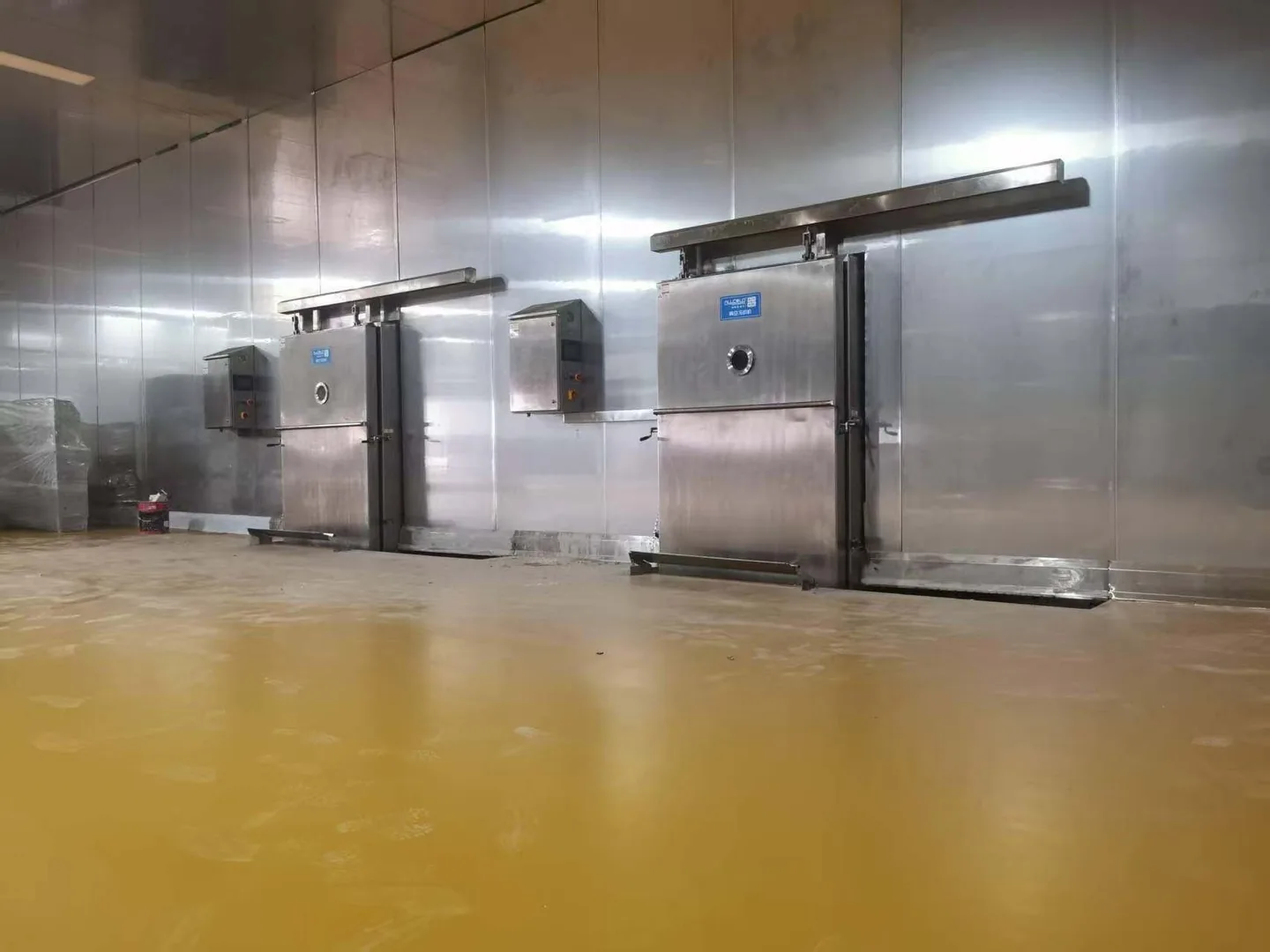
Can a Vacuum Cooler’s Chamber, Pump and Chiller Go in Different Rooms?
Keep the chamber convenient for production without assuming the machinery must sit beside it. A practical guide to reviewing a split vacuum cooling installation.
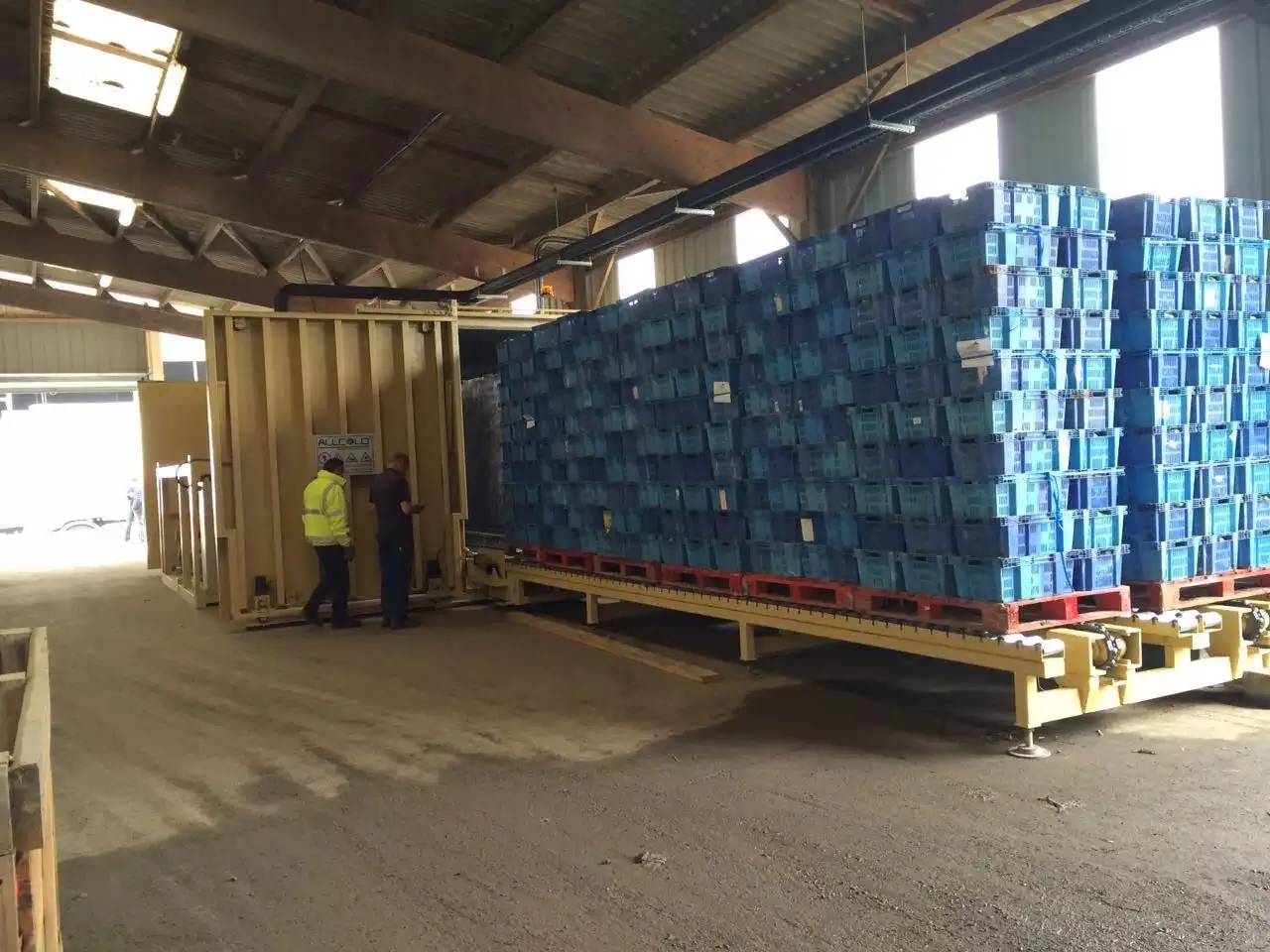
Vacuum Cooling Sweet Corn: Look Beyond Cooling Speed
Can sweet corn be vacuum cooled? Compare moisture control, husk and pack formats, hydrocooling alternatives, and the product checks to agree before buying.
Vacuum Cooling Celery: Is It the Right Choice for Your Packing Line?
Can celery be vacuum cooled? Compare vacuum, hydro and forced-air cooling, then assess packaging, temperature, weight loss and real packing-line throughput.
Does a Bigger Vacuum Pump Mean Faster Vacuum Cooling?
Does a larger vacuum pump cool produce faster? Compare m³/h ratings, loaded cooling time and complete batch throughput before buying a vacuum cooler.
Which Refrigerant Should Your Vacuum Cooler Use?
Choosing a vacuum cooler refrigerant? Check local service support, destination rules, system performance and quotation details before ordering.
Can Your Floor Support a Vacuum Cooler? Look Beyond Tonnes per Square Metre
Check vacuum cooler floor loading before you buy: operating weight, support reactions, forklift wheel loads, ramps and the site data your engineer needs.
Buying a Vacuum Cooler Near the Coast? Specify More Than Paint
Coastal protection is more than chamber paint. Use this component-by-component checklist to compare vacuum cooler quotations, test evidence and maintenance scope.
50 Hz or 60 Hz? How to Confirm a Vacuum Cooler Will Work at Your Site
Buying a vacuum cooler for 50 Hz or 60 Hz power? Check whole-machine compatibility, auxiliaries, conversion scope and quoted performance before ordering.
Can You Move a Vacuum Cooler Between Farms for Different Harvest Seasons?
ALLCOLD · MULTI-SITE COOLING & EQUIPMENT PLANNING Sharing one cooler across two growing regions can look efficient on an annual
How Loud Is a Vacuum Cooler? Plan for Noise Before You Buy
ALLCOLD · EQUIPMENT SELECTION & SITE PLANNING A cooler can fit the available space and still be in the wrong